
Exercise 10 Muscle histology Muscle Types Skeletal attached
- Slides: 12
Exercise 10 Muscle histology
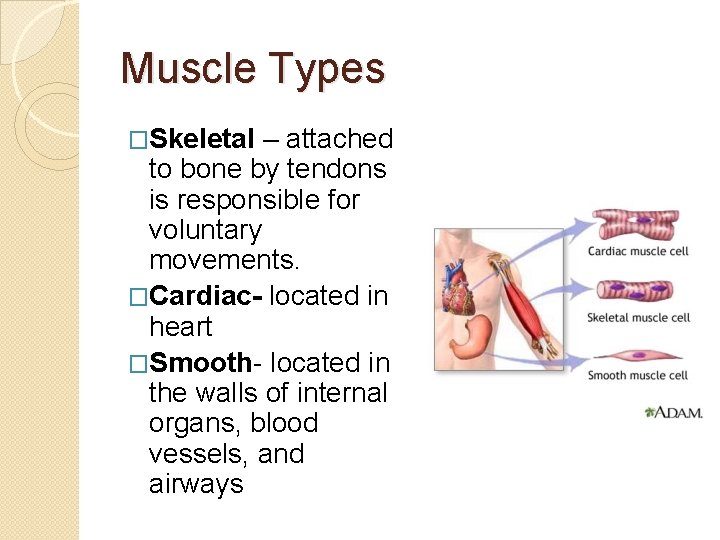
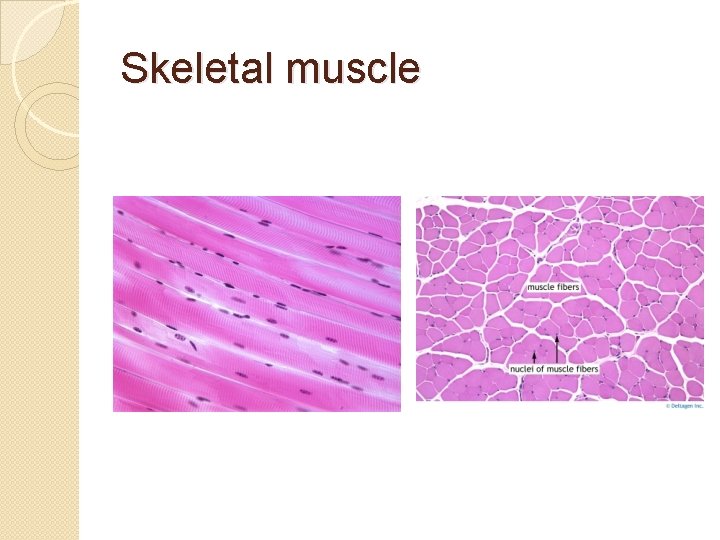
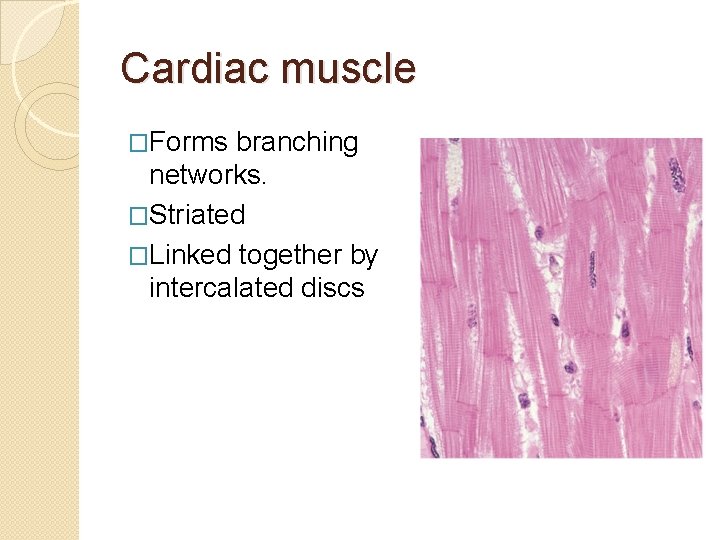
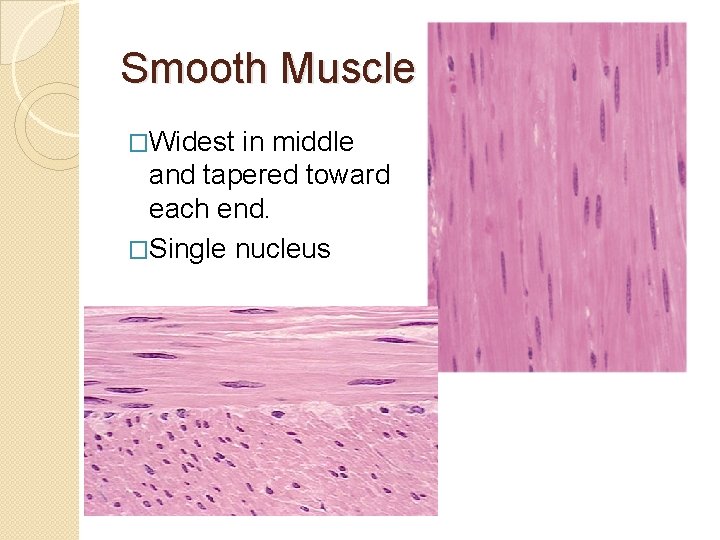
Muscle Types �Skeletal – attached to bone by tendons is responsible for voluntary movements. �Cardiac- located in heart �Smooth- located in the walls of internal organs, blood vessels, and airways
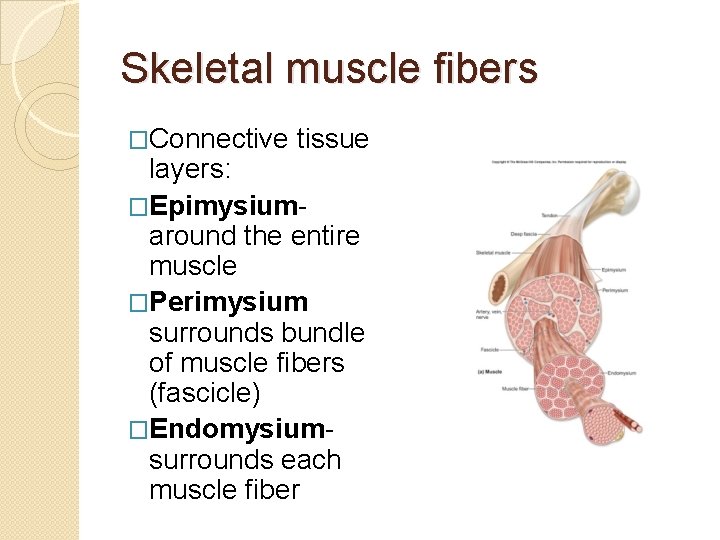
Skeletal muscle fibers �Connective tissue layers: �Epimysiumaround the entire muscle �Perimysium surrounds bundle of muscle fibers (fascicle) �Endomysiumsurrounds each muscle fiber
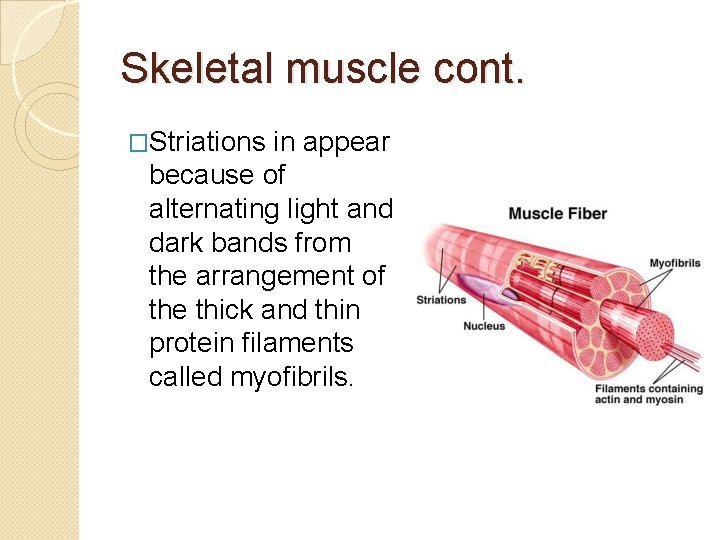
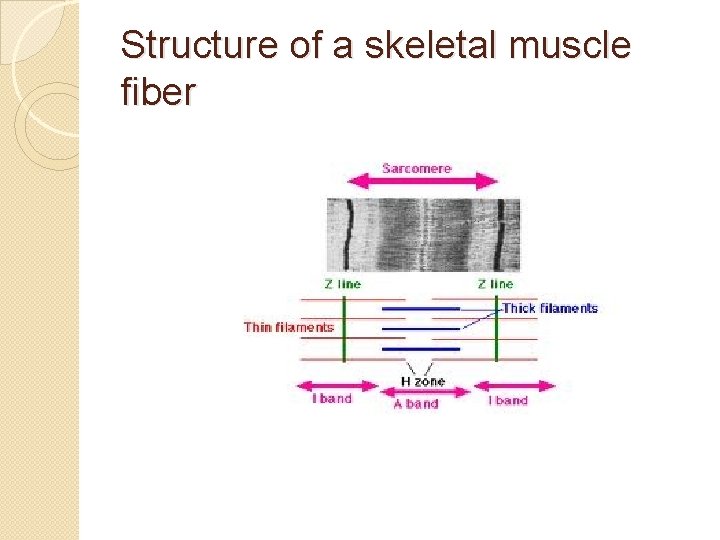
Skeletal muscle cont. �Striations in appear because of alternating light and dark bands from the arrangement of the thick and thin protein filaments called myofibrils.
Skeletal muscle
Cardiac muscle �Forms branching networks. �Striated �Linked together by intercalated discs
Smooth Muscle �Widest in middle and tapered toward each end. �Single nucleus
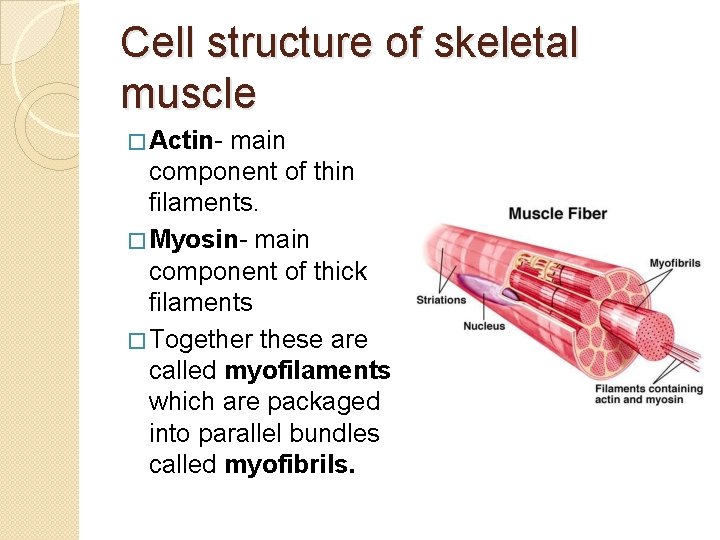
Cell structure of skeletal muscle � Actin- main component of thin filaments. � Myosin- main component of thick filaments � Together these are called myofilaments which are packaged into parallel bundles called myofibrils.
Structure of a skeletal muscle fiber
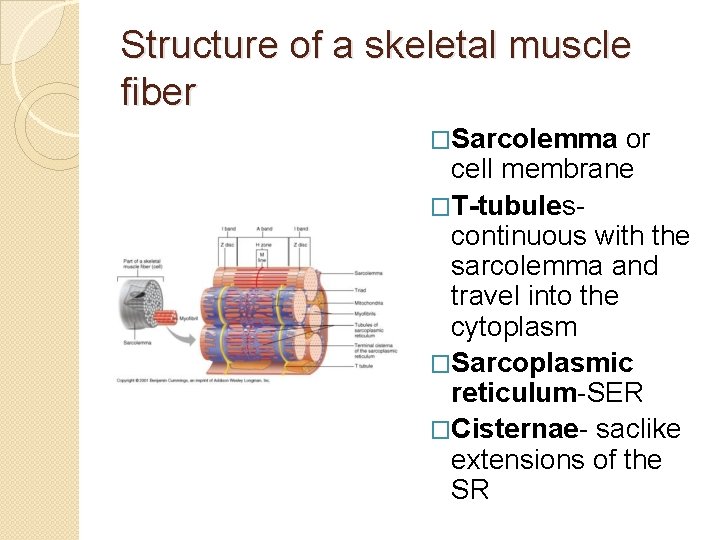
Structure of a skeletal muscle fiber �Sarcolemma or cell membrane �T-tubulescontinuous with the sarcolemma and travel into the cytoplasm �Sarcoplasmic reticulum-SER �Cisternae- saclike extensions of the SR
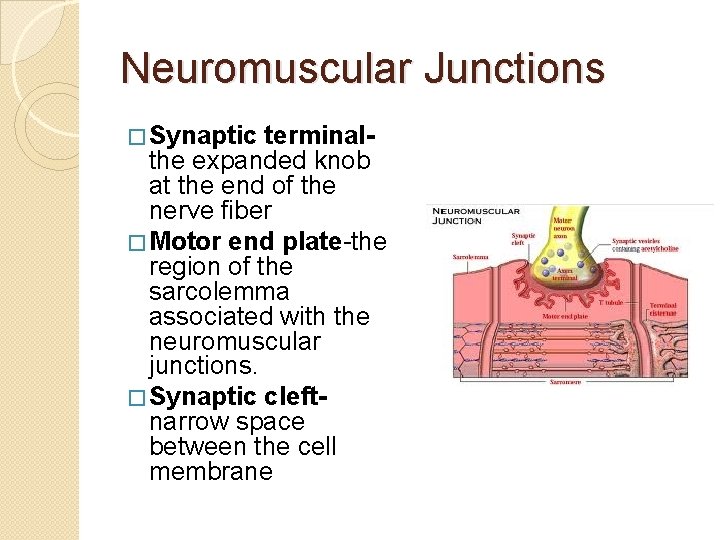
Neuromuscular Junctions � Synaptic terminalthe expanded knob at the end of the nerve fiber � Motor end plate-the region of the sarcolemma associated with the neuromuscular junctions. � Synaptic cleftnarrow space between the cell membrane
The End �View the different types of muscle under the microscope. �Be able to ID the various terms on models, pictures or on slides