
Executive Powers of the President Delegated Expressed Powers
- Slides: 20
Executive Powers of the President
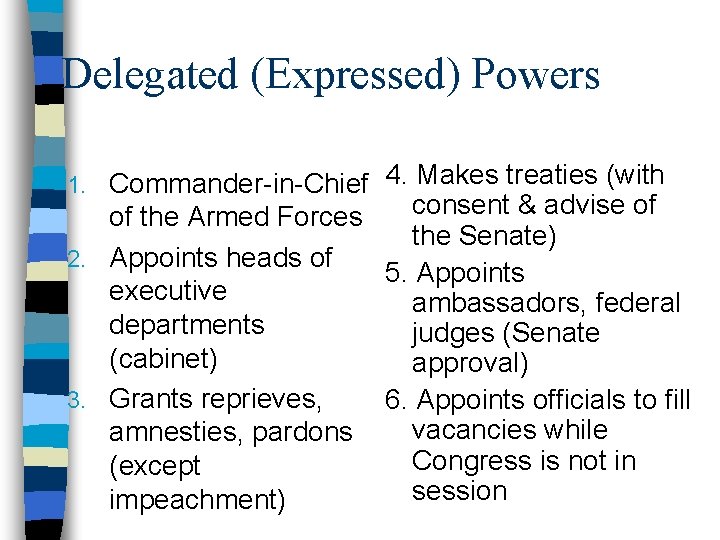
Delegated (Expressed) Powers Commander-in-Chief 4. Makes treaties (with consent & advise of of the Armed Forces the Senate) 2. Appoints heads of 5. Appoints executive ambassadors, federal departments judges (Senate (cabinet) approval) 3. Grants reprieves, 6. Appoints officials to fill vacancies while amnesties, pardons Congress is not in (except session impeachment) 1.
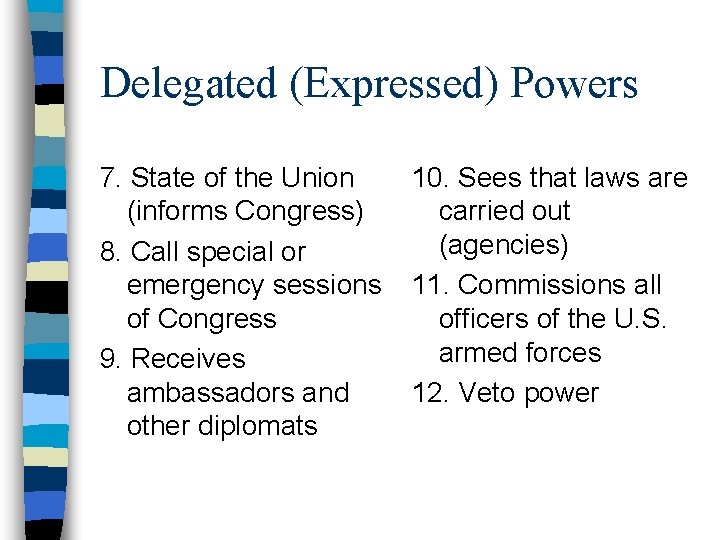
Delegated (Expressed) Powers 7. State of the Union (informs Congress) 8. Call special or emergency sessions of Congress 9. Receives ambassadors and other diplomats 10. Sees that laws are carried out (agencies) 11. Commissions all officers of the U. S. armed forces 12. Veto power
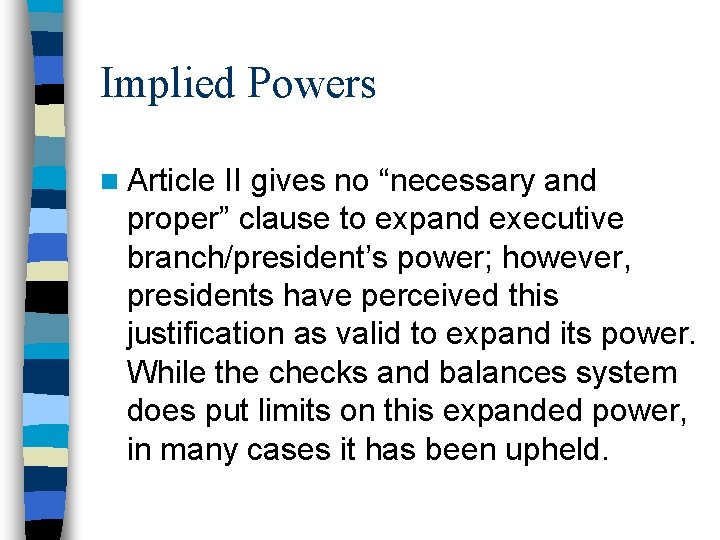
Implied Powers n Article II gives no “necessary and proper” clause to expand executive branch/president’s power; however, presidents have perceived this justification as valid to expand its power. While the checks and balances system does put limits on this expanded power, in many cases it has been upheld.
Example: Military Intervention n Since 1801, presidents have initiated armed conflicts abroad over 200 times without congressional declaration of war. n The expansion of power here comes under the delegated power as commander-in-chief
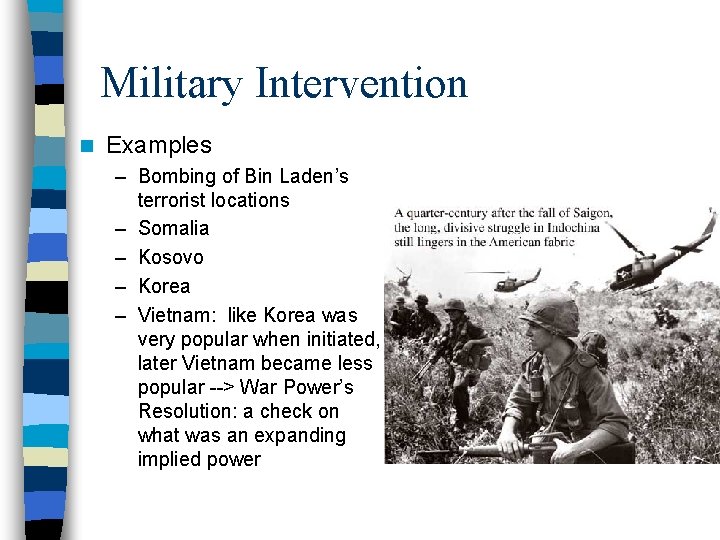
Military Intervention n Examples – Bombing of Bin Laden’s terrorist locations – Somalia – Kosovo – Korea – Vietnam: like Korea was very popular when initiated, later Vietnam became less popular --> War Power’s Resolution: a check on what was an expanding implied power
Example: Emergency Powers This is like the president acting as commander-in-chief, but in domestic situations n Example: Lincoln and the Civil War n – Congress was adjourned in April 1861 when war began and without calling an emergency session for a declaration of war, he instead began raising a volunteer army and blockaded southern ports without congressional authorization – Martial law in the West, suspended writ of habeas corpus – He justifies it as an emergency to save the Constitution and the Union
Emergency Powers n Truman and the Steel Mills: – Executive order to take over the mills during the Korean War – Rejected by the Supreme Court n It seems that if the action by the president is popular, Congress isn’t too bothered by it, but if the presidential action isn’t popular, Congress or the Supreme Court can step in through the checks and balances system as it did with Truman.
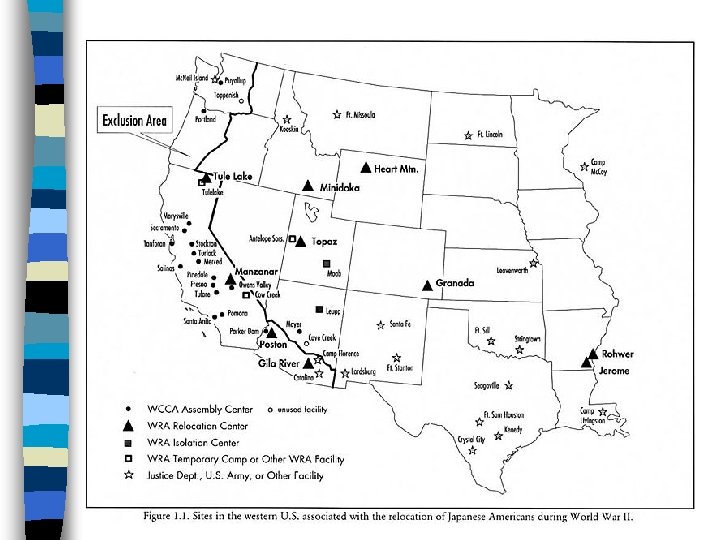
Executive Orders and Executive Agreements n Executive Order: a directive to one or more executive agency by the President. Usually deals with domestic issues. n Example: Truman (1948): banned racial segregation in the armed forces n FDR (1942): Japanese interment n Reagan (1980 s): trade embargo with Nicaragua
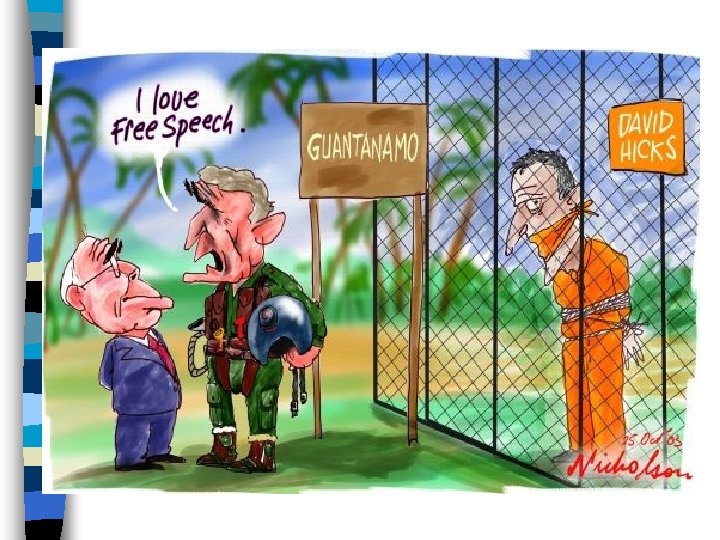
Bush’s Executive Orders Restricted access to sensitive programs such as the National Security Agency’s warrantless surveillance operation= Senate Intelligence Committee voted 9 -6 to be notified n “Signing statement” to reverse the ban on torture n 750+ “signing statements” that state his interpretation of new laws and sometimes declare that they infringe on his presidential powers n Guantanamo military tribunals= Supreme Court ruled (June 29, 2006) that Bush overstepped his authority n
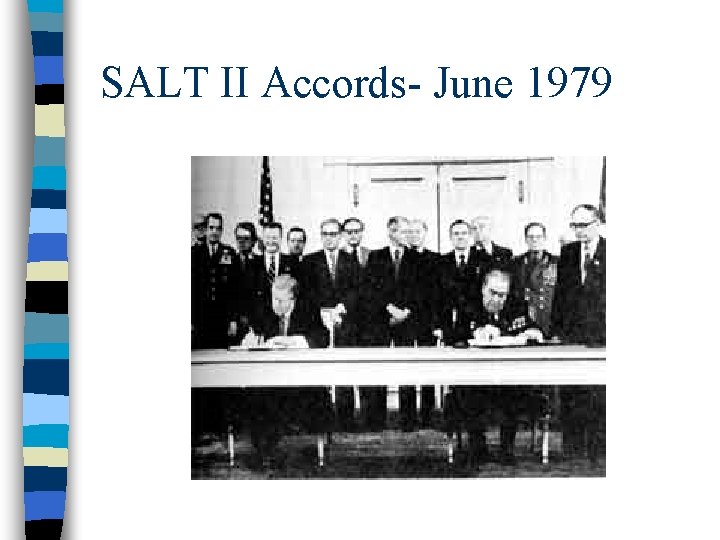
Executive Agreements n n n Similar to a treaty- an agreement between the president and the head of another country, but does not require Senate approval Carter (late 1970 s): committed U. S. involvement to settle disputes between Israel & Egypt if either violated the treaty SALT I & II Clinton (1998): peace pact between PLO & Israel, CIA involved Thousands of these
SALT II Accords- June 1979
Impoundments n President may refuse to send the money appropriated by Congress for a specific program or project n Jefferson, Grant, Wilson, FDR, & Nixon have all used it at one time n Gives them the use of a line-item veto in a sense n Usual argument or justificationpresidential duty in executing laws “includes obligation to prevent waste” (budget)
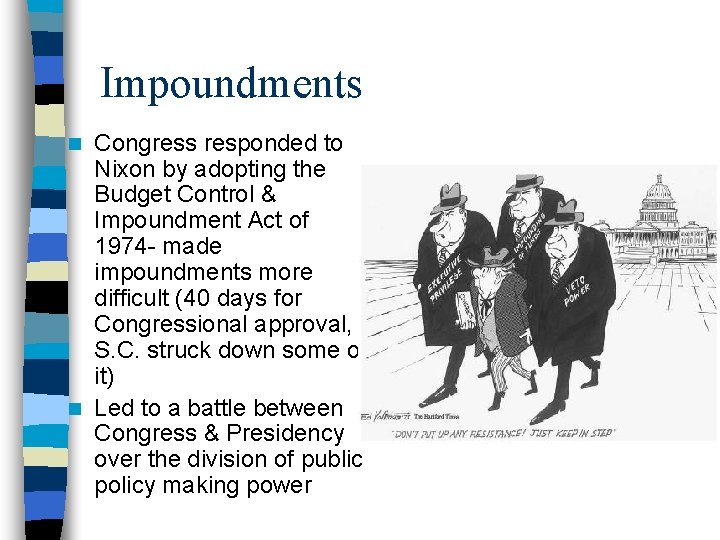
Impoundments Congress responded to Nixon by adopting the Budget Control & Impoundment Act of 1974 - made impoundments more difficult (40 days for Congressional approval, S. C. struck down some of it) n Led to a battle between Congress & Presidency over the division of public policy making power n
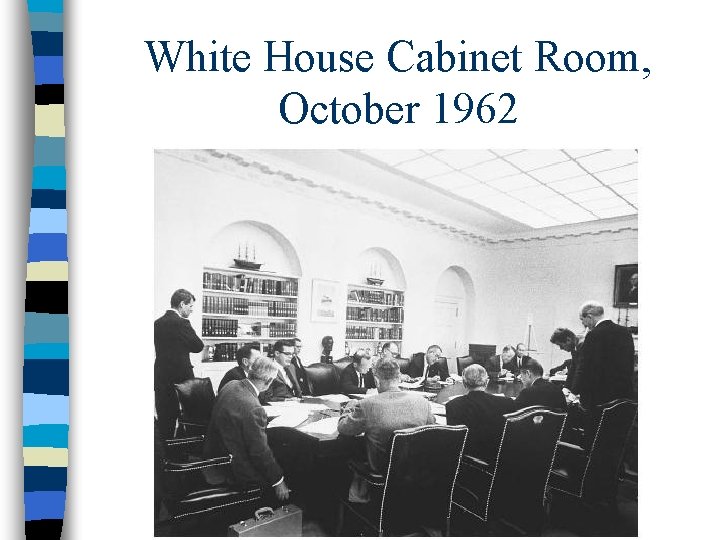
Executive Privilege Right of the President to deny information requested by other branches, usually citing security reasons n Open discussions in Cabinet meetings and other strategic areas n Nixon tried to use it when subpoenaed for the tapes of White House meetings during Watergate, but the Supreme Court rejected this assertion of executive privilege n Example: Cuban Missile Crisis n
White House Cabinet Room, October 1962
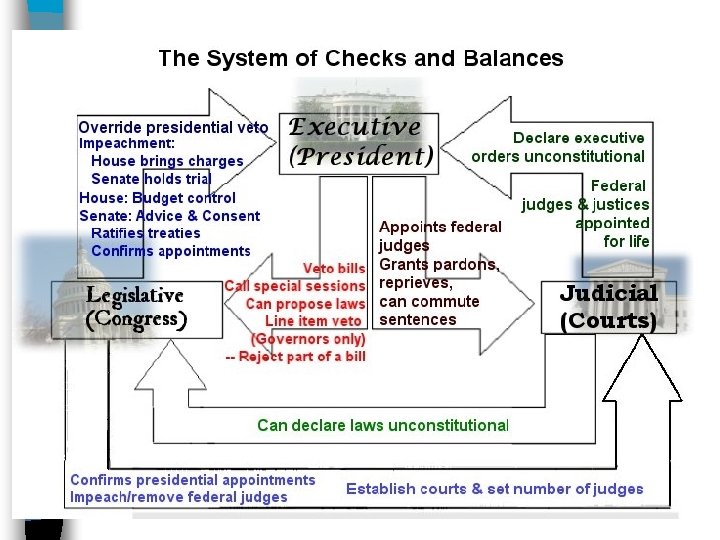
Denied Powers n Not explicitly enumerated in Article II of Constitution n But come from the limitations from the other branches provided by the checks and balances system n Congress: Impeachment, overrides vetoes, investigations, approvals n Supreme Court: judicial review n Political checks: public opinion, media attention, popularity