
Excretory Systems Emily BeaumontMc Allen Aims and Objectives
Excretory Systems Emily Beaumont-Mc. Allen
Aims and Objectives • Aim: To recognise the structure and function of the excretory systems within a mammalian body. • Ob 1: Identify the structures involved in excreting waste from the body. • Ob 2: Explain how the structure relates to the function of the organs involved in excreting waste from the body. • Ob 3: Compare the mammalian excretory system to another animal excretory system.
Excretory System Functions • Regulates water balance and other substances in blood • Eliminates cellular (metabolic) wastes • Metabolism is the name given to all the chemical reactions that keep an animal alive • These chemical reactions produce waste products therefore metabolic waste.
Excretory System • There are FOUR main types of metabolic waste produced by animals (can you name them? ) – – Water Carbon dioxide Salts Urea And… • There are FOUR excretory organs in the body… (Can you name them) – Liver (Slightly different from the rest as it is one of the main organs that produces one of the metabolic waste products) – Lungs – Skin – Kidneys Task: Link up the waste products with the correct organ, hint it isn’t one each.

The Lungs • Carbon dioxide moves out of the cells, into the bloodstream and is brought to the lungs • Carbon dioxide is excreted when the animal breaths out

The Skin • Sweat is made up of water, salts and urea • Sweating performs two functions: • Cools the body • Excretes metabolic wastes • Waste moves from the blood into the sweat glands • When body temperature rises, waste is released from the gland moves out of the body through pores
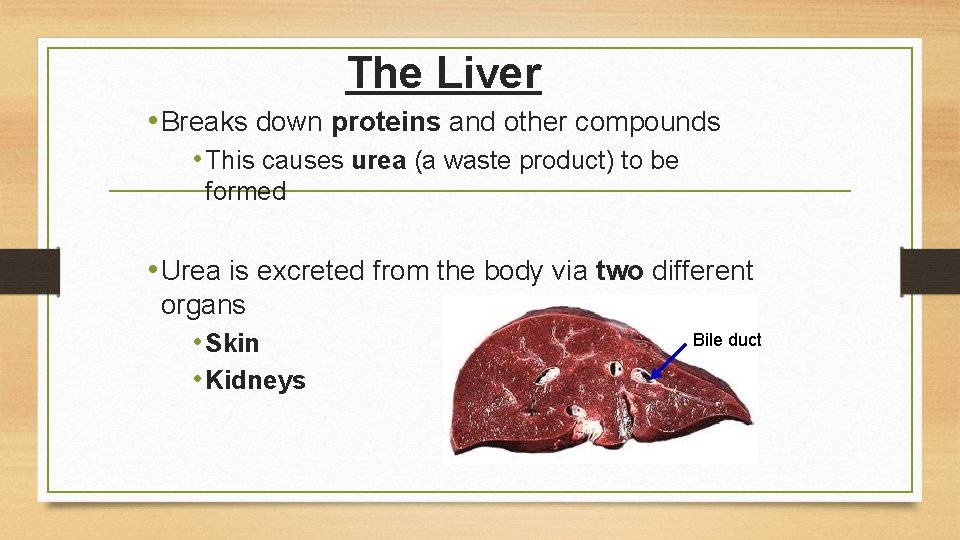
The Liver • Breaks down proteins and other compounds • This causes urea (a waste product) to be formed • Urea is excreted from the body via two different organs • Skin • Kidneys Bile duct
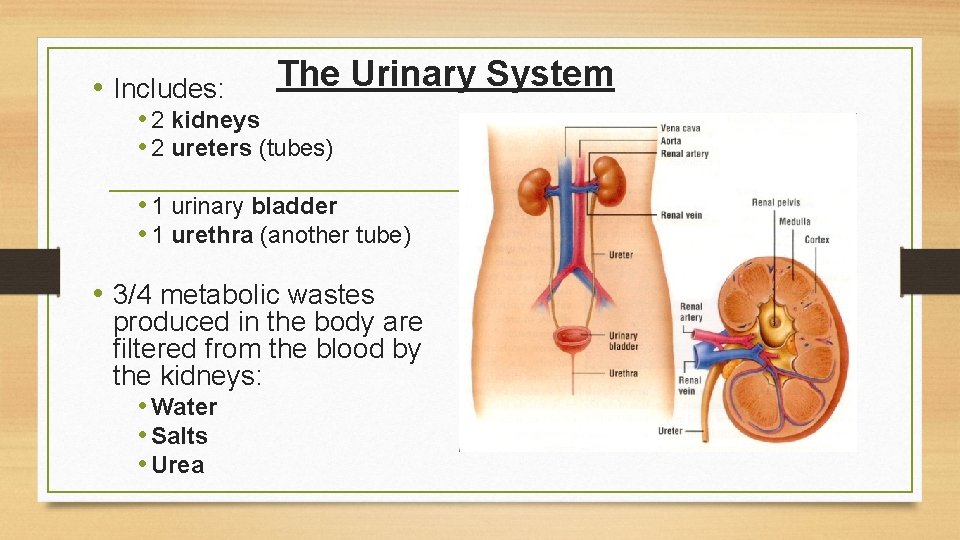
• Includes: The Urinary System • 2 kidneys • 2 ureters (tubes) • 1 urinary bladder • 1 urethra (another tube) • 3/4 metabolic wastes produced in the body are filtered from the blood by the kidneys: • Water • Salts • Urea
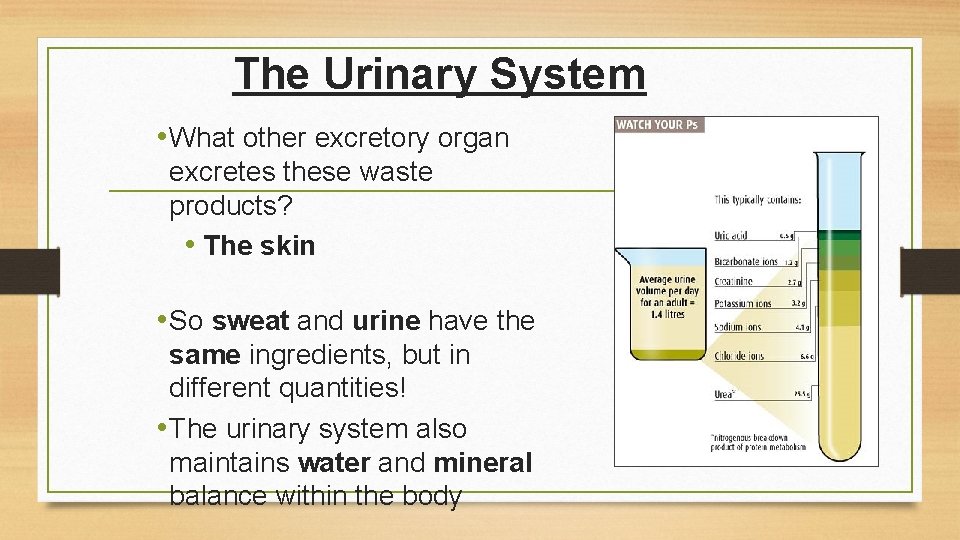
The Urinary System • What other excretory organ excretes these waste products? • The skin • So sweat and urine have the same ingredients, but in different quantities! • The urinary system also maintains water and mineral balance within the body
Questions Skin Lungs Liver Urinary system Which one… Excretes salt from its surface Skin Responsible for excreting carbon dioxide Lungs Produces urea Liver Removes body heat, water and other wastes Skin Contains two tubes called ureters Urinary System
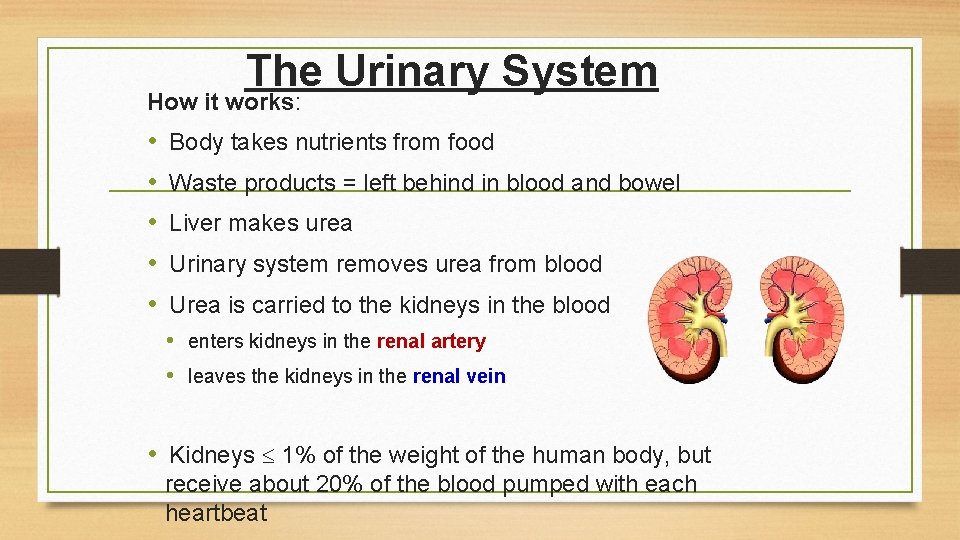
The Urinary System How it works: • • • Body takes nutrients from food Waste products = left behind in blood and bowel Liver makes urea Urinary system removes urea from blood Urea is carried to the kidneys in the blood • enters kidneys in the renal artery • leaves the kidneys in the renal vein • Kidneys 1% of the weight of the human body, but receive about 20% of the blood pumped with each heartbeat
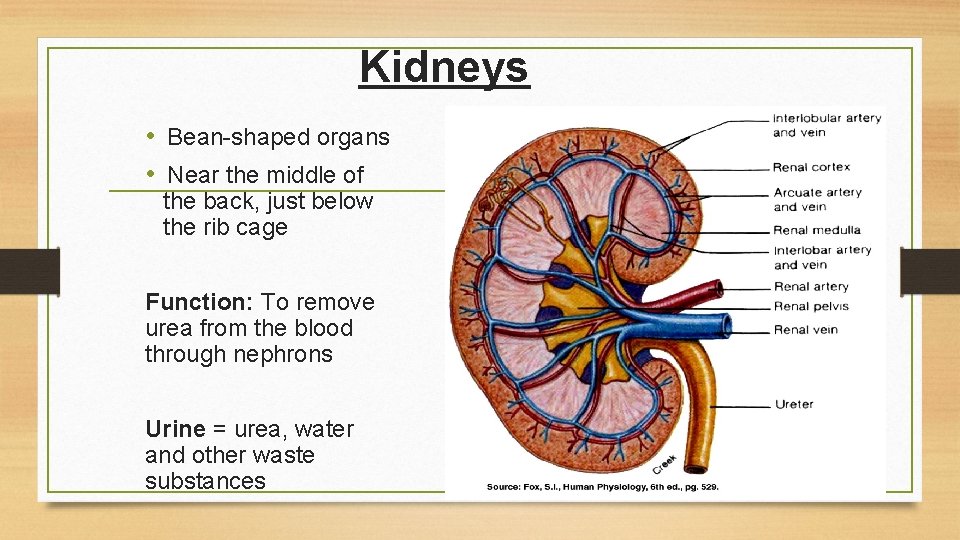
Kidneys • Bean-shaped organs • Near the middle of the back, just below the rib cage Function: To remove urea from the blood through nephrons Urine = urea, water and other waste substances
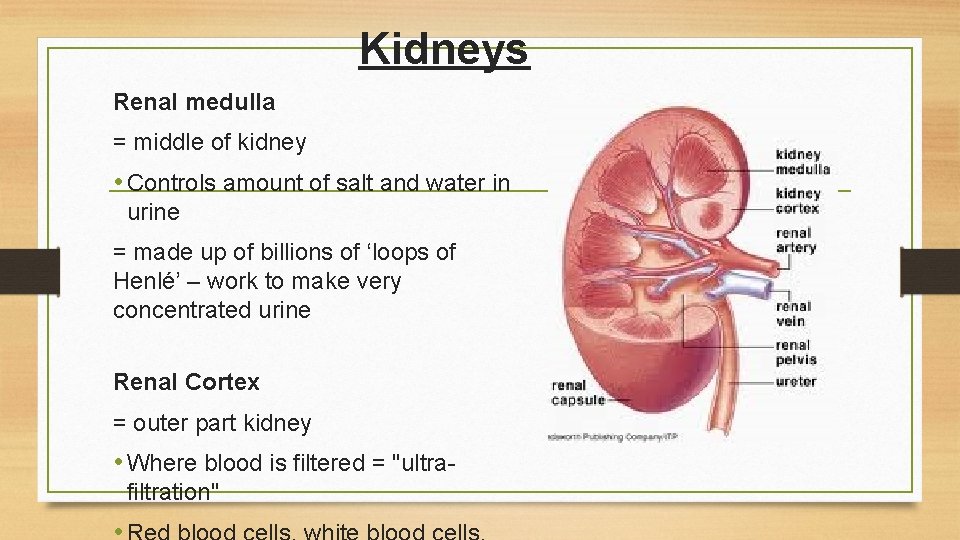
Kidneys Renal medulla = middle of kidney • Controls amount of salt and water in urine = made up of billions of ‘loops of Henlé’ – work to make very concentrated urine Renal Cortex = outer part kidney • Where blood is filtered = "ultrafiltration"
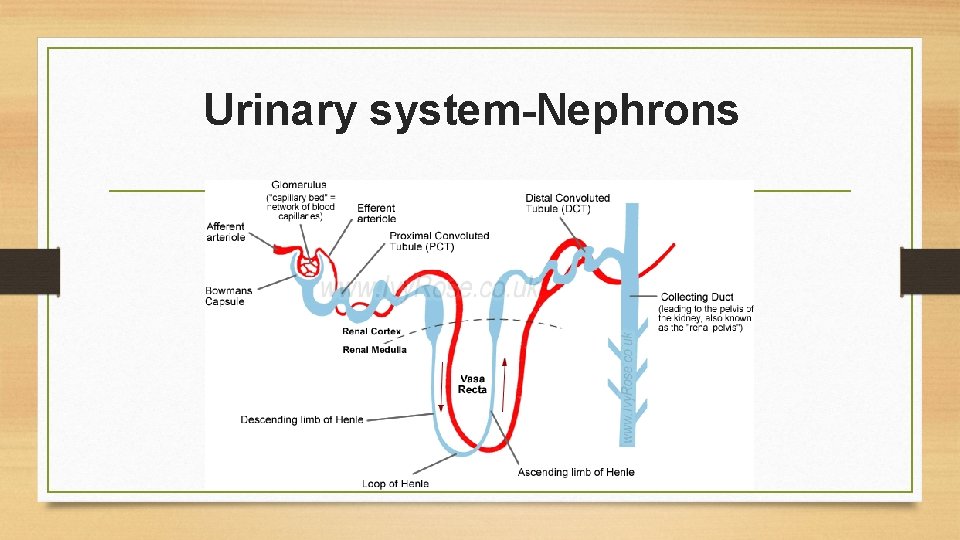
Urinary system-Nephrons
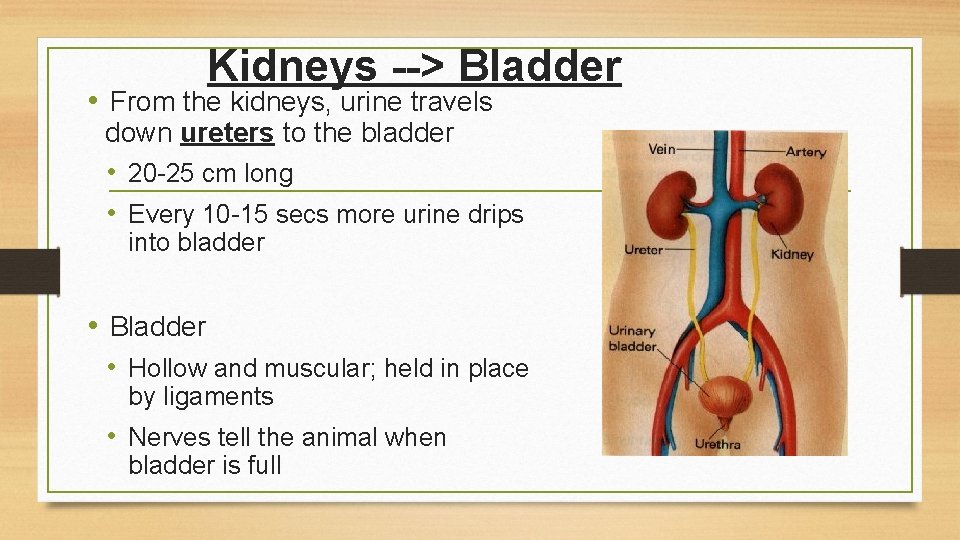
Kidneys --> Bladder • From the kidneys, urine travels down ureters to the bladder • 20 -25 cm long • Every 10 -15 secs more urine drips into bladder • Bladder • Hollow and muscular; held in place by ligaments • Nerves tell the animal when bladder is full
- Slides: 15