
EXCRETORY SYSTEM Specific learning objectives Kidney as a
EXCRETORY SYSTEM
Specific learning objectives • • • Kidney as a excretory organ Functions of kidney Functional unit of kidney What is filtration membrane? Types of nephrons
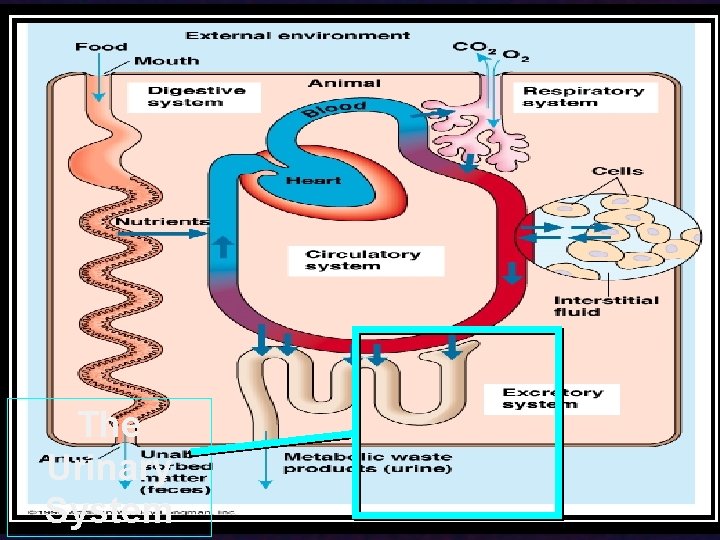
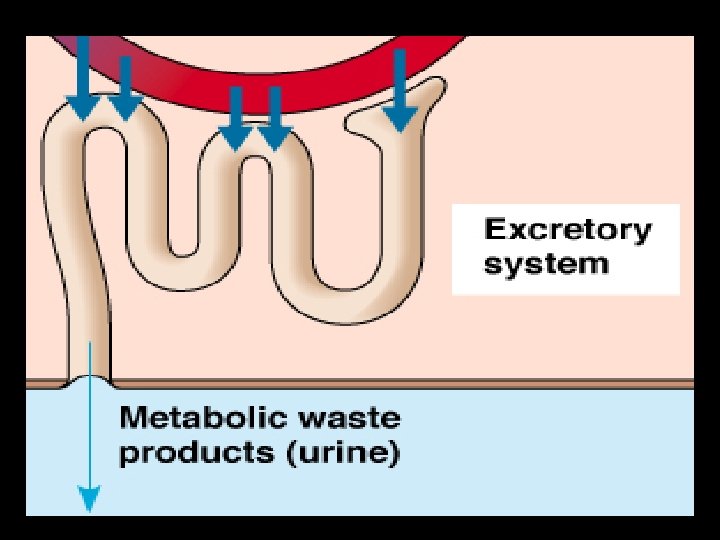
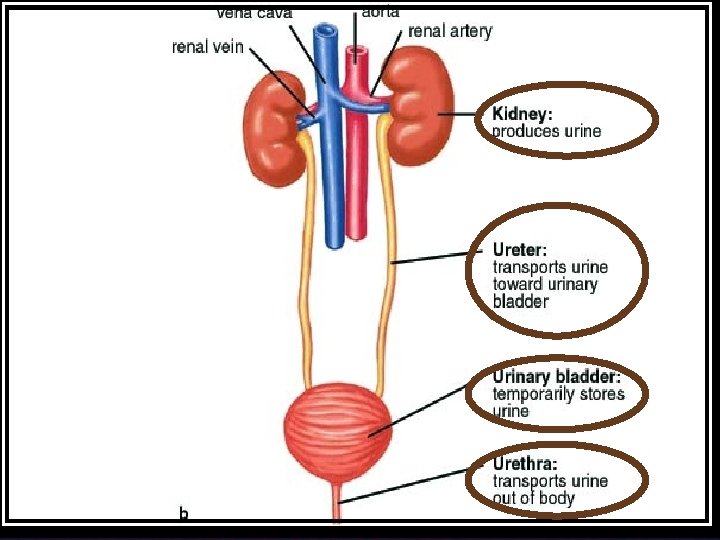
The Urinary System
FUNCTIONS OF KIDNEY 1. Excretory 2. Homeostatic, §Water balance §Electrolyte balance §Blood pressure regulation §Acid base balance 3. Endocrine. o. Renin o. Erythropoietin o 1, 25 -dihydroxycholecalciferol
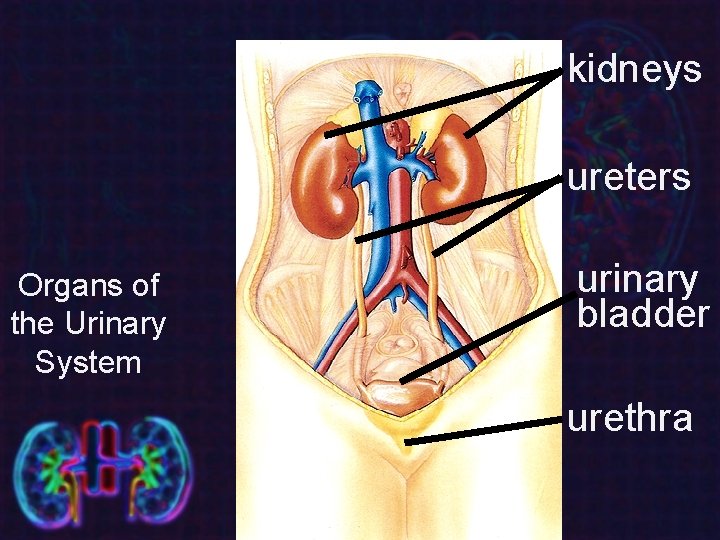
kidneys ureters Organs of the Urinary System urinary bladder urethra
FUNCTIONS OF KIDNEY 1. Excretory 2. Homeostatic §Water balance §Electrolyte balance §Blood pressure regulation §Acid base balance 3. Endocrine. § Renin § Erythropoietin & thrombopoitin § 1, 25 -dihydroxycholecalciferol
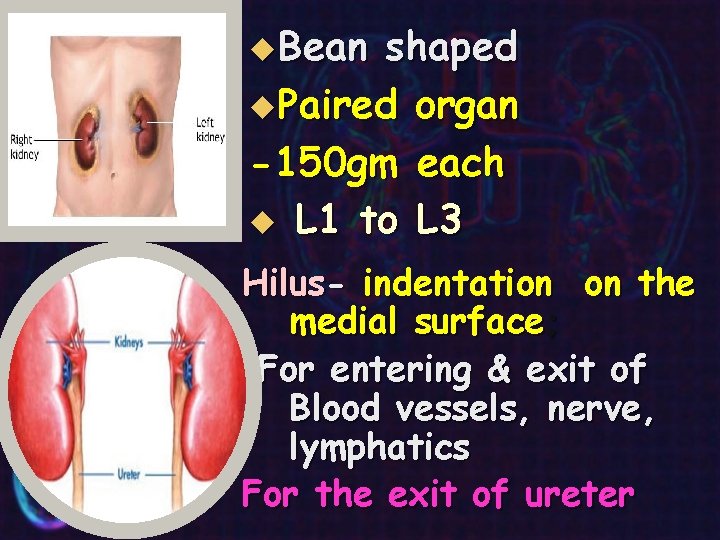
u. Bean shaped u. Paired organ -150 gm each u L 1 to L 3 Hilus- indentation on the medial surface; For entering & exit of Blood vessels, nerve, lymphatics For the exit of ureter
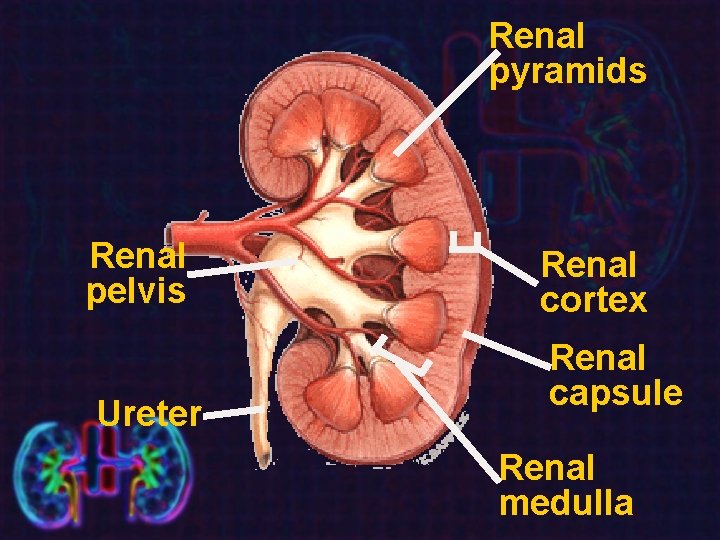
Renal pyramids Renal pelvis Ureter Renal cortex Renal capsule Renal medulla
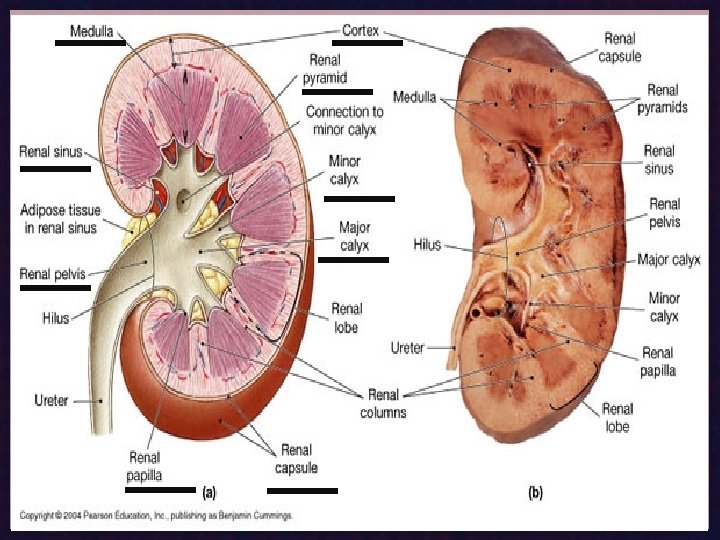
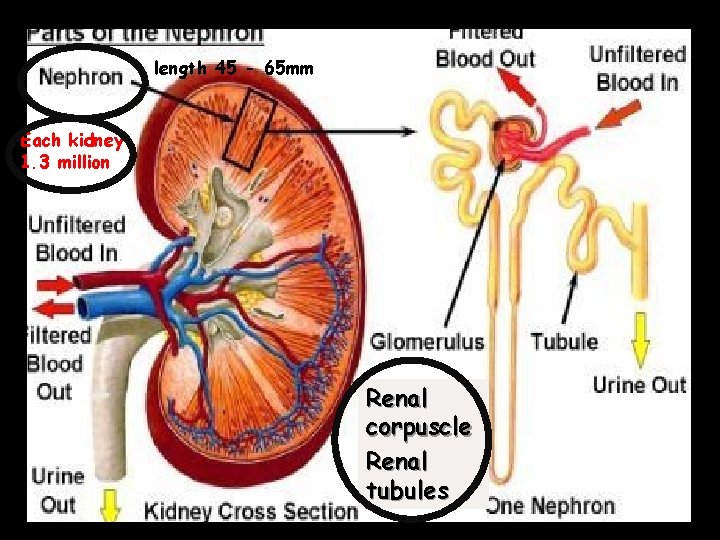
length 45 - 65 mm Each kidney 1. 3 million Renal corpuscle Renal tubules
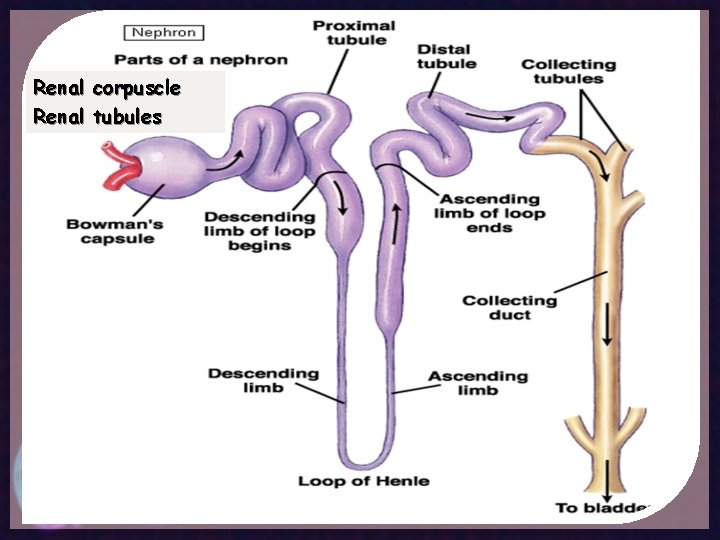
Renal corpuscle Renal tubules
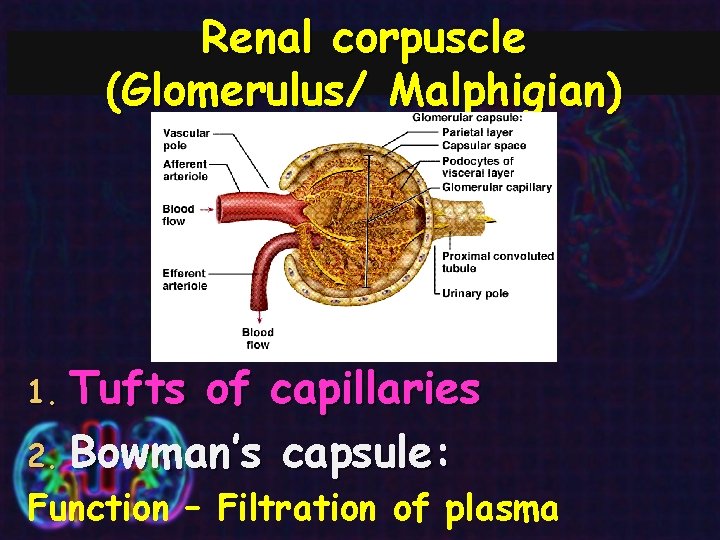
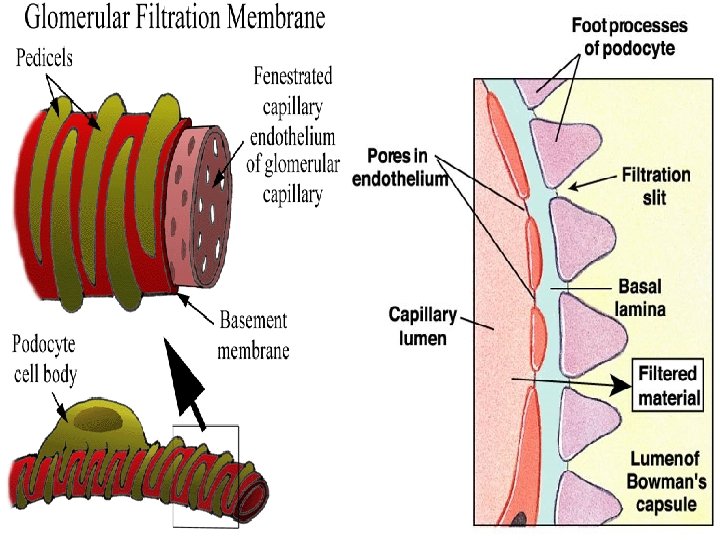
Renal corpuscle (Glomerulus/ Malphigian) 1. Tufts of capillaries 2. Bowman’s capsule: Function – Filtration of plasma
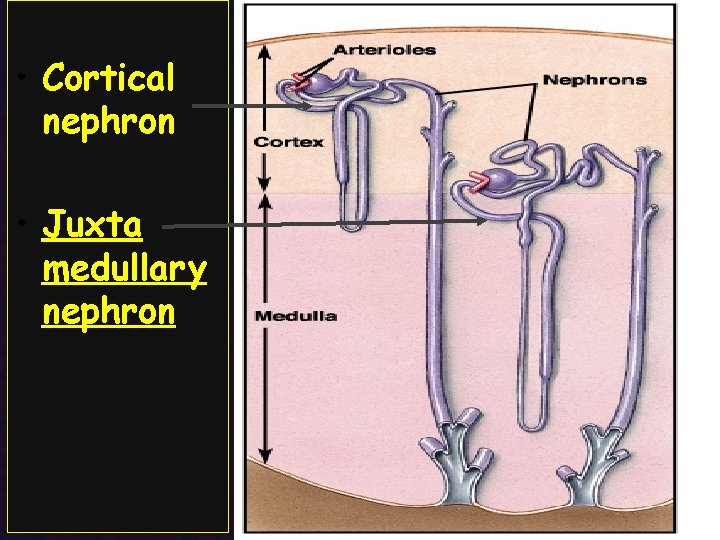
• Cortical nephron • Juxta medullary nephron
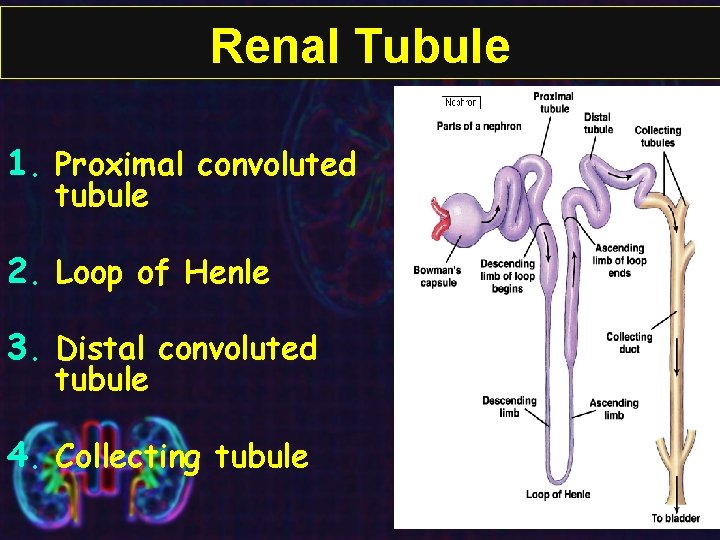
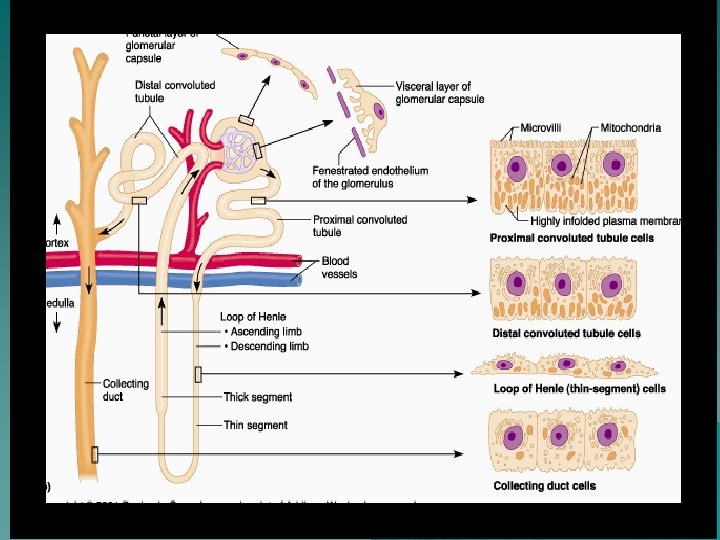
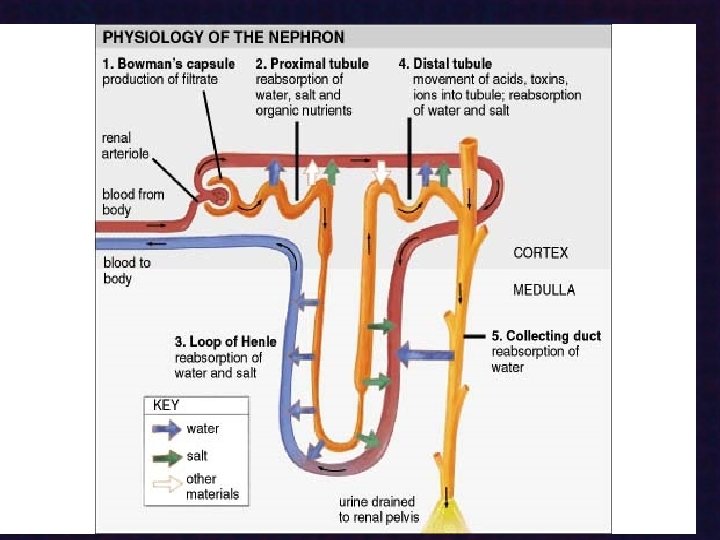
Renal Tubule 1. Proximal convoluted tubule 2. Loop of Henle 3. Distal convoluted tubule 4. Collecting tubule
Loop of Henle -Function Helps in concentration of urine u 20% of water & 25% of solutes reabsorbs u
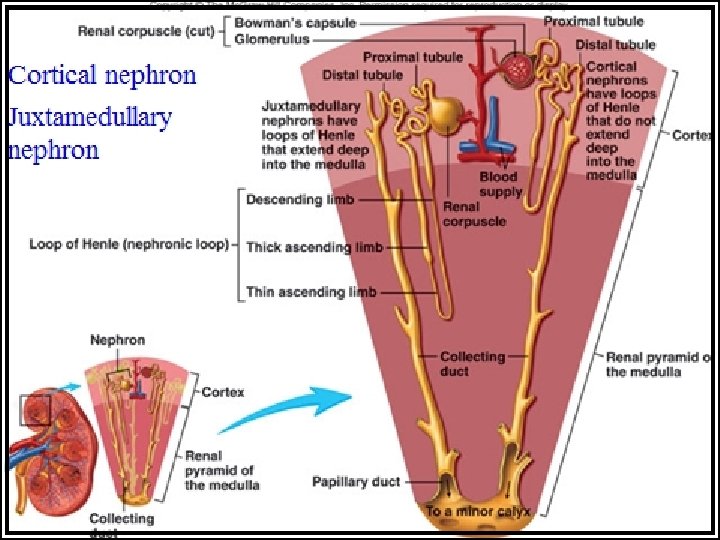
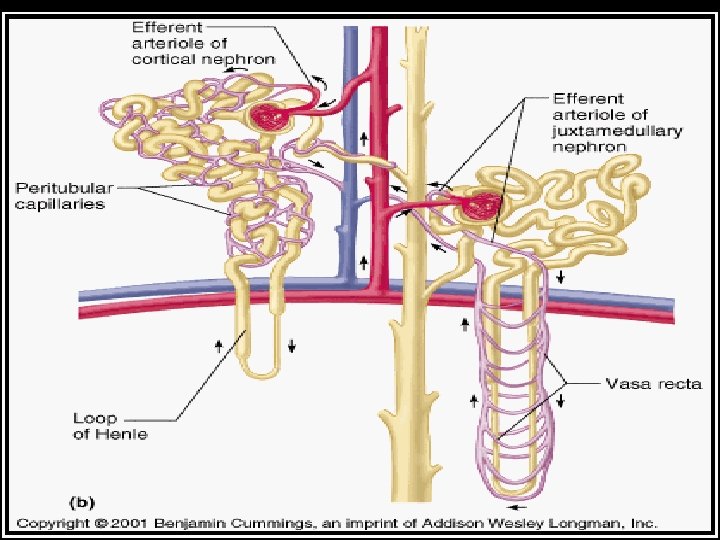
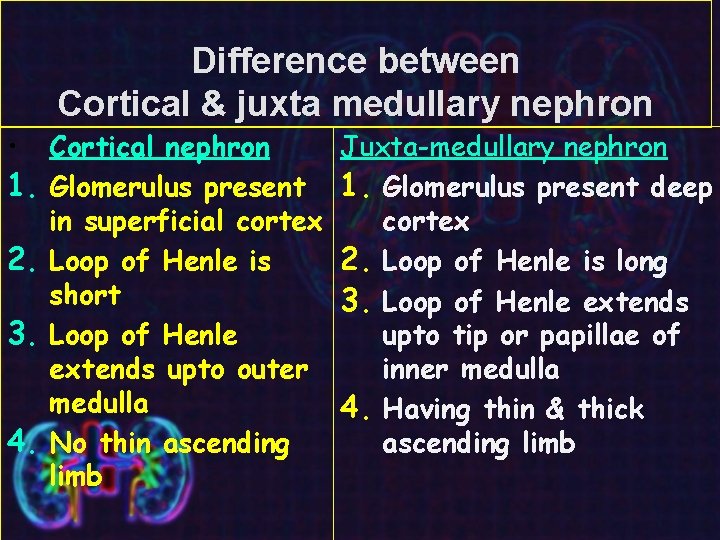
Difference between Cortical & juxta medullary nephron • 1. 2. 3. 4. Cortical nephron Glomerulus present in superficial cortex Loop of Henle is short Loop of Henle extends upto outer medulla No thin ascending limb Juxta-medullary nephron 1. Glomerulus present deep cortex 2. Loop of Henle is long 3. Loop of Henle extends upto tip or papillae of inner medulla 4. Having thin & thick ascending limb
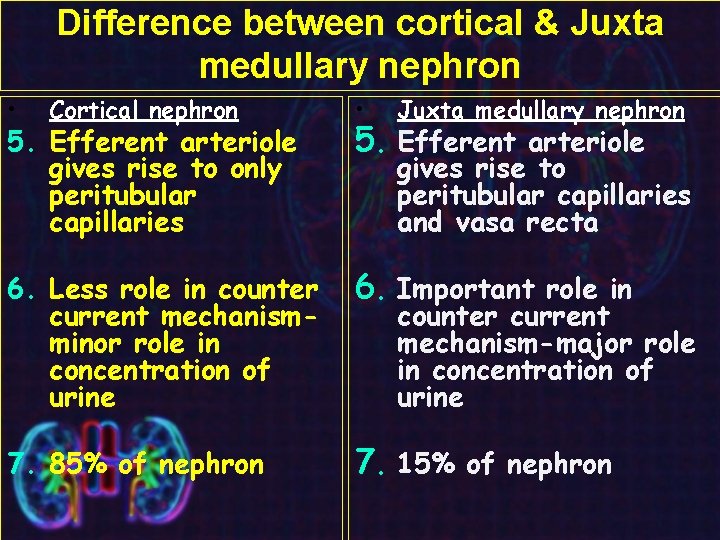
Difference between cortical & Juxta medullary nephron • Cortical nephron 5. Efferent arteriole gives rise to only peritubular capillaries • Juxta medullary nephron 5. Efferent arteriole gives rise to peritubular capillaries and vasa recta 6. Less role in counter current mechanismminor role in concentration of urine 6. Important role in 7. 85% of nephron 7. 15% of nephron counter current mechanism-major role in concentration of urine
Summary
References • Comprehensive Textbook of Medical physiology (Vol 2, 1 stedition) G K Pal • Text book of medical physiology (Vol 2, 6 thedition) A K Jain • Essentials of medical physiology (6 thedition) K Sembulingam and Prema Sembulingam • https: //www. researchgate. net/figure/Schematicrepresentation-of-the-nephron-There-are-two-typesof-nephrons-cortical_fig 1_5786096 • https: //www. shutterstock. com/imageillustration/nephron-types-labeled-147943901
THANK YOU
- Slides: 26