
Excretory System Part 1 Excretion Process that rids

- Slides: 12
Excretory System Part 1
Excretion Process that rids body of metabolic wastes: Preformed by: a) Skin b) Liver c) Lungs d) Kidney f) Intestines
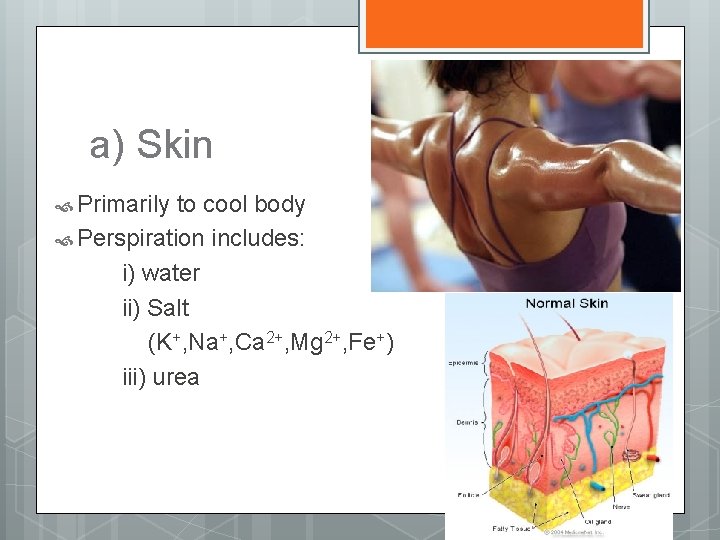
a) Skin Primarily to cool body Perspiration includes: i) water ii) Salt (K+, Na+, Ca 2+, Mg 2+, Fe+) iii) urea
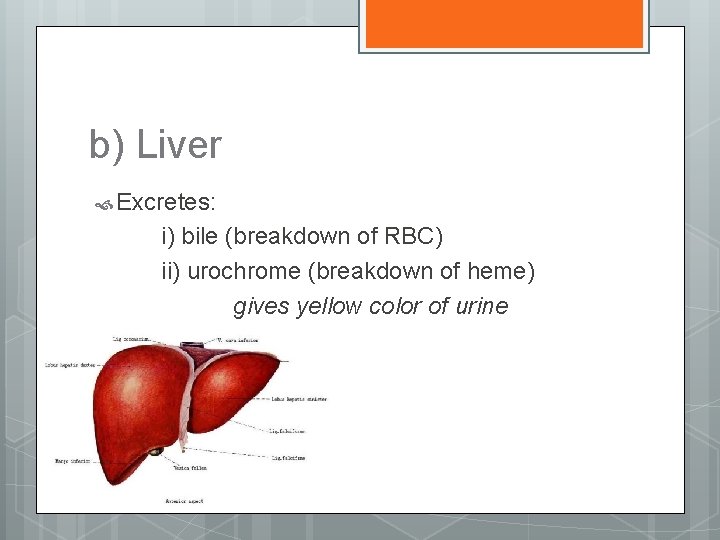
b) Liver Excretes: i) bile (breakdown of RBC) ii) urochrome (breakdown of heme) gives yellow color of urine
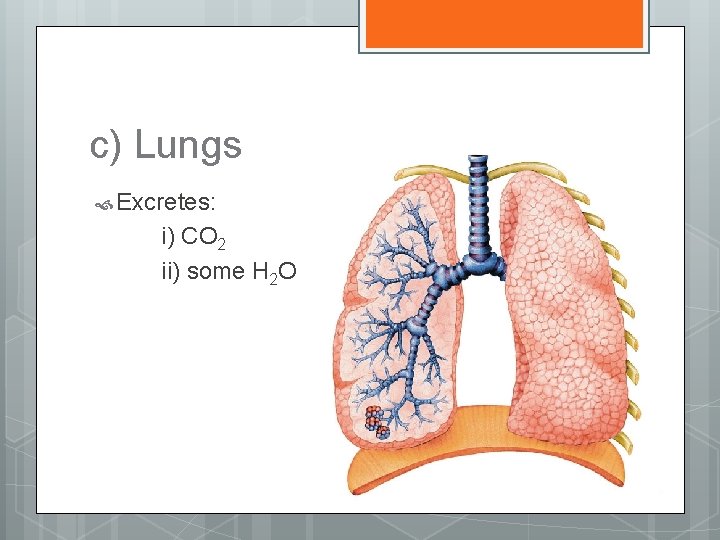
c) Lungs Excretes: i) CO 2 ii) some H 2 O
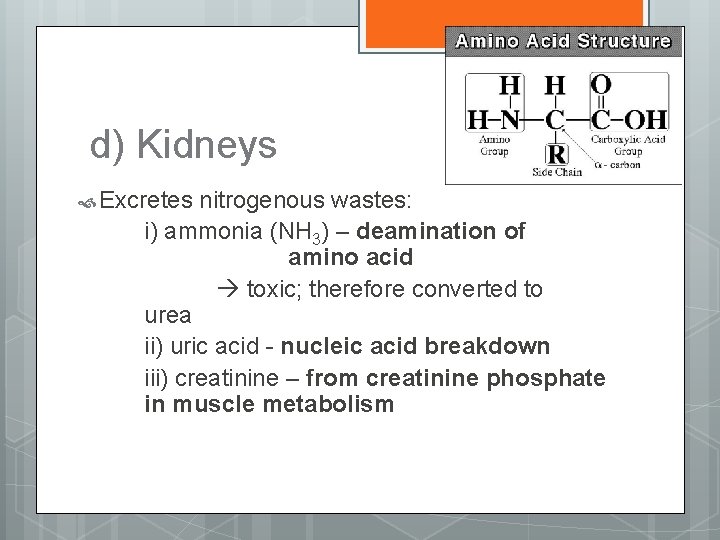
d) Kidneys Excretes nitrogenous wastes: i) ammonia (NH 3) – deamination of amino acid toxic; therefore converted to urea ii) uric acid - nucleic acid breakdown iii) creatinine – from creatinine phosphate in muscle metabolism
d) Kidneys Also excretes: i) ions ii) water iii) detoxified drugs (penicillin, histamines) Urine is composed mainly of urea (~3%), salts (~2%), and water (~95%)
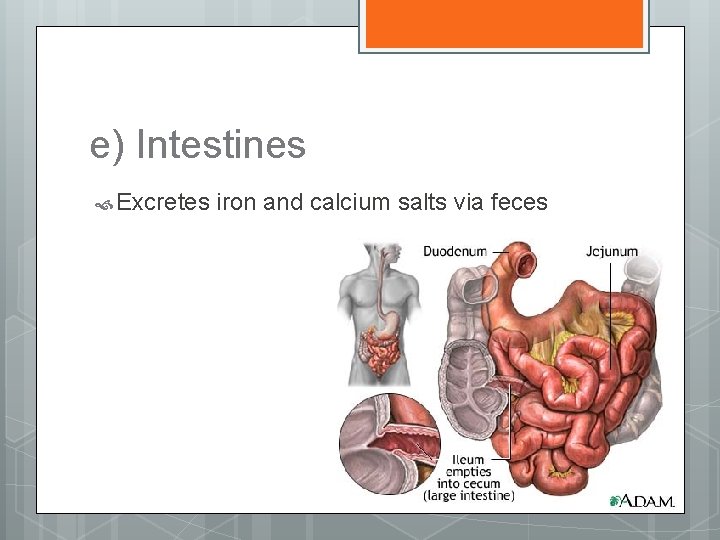
e) Intestines Excretes iron and calcium salts via feces
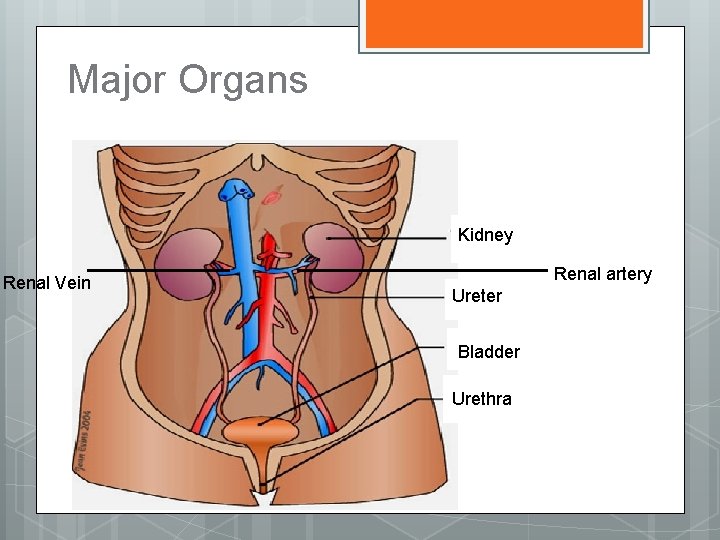
Major Organs Kidney Renal Vein Renal artery Ureter Bladder Urethra
Functions of major organ Organs Function Kidney - Removal of metabolic waste - Maintain blood volume - Maintain blood p. H Renal Artery - Brings blood to kidneys Renal Vein - Brings blood away from kidneys Ureter - 25 cm tube from kidney to bladder via peristalsis Bladder - Hold up to 600 m. L – 1000 m. L of urine - Hollow and muscular Urethra - Tube carrying urine out from bladder - ♀ ~1” long (carries urine only) - ♂ ~ 6” long (carries semen and urine)
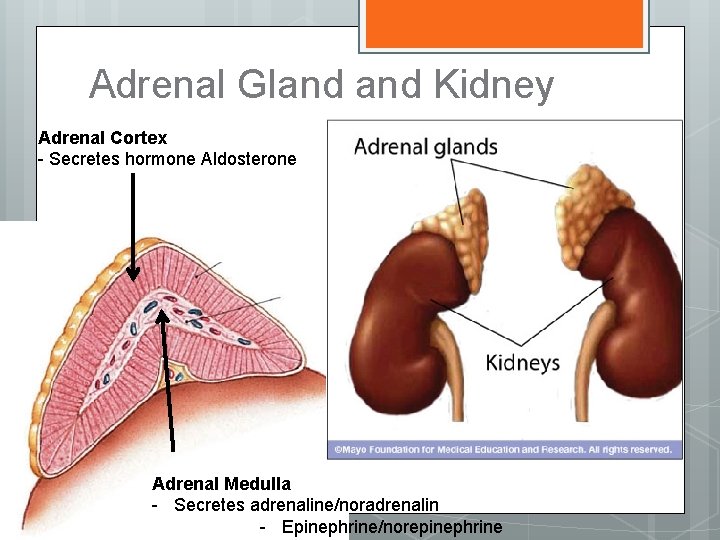
Adrenal Gland Kidney Adrenal Cortex - Secretes hormone Aldosterone Adrenal Medulla - Secretes adrenaline/noradrenalin - Epinephrine/norepinephrine
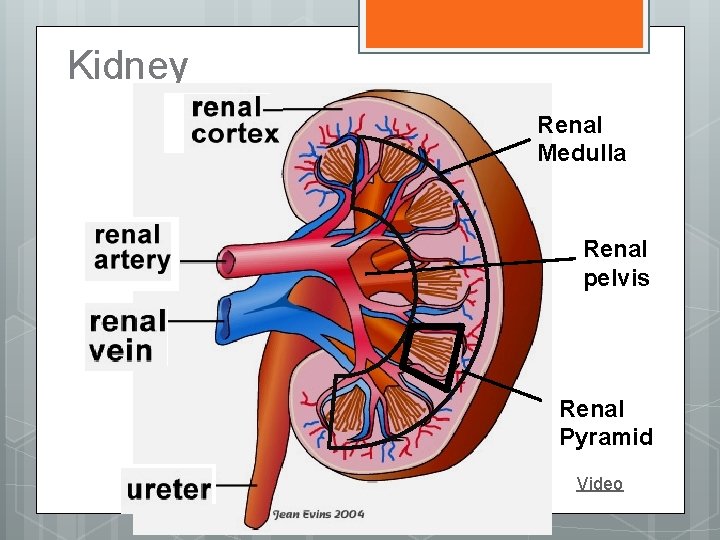
Kidney Renal Medulla Renal pelvis Renal Pyramid Video