
EXCRETION Excretion n Process by which metabolic wastes
EXCRETION
Excretion n Process by which metabolic wastes and excess substances are removed from an organism n Excretory wastes are produced at end of metabolism (must come from cells)
The Excretory System Major Wastes n n CO 2 H 2 O Nitrogenous Waste Mineral Salt Major Organs n n Liver Lungs Skin Kidneys (Urinary System)
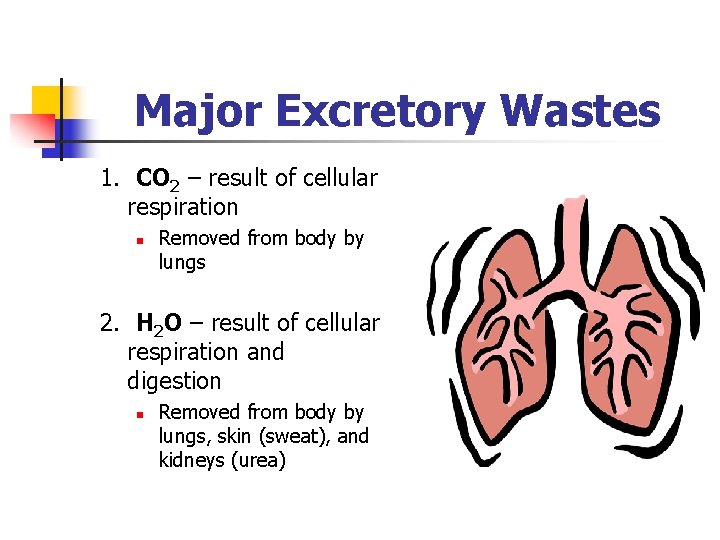
Major Excretory Wastes 1. CO 2 – result of cellular respiration n Removed from body by lungs 2. H 2 O – result of cellular respiration and digestion n Removed from body by lungs, skin (sweat), and kidneys (urea)
Major Excretory Wastes 3. Nitrogenous Waste – result of breakdown of amino acids (from proteins) that take the form of ammonia, urea, or uric acid n Removed from body by skin (sweat), and kidneys (urine)
Major Excretory Wastes 4. Mineral Salts – produced during normal metabolism n n Removed from body by skin (sweat) and kidneys (urine) FECES is NOT a metabolic waste because it is unabsorbed and undigested nutrients that have never entered the cells!
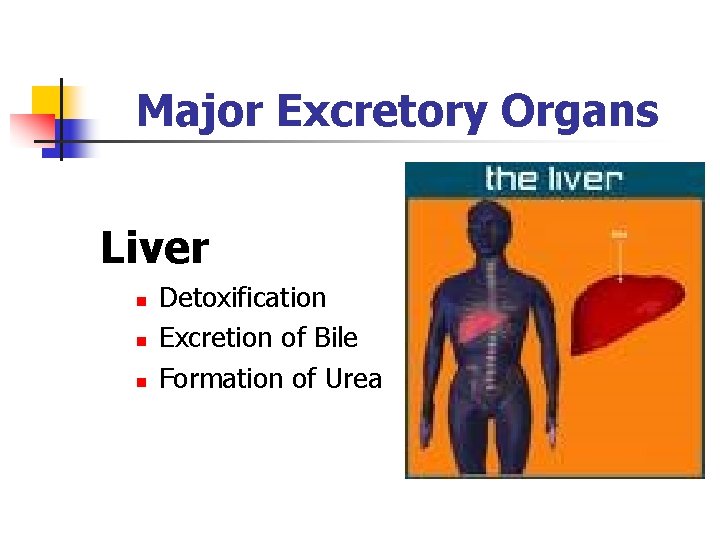
Major Excretory Organs Liver n n n Detoxification Excretion of Bile Formation of Urea
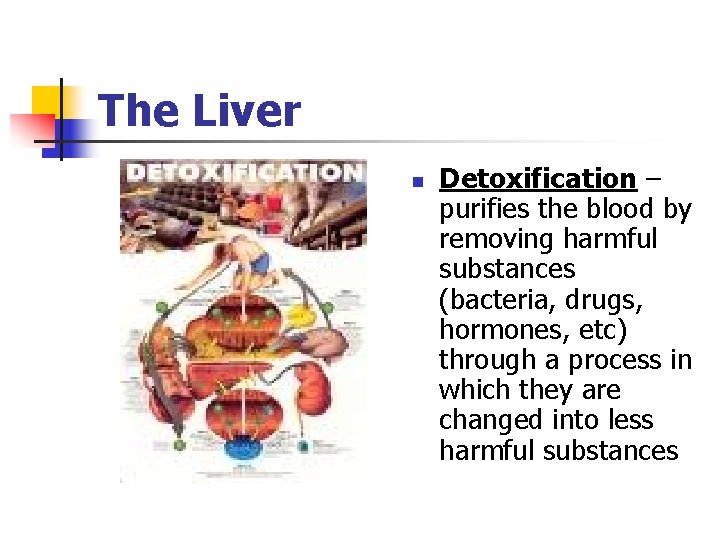
The Liver n Detoxification – purifies the blood by removing harmful substances (bacteria, drugs, hormones, etc) through a process in which they are changed into less harmful substances
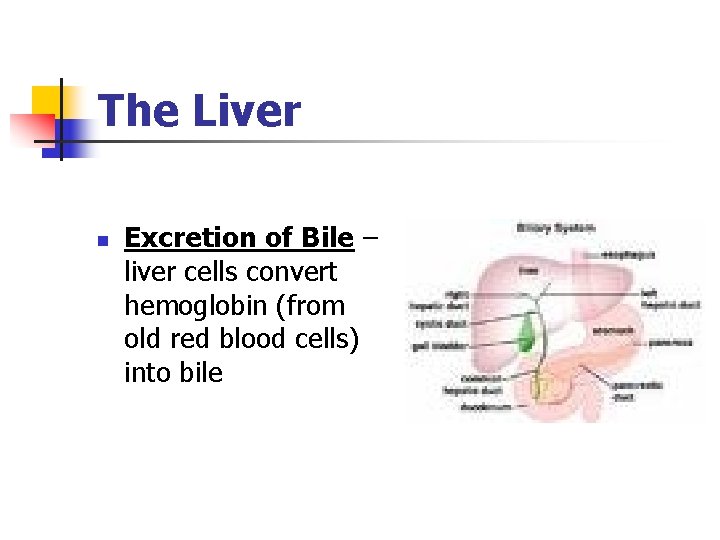
The Liver n Excretion of Bile – liver cells convert hemoglobin (from old red blood cells) into bile
The Liver n Formation of Urea – nitrogenous wastes are broken down in the liver and turned into urea n Urea will be filtered through the kidneys and removed from the body in the urine
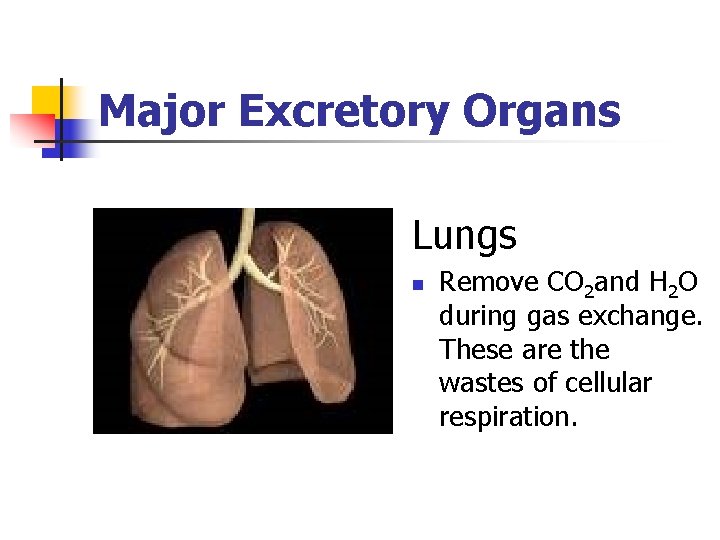
Major Excretory Organs Lungs n Remove CO 2 and H 2 O during gas exchange. These are the wastes of cellular respiration.
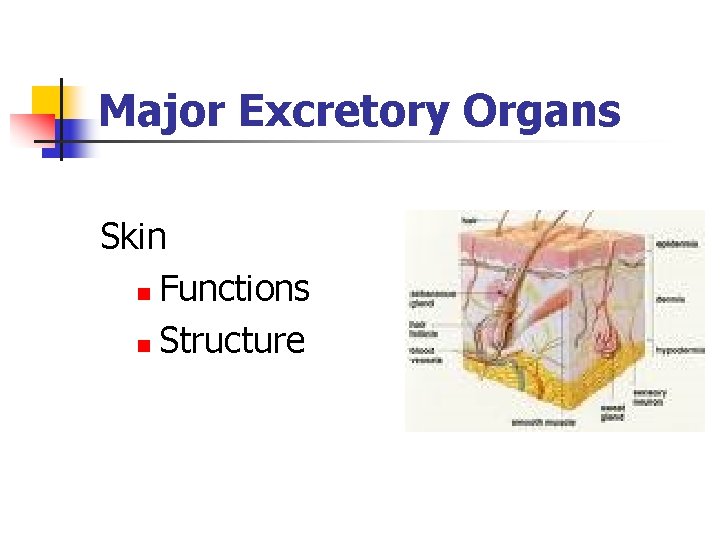
Major Excretory Organs Skin n Functions n Structure
The Skin - Functions n n Keep microorganisms and other foreign substances from entering the body Temperature regulation n Removal of excess body heat by sweating and opening blood vessels Keeps heat in when body is cool (blood vessels narrow to decrease blood flow) Produce heat by the actions of shivering and muscle tension triggered by the skin
The Skin - Structure n n Epidermis – outer layer of the skin Dermis – inner layer of the skin n n Sebaceous Glands – “oil glands” that produce oils that provide a protective coating to skin and hair Sudoriferous Glands – “sweat glands” that secrete sweat (water, mineral salts, nitrogenous wastes) through pores in the skin
- Slides: 14