
Excretion 1 Human Excretion As an organism carries
- Slides: 21
Excretion 1
Human Excretion As an organism carries on its life activities it produces Metabolic Wastes Excretion - is the removal of cellular wastes from an organism. WARNING Excretion does not include the removal of undigested food (egestion) 2
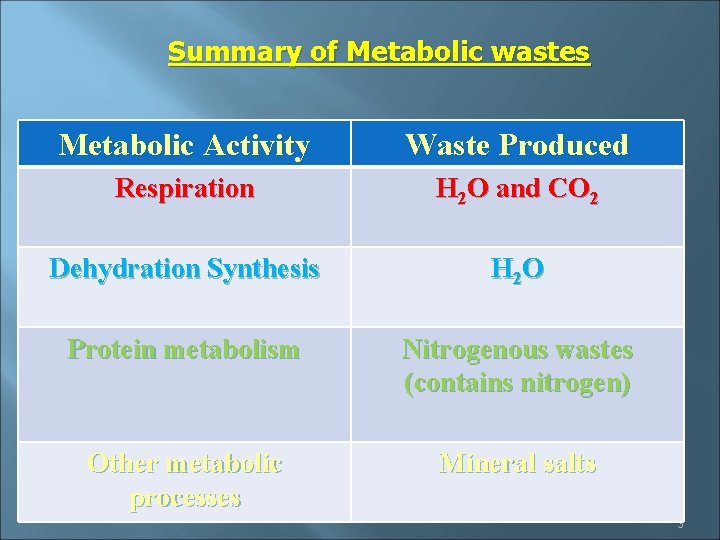
Summary of Metabolic wastes Metabolic Activity Waste Produced Respiration H 2 O and CO 2 Dehydration Synthesis H 2 O Protein metabolism Nitrogenous wastes (contains nitrogen) Other metabolic processes Mineral salts - 3
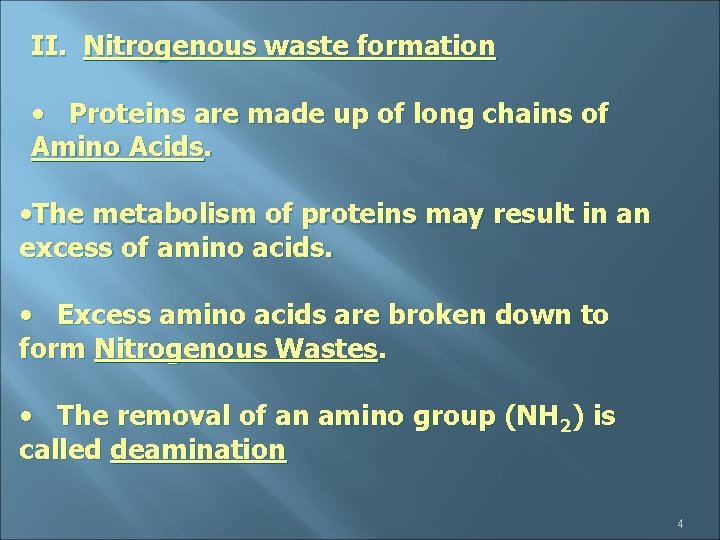
II. Nitrogenous waste formation • Proteins are made up of long chains of Amino Acids. • The metabolism of proteins may result in an excess of amino acids. • Excess amino acids are broken down to form Nitrogenous Wastes. • The removal of an amino group (NH 2) is called deamination 4
Nitrogenous wastes may exist in 3 forms that vary in toxicity and solubility 1. Ammonia - NH 3 is very toxic and soluble in water. Removal is easy for an animal that lives in water Ex: protozoan’s, hydra, fish 2. Urea - less toxic, and soluble in water Ex: Human urine, earthworm 3. Uric Acid – is not soluble in water, and is therefore not toxic. 5
• Uric acid forms solid crystals • Uric acid is formed by animals that need to conserve H 20. Ex: Birds, insects, and reptiles • Not all wastes are toxic Ex: H 20, Uric Acid • Non toxic wastes may be retained, released or recycled. Ex: desert animals may recycle the water given off during respiration. Ex: plants and algae may recycle the waste gases of photosynthesis and respiration. 6
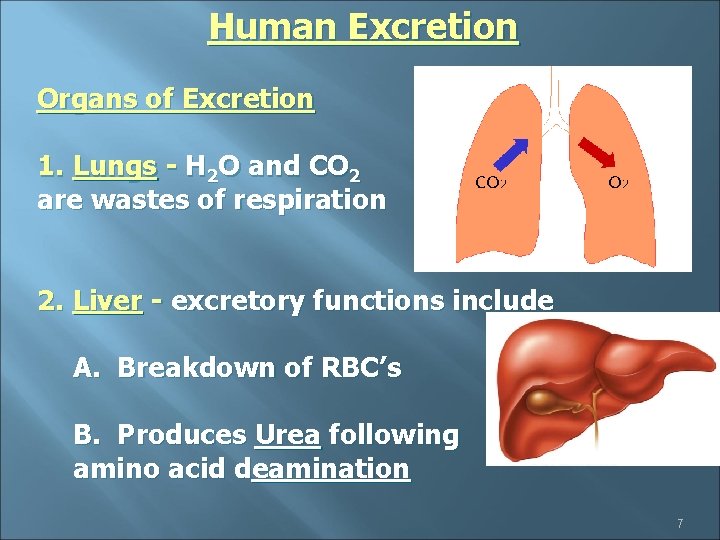
Human Excretion Organs of Excretion 1. Lungs - H 2 O and CO 2 are wastes of respiration 2. Liver - excretory functions include A. Breakdown of RBC’s B. Produces Urea following amino acid deamination 7
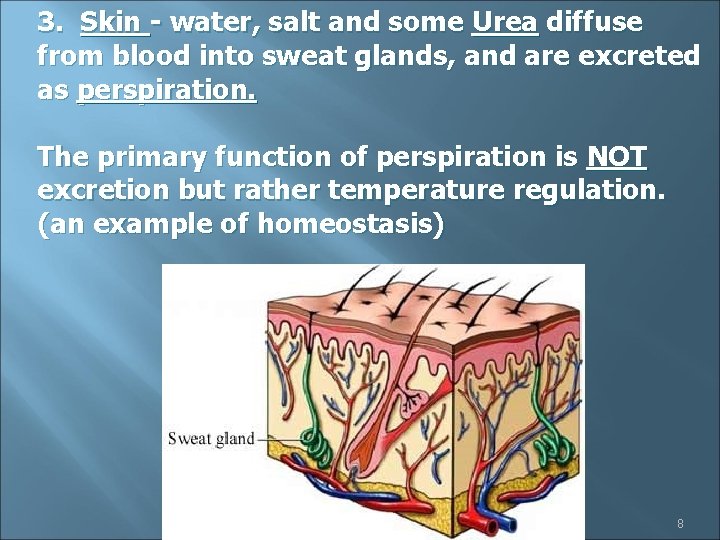
3. Skin - water, salt and some Urea diffuse from blood into sweat glands, and are excreted as perspiration. The primary function of perspiration is NOT excretion but rather temperature regulation. (an example of homeostasis) 8
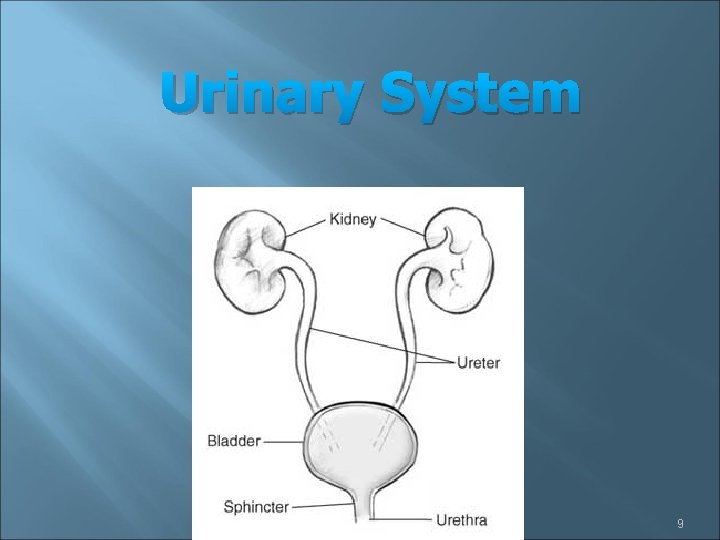
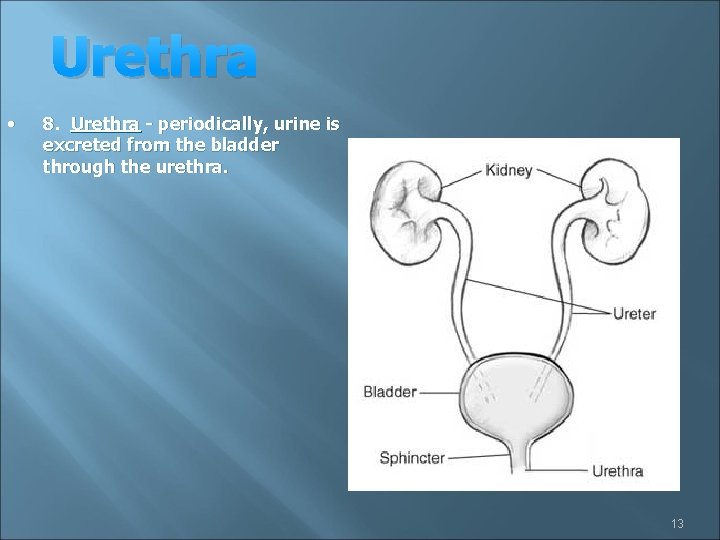
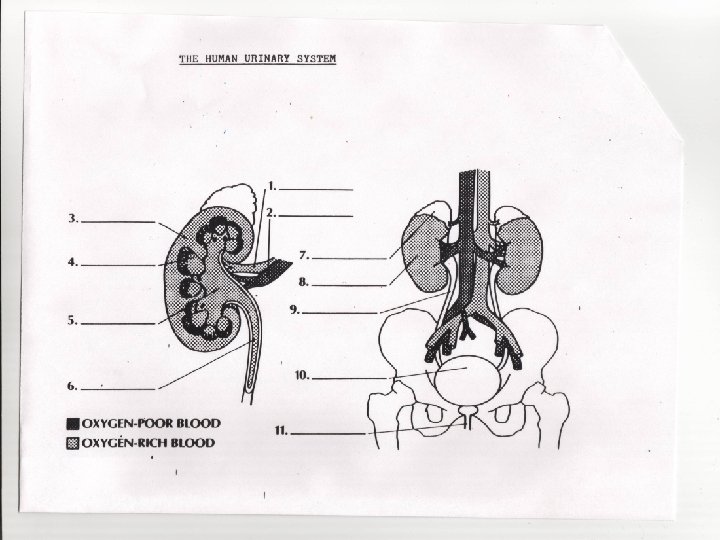
Urinary System 9
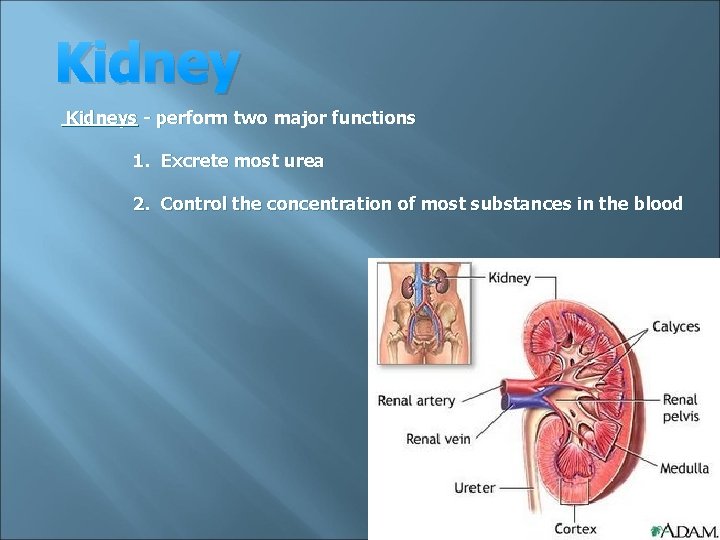
Kidneys - perform two major functions 1. Excrete most urea 2. Control the concentration of most substances in the blood 10
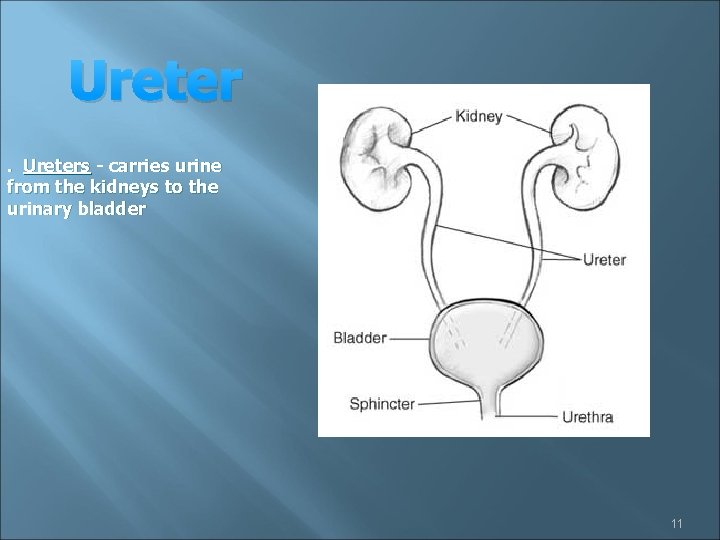
Ureters - carries urine from the kidneys to the urinary bladder 11
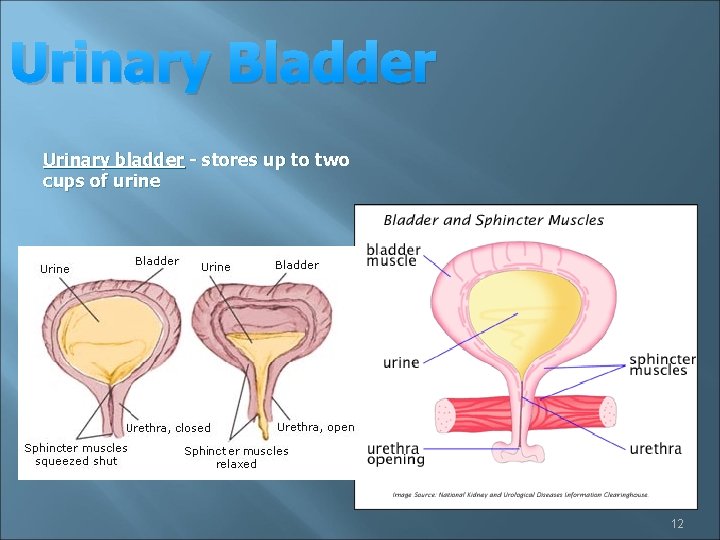
Urinary Bladder Urinary bladder - stores up to two cups of urine 12
Urethra • 8. Urethra - periodically, urine is excreted from the bladder through the urethra. 13
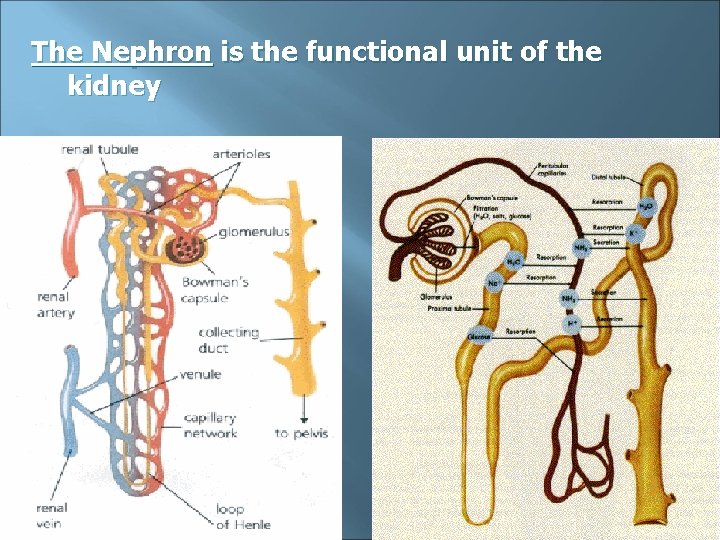
The Nephron is the functional unit of the kidney 14
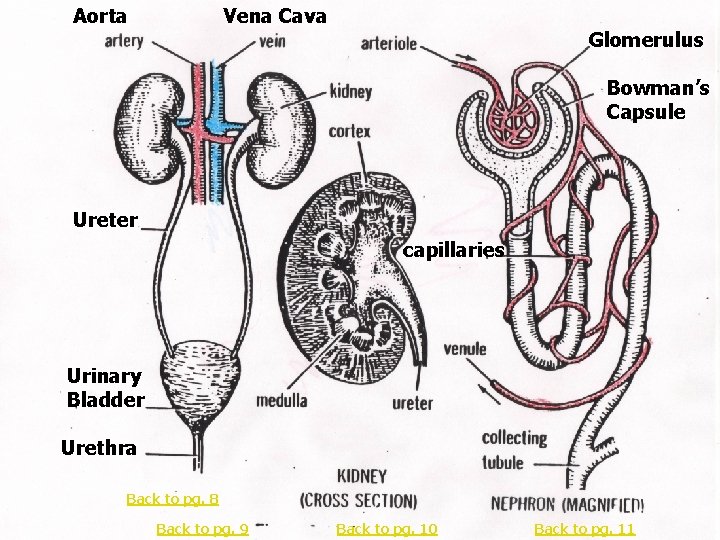
IV. Function of the Urinary System. 1. Renal Arteries - bring blood to the kidneys where microscopic nephrons are involved in both filtration and reabsorption. 2. Water, salts, urea, Amino acids and glucose are filtered from the glomerulus into the cup-like Bowman’s capsule. 3. As these materials move through the tubule of the nephron, water, minerals, and digestive end products are reabsorbed by active transport into the capillaries associated with the tubule diagram of Urinary system • 4. After reabsorption the fluid that remains in the tubule is Urine 5. Renal Veins - carry filtered “clean” blood away from the kidney. 15
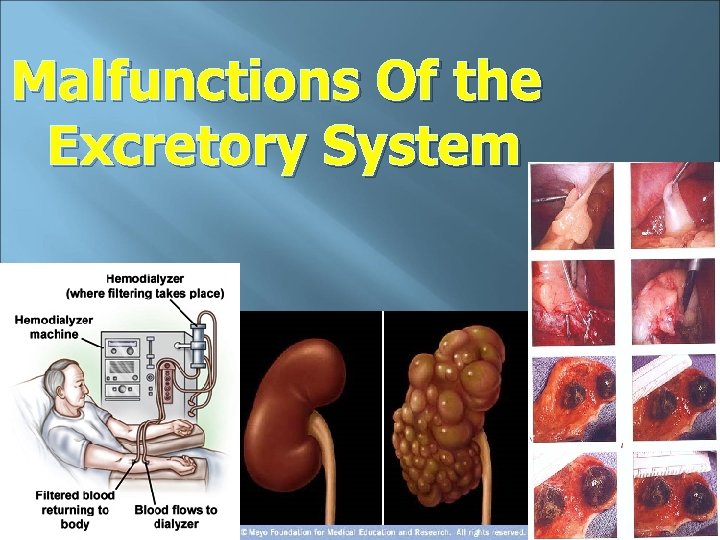
Malfunctions Of the Excretory System 16
1. Kidney diseases - malfunctions of the kidneys or the nephron caused by: • High protein diets • Infections • Lead or mercury 17
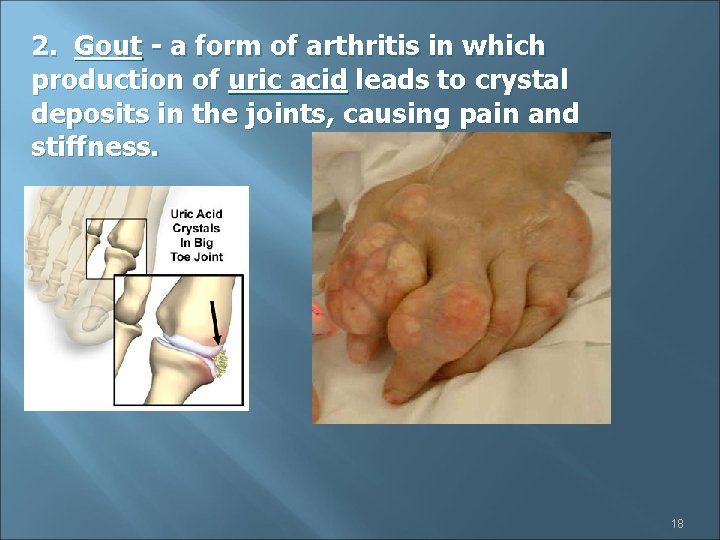
2. Gout - a form of arthritis in which production of uric acid leads to crystal deposits in the joints, causing pain and stiffness. 18
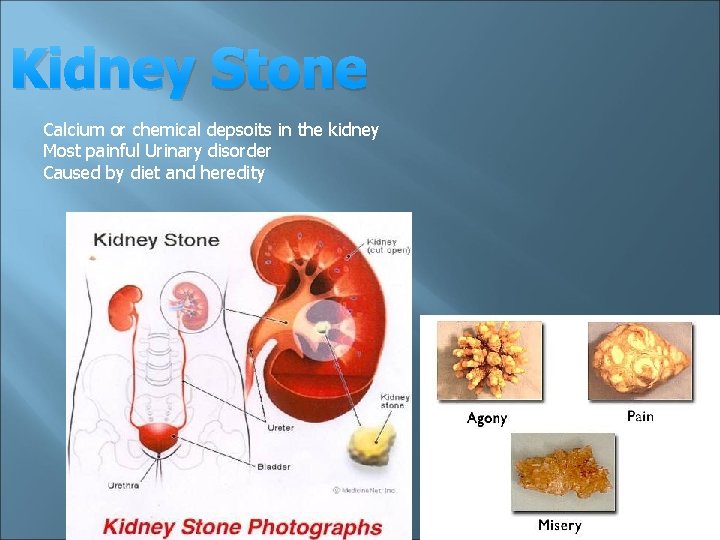
Kidney Stone Calcium or chemical depsoits in the kidney Most painful Urinary disorder Caused by diet and heredity 19
Aorta Vena Cava Glomerulus Bowman’s Capsule Ureter capillaries Urinary Bladder Urethra Back to pg. 8 Back to pg. 9 Back to pg. 10 Back to pg. 11 20
21