
Exchange of Respiratory Gases Control of AcidBase balance

• • Exchange of Respiratory Gases Control of Acid/Base balance Control of Blood p. H Consists of – Conductive system – Exchange system – Circulatory System Interface • Cellular respiration • External respiration • Internal respiration
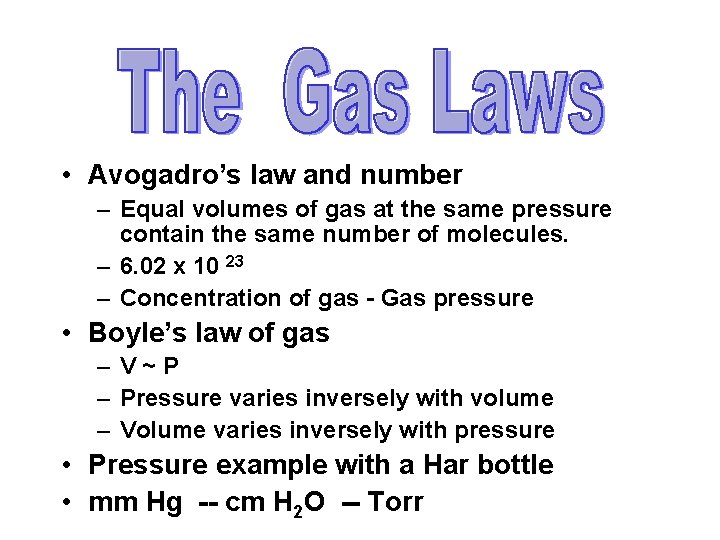
• Avogadro’s law and number – Equal volumes of gas at the same pressure contain the same number of molecules. – 6. 02 x 10 23 – Concentration of gas - Gas pressure • Boyle’s law of gas – V~P – Pressure varies inversely with volume – Volume varies inversely with pressure • Pressure example with a Har bottle • mm Hg -- cm H 2 O -- Torr
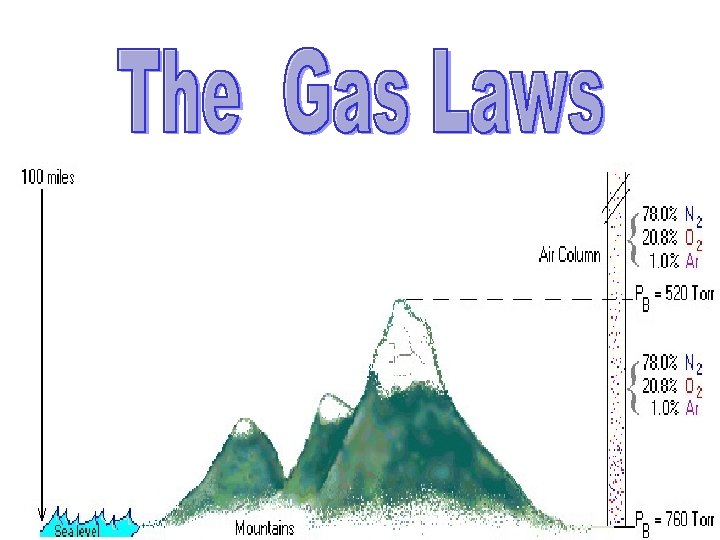
• Daltons Law of Partial Pressure
• Laws of Gas Flow – Laminar flow - Turbulence • Poiseuille's law states that flow rate is inversely related to both the tube length and to the viscosity of the gas • Bernouli’s law relates the loss in pressure to the resistance of a system. Total pressure is divided between flow( forward
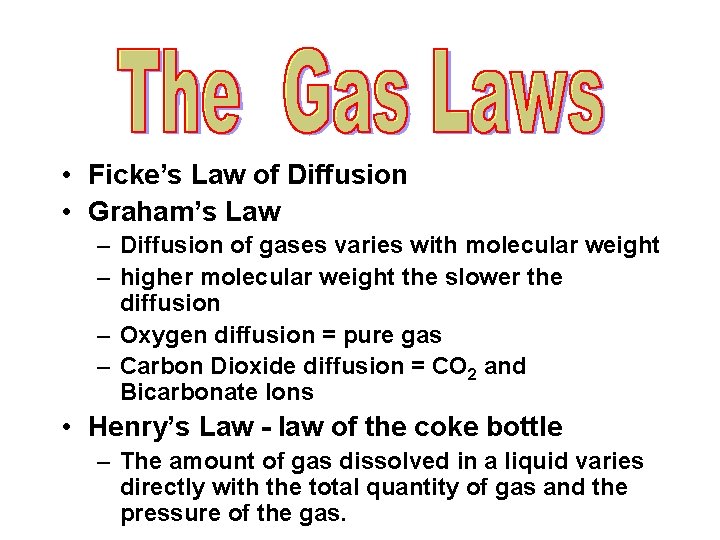
• Ficke’s Law of Diffusion • Graham’s Law – Diffusion of gases varies with molecular weight – higher molecular weight the slower the diffusion – Oxygen diffusion = pure gas – Carbon Dioxide diffusion = CO 2 and Bicarbonate Ions • Henry’s Law - law of the coke bottle – The amount of gas dissolved in a liquid varies directly with the total quantity of gas and the pressure of the gas.
• Charles’s Law - effects of temperature on a gas – Pressure varies with Temperature – Heating a can example • Interaction with Boyle’s law • Dalton’s Law of Partial Pressure – Partial Pressure of a gas is proportional to the proportion of that gas in a mixture of gases – Oxygen 21% of 760 Torr = 160 Torr – Nitrogen 79% or 600 Torr

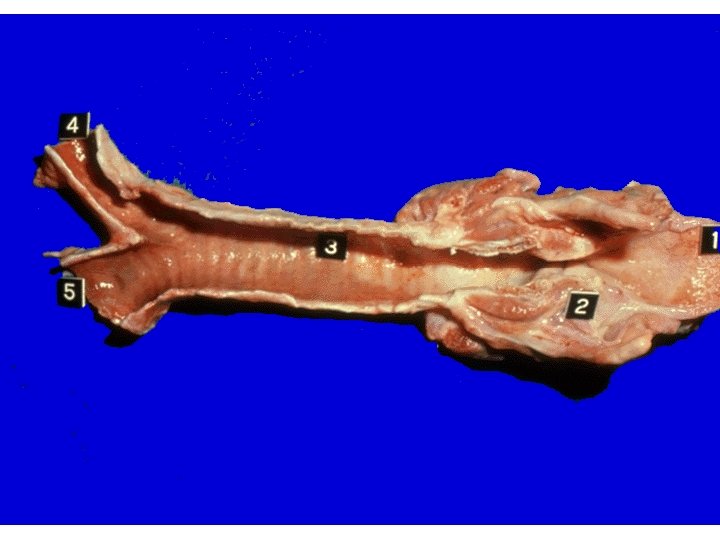
• • Nose External Nares or Nostrils Nasal Cavity - boundries Internal Nares Conche Hard Palate Soft Palate and Uvula
• Paranasal Sinuses • Olfactory Epithelium • Nasal Epithelium - Pseudostratified Ciliated Columnar Epithelium • Nasopharynx • Oropharynx - Fauces = narrowing flaps • Laryngopharynx • Tonsils (Palatine & Lingual) and Adenoids or Pharyngeal • Eustachian tubes
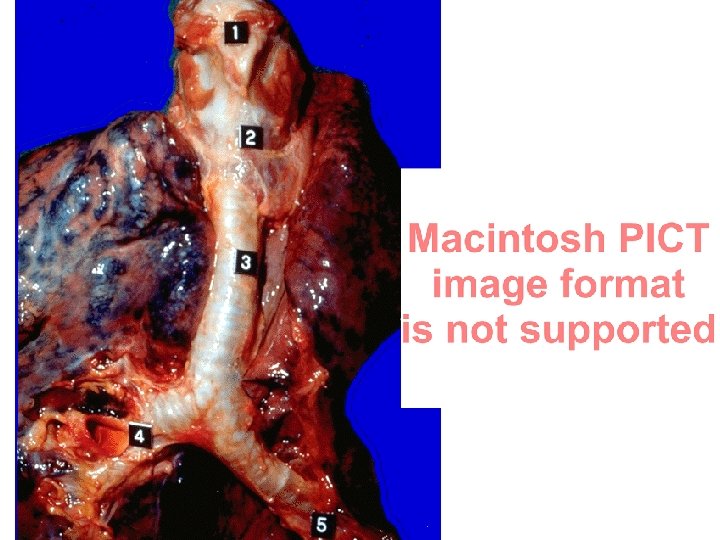
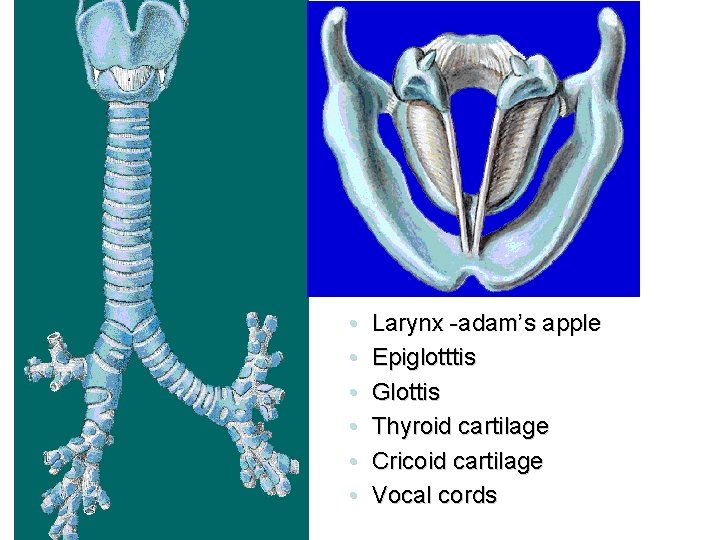
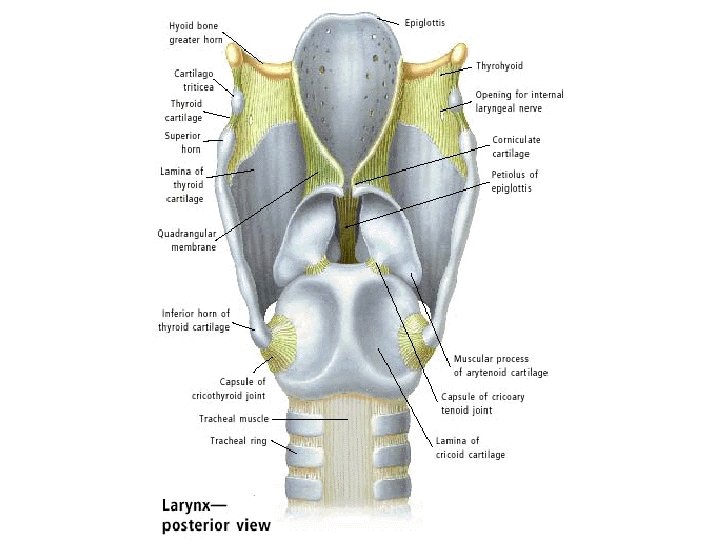
• • • Larynx -adam’s apple Epiglotttis Glottis Thyroid cartilage Cricoid cartilage Vocal cords


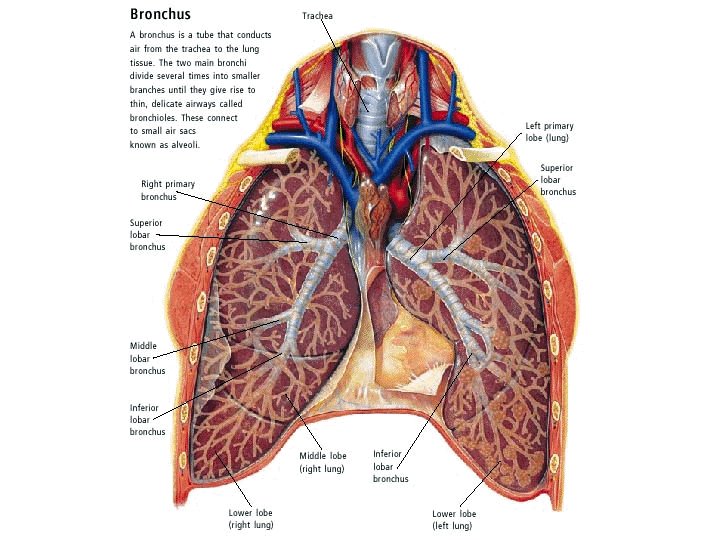
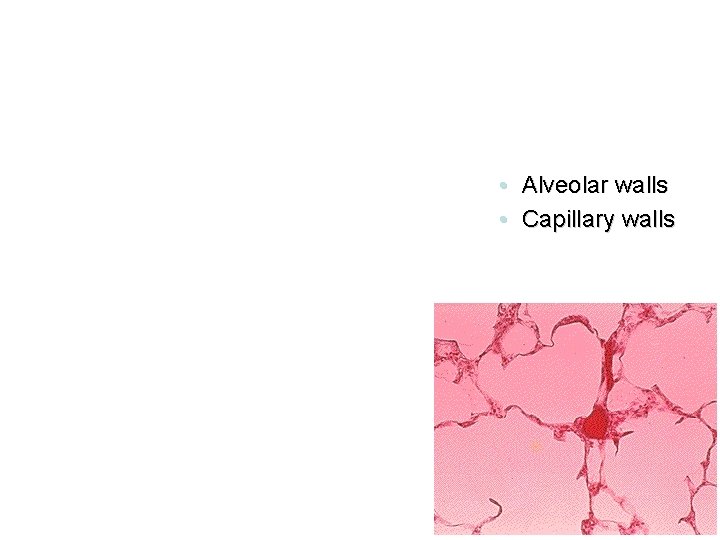
• Alveolar walls • Capillary walls
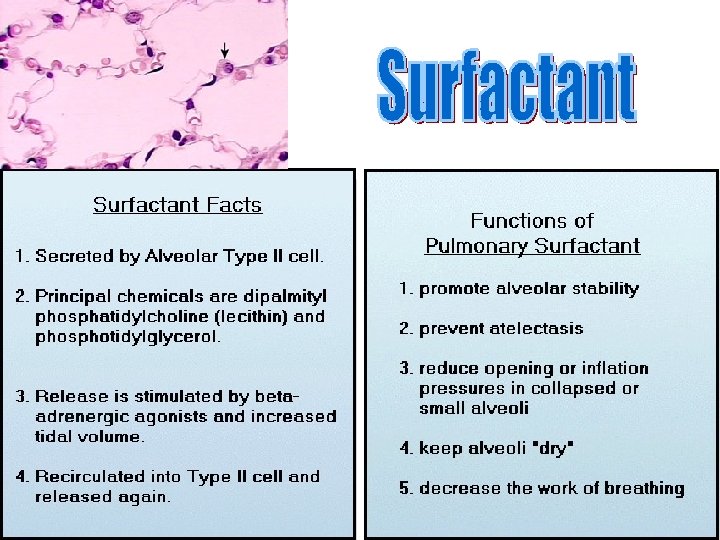
• Type I Alveolar cell - respiratory • Type II- produces surfactant

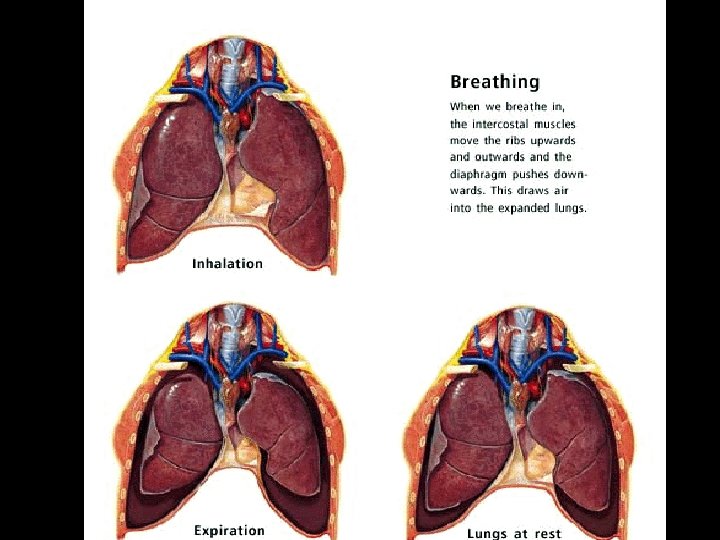
• Contraction of – External Intercostals – Diaphragm • Intra-alveolar pressure - 756 • Volume moved = 2. 2 liters • Bucket Handle movement – Rib movement • Pump Handle movement – Sternum movement

• • • Passive movement Elastic recoil of diaphragm Elastic Recoil of lung tissue Surfactant Abdominal assist
• Effects of Posture • Abdominal Pressure
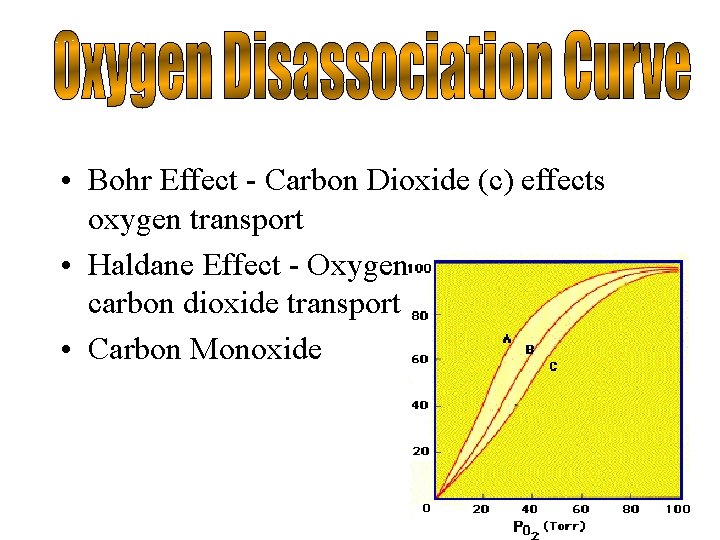
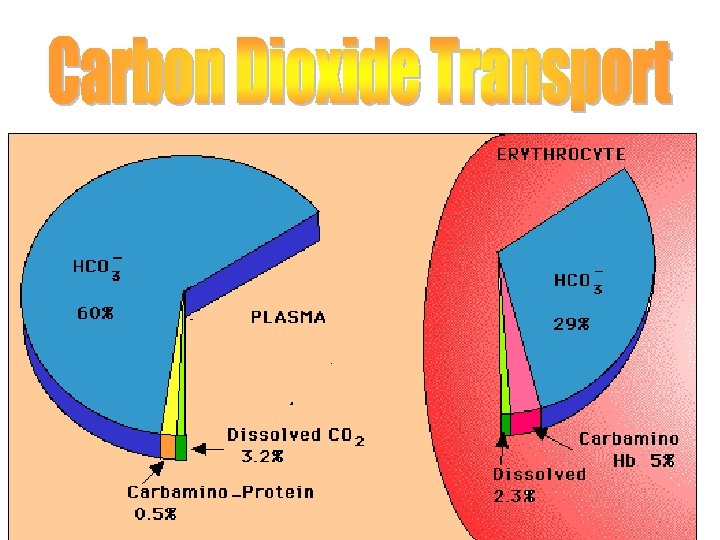
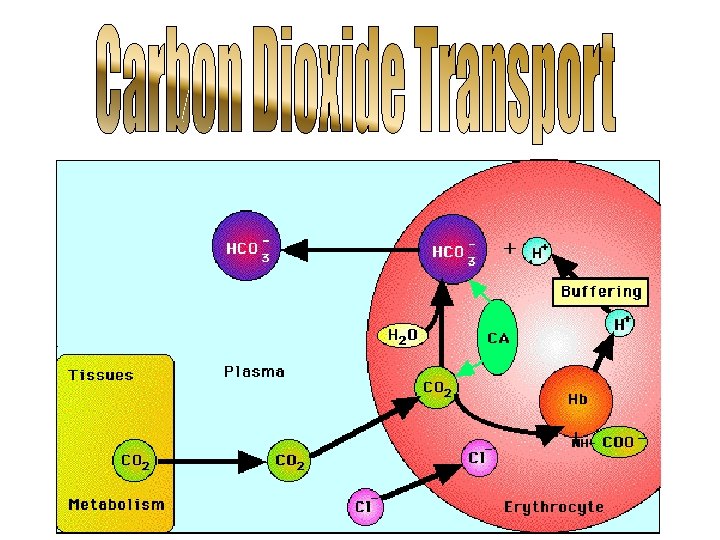
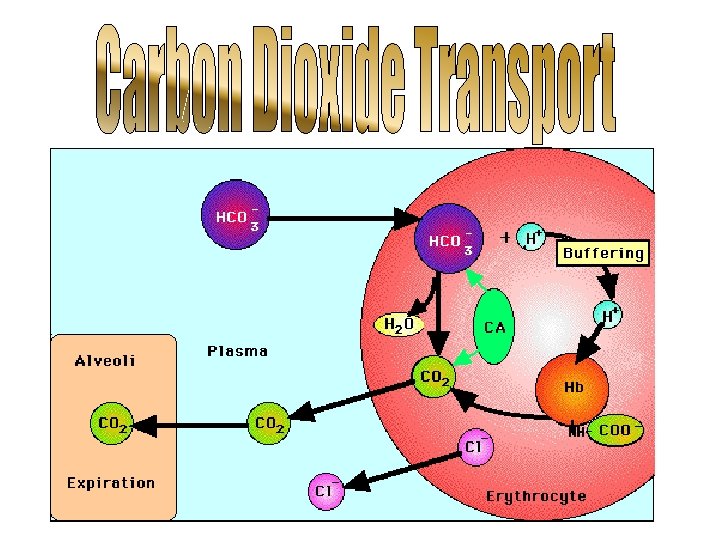
• Bohr Effect - Carbon Dioxide (c) effects oxygen transport • Haldane Effect - Oxygen levels effect carbon dioxide transport • Carbon Monoxide

Fetal Postnatal
- Slides: 30