
Exchange and communal relationships Brian Pochinski Communal relationships
Exchange and communal relationships Brian Pochinski
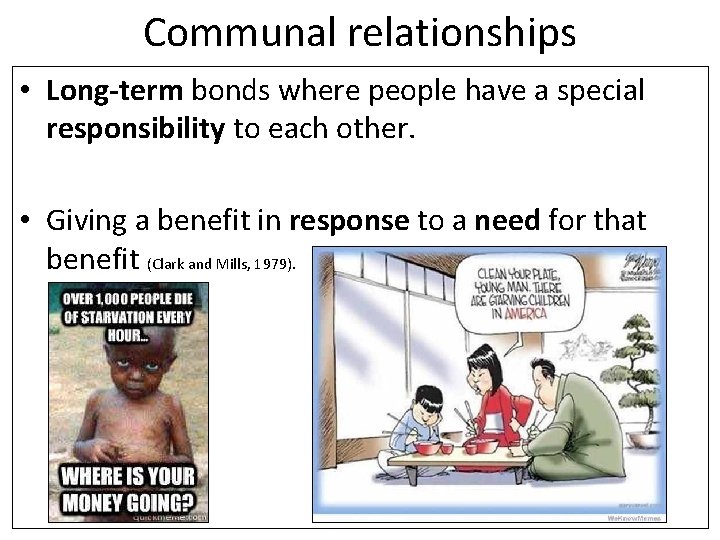
Communal relationships • Long-term bonds where people have a special responsibility to each other. • Giving a benefit in response to a need for that benefit (Clark and Mills, 1979).

Communal relationships • Based on sameness and family-like sharing of a common identity (Fiske, 1992). • Charles Manson marriage: http: //www. bbc. com/news/world-us-canada 30089036

Exchange relationships • Short-term trading based relationships where people do not have responsibility to each other. • Giving and receiving is based on equity and reciprocity. • Giving a benefit for getting a benefit (Clark and Mills, 1979).
Clark and Mills, 1979 • Giving a benefit in response to receiving a benefit is typical of an exchange relationship, but not a communal relationship. • Giving a benefit because it fulfills a need is typical of an communal relationship, but not an exchange relationship.
Clark and Mills, 1979 • Hypothesis: receiving a benefit after a person has been given a benefit leads to greater attraction when an exchange relationship is preferred and decreases attraction when a communal relationship is desired.
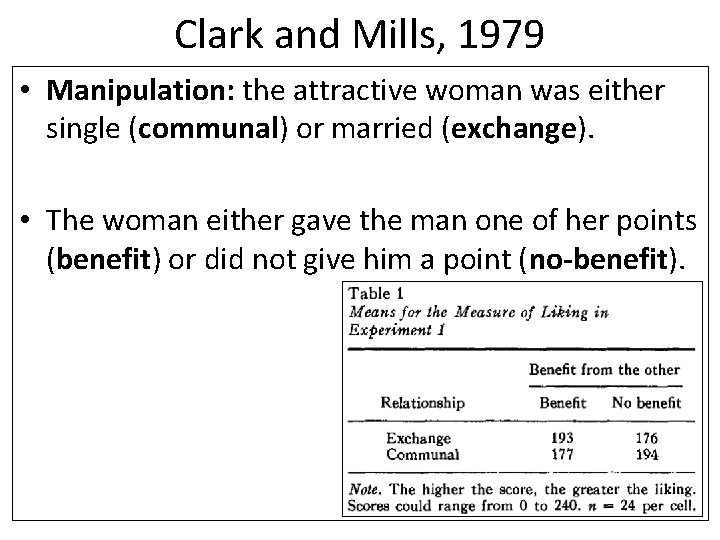
Clark and Mills, 1979 • Manipulation: the attractive woman was either single (communal) or married (exchange). • The woman either gave the man one of her points (benefit) or did not give him a point (no-benefit).

Clark and Mills, 1979 • Manipulating exchange and communal relationships affect liking another individual depending on aid provided and requests.
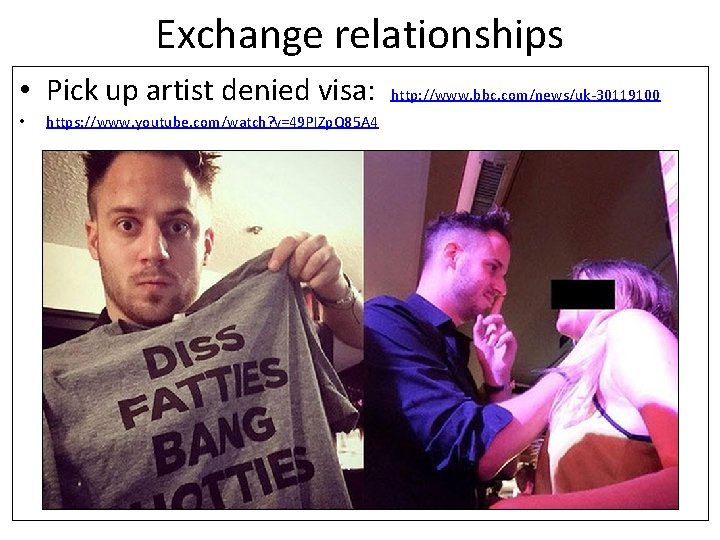
Exchange relationships • Pick up artist denied visa: • https: //www. youtube. com/watch? v=49 PIZp. Q 85 A 4 http: //www. bbc. com/news/uk-30119100
Research • Students and professors form exchange relationships. • Do what I tell you to do, get a good letter and maybe a prominent career… • What are the issues with this practice in research? ?
- Slides: 10