
Excellence In Instruction Module 2 Marzanos Taxonomy Standardsbased
Excellence In Instruction Module 2: Marzano’s Taxonomy Standards-based Planning Standards-based Instruction
2 C H A M P S • Voice Level 0 while facilitator or others are speaking • Voice Level 2 while working with colleagues • We will use an attention signal to help the group refocus • Parking Lot for questions • Excellence in Instruction • Take any phone calls or text messages outside of the room • Take care of personal needs • Use your electronics to enhance your learning, not distract • Participate fully in the structures • Identify your A-B partnership • Successful understanding of the Marzano Focused Map and application of protocols
3 A C H I E V E • Excellence in Instruction • Voice Level 0 while others are speaking • Voice Level 2 while working with others • We will use an attention signal to refocus the group • Use the Parking Lot structure • Each teacher should contribute to the discussion today and leave with an understanding of Marzano Focused Map • Use your electronics to enhance your learning, not distract • Participate fully in the structures • Identify your A-B partnership • Successful understanding of the Marzano Focused Map and application of protocols • Collaborate and listen for new ideas to apply
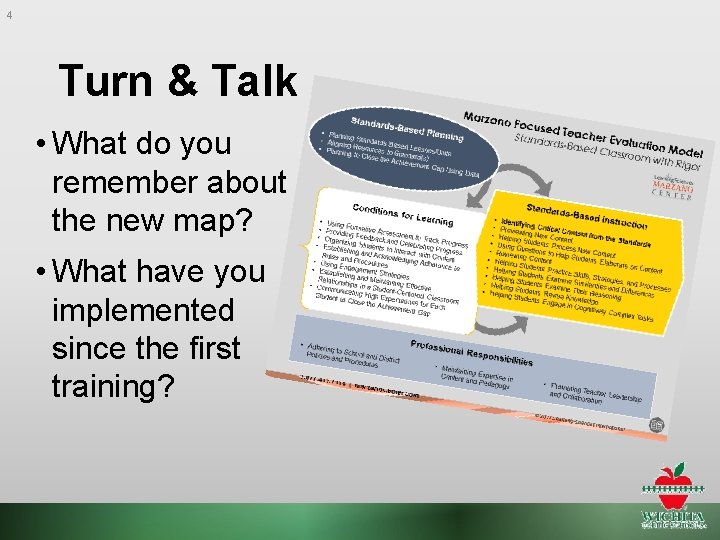
4 Turn & Talk • What do you remember about the new map? • What have you implemented since the first training?
5 Learning Targets CONTENT OBJECTIVES • Participants will learn the Marzano Taxonomy and how it applies to content standards. LITERACY OBJECTIVES • Participate in collaborative conversations about instruction. • Participants will learn key • Read and respond to text. features of Standards. Based Planning. • Participants will understand how to identify critical content in their lessons.
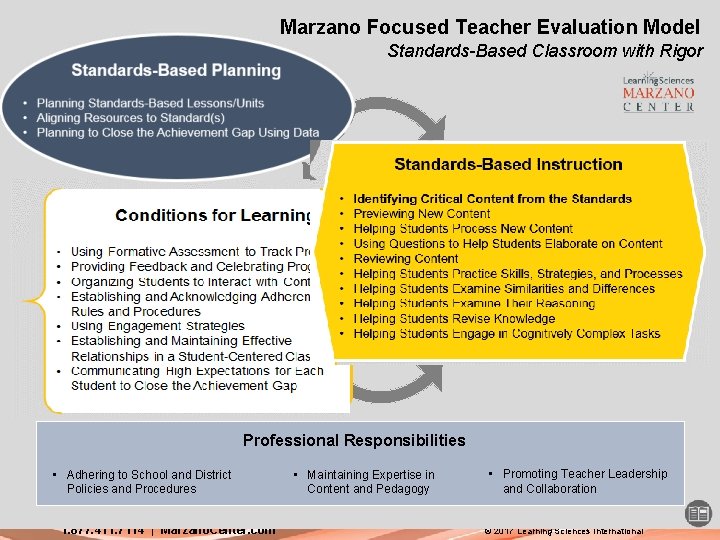
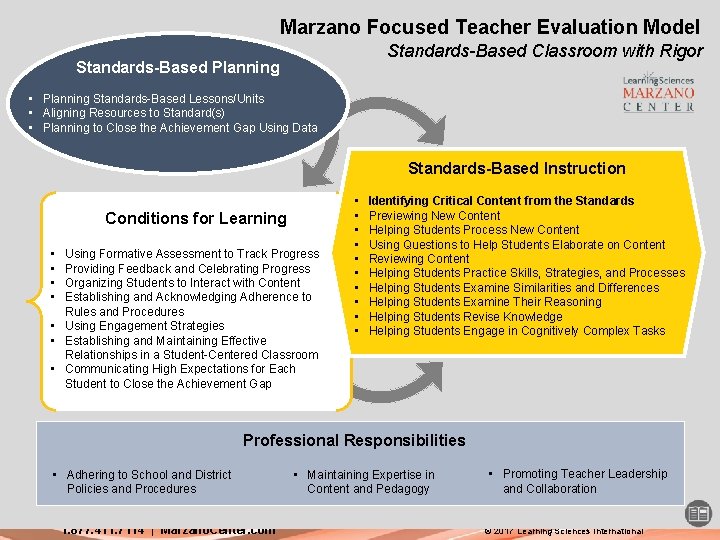
Marzano Focused Teacher Evaluation Model Standards-Based Classroom with Rigor Standards-Based Planning • Planning Standards-Based Lessons/Units • Aligning Resources to Standard(s) • Planning to Close the Achievement Gap Using Data Standards-Based Instruction Conditions for Learning • • Using Formative Assessment to Track Progress Providing Feedback and Celebrating Progress Organizing Students to Interact with Content Establishing and Acknowledging Adherence to Rules and Procedures • Using Engagement Strategies • Establishing and Maintaining Effective Relationships in a Student-Centered Classroom • Communicating High Expectations for Each Student to Close the Achievement Gap • • • Identifying Critical Content from the Standards Previewing New Content Helping Students Process New Content Using Questions to Help Students Elaborate on Content Reviewing Content Helping Students Practice Skills, Strategies, and Processes Helping Students Examine Similarities and Differences Helping Students Examine Their Reasoning Helping Students Revise Knowledge Helping Students Engage in Cognitively Complex Tasks Professional Responsibilities • Adhering to School and District Policies and Procedures 1. 877. 411. 7114 | Marzano. Center. com • Maintaining Expertise in Content and Pedagogy • Promoting Teacher Leadership and Collaboration © 2017 Learning Sciences International

7 Rigor & The Marzano Taxonomy
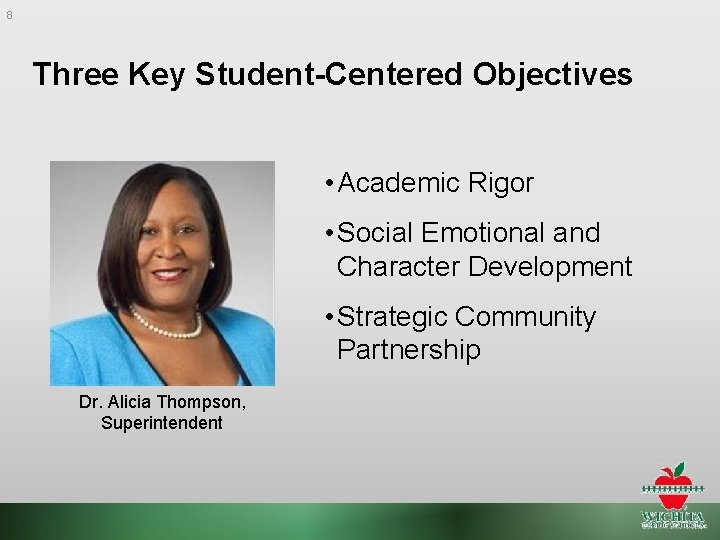
8 Three Key Student-Centered Objectives • Academic Rigor • Social Emotional and Character Development • Strategic Community Partnership Dr. Alicia Thompson, Superintendent
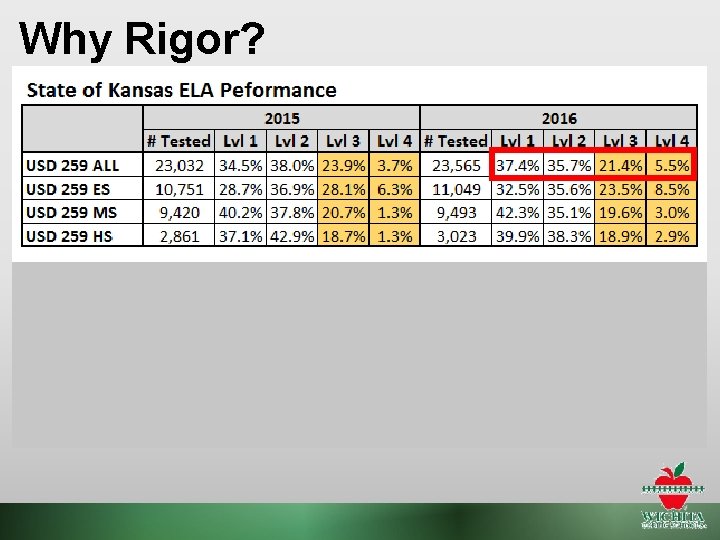
Why Rigor?
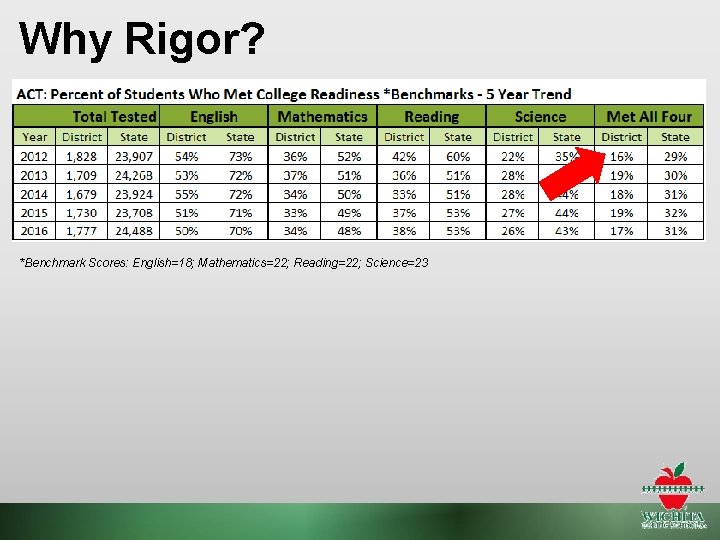
Why Rigor? *Benchmark Scores: English=18; Mathematics=22; Reading=22; Science=23

Is there a teaching gap resulting in a rigor gap? How will you know? 1. 877. 411. 7114 | Marzano. Center. com © 2017 Learning Sciences International
12 Rigor Gap? Teaching Gap? • Are students in your classrooms engaging in discussions in which they: • process information? • are more thoughtful and analytic about their conclusions? • apply their knowledge? • are less dependent on the teacher and more dependent on their own problem solving abilities? 1. 877. 411. 7114 | Marzano. Center. com © 2017 Learning Sciences International
Content & Literacy Objectives Identify what students will know and be able to do to demonstrate the standard 1. 877. 411. 7114 | Marzano. Center. com Learning Targets © 2017 Learning Sciences International
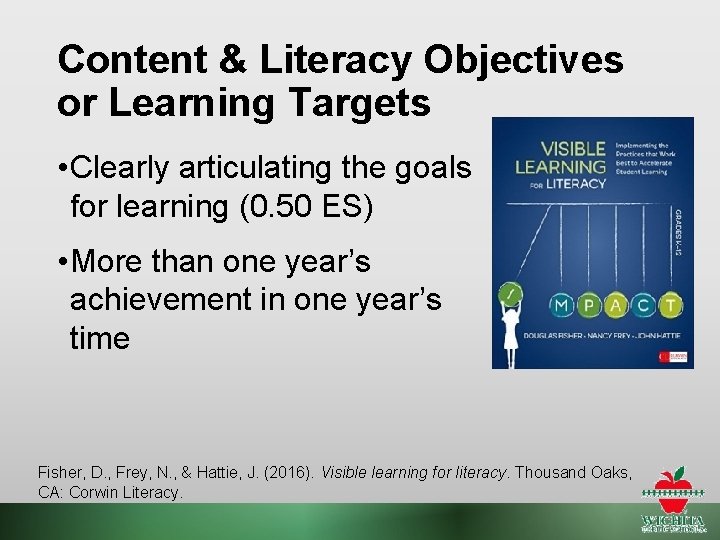
Content & Literacy Objectives or Learning Targets • Clearly articulating the goals for learning (0. 50 ES) • More than one year’s achievement in one year’s time Fisher, D. , Frey, N. , & Hattie, J. (2016). Visible learning for literacy. Thousand Oaks, CA: Corwin Literacy.
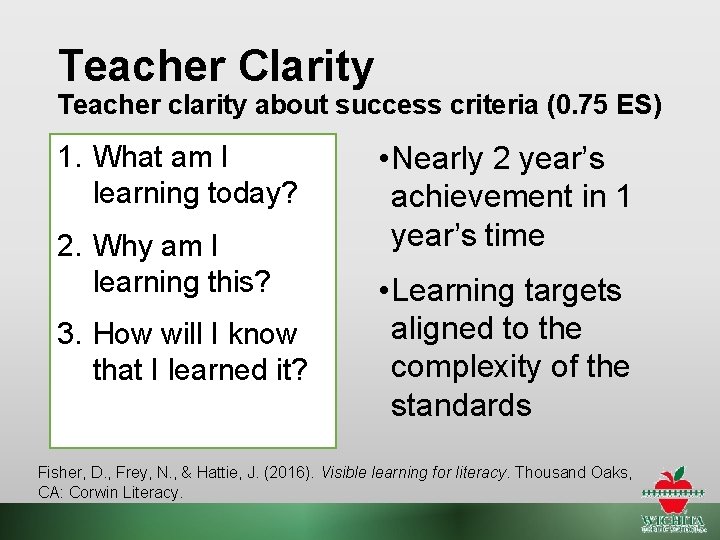
Teacher Clarity Teacher clarity about success criteria (0. 75 ES) 1. What am I learning today? 2. Why am I learning this? 3. How will I know that I learned it? • Nearly 2 year’s achievement in 1 year’s time • Learning targets aligned to the complexity of the standards Fisher, D. , Frey, N. , & Hattie, J. (2016). Visible learning for literacy. Thousand Oaks, CA: Corwin Literacy.
Activate Prior Knowledge • Bloom’s Taxonomy • Webb’s Depth of Knowledge • Costa’s Levels of Questioning • Marzano’s Taxonomy Share what you know about any of these taxonomies.
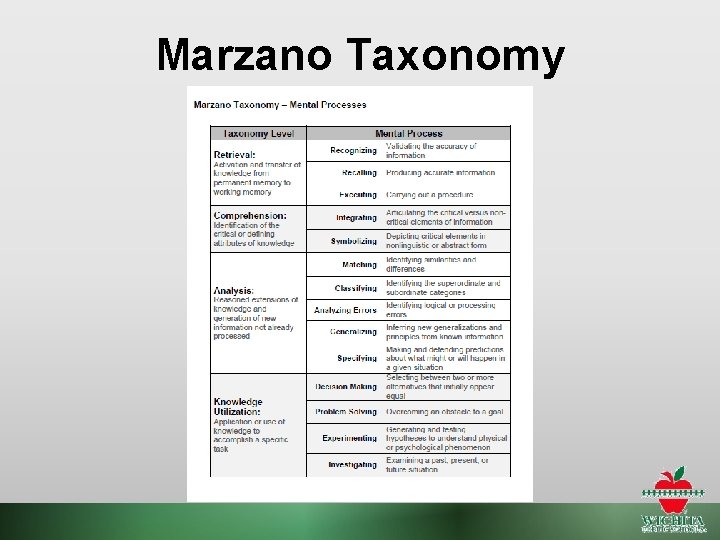
Marzano Taxonomy
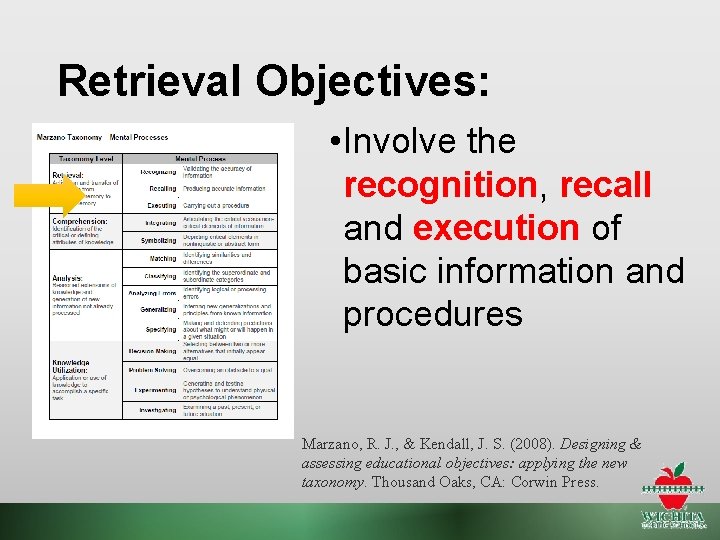
Retrieval Objectives: • Involve the recognition, recall and execution of basic information and procedures Marzano, R. J. , & Kendall, J. S. (2008). Designing & assessing educational objectives: applying the new taxonomy. Thousand Oaks, CA: Corwin Press.
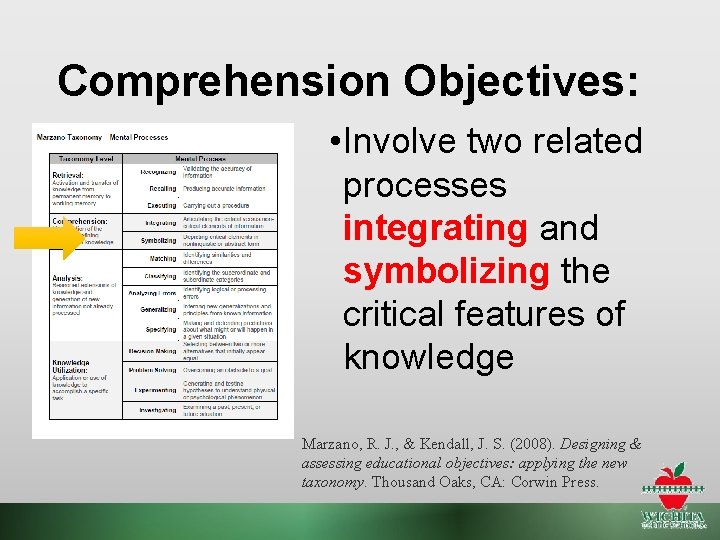
Comprehension Objectives: • Involve two related processes integrating and symbolizing the critical features of knowledge Marzano, R. J. , & Kendall, J. S. (2008). Designing & assessing educational objectives: applying the new taxonomy. Thousand Oaks, CA: Corwin Press.
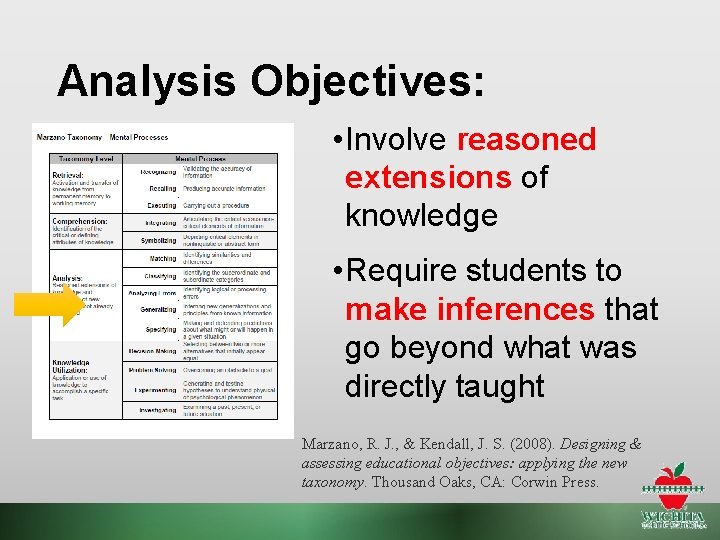
Analysis Objectives: • Involve reasoned extensions of knowledge • Require students to make inferences that go beyond what was directly taught Marzano, R. J. , & Kendall, J. S. (2008). Designing & assessing educational objectives: applying the new taxonomy. Thousand Oaks, CA: Corwin Press.
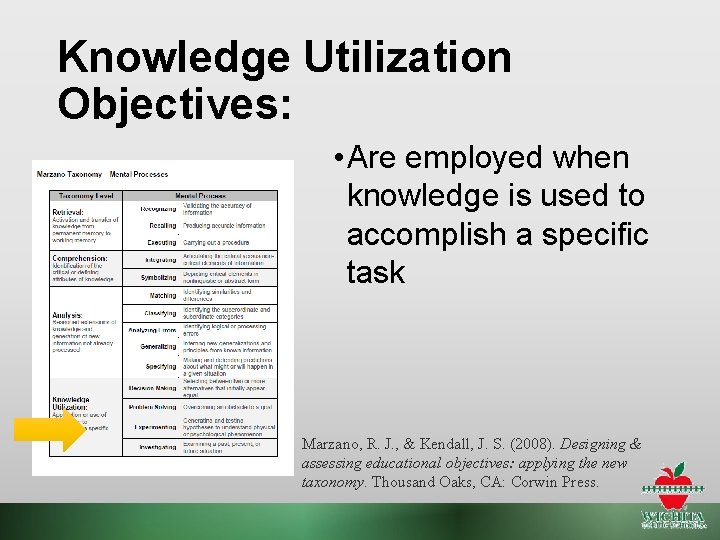
Knowledge Utilization Objectives: • Are employed when knowledge is used to accomplish a specific task Marzano, R. J. , & Kendall, J. S. (2008). Designing & assessing educational objectives: applying the new taxonomy. Thousand Oaks, CA: Corwin Press.
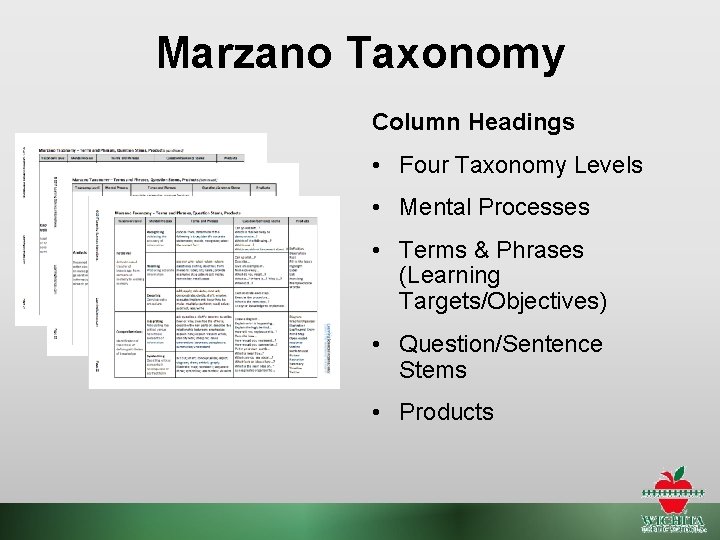
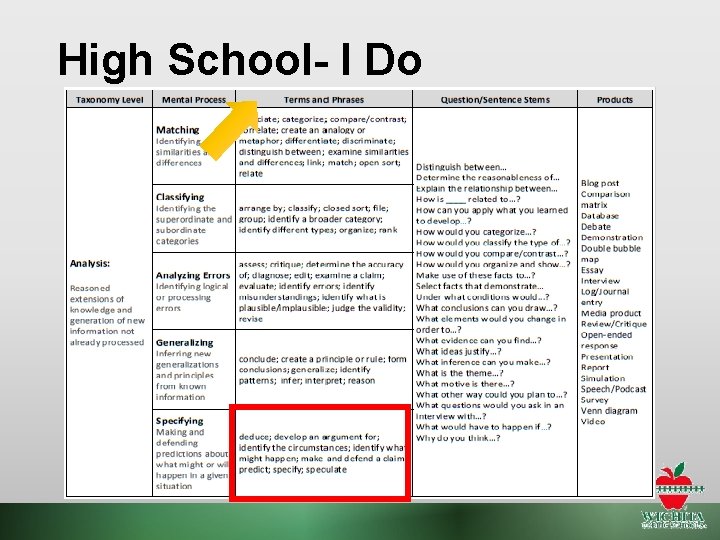
Marzano Taxonomy Column Headings • Four Taxonomy Levels • Mental Processes • Terms & Phrases (Learning Targets/Objectives) • Question/Sentence Stems • Products
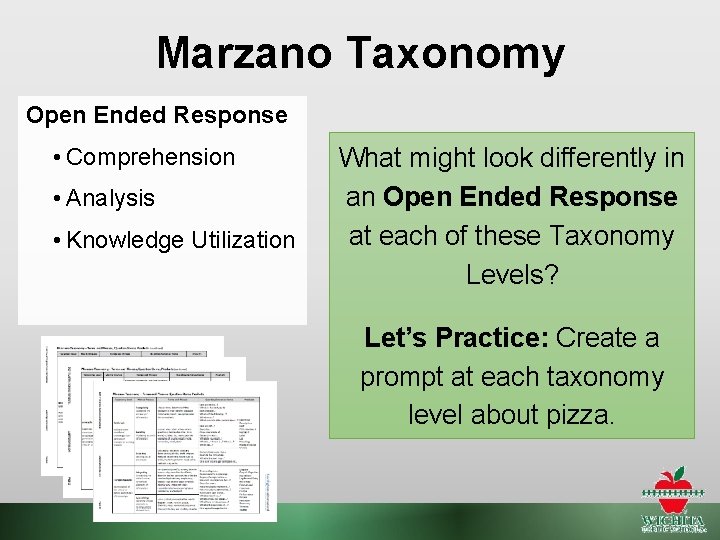
Marzano Taxonomy Open Ended Response • Comprehension • Analysis • Knowledge Utilization What might look differently in an Open Ended Response at each of these Taxonomy Levels? Let’s Practice: Create a prompt at each taxonomy level about pizza.
Content Standards Please find your content standard documents or IUGs. Fine Arts CTE Course Unique Competencies KELS
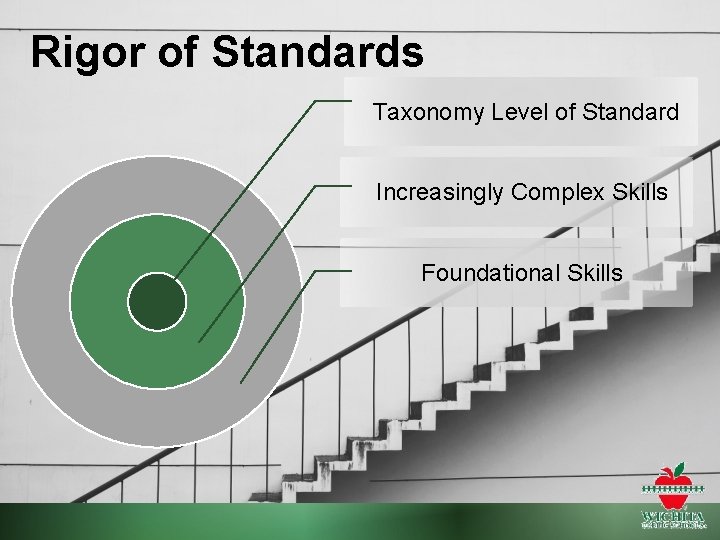
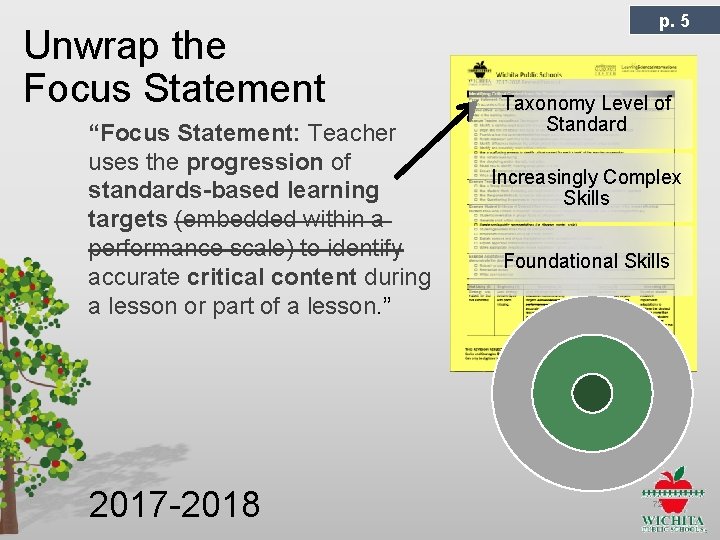
Rigor of Standards Taxonomy Level of Standard Increasingly Complex Skills Foundational Skills
26 Unpacking a Standard 1. Read the standard. Circle the verbs and underline the nouns. a. VERBS: What mental process is the student doing? b. NOUNS: What do they need to know? 2. Consult the Taxonomy handout page
27 ELEMENTARY STANDARDS
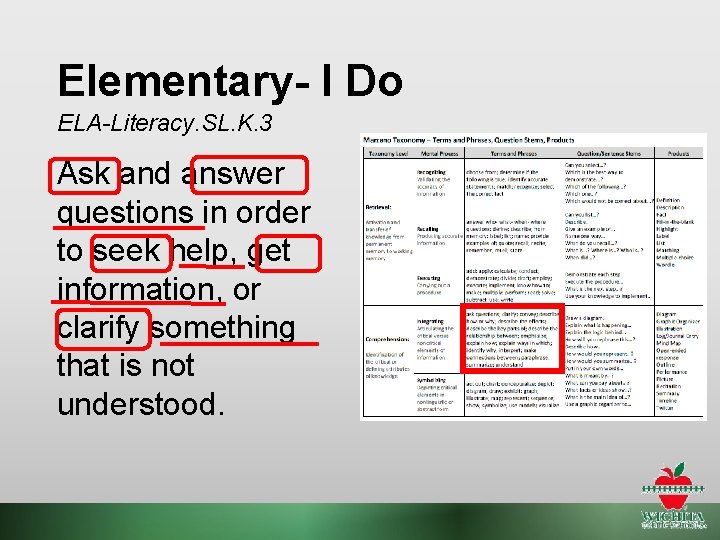
Elementary- I Do ELA-Literacy. SL. K. 3 Ask and answer questions in order to seek help, get information, or clarify something that is not understood.
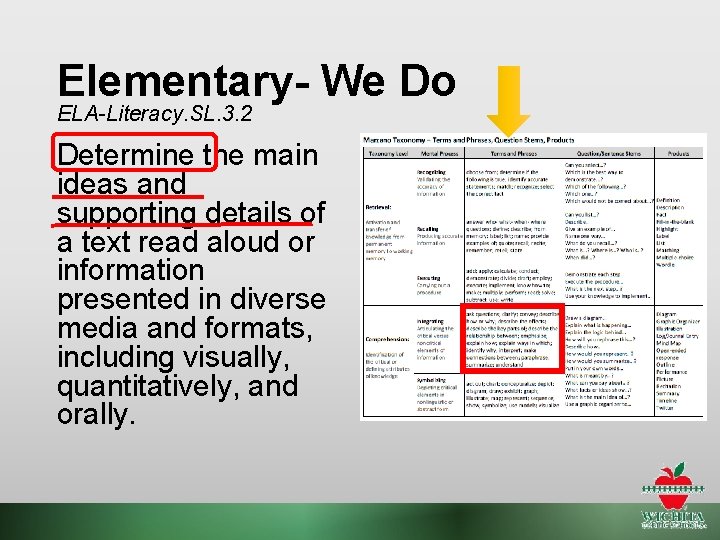
Elementary- We Do ELA-Literacy. SL. 3. 2 Determine the main ideas and supporting details of a text read aloud or information presented in diverse media and formats, including visually, quantitatively, and orally.
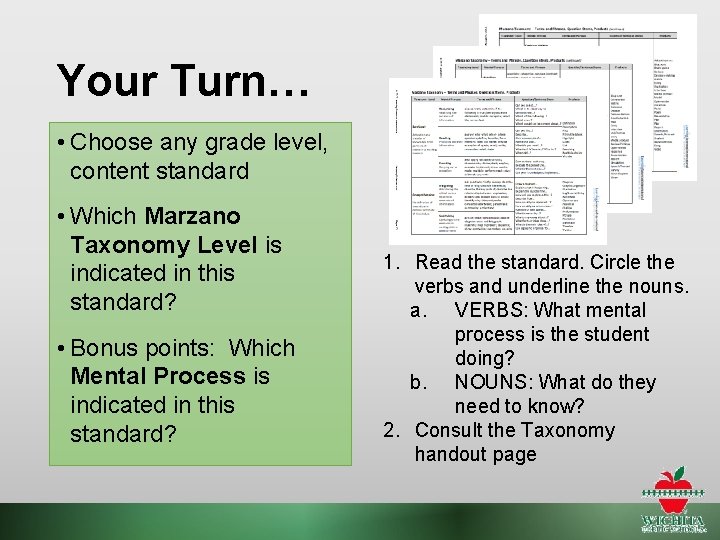
Your Turn… • Choose any grade level, content standard • Which Marzano Taxonomy Level is indicated in this standard? • Bonus points: Which Mental Process is indicated in this standard? 1. Read the standard. Circle the verbs and underline the nouns. a. VERBS: What mental process is the student doing? b. NOUNS: What do they need to know? 2. Consult the Taxonomy handout page
Elementary- You Do (use if you don’t have your own standards) ELA-Literacy. L. 5. 3. B Compare and contrast the varieties of English (e. g…dialects, registers) used in stories, dramas, or poems.
MIDDLE SCHOOL STANDARDS 32
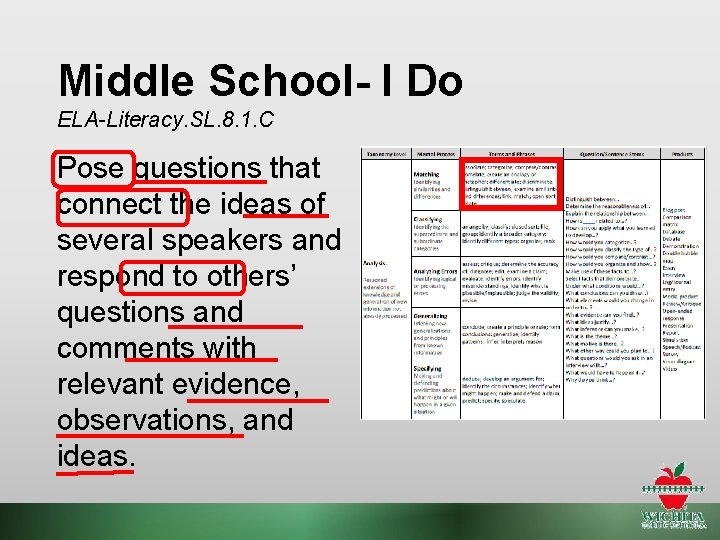
Middle School- I Do ELA-Literacy. SL. 8. 1. C Pose questions that connect the ideas of several speakers and respond to others’ questions and comments with relevant evidence, observations, and ideas.
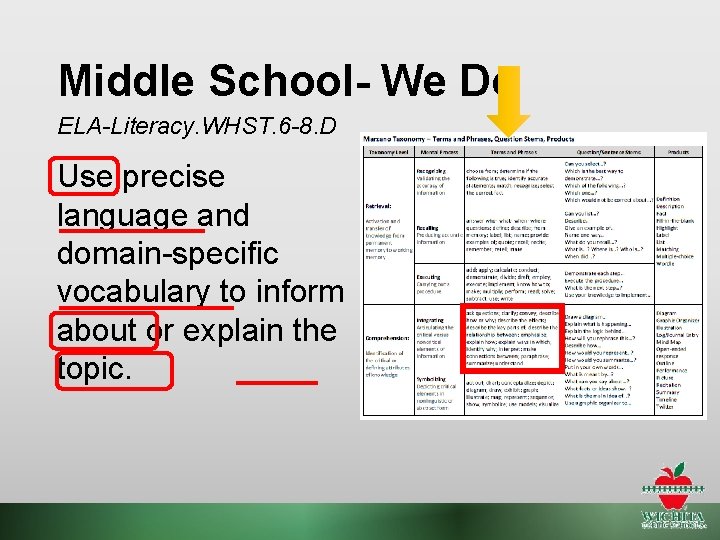
Middle School- We Do ELA-Literacy. WHST. 6 -8. D Use precise language and domain-specific vocabulary to inform about or explain the topic.
Your Turn… • Choose any grade level, content standard • Which Marzano Taxonomy Level is indicated in this standard? • Bonus points: Which Mental Process is indicated in this standard? 1. Read the standard. Circle the verbs and underline the nouns. a. VERBS: What mental process is the student doing? b. NOUNS: What do they need to know? 2. Consult the Taxonomy handout page
Middle School- You Do (use if you don’t have your own standards) ELA-Literacy. WHST. 6 -8, 9 Draw evidence from informational texts to support analysis, reflection, and research.

HIGH SCHOOL STANDARDS 37
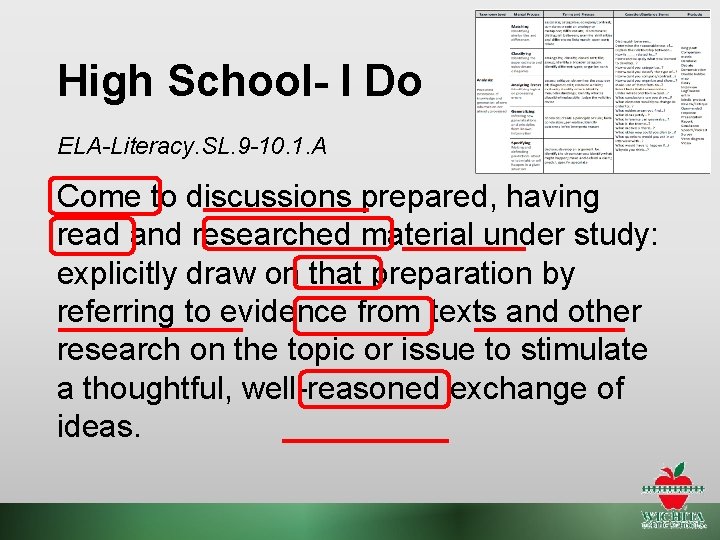
High School- I Do ELA-Literacy. SL. 9 -10. 1. A Come to discussions prepared, having read and researched material under study: explicitly draw on that preparation by referring to evidence from texts and other research on the topic or issue to stimulate a thoughtful, well-reasoned exchange of ideas.
High School- I Do
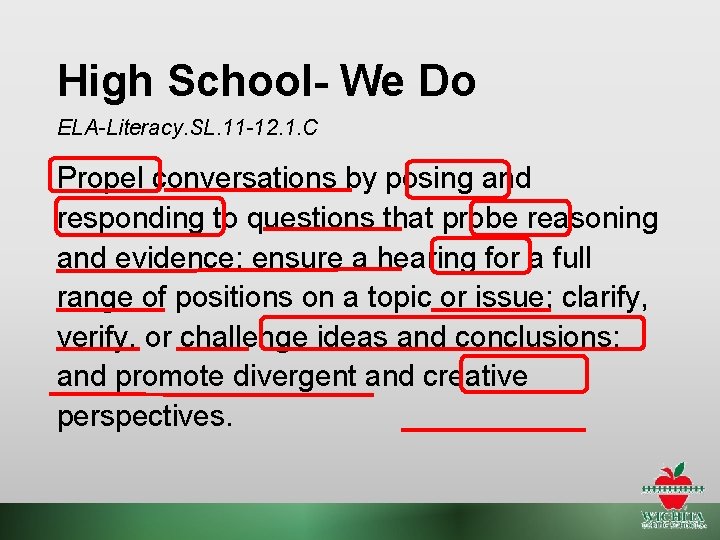
High School- We Do ELA-Literacy. SL. 11 -12. 1. C Propel conversations by posing and responding to questions that probe reasoning and evidence; ensure a hearing for a full range of positions on a topic or issue; clarify, verify, or challenge ideas and conclusions; and promote divergent and creative perspectives.
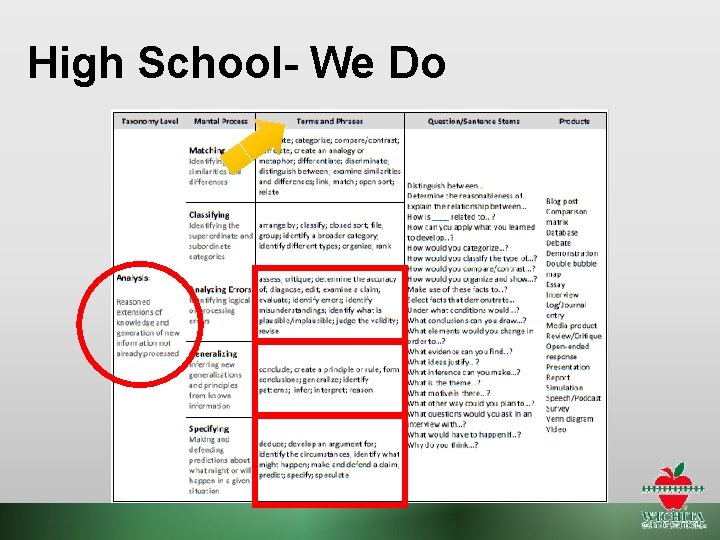
High School- We Do
Your Turn… • Choose any grade level, content standard • Which Marzano Taxonomy Level is indicated in this standard? • Bonus points: Which Mental Process is indicated in this standard? 1. Read the standard. Circle the verbs and underline the nouns. a. VERBS: What mental process is the student doing? b. NOUNS: What do they need to know? 2. Consult the Taxonomy handout page
High School- You Do (use if you don’t have your own standards) ELA-Literacy. WHST. 11 -12. 1. B Develop claim(s) and counterclaims fairly and thoroughly, supplying the most relevant data and evidence for each while pointing out the strengths and limitations of both claim(s) and counterclaims in a discipline-appropriate form that anticipates the audience’s knowledge level, concerns, values, and possible biases.
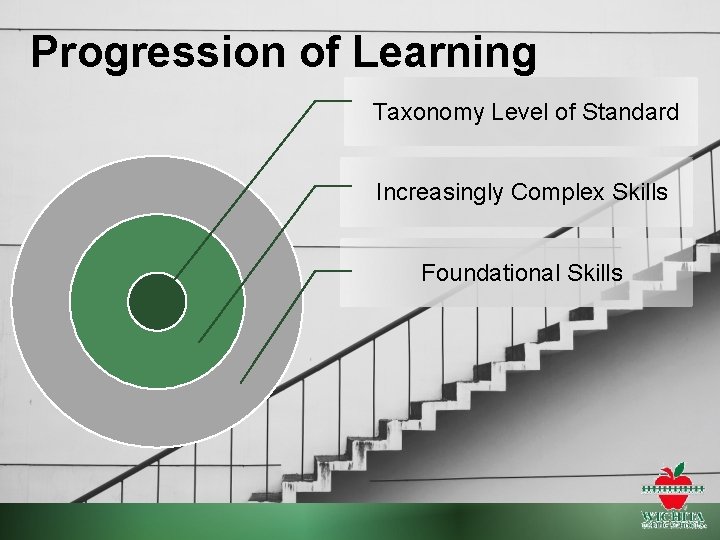
Progression of Learning Taxonomy Level of Standard Increasingly Complex Skills Foundational Skills
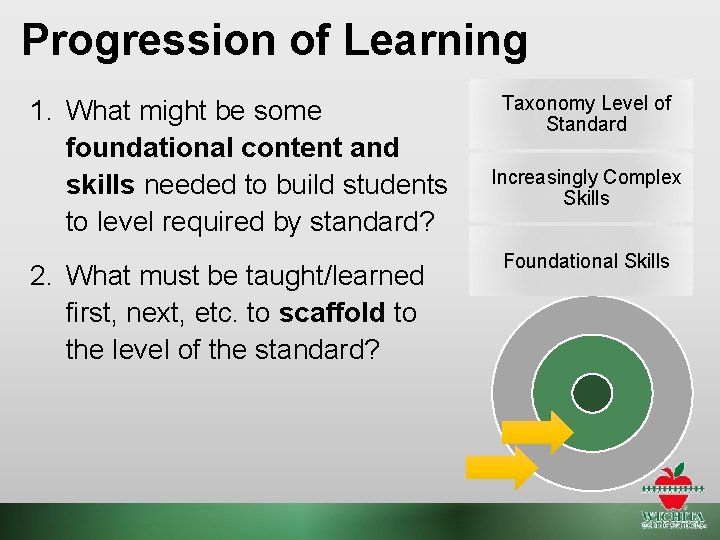
Progression of Learning 1. What might be some foundational content and skills needed to build students to level required by standard? 2. What must be taught/learned first, next, etc. to scaffold to the level of the standard? Taxonomy Level of Standard Increasingly Complex Skills Foundational Skills
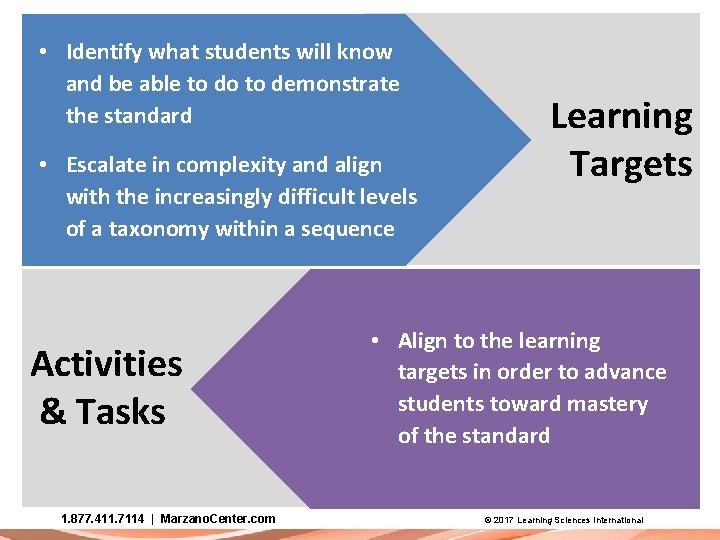
• Identify what students will know and be able to do to demonstrate the standard • Escalate in complexity and align with the increasingly difficult levels of a taxonomy within a sequence Activities & Tasks 1. 877. 411. 7114 | Marzano. Center. com Learning Targets • Align to the learning targets in order to advance students toward mastery of the standard © 2017 Learning Sciences International

Is there a teaching gap resulting in a rigor gap? How will you know? 1. 877. 411. 7114 | Marzano. Center. com © 2017 Learning Sciences International
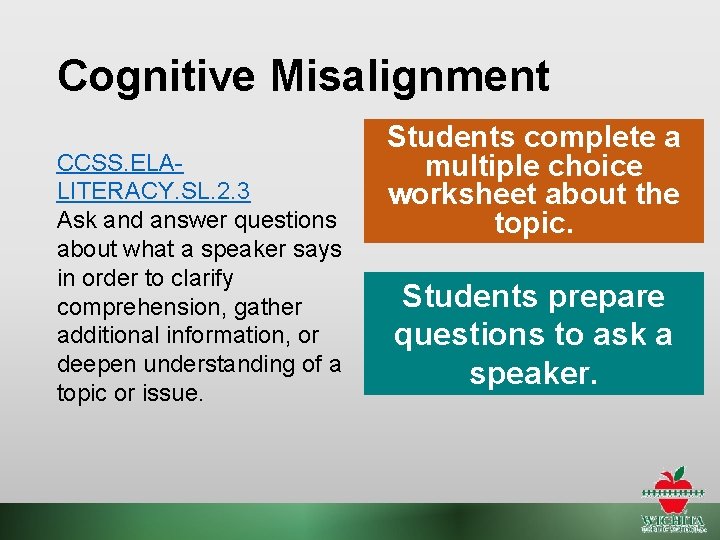
Cognitive Misalignment CCSS. ELALITERACY. SL. 2. 3 Ask and answer questions about what a speaker says in order to clarify comprehension, gather additional information, or deepen understanding of a topic or issue. Students complete a multiple choice worksheet about the topic. Students prepare questions to ask a speaker.
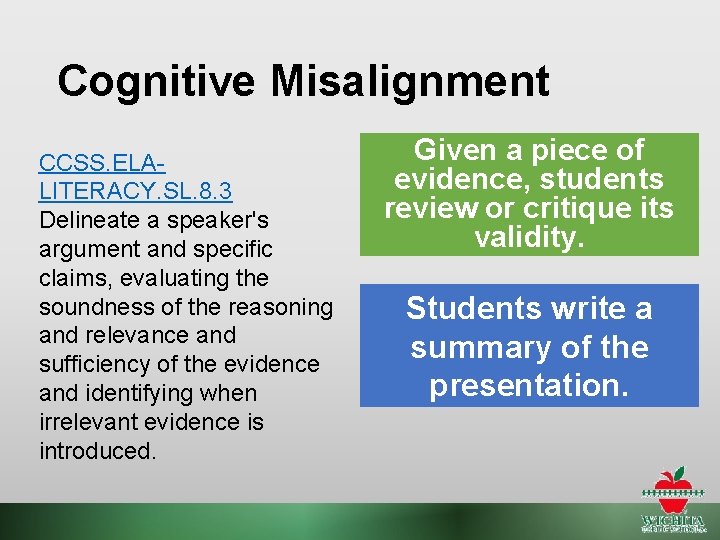
Cognitive Misalignment CCSS. ELALITERACY. SL. 8. 3 Delineate a speaker's argument and specific claims, evaluating the soundness of the reasoning and relevance and sufficiency of the evidence and identifying when irrelevant evidence is introduced. Given a piece of evidence, students review or critique its validity. Students write a summary of the presentation.
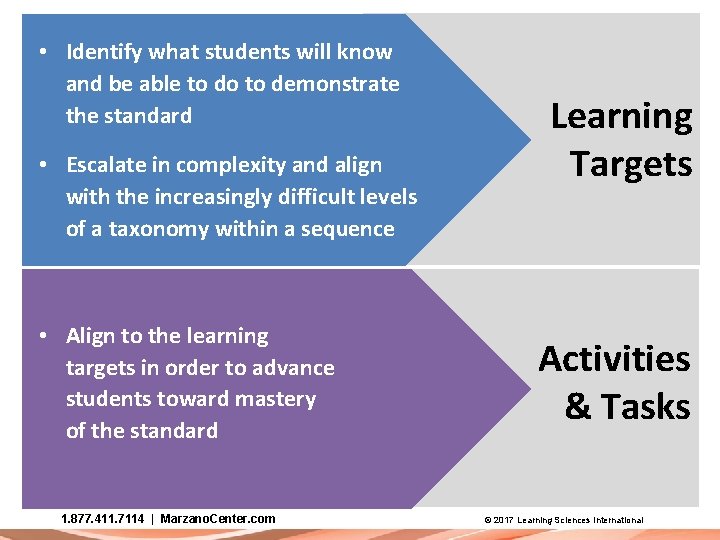
• Identify what students will know and be able to do to demonstrate the standard • Escalate in complexity and align with the increasingly difficult levels of a taxonomy within a sequence • Align to the learning targets in order to advance students toward mastery of the standard 1. 877. 411. 7114 | Marzano. Center. com Learning Targets Activities & Tasks © 2017 Learning Sciences International
51 Standards-Based Planning
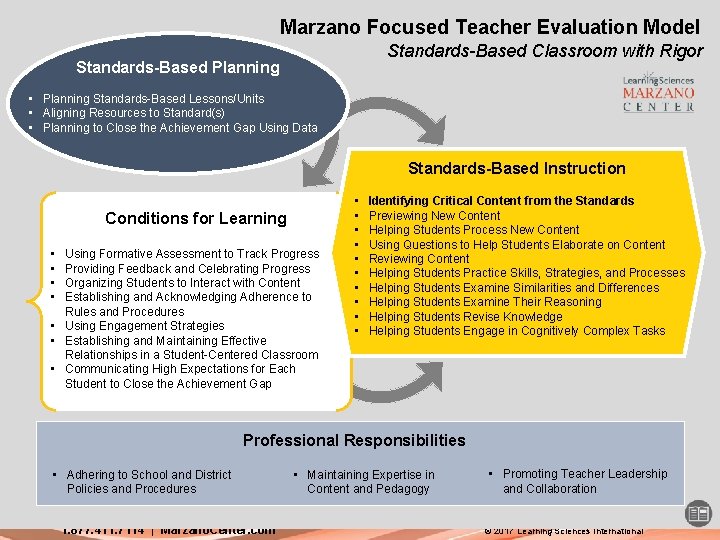
Marzano Focused Teacher Evaluation Model Standards-Based Classroom with Rigor Standards-Based Planning • Planning Standards-Based Lessons/Units • Aligning Resources to Standard(s) • Planning to Close the Achievement Gap Using Data Standards-Based Instruction Conditions for Learning • • Using Formative Assessment to Track Progress Providing Feedback and Celebrating Progress Organizing Students to Interact with Content Establishing and Acknowledging Adherence to Rules and Procedures • Using Engagement Strategies • Establishing and Maintaining Effective Relationships in a Student-Centered Classroom • Communicating High Expectations for Each Student to Close the Achievement Gap • • • Identifying Critical Content from the Standards Previewing New Content Helping Students Process New Content Using Questions to Help Students Elaborate on Content Reviewing Content Helping Students Practice Skills, Strategies, and Processes Helping Students Examine Similarities and Differences Helping Students Examine Their Reasoning Helping Students Revise Knowledge Helping Students Engage in Cognitively Complex Tasks Professional Responsibilities • Adhering to School and District Policies and Procedures 1. 877. 411. 7114 | Marzano. Center. com • Maintaining Expertise in Content and Pedagogy • Promoting Teacher Leadership and Collaboration © 2017 Learning Sciences International
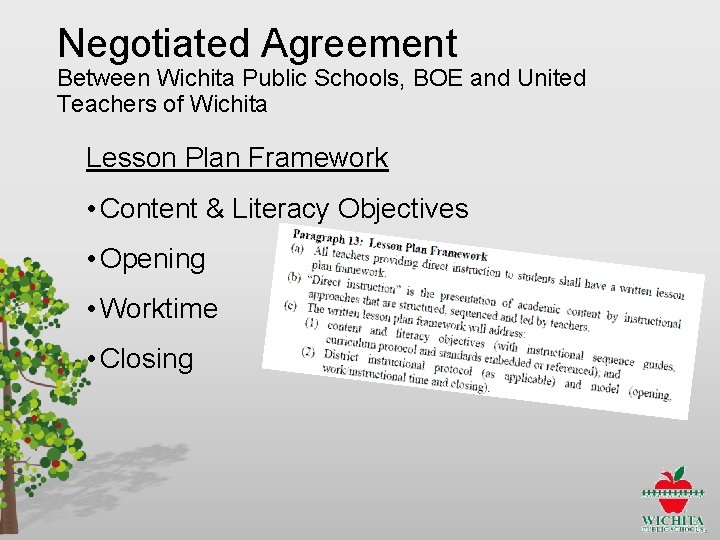
Negotiated Agreement Between Wichita Public Schools, BOE and United Teachers of Wichita Lesson Plan Framework • Content & Literacy Objectives • Opening • Worktime • Closing
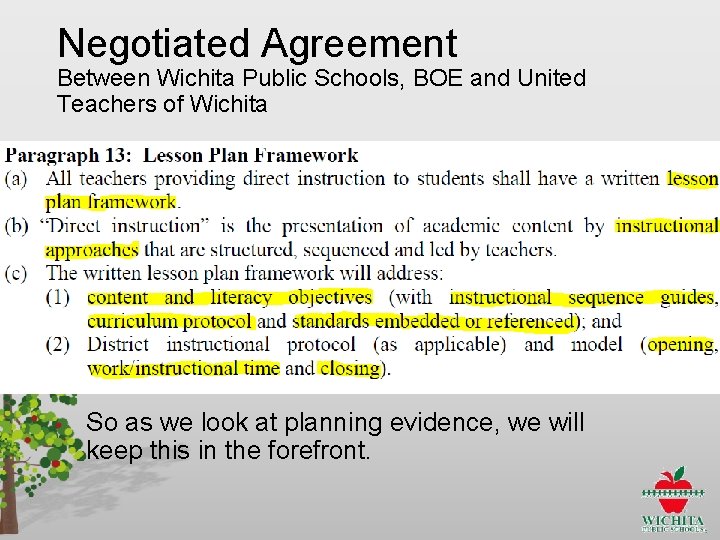
Negotiated Agreement Between Wichita Public Schools, BOE and United Teachers of Wichita Lesson Plan Framework • Content & Literacy Objectives • Opening • Worktime • Closing So as we look at planning evidence, we will keep this in the forefront.
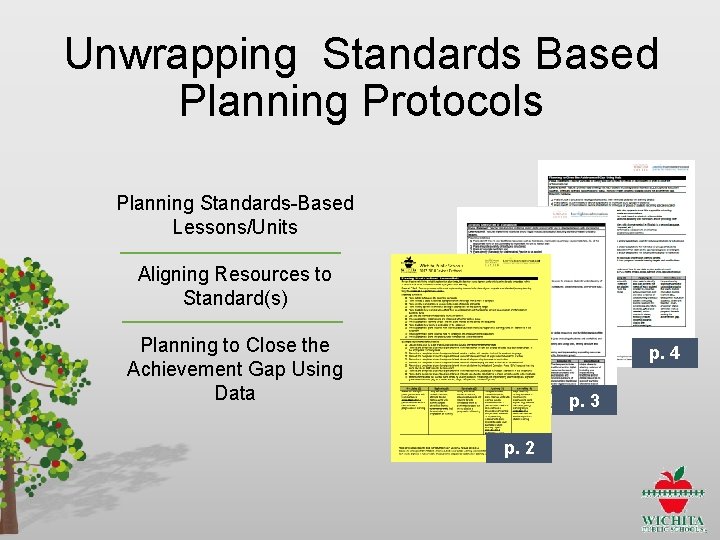
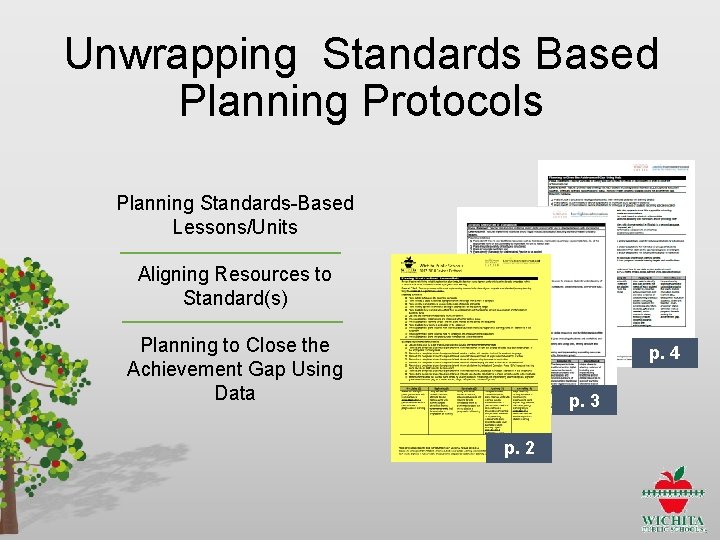
Unwrapping Standards Based Planning Protocols Planning Standards-Based Lessons/Units Aligning Resources to Standard(s) Planning to Close the Achievement Gap Using Data p. 4 p. 3 p. 2
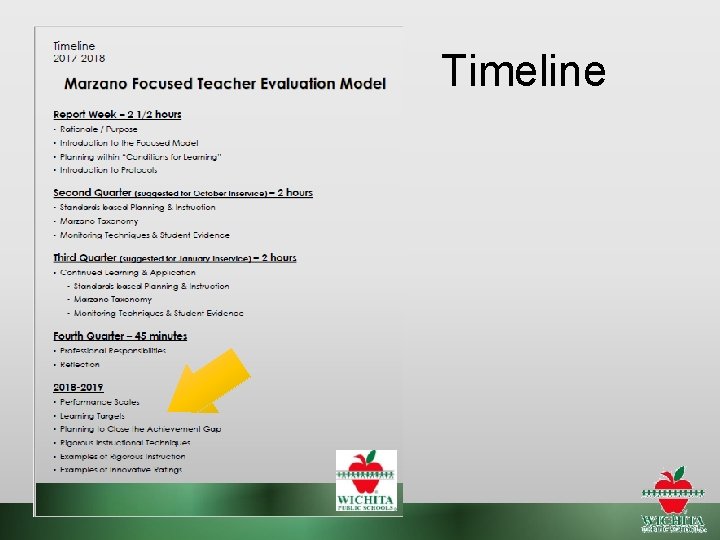
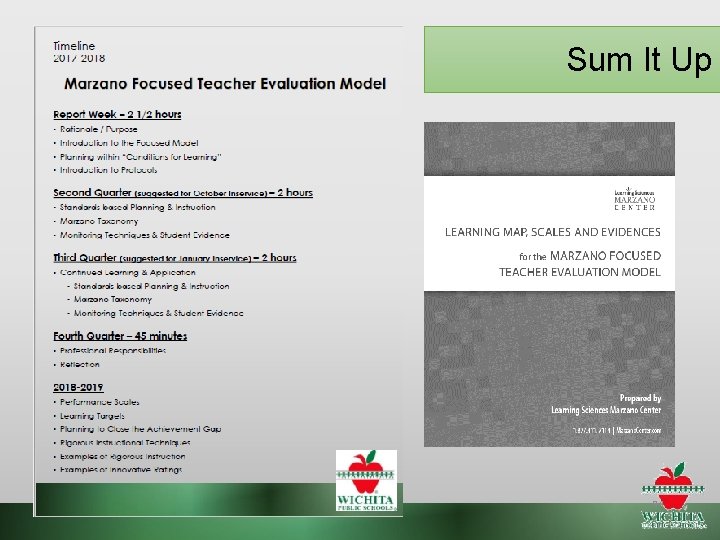
Timeline
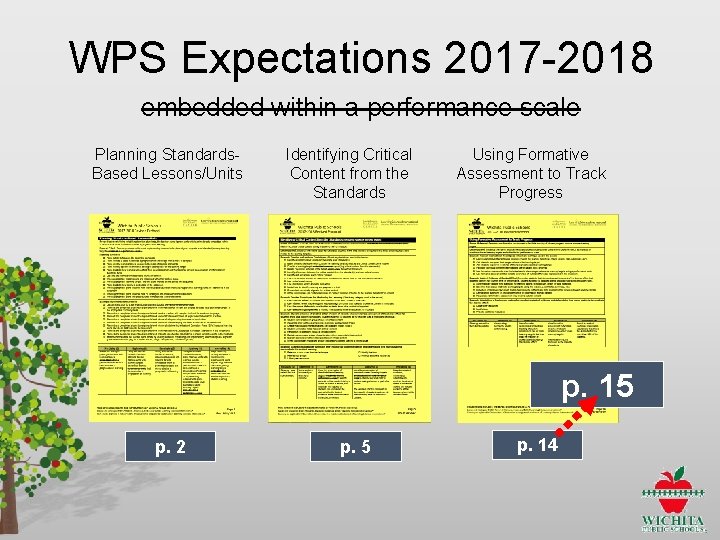
WPS Expectations 2017 -2018 embedded within a performance scale Planning Standards. Based Lessons/Units Identifying Critical Content from the Standards Using Formative Assessment to Track Progress p. 15 p. 2 p. 5 p. 14
What is a performance scale? • a progression of learning goals • used during lesson planning • used during instruction to • assess the level of understanding • increase the rigor accordingly
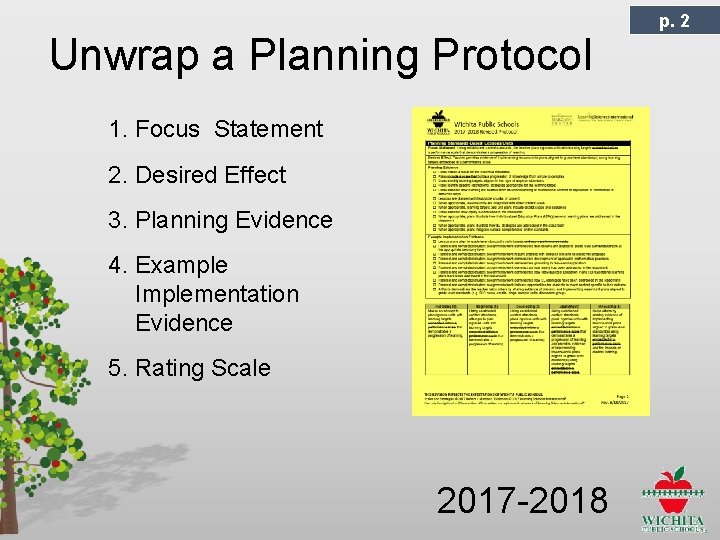
Unwrap a Planning Protocol 1. Focus Statement 2. Desired Effect 3. Planning Evidence 4. Example Implementation Evidence 5. Rating Scale 2017 -2018 p. 2
60 p. 2 Unwrap the Focus Statement “Focus Statement: Using established content standards, teacher plans How m ight you rigorous units with learning r previo us targets embedded within a learning from to day performance scale that suppor t your demonstrate a progression unders tanding of learning. ” of the stateme nt? focus
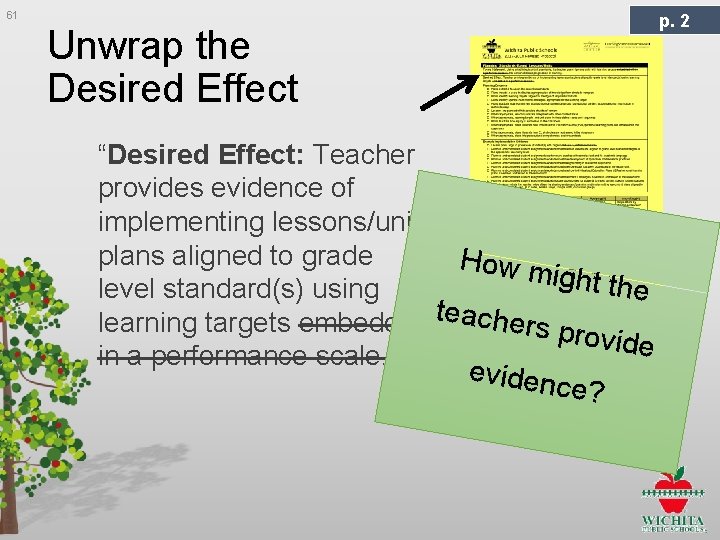
61 p. 2 Unwrap the Desired Effect “Desired Effect: Teacher provides evidence of implementing lessons/units plans aligned to grade How m ight the level standard(s) using learning targets embedded teachers pro vide in a performance scale. ” eviden ce?
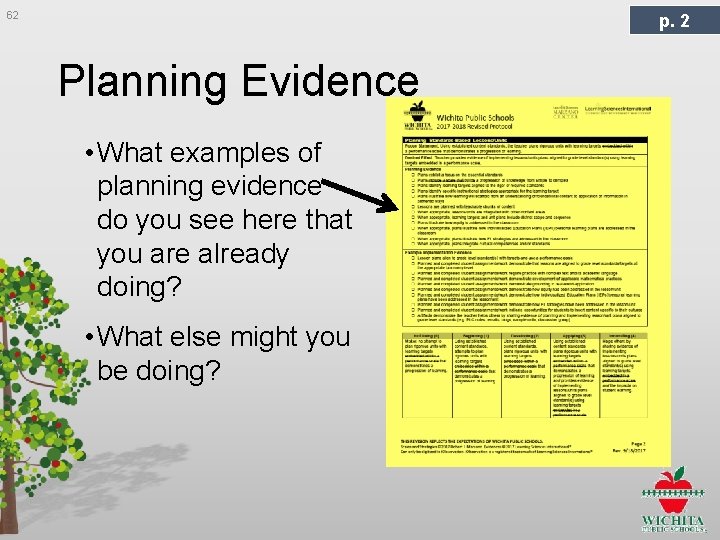
62 p. 2 Planning Evidence • What examples of planning evidence do you see here that you are already doing? • What else might you be doing?
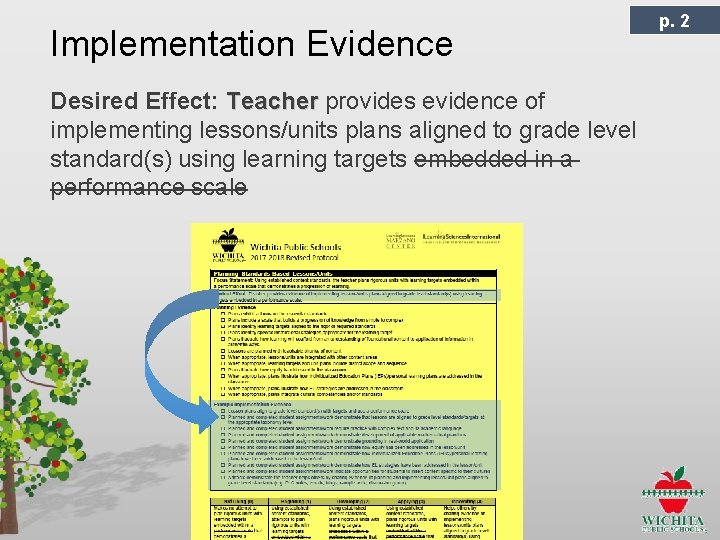
Implementation Evidence Desired Effect: Teacher provides evidence of Teacher implementing lessons/units plans aligned to grade level standard(s) using learning targets embedded in a performance scale p. 2
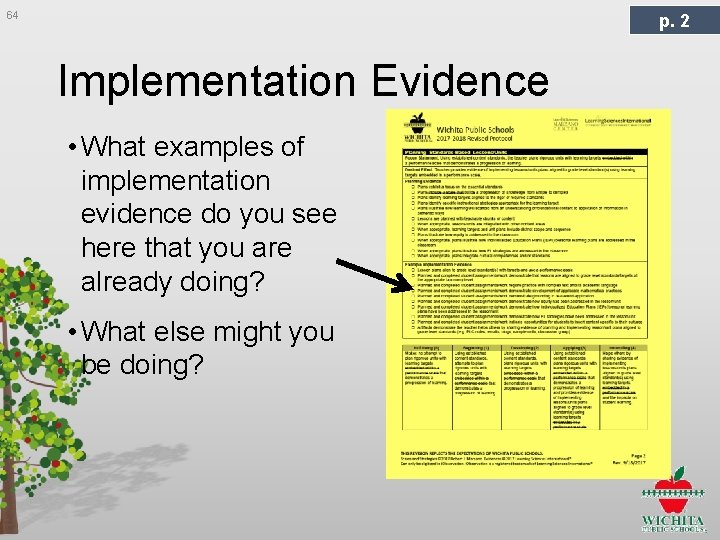
64 p. 2 Implementation Evidence • What examples of implementation evidence do you see here that you are already doing? • What else might you be doing?
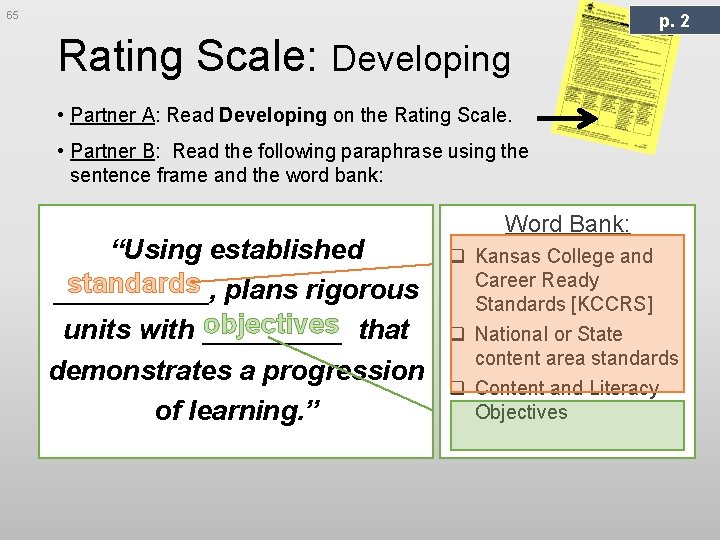
65 p. 2 Rating Scale: Developing • Partner A: Read Developing on the Rating Scale. • Partner B: Read the following paraphrase using the sentence frame and the word bank: “Using established standards plans rigorous _____, objectives that units with _____ demonstrates a progression of learning. ” Word Bank: q Kansas College and Career Ready Standards [KCCRS] q National or State content area standards q Content and Literacy Objectives
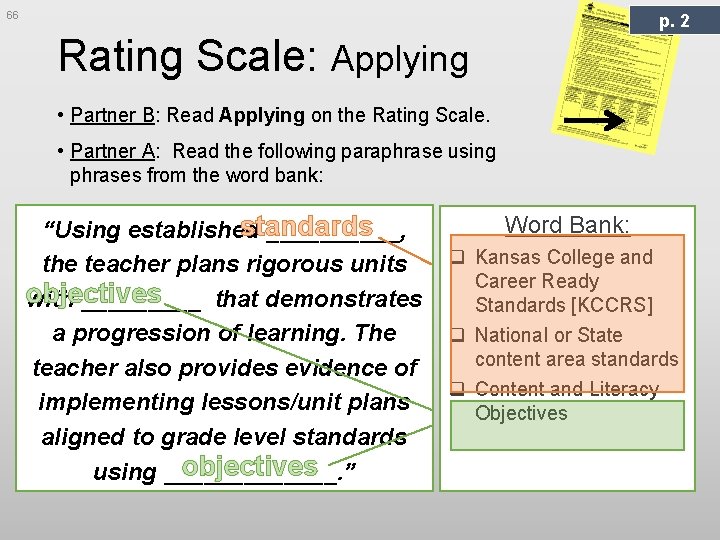
66 p. 2 Rating Scale: Applying • Partner B: Read Applying on the Rating Scale. • Partner A: Read the following paraphrase using phrases from the word bank: standards “Using established _____, the teacher plans rigorous units objectives with _____ that demonstrates a progression of learning. The teacher also provides evidence of implementing lessons/unit plans aligned to grade level standards objectives using _______. ” Word Bank: q Kansas College and Career Ready Standards [KCCRS] q National or State content area standards q Content and Literacy Objectives
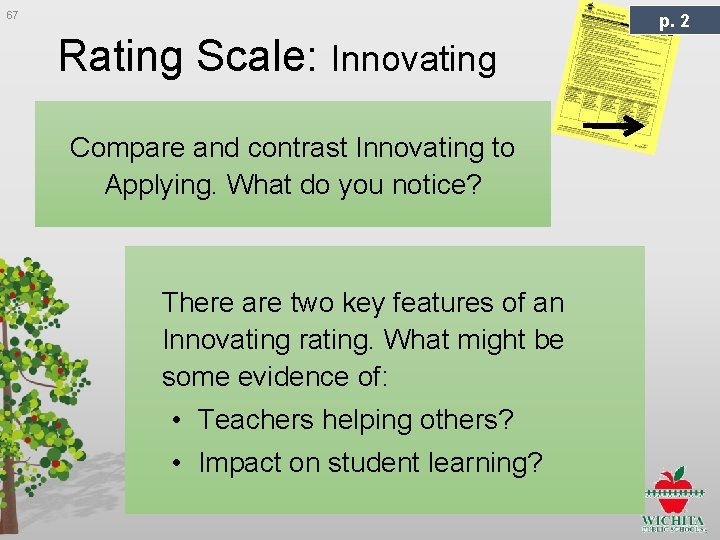
67 p. 2 Rating Scale: Innovating Compare and contrast Innovating to Applying. What do you notice? There are two key features of an Innovating rating. What might be some evidence of: • Teachers helping others? • Impact on student learning?
Unwrapping Standards Based Planning Protocols Planning Standards-Based Lessons/Units Aligning Resources to Standard(s) Planning to Close the Achievement Gap Using Data p. 4 p. 3 p. 2
Standards-Based Instruction
Marzano Focused Teacher Evaluation Model Standards-Based Classroom with Rigor Standards-Based Planning • Planning Standards-Based Lessons/Units • Aligning Resources to Standard(s) • Planning to Close the Achievement Gap Using Data Standards-Based Instruction Conditions for Learning • • Using Formative Assessment to Track Progress Providing Feedback and Celebrating Progress Organizing Students to Interact with Content Establishing and Acknowledging Adherence to Rules and Procedures • Using Engagement Strategies • Establishing and Maintaining Effective Relationships in a Student-Centered Classroom • Communicating High Expectations for Each Student to Close the Achievement Gap • • • Identifying Critical Content from the Standards Previewing New Content Helping Students Process New Content Using Questions to Help Students Elaborate on Content Reviewing Content Helping Students Practice Skills, Strategies, and Processes Helping Students Examine Similarities and Differences Helping Students Examine Their Reasoning Helping Students Revise Knowledge Helping Students Engage in Cognitively Complex Tasks Professional Responsibilities • Adhering to School and District Policies and Procedures 1. 877. 411. 7114 | Marzano. Center. com • Maintaining Expertise in Content and Pedagogy • Promoting Teacher Leadership and Collaboration © 2017 Learning Sciences International
Identifying Critical Content from the Standards p. 5 in d e r ui Req lesson y ever
Unwrap the Focus Statement “Focus Statement: Teacher uses the progression of standards-based learning targets (embedded within a performance scale) to identify accurate critical content during a lesson or part of a lesson. ” 2017 -2018 p. 5 Taxonomy Level of Standard Increasingly Complex Skills Foundational Skills 72
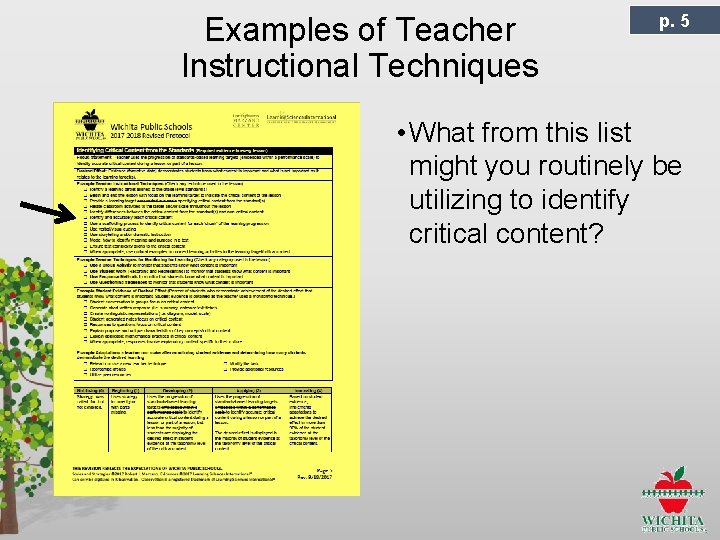
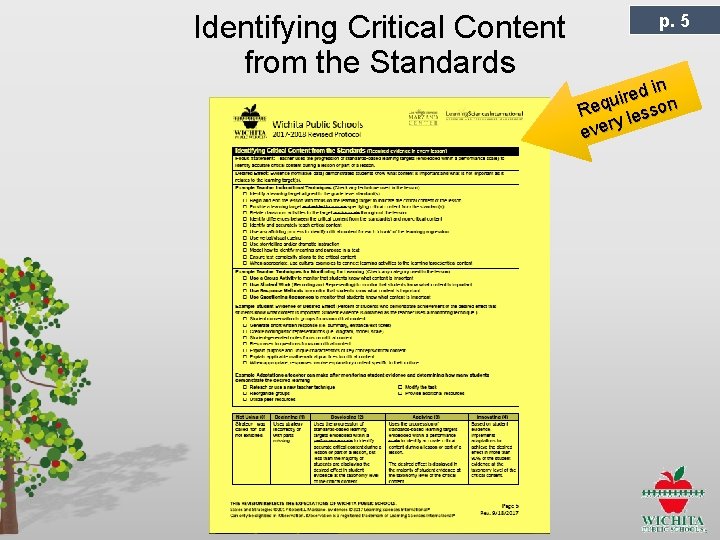
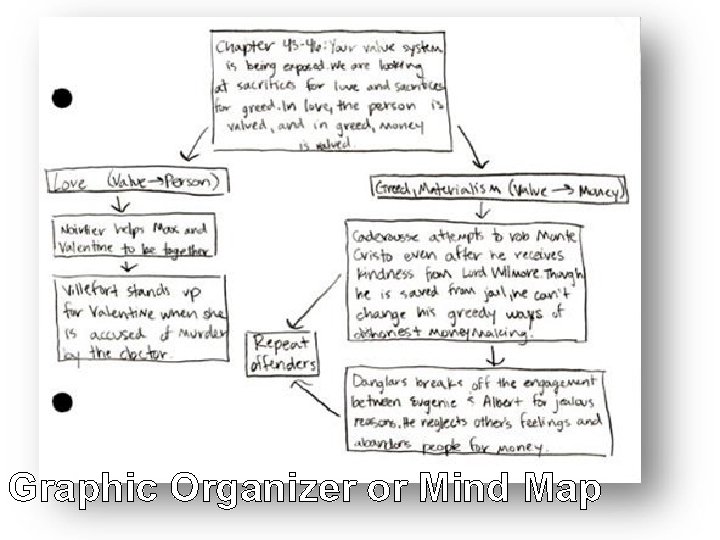
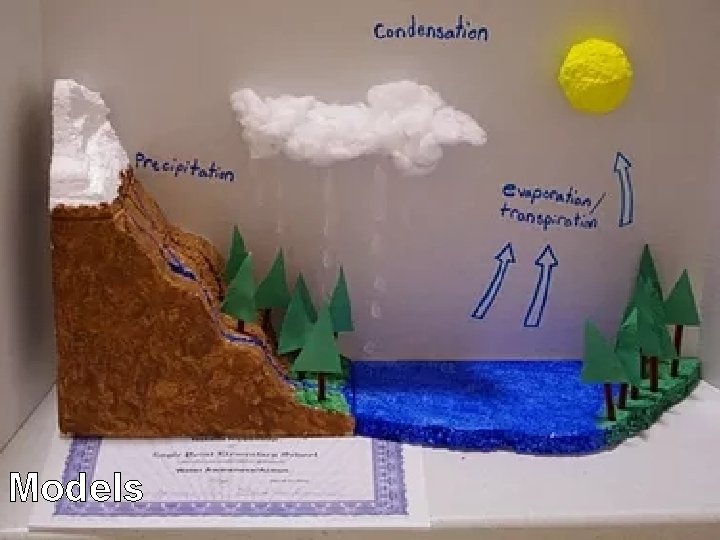
Examples of Teacher Instructional Techniques p. 5 • What from this list might you routinely be utilizing to identify critical content?
Additional Techniques for Identifying Critical Content p. 5
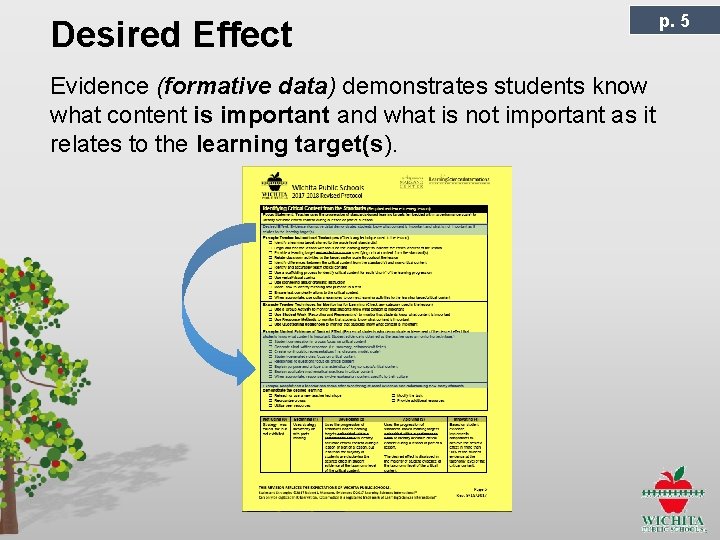
Desired Effect p. 5 Evidence (formative data) demonstrates students know what content is important and what is not important as it relates to the learning target(s).
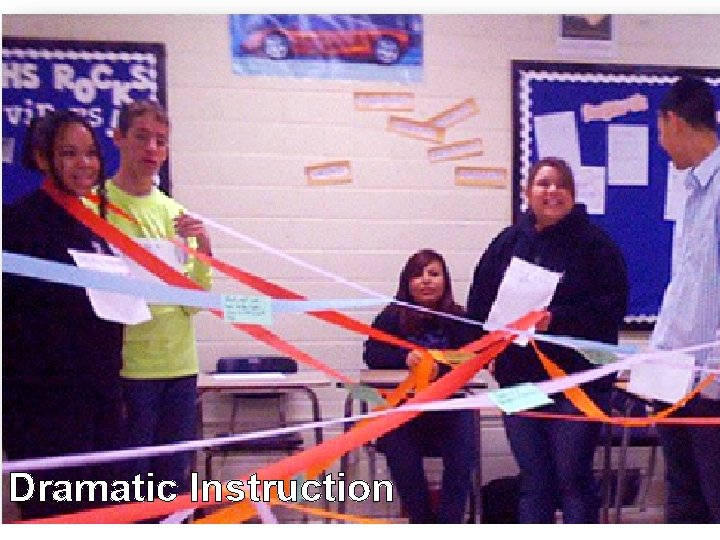
Dramatic Instruction
Graphic Organizer or Mind Map
Models
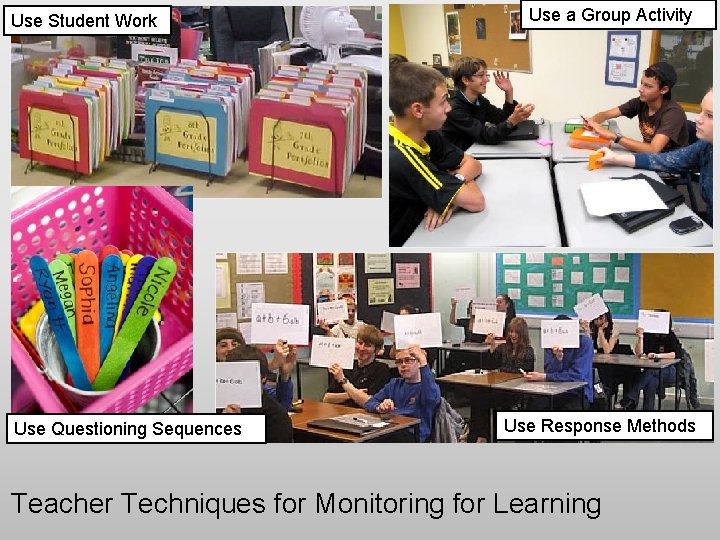
Use Student Work Use Questioning Sequences Use a Group Activity Use Response Methods Teacher Techniques for Monitoring for Learning
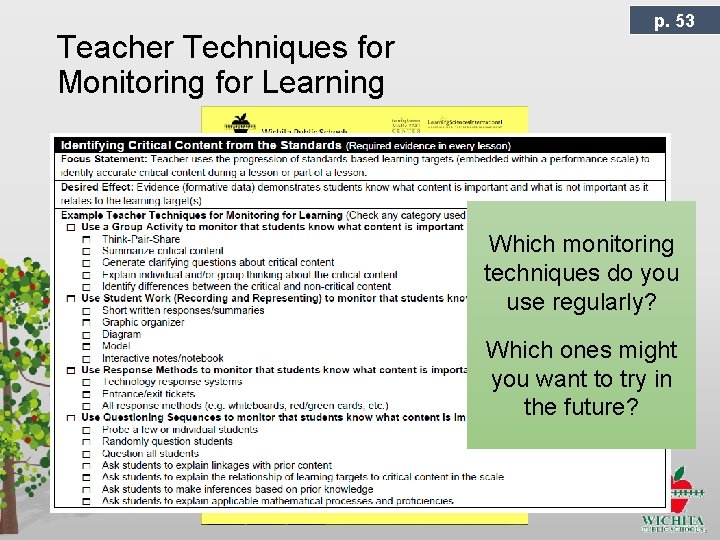
Teacher Techniques for Monitoring for Learning p. 53 Which monitoring techniques do you use regularly? Which ones might you want to try in the future?
81 p. 5 Rating Scale: Innovating Compare and contrast Innovating to Applying. What do you notice? What might be some evidence of “implementing adaptations to achieve the desired effect? ”
Teacher Clarity Teacher clarity about success criteria (0. 75 ES) 1. What am I learning today? 2. Why am I learning this? 3. How will I know that I learned it? • Nearly 2 year’s achievement in 1 year’s time • Learning targets aligned to the complexity of the standards (Fisher, Frey & Hattie, 2016, p. 27)
Quick Write • Reflecting on the content from today, what might be some things you will be intentional to integrate into your practice? • How might these protocols be beneficial when lesson planning?
Sum It Up 84
Reflection Clicks Clunks What have you learned today? What might you still be wondering? 85
- Slides: 85