
Excavations CALL BEFORE YOU DIG 4 Determine the
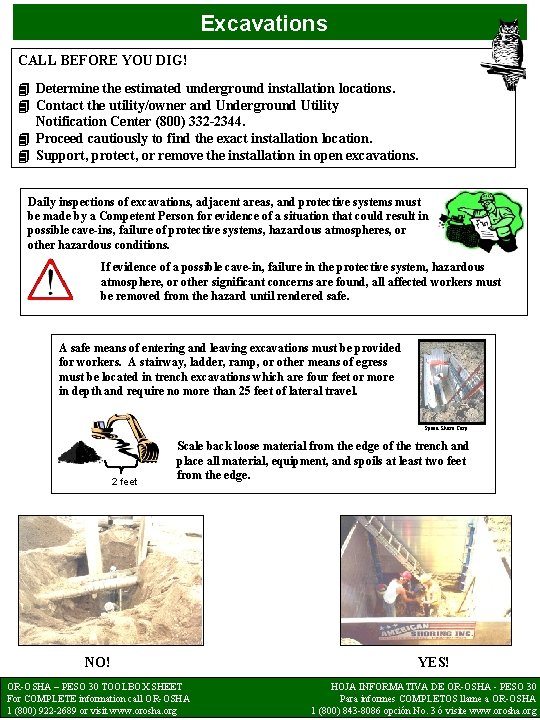
Excavations CALL BEFORE YOU DIG! 4 Determine the estimated underground installation locations. 4 Contact the utility/owner and Underground Utility Notification Center (800) 332 -2344. 4 Proceed cautiously to find the exact installation location. 4 Support, protect, or remove the installation in open excavations. Daily inspections of excavations, adjacent areas, and protective systems must be made by a Competent Person for evidence of a situation that could result in possible cave-ins, failure of protective systems, hazardous atmospheres, or other hazardous conditions. If evidence of a possible cave-in, failure in the protective system, hazardous atmosphere, or other significant concerns are found, all affected workers must be removed from the hazard until rendered safe. A safe means of entering and leaving excavations must be provided for workers. A stairway, ladder, ramp, or other means of egress must be located in trench excavations which are four feet or more in depth and require no more than 25 feet of lateral travel. Speed Shore Corp. 2 feet Scale back loose material from the edge of the trench and place all material, equipment, and spoils at least two feet from the edge. NO! OR-OSHA – PESO 30 TOOLBOX SHEET For COMPLETE information call OR-OSHA 1 (800) 922 -2689 or visit www. orosha. org YES! HOJA INFORMATIVA DE OR-OSHA - PESO 30 Para informes COMPLETOS llame a OR-OSHA 1 (800) 843 -8086 opción No. 3 ó visite www. orosha. org
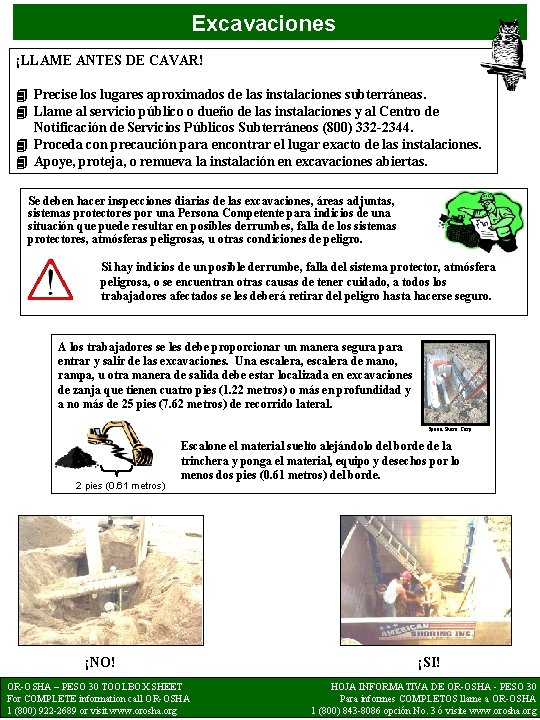
Excavaciones ¡LLAME ANTES DE CAVAR! 4 Precise los lugares aproximados de las instalaciones subterráneas. 4 Llame al servicio público o dueño de las instalaciones y al Centro de Notificación de Servicios Públicos Subterráneos (800) 332 -2344. 4 Proceda con precaución para encontrar el lugar exacto de las instalaciones. 4 Apoye, proteja, o remueva la instalación en excavaciones abiertas. Se deben hacer inspecciones diarias de las excavaciones, áreas adjuntas, sistemas protectores por una Persona Competente para indicios de una situación que puede resultar en posibles derrumbes, falla de los sistemas protectores, atmósferas peligrosas, u otras condiciones de peligro. Si hay indicios de un posible derrumbe, falla del sistema protector, atmósfera peligrosa, o se encuentran otras causas de tener cuidado, a todos los trabajadores afectados se les deberá retirar del peligro hasta hacerse seguro. A los trabajadores se les debe proporcionar un manera segura para entrar y salir de las excavaciones. Una escalera, escalera de mano, rampa, u otra manera de salida debe estar localizada en excavaciones de zanja que tienen cuatro pies (1. 22 metros) o más en profundidad y a no más de 25 pies (7. 62 metros) de recorrido lateral. Speed Shore Corp. 2 pies (0. 61 metros) Escalone el material suelto alejándolo del borde de la trinchera y ponga el material, equipo y desechos por lo menos dos pies (0. 61 metros) del borde. ¡NO! OR-OSHA – PESO 30 TOOLBOX SHEET For COMPLETE information call OR-OSHA 1 (800) 922 -2689 or visit www. orosha. org ¡SI! HOJA INFORMATIVA DE OR-OSHA - PESO 30 Para informes COMPLETOS llame a OR-OSHA 1 (800) 843 -8086 opción No. 3 ó visite www. orosha. org
- Slides: 2