
Excavation Safety 29 CFR 1926 650 1 Excavation





- Slides: 49
Excavation Safety 29 CFR 1926. 650 1
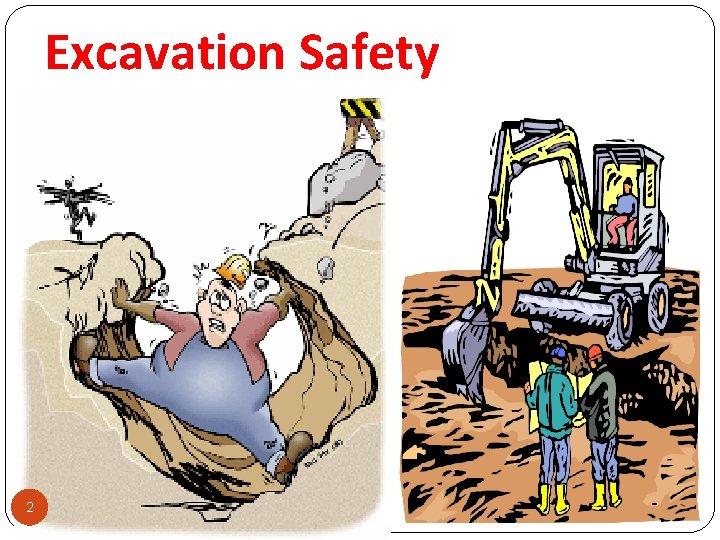
Excavation Safety 2
3 19/5/2021
4
Piling To Prevent Soil Collapse 5
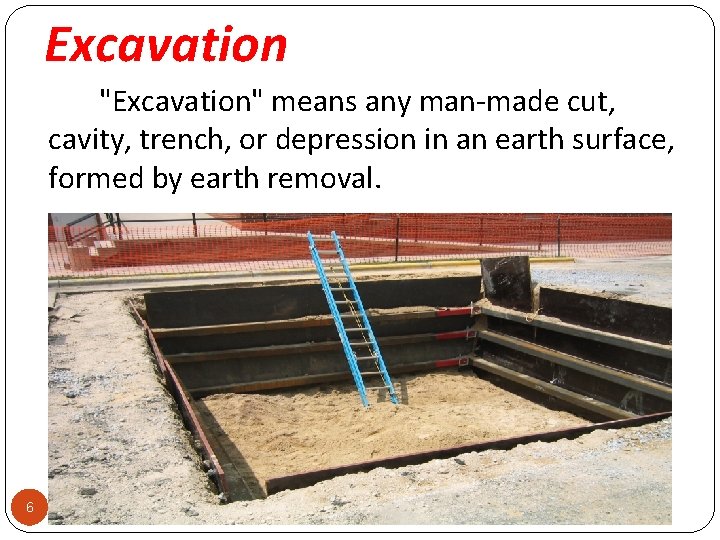
Excavation "Excavation" means any man-made cut, cavity, trench, or depression in an earth surface, formed by earth removal. 6 19/5/2021
Trench A narrow underground excavation that is deeper than it’s width but not wider than 4. 5 m (Measured at the bottom) 7
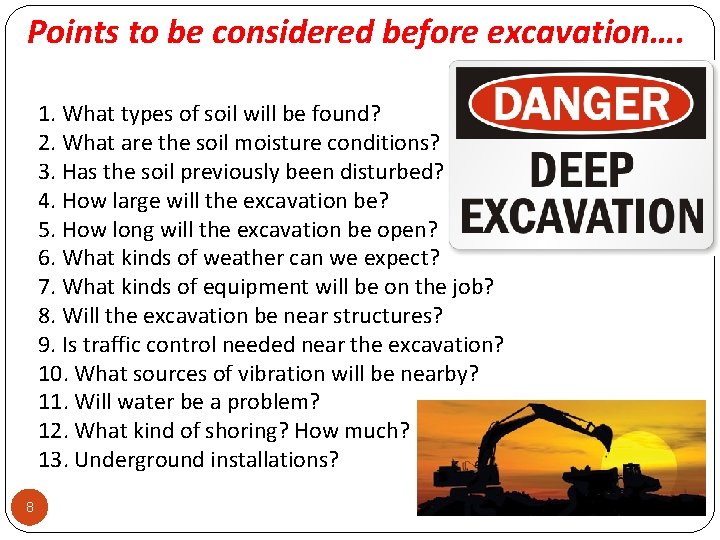
Points to be considered before excavation…. 1. What types of soil will be found? 2. What are the soil moisture conditions? 3. Has the soil previously been disturbed? 4. How large will the excavation be? 5. How long will the excavation be open? 6. What kinds of weather can we expect? 7. What kinds of equipment will be on the job? 8. Will the excavation be near structures? 9. Is traffic control needed near the excavation? 10. What sources of vibration will be nearby? 11. Will water be a problem? 12. What kind of shoring? How much? 13. Underground installations? 8
Types of Excavation There are 2 types of excavation, Normal excavation - <1. 2 m (or) 6 ft Deep excavation - >1. 2 m (or) 6 ft 9
Hazards of Excavation falling onto man (Cave in). Man falling into excavation. Vehicle falling into excavation. Underground electrical cables and utility lines. Exposure to toxic, irritating (or) flammable gases. Confined spaces. Water accumulation. Oxygen deficiency. 10 19/5/2021
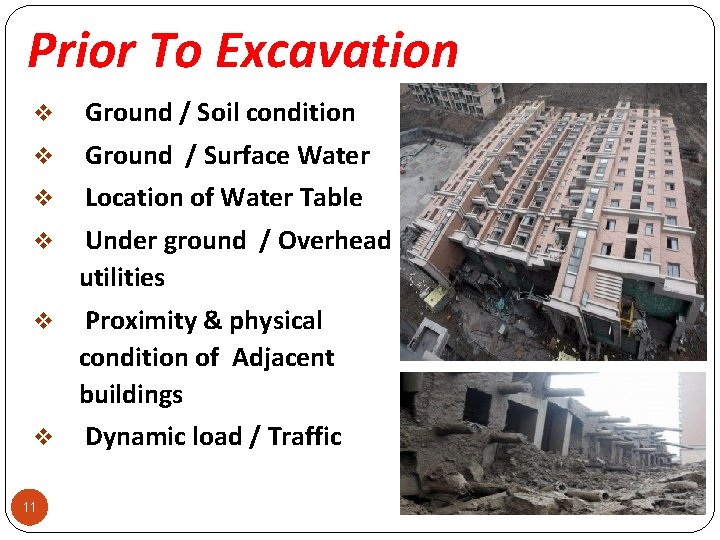
Prior To Excavation v Ground / Soil condition v Ground / Surface Water v Location of Water Table v Under ground / Overhead utilities v Proximity & physical condition of Adjacent buildings v Dynamic load / Traffic 11 19/5/2021
Soil Classification Type A – Clay Compressive Strength of 143. 69 k. N / M 2. or greater. Type B – Granular Soil Compressive Strength between 47. 91 – 143. 69 k. N / M 2 Type C – Gravel 12 Compressive Strength of 47. 91 k. N / M 2 or lesser
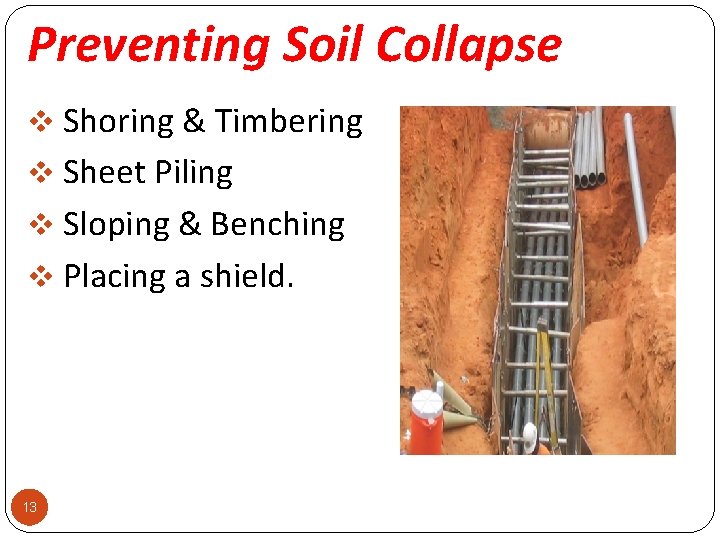
Preventing Soil Collapse v Shoring & Timbering v Sheet Piling v Sloping & Benching v Placing a shield. 13
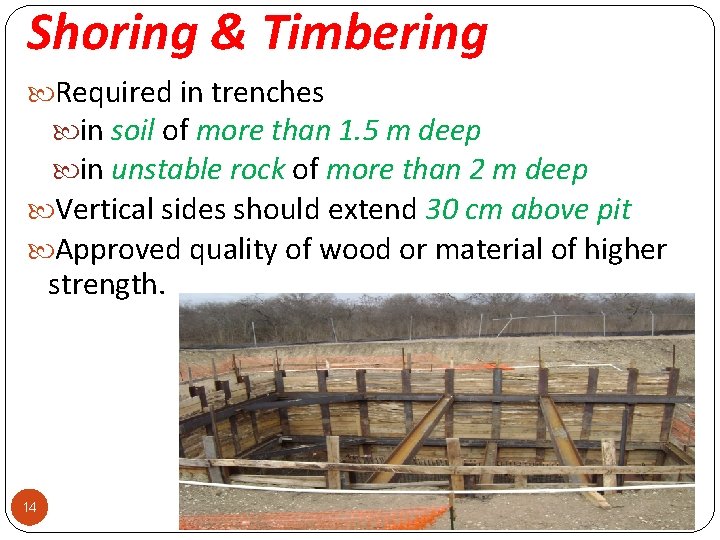
Shoring & Timbering Required in trenches in soil of more than 1. 5 m deep in unstable rock of more than 2 m deep Vertical sides should extend 30 cm above pit Approved quality of wood or material of higher strength. 14 19/5/2021
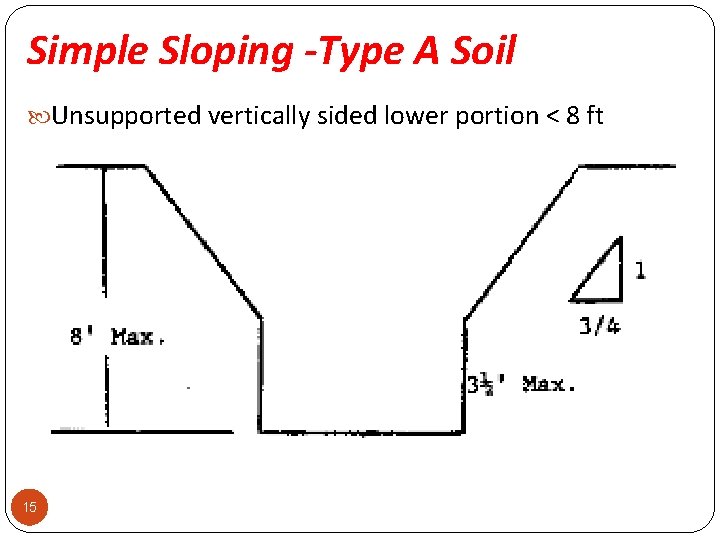
Simple Sloping -Type A Soil Unsupported vertically sided lower portion < 8 ft 15
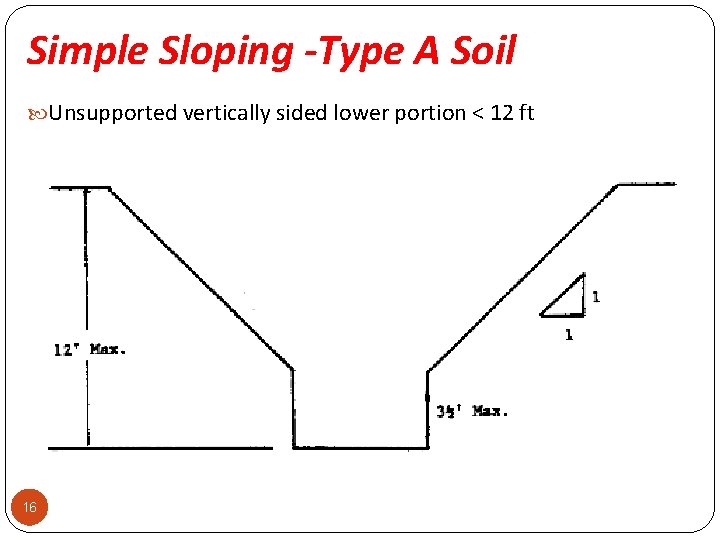
Simple Sloping -Type A Soil Unsupported vertically sided lower portion < 12 ft 16
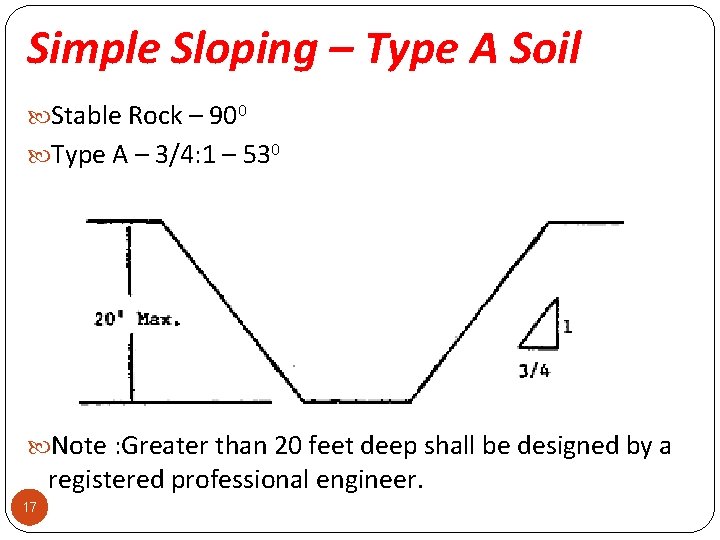
Simple Sloping – Type A Soil Stable Rock – 900 Type A – 3/4: 1 – 530 Note : Greater than 20 feet deep shall be designed by a registered professional engineer. 17
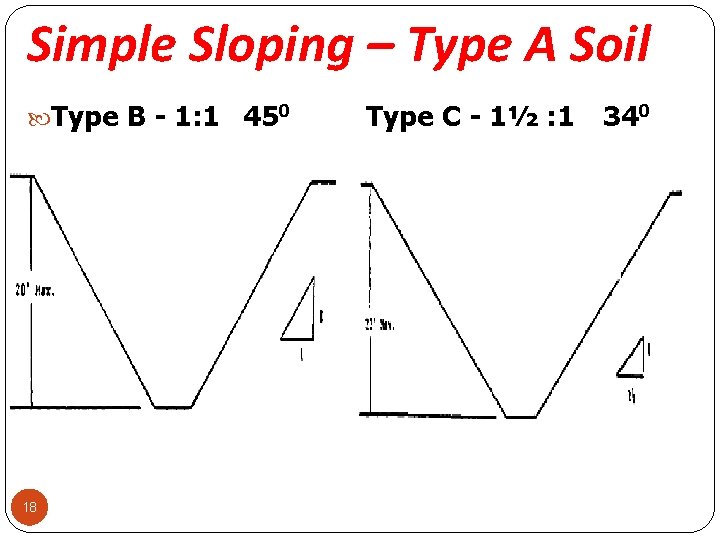
Simple Sloping – Type A Soil Type B - 1: 1 450 18 Type C - 1½ : 1 340
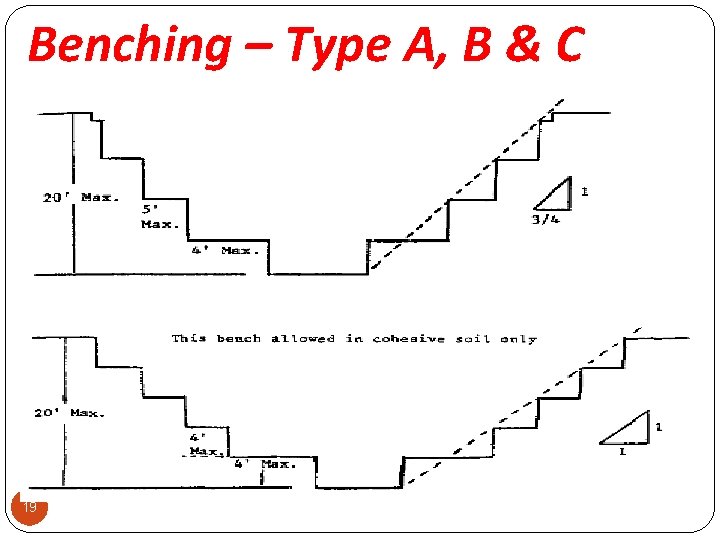
Benching – Type A, B & C 19
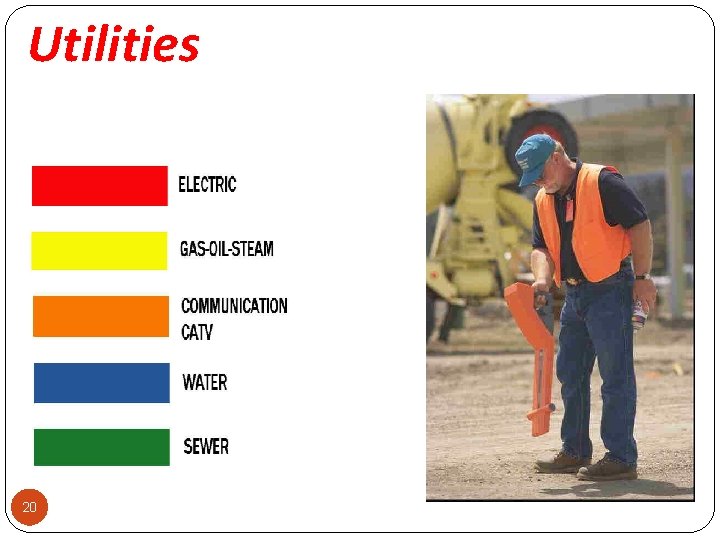
Utilities 20
21 19/5/2021
22 19/5/2021
23 19/5/2021
24 19/5/2021
25 19/5/2021
26 19/5/2021
27 19/5/2021
28 19/5/2021
29 19/5/2021
30 19/5/2021
31 19/5/2021
32 19/5/2021
33 19/5/2021
34 19/5/2021
35 19/5/2021
36 19/5/2021
37 19/5/2021
38 19/5/2021
39 19/5/2021
40 19/5/2021
41 19/5/2021
42 19/5/2021
43 19/5/2021
44 19/5/2021
45 19/5/2021
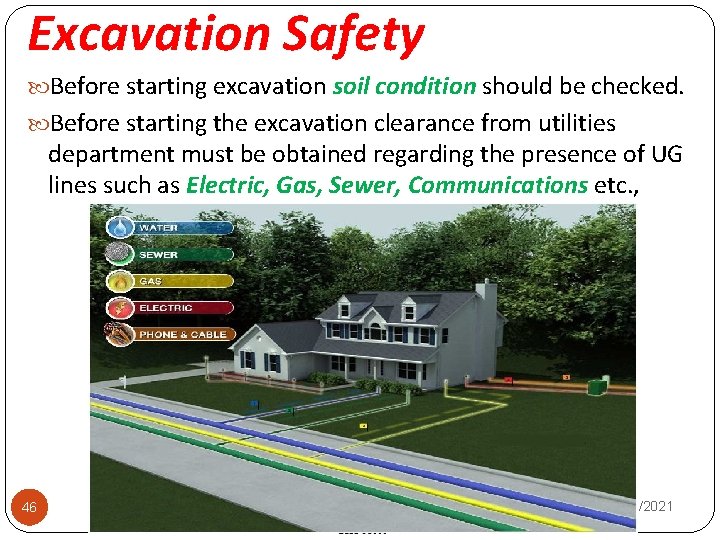
Excavation Safety Before starting excavation soil condition should be checked. Before starting the excavation clearance from utilities department must be obtained regarding the presence of UG lines such as Electric, Gas, Sewer, Communications etc. , 46 19/5/2021
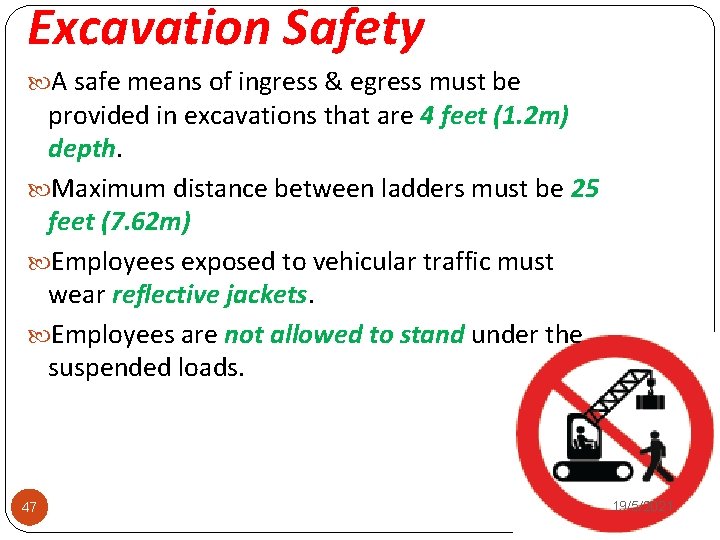
Excavation Safety A safe means of ingress & egress must be provided in excavations that are 4 feet (1. 2 m) depth. Maximum distance between ladders must be 25 feet (7. 62 m) Employees exposed to vehicular traffic must wear reflective jackets. Employees are not allowed to stand under the suspended loads. 47 19/5/2021
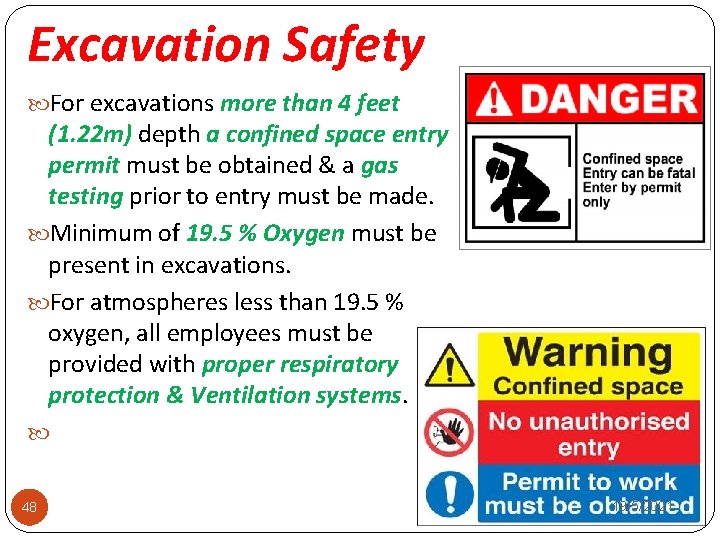
Excavation Safety For excavations more than 4 feet (1. 22 m) depth a confined space entry permit must be obtained & a gas testing prior to entry must be made. Minimum of 19. 5 % Oxygen must be present in excavations. For atmospheres less than 19. 5 % oxygen, all employees must be provided with proper respiratory protection & Ventilation systems. 48 19/5/2021
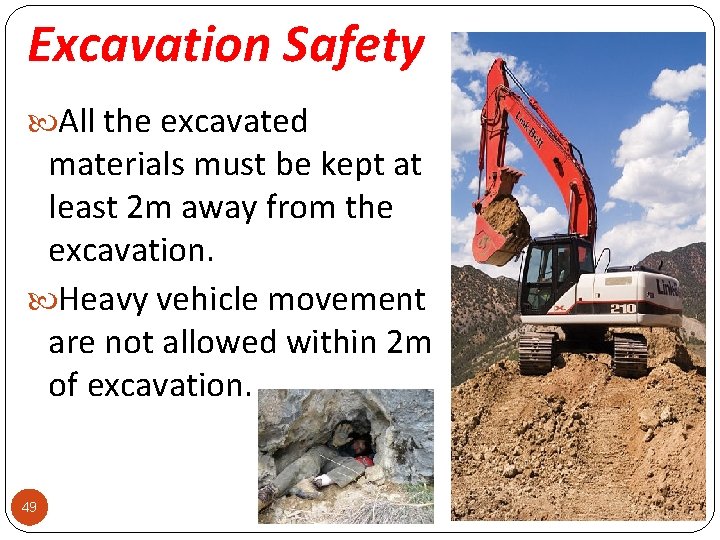
Excavation Safety All the excavated materials must be kept at least 2 m away from the excavation. Heavy vehicle movement are not allowed within 2 m of excavation. 49 19/5/2021