
EXAMPLES OF GENETIC CHANGE Examples of physical traits




- Slides: 64
EXAMPLES OF GENETIC CHANGE
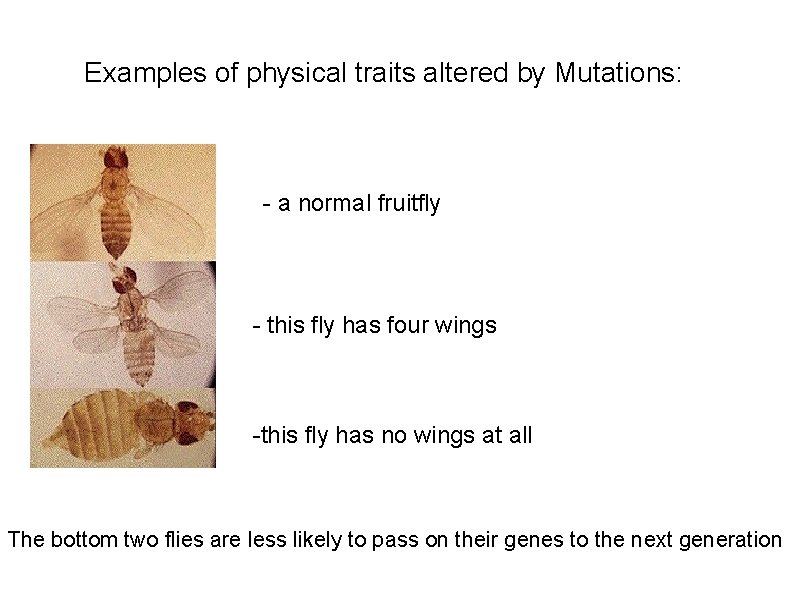
Examples of physical traits altered by Mutations: - a normal fruitfly - this fly has four wings -this fly has no wings at all The bottom two flies are less likely to pass on their genes to the next generation
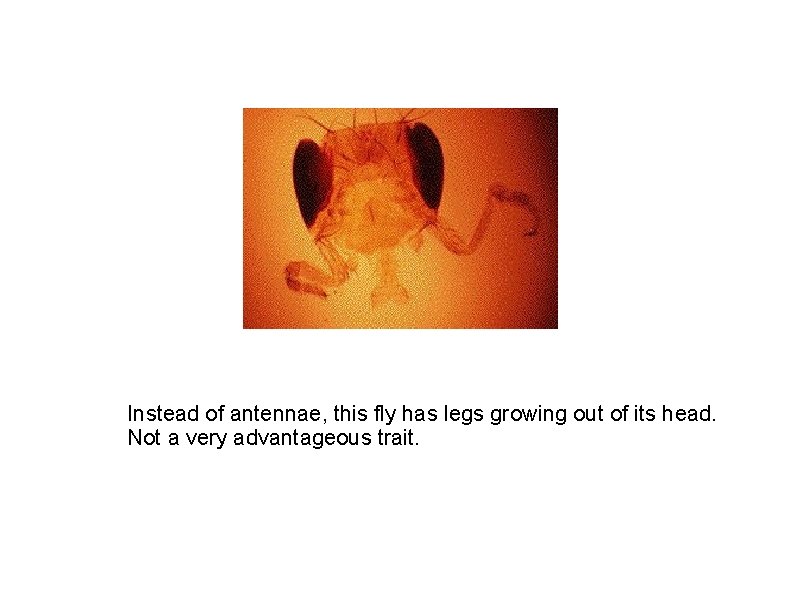
Instead of antennae, this fly has legs growing out of its head. Not a very advantageous trait.
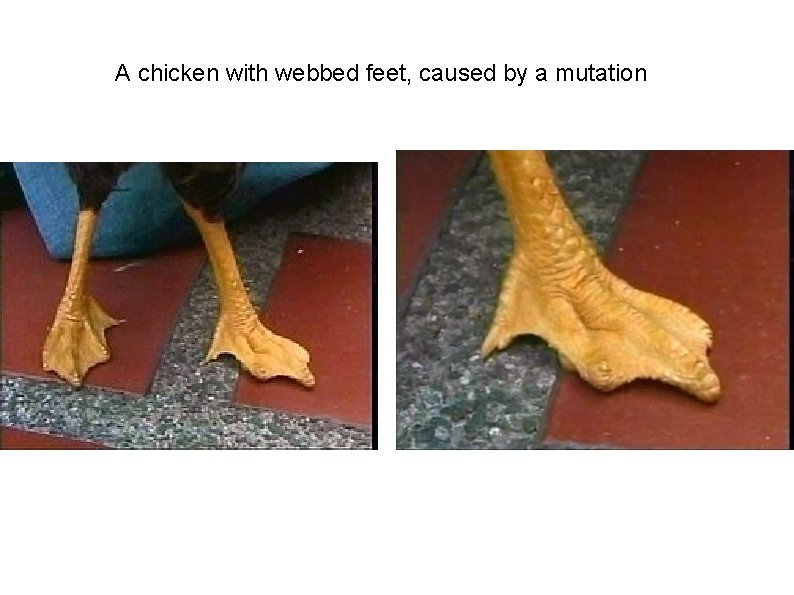
A chicken with webbed feet, caused by a mutation
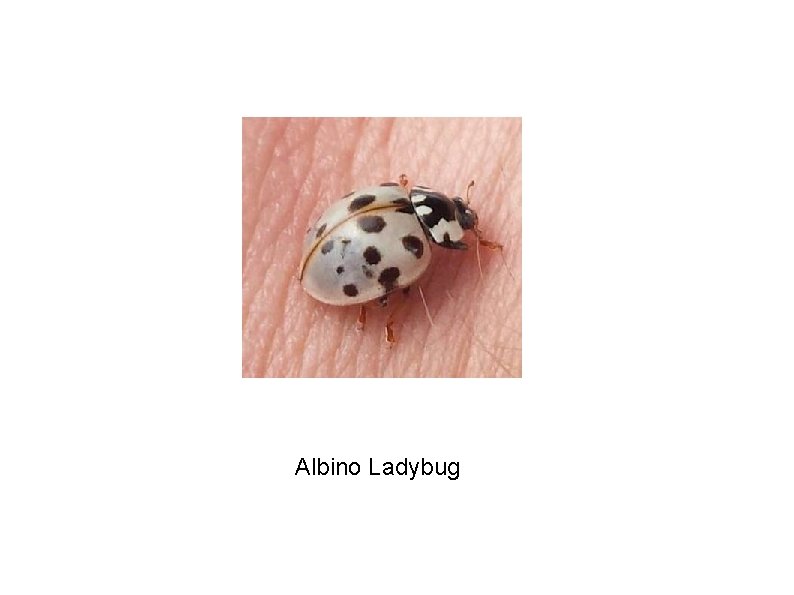
Albino Ladybug
If mutations happen to create a beneficial variation of a gene, that gene will spread through a population.
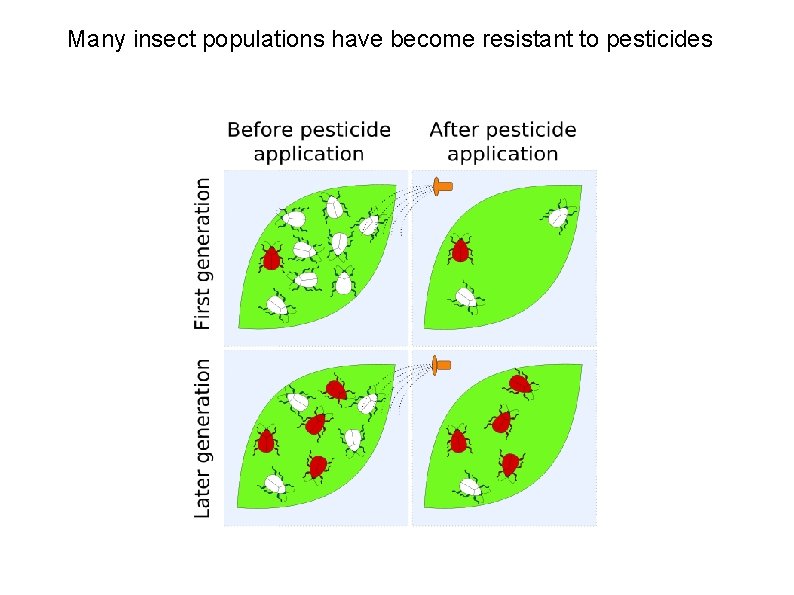
Many insect populations have become resistant to pesticides
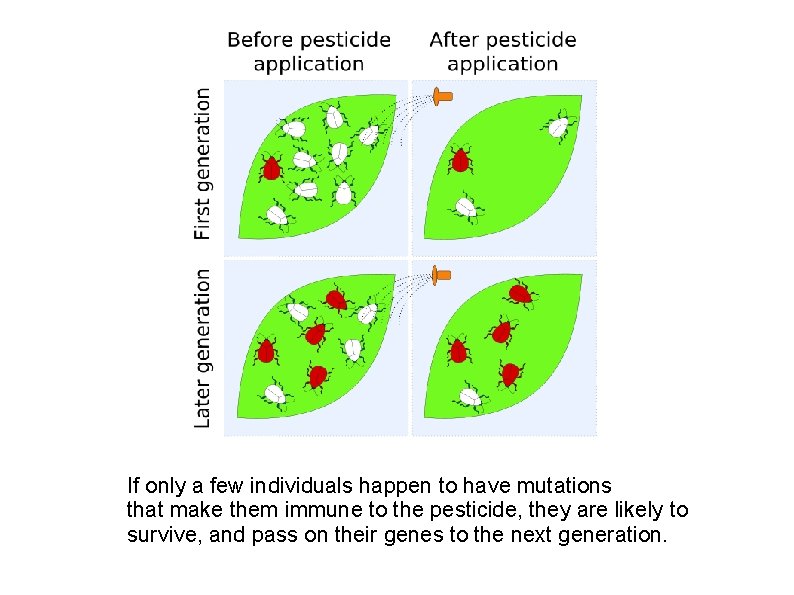
If only a few individuals happen to have mutations that make them immune to the pesticide, they are likely to survive, and pass on their genes to the next generation.
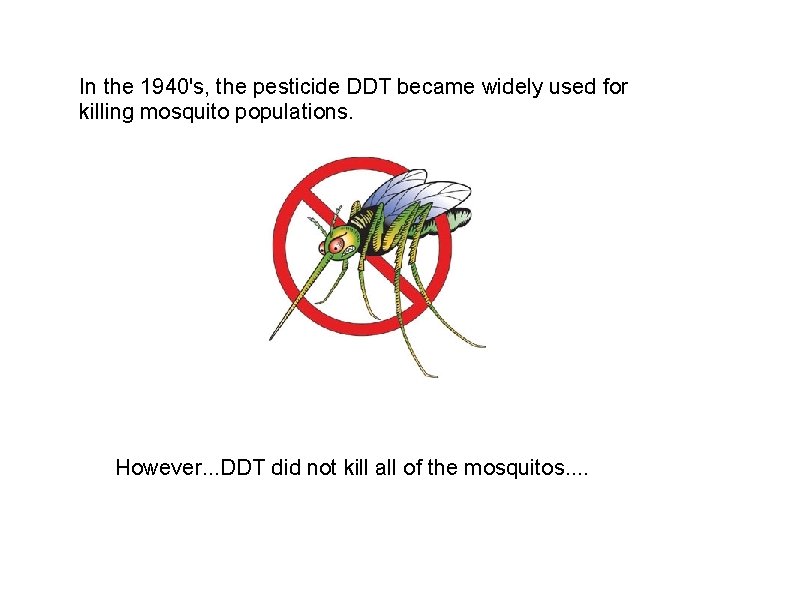
In the 1940's, the pesticide DDT became widely used for killing mosquito populations. However. . . DDT did not kill all of the mosquitos. .
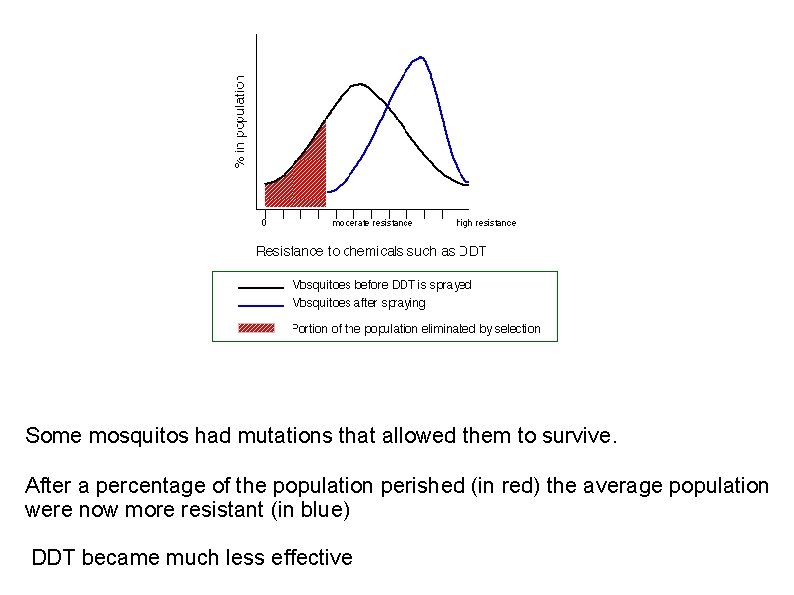
Some mosquitos had mutations that allowed them to survive. After a percentage of the population perished (in red) the average population were now more resistant (in blue) DDT became much less effective
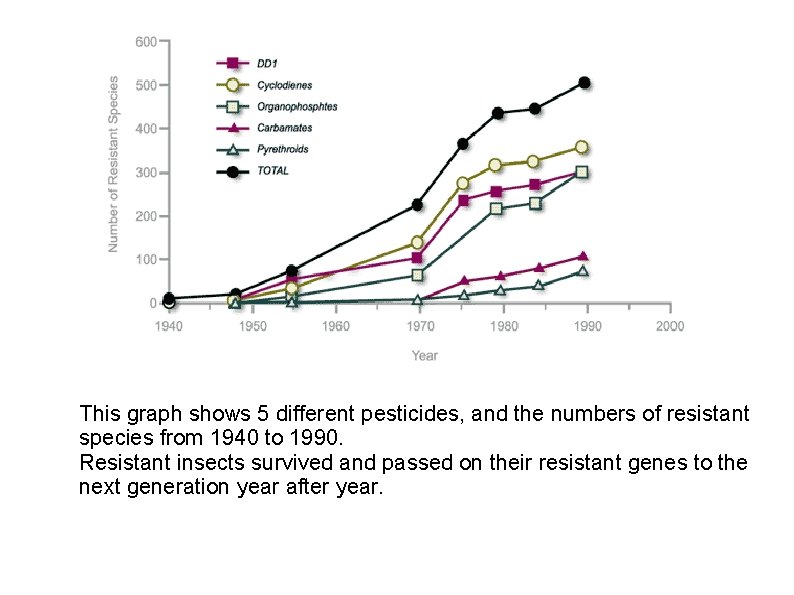
This graph shows 5 different pesticides, and the numbers of resistant species from 1940 to 1990. Resistant insects survived and passed on their resistant genes to the next generation year after year.
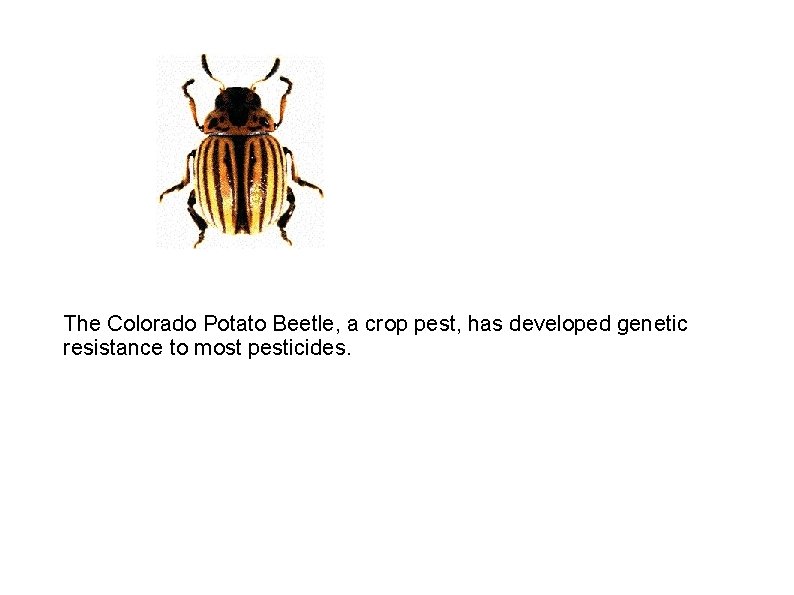
The Colorado Potato Beetle, a crop pest, has developed genetic resistance to most pesticides.
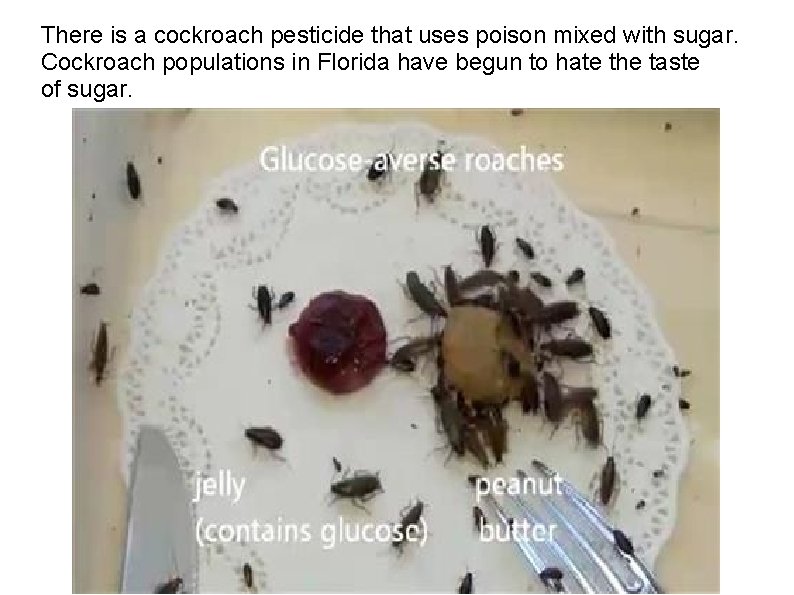
There is a cockroach pesticide that uses poison mixed with sugar. Cockroach populations in Florida have begun to hate the taste of sugar.
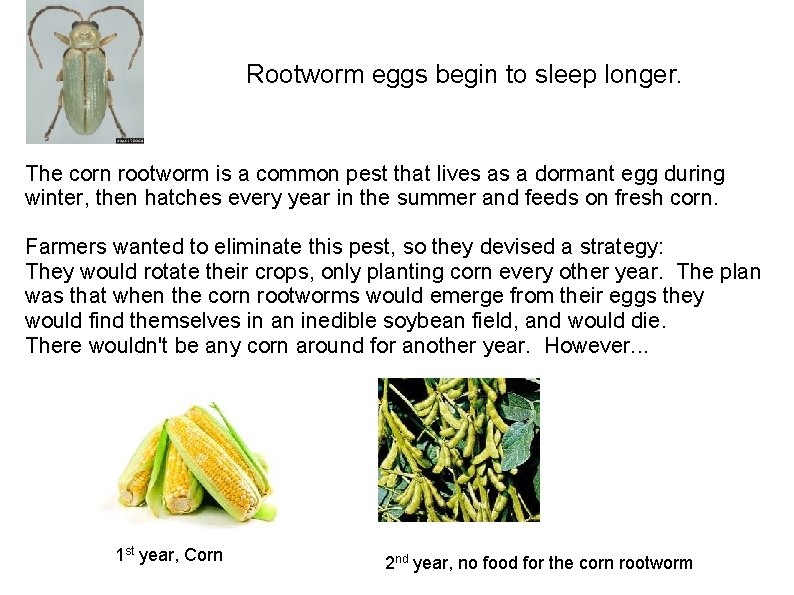
Rootworm eggs begin to sleep longer. The corn rootworm is a common pest that lives as a dormant egg during winter, then hatches every year in the summer and feeds on fresh corn. Farmers wanted to eliminate this pest, so they devised a strategy: They would rotate their crops, only planting corn every other year. The plan was that when the corn rootworms would emerge from their eggs they would find themselves in an inedible soybean field, and would die. There wouldn't be any corn around for another year. However. . . 1 st year, Corn 2 nd year, no food for the corn rootworm
It worked at first, but the cornworms began reappearing. A type of cornworm, “Diabrotica barberi Smith & Lawrence”, began sleeping in an extra year. A small percenatage of eggs did not hatch every year, but only once every two years. When the eggs hatched in two years, they would be in a field full of delicious corn. Subsequently, their two-year egg dormancy genes would be passed on to the next generation, while the one-year dormancy eggs would perish.
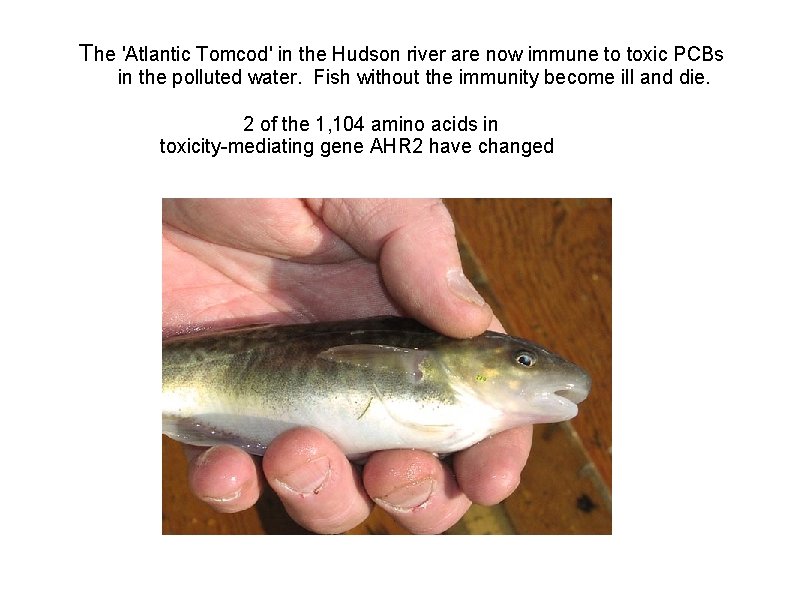
The 'Atlantic Tomcod' in the Hudson river are now immune to toxic PCBs in the polluted water. Fish without the immunity become ill and die. 2 of the 1, 104 amino acids in toxicity-mediating gene AHR 2 have changed
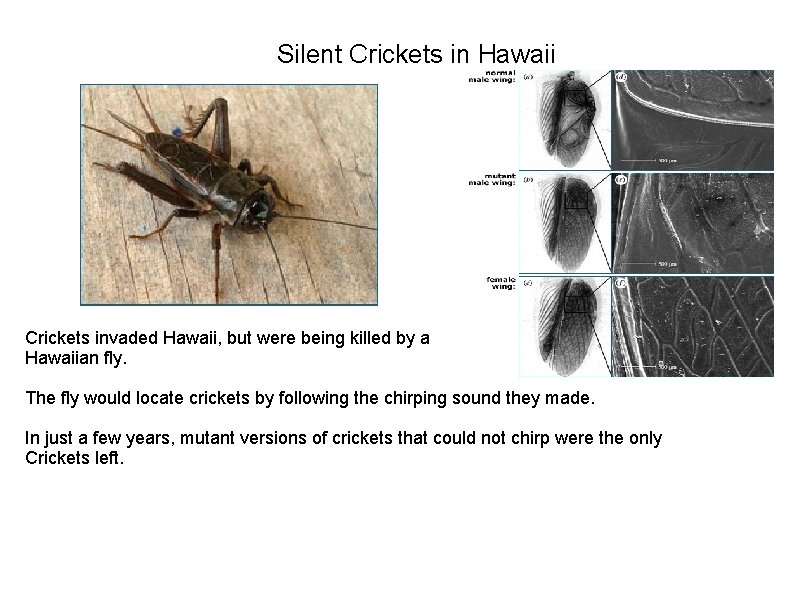
Silent Crickets in Hawaii Crickets invaded Hawaii, but were being killed by a Hawaiian fly. The fly would locate crickets by following the chirping sound they made. In just a few years, mutant versions of crickets that could not chirp were the only Crickets left.
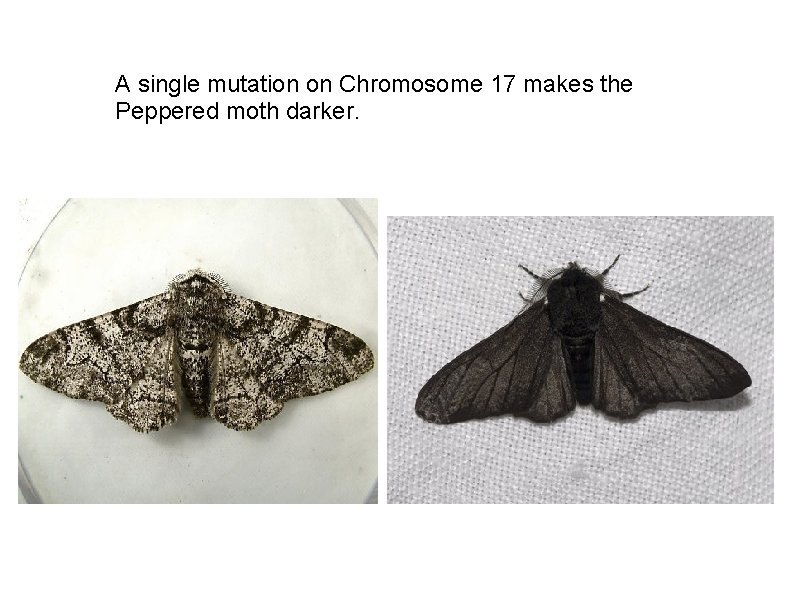
A single mutation on Chromosome 17 makes the Peppered moth darker.
On dark trees, the dark moths have better camouflage. In an environment with dark trees they are more likely to pass on their genes to the next generation.
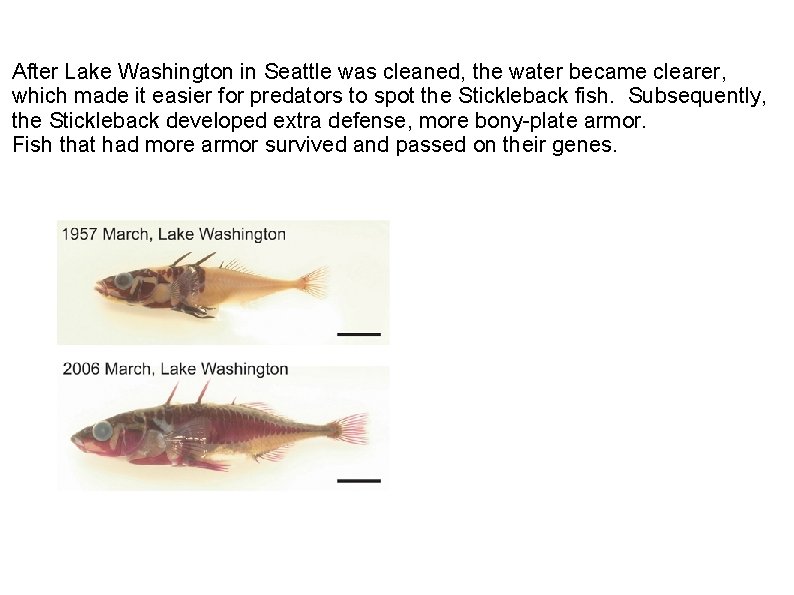
After Lake Washington in Seattle was cleaned, the water became clearer, which made it easier for predators to spot the Stickleback fish. Subsequently, the Stickleback developed extra defense, more bony-plate armor. Fish that had more armor survived and passed on their genes.
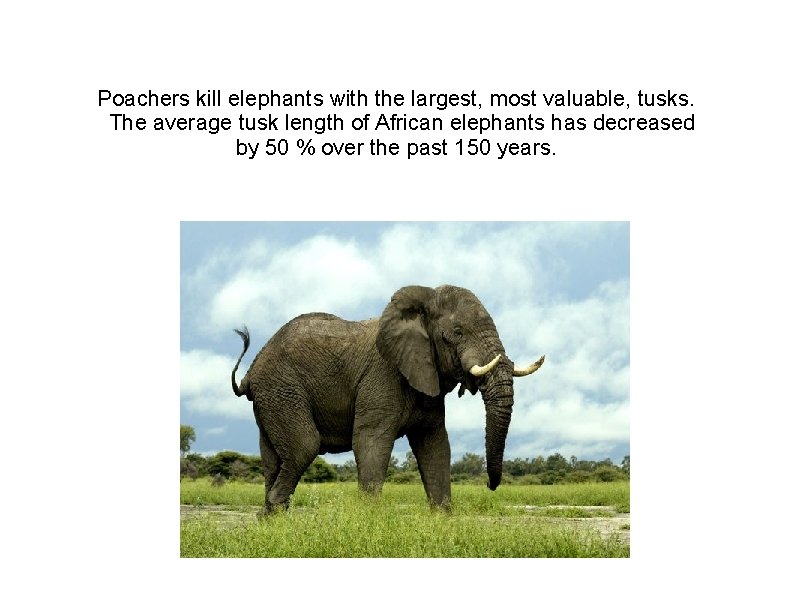
Poachers kill elephants with the largest, most valuable, tusks. The average tusk length of African elephants has decreased by 50 % over the past 150 years.
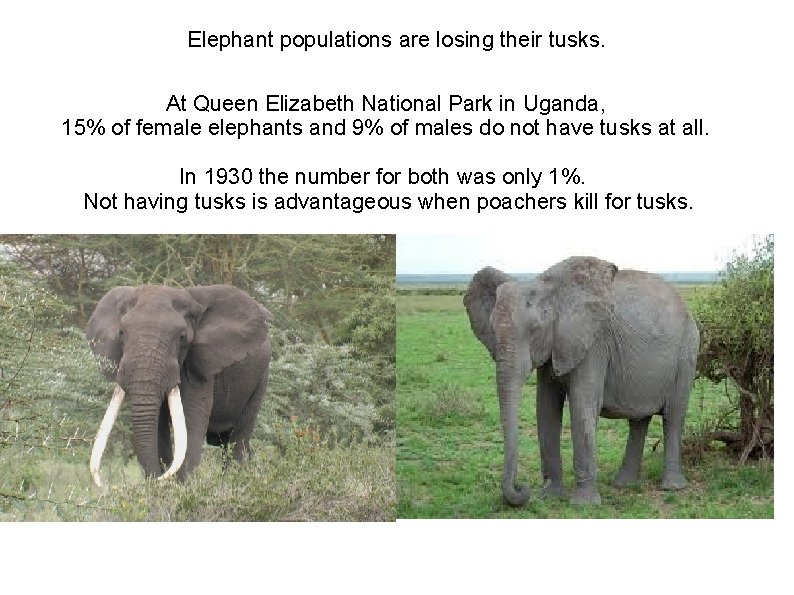
Elephant populations are losing their tusks. At Queen Elizabeth National Park in Uganda, 15% of female elephants and 9% of males do not have tusks at all. In 1930 the number for both was only 1%. Not having tusks is advantageous when poachers kill for tusks.
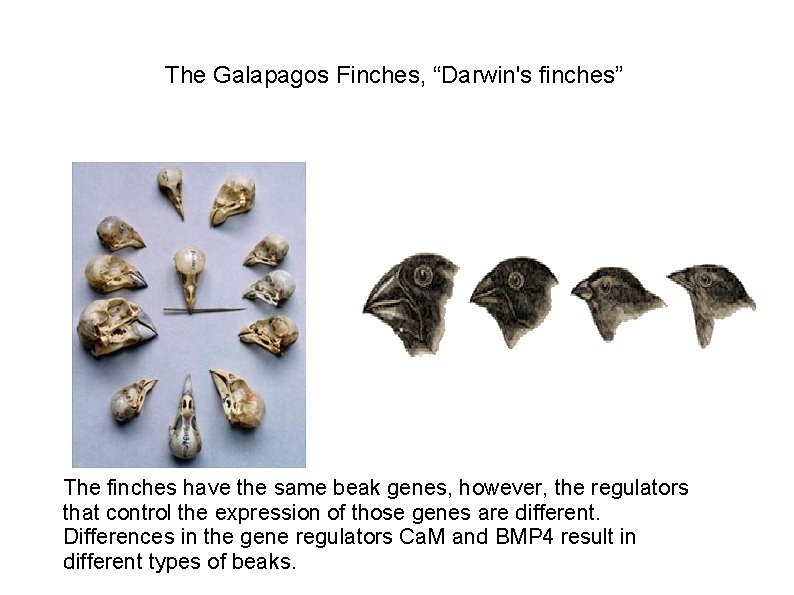
The Galapagos Finches, “Darwin's finches” The finches have the same beak genes, however, the regulators that control the expression of those genes are different. Differences in the gene regulators Ca. M and BMP 4 result in different types of beaks.
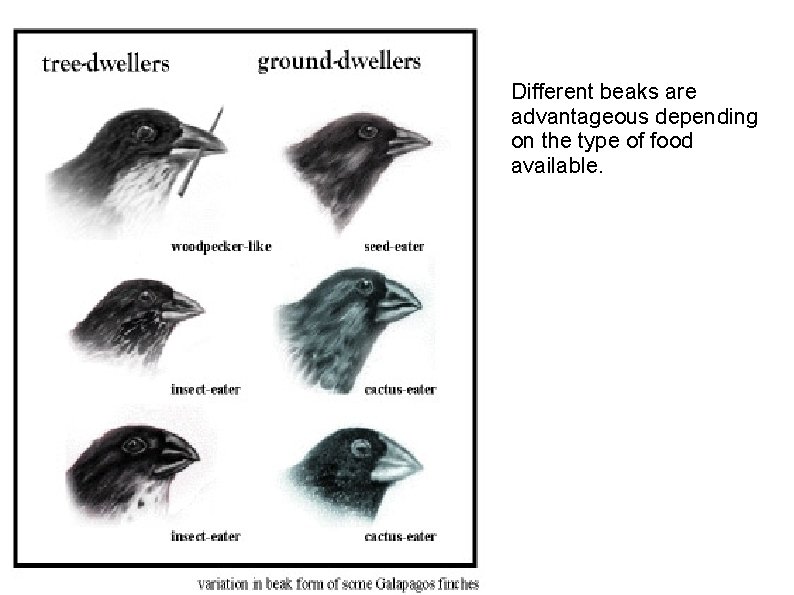
Different beaks are advantageous depending on the type of food available.
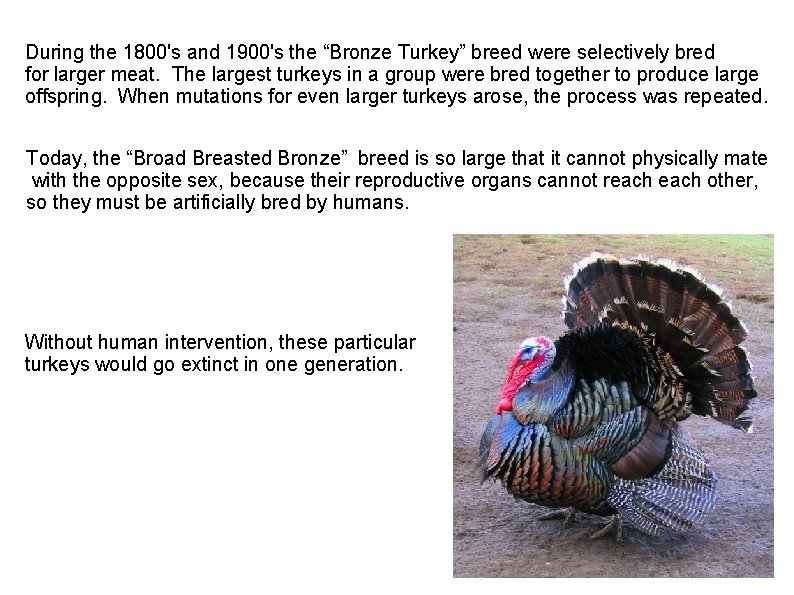
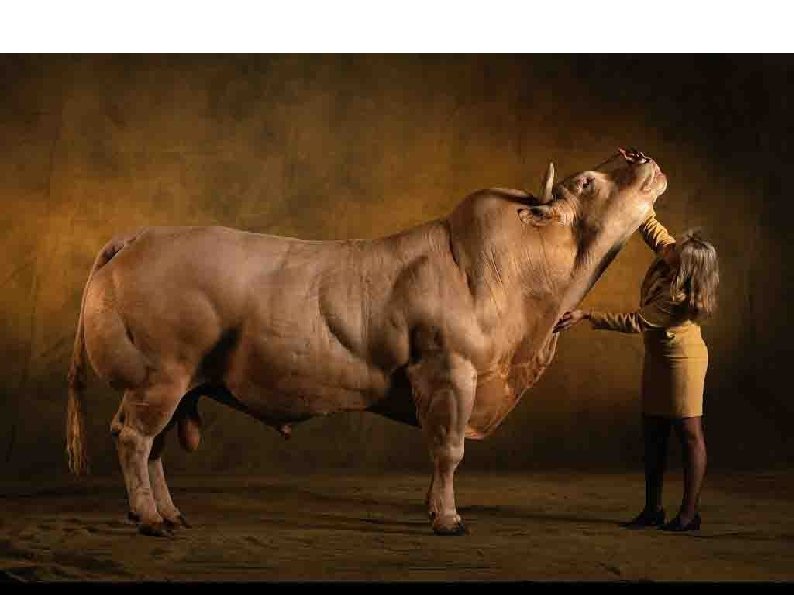
During the 1800's and 1900's the “Bronze Turkey” breed were selectively bred for larger meat. The largest turkeys in a group were bred together to produce large offspring. When mutations for even larger turkeys arose, the process was repeated. Today, the “Broad Breasted Bronze” breed is so large that it cannot physically mate with the opposite sex, because their reproductive organs cannot reach other, so they must be artificially bred by humans. Without human intervention, these particular turkeys would go extinct in one generation.
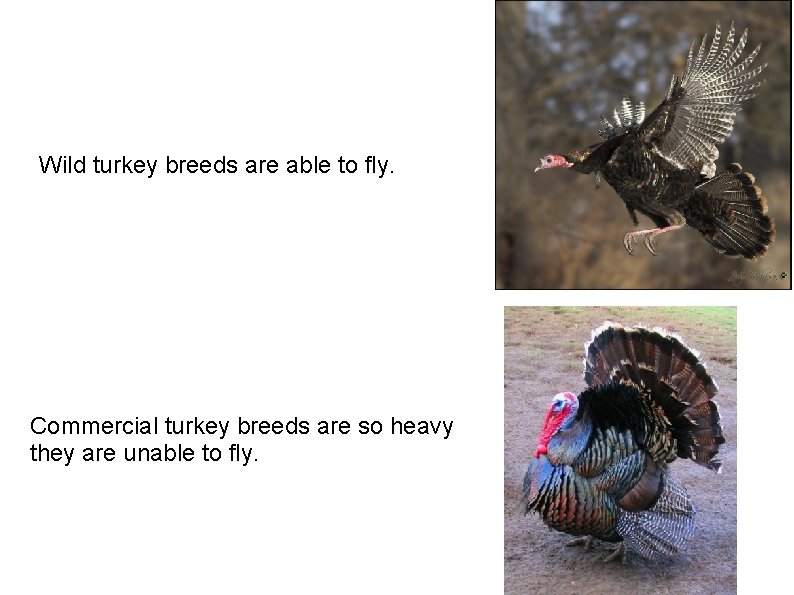
Wild turkey breeds are able to fly. Commercial turkey breeds are so heavy they are unable to fly.
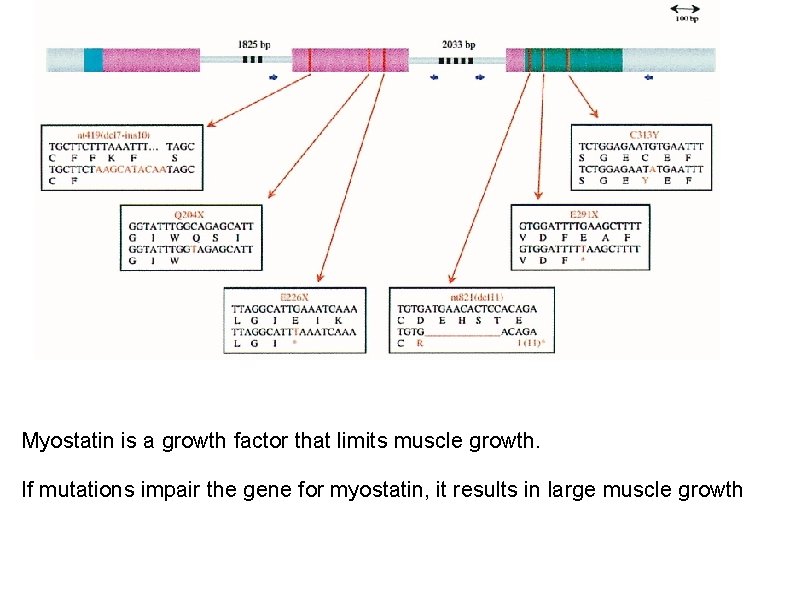
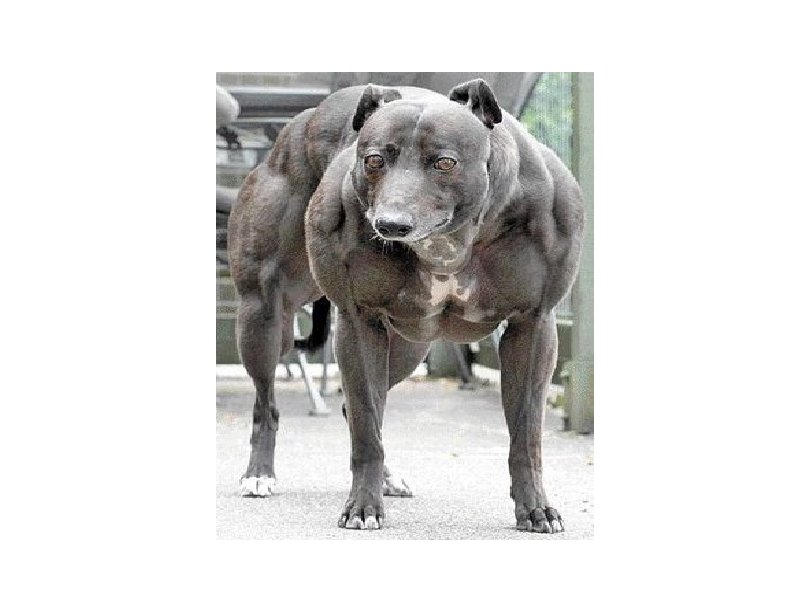
Myostatin is a growth factor that limits muscle growth. If mutations impair the gene for myostatin, it results in large muscle growth
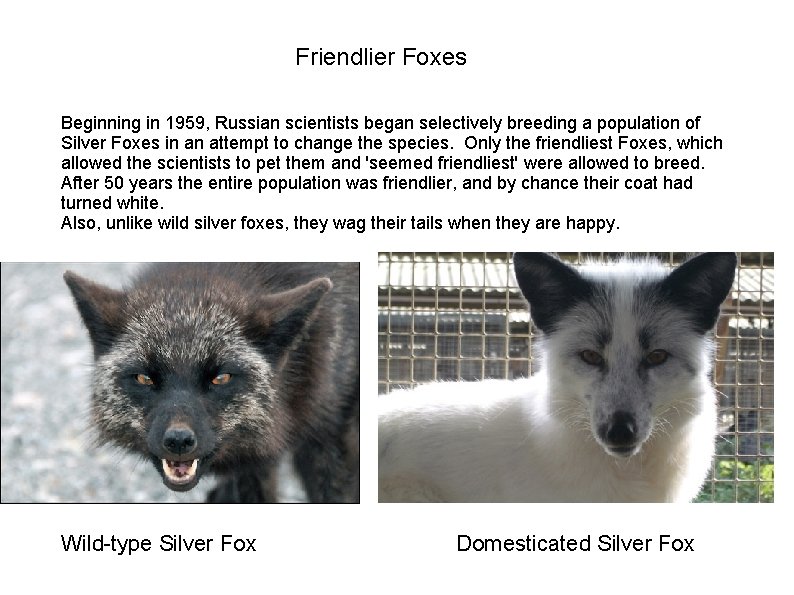
Friendlier Foxes Beginning in 1959, Russian scientists began selectively breeding a population of Silver Foxes in an attempt to change the species. Only the friendliest Foxes, which allowed the scientists to pet them and 'seemed friendliest' were allowed to breed. After 50 years the entire population was friendlier, and by chance their coat had turned white. Also, unlike wild silver foxes, they wag their tails when they are happy. Wild-type Silver Fox Domesticated Silver Fox
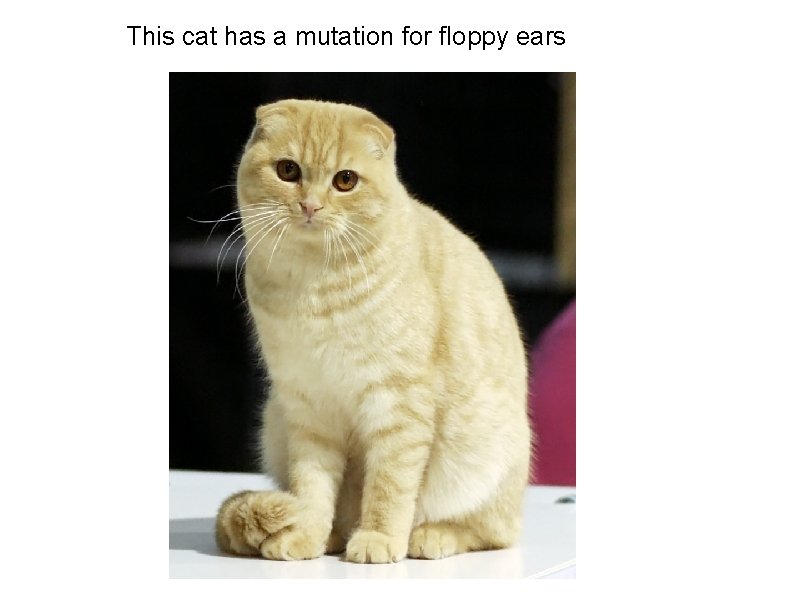
This cat has a mutation for floppy ears
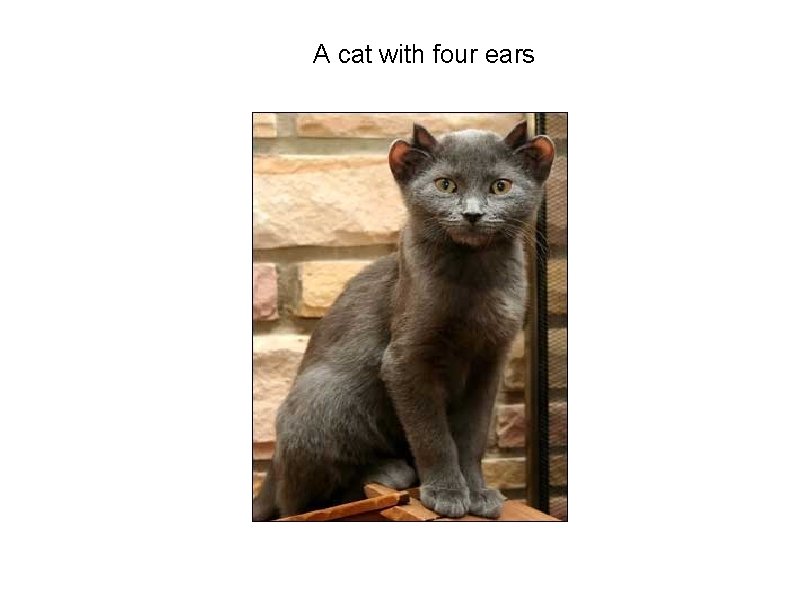
A cat with four ears
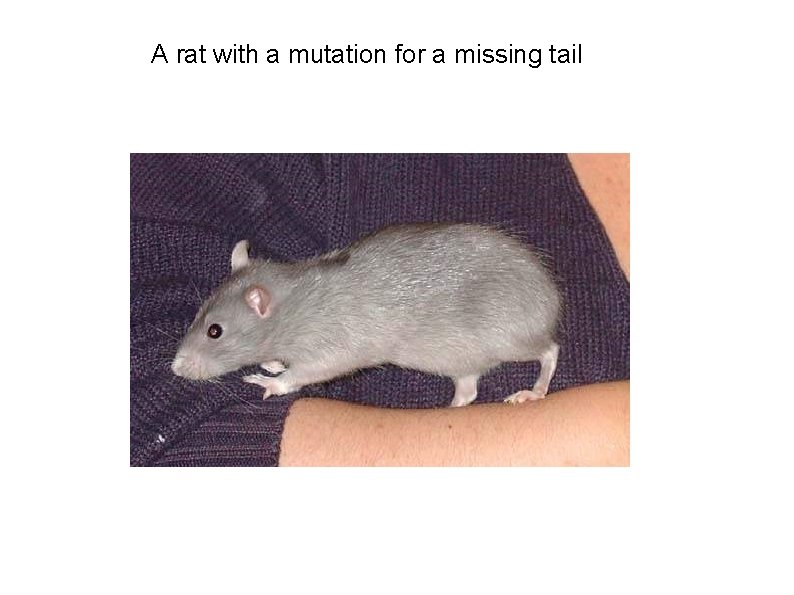
A rat with a mutation for a missing tail
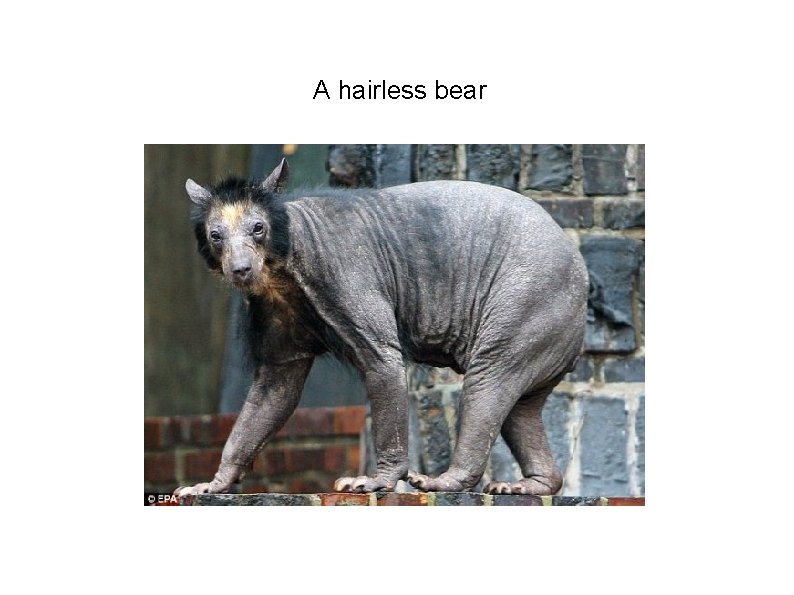
A hairless bear
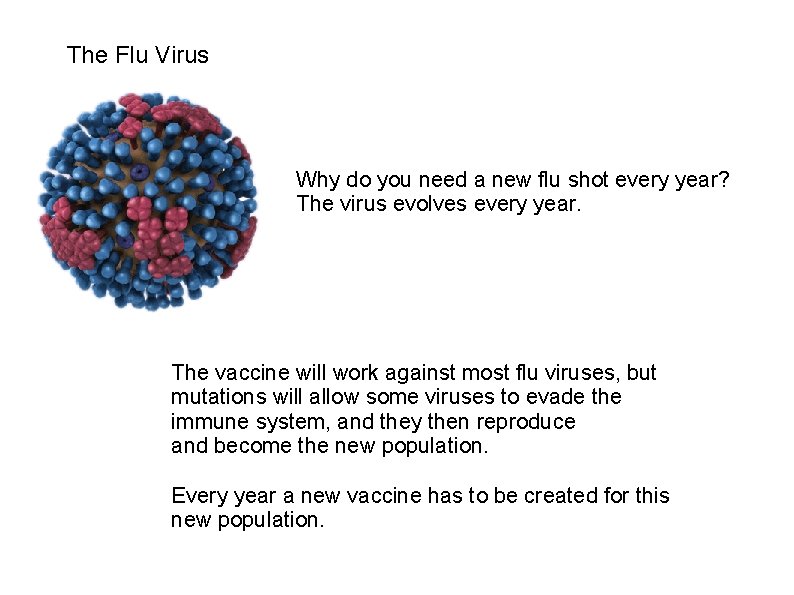
The Flu Virus Why do you need a new flu shot every year? The virus evolves every year. The vaccine will work against most flu viruses, but mutations will allow some viruses to evade the immune system, and they then reproduce and become the new population. Every year a new vaccine has to be created for this new population.
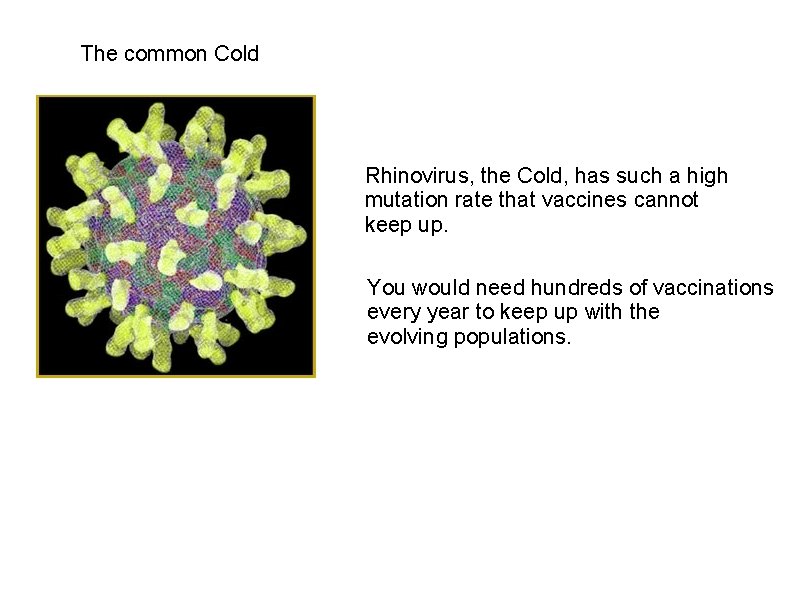
The common Cold Rhinovirus, the Cold, has such a high mutation rate that vaccines cannot keep up. You would need hundreds of vaccinations every year to keep up with the evolving populations.
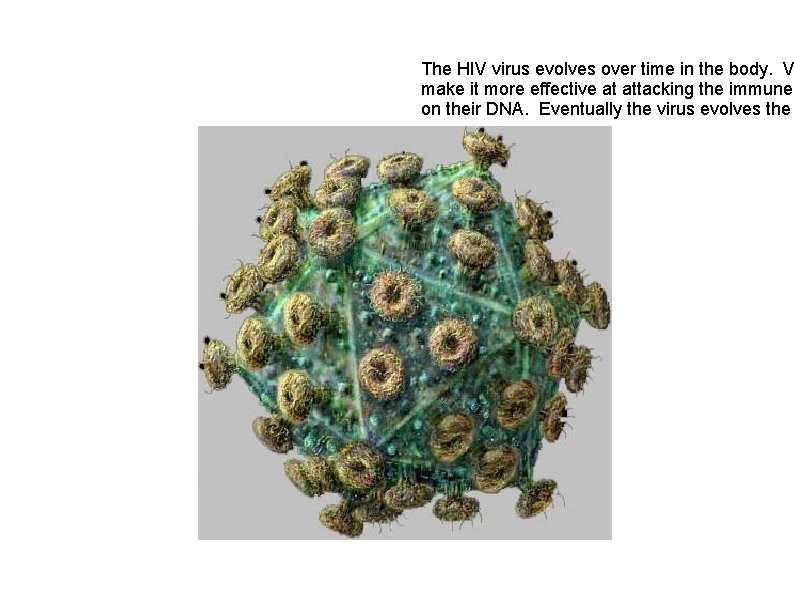
The HIV virus evolves over time in the body. V make it more effective at attacking the immune on their DNA. Eventually the virus evolves the
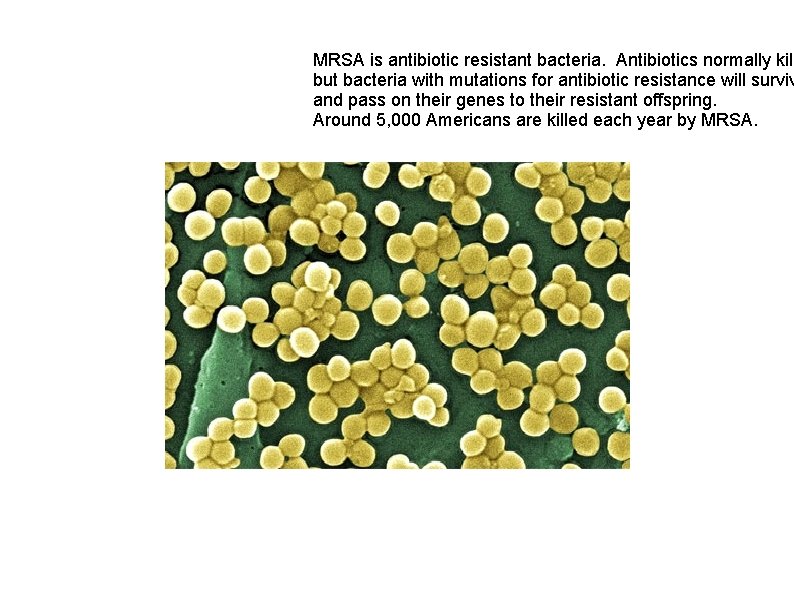
MRSA is antibiotic resistant bacteria. Antibiotics normally kill but bacteria with mutations for antibiotic resistance will surviv and pass on their genes to their resistant offspring. Around 5, 000 Americans are killed each year by MRSA.
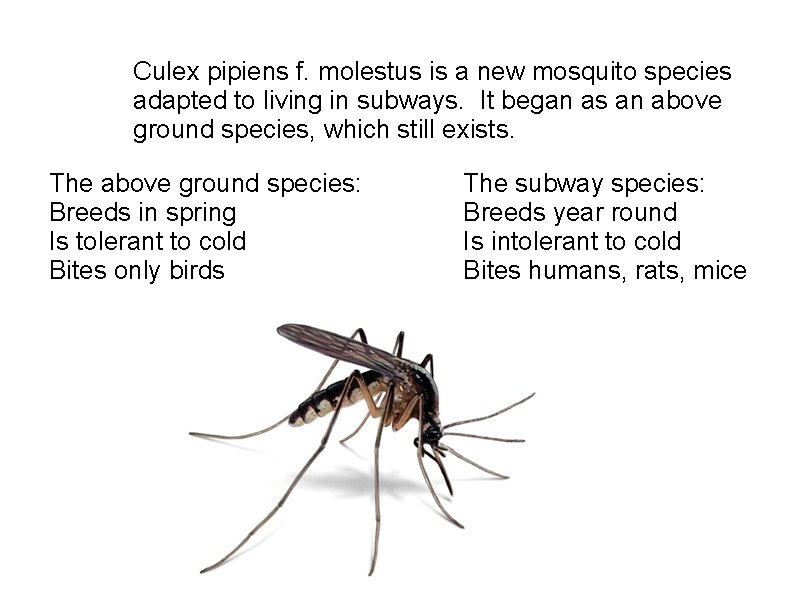
Culex pipiens f. molestus is a new mosquito species adapted to living in subways. It began as an above ground species, which still exists. The above ground species: Breeds in spring Is tolerant to cold Bites only birds The subway species: Breeds year round Is intolerant to cold Bites humans, rats, mice
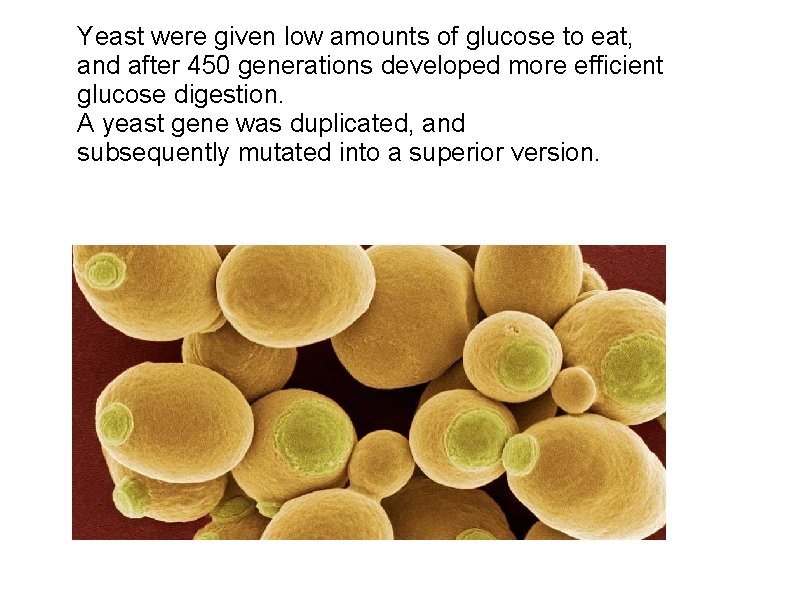
Yeast were given low amounts of glucose to eat, and after 450 generations developed more efficient glucose digestion. A yeast gene was duplicated, and subsequently mutated into a superior version.
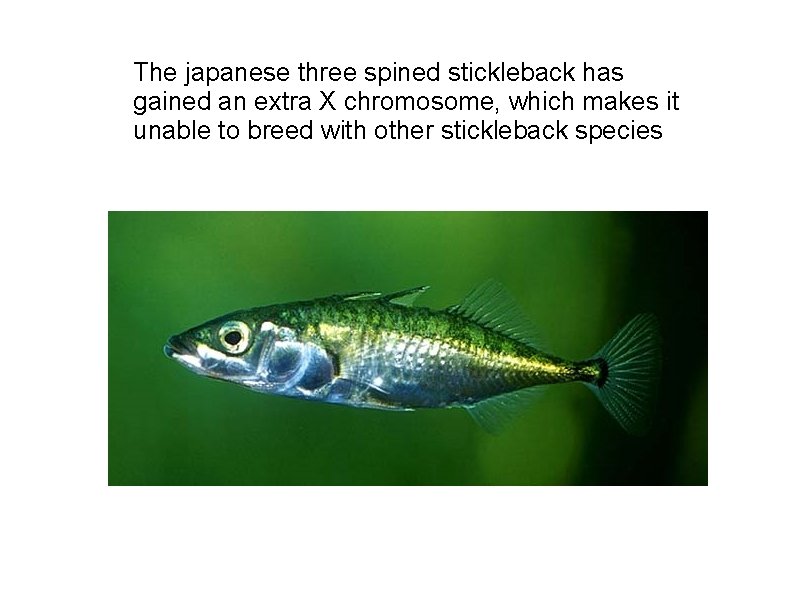
The japanese three spined stickleback has gained an extra X chromosome, which makes it unable to breed with other stickleback species
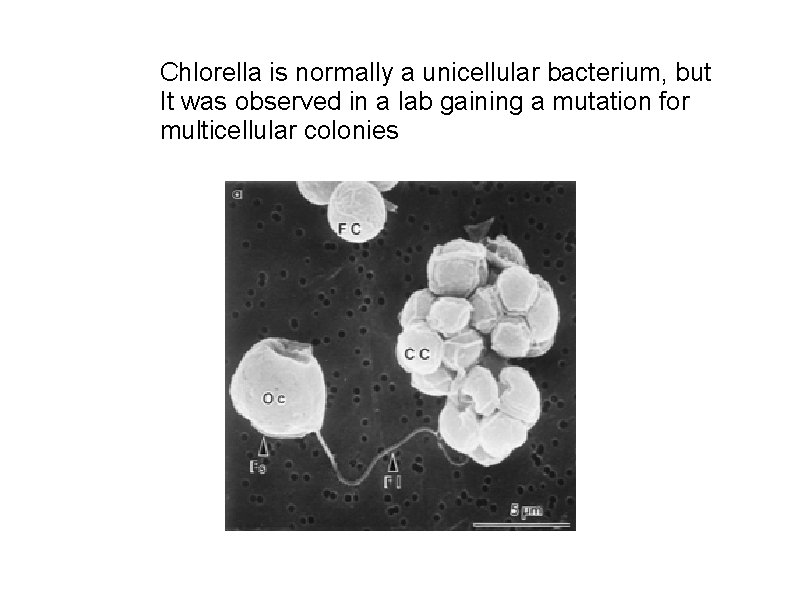
Chlorella is normally a unicellular bacterium, but It was observed in a lab gaining a mutation for multicellular colonies
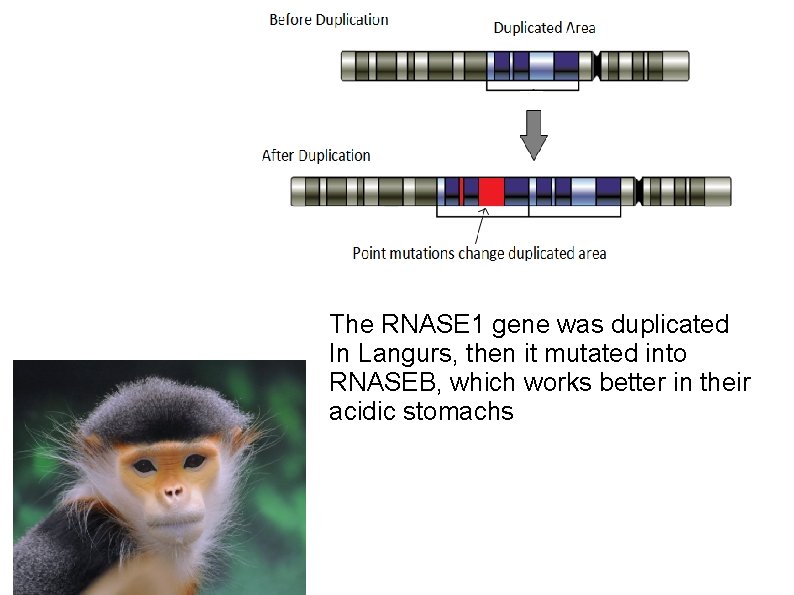
The RNASE 1 gene was duplicated In Langurs, then it mutated into RNASEB, which works better in their acidic stomachs
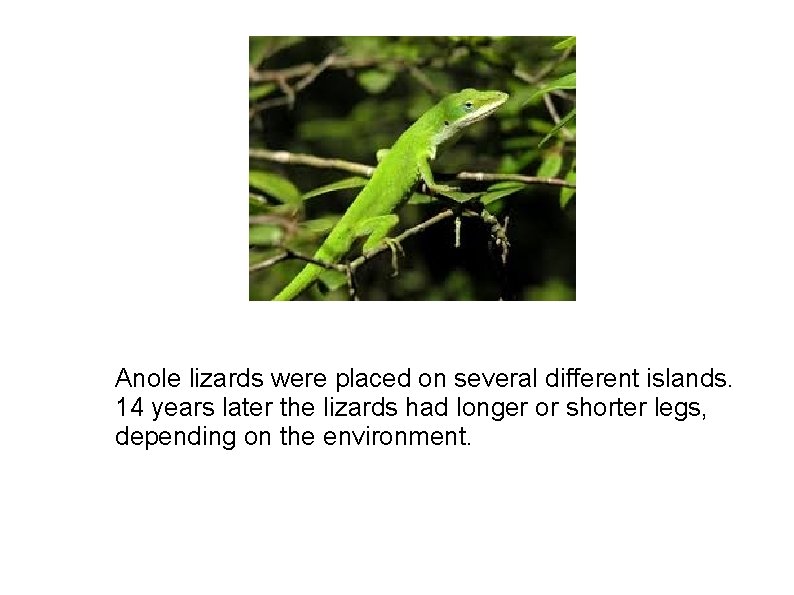
Anole lizards were placed on several different islands. 14 years later the lizards had longer or shorter legs, depending on the environment.
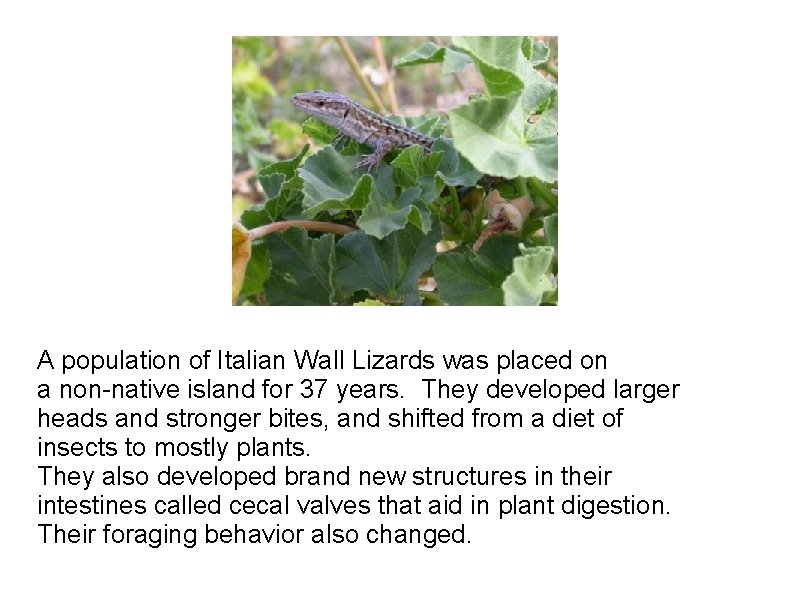
A population of Italian Wall Lizards was placed on a non-native island for 37 years. They developed larger heads and stronger bites, and shifted from a diet of insects to mostly plants. They also developed brand new structures in their intestines called cecal valves that aid in plant digestion. Their foraging behavior also changed.
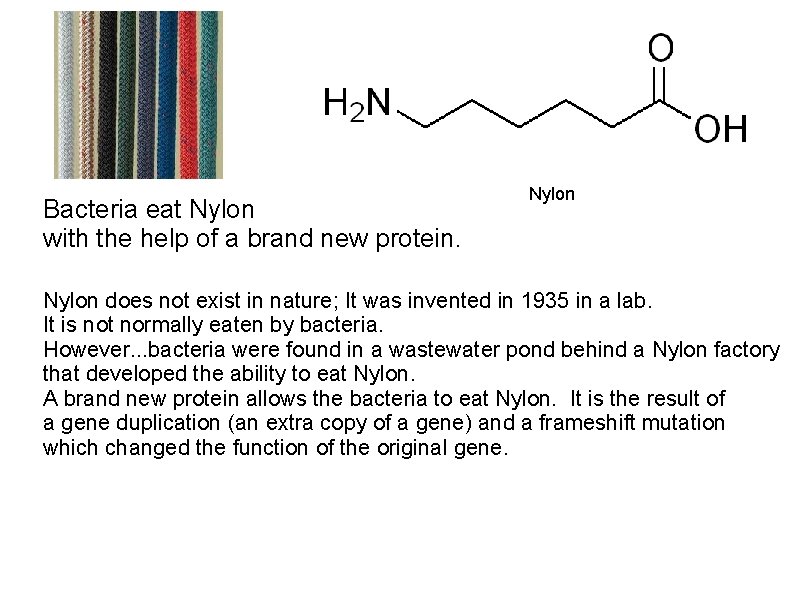
Bacteria eat Nylon with the help of a brand new protein. Nylon does not exist in nature; It was invented in 1935 in a lab. It is not normally eaten by bacteria. However. . . bacteria were found in a wastewater pond behind a Nylon factory that developed the ability to eat Nylon. A brand new protein allows the bacteria to eat Nylon. It is the result of a gene duplication (an extra copy of a gene) and a frameshift mutation which changed the function of the original gene.
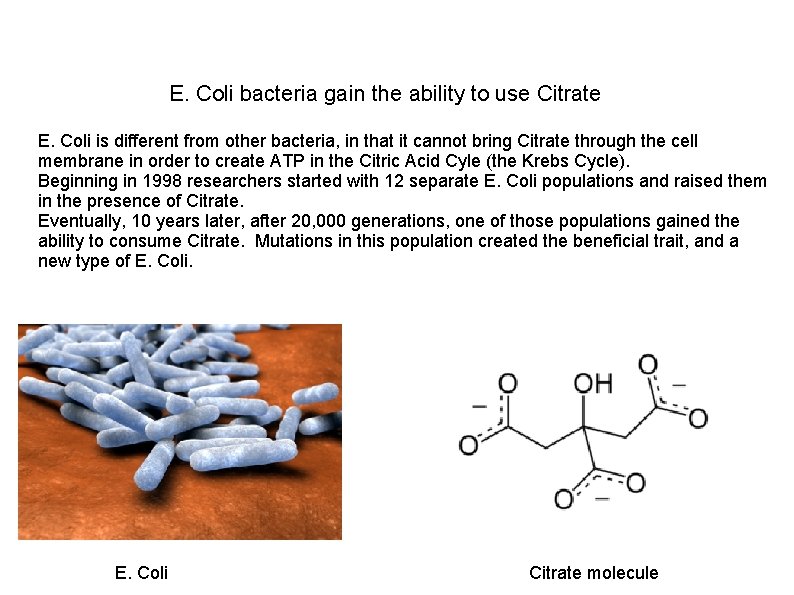
E. Coli bacteria gain the ability to use Citrate E. Coli is different from other bacteria, in that it cannot bring Citrate through the cell membrane in order to create ATP in the Citric Acid Cyle (the Krebs Cycle). Beginning in 1998 researchers started with 12 separate E. Coli populations and raised them in the presence of Citrate. Eventually, 10 years later, after 20, 000 generations, one of those populations gained the ability to consume Citrate. Mutations in this population created the beneficial trait, and a new type of E. Coli Citrate molecule
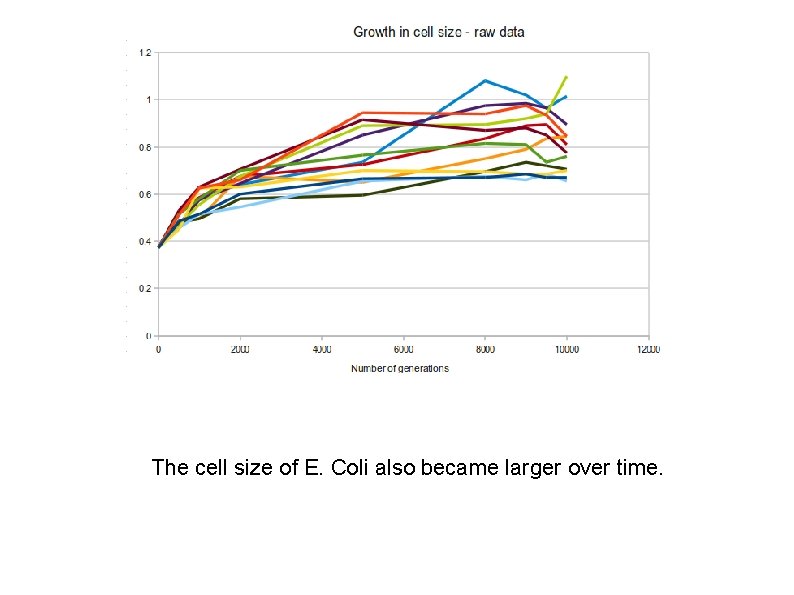
The cell size of E. Coli also became larger over time.
Every human being is born with at least 34 mutations of their 3. 2 billion nucleotides.
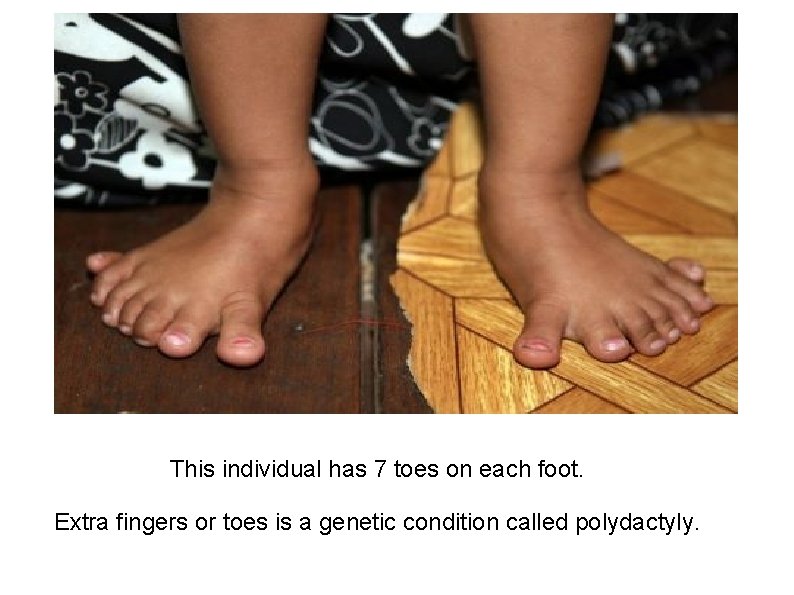
This individual has 7 toes on each foot. Extra fingers or toes is a genetic condition called polydactyly.
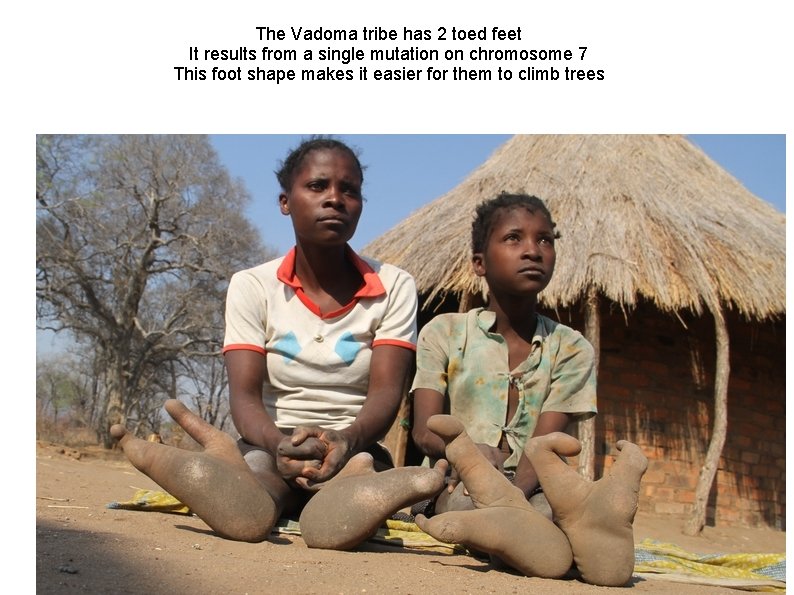
The Vadoma tribe has 2 toed feet It results from a single mutation on chromosome 7 This foot shape makes it easier for them to climb trees
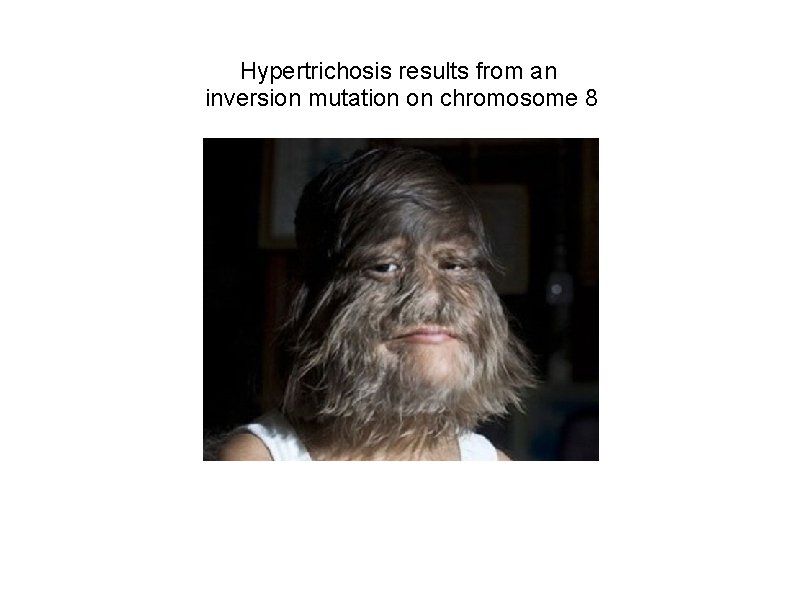
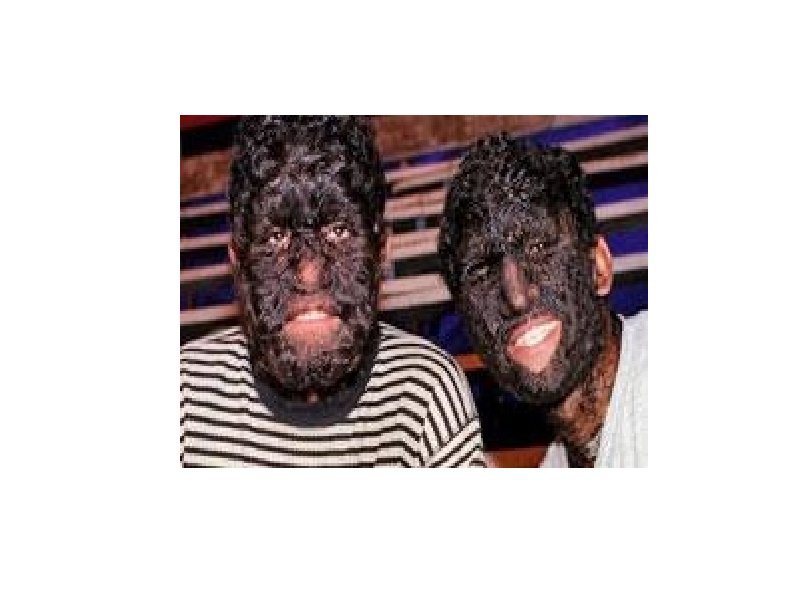
Hypertrichosis results from an inversion mutation on chromosome 8
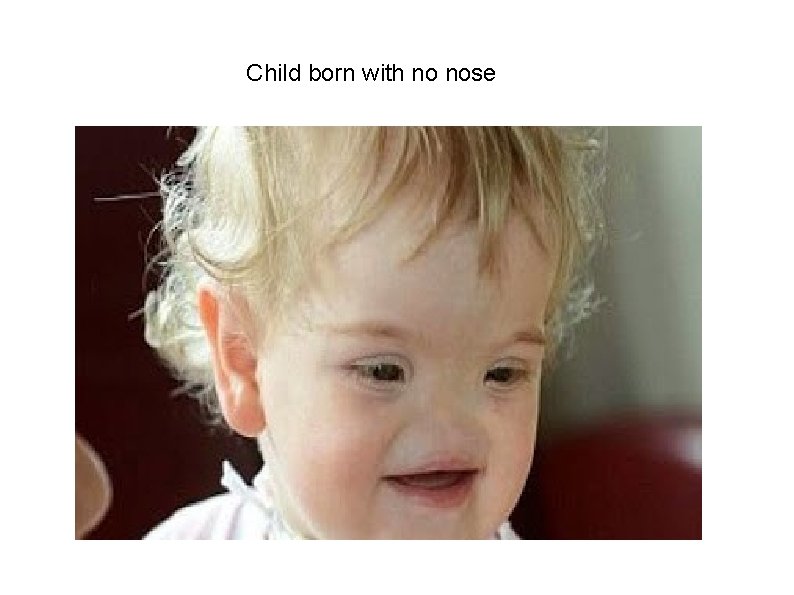
Child born with no nose
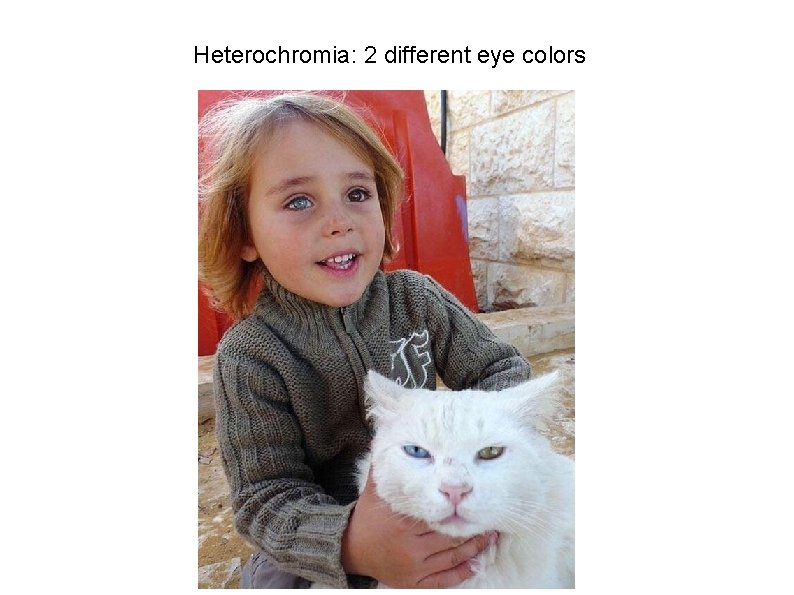
Heterochromia: 2 different eye colors
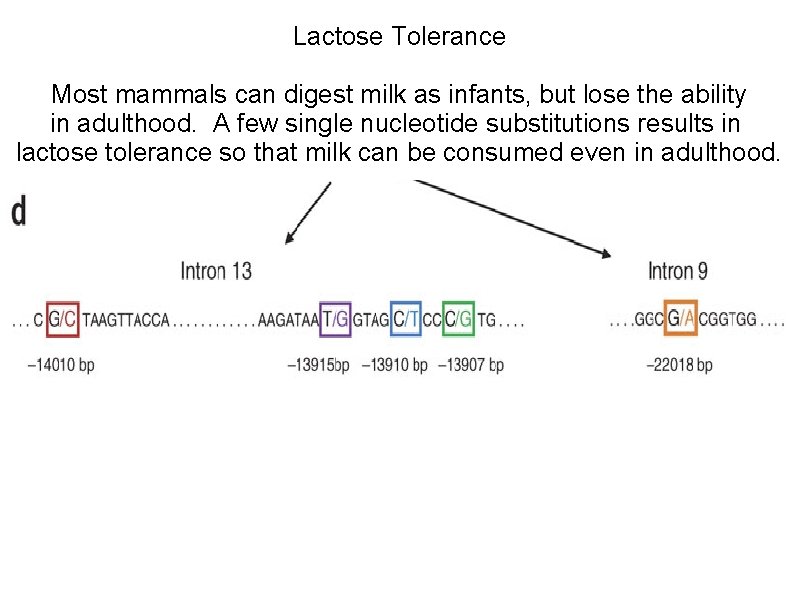
Lactose Tolerance Most mammals can digest milk as infants, but lose the ability in adulthood. A few single nucleotide substitutions results in lactose tolerance so that milk can be consumed even in adulthood.
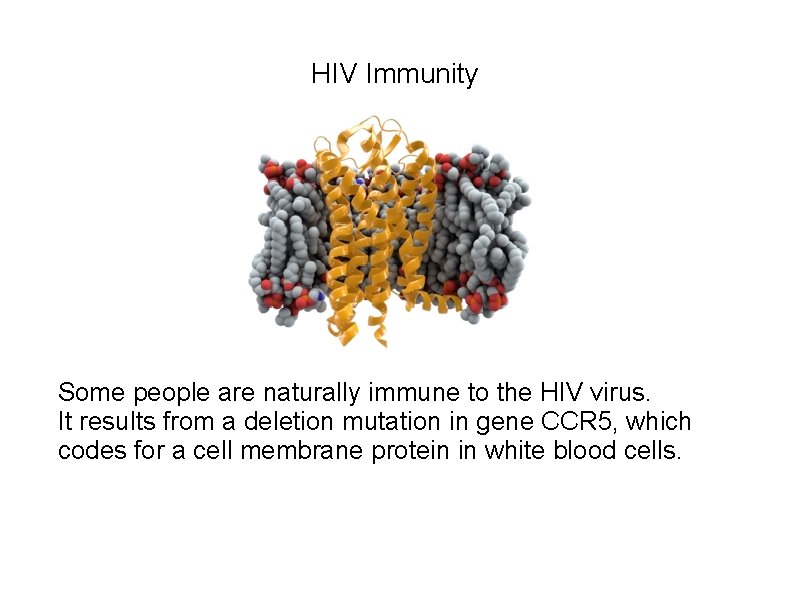
HIV Immunity Some people are naturally immune to the HIV virus. It results from a deletion mutation in gene CCR 5, which codes for a cell membrane protein in white blood cells.
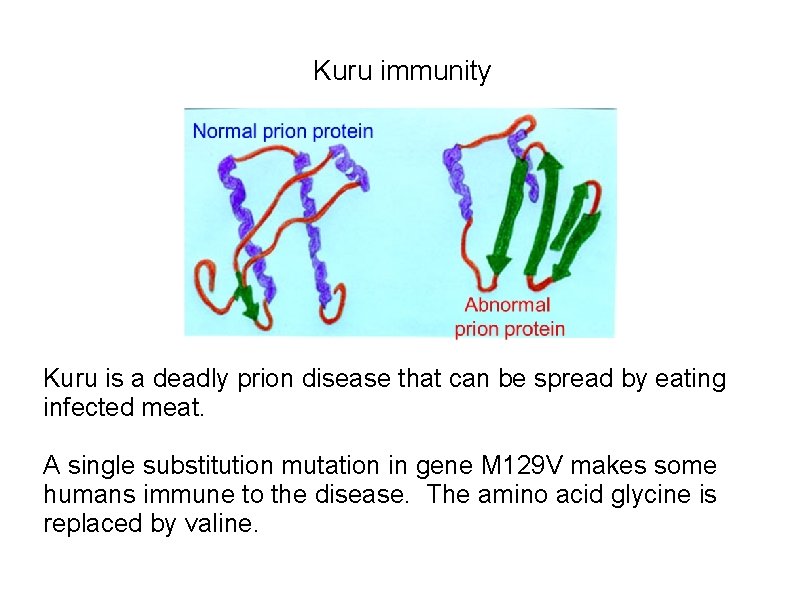
Kuru immunity Kuru is a deadly prion disease that can be spread by eating infected meat. A single substitution mutation in gene M 129 V makes some humans immune to the disease. The amino acid glycine is replaced by valine.
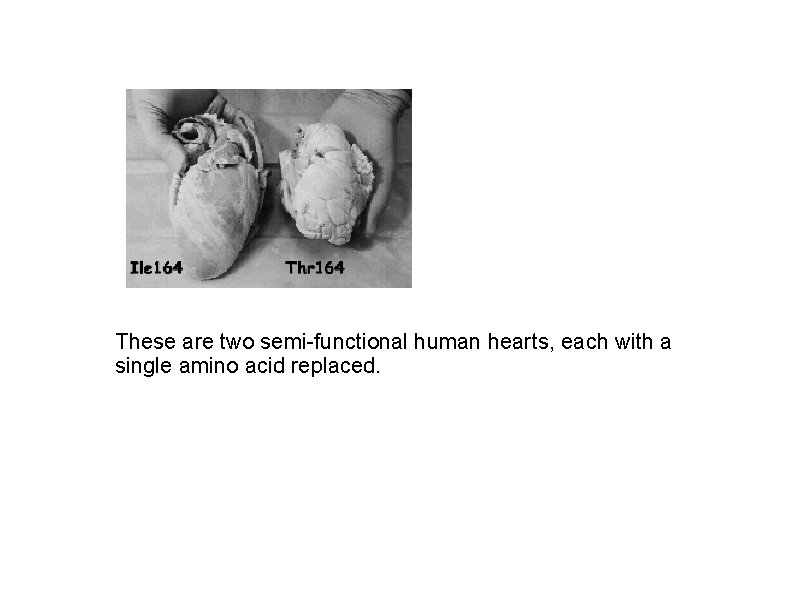
These are two semi-functional human hearts, each with a single amino acid replaced.
We have looked at just a few examples of traits being changed by differences in DNA. Every physical trait is coded by DNA, and every piece of DNA can be changed by mutations. Every physical trait can be changed by mutations.
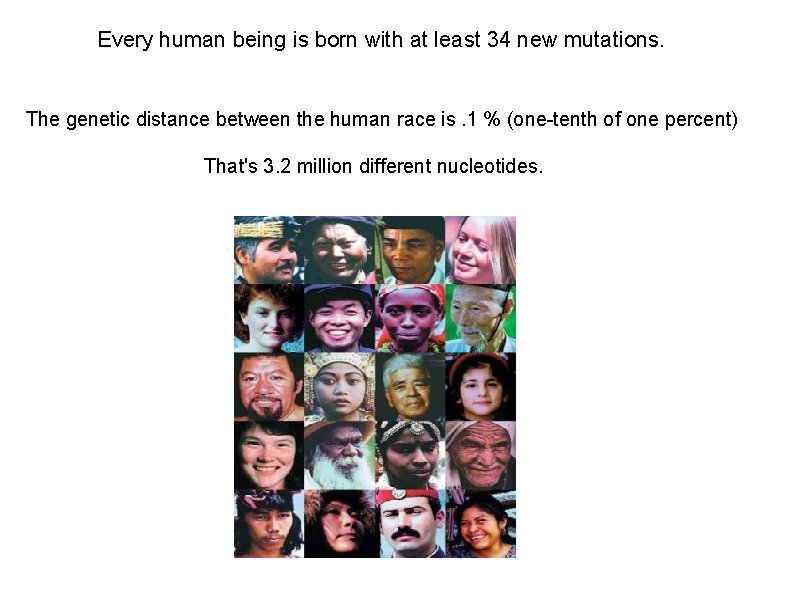
Every human being is born with at least 34 new mutations. The genetic distance between the human race is. 1 % (one-tenth of one percent) That's 3. 2 million different nucleotides.