
Examples of cell surface molecules expressed by T
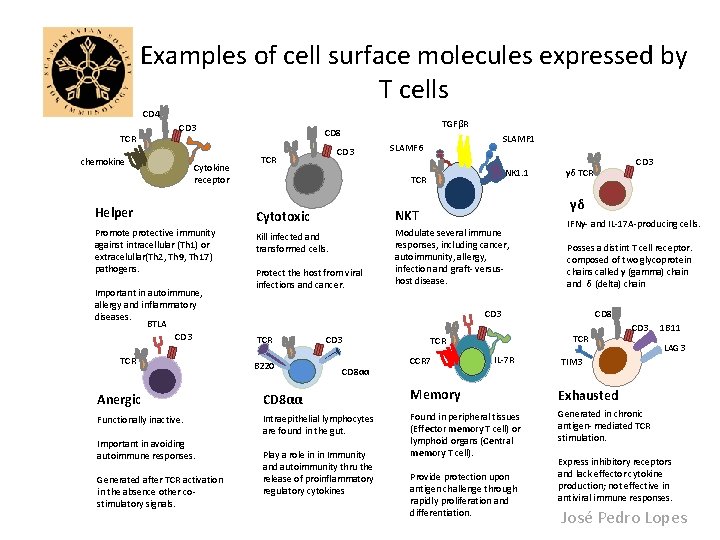
Examples of cell surface molecules expressed by T cells CD 4 TCR CD 3 chemokine Cytokine receptor Helper Promote protective immunity against intracellular (Th 1) or extracelullar(Th 2, Th 9, Th 17) pathogens. Important in autoimmune, allergy and inflammatory diseases. BTLA CD 3 TCR TGFβR CD 8 CD 3 TCR SLAMF 1 SLAMF 6 NK 1. 1 TCR γδ Cytotoxic NKT Kill infected and transformed cells. Modulate several immune responses, including cancer, autoimmunity, allergy, infection and graft- versushost disease. Protect the host from viral infections and cancer. CD 3 γδ TCR IFNγ- and IL-17 A-producing cells. Posses a distint T cell receptor. composed of two glycoprotein chains called γ (gamma) chain and δ (delta) chain CD 44 CD 8 CD 3 TCR B 220 CD 3 CD 8αα TCR CCR 7 IL-7 R CD 3 CD 8αα Memory Exhausted Functionally inactive. Intraepithelial lymphocytes are found in the gut. Found in peripheral tissues (Effector memory T cell) or lymphoid organs (Central memory T cell). Generated in chronic antigen- mediated TCR stimulation. Generated after TCR activation in the absence other costimulatory signals. Play a role in in Immunity and autoimmunity thru the release of proinflammatory regulatory cytokines Provide protection upon antigen challenge through rapidly proliferation and differentiation. LAG 3 TIM 3 Anergic Important in avoiding autoimmune responses. 1 B 11 Express inhibitory receptors and lack effector cytokine production; not effective in antiviral immune responses. José Pedro Lopes
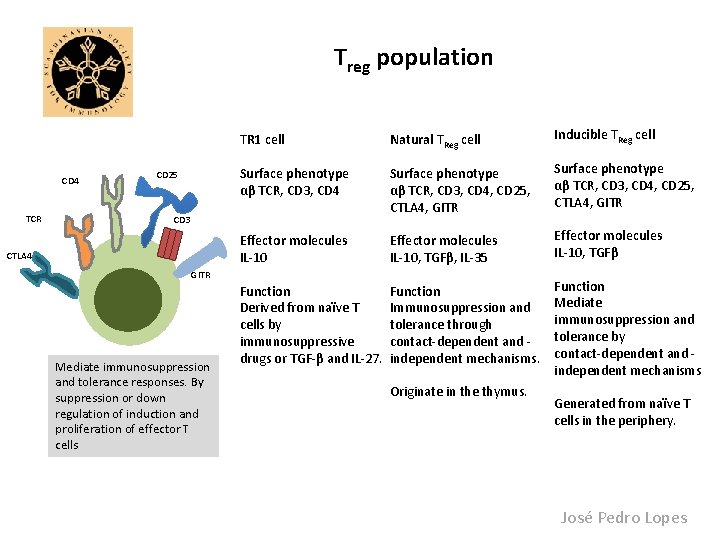
Treg population CD 4 TCR CD 25 TR 1 cell Natural TReg cell Inducible TReg cell Surface phenotype αβ TCR, CD 3, CD 4, CD 25, CTLA 4, GITR Effector molecules IL-10, TGFβ, IL-35 Effector molecules IL-10, TGFβ Function Derived from naïve T cells by immunosuppressive drugs or TGF-β and IL-27. Function Immunosuppression and tolerance through contact-dependent and independent mechanisms. Function Mediate immunosuppression and tolerance by contact-dependent and independent mechanisms CD 3 CTLA 4 GITR Mediate immunosuppression and tolerance responses. By suppression or down regulation of induction and proliferation of effector T cells Originate in the thymus. Generated from naïve T cells in the periphery. José Pedro Lopes
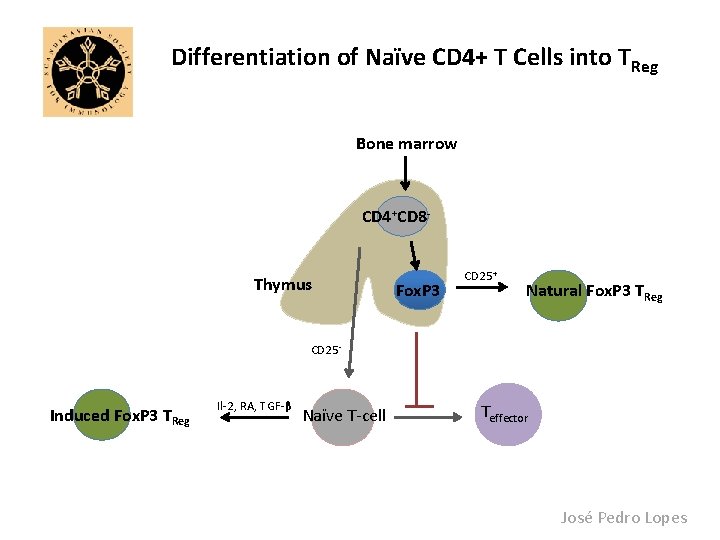
Differentiation of Naïve CD 4+ T Cells into TReg Bone marrow CD 4+CD 8 - Thymus Fox. P 3 CD 25+ Natural Fox. P 3 TReg CD 25 - Induced Fox. P 3 TReg Il-2, RA, TGF-β Naïve T-cell Teffector José Pedro Lopes
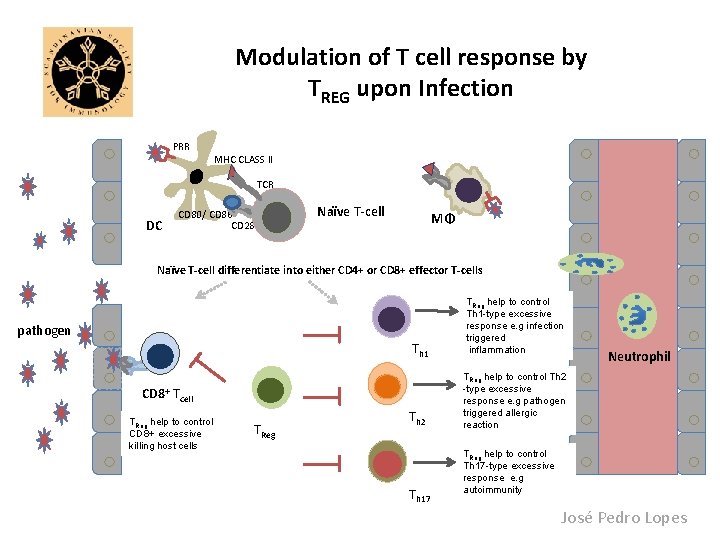
Modulation of T cell response by TREG upon Infection PRR MHC CLASS II TCR DC CD 80/ CD 86 CD 28 Naïve T-cell MΦ Naïve T-cell differentiate into either CD 4+ or CD 8+ effector T-cells Th 1 TReg help to control Th 1 -type excessive response e. g infection triggered inflammation Th 2 TReg help to control Th 2 -type excessive response e. g pathogen triggered allergic reaction pathogen CD 8+ Tcell TReg help to control CD 8+ excessive killing host cells TReg Th 17 Neutrophil TReg help to control Th 17 -type excessive response e. g autoimmunity José Pedro Lopes
- Slides: 4