
Examples Example 1 An object oscillates with simple
Examples
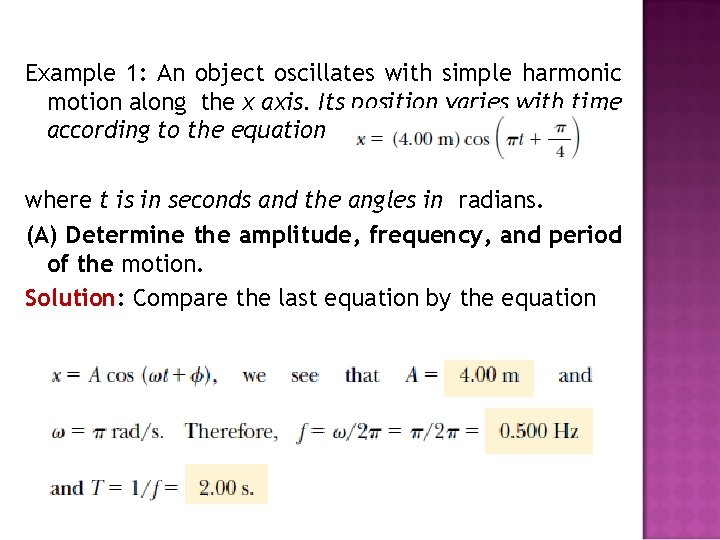
Example 1: An object oscillates with simple harmonic motion along the x axis. Its position varies with time according to the equation where t is in seconds and the angles in radians. (A) Determine the amplitude, frequency, and period of the motion. Solution: Compare the last equation by the equation
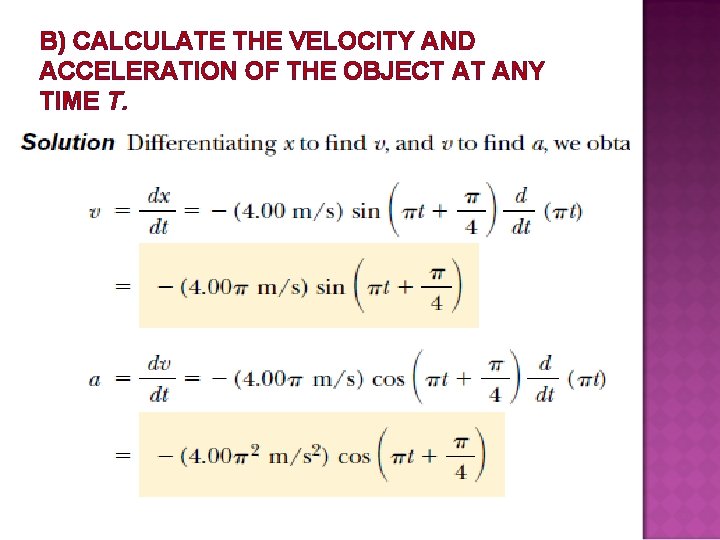
B) CALCULATE THE VELOCITY AND ACCELERATION OF THE OBJECT AT ANY TIME T.

USING THE RESULTS OF PART (B), DETERMINE THE POSITION, VELOCITY, AND ACCELERATION OF THE OBJECT AT T = 1. 00 S.
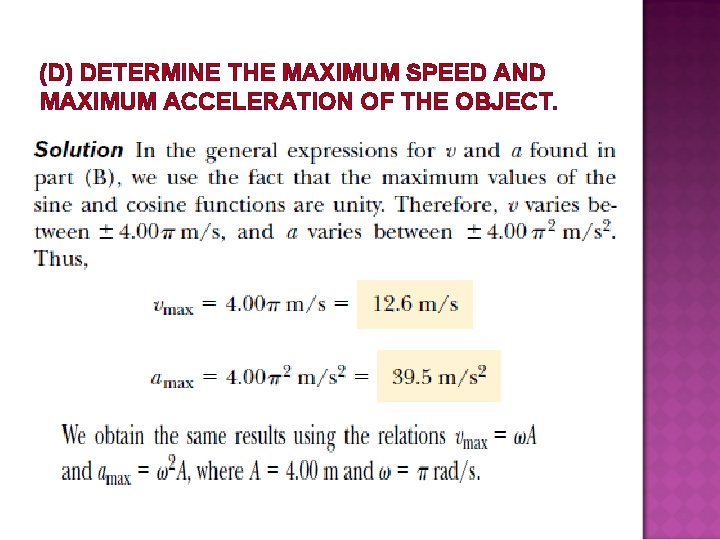
(D) DETERMINE THE MAXIMUM SPEED AND MAXIMUM ACCELERATION OF THE OBJECT.
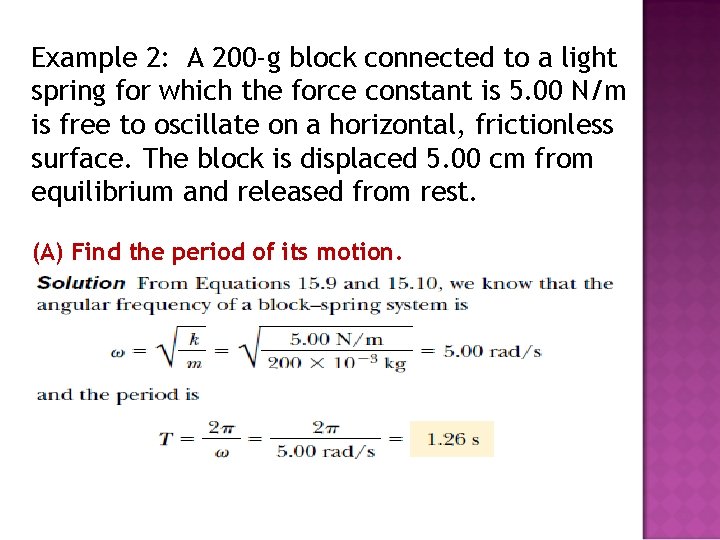
Example 2: A 200 -g block connected to a light spring for which the force constant is 5. 00 N/m is free to oscillate on a horizontal, frictionless surface. The block is displaced 5. 00 cm from equilibrium and released from rest. (A) Find the period of its motion.
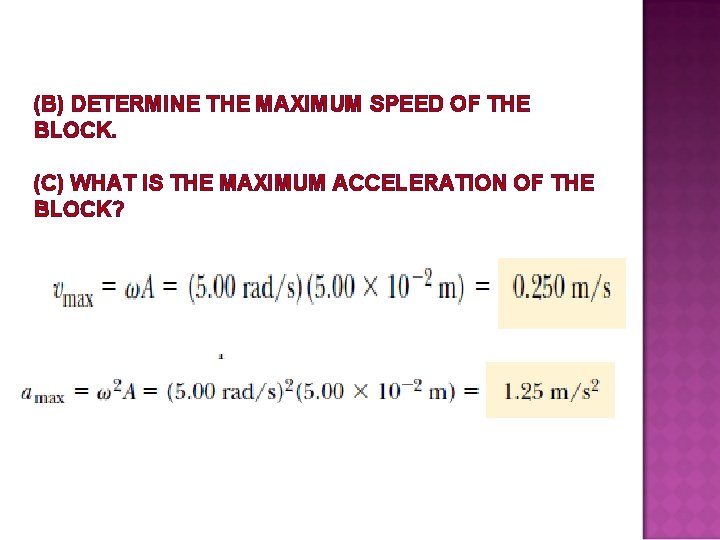
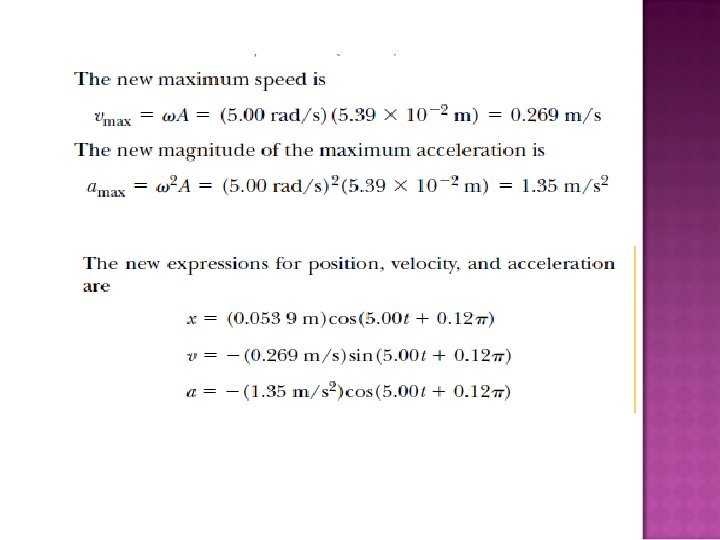
(B) DETERMINE THE MAXIMUM SPEED OF THE BLOCK. (C) WHAT IS THE MAXIMUM ACCELERATION OF THE BLOCK?
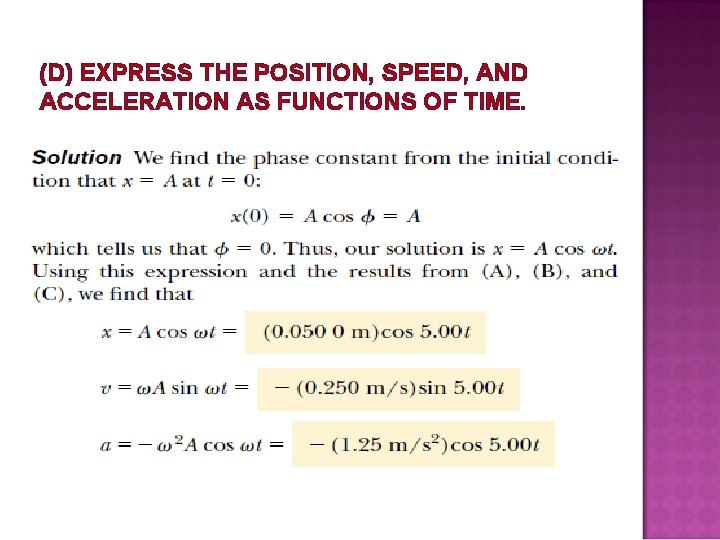
(D) EXPRESS THE POSITION, SPEED, AND ACCELERATION AS FUNCTIONS OF TIME.
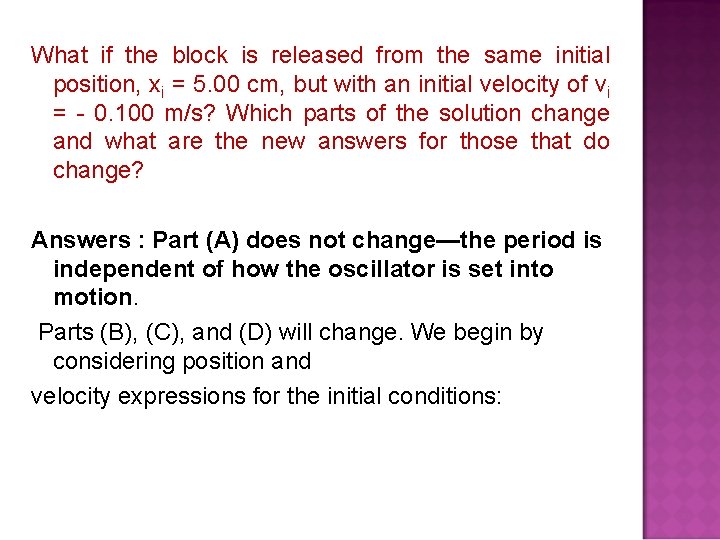
What if the block is released from the same initial position, xi = 5. 00 cm, but with an initial velocity of vi = - 0. 100 m/s? Which parts of the solution change and what are the new answers for those that do change? Answers : Part (A) does not change—the period is independent of how the oscillator is set into motion. Parts (B), (C), and (D) will change. We begin by considering position and velocity expressions for the initial conditions:
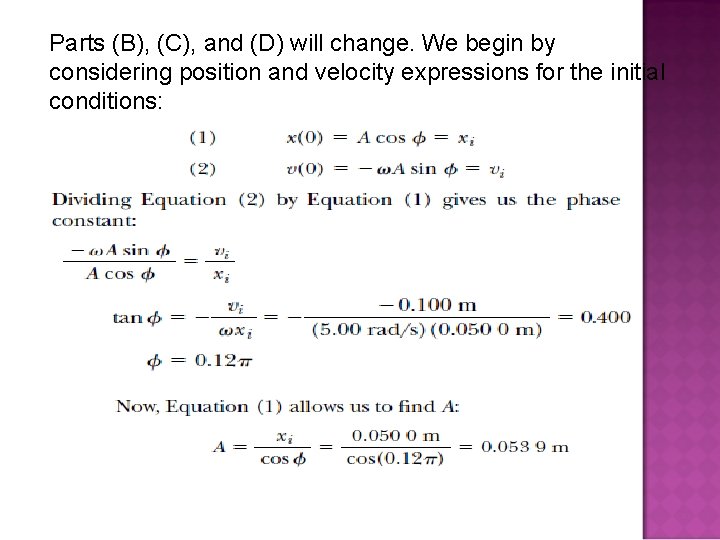
Parts (B), (C), and (D) will change. We begin by considering position and velocity expressions for the initial conditions:
- Slides: 11