
Example11 Runway has longitudinal grades consists of three



- Slides: 22
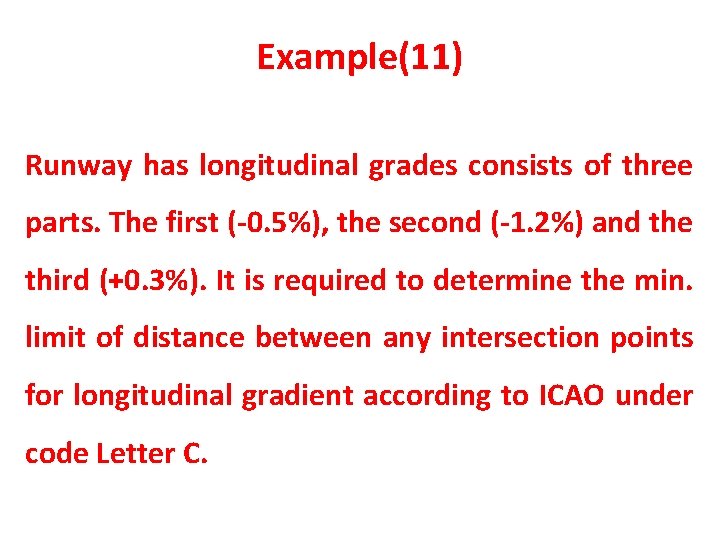
Example(11) Runway has longitudinal grades consists of three parts. The first (-0. 5%), the second (-1. 2%) and the third (+0. 3%). It is required to determine the min. limit of distance between any intersection points for longitudinal gradient according to ICAO under code Letter C.
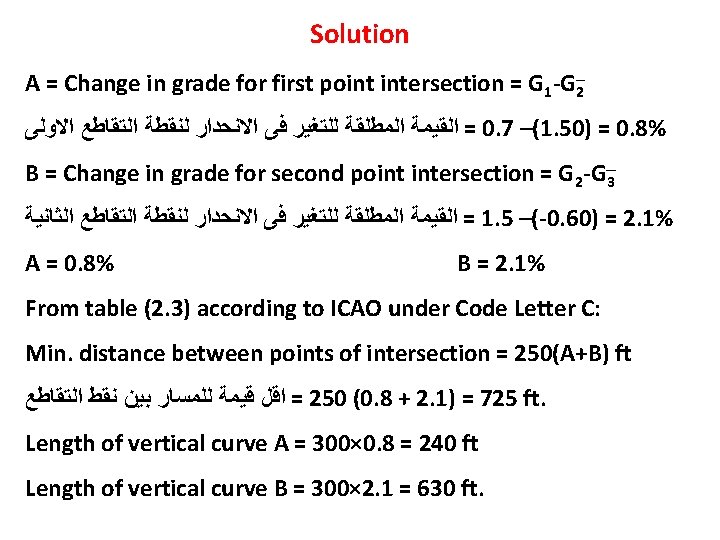
Example (12) Runway has longitudinal grades consists of three parts. The first is (+0. 7%), the second is (+1. 5%) and the third is (-0. 6%). It is required to determine the min. limit of distance between any intersection points for longitudinal gradient according to FAA under Utility airports. Also, determine the lengths of vertical curves.
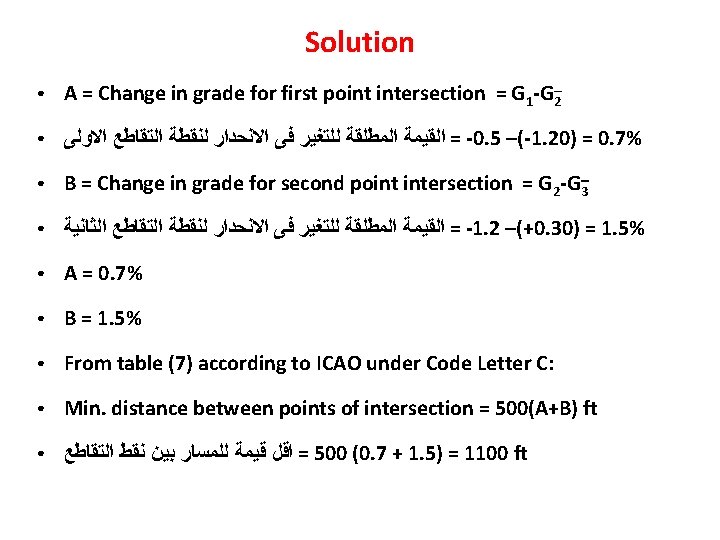
Solution A = Change in grade for first point intersection = G 1 -G 2 = ﺍﻟﻘﻴﻤﺔ ﺍﻟﻤﻄﻠﻘﺔ ﻟﻠﺘﻐﻴﺮ ﻓﻰ ﺍﻻﻧﺤﺪﺍﺭ ﻟﻨﻘﻄﺔ ﺍﻟﺘﻘﺎﻃﻊ ﺍﻻﻭﻟﻰ 0. 7 –(1. 50) = 0. 8% B = Change in grade for second point intersection = G 2 -G 3 = ﺍﻟﻘﻴﻤﺔ ﺍﻟﻤﻄﻠﻘﺔ ﻟﻠﺘﻐﻴﺮ ﻓﻰ ﺍﻻﻧﺤﺪﺍﺭ ﻟﻨﻘﻄﺔ ﺍﻟﺘﻘﺎﻃﻊ ﺍﻟﺜﺎﻧﻴﺔ 1. 5 –(-0. 60) = 2. 1% A = 0. 8% B = 2. 1% From table (2. 3) according to ICAO under Code Letter C: Min. distance between points of intersection = 250(A+B) ft = ﺍﻗﻞ ﻗﻴﻤﺔ ﻟﻠﻤﺴﺎﺭ ﺑﻴﻦ ﻧﻘﻂ ﺍﻟﺘﻘﺎﻃﻊ 250 (0. 8 + 2. 1) = 725 ft. Length of vertical curve A = 300× 0. 8 = 240 ft Length of vertical curve B = 300× 2. 1 = 630 ft.
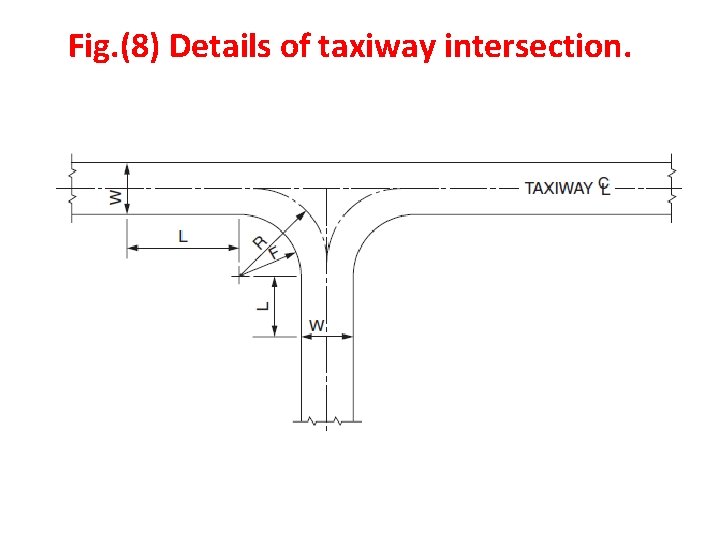
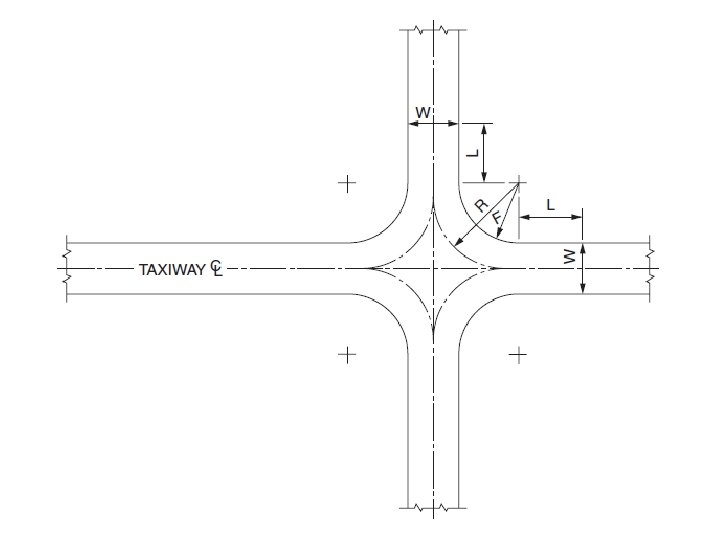
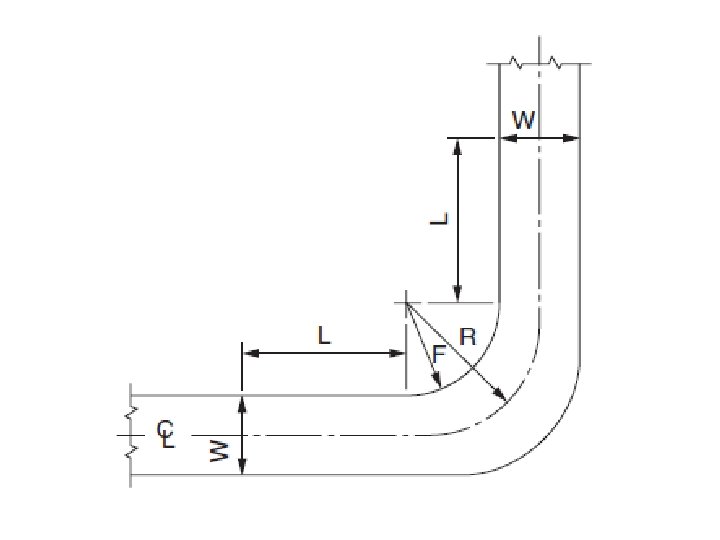
Fig. (8) Details of taxiway intersection.
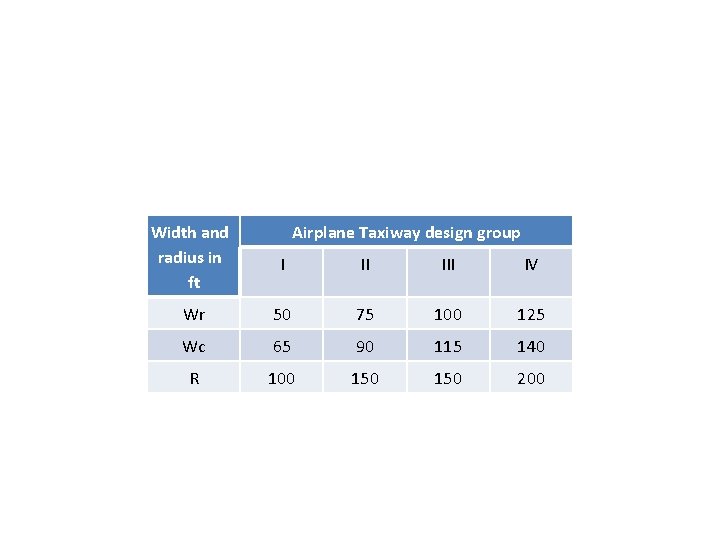
Width and radius in ft Airplane Taxiway design group I II IV Wr 50 75 100 125 Wc 65 90 115 140 R 100 150 200
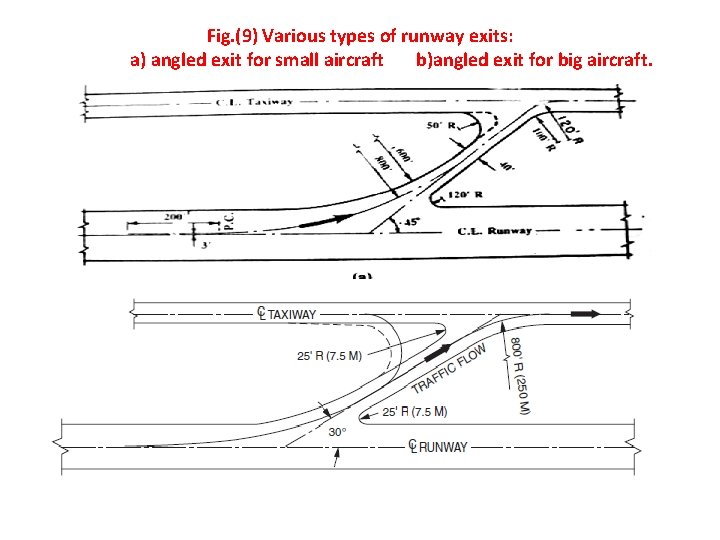
Fig. (9) Various types of runway exits: a) angled exit for small aircraft b)angled exit for big aircraft.
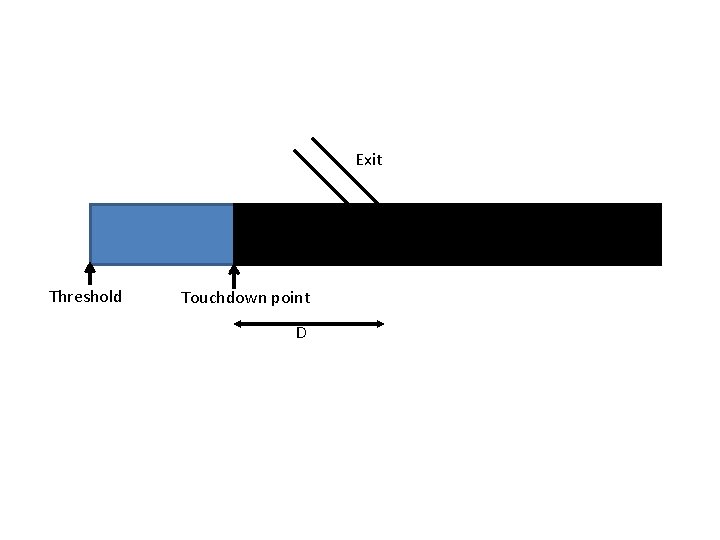
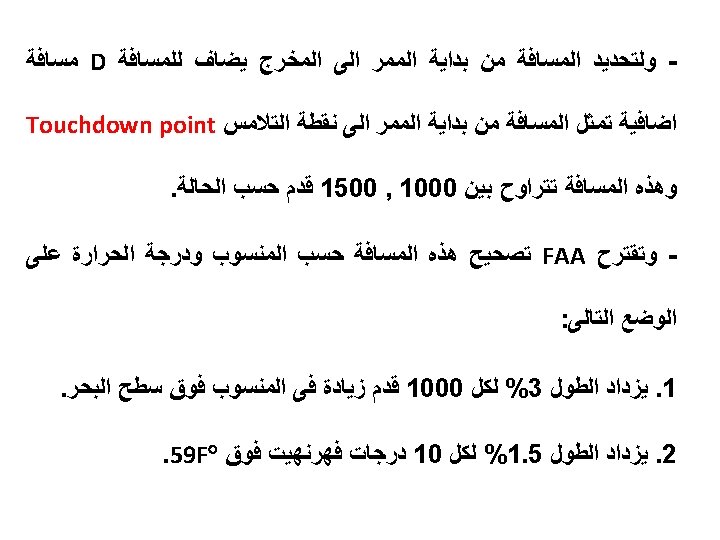
Exit Threshold Touchdown point D
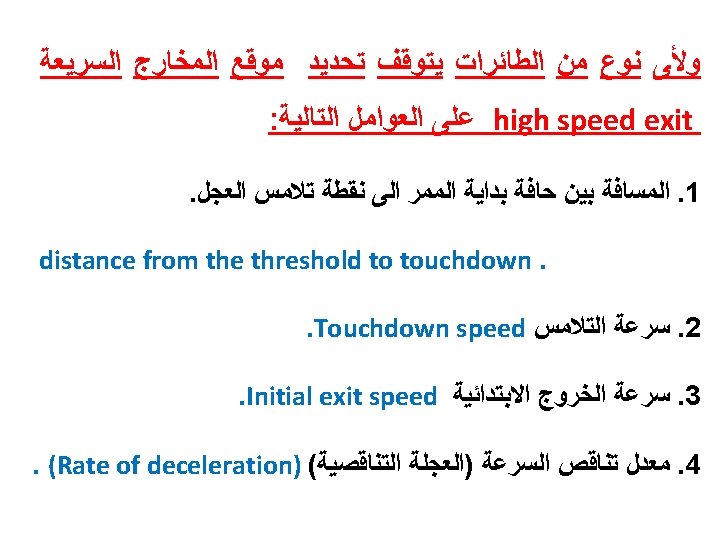
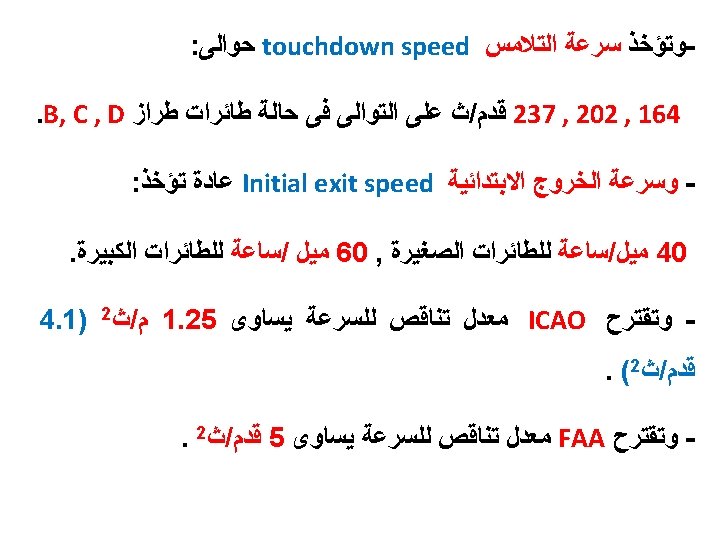
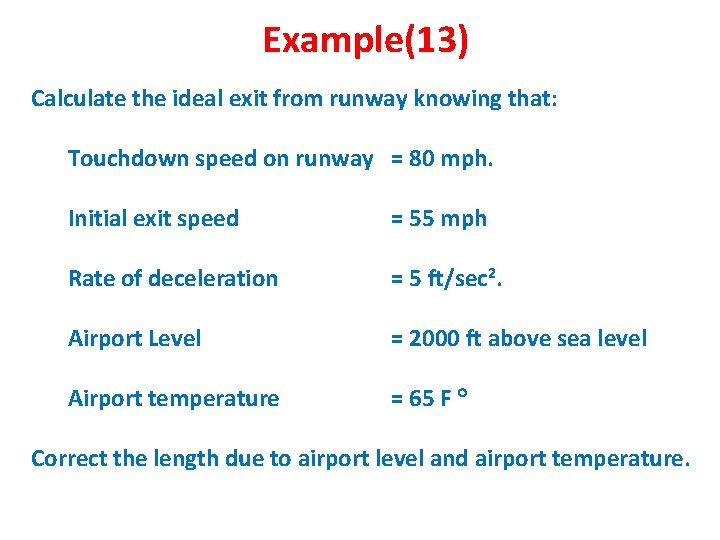
Example(13) Calculate the ideal exit from runway knowing that: Touchdown speed on runway = 80 mph. Initial exit speed = 55 mph Rate of deceleration = 5 ft/sec 2. Airport Level = 2000 ft above sea level Airport temperature = 65 F Correct the length due to airport level and airport temperature.
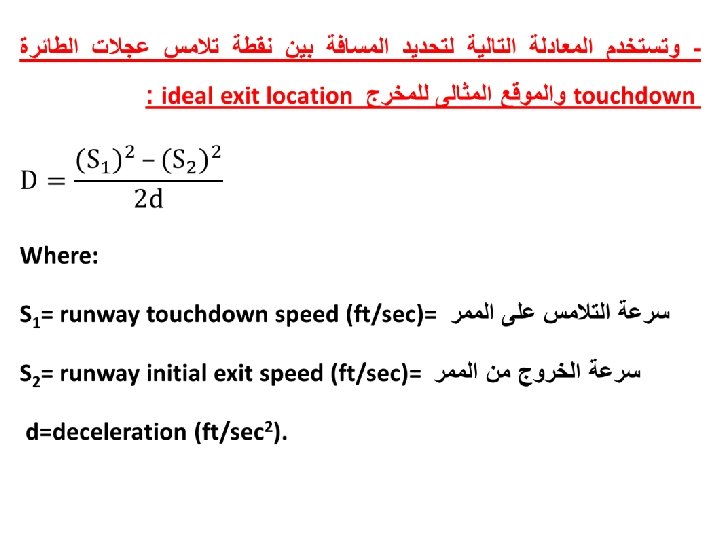
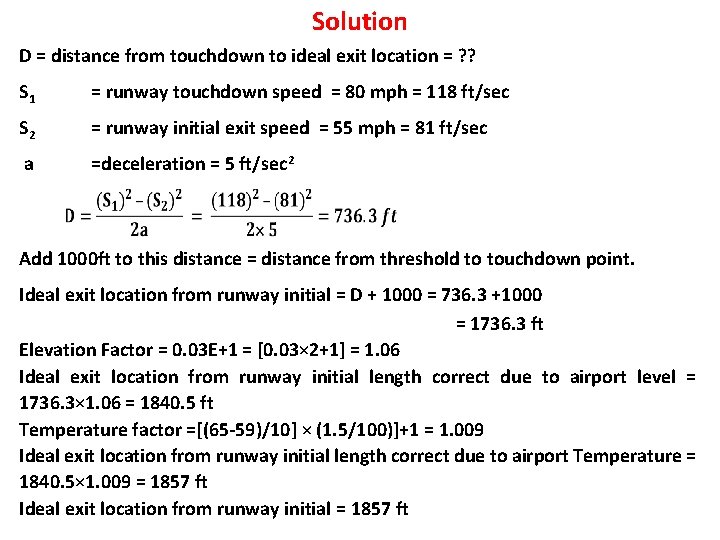
Solution D = distance from touchdown to ideal exit location = ? ? S 1 = runway touchdown speed = 80 mph = 118 ft/sec S 2 = runway initial exit speed = 55 mph = 81 ft/sec a =deceleration = 5 ft/sec 2 Add 1000 ft to this distance = distance from threshold to touchdown point. Ideal exit location from runway initial = D + 1000 = 736. 3 +1000 = 1736. 3 ft Elevation Factor = 0. 03 E+1 = [0. 03× 2+1] = 1. 06 Ideal exit location from runway initial length correct due to airport level = 1736. 3× 1. 06 = 1840. 5 ft Temperature factor =[(65 -59)/10] × (1. 5/100)]+1 = 1. 009 Ideal exit location from runway initial length correct due to airport Temperature = 1840. 5× 1. 009 = 1857 ft Ideal exit location from runway initial = 1857 ft