
Example A B Define Plan View Additional Task
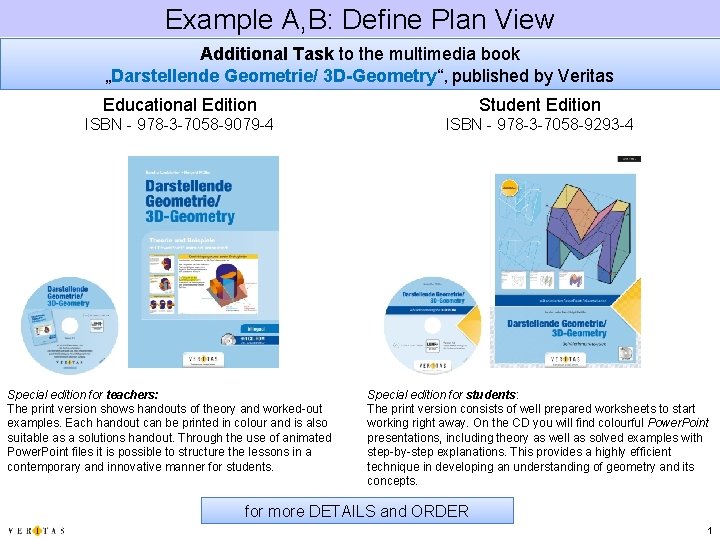
Example A, B: Define Plan View Additional Task to the multimedia book „Darstellende Geometrie/ 3 D-Geometry“, published by Veritas Educational Edition Student Edition ISBN - 978 -3 -7058 -9079 -4 ISBN - 978 -3 -7058 -9293 -4 Special edition for teachers: The print version shows handouts of theory and worked-out examples. Each handout can be printed in colour and is also suitable as a solutions handout. Through the use of animated Power. Point files it is possible to structure the lessons in a contemporary and innovative manner for students. Special edition for students: The print version consists of well prepared worksheets to start working right away. On the CD you will find colourful Power. Point presentations, including theory as well as solved examples with step-by-step explanations. This provides a highly efficient technique in developing an understanding of geometry and its concepts. for more DETAILS and ORDER 1
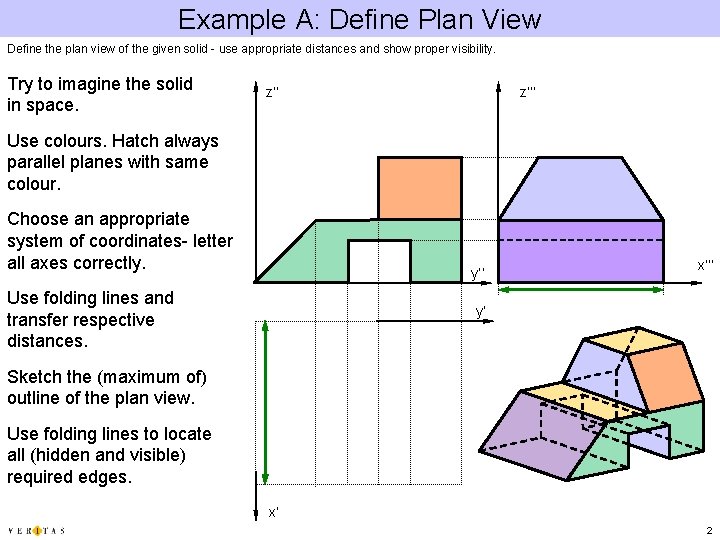
Example A: Define Plan View Define the plan view of the given solid - use appropriate distances and show proper visibility. Try to imagine the solid in space. z‘‘ z’’’ Use colours. Hatch always parallel planes with same colour. Choose an appropriate system of coordinates- letter all axes correctly. y‘‘ Use folding lines and transfer respective distances. x‘‘‘ y‘ Sketch the (maximum of) outline of the plan view. Use folding lines to locate all (hidden and visible) required edges. x‘ 2
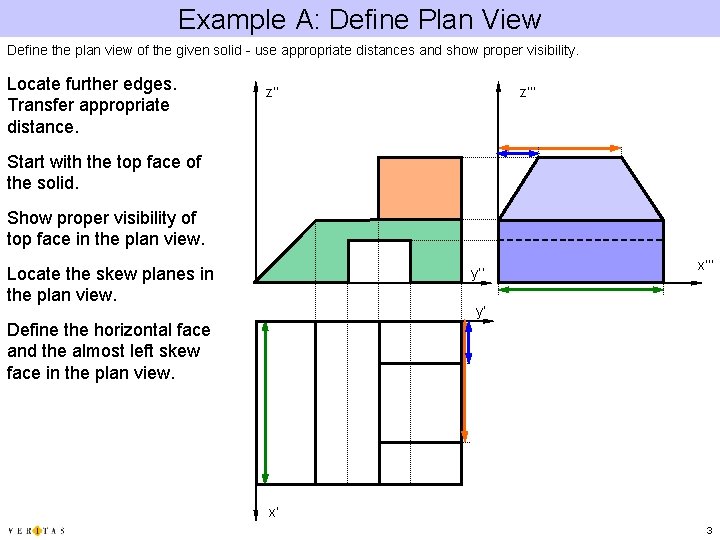
Example A: Define Plan View Define the plan view of the given solid - use appropriate distances and show proper visibility. Locate further edges. Transfer appropriate distance. z‘‘ z’’’ Start with the top face of the solid. Show proper visibility of top face in the plan view. Locate the skew planes in the plan view. y‘‘ x‘‘‘ y‘ Define the horizontal face and the almost left skew face in the plan view. x‘ 3
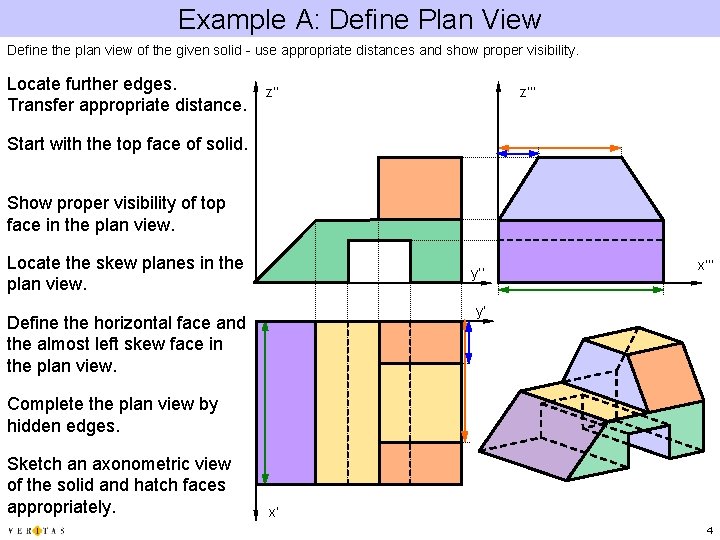
Example A: Define Plan View Define the plan view of the given solid - use appropriate distances and show proper visibility. Locate further edges. Transfer appropriate distance. z‘‘ z’’’ Start with the top face of solid. Show proper visibility of top face in the plan view. Locate the skew planes in the plan view. y‘‘ x‘‘‘ y‘ Define the horizontal face and the almost left skew face in the plan view. Complete the plan view by hidden edges. Sketch an axonometric view of the solid and hatch faces appropriately. x‘ 4
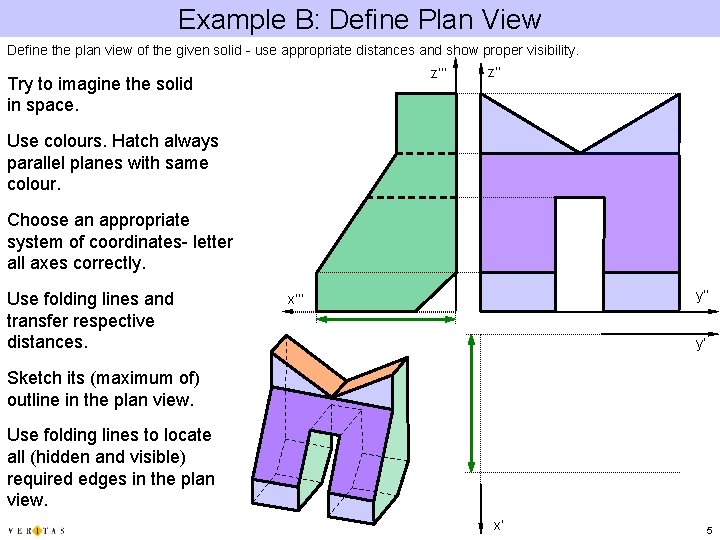
Example B: Define Plan View Define the plan view of the given solid - use appropriate distances and show proper visibility. z’’’ Try to imagine the solid in space. z’’ Use colours. Hatch always parallel planes with same colour. Choose an appropriate system of coordinates- letter all axes correctly. Use folding lines and transfer respective distances. y’’ x’’’ y‘ Sketch its (maximum of) outline in the plan view. Use folding lines to locate all (hidden and visible) required edges in the plan view. x‘ 5
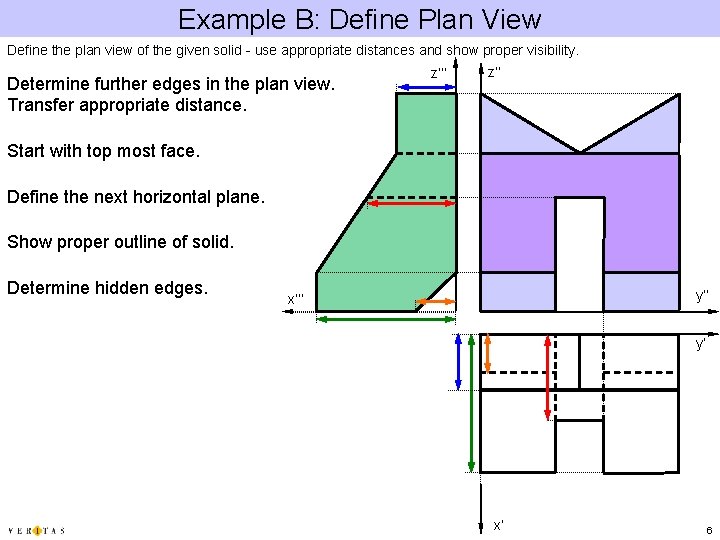
Example B: Define Plan View Define the plan view of the given solid - use appropriate distances and show proper visibility. Determine further edges in the plan view. Transfer appropriate distance. z’’’ z’’ Start with top most face. Define the next horizontal plane. Show proper outline of solid. Determine hidden edges. y‘‘ x’’’ y‘ x‘ 6
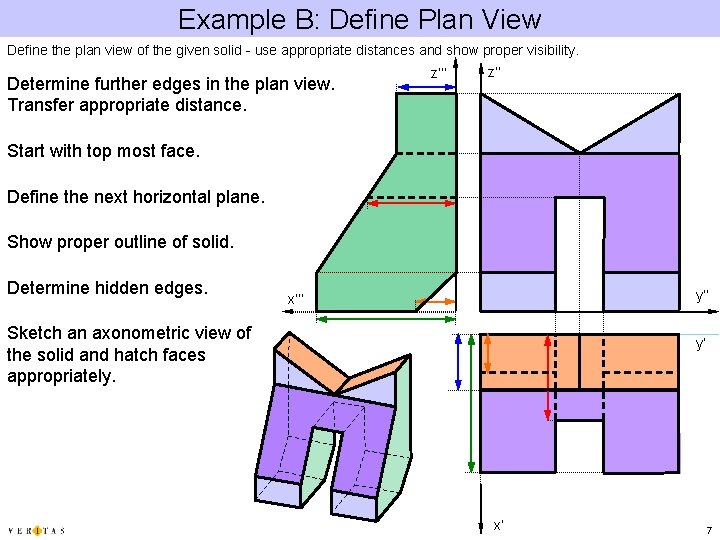
Example B: Define Plan View Define the plan view of the given solid - use appropriate distances and show proper visibility. Determine further edges in the plan view. Transfer appropriate distance. z’’’ z’’ Start with top most face. Define the next horizontal plane. Show proper outline of solid. Determine hidden edges. y‘‘ x’’’ Sketch an axonometric view of the solid and hatch faces appropriately. y‘ x‘ 7
- Slides: 7