
Example 2 Adding Integers Find the sum 12
- Slides: 6
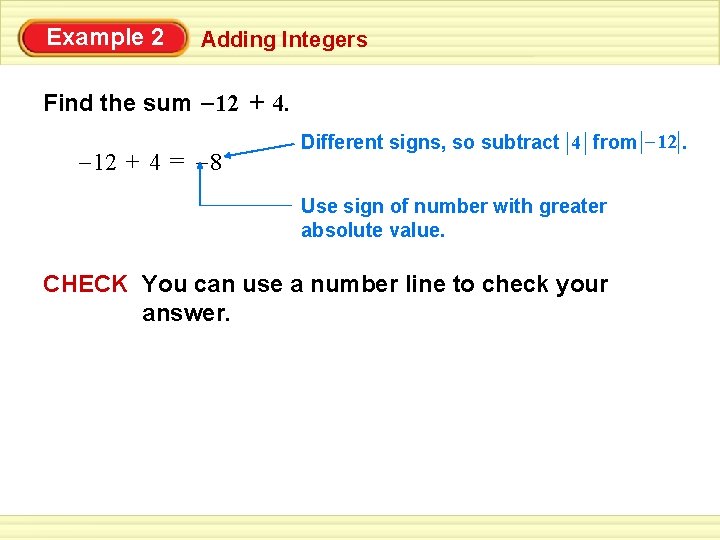
Example 2 Adding Integers Find the sum – 12 + 4 = – 8 Different signs, so subtract 4 from – 12. Use sign of number with greater absolute value. CHECK You can use a number line to check your answer.
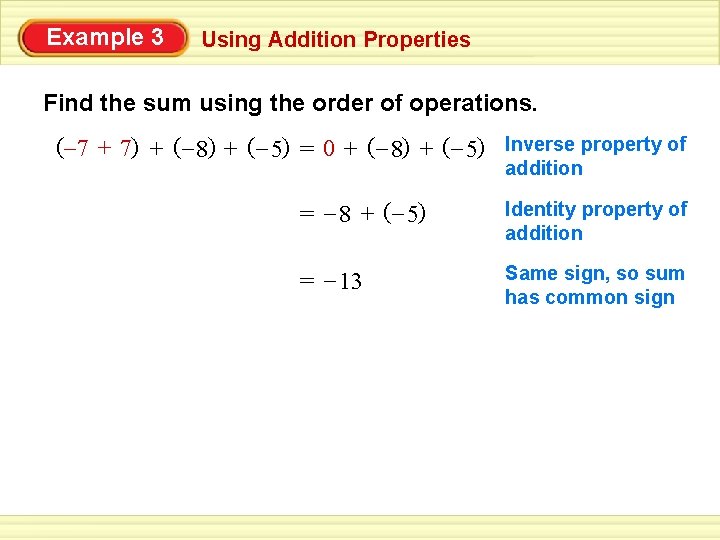
Example 3 Using Addition Properties Find the sum using the order of operations. (– 7 + 7) + ( – 8) + ( – 5) = 0 + ( – 8) + ( – 5) Inverse property of addition = – 8 + ( – 5) Identity property of addition = – 13 Same sign, so sum has common sign
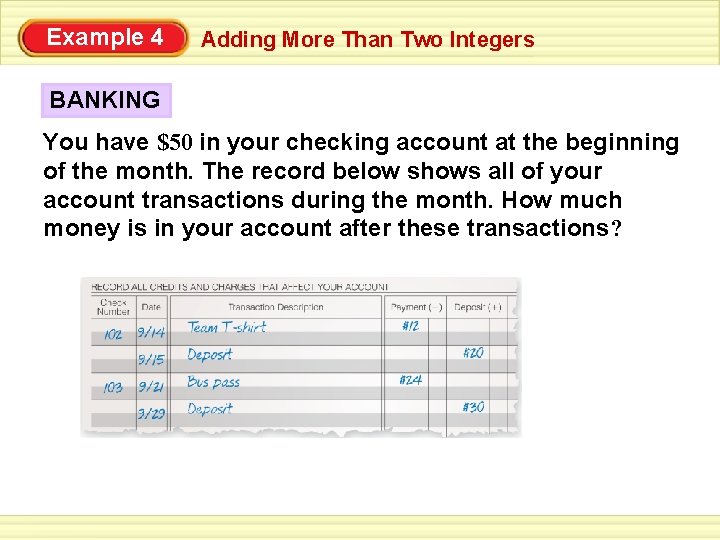
Example 4 Adding More Than Two Integers BANKING You have $50 in your checking account at the beginning of the month. The record below shows all of your account transactions during the month. How much money is in your account after these transactions?
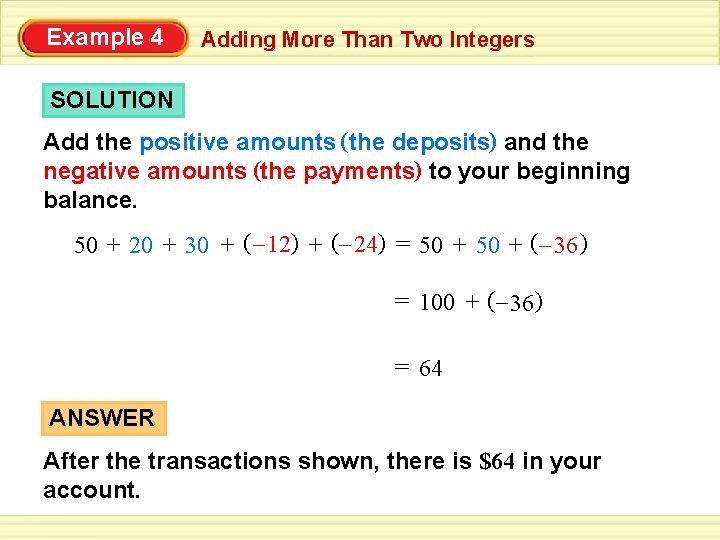
Example 4 Adding More Than Two Integers SOLUTION Add the positive amounts ( the deposits) and the negative amounts (the payments) to your beginning balance. 50 + 20 + 30 + ( – 12) + (– 24) = 50 + ( – 36 ) = 100 + ( – 36) = 64 ANSWER After the transactions shown, there is $64 in your account.
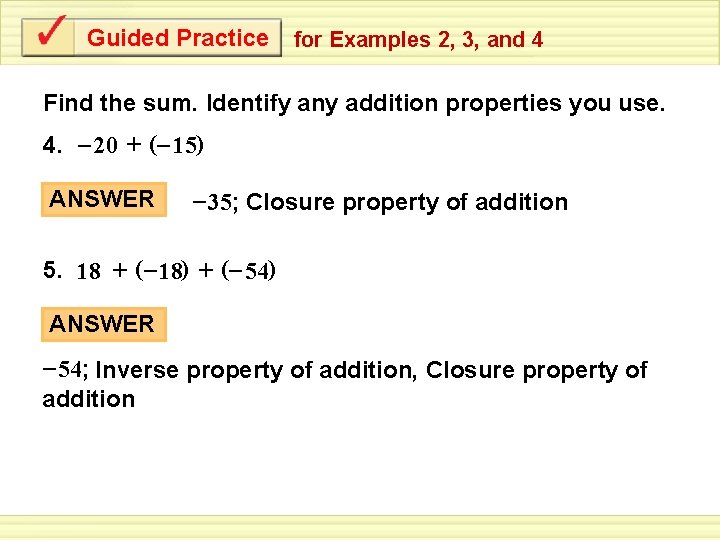
Guided Practice for Examples 2, 3, and 4 Find the sum. Identify any addition properties you use. 4. – 20 + ( – 15) ANSWER – 35; Closure property of addition 5. 18 + ( – 18) + ( – 54) ANSWER – 54; Inverse property of addition, Closure property of addition
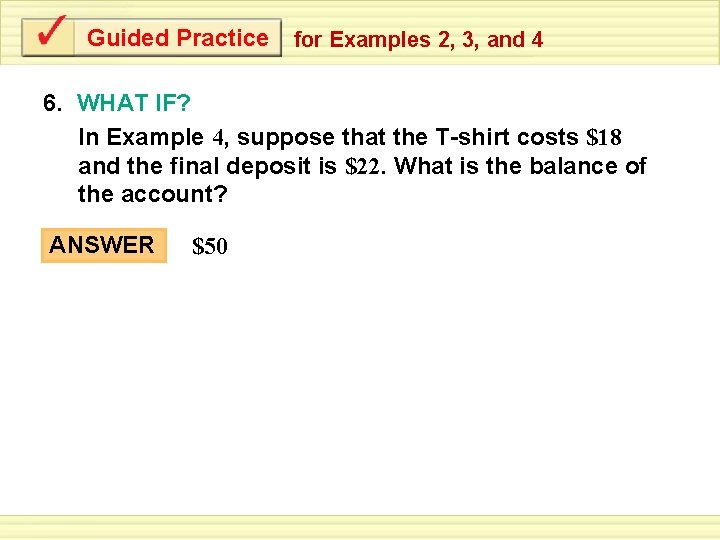
Guided Practice for Examples 2, 3, and 4 6. WHAT IF? In Example 4, suppose that the T-shirt costs $18 and the final deposit is $22. What is the balance of the account? ANSWER $50