
Example 1 3 Where Is the Resultant Force

- Slides: 10
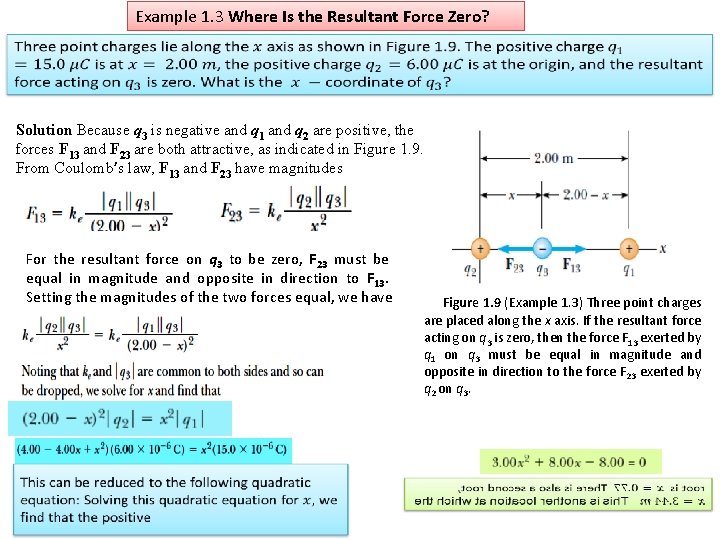
Example 1. 3 Where Is the Resultant Force Zero? Solution Because q 3 is negative and q 1 and q 2 are positive, the forces F 13 and F 23 are both attractive, as indicated in Figure 1. 9. From Coulomb’s law, F 13 and F 23 have magnitudes For the resultant force on q 3 to be zero, F 23 must be equal in magnitude and opposite in direction to F 13. Setting the magnitudes of the two forces equal, we have Figure 1. 9 (Example 1. 3) Three point charges are placed along the x axis. If the resultant force acting on q 3 is zero, then the force F 13 exerted by q 1 on q 3 must be equal in magnitude and opposite in direction to the force F 23 exerted by q 2 on q 3.
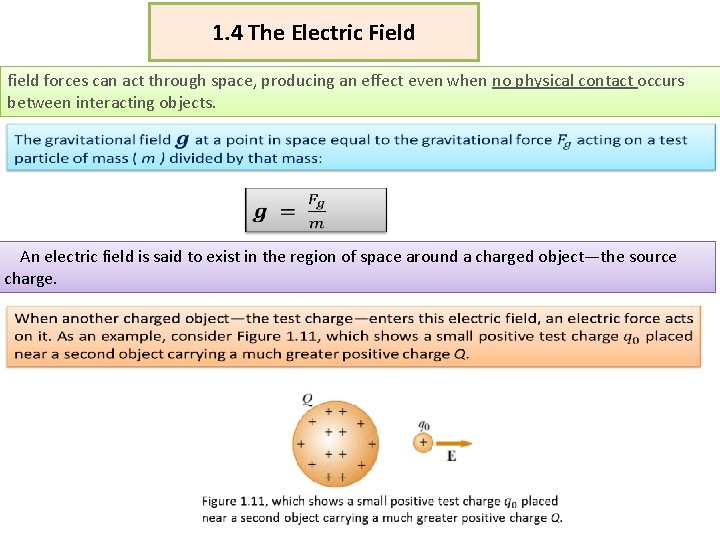
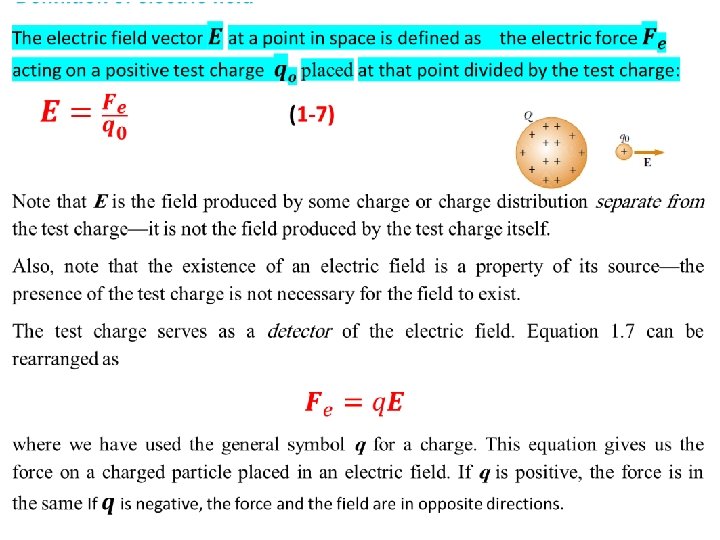
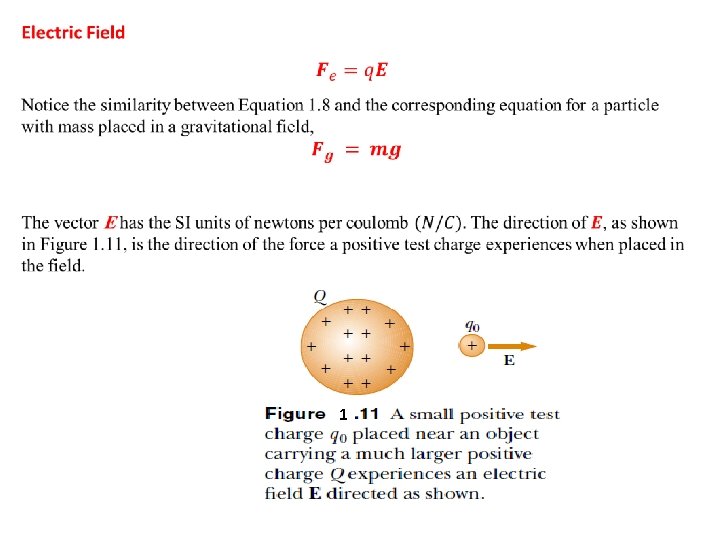
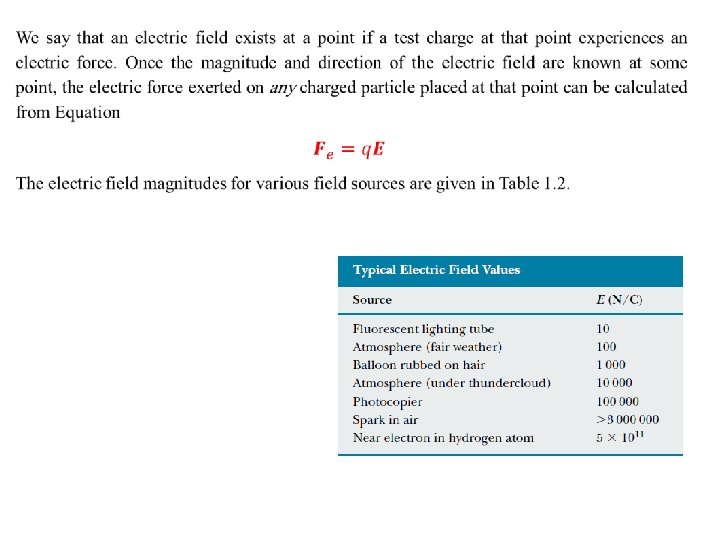
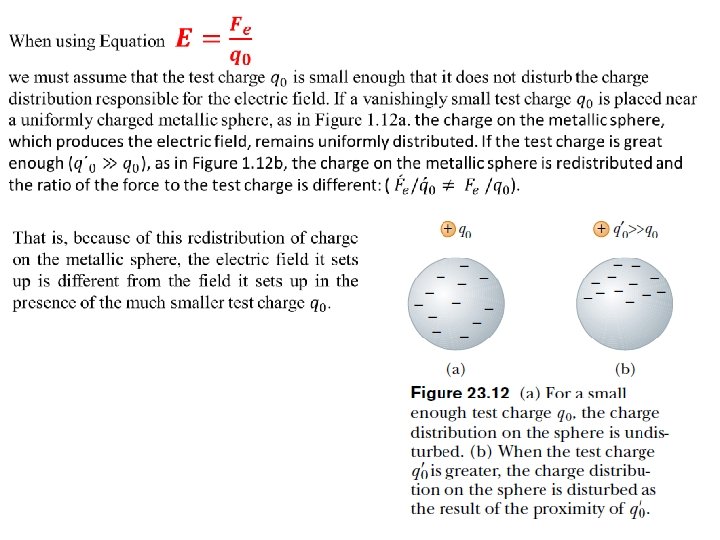
1. 4 The Electric Field forces can act through space, producing an effect even when no physical contact occurs between interacting objects. An electric field is said to exist in the region of space around a charged object—the source charge.
1
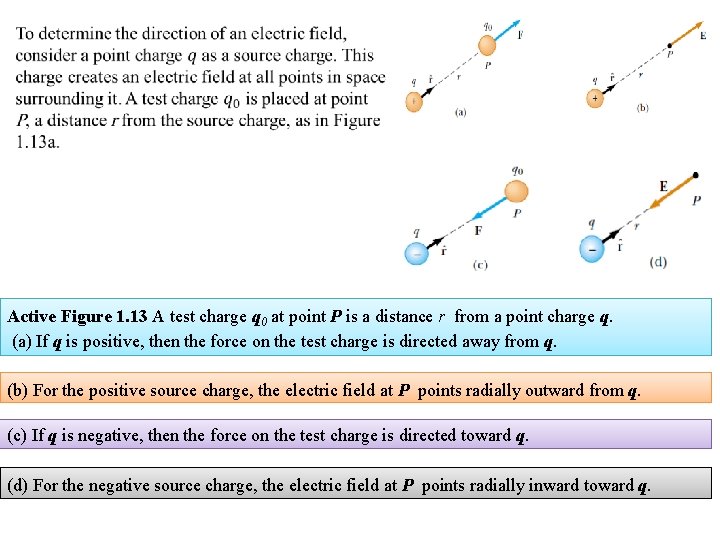
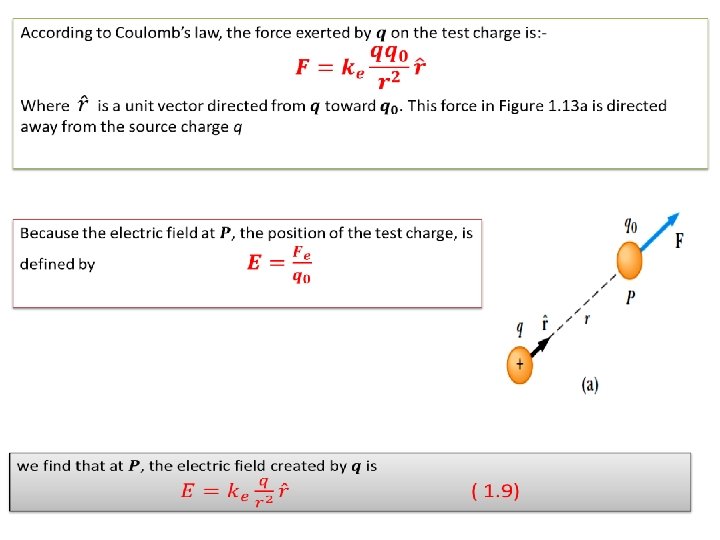
Active Figure 1. 13 A test charge q 0 at point P is a distance r from a point charge q. (a) If q is positive, then the force on the test charge is directed away from q. (b) For the positive source charge, the electric field at P points radially outward from q. (c) If q is negative, then the force on the test charge is directed toward q. (d) For the negative source charge, the electric field at P points radially inward toward q.
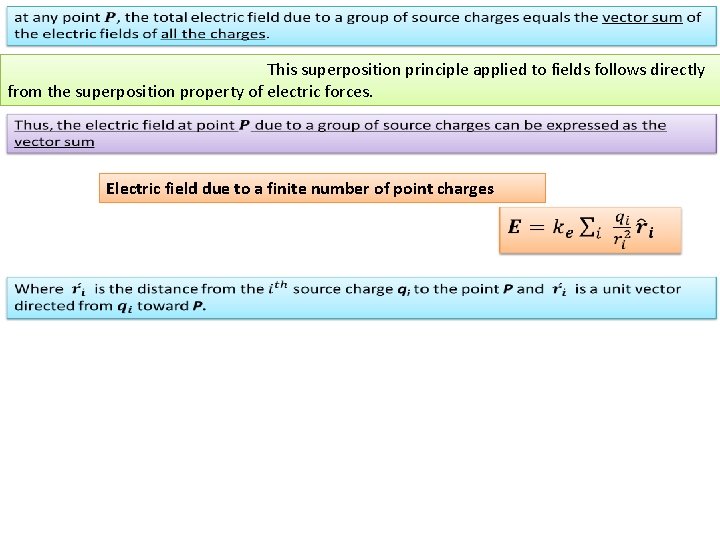
This superposition principle applied to fields follows directly from the superposition property of electric forces. Electric field due to a finite number of point charges