
Examining the Causes of Inflation Robert Kelchen Student
Examining the Causes of Inflation Robert Kelchen Student Research Conference April 20, 2006
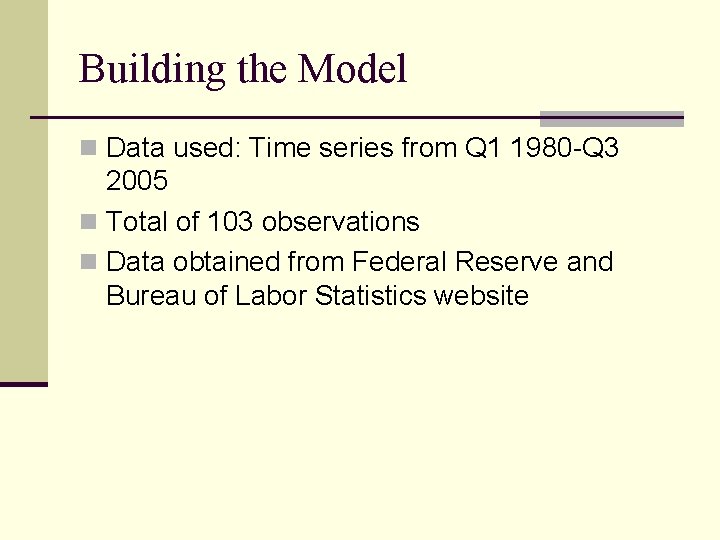
Building the Model n Data used: Time series from Q 1 1980 -Q 3 2005 n Total of 103 observations n Data obtained from Federal Reserve and Bureau of Labor Statistics website
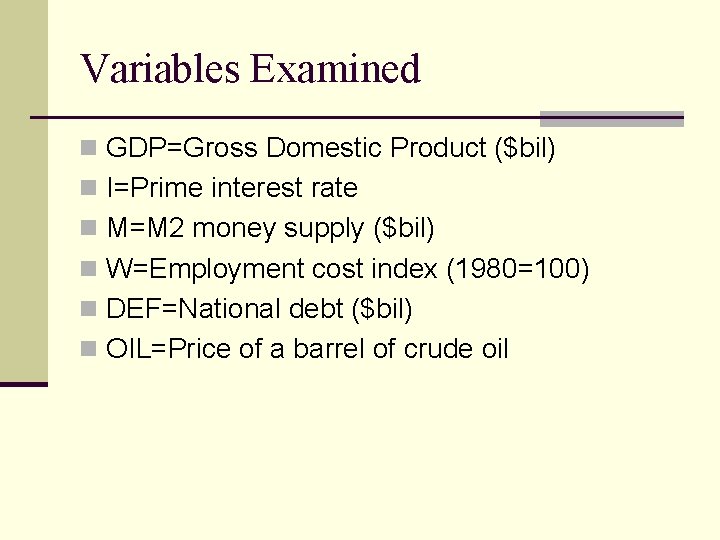
Variables Examined n GDP=Gross Domestic Product ($bil) n I=Prime interest rate n M=M 2 money supply ($bil) n W=Employment cost index (1980=100) n DEF=National debt ($bil) n OIL=Price of a barrel of crude oil
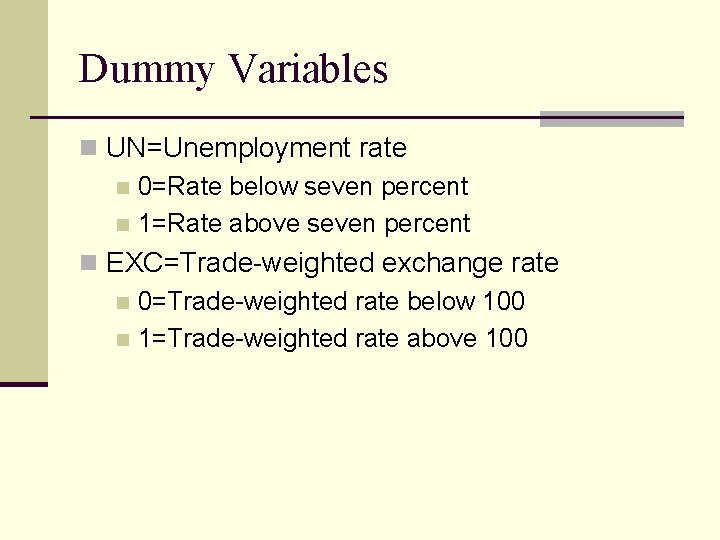
Dummy Variables n UN=Unemployment rate n 0=Rate below seven percent n 1=Rate above seven percent n EXC=Trade-weighted exchange rate n 0=Trade-weighted rate below 100 n 1=Trade-weighted rate above 100

Linear Model with Dummy Variables
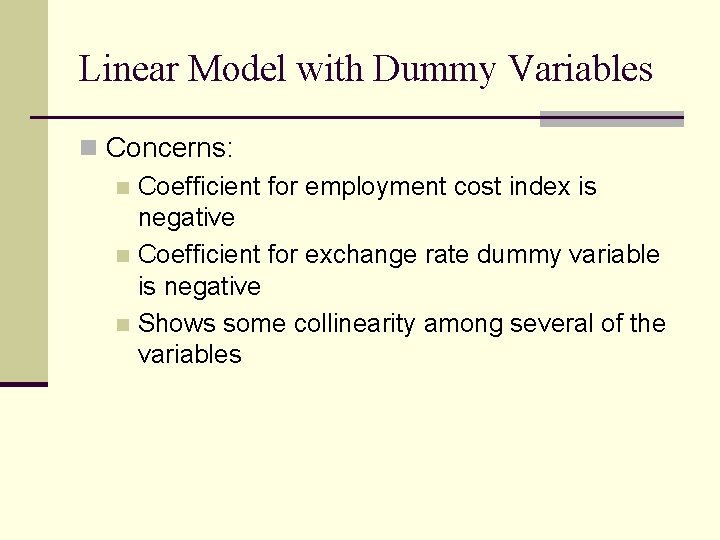
Linear Model with Dummy Variables n Concerns: n Coefficient for employment cost index is negative n Coefficient for exchange rate dummy variable is negative n Shows some collinearity among several of the variables
Partial Logarithmic Model with Dummy Variables
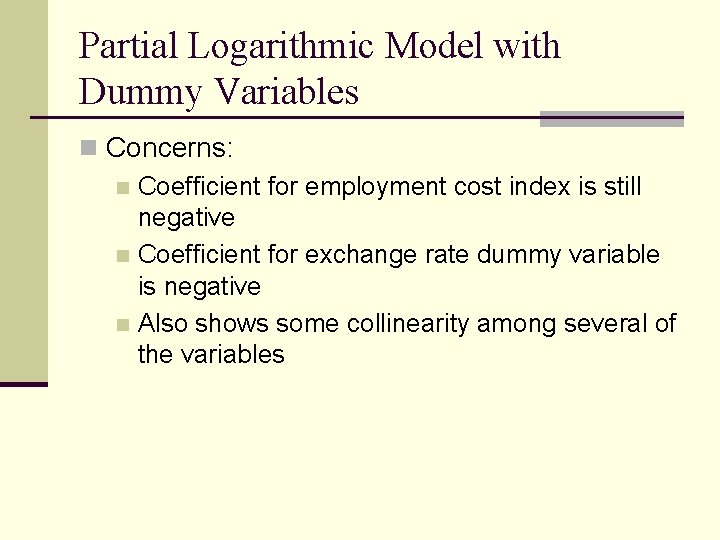
Partial Logarithmic Model with Dummy Variables n Concerns: n Coefficient for employment cost index is still negative n Coefficient for exchange rate dummy variable is negative n Also shows some collinearity among several of the variables
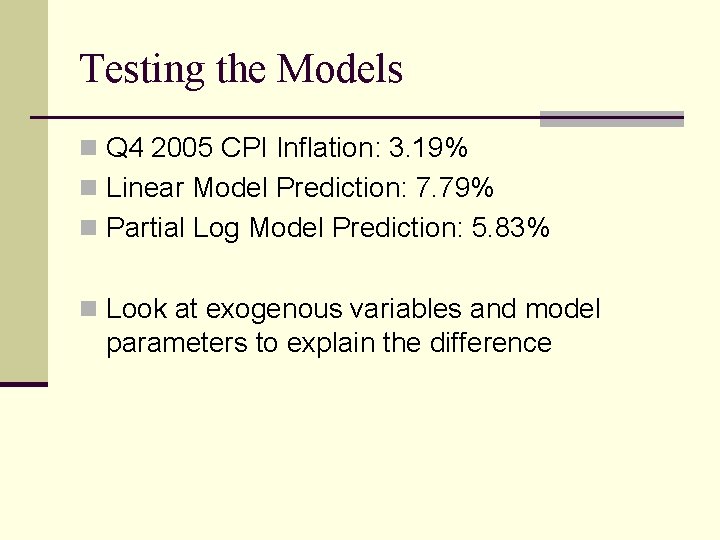
Testing the Models n Q 4 2005 CPI Inflation: 3. 19% n Linear Model Prediction: 7. 79% n Partial Log Model Prediction: 5. 83% n Look at exogenous variables and model parameters to explain the difference
Conclusion n Although both models explain a fair amount of the regression, the partial logarithmic model is the better model. n The partial logarithmic model consistently has less error in regression, especially in recent years. n No model can predict inflation with perfect accuracy!
- Slides: 10