
Examining repeats with databases Miguel Andrade Faculty of
Examining repeats with databases Miguel Andrade Faculty of Biology, Johannes Gutenberg University Mainz, Germany andrade@uni-mainz. de
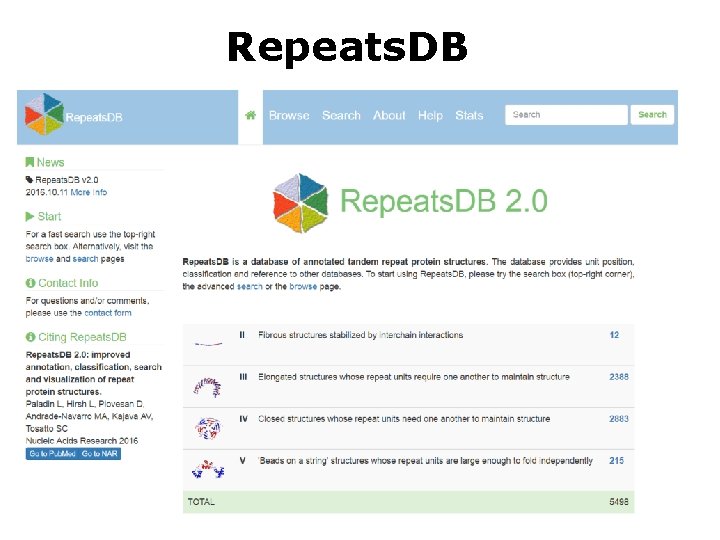
Repeats. DB

Repeats. DB http: //repeatsdb. bio. unipd. it/protein/3 vbp. A
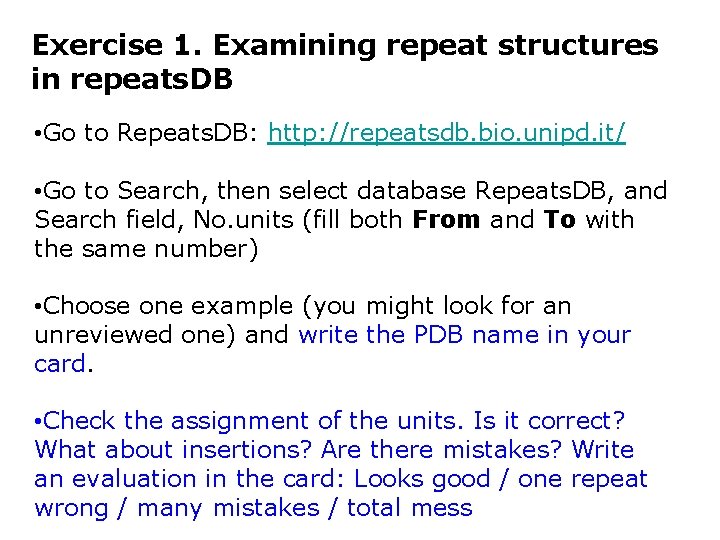
Exercise 1. Examining repeat structures in repeats. DB • Go to Repeats. DB: http: //repeatsdb. bio. unipd. it/ • Go to Search, then select database Repeats. DB, and Search field, No. units (fill both From and To with the same number) • Choose one example (you might look for an unreviewed one) and write the PDB name in your card. • Check the assignment of the units. Is it correct? What about insertions? Are there mistakes? Write an evaluation in the card: Looks good / one repeat wrong / many mistakes / total mess
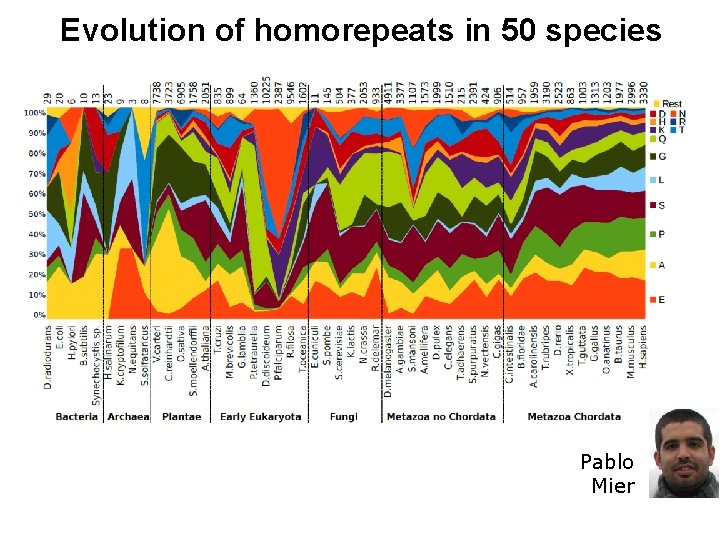
Evolution of homorepeats in 50 species Pablo Mier
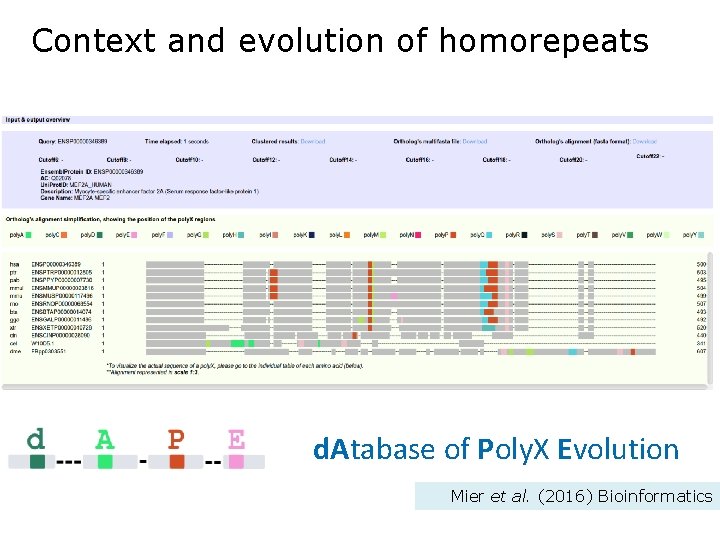
Context and evolution of homorepeats d. Atabase of Poly. X Evolution Mier et al. (2016) Bioinformatics
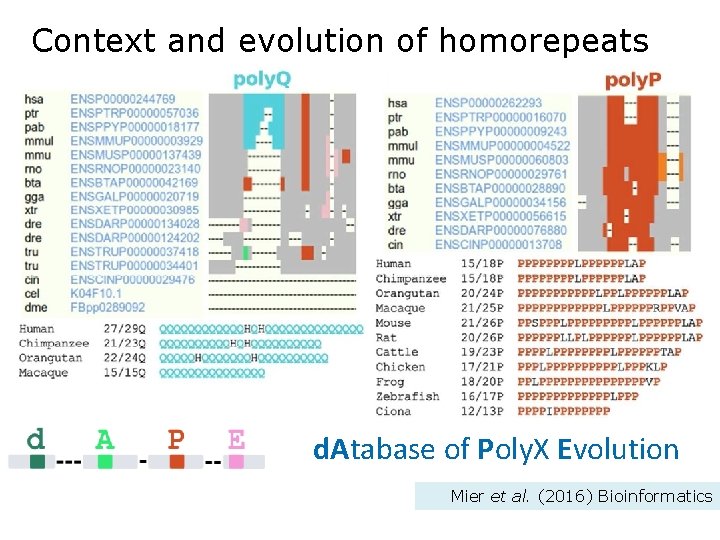
Context and evolution of homorepeats d. Atabase of Poly. X Evolution Mier et al. (2016) Bioinformatics
Exercise 2. Viewing homorepeats in an alignment with d. APE • Find a random human protein in Uni. Prot using this URL: https: //www. uniprot. org/uniprot/? query=organism%3 Ahuma n&random=yes. Write the Entry Name in your card. • Copy the Entry ID (e. g. P 10275). • Go to the d. APE web page: http: //cbdm-01. zdv. uni-mainz. de/~munoz/polyx/ • Use the Entry ID in option A • Hit the “Report the evolution of its poly. X" button • Write down in you card: (1) Which type of poly. X has the human protein? (2) Which additional poly. X not in the human protein were found in the orthologs?
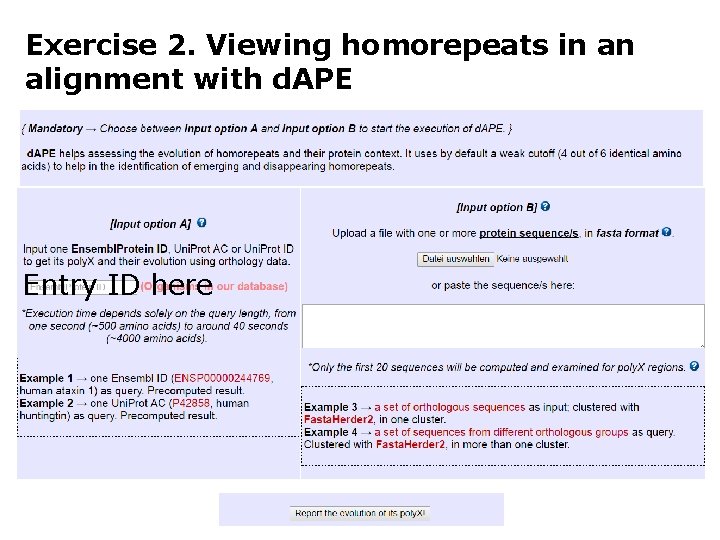
Exercise 2. Viewing homorepeats in an alignment with d. APE Entry ID here
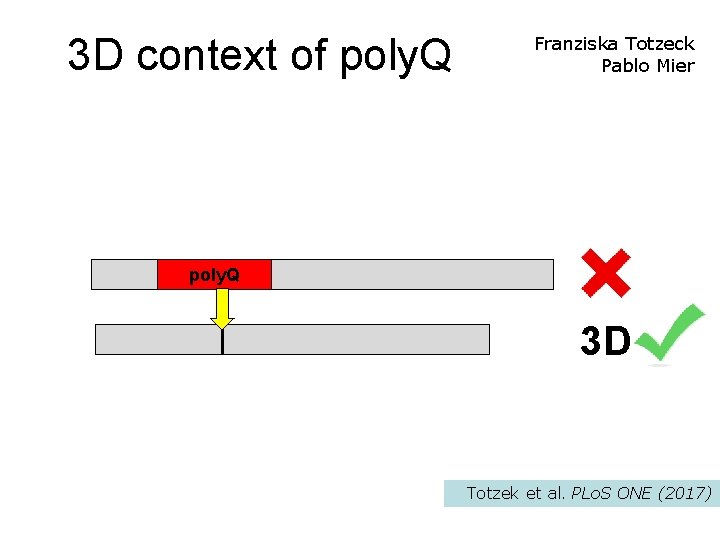
3 D context of poly. Q Franziska Totzeck Pablo Mier 3 D 3 D Totzek et al. PLo. S ONE (2017)
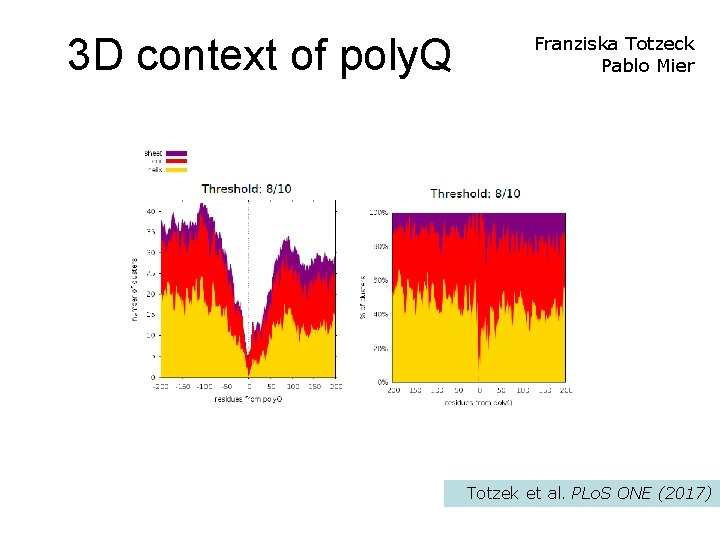
3 D context of poly. Q Franziska Totzeck Pablo Mier Totzek et al. PLo. S ONE (2017)
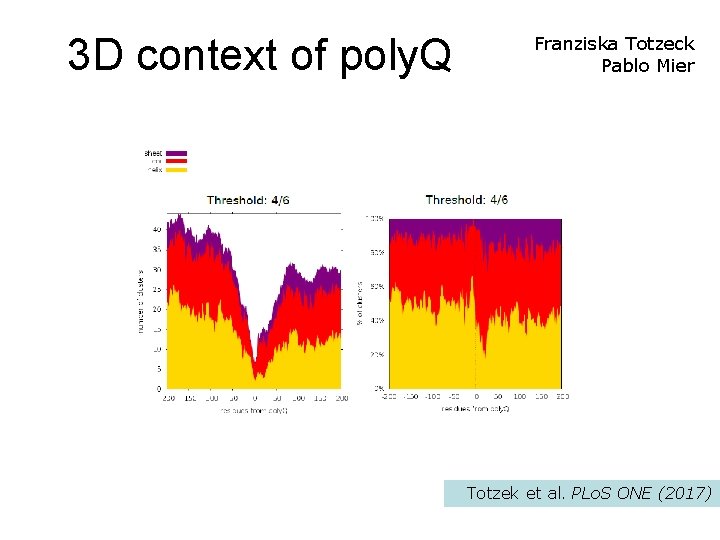
3 D context of poly. Q Franziska Totzeck Pablo Mier Totzek et al. PLo. S ONE (2017)
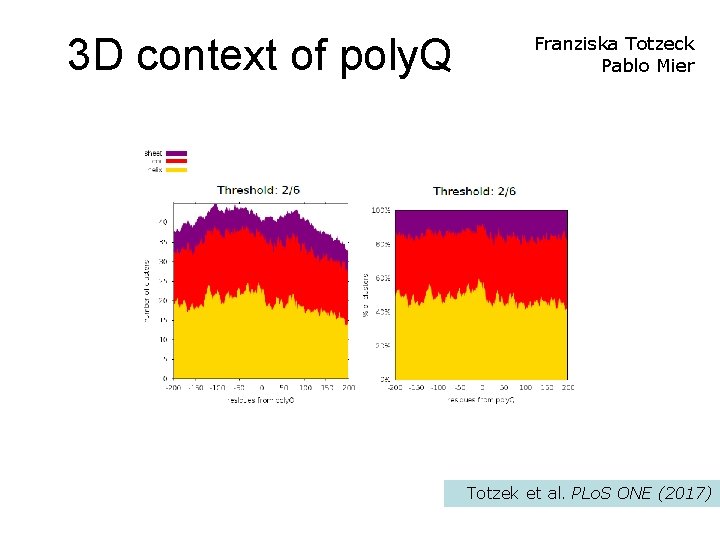
3 D context of poly. Q Franziska Totzeck Pablo Mier Totzek et al. PLo. S ONE (2017)
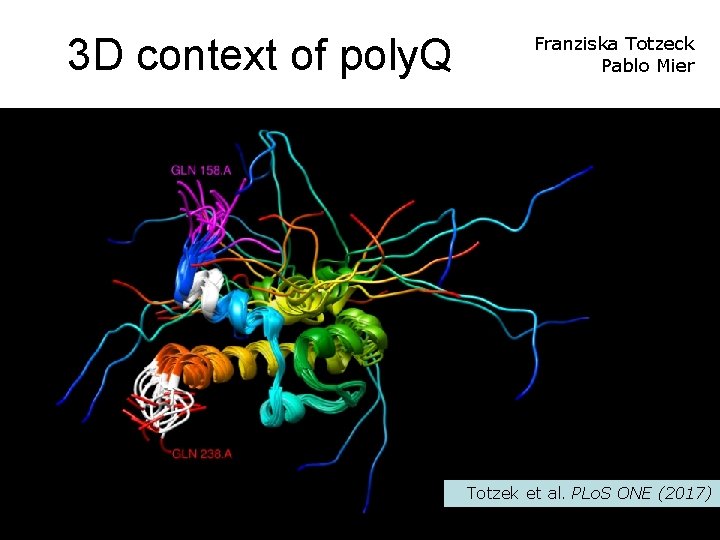
3 D context of poly. Q Franziska Totzeck Pablo Mier Totzek et al. PLo. S ONE (2017)
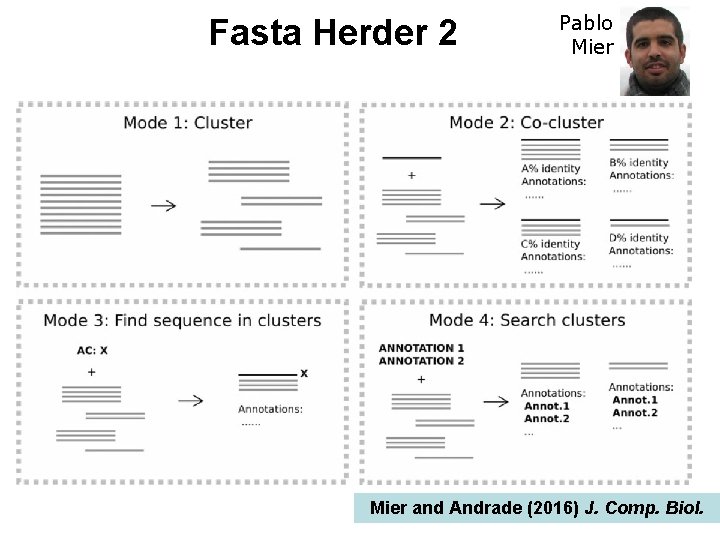
Fasta Herder 2 Pablo Mier and Andrade (2016) J. Comp. Biol.
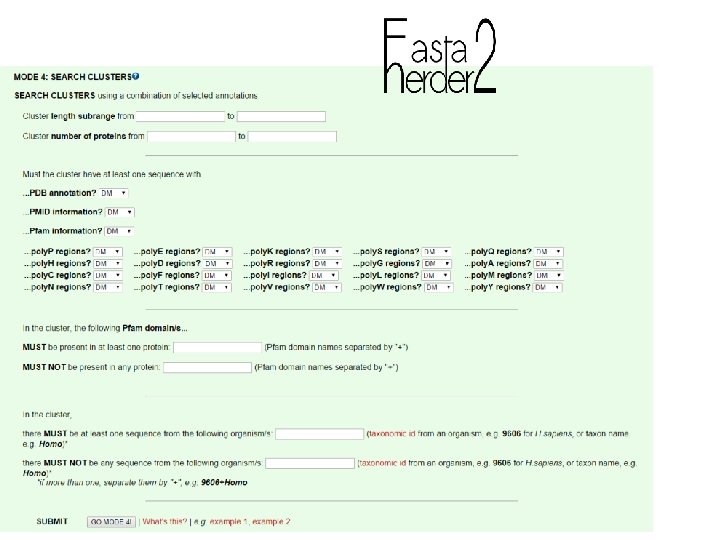
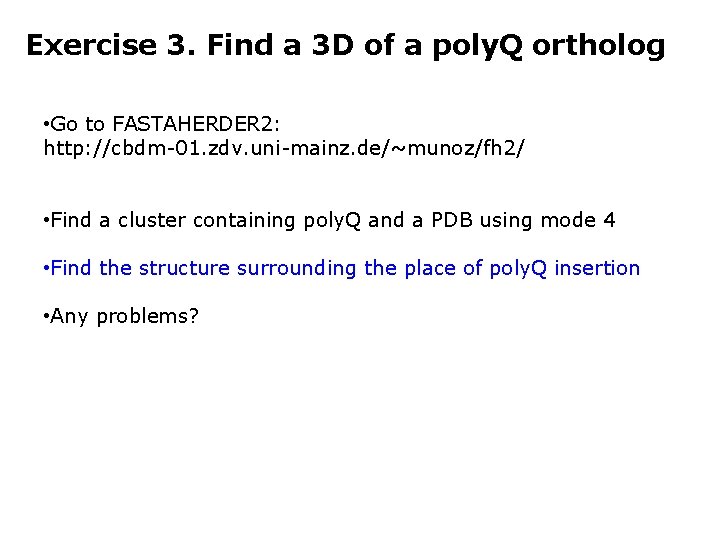
Exercise 3. Find a 3 D of a poly. Q ortholog • Go to FASTAHERDER 2: http: //cbdm-01. zdv. uni-mainz. de/~munoz/fh 2/ • Find a cluster containing poly. Q and a PDB using mode 4 • Find the structure surrounding the place of poly. Q insertion • Any problems?
Exercise 3. Find a 3 D of a poly. Q ortholog • Go to FASTAHERDER 2: http: //cbdm-01. zdv. uni-mainz. de/~munoz/fh 2/ • Find a cluster containing poly. Q and a PDB using mode 4 • Find the structure surrounding the place of poly. Q insertion • Any problems? • If yes, then use this example: Species: “Escherichia coli”, PDB “yes”, and poly. Q “yes” Get the E. coli sequence and the one with poly. Q and align them. Can you see the poly. Q insertions? Compare to PDB: 4 JNF (from DNAK_ECOLI P 0 A 6 Y 8)
Exercise 3. Find a 3 D of a poly. Q ortholog • FH 2 mode 3 with C 4 YKT 4 / Candida albicans 288 aa with two poly. Q Align and compare to P 01123 S. cerevisiae 206 alpha-helix and poly. Q inserts after. See PDB 2 BCG chain Y = YPT 1
- Slides: 19