
Examining Inspection Frequency under the State Level Concept

- Slides: 16
Examining Inspection Frequency under the State -Level Concept Presented by Ken Jarman with Ty Otto, Mark Schanfein*, and Ben Wilson Pacific Northwest National Laboratory * M. Schanfein now at Idaho National Laboratory PNNL is operated by Battelle for the U. S. Department of Energy PNNL-SA-138943
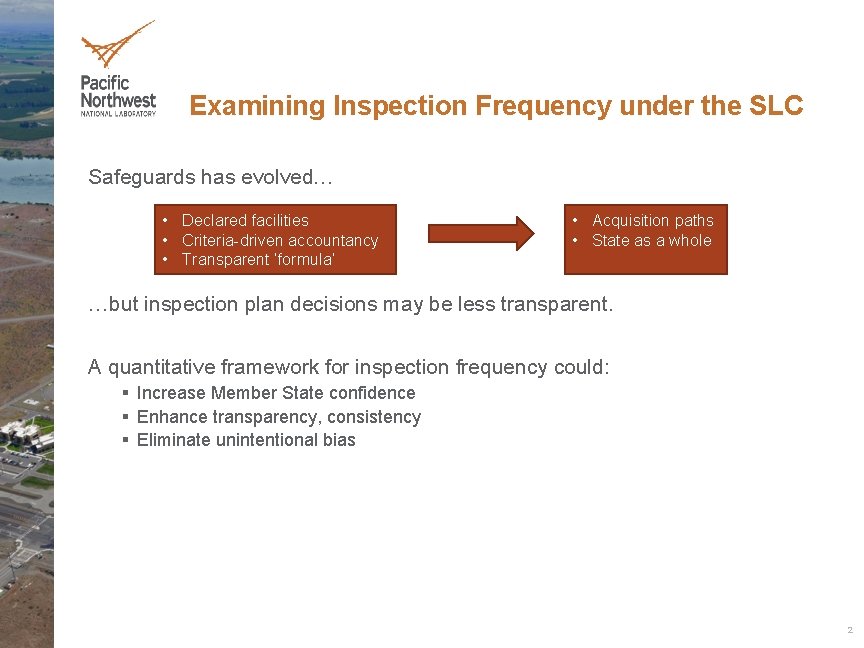
Examining Inspection Frequency under the SLC Safeguards has evolved… • Declared facilities • Criteria-driven accountancy • Transparent ‘formula’ • Acquisition paths • State as a whole …but inspection plan decisions may be less transparent. A quantitative framework for inspection frequency could: § Increase Member State confidence § Enhance transparency, consistency § Eliminate unintentional bias 2
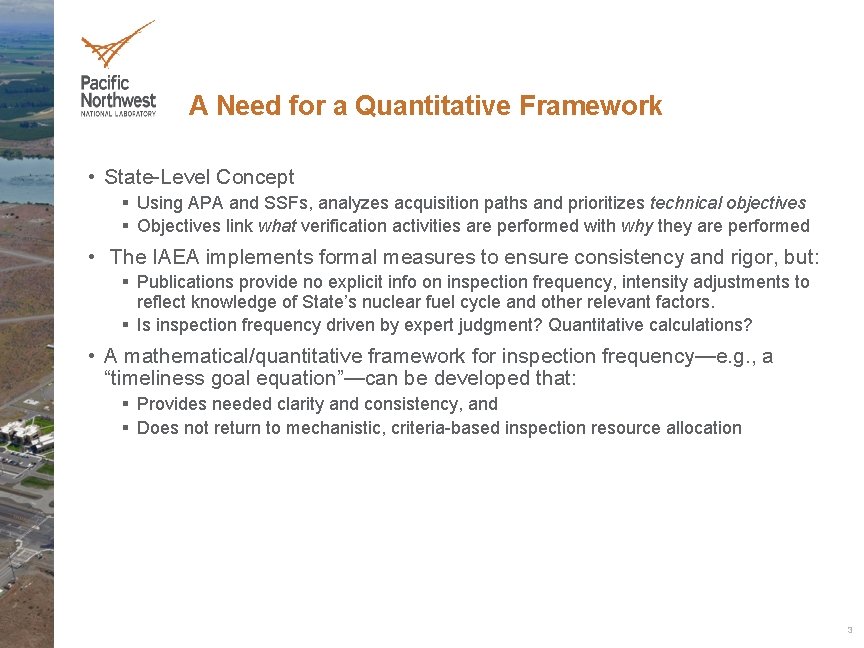
A Need for a Quantitative Framework • State-Level Concept § Using APA and SSFs, analyzes acquisition paths and prioritizes technical objectives § Objectives link what verification activities are performed with why they are performed • The IAEA implements formal measures to ensure consistency and rigor, but: § Publications provide no explicit info on inspection frequency, intensity adjustments to reflect knowledge of State’s nuclear fuel cycle and other relevant factors. § Is inspection frequency driven by expert judgment? Quantitative calculations? • A mathematical/quantitative framework for inspection frequency—e. g. , a “timeliness goal equation”—can be developed that: § Provides needed clarity and consistency, and § Does not return to mechanistic, criteria-based inspection resource allocation 3
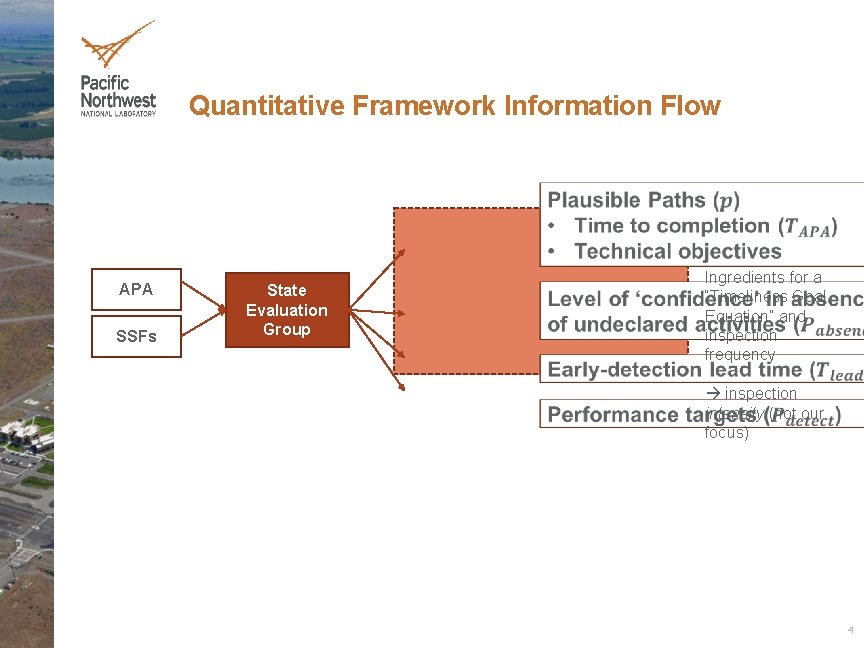
Quantitative Framework Information Flow APA SSFs State Evaluation Group Ingredients for a “Timeliness Goal Equation” and inspection frequency inspection intensity (not our focus) 4
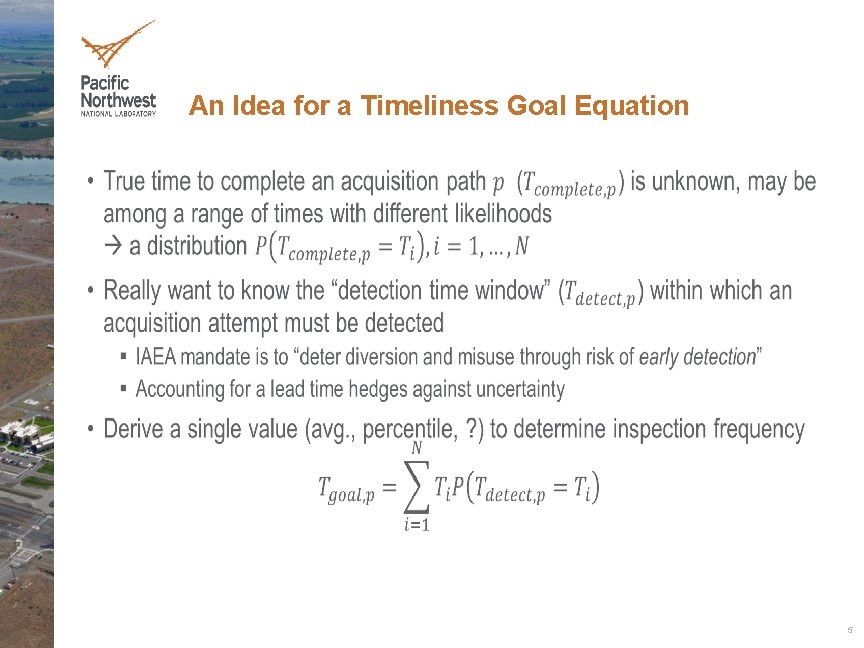
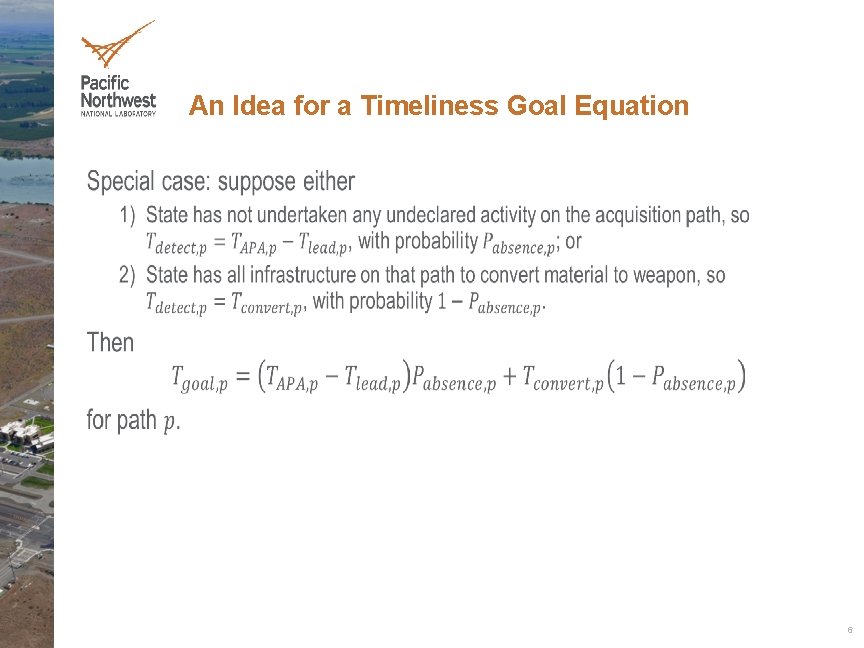
An Idea for a Timeliness Goal Equation • 5
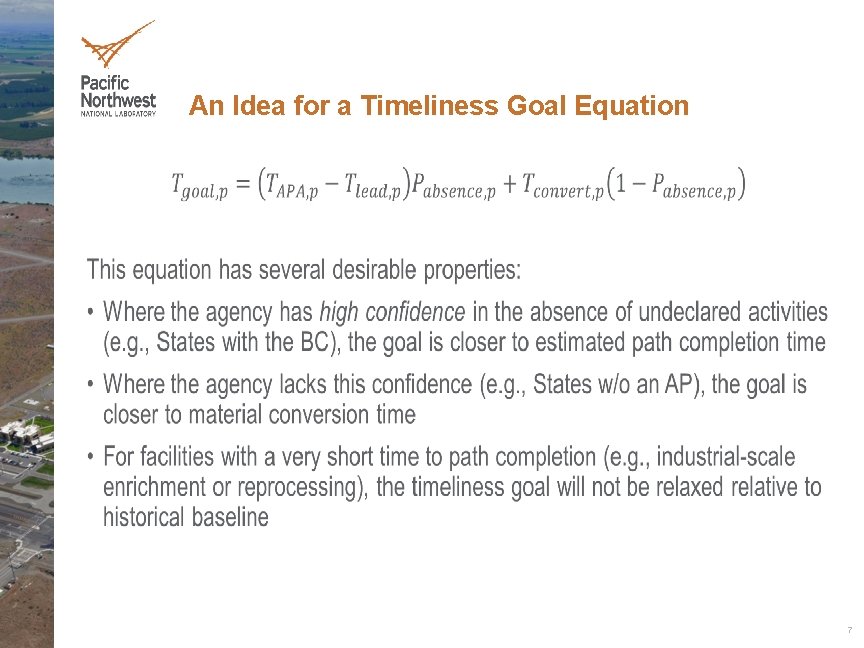
An Idea for a Timeliness Goal Equation • 6
An Idea for a Timeliness Goal Equation • 7
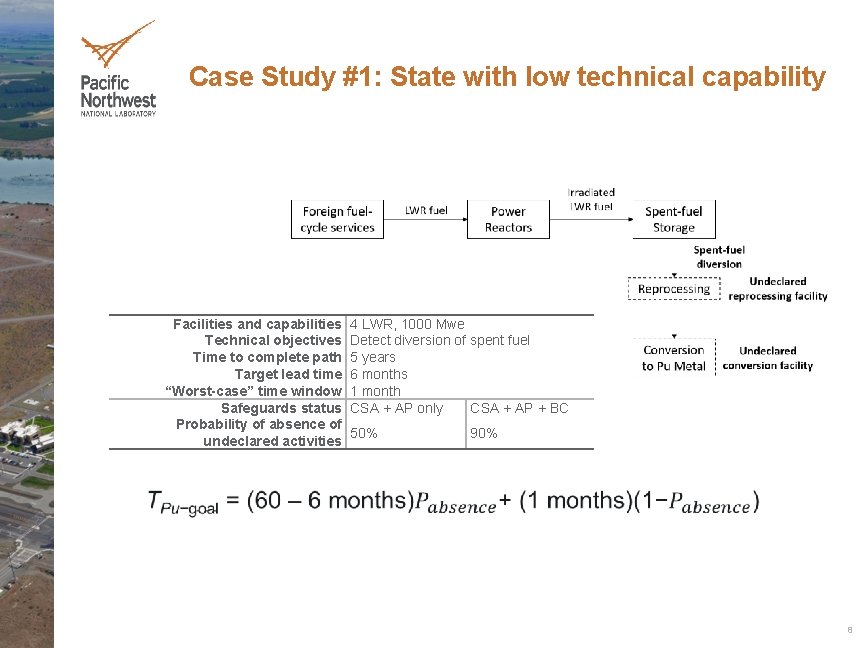
Case Study #1: State with low technical capability Facilities and capabilities Technical objectives Time to complete path Target lead time “Worst-case” time window Safeguards status Probability of absence of undeclared activities 4 LWR, 1000 Mwe Detect diversion of spent fuel 5 years 6 months 1 month CSA + AP only CSA + AP + BC 50% 90% 8
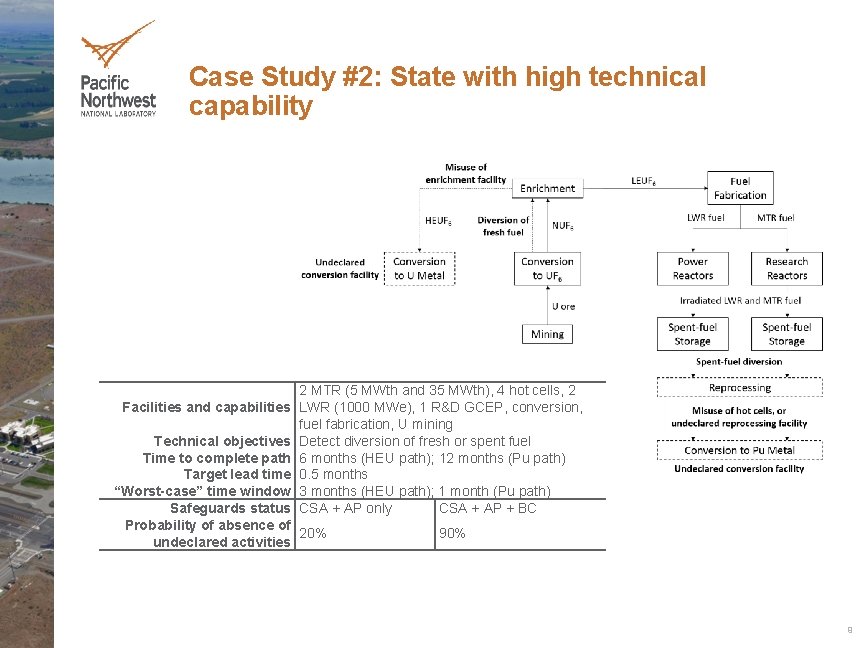
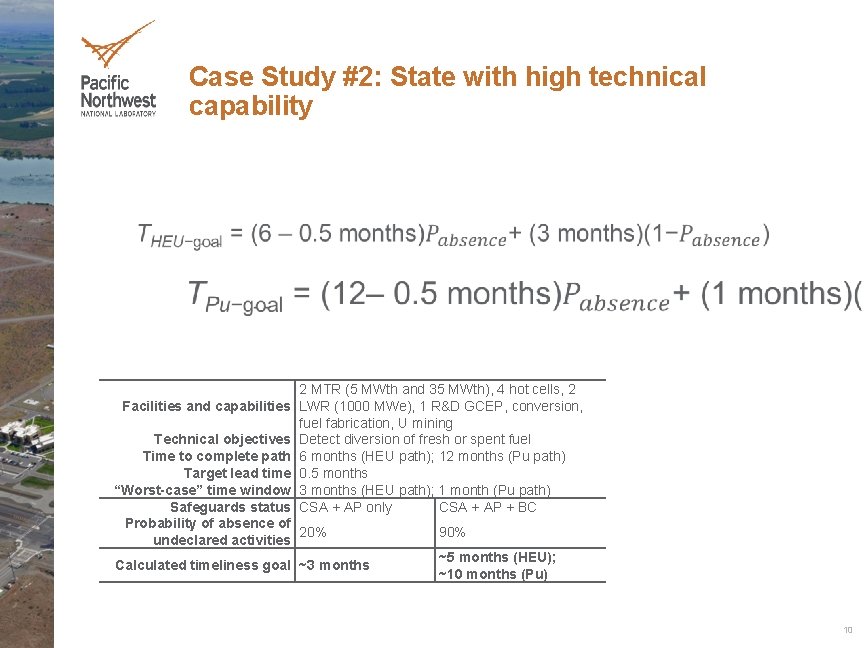
Case Study #2: State with high technical capability Facilities and capabilities 2 MTR (5 MWth and 35 MWth), 4 hot cells, 2 LWR (1000 MWe), 1 R&D GCEP, conversion, fuel fabrication, U mining Detect diversion of fresh or spent fuel 6 months (HEU path); 12 months (Pu path) 0. 5 months 3 months (HEU path); 1 month (Pu path) CSA + AP only CSA + AP + BC Technical objectives Time to complete path Target lead time “Worst-case” time window Safeguards status Probability of absence of 20% undeclared activities 90% 9
Case Study #2: State with high technical capability Facilities and capabilities 2 MTR (5 MWth and 35 MWth), 4 hot cells, 2 LWR (1000 MWe), 1 R&D GCEP, conversion, fuel fabrication, U mining Detect diversion of fresh or spent fuel 6 months (HEU path); 12 months (Pu path) 0. 5 months 3 months (HEU path); 1 month (Pu path) CSA + AP only CSA + AP + BC Technical objectives Time to complete path Target lead time “Worst-case” time window Safeguards status Probability of absence of 20% undeclared activities Calculated timeliness goal ~3 months 90% ~5 months (HEU); ~10 months (Pu) 10
Conclusions • A quantitative framework for inspection frequency is possible, but faces many challenges that could be addressed with additional study • A timeliness-goal equation is a step in a useful direction, not the final answer § Calculated timeliness goal is a guide, not a criterion § Helps make assumptions behind decisions more explicit and transparent for SEG consideration § Provides SEGs with a starting point that they can modify based on all available safeguards-relevant information § Provides a common framework for consistency across States § Can be used to highlight the extent to which in-field verification plans are sensitive to assumptions about the effectiveness of certain safeguards activities 11
Acknowledgments • Research for this paper was funded by the U. S. Department of Energy’s National Nuclear Security Administration • Project Team § § Ken Jarman, math/statistics for nonproliferation Ty Otto, nonproliferation policy Ben Wilson, safeguards/analysis Mark Schanfein, nonproliferation advisor 12
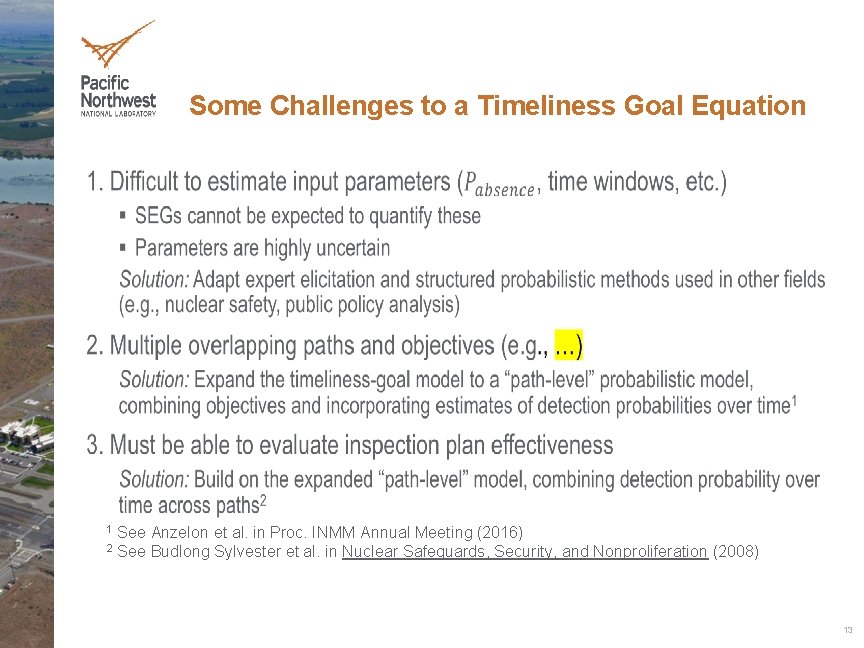
Some Challenges to a Timeliness Goal Equation • See Anzelon et al. in Proc. INMM Annual Meeting (2016) 2 See Budlong Sylvester et al. in Nuclear Safeguards, Security, and Nonproliferation (2008) 1 13
Thank you 14
Historical Perspective • Inspection frequency: the frequency with which inspectors visit a declared facility (e. g. , annual PIV, monthly IIV, less frequent SNRI) • Prior to AP and Integrated Safeguards: the Safeguards Criteria § Material type and amount, facility formula for frequency (e. g. , detect diversion of 1 SQ LEUF 6 at GCEP monthly inspection) § Simple, non-discriminatory § No flexibility for using SG-relevant info to guide inspection resource allocation • Integrated Safeguards and the Broader Conclusion § Allowed for less frequent inspection at declared facilities (e. g. , timeliness goal for spent fuel at reactors increased from 3 months to 1 year) • State-Level Concept § Using APA and SSFs, analyzes acquisition paths and prioritizes technical objectives § Objectives link what verification activities are performed with why 15
Quantitative Framework Requirements Inspection frequency determination should: • Address the need for timely detection of diversion or misuse along plausible acquisition paths • Be transparent, objective, technically defensible, technically achievable • Be consistent with the practices embodied in the SLC, especially: § Use of APA and supporting SG-relevant info to identify, prioritize objectives § Reliance on the 6 SSFs for differentiation among States § A focus on achieving technical and generic objectives (not mechanistic criteria) 16