
Examining human impacts on tusk evolution in elephants
- Slides: 24
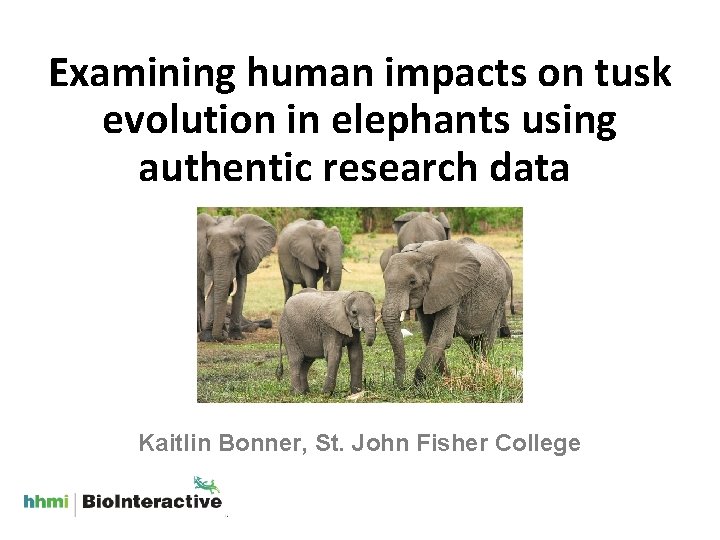
Examining human impacts on tusk evolution in elephants using authentic research data Kaitlin Bonner, St. John Fisher College
Workshop Goals • Explore why and how we use data in the classroom. • What does using data in the classroom look like and how does it help develop quantitative reasoning? • Use HHMI Bio. Interactive and authentic research data to enhance quantitative reasoning exercises by: • adding accessible and engaging pedagogical context to a research question, • using raw data from primary literature, and • reducing the barriers to data visualization, data exploration, and analysis.
Why do we use data in the classroom? Vision and Change: Core competencies Ability to apply the process of science Ability to use quantitative reasoning Ability to use modeling and simulation Ability to tap into the interdisciplinary nature of science • Ability to communicate and collaborate with other disciplines • Ability to to understand the relationship between science and society • •
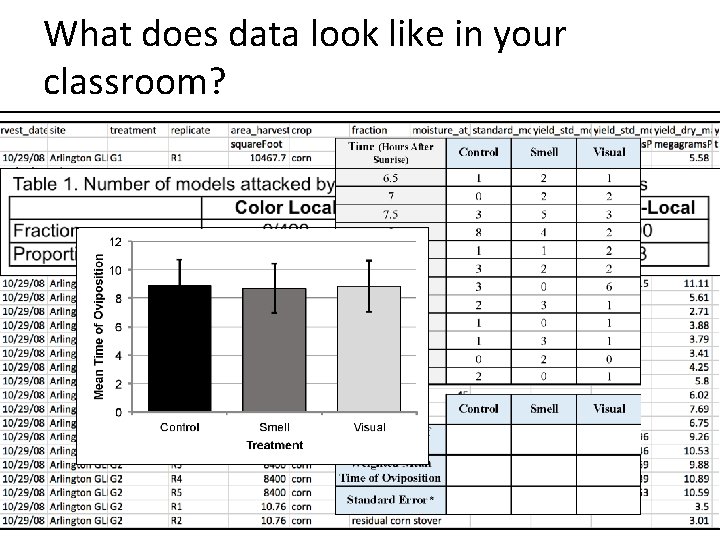
What does data look like in your classroom?
Using data in your classroom • What do your students do well? • Where do they need improvement? • What is the biggest barrier?
What quantitative skills do you focus on in your classroom? • Evaluate and interpret data • Create and interpret graphs • Applying statistical methods to diverse data Calculate descriptive statistics • Conduct inferential statistical tests • Interpret statistical significance • Mathematical modeling • Managing and analyzing large data sets •
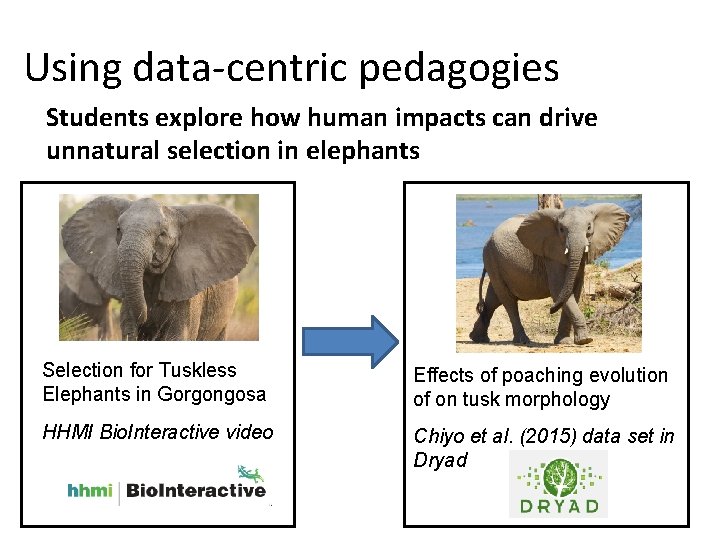
Using data-centric pedagogies Students explore how human impacts can drive unnatural selection in elephants Selection for Tuskless Elephants in Gorgongosa Effects of poaching evolution of on tusk morphology HHMI Bio. Interactive video Chiyo et al. (2015) data set in Dryad
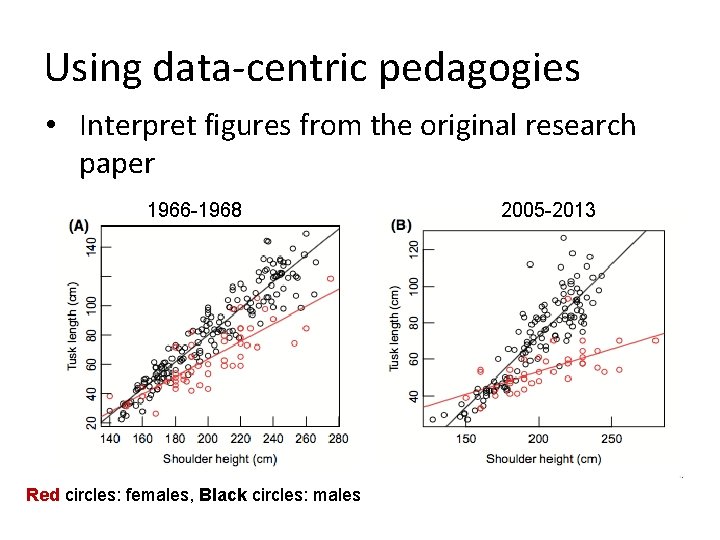
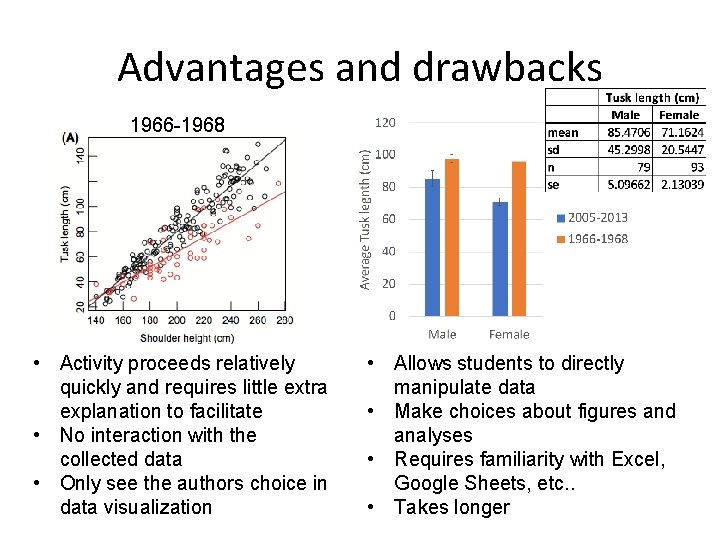
Using data-centric pedagogies • Interpret figures from the original research paper 1966 -1968 Red circles: females, Black circles: males 2005 -2013
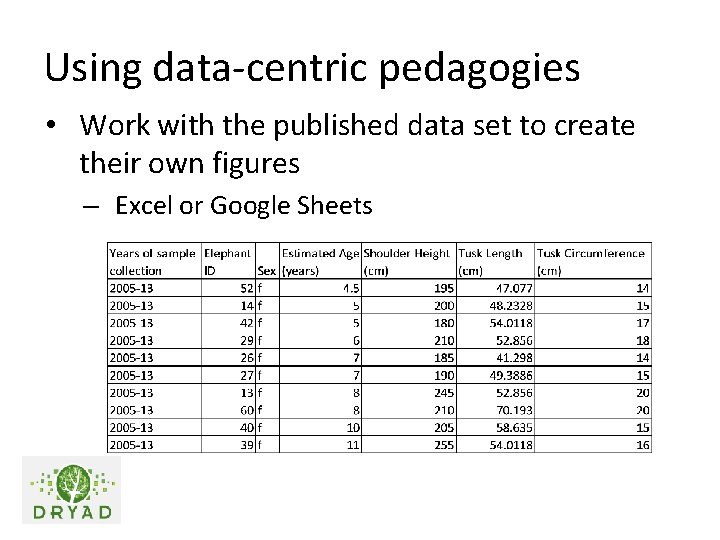
Using data-centric pedagogies • Work with the published data set to create their own figures – Excel or Google Sheets
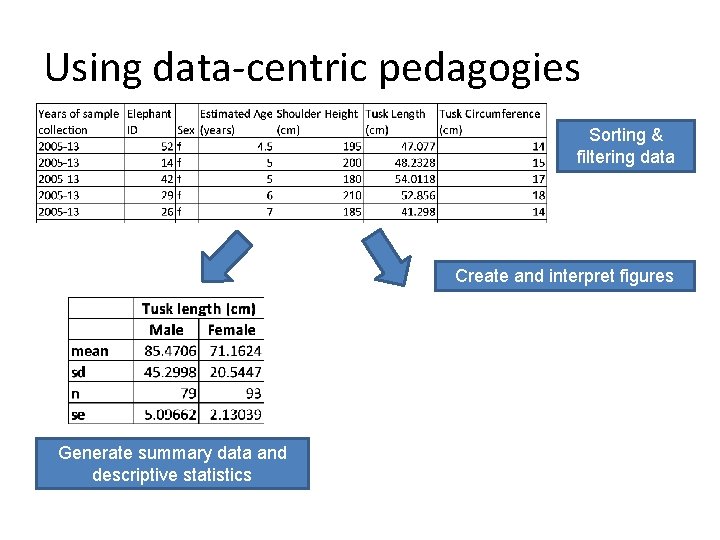
Using data-centric pedagogies Sorting & filtering data Create and interpret figures Generate summary data and descriptive statistics
Advantages and drawbacks 1966 -1968 • Activity proceeds relatively quickly and requires little extra explanation to facilitate • No interaction with the collected data • Only see the authors choice in data visualization • Allows students to directly manipulate data • Make choices about figures and analyses • Requires familiarity with Excel, Google Sheets, etc. . • Takes longer
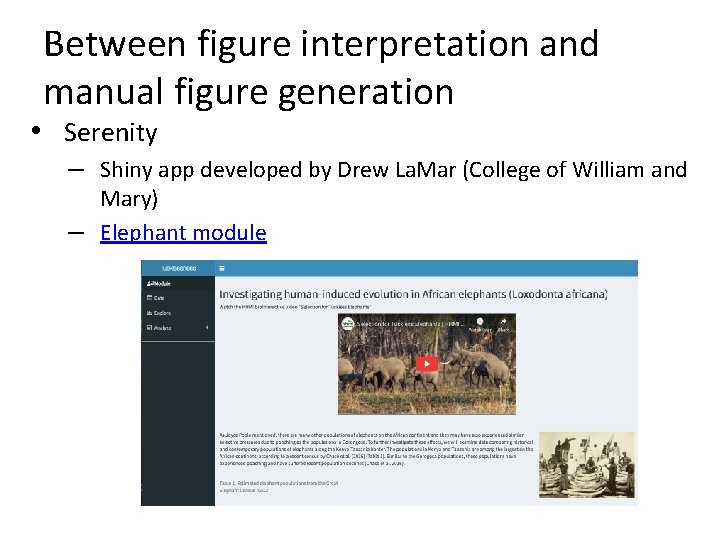
Between figure interpretation and manual figure generation • Serenity – Shiny app developed by Drew La. Mar (College of William and Mary) – Elephant module
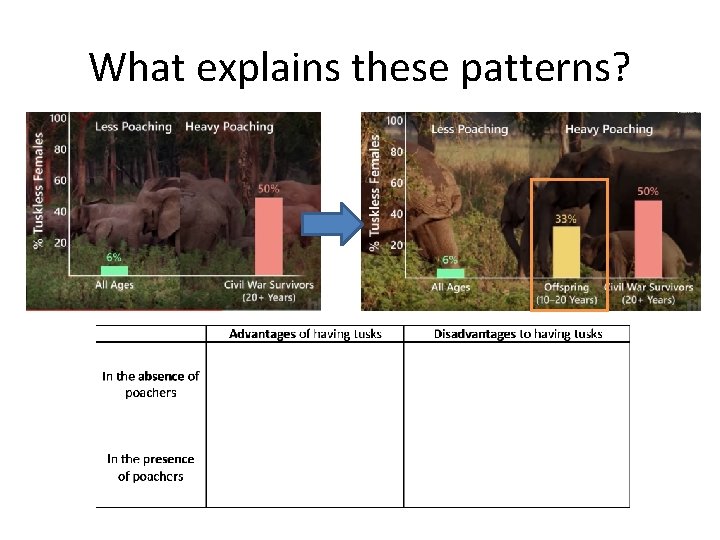
What explains these patterns?
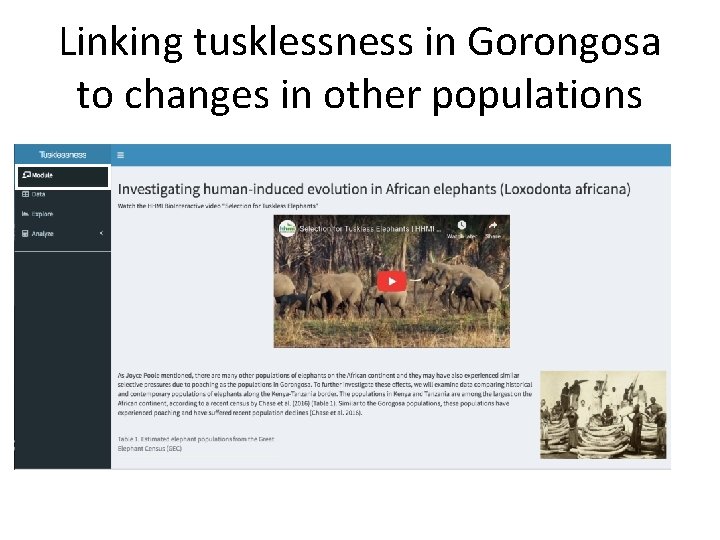
Linking tusklessness in Gorongosa to changes in other populations
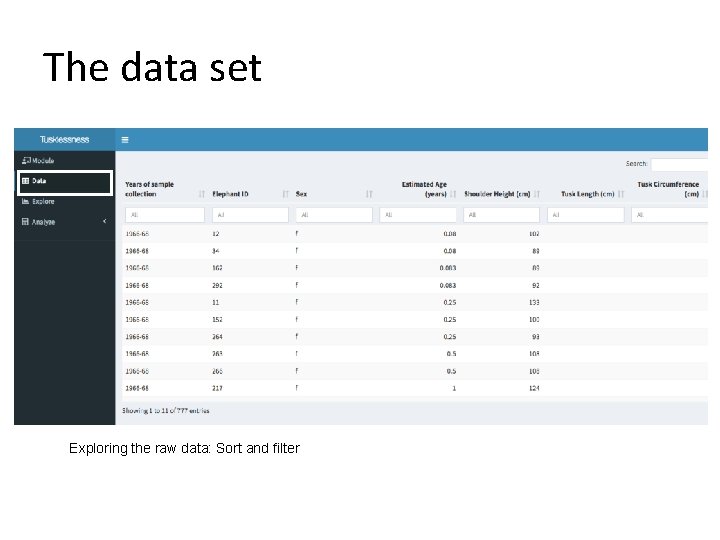
The data set Exploring the raw data: Sort and filter
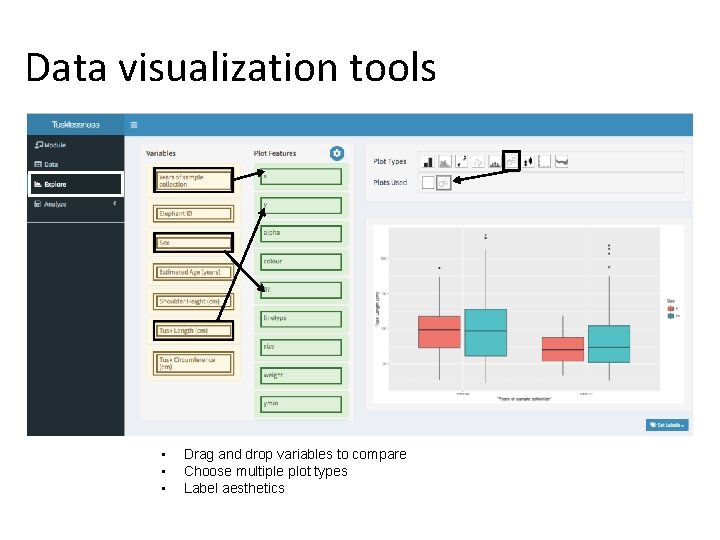
Data visualization tools • • • Drag and drop variables to compare Choose multiple plot types Label aesthetics
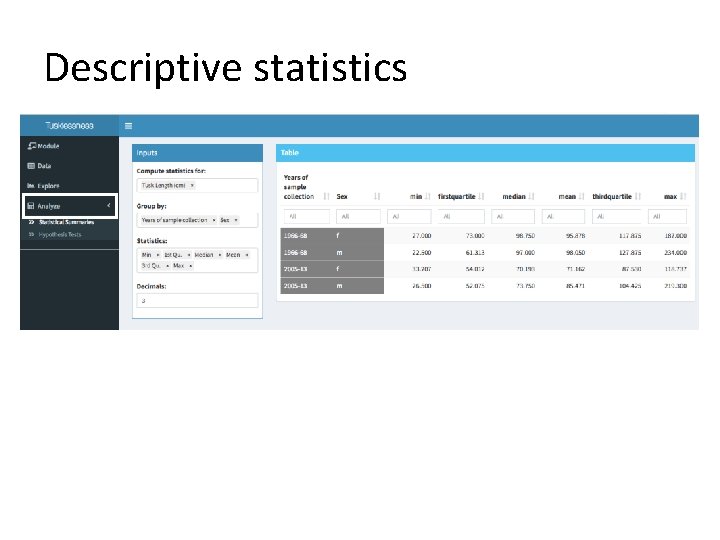
Descriptive statistics
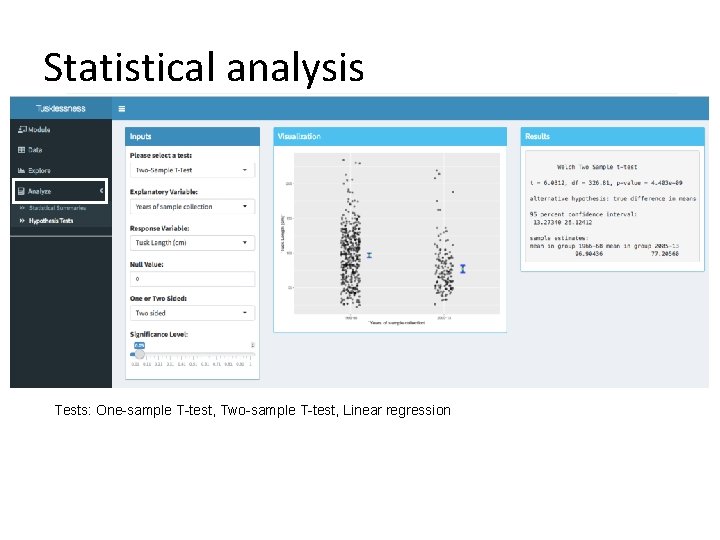
Statistical analysis Tests: One-sample T-test, Two-sample T-test, Linear regression
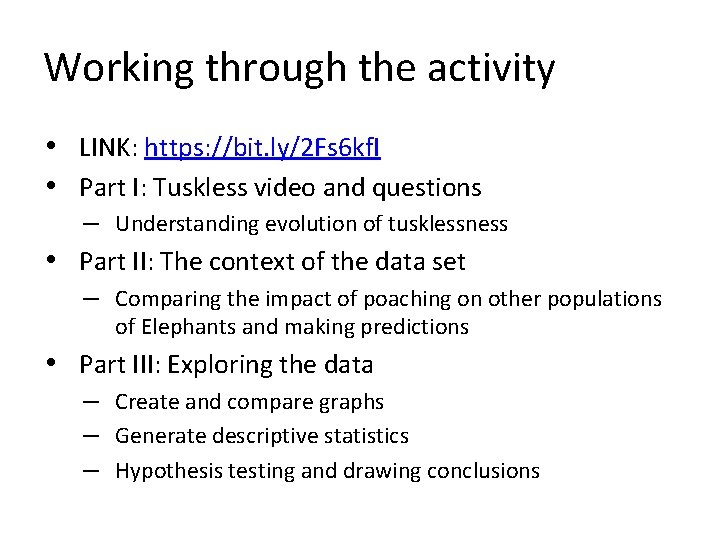
Working through the activity • LINK: https: //bit. ly/2 Fs 6 kf. I • Part I: Tuskless video and questions – Understanding evolution of tusklessness • Part II: The context of the data set – Comparing the impact of poaching on other populations of Elephants and making predictions • Part III: Exploring the data – Create and compare graphs – Generate descriptive statistics – Hypothesis testing and drawing conclusions
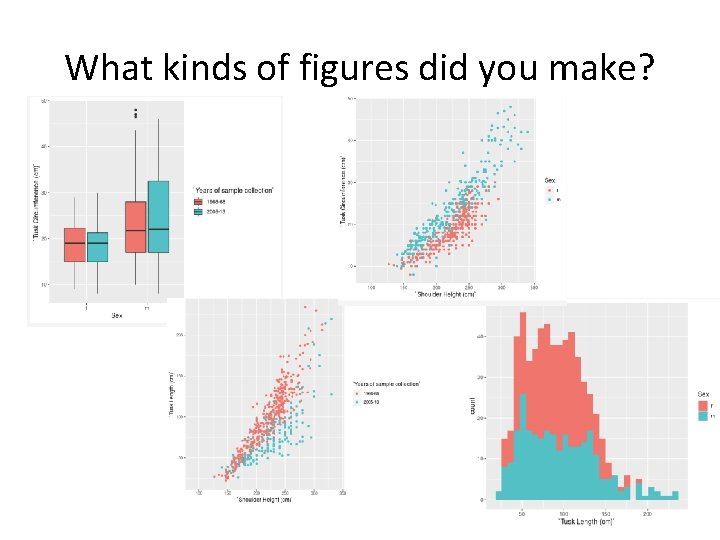
What kinds of figures did you make?
Questions?
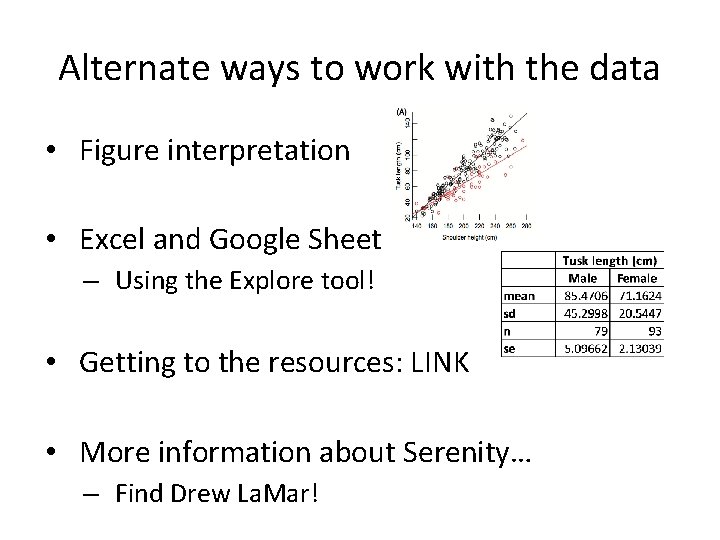
Alternate ways to work with the data • Figure interpretation • Excel and Google Sheet – Using the Explore tool! • Getting to the resources: LINK • More information about Serenity… – Find Drew La. Mar!
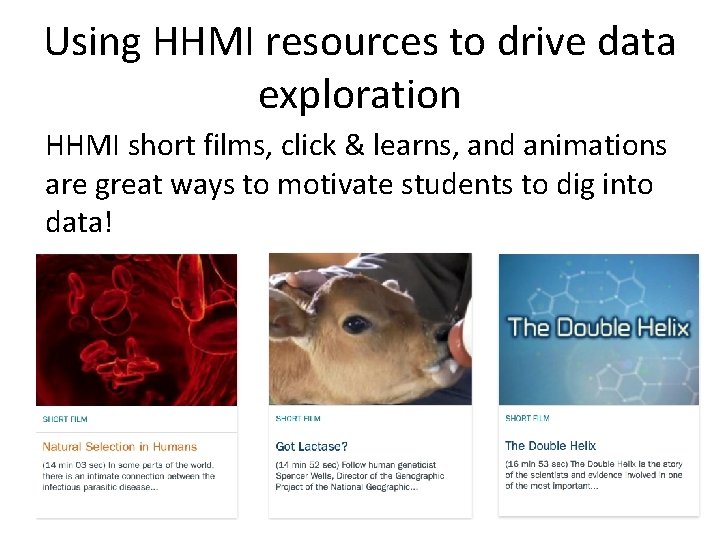
Using HHMI resources to drive data exploration HHMI short films, click & learns, and animations are great ways to motivate students to dig into data!
Please complete the survey! http: //bit. ly/Lifedisc 19