
Exam tips Pen spare Pencil Sharpener rubber Spellings
Exam tips • Pen (spare) • Pencil • Sharpener / rubber Spellings Environment Volcano / Volcanoes Erosion Desert Deciduous Antarctic Don’t forget Look out for questions without lines to write – you may have to draw on maps /graphs! Examiners cannot take marks off you – always answer every question!!
GEOGRAPHY UNIT 1 UNIT 2 • Restless Earth • Living World • Water On the Land • Population Change • Changing Urban Environments • Tourism
Human Geography UNIT 2 • Population Change • Changing Urban Environments • Tourism
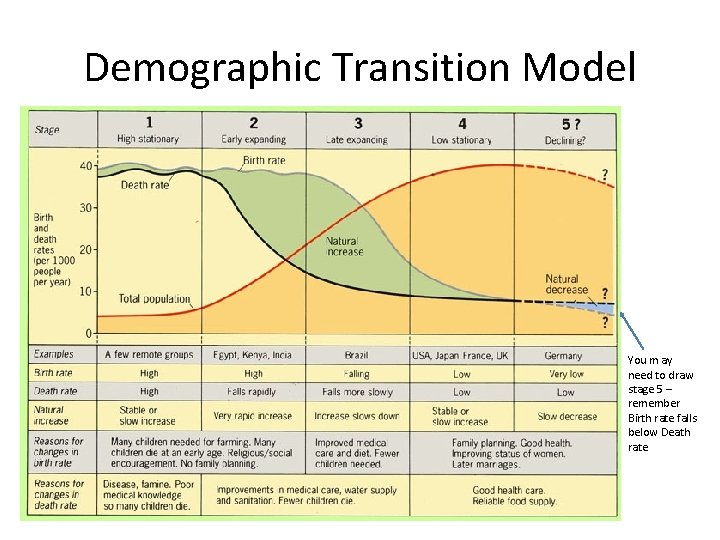
Demographic Transition Model You m ay need to draw stage 5 – remember Birth rate falls below Death rate
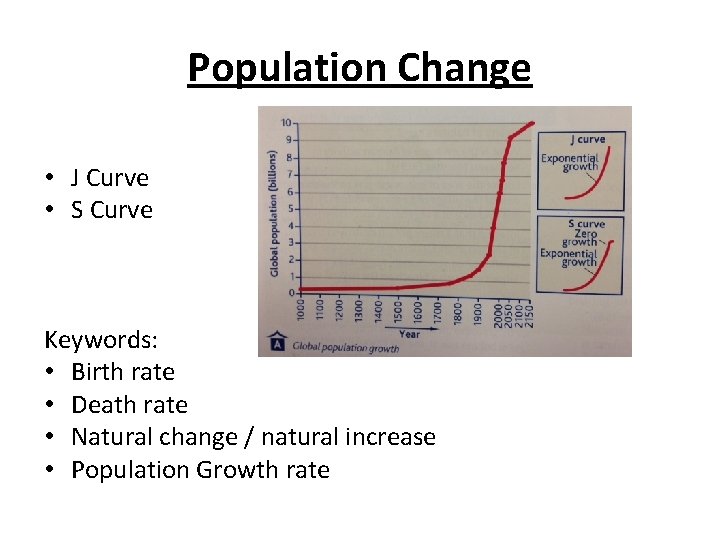
Population Change • J Curve • S Curve Keywords: • Birth rate • Death rate • Natural change / natural increase • Population Growth rate
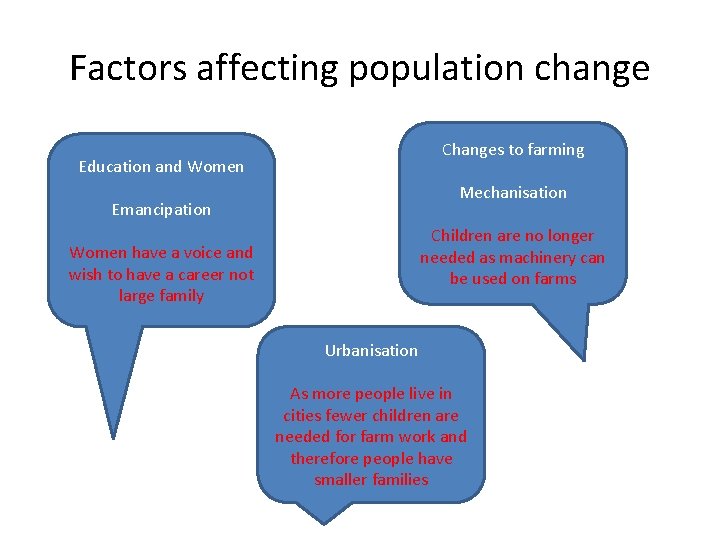
Factors affecting population change Changes to farming Education and Women Mechanisation Emancipation Children are no longer needed as machinery can be used on farms Women have a voice and wish to have a career not large family Urbanisation As more people live in cities fewer children are needed for farm work and therefore people have smaller families
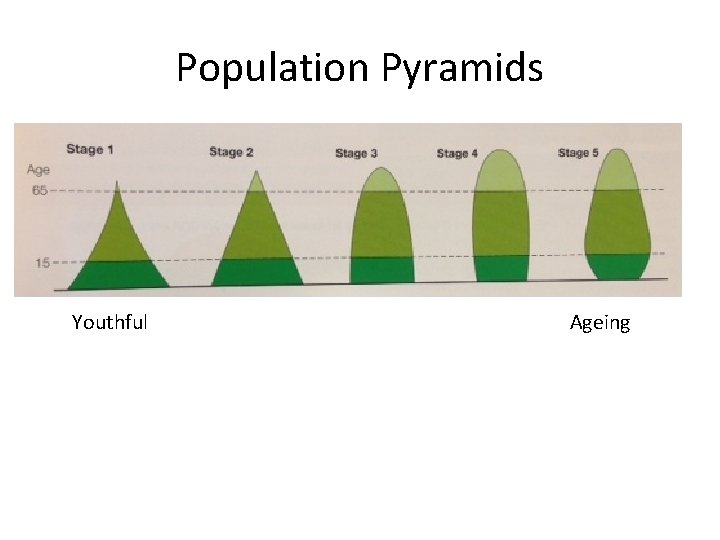
Population Pyramids Youthful Ageing
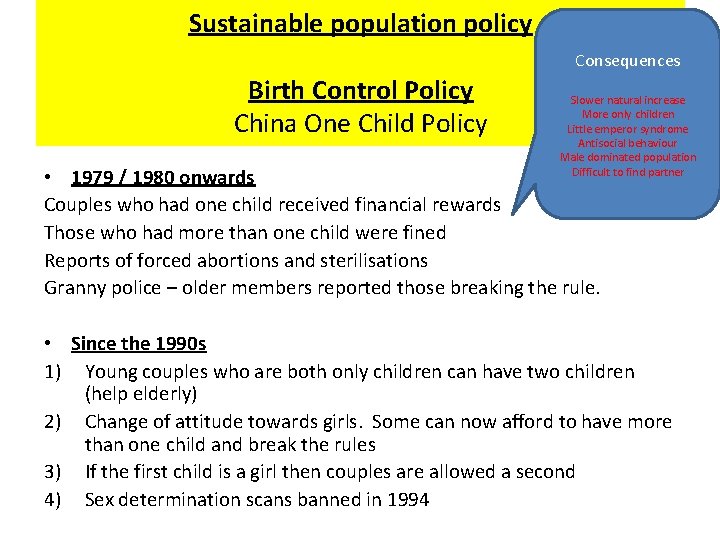
Sustainable population policy Consequences Birth Control Policy China One Child Policy Slower natural increase More only children Little emperor syndrome Antisocial behaviour Male dominated population Difficult to find partner • 1979 / 1980 onwards Couples who had one child received financial rewards Those who had more than one child were fined Reports of forced abortions and sterilisations Granny police – older members reported those breaking the rule. • Since the 1990 s 1) Young couples who are both only children can have two children (help elderly) 2) Change of attitude towards girls. Some can now afford to have more than one child and break the rules 3) If the first child is a girl then couples are allowed a second 4) Sex determination scans banned in 1994
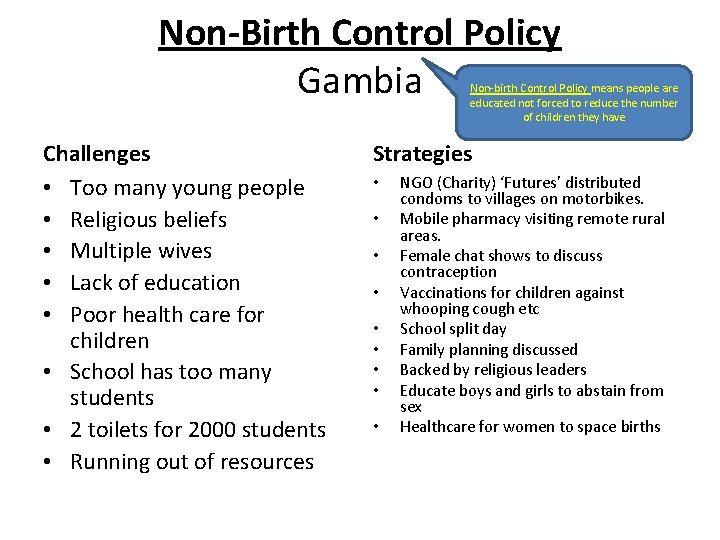
Non-Birth Control Policy Gambia Non-birth Control Policy means people are educated not forced to reduce the number of children they have Challenges • Too many young people • Religious beliefs • Multiple wives • Lack of education • Poor health care for children • School has too many students • 2 toilets for 2000 students • Running out of resources Strategies • • • NGO (Charity) ‘Futures’ distributed condoms to villages on motorbikes. Mobile pharmacy visiting remote rural areas. Female chat shows to discuss contraception Vaccinations for children against whooping cough etc School split day Family planning discussed Backed by religious leaders Educate boys and girls to abstain from sex Healthcare for women to space births
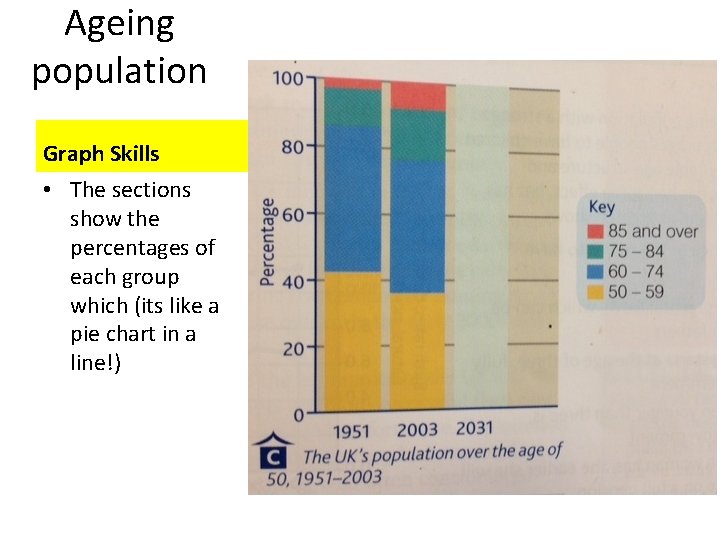
Ageing population Graph Skills • The sections show the percentages of each group which (its like a pie chart in a line!)

Ageing Population (East Devon, UK and France) Challenges More frequent visits to doctors and chemists More geriatric operations in hospitals People unable to live independently People less confident about or are unable to drive The reason this is negative is because… …. it is a strain on NHS resources. …. it means more money is needed for operations like hip replacements so less money for younger people. …. more specialist care homes are needed which costs lots of money. …. then they become isolated and lonely. Solutions FRANCE PRONATALIST POLICY
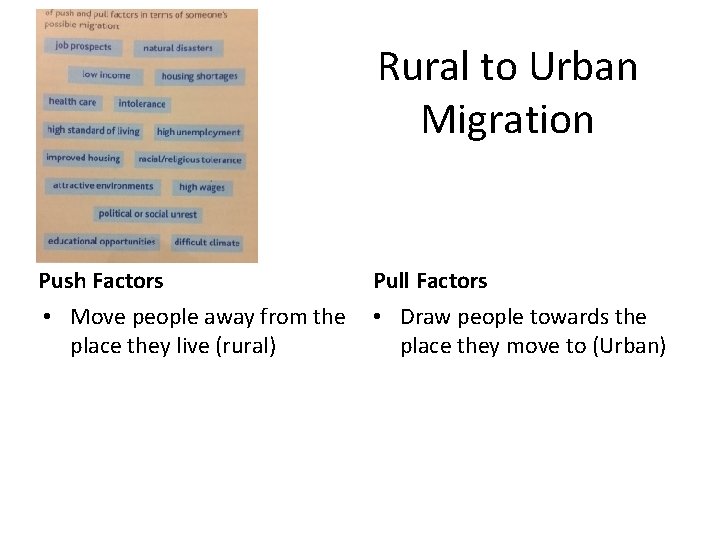
Rural to Urban Migration Push Factors Pull Factors • Move people away from the • Draw people towards the place they live (rural) place they move to (Urban)
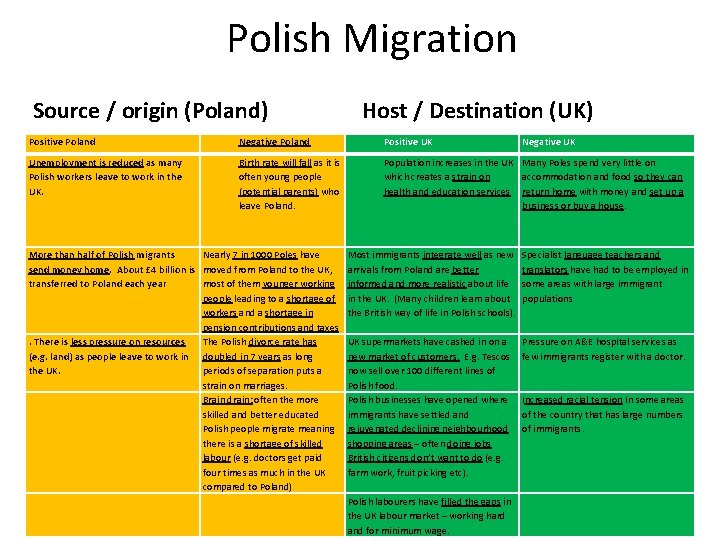
Polish Migration Source / origin (Poland) Host / Destination (UK) Positive Poland Negative Poland Positive UK Unemployment is reduced as many Polish workers leave to work in the UK. Birth rate will fall as it is often young people (potential parents) who leave Poland. Population increases in the UK Many Poles spend very little on which creates a strain on accommodation and food so they can health and education services return home with money and set up a business or buy a house. More than half of Polish migrants Nearly 7 in 1000 Poles have send money home. About £ 4 billion is moved from Poland to the UK, transferred to Poland each year most of them younger working people leading to a shortage of workers and a shortage in pension contributions and taxes. There is less pressure on resources The Polish divorce rate has (e. g. land) as people leave to work in doubled in 7 years as long the UK. periods of separation puts a strain on marriages. Brain drain: often the more skilled and better educated Polish people migrate meaning there is a shortage of skilled labour (e. g. doctors get paid four times as much in the UK compared to Poland) Negative UK Most immigrants integrate well as new arrivals from Poland are better informed and more realistic about life in the UK. (Many children learn about the British way of life in Polish schools). Specialist language teachers and translators have had to be employed in some areas with large immigrant populations UK supermarkets have cashed in on a new market of customers. E. g. Tescos now sell over 100 different lines of Polish food. Polish businesses have opened where immigrants have settled and rejuvenated declining neighbourhood shopping areas – often doing jobs British citizens don’t want to do (e. g. farm work, fruit picking etc). Pressure on A&E hospital services as few immigrants register with a doctor. Increased racial tension in some areas of the country that has large numbers of immigrants. Polish labourers have filled the gaps in the UK labour market – working hard and for minimum wage.
Refugee movements • • • • Afghan Refugees Afghanistan had an estimated population of 28 million 3 million refugees Difficult life, drought, poverty, corruption. The Jungle – area of wasteland on the edge of Calais Entrance to channel tunnel August 2009 700 -800 afghans living there (trying to get to the UK) Wanted to get to England because it is ‘good and safe’ 22 nd December 2009 the remaining migrants were arrested. 24 hours later the settlement was bulldozed Many released so returned and attempted to try and get into the UK again. Asylum Seeker – seeking asylum Refugee – granted asylum Economic Asylum Seeker – claiming to need protection but actually moving for economic benefits.
Changing Urban Environments
Causes of Urbanisation • Urbanisation (increase in the number of people living in cities) 2 Reasons for urbanisation: – Rural to urban migration – High levels of natural increase
Land use • • • CBD Inner City Inner Suburbs Outer Suburbs Rural Urban Fringe Greenbelt
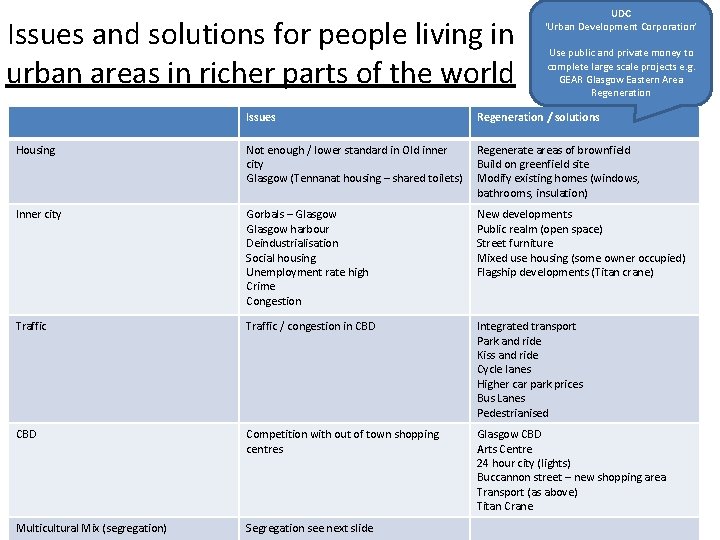
Issues and solutions for people living in urban areas in richer parts of the world UDC ‘Urban Development Corporation’ Use public and private money to complete large scale projects e. g. GEAR Glasgow Eastern Area Regeneration Issues Regeneration / solutions Housing Not enough / lower standard in Old inner city Glasgow (Tennanat housing – shared toilets) Regenerate areas of brownfield Build on greenfield site Modify existing homes (windows, bathrooms, insulation) Inner city Gorbals – Glasgow harbour Deindustrialisation Social housing Unemployment rate high Crime Congestion New developments Public realm (open space) Street furniture Mixed use housing (some owner occupied) Flagship developments (Titan crane) Traffic / congestion in CBD Integrated transport Park and ride Kiss and ride Cycle lanes Higher car park prices Bus Lanes Pedestrianised CBD Competition with out of town shopping centres Glasgow CBD Arts Centre 24 hour city (lights) Buccannon street – new shopping area Transport (as above) Titan Crane Multicultural Mix (segregation) Segregation see next slide
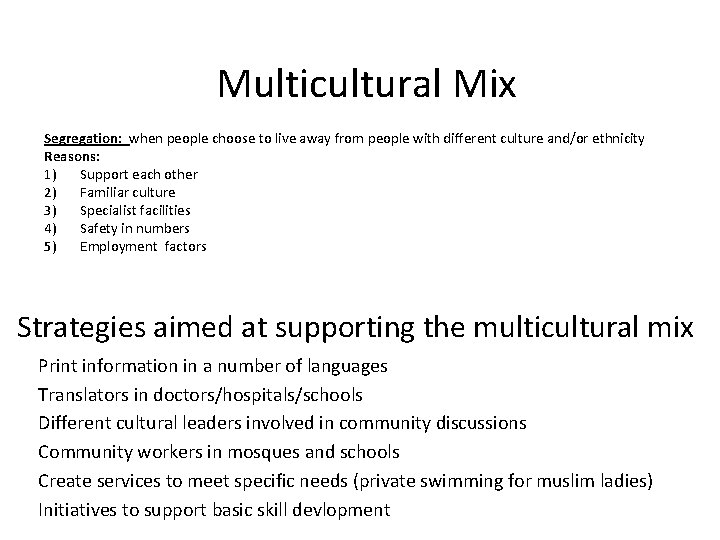
Multicultural Mix Segregation: when people choose to live away from people with different culture and/or ethnicity Reasons: 1) Support each other 2) Familiar culture 3) Specialist facilities 4) Safety in numbers 5) Employment factors Strategies aimed at supporting the multicultural mix Print information in a number of languages Translators in doctors/hospitals/schools Different cultural leaders involved in community discussions Community workers in mosques and schools Create services to meet specific needs (private swimming for muslim ladies) Initiatives to support basic skill devlopment
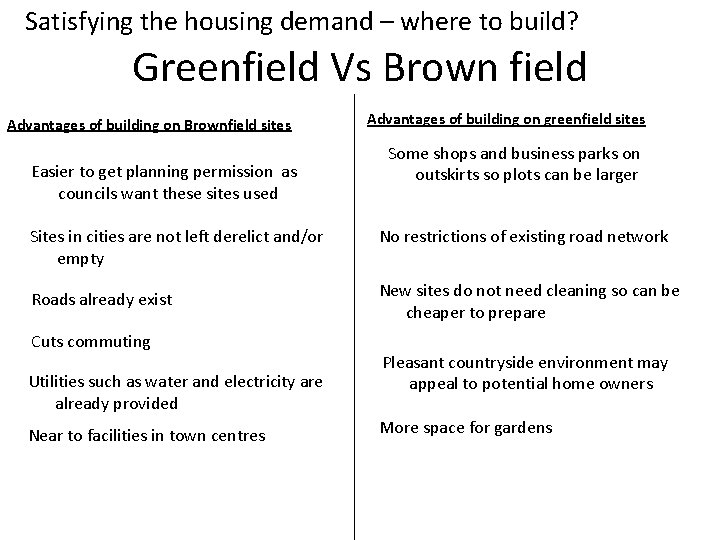
Satisfying the housing demand – where to build? Greenfield Vs Brown field Advantages of building on Brownfield sites Easier to get planning permission as councils want these sites used Sites in cities are not left derelict and/or empty Roads already exist Cuts commuting Utilities such as water and electricity are already provided Near to facilities in town centres Advantages of building on greenfield sites Some shops and business parks on outskirts so plots can be larger No restrictions of existing road network New sites do not need cleaning so can be cheaper to prepare Pleasant countryside environment may appeal to potential home owners More space for gardens
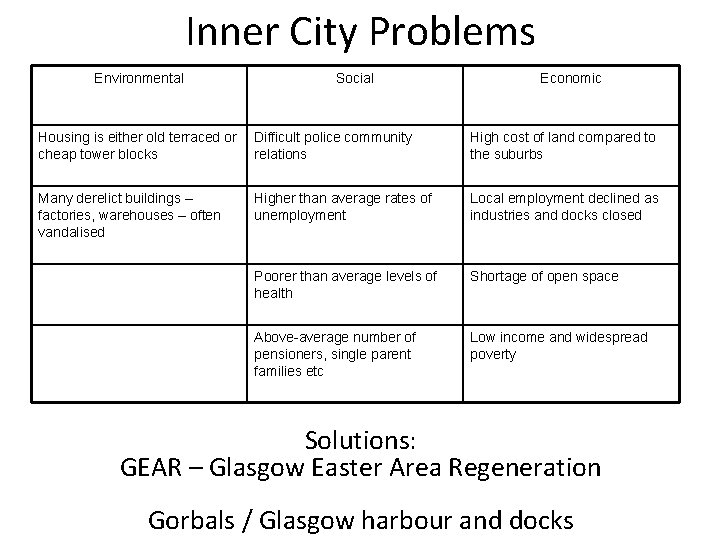
Inner City Problems Environmental Social Economic Housing is either old terraced or cheap tower blocks Difficult police community relations High cost of land compared to the suburbs Many derelict buildings – factories, warehouses – often vandalised Higher than average rates of unemployment Local employment declined as industries and docks closed Poorer than average levels of health Shortage of open space Above-average number of pensioners, single parent families etc Low income and widespread poverty Solutions: GEAR – Glasgow Easter Area Regeneration Gorbals / Glasgow harbour and docks
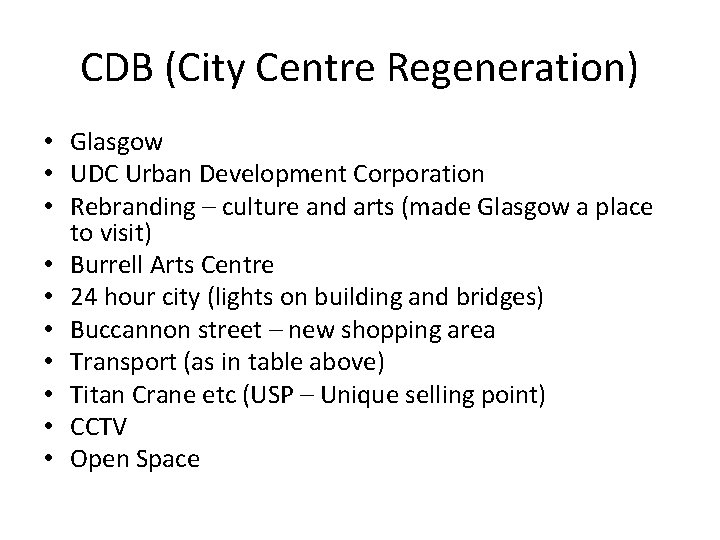
CDB (City Centre Regeneration) • Glasgow • UDC Urban Development Corporation • Rebranding – culture and arts (made Glasgow a place to visit) • Burrell Arts Centre • 24 hour city (lights on building and bridges) • Buccannon street – new shopping area • Transport (as in table above) • Titan Crane etc (USP – Unique selling point) • CCTV • Open Space
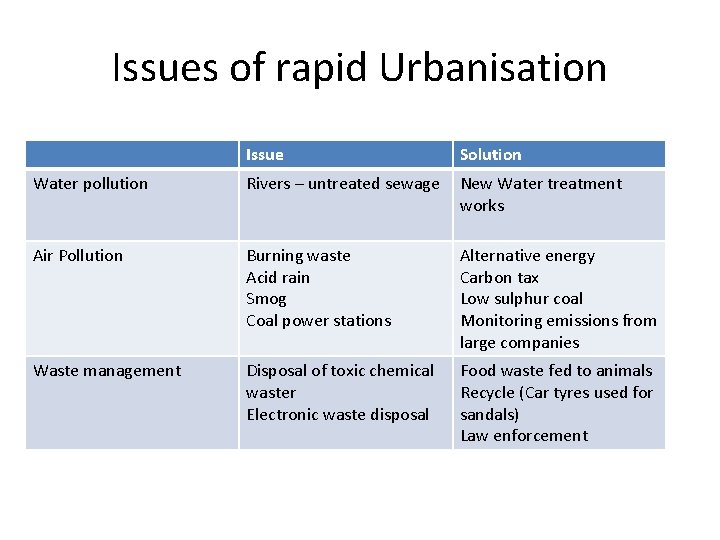
Issues of rapid Urbanisation Issue Solution Water pollution Rivers – untreated sewage New Water treatment works Air Pollution Burning waste Acid rain Smog Coal power stations Alternative energy Carbon tax Low sulphur coal Monitoring emissions from large companies Waste management Disposal of toxic chemical waster Electronic waste disposal Food waste fed to animals Recycle (Car tyres used for sandals) Law enforcement
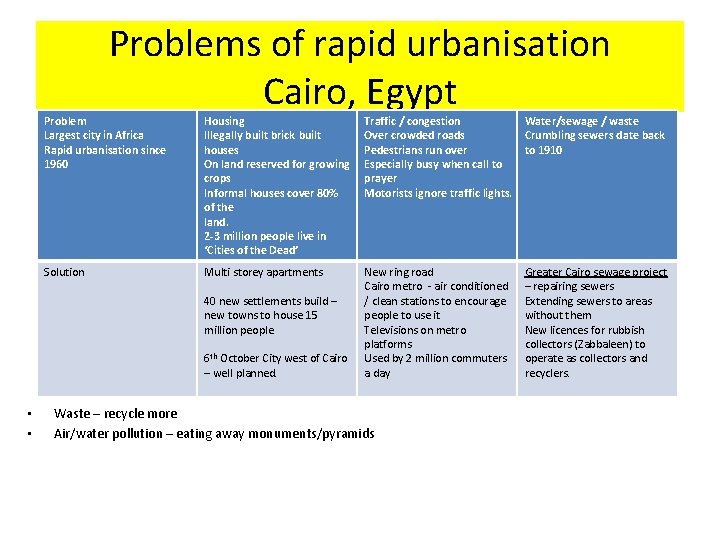
Problems of rapid urbanisation Cairo, Egypt Problem Largest city in Africa Rapid urbanisation since 1960 Housing Illegally built brick built houses On land reserved for growing crops Informal houses cover 80% of the land. 2 -3 million people live in ‘Cities of the Dead’ Traffic / congestion Water/sewage / waste Over crowded roads Crumbling sewers date back Pedestrians run over to 1910 Especially busy when call to prayer Motorists ignore traffic lights. Solution Multi storey apartments New ring road Cairo metro - air conditioned / clean stations to encourage people to use it Televisions on metro platforms Used by 2 million commuters a day 40 new settlements build – new towns to house 15 million people 6 th October City west of Cairo – well planned. • • Waste – recycle more Air/water pollution – eating away monuments/pyramids Greater Cairo sewage project – repairing sewers Extending sewers to areas without them New licences for rubbish collectors (Zabbaleen) to operate as collectors and recyclers.
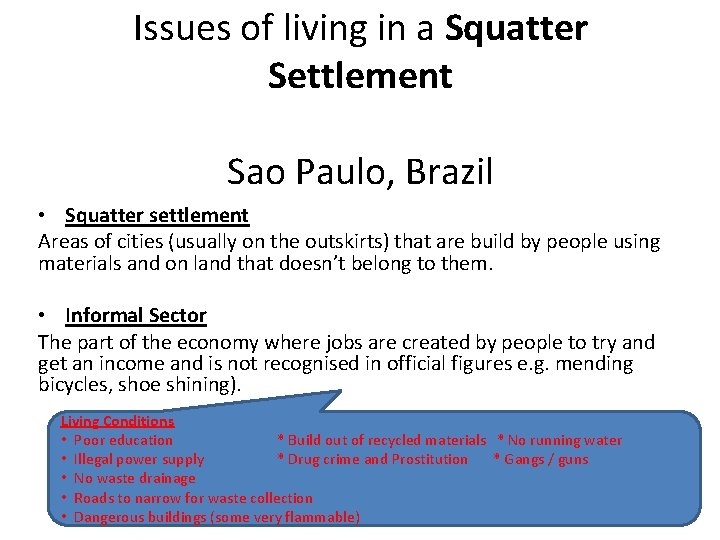
Issues of living in a Squatter Settlement Sao Paulo, Brazil • Squatter settlement Areas of cities (usually on the outskirts) that are build by people using materials and on land that doesn’t belong to them. • Informal Sector The part of the economy where jobs are created by people to try and get an income and is not recognised in official figures e. g. mending bicycles, shoe shining). Living Conditions • Poor education * Build out of recycled materials * No running water • Illegal power supply * Drug crime and Prostitution * Gangs / guns • No waste drainage • Roads to narrow for waste collection • Dangerous buildings (some very flammable)
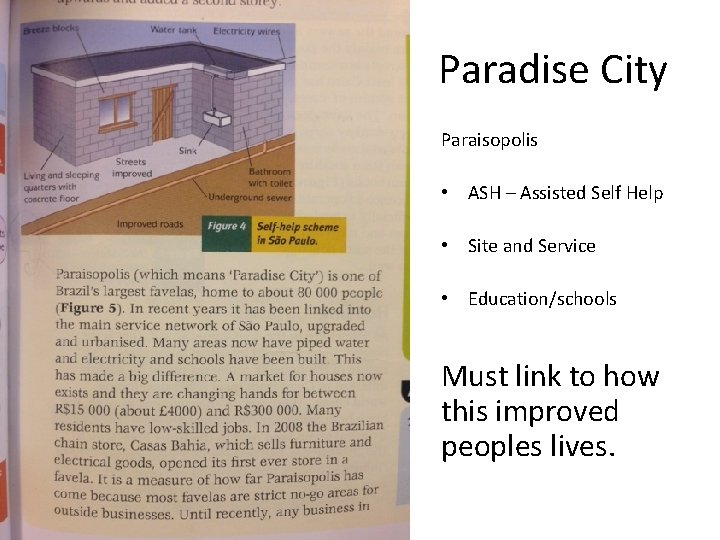
Paradise City Paraisopolis • ASH – Assisted Self Help • Site and Service • Education/schools Must link to how this improved peoples lives.
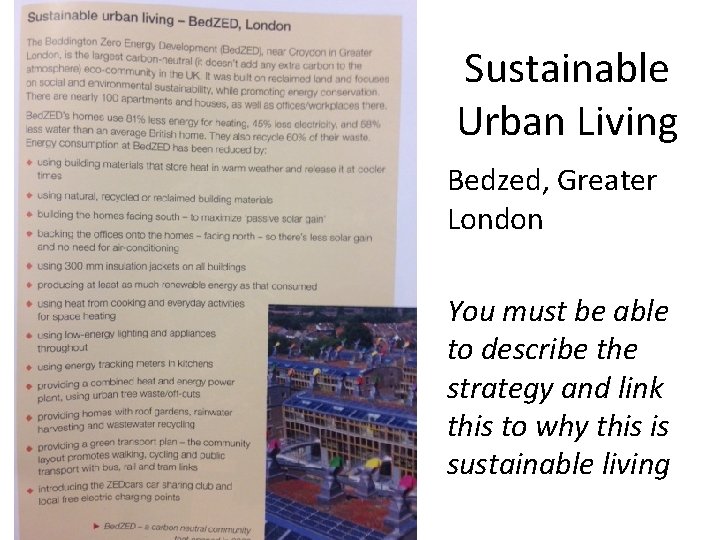
Sustainable Urban Living Bedzed, Greater London You must be able to describe the strategy and link this to why this is sustainable living
Tourism
Tourism - Growth Reasons for increase/growth 1) Social and economic factors • increase in disposable income since 1950 • People have fewer children • Car ownership has grown • People have more leisure time 2) Improved technology • Travel is quick and easy (motorway, airport expansion and faster jet aircraft) • Flying cheaper and booking online 3) Expansion of holiday choice • Growth of National Parks • Cheap package holidays to mainland Spain • New destinations all over the world • Ecotourism and unusual destinations such as Antarctica are expanding rapidly.
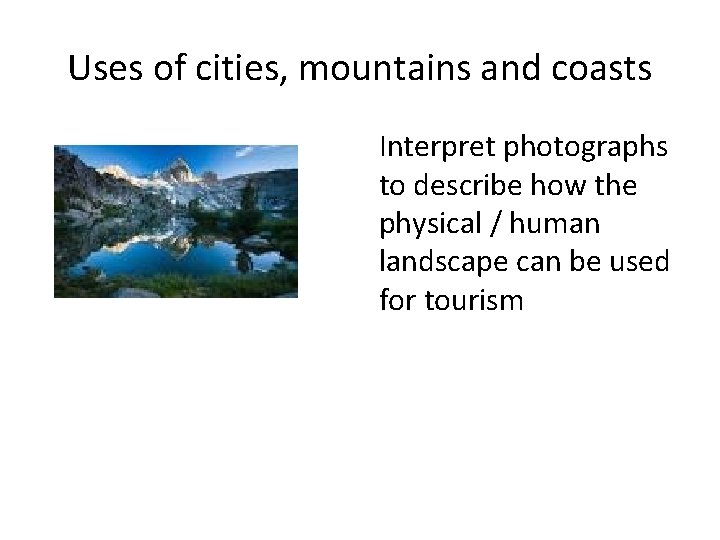
Uses of cities, mountains and coasts Interpret photographs to describe how the physical / human landscape can be used for tourism
Contribution to economy UK • UK economy earns £ 80 billion every year. • 27. 7. million overseas visitors spend over £ 13 billion • Restaurants (£ 20 billion) and hotels (£ 16 billion) • More jobs and income • London Eye is the most visited attraction in the UK with 3. 7 million visitors per year. France • Has more tourists than any other country USA • Earns more money than any other country from tourism ESSENTIAL JOBS CREATED INCOME AND EMPLOYMENT (80% in Barbados)
Benefits of tourism in poorer countries • Employment • Tax visitors (pays for new water supplies, drainage, electricity, and roads) • Extra jobs created indirectly (Hotels buy food from farmers etc. ) • Helps develop new businesses providing services (taxis, bars and restaurant, builders and maintenance).
Tourism in the UK • Domestic tourism (grew quickly in the 1950 s and 60 s) • UK seaside holidays peaked in the mid 1970 s (40 million visitors annually) • Britain's seaside resorts declined as package holidays abroad grew in number and affordability.
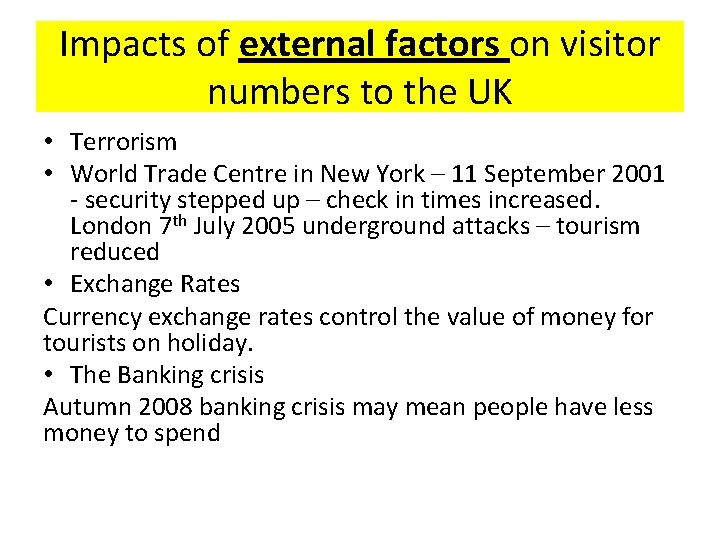
Impacts of external factors on visitor numbers to the UK • Terrorism • World Trade Centre in New York – 11 September 2001 - security stepped up – check in times increased. London 7 th July 2005 underground attacks – tourism reduced • Exchange Rates Currency exchange rates control the value of money for tourists on holiday. • The Banking crisis Autumn 2008 banking crisis may mean people have less money to spend
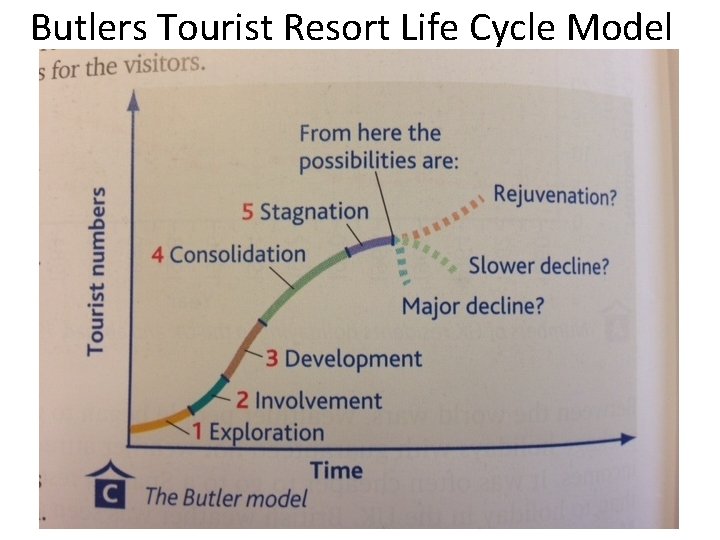
Butlers Tourist Resort Life Cycle Model
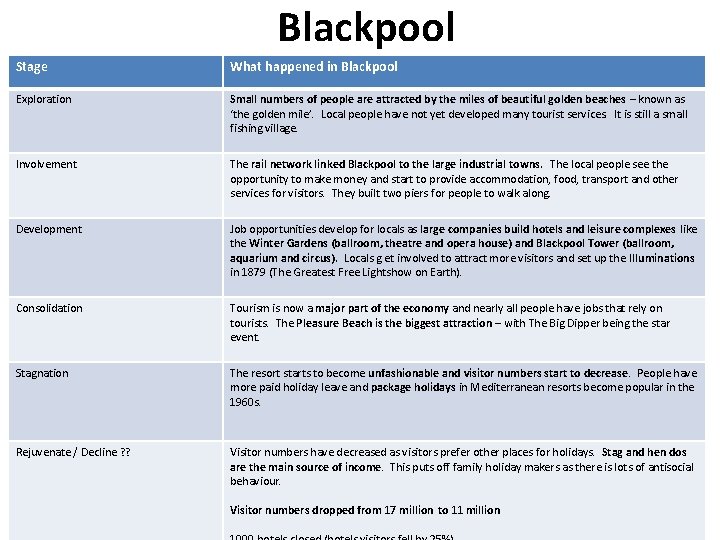
Blackpool Stage What happened in Blackpool Exploration Small numbers of people are attracted by the miles of beautiful golden beaches – known as ‘the golden mile’. Local people have not yet developed many tourist services. It is still a small fishing village. Involvement The rail network linked Blackpool to the large industrial towns. The local people see the opportunity to make money and start to provide accommodation, food, transport and other services for visitors. They built two piers for people to walk along. Development Job opportunities develop for locals as large companies build hotels and leisure complexes like the Winter Gardens (ballroom, theatre and opera house) and Blackpool Tower (ballroom, aquarium and circus). Locals g et involved to attract more visitors and set up the Illuminations in 1879 (The Greatest Free Lightshow on Earth). Consolidation Tourism is now a major part of the economy and nearly all people have jobs that rely on tourists. The Pleasure Beach is the biggest attraction – with The Big Dipper being the star event. Stagnation The resort starts to become unfashionable and visitor numbers start to decrease. People have more paid holiday leave and package holidays in Mediterranean resorts become popular in the 1960 s. Rejuvenate / Decline ? ? Visitor numbers have decreased as visitors prefer other places for holidays. Stag and hen dos are the main source of income. This puts off family holiday makers as there is lots of antisocial behaviour. Visitor numbers dropped from 17 million to 11 million
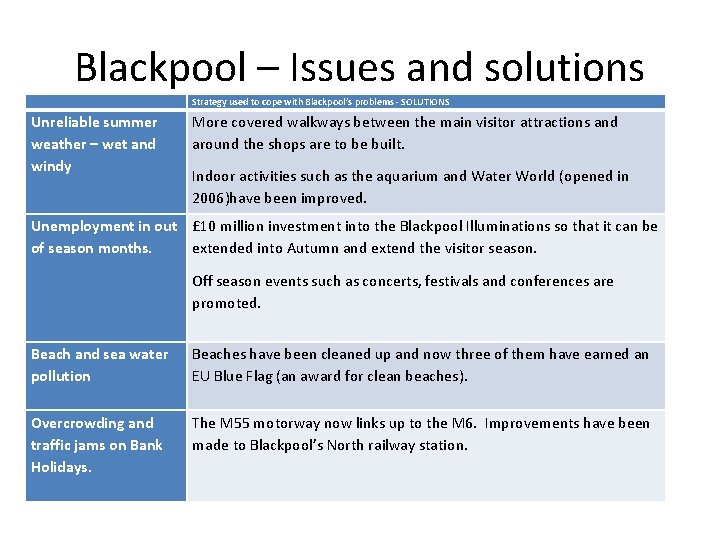
Blackpool – Issues and solutions Strategy used to cope with Blackpool’s problems - SOLUTIONS Unreliable summer weather – wet and windy More covered walkways between the main visitor attractions and around the shops are to be built. Indoor activities such as the aquarium and Water World (opened in 2006)have been improved. Unemployment in out £ 10 million investment into the Blackpool Illuminations so that it can be of season months. extended into Autumn and extend the visitor season. Off season events such as concerts, festivals and conferences are promoted. Beach and sea water pollution Beaches have been cleaned up and now three of them have earned an EU Blue Flag (an award for clean beaches). Overcrowding and traffic jams on Bank Holidays. The M 55 motorway now links up to the M 6. Improvements have been made to Blackpool’s North railway station.
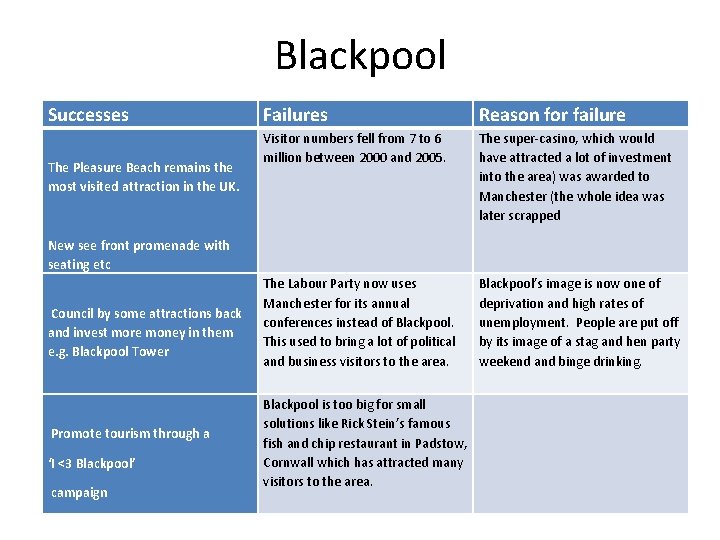
Blackpool Successes Failures Reason for failure Visitor numbers fell from 7 to 6 million between 2000 and 2005. The super-casino, which would have attracted a lot of investment into the area) was awarded to Manchester (the whole idea was later scrapped The Labour Party now uses Manchester for its annual conferences instead of Blackpool. This used to bring a lot of political and business visitors to the area. Blackpool’s image is now one of deprivation and high rates of unemployment. People are put off by its image of a stag and hen party weekend and binge drinking. The Pleasure Beach remains the most visited attraction in the UK. New see front promenade with seating etc Council by some attractions back and invest more money in them e. g. Blackpool Tower Promote tourism through a ‘I <3 Blackpool’ campaign Blackpool is too big for small solutions like Rick Stein’s famous fish and chip restaurant in Padstow, Cornwall which has attracted many visitors to the area.
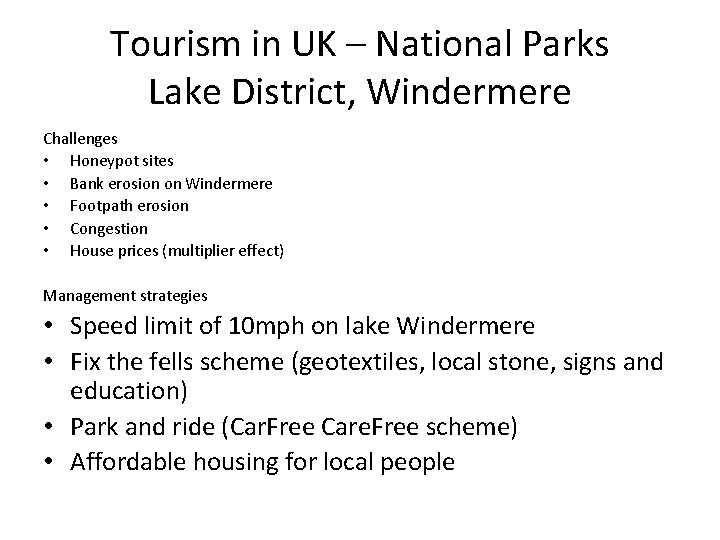
Tourism in UK – National Parks Lake District, Windermere Challenges • Honeypot sites • Bank erosion on Windermere • Footpath erosion • Congestion • House prices (multiplier effect) Management strategies • Speed limit of 10 mph on lake Windermere • Fix the fells scheme (geotextiles, local stone, signs and education) • Park and ride (Car. Free Care. Free scheme) • Affordable housing for local people
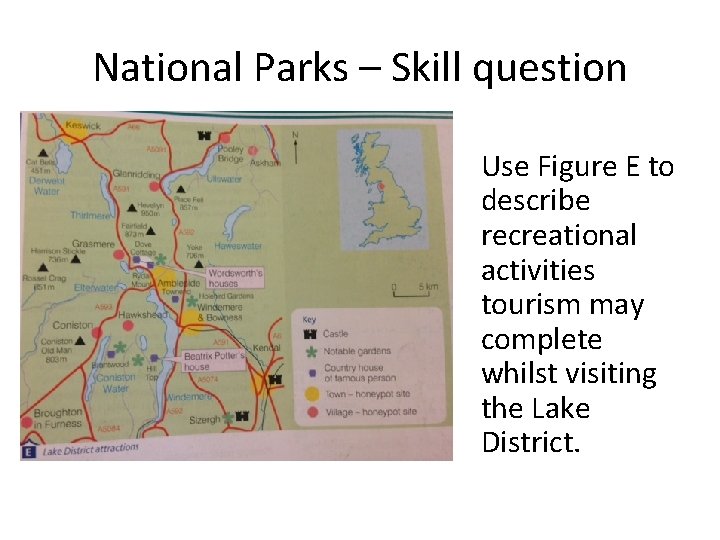
National Parks – Skill question Use Figure E to describe recreational activities tourism may complete whilst visiting the Lake District.
Mass Tourism • Mass tourism: tourism on a large scale to one country or region. This equates to the development and Consolidation phase of the Butler tourist resort life cycle model.
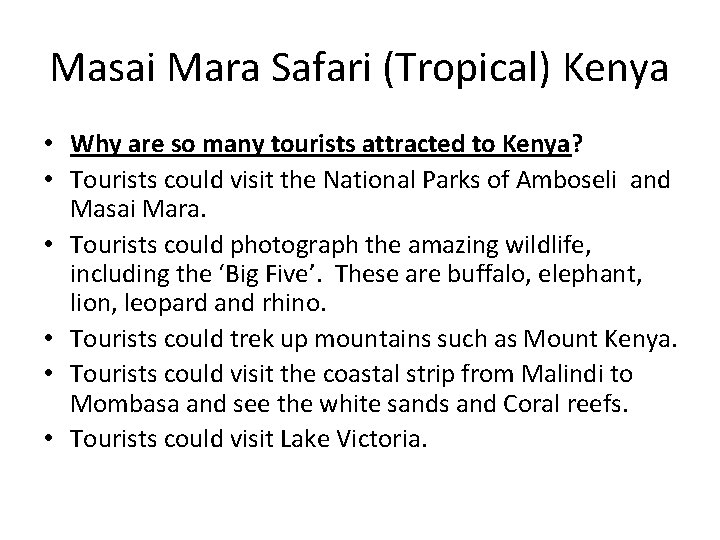
Masai Mara Safari (Tropical) Kenya • Why are so many tourists attracted to Kenya? • Tourists could visit the National Parks of Amboseli and Masai Mara. • Tourists could photograph the amazing wildlife, including the ‘Big Five’. These are buffalo, elephant, lion, leopard and rhino. • Tourists could trek up mountains such as Mount Kenya. • Tourists could visit the coastal strip from Malindi to Mombasa and see the white sands and Coral reefs. • Tourists could visit Lake Victoria.
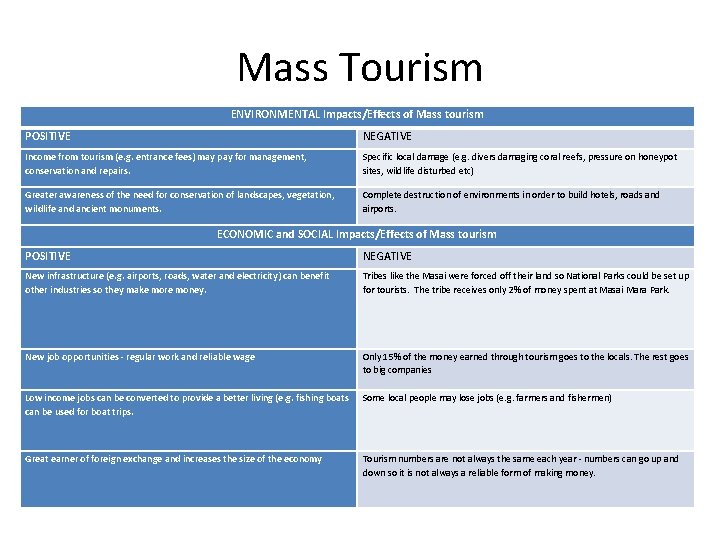
Mass Tourism ENVIRONMENTAL Impacts/Effects of Mass tourism POSITIVE NEGATIVE Income from tourism (e. g. entrance fees) may pay for management, conservation and repairs. Specific local damage (e. g. divers damaging coral reefs, pressure on honeypot sites, wildlife disturbed etc) Greater awareness of the need for conservation of landscapes, vegetation, wildlife and ancient monuments. Complete destruction of environments in order to build hotels, roads and airports. ECONOMIC and SOCIAL Impacts/Effects of Mass tourism POSITIVE NEGATIVE New infrastructure (e. g. airports, roads, water and electricity) can benefit other industries so they make more money. Tribes like the Masai were forced off their land so National Parks could be set up for tourists. The tribe receives only 2% of money spent at Masai Mara Park. New job opportunities - regular work and reliable wage Low income jobs can be converted to provide a better living (e. g. fishing boats can be used for boat trips. Only 15% of the money earned through tourism goes to the locals. The rest goes to big companies Some local people may lose jobs (e. g. farmers and fishermen) Great earner of foreign exchange and increases the size of the economy Tourism numbers are not always the same each year - numbers can go up and down so it is not always a reliable form of making money.
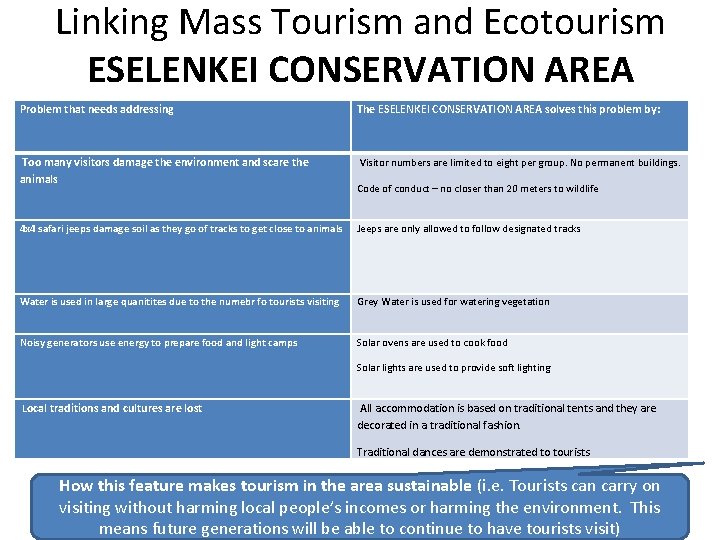
Linking Mass Tourism and Ecotourism ESELENKEI CONSERVATION AREA Problem that needs addressing The ESELENKEI CONSERVATION AREA solves this problem by: Too many visitors damage the environment and scare the animals Visitor numbers are limited to eight per group. No permanent buildings. 4 x 4 safari jeeps damage soil as they go of tracks to get close to animals Jeeps are only allowed to follow designated tracks Water is used in large quanitites due to the numebr fo tourists visiting Grey Water is used for watering vegetation Noisy generators use energy to prepare food and light camps Solar ovens are used to cook food Code of conduct – no closer than 20 meters to wildlife Solar lights are used to provide soft lighting Local traditions and cultures are lost All accommodation is based on traditional tents and they are decorated in a traditional fashion. Traditional dances are demonstrated to tourists How this feature makes tourism in the area sustainable (i. e. Tourists can carry on visiting without harming local people’s incomes or harming the environment. This means future generations will be able to continue to have tourists visit)
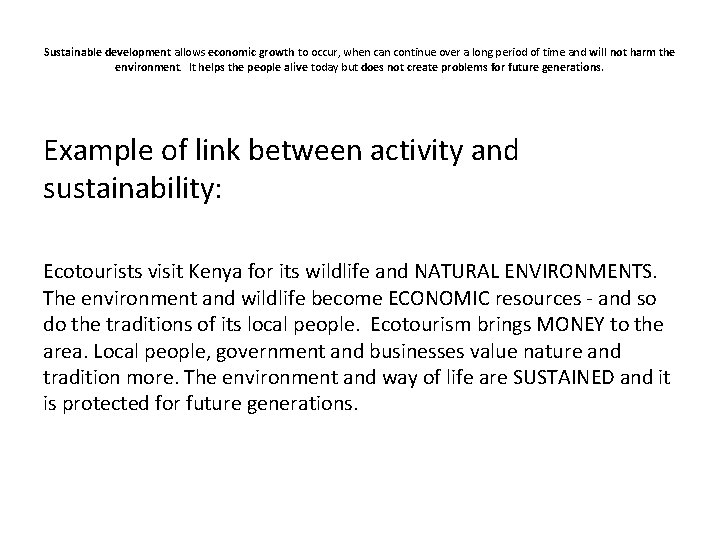
Sustainable development allows economic growth to occur, when can continue over a long period of time and will not harm the environment. It helps the people alive today but does not create problems for future generations. Example of link between activity and sustainability: Ecotourists visit Kenya for its wildlife and NATURAL ENVIRONMENTS. The environment and wildlife become ECONOMIC resources - and so do the traditions of its local people. Ecotourism brings MONEY to the area. Local people, government and businesses value nature and tradition more. The environment and way of life are SUSTAINED and it is protected for future generations.
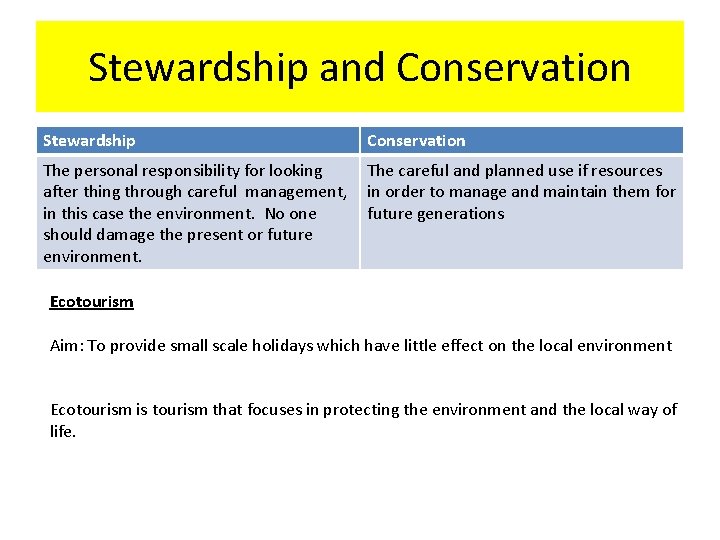
Stewardship and Conservation Stewardship Conservation The personal responsibility for looking The careful and planned use if resources after thing through careful management, in order to manage and maintain them for in this case the environment. No one future generations should damage the present or future environment. Ecotourism Aim: To provide small scale holidays which have little effect on the local environment Ecotourism is tourism that focuses in protecting the environment and the local way of life.
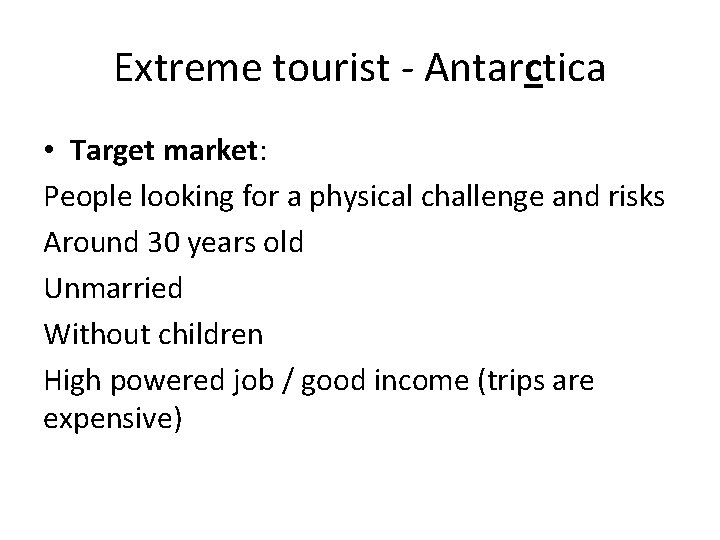
Extreme tourist - Antarctica • Target market: People looking for a physical challenge and risks Around 30 years old Unmarried Without children High powered job / good income (trips are expensive)
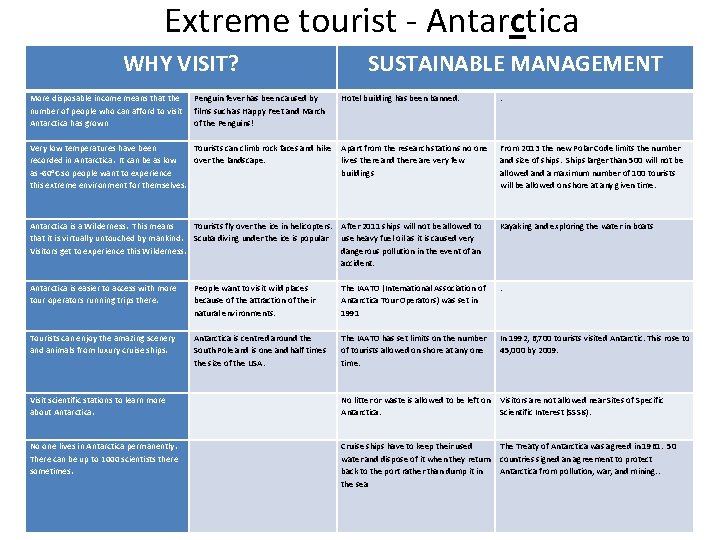
Extreme tourist - Antarctica WHY VISIT? More disposable income means that the number of people who can afford to visit Antarctica has grown Penguin fever has been caused by films such as Happy Feet and March of the Penguins! SUSTAINABLE MANAGEMENT Hotel building has been banned. . Very low temperatures have been Tourists can climb rock faces and hike Apart from the research stations no one recorded in Antarctica. It can be as low over the landscape. lives there and there are very few as -60 o. C so people want to experience buildings this extreme environment for themselves. From 2013 the new Polar Code limits the number and size of ships. Ships larger than 500 will not be allowed and a maximum number of 100 tourists will be allowed on shore at any given time. Antarctica is a Wilderness. This means Tourists fly over the ice in helicopters. After 2011 ships will not be allowed to that it is virtually untouched by mankind. Scuba diving under the ice is popular use heavy fuel oil as it is caused very Visitors get to experience this Wilderness. dangerous pollution in the event of an accident. Kayaking and exploring the water in boats Antarctica is easier to access with more tour operators running trips there. People want to visit wild places because of the attraction of their natural environments. The IAATO (International Association of Antarctica Tour Operators) was set in 1991 . Tourists can enjoy the amazing scenery and animals from luxury cruise ships. Antarctica is centred around the South Pole and is one and half times the size of the USA. The IAATO has set limits on the number of tourists allowed on shore at any one time. In 1992, 6, 700 tourists visited Antarctic. This rose to 45, 000 by 2009. Visit scientific stations to learn more about Antarctica. No litter or waste is allowed to be left on Visitors are not allowed near Sites of Specific Antarctica. Scientific Interest (SSSIs). No one lives in Antarctica permanently. There can be up to 1000 scientists there sometimes. Cruise ships have to keep their used The Treaty of Antarctica was agreed in 1961. 50 water and dispose of it when they return countries signed an agreement to protect back to the port rather than dump it in Antarctica from pollution, war, and mining. . the sea
MAP SKILLS
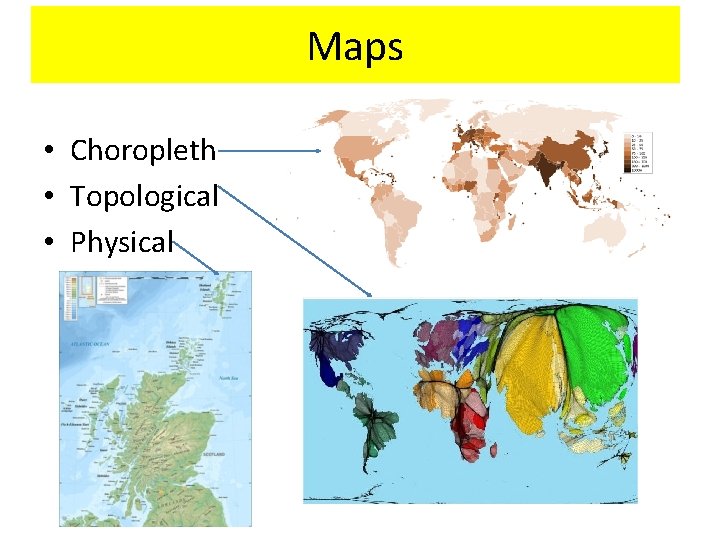
Maps • Choropleth • Topological • Physical
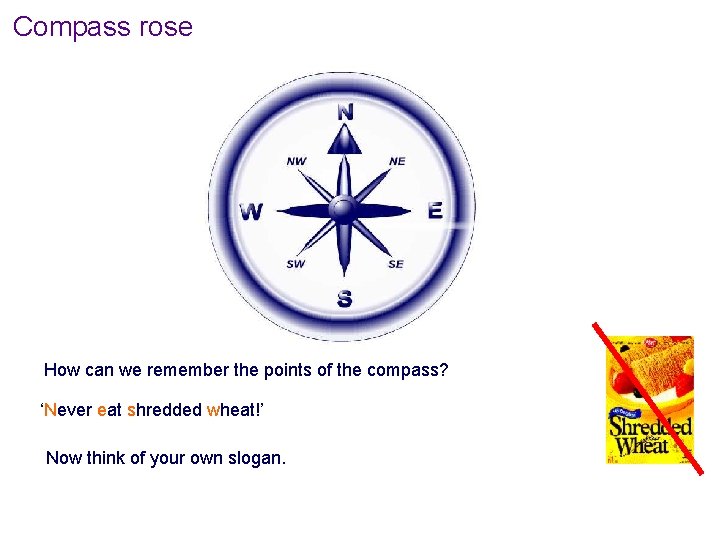
Compass rose How can we remember the points of the compass? ‘Never eat shredded wheat!’ Now think of your own slogan.
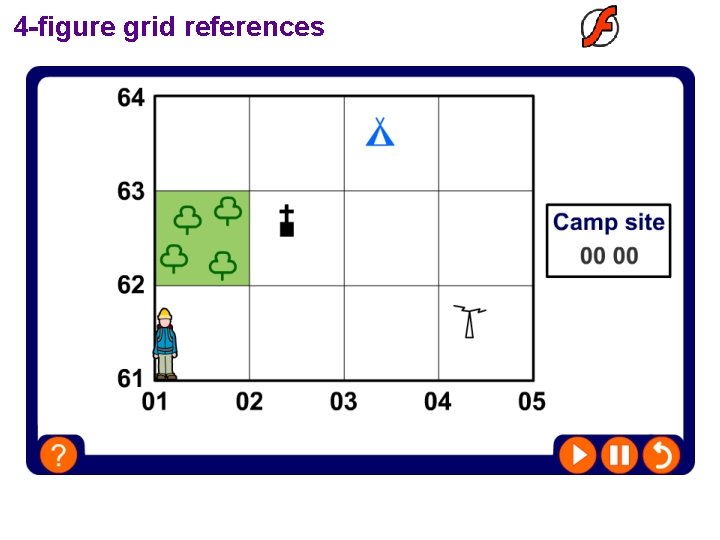
4 -figure grid references
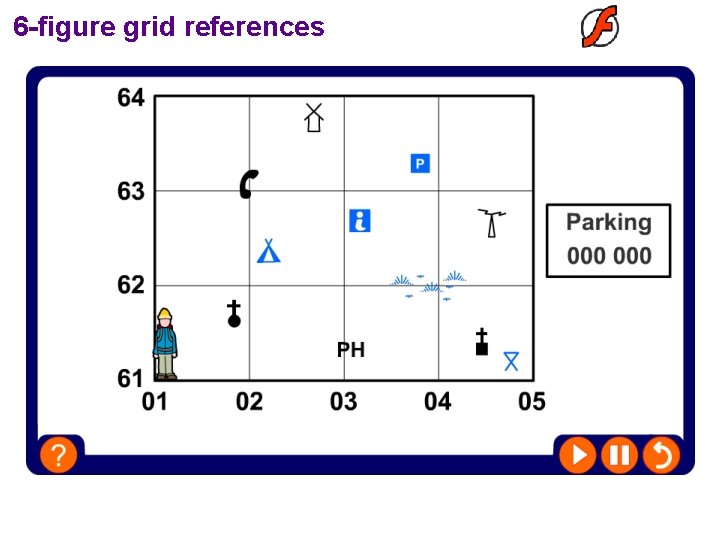
6 -figure grid references
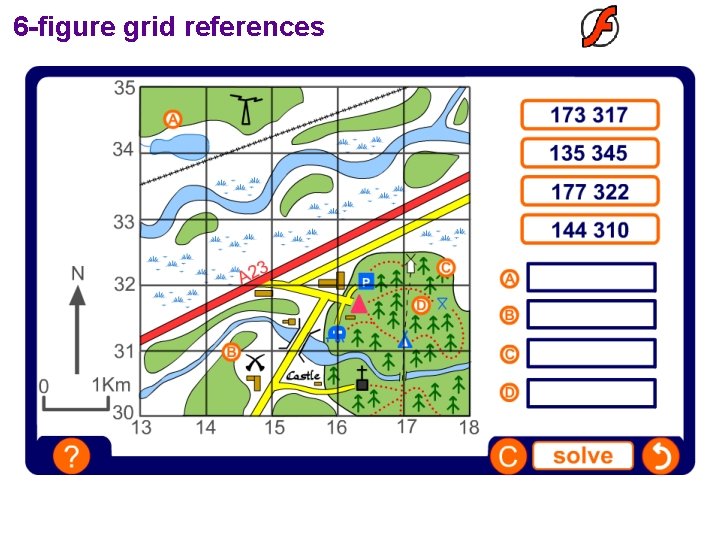
6 -figure grid references
Scale
- Slides: 55