
Exam technique Knowledge Application Analysis Evaluation Application USE
- Slides: 29
Exam technique • • Knowledge Application Analysis Evaluation
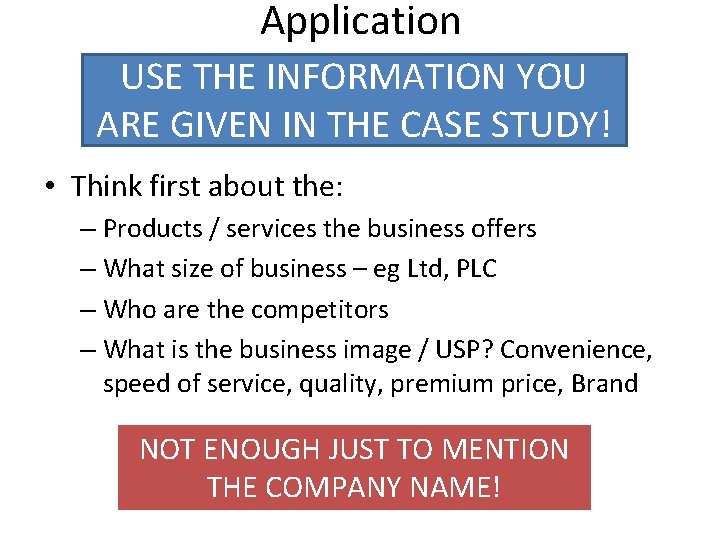
Application USE THE INFORMATION YOU ARE GIVEN IN THE CASE STUDY! • Think first about the: – Products / services the business offers – What size of business – eg Ltd, PLC – Who are the competitors – What is the business image / USP? Convenience, speed of service, quality, premium price, Brand NOT ENOUGH JUST TO MENTION THE COMPANY NAME!
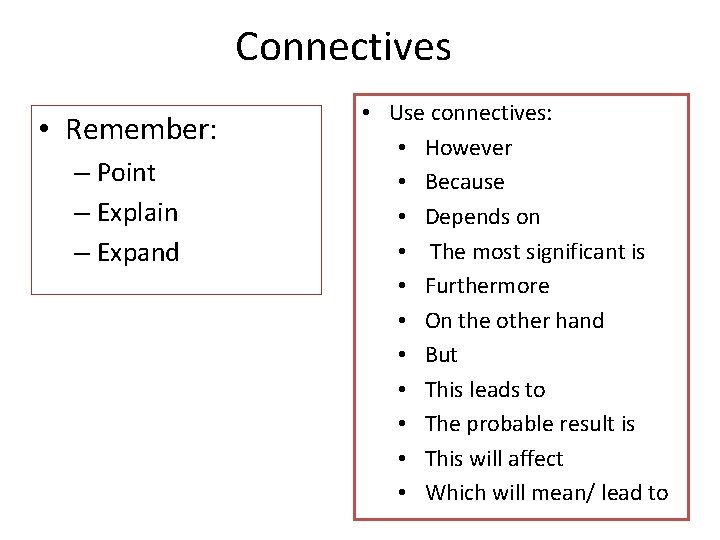
Connectives • Remember: – Point – Explain – Expand • Use connectives: • However • Because • Depends on • The most significant is • Furthermore • On the other hand • But • This leads to • The probable result is • This will affect • Which will mean/ lead to
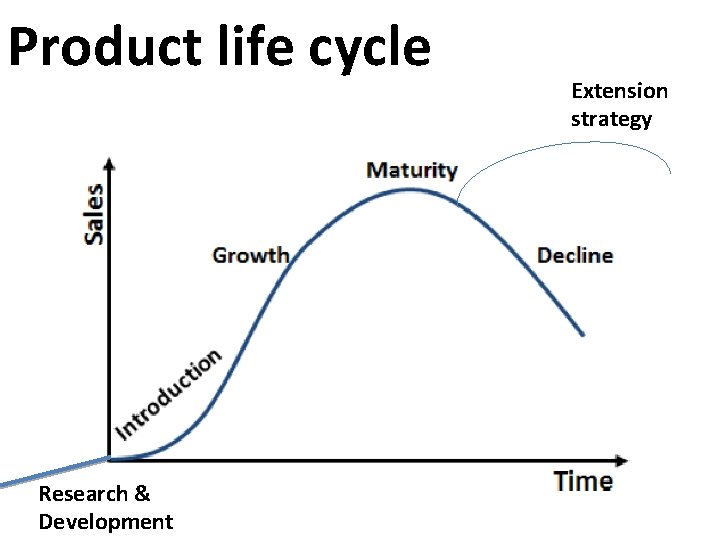
Product life cycle Research & Development Extension strategy
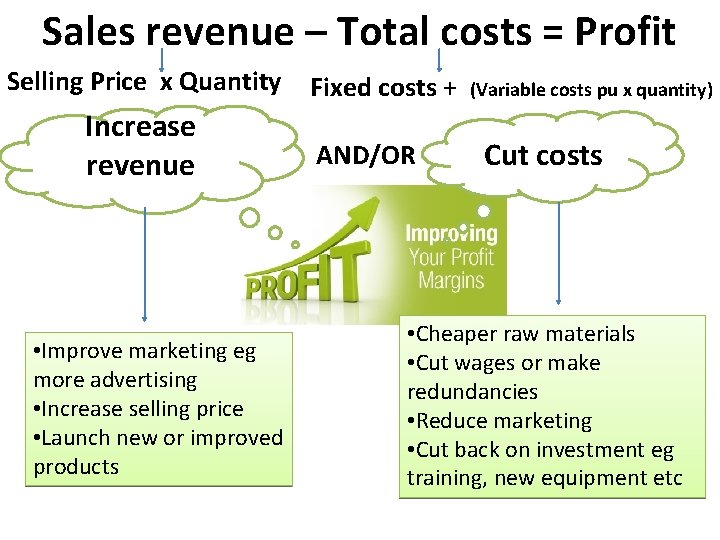
Sales revenue – Total costs = Profit Selling Price x Quantity Increase revenue • Improve marketing eg more advertising • Increase selling price • Launch new or improved products Fixed costs + AND/OR (Variable costs pu x quantity) Cut costs • Cheaper raw materials • Cut wages or make redundancies • Reduce marketing • Cut back on investment eg training, new equipment etc
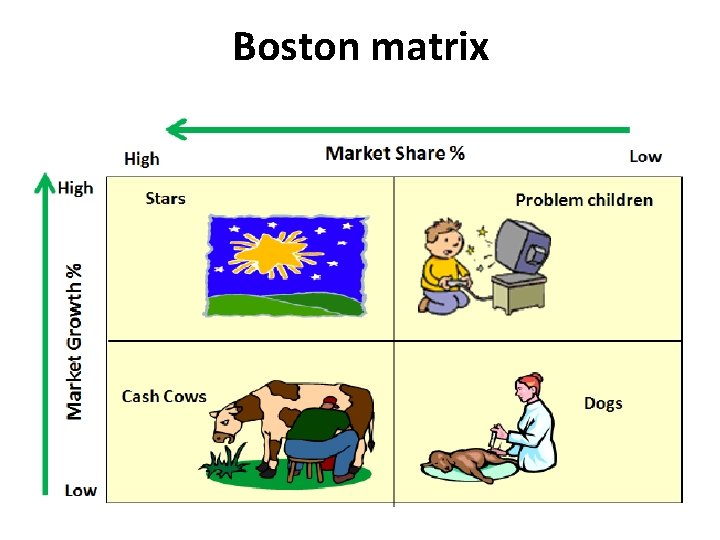
Boston matrix
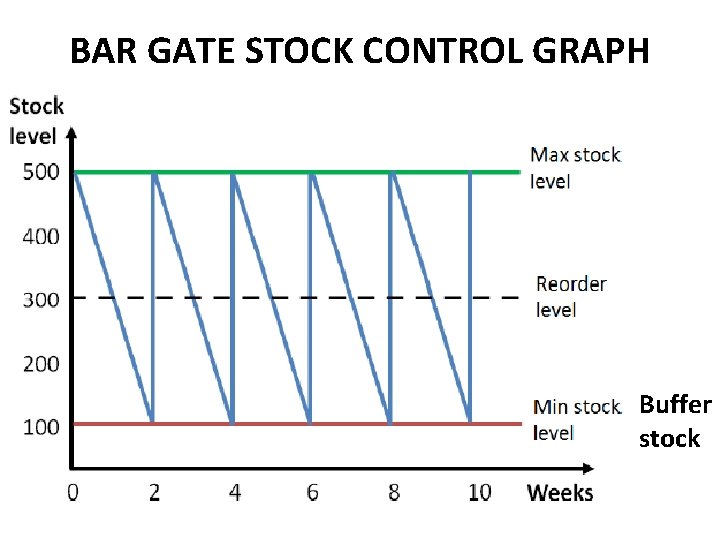
BAR GATE STOCK CONTROL GRAPH Buffer stock
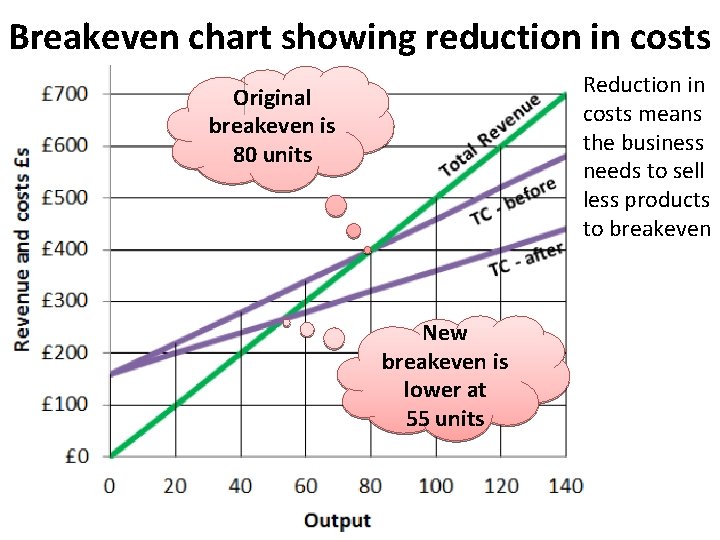
Breakeven chart showing reduction in costs Reduction in costs means the business needs to sell less products to breakeven Original breakeven is 80 units New breakeven is lower at 55 units
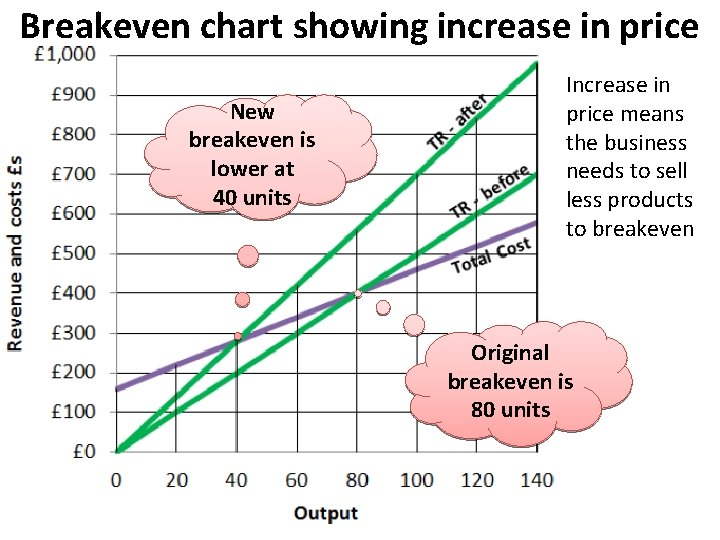
Breakeven chart showing increase in price New breakeven is lower at 40 units Increase in price means the business needs to sell less products to breakeven Original breakeven is 80 units
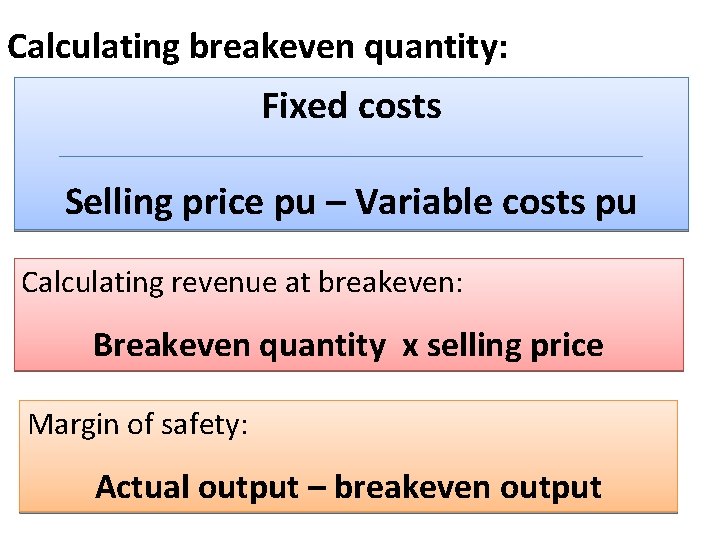
Calculating breakeven quantity: Fixed costs Selling price pu – Variable costs pu Calculating revenue at breakeven: Breakeven quantity x selling price Margin of safety: Actual output – breakeven output
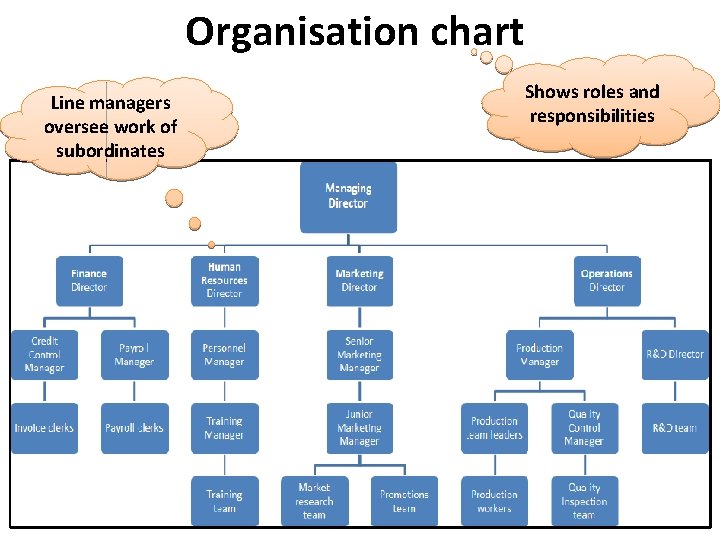
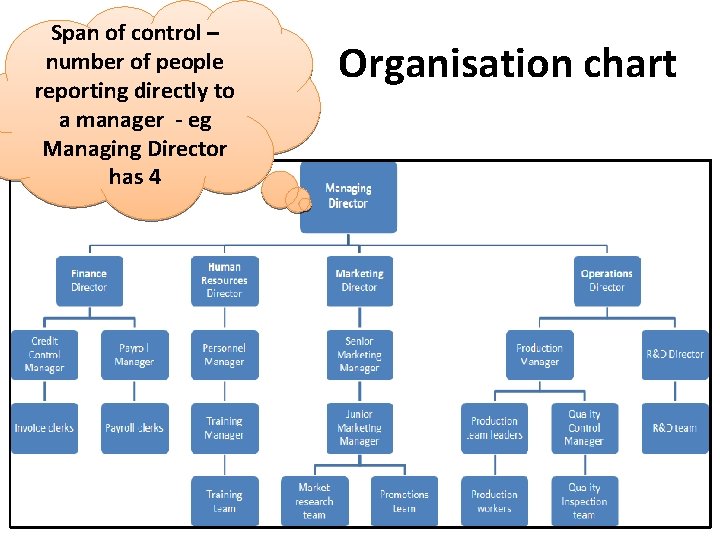
Organisation chart Line managers oversee work of subordinates Shows roles and responsibilities
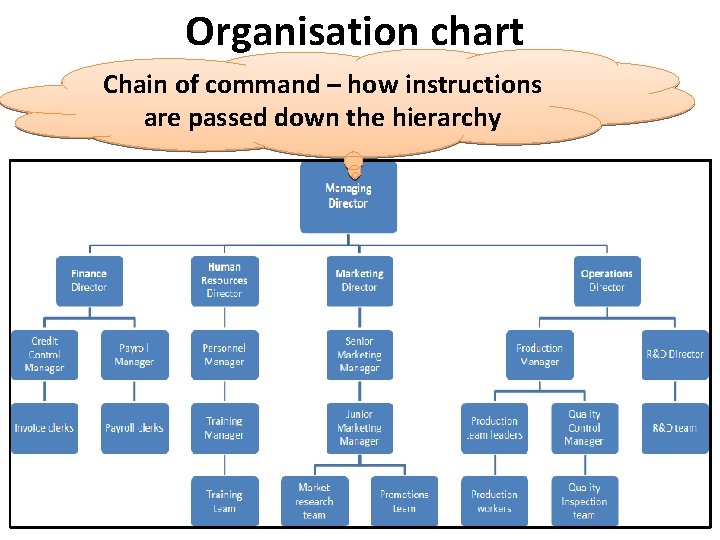
Organisation chart Chain of command – how instructions are passed down the hierarchy
Span of control – number of people reporting directly to a manager - eg Managing Director has 4 Organisation chart
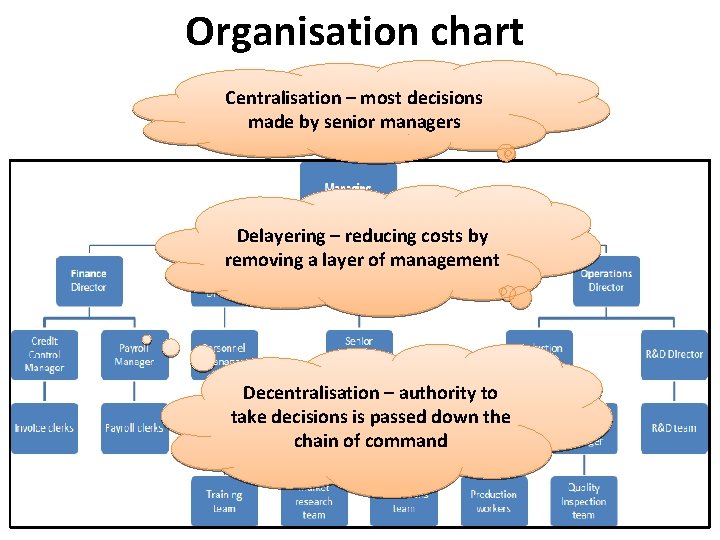
Organisation chart Centralisation – most decisions made by senior managers Delayering – reducing costs by removing a layer of management Decentralisation – authority to take decisions is passed down the chain of command
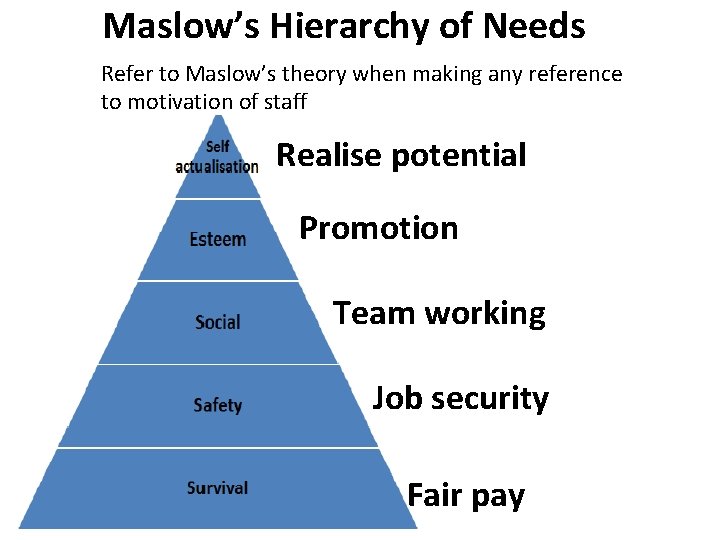
Maslow’s Hierarchy of Needs Refer to Maslow’s theory when making any reference to motivation of staff Realise potential Promotion Team working Job security Fair pay
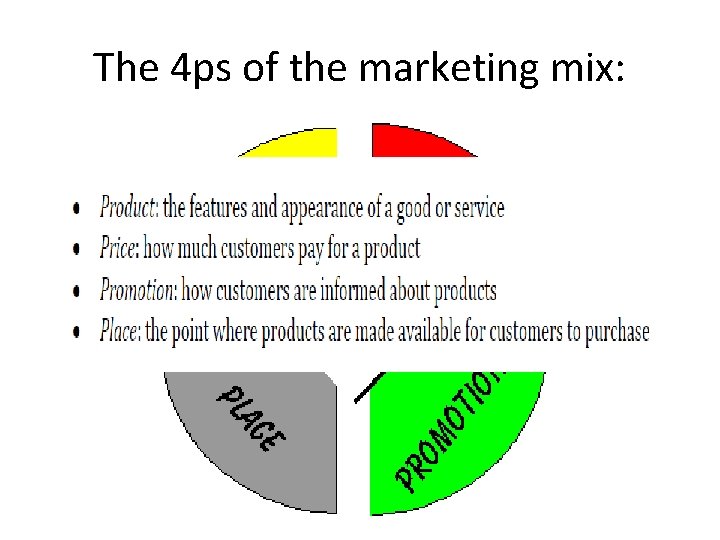
The 4 ps of the marketing mix:
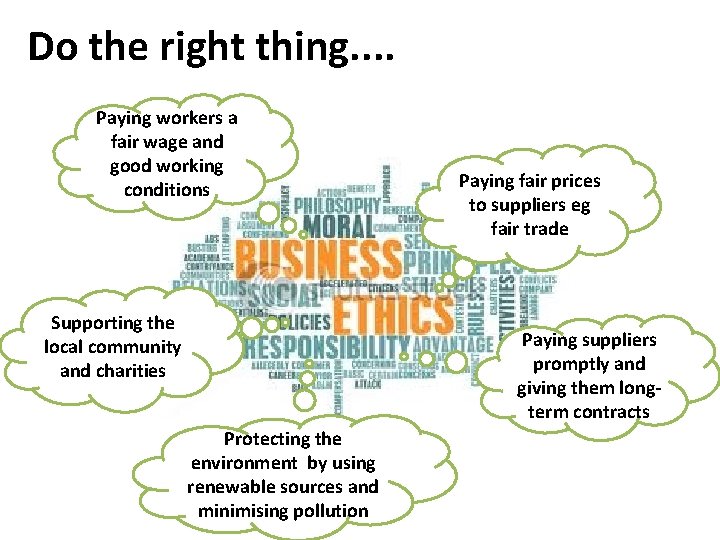
Do the right thing. . Paying workers a fair wage and good working conditions Supporting the local community and charities Paying fair prices to suppliers eg fair trade Paying suppliers promptly and giving them longterm contracts Protecting the environment by using renewable sources and minimising pollution
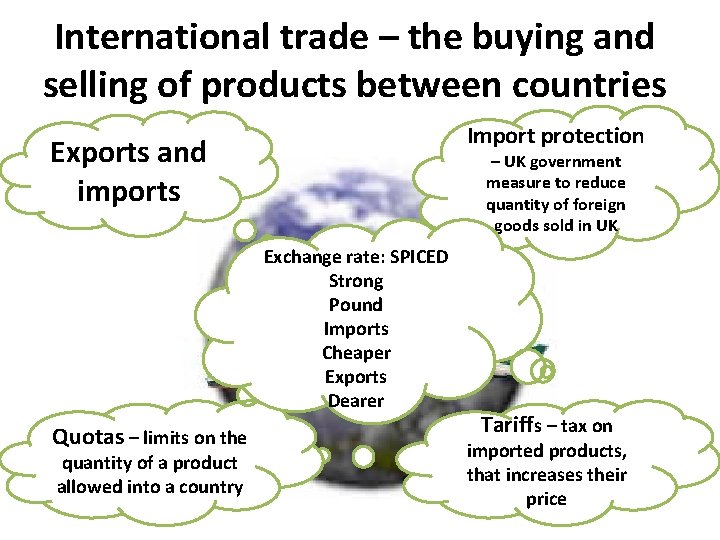
International trade – the buying and selling of products between countries Import protection Exports and imports – UK government measure to reduce quantity of foreign goods sold in UK Exchange rate: SPICED Strong Pound Imports Cheaper Exports Dearer Quotas – limits on the quantity of a product allowed into a country Tariffs – tax on imported products, that increases their price
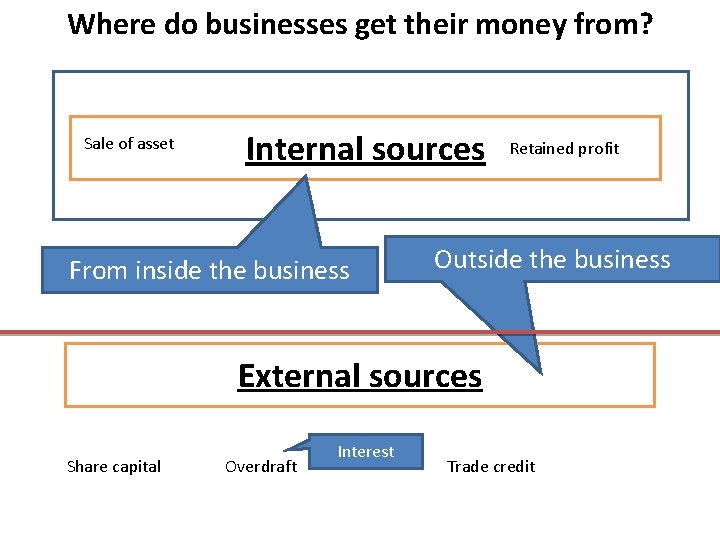
Where do businesses get their money from? Sale of asset Internal sources From inside the business Retained profit Outside the business External sources Share capital Overdraft Interest Trade credit
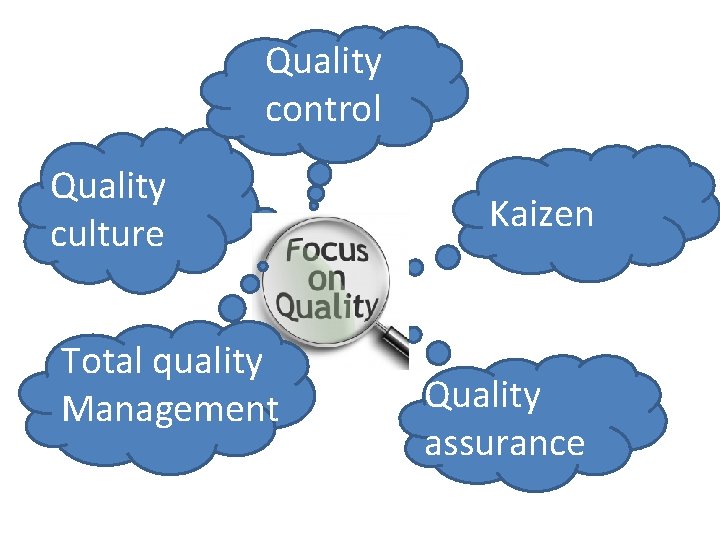
Quality control Quality culture Total quality Management Kaizen Quality assurance
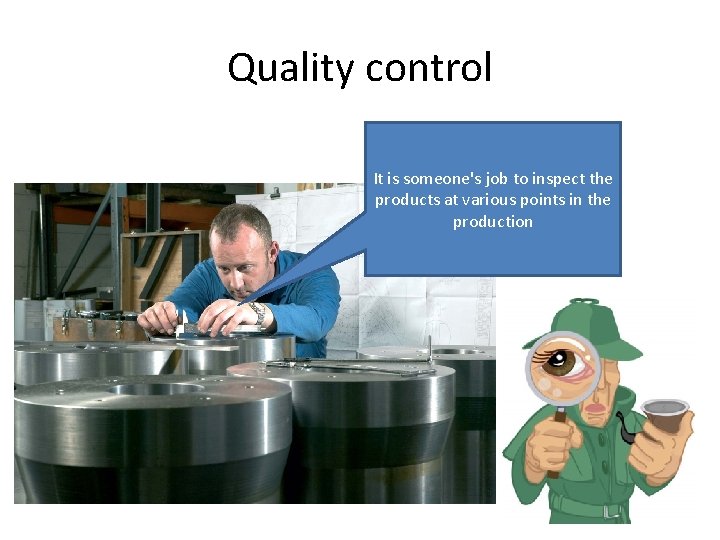
Quality control It is someone's job to inspect the products at various points in the production
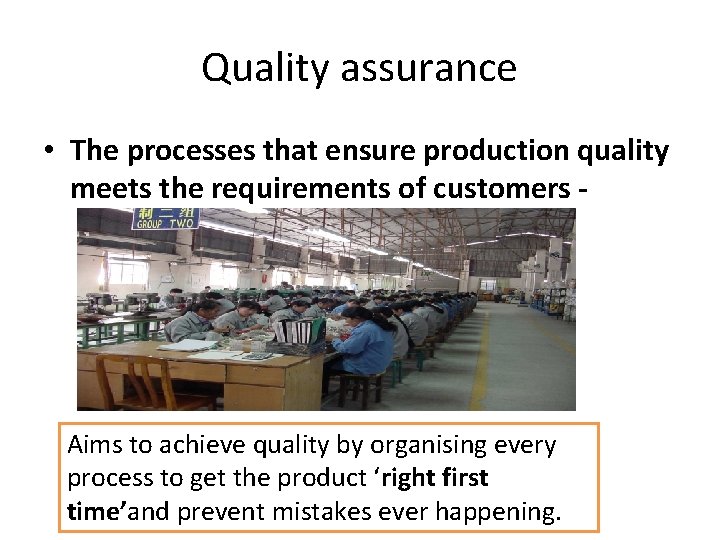
Quality assurance • The processes that ensure production quality meets the requirements of customers - Aims to achieve quality by organising every process to get the product ‘right first time’and prevent mistakes ever happening.
Quality control • The job of an inspector Quality assurance • The process where everyone checks the products to ensure they are the correct standard
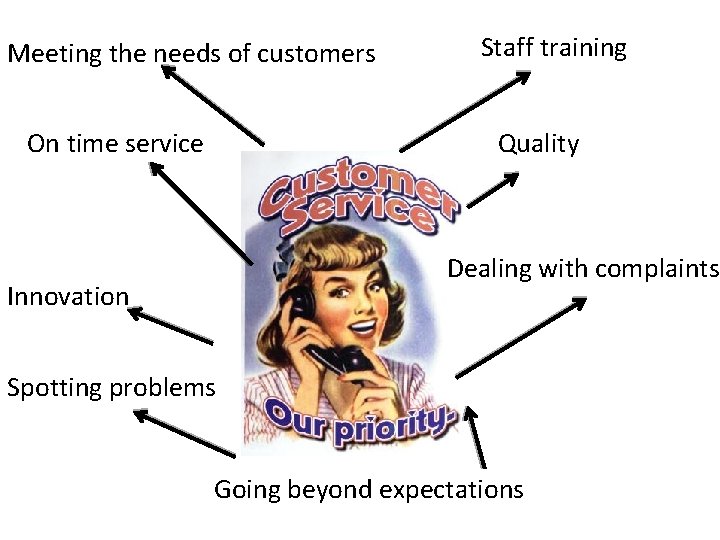
Meeting the needs of customers On time service Staff training Quality Dealing with complaints Innovation Spotting problems Going beyond expectations
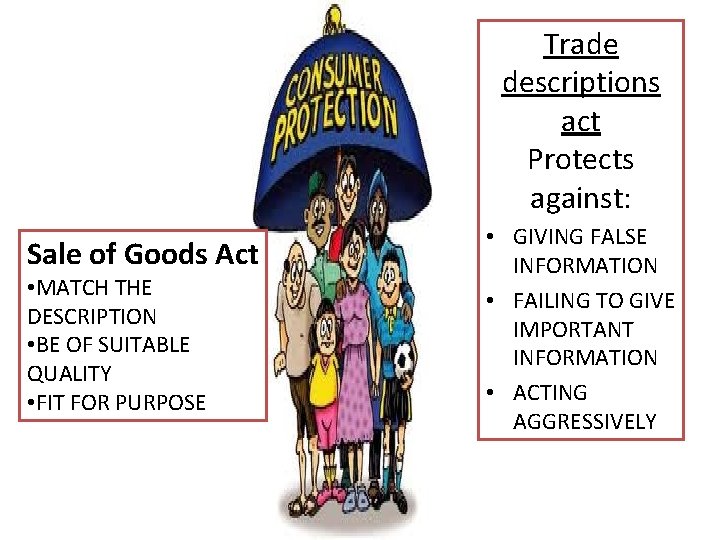
Trade descriptions act Protects against: Sale of Goods Act • MATCH THE DESCRIPTION • BE OF SUITABLE QUALITY • FIT FOR PURPOSE • GIVING FALSE INFORMATION • FAILING TO GIVE IMPORTANT INFORMATION • ACTING AGGRESSIVELY
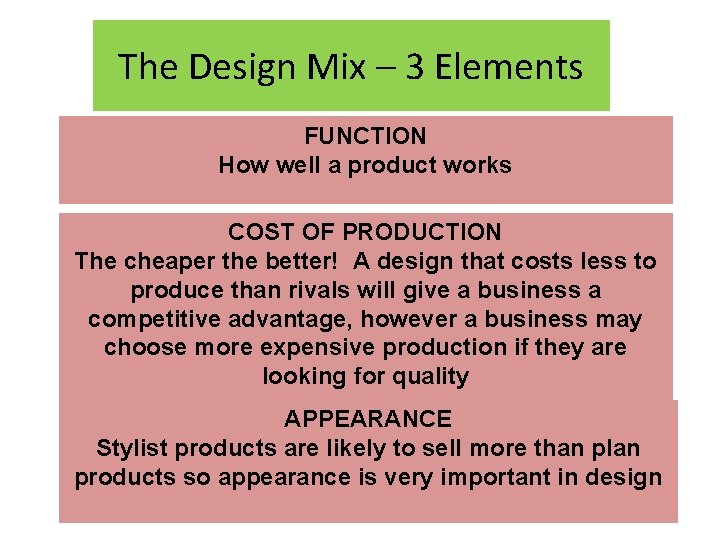
The Design Mix – 3 Elements FUNCTION How well a product works COST OF PRODUCTION The cheaper the better! A design that costs less to produce than rivals will give a business a competitive advantage, however a business may choose more expensive production if they are looking for quality APPEARANCE Stylist products are likely to sell more than plan products so appearance is very important in design
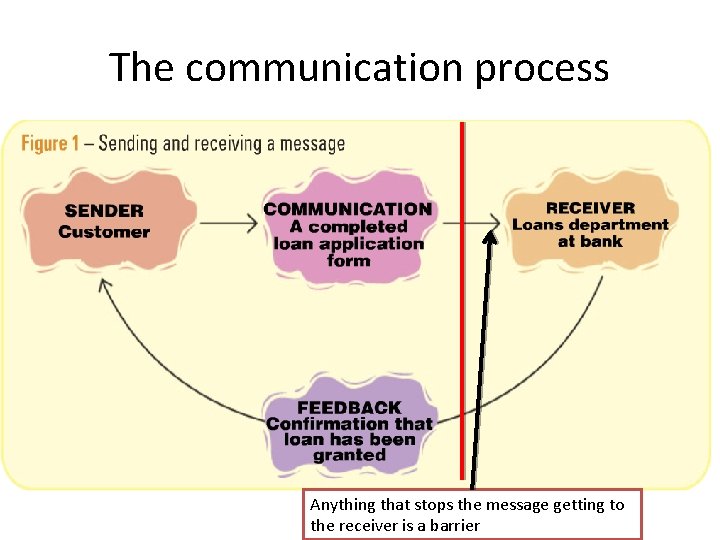
The communication process Anything that stops the message getting to the receiver is a barrier
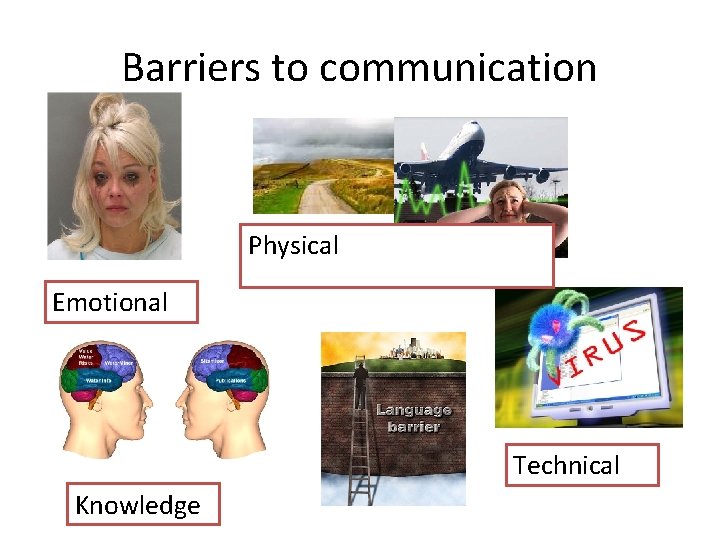
Barriers to communication Physical Emotional Technical Knowledge
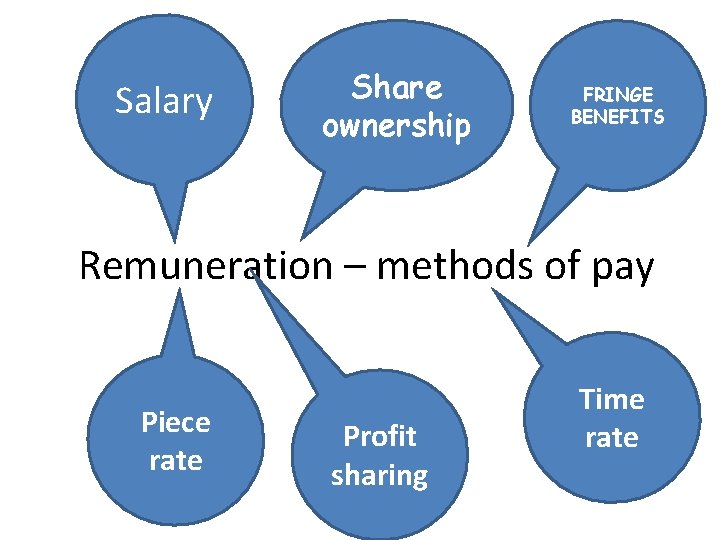
Salary Share ownership FRINGE BENEFITS Remuneration – methods of pay Piece rate Profit sharing Time rate