
Exam Preparation Overcoming Test Anxiety A Crash Course


- Slides: 24
Exam Preparation & Overcoming Test Anxiety A Crash Course
Exam Preparation Knowing how and when to study
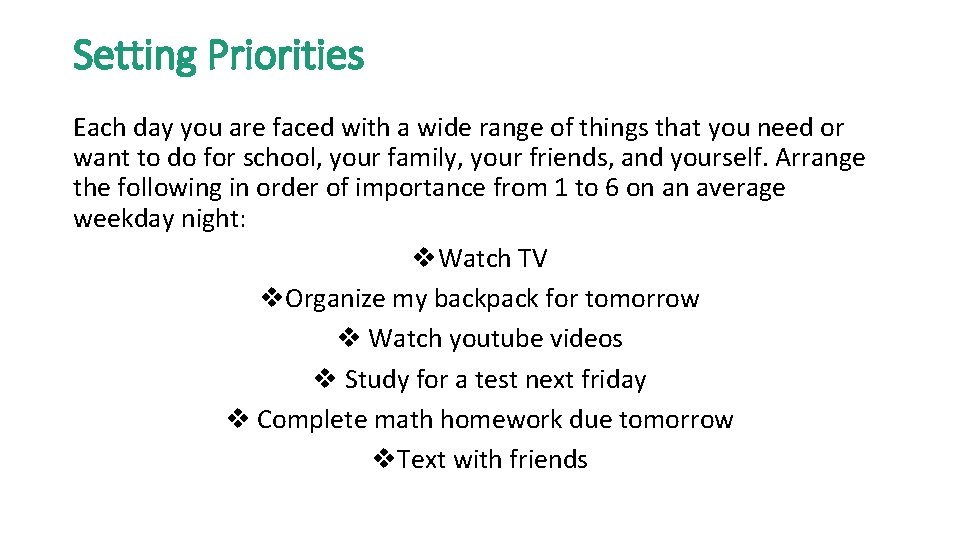
Setting Priorities Each day you are faced with a wide range of things that you need or want to do for school, your family, your friends, and yourself. Arrange the following in order of importance from 1 to 6 on an average weekday night: v. Watch TV v. Organize my backpack for tomorrow v Watch youtube videos v Study for a test next friday v Complete math homework due tomorrow v. Text with friends
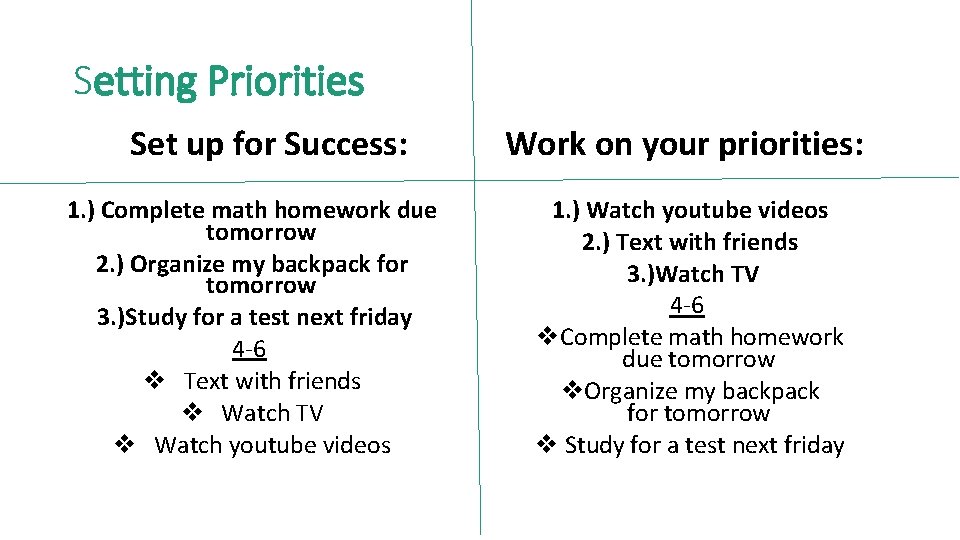
Setting Priorities Set up for Success: 1. ) Complete math homework due tomorrow 2. ) Organize my backpack for tomorrow 3. )Study for a test next friday 4 -6 v Text with friends v Watch TV v Watch youtube videos Work on your priorities: 1. ) Watch youtube videos 2. ) Text with friends 3. )Watch TV 4 -6 v. Complete math homework due tomorrow v. Organize my backpack for tomorrow v Study for a test next friday
Key to Success In order to be a successful student, you must make your assignments, as well as studying for tests and exams a priority over entertainment.
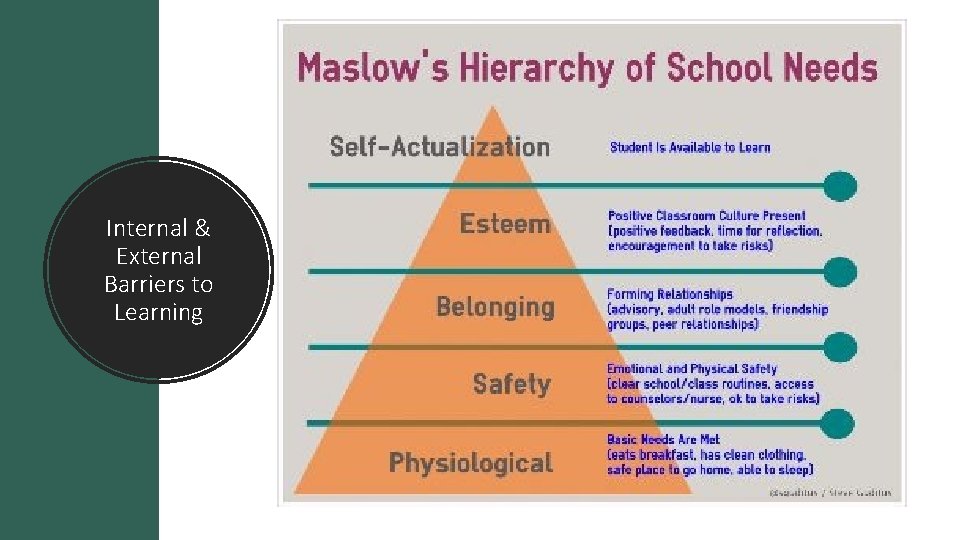
Internal & External Barriers to Learning
Internal & External Barriers • There are many internal & external barriers to studying, here are some questions to ask yourself about what influences your learning: • • • Are you available to learn (physically & emotionally)? Do you feel accepted and valued by others? Do you have positive thoughts and self talk? Do you have positive relationships with your fellow students and teacher? Do you feel emotionally and physically safe at school and home? Are your basic needs being met? Do you get enough sleep? Do you eat healthy foods? Do you practice good self care? Fill in your chart with your own personal internal (thoughts & feelings) & external barriers (distractions & environment)
Knowing when to study: • Studying has shown to be most effective in chunks or short repeated sessions. (you should be studying for several days or weeks before your test or exam) • Study at specific times, make it a part of your routine. (ie: after dinner every day) • Try the pomodoro technique. This is a technique proven to boost productivity. Using a timer study for 25 minutes (an undistracted/ focused 25 minutes), then take a 5 minute break. • After four "pomodoros" have passed (100 minutes with 4 breaks), you take a 15 minute break. • The pomodoro technique keeps your brain fresh and focused.
Study Environment: • Create a dedicated or sacred spot • Your environment should be comfortable and free from distractions • Have all of your materials on hand before starting your session • Some research shows that varying your study environment can help you study • Some research shows that studying in the same place you will help you with recall • Certain classical music has been shown to help but studies have shown that students using a quiet environment have better recall of content.
Keys to Success Knowing when and where to study are two important factors in test and exam success. Studying in short chunks in a comfortable, distraction free environment have been proven to be successful study techniques.
How do I study best based on my learning style? There are several ways to study based on your dominant learning style. Remember that you do not just learn ONE way. You have a combination of three main learning styles. Ø Auditory Learner Ø Visual Learner Ø Kinesthetic Learner
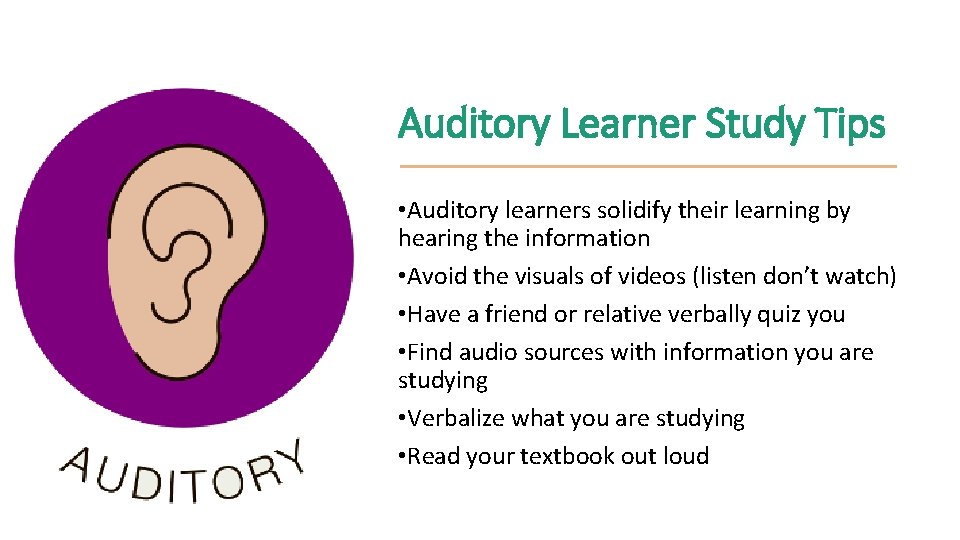
Auditory Learner Study Tips • Auditory learners solidify their learning by hearing the information • Avoid the visuals of videos (listen don’t watch) • Have a friend or relative verbally quiz you • Find audio sources with information you are studying • Verbalize what you are studying • Read your textbook out loud
Visual Learner Study Tips • Visual learners take in information with their eyes • Take detailed notes you can review later • Consider using mindmaps to sort your information • Write a practice test • Use flash cards while studying • Watch a video on the topic
Kinesthetic Learner Study Tips • Kinesthetic learners learn best through physical activity • Time your study sessions using the pomodoro technique, do a body break during your five minute break • Find ways to make your session active (such as a friend quizing you while you do an activity) • Keep your hands busy using a stress ball or fidget • Use flash cards spread throughout the room to get moving
Key to Success Knowing what learning style you are can help you to determine what study techniques can work best for you. Remember that everyone is a combination of three styles so a combination of techniques may be what you need.
General Study Tips: • Study based on how you learn best • Notes can be overwhelming for many, flash cards are excellent tools • Have a specific goal or plan for each study session (use the learning plan template to help with planning study sessions) • Study as if you have to teach it to someone else, your brain will organize information more logically • Eliminate distractions such as the television, or phone • Find a study buddy with similar habits to yours • Do a practice test (collect questions, make your own, or have a friend make a quiz) • Take care of yourself, get enough sleep and eat well • Don’t cram, study over many days in smaller sessions
Overcoming Test Anxiety Dealing with stress and anxiety!
Overcoming Test Anxiety • Test anxiety is completely normal for most students. • Expect to have some level of anxiety during tests and exams. • Find techniques that work for you (we will be learning about some in the next few slides) • Use the test anxiety booklet for additional information
Before the test or exam: • Get at least 8 hours of sleep prior to an exam (and in the week leading up to your exam or test) • Eat a balanced diet during the week and a fiber and carbohydrate rich breakfast the day of the exam to fuel your brain. • Avoid “high stress” foods such as caffeine, sugary foods and snacks, and fried foods. • Avoid cramming just before the test, make sure to prepare well in advance • Strive for a relaxed state of concentration. Avoid speaking with any fellow students who have not prepared, who express negativity, who will distract your preparation • Approach the exam with confidence, positive self talk can help put you into the right mindset • Keep your expectations realistic. Do not expect 100% on any exam. • Bring a water bottle to keep hydrated and a small snack to eat during the exam • Arrive early so you have time to get settled.
During the test or exam: • • • Read directions carefully Change positions or stretch to help you relax Concentrate on your breathing, slow, deep breaths can help you relax Take your time Don't think about the fear Write down any formulas or important information in the margins of your exam as soon as you are allowed to begin Use positive visualization and self talk, you’ve got this! You are doing your best! Skip difficult questions and come back to them Don’t panic or rush when other students begin to hand in their papers Expect to have some anxiety, acknowledge it but do not let it take control.
After the test: • Think about the techniques you used and what worked • Look for ways to improve • Celebrate your accomplishments • Treat yourself (vent to friends, watch a movie, go for a walk)
Discussion & Questions • Comments about what you have learned? • Techniques you can share? • Questions about the presentation? • Reflection?