
Exam IV will be offered on Wed Dec

Exam IV will be offered on Wed. Dec. 5 in class It will also be offered during the regularly scheduled time Thursday, December 13 th Study Guide will be posted this afternoon
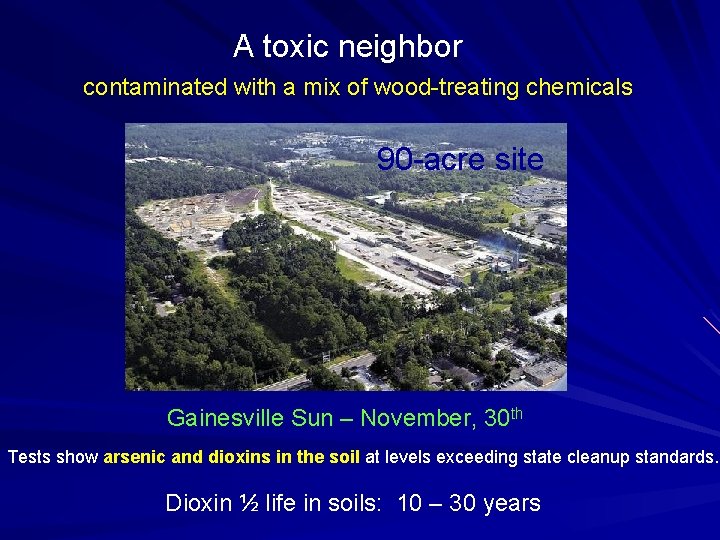
A toxic neighbor contaminated with a mix of wood-treating chemicals 90 -acre site Gainesville Sun – November, 30 th Tests show arsenic and dioxins in the soil at levels exceeding state cleanup standards. Dioxin ½ life in soils: 10 – 30 years
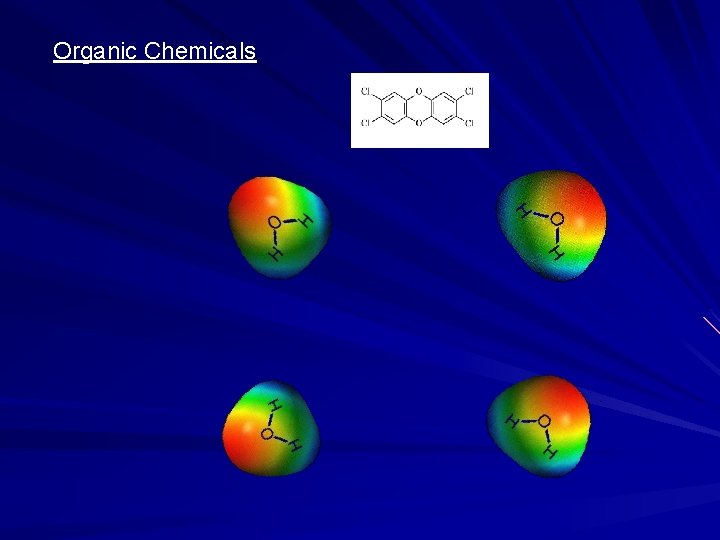
Organic Chemicals
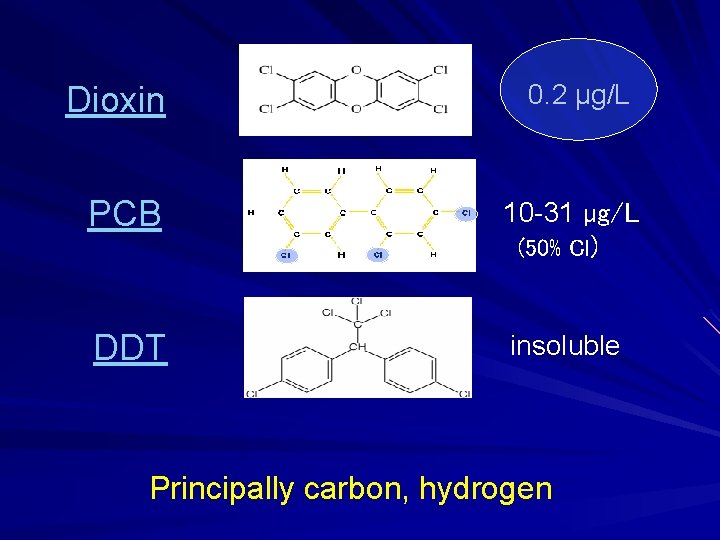
Dioxin 0. 2 µg/L PCB 10 -31 µg/L (50% Cl) DDT insoluble Principally carbon, hydrogen
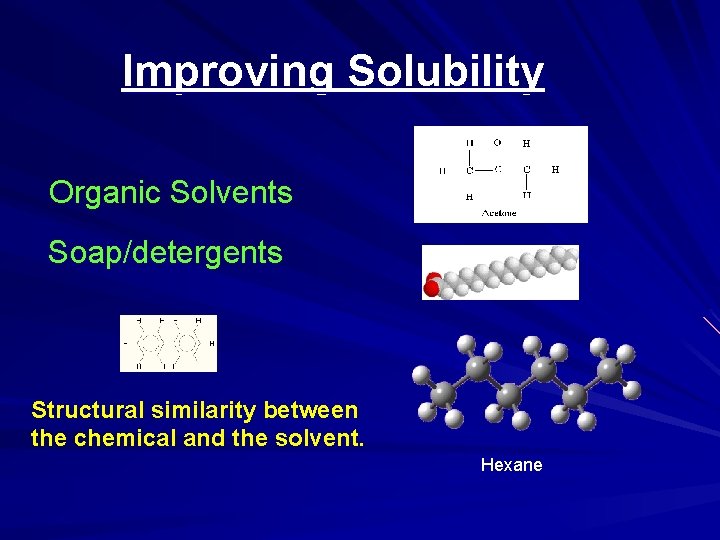
Improving Solubility Organic Solvents Soap/detergents Structural similarity between the chemical and the solvent. Hexane
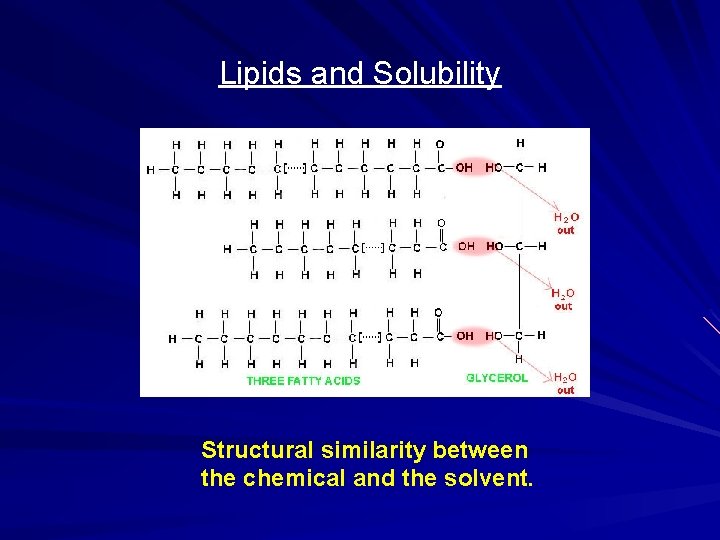
Lipids and Solubility Structural similarity between the chemical and the solvent.
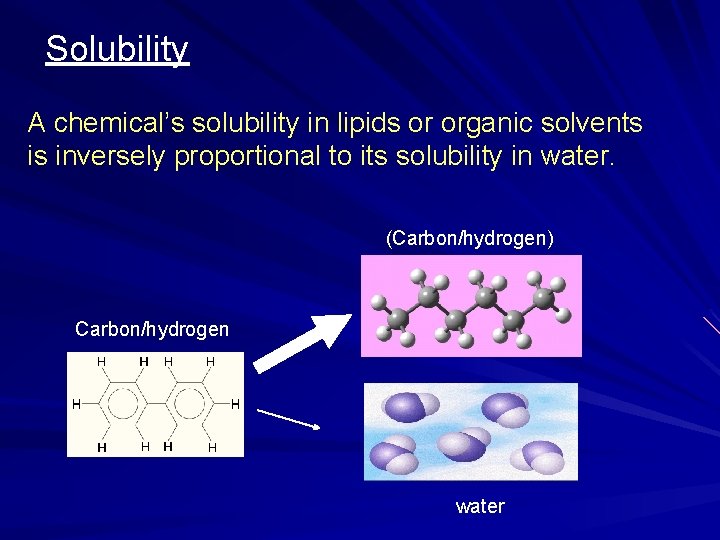
Solubility A chemical’s solubility in lipids or organic solvents is inversely proportional to its solubility in water. (Carbon/hydrogen) Carbon/hydrogen water
Consequences
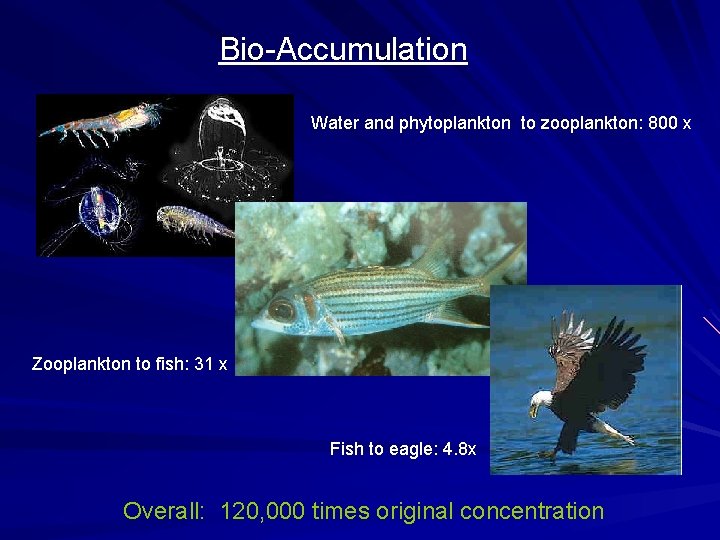
Bio-Accumulation Water and phytoplankton to zooplankton: 800 x Zooplankton to fish: 31 x Fish to eagle: 4. 8 x Overall: 120, 000 times original concentration
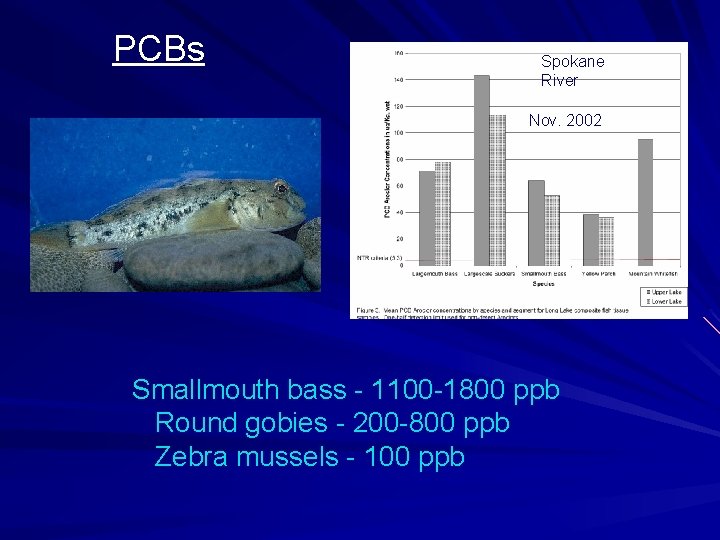
PCBs Spokane River Nov. 2002 Smallmouth bass - 1100 -1800 ppb Round gobies - 200 -800 ppb Zebra mussels - 100 ppb
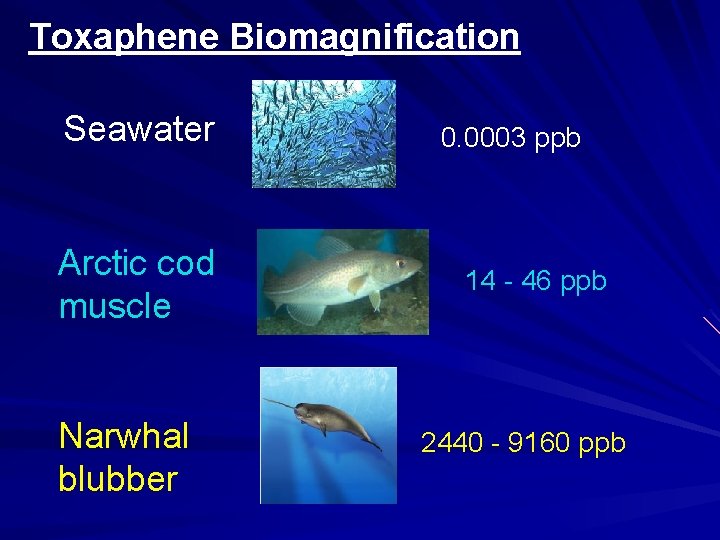
Toxaphene Biomagnification Seawater Arctic cod muscle Narwhal blubber 0. 0003 ppb 14 - 46 ppb 2440 - 9160 ppb
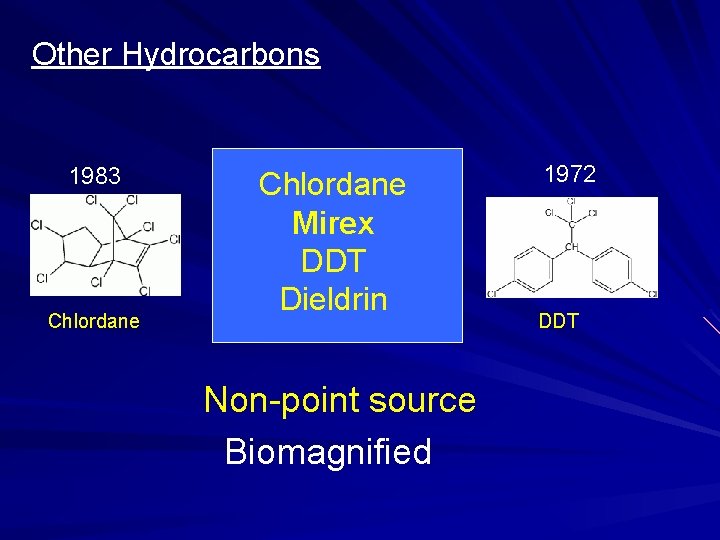
Other Hydrocarbons 1983 Chlordane Mirex DDT Dieldrin Non-point source Biomagnified 1972 DDT
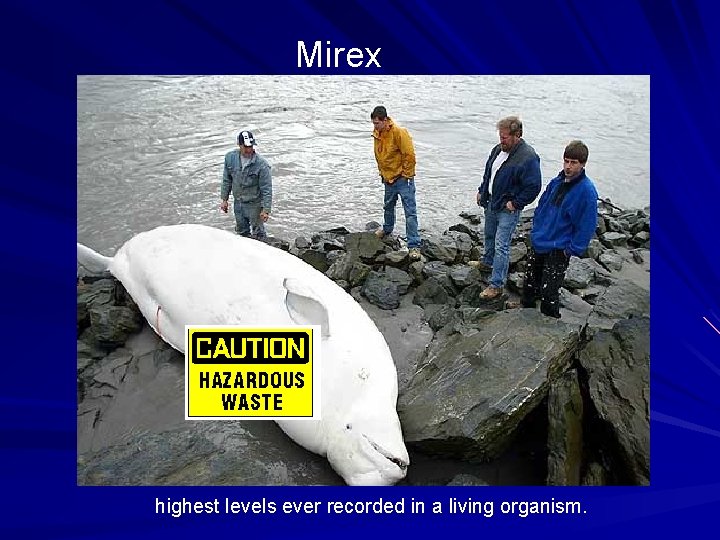
Mirex highest levels ever recorded in a living organism.
Quantification How can soils help?
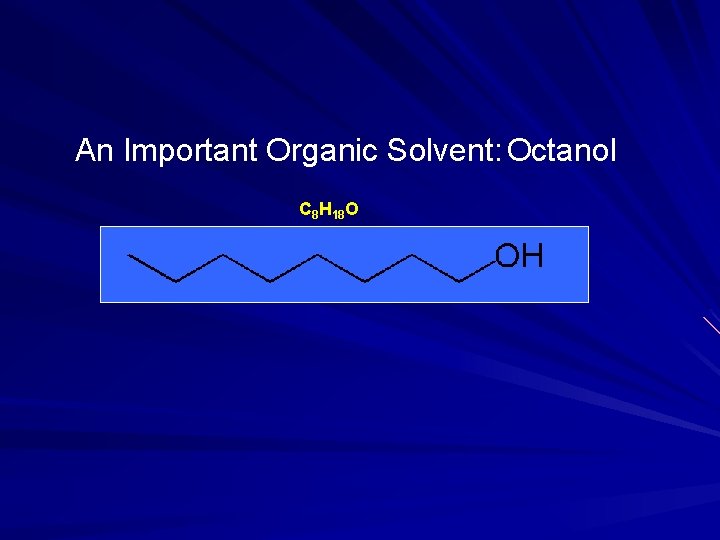
An Important Organic Solvent: Octanol C 8 H 18 O
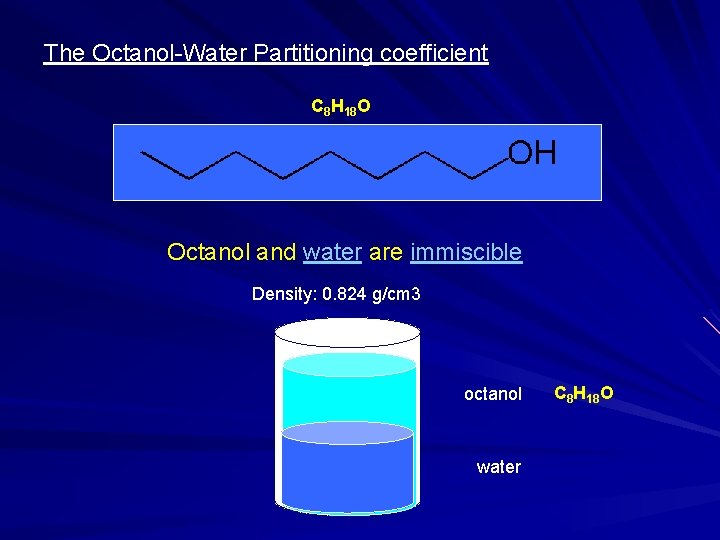
The Octanol-Water Partitioning coefficient C 8 H 18 O Octanol and water are immiscible Density: 0. 824 g/cm 3 octanol water C 8 H 18 O
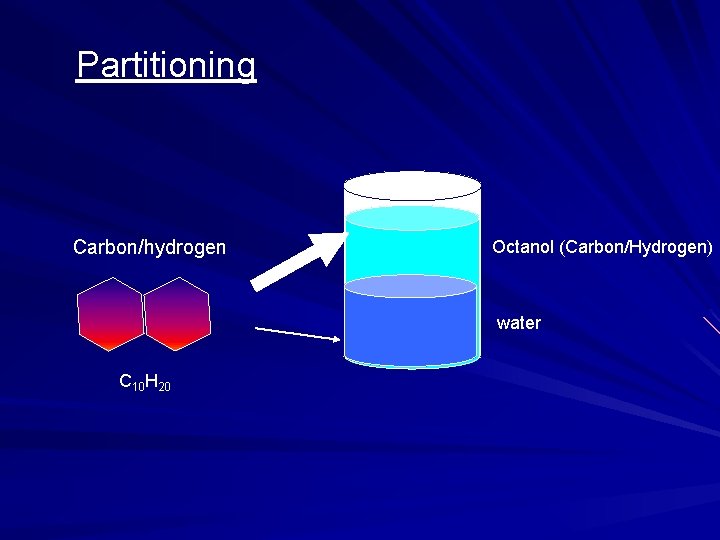
Partitioning Carbon/hydrogen Octanol (Carbon/Hydrogen) water C 10 H 20
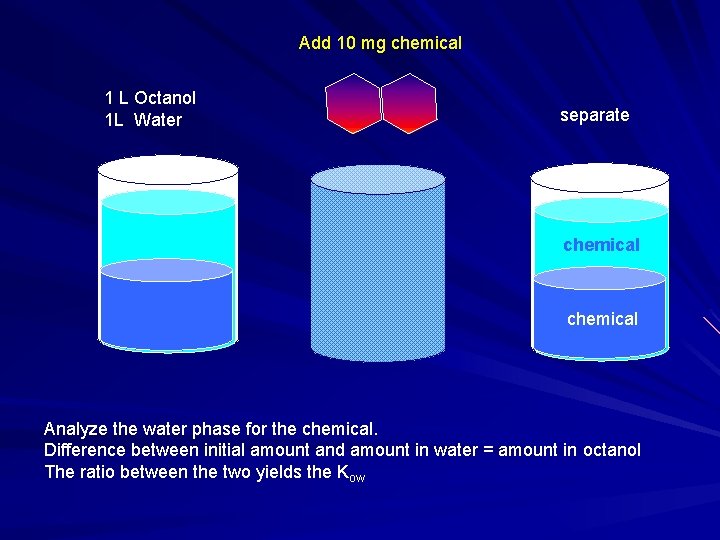
Add 10 mg chemical 1 L Octanol 1 L Water separate chemical Analyze the water phase for the chemical. Difference between initial amount and amount in water = amount in octanol The ratio between the two yields the Kow
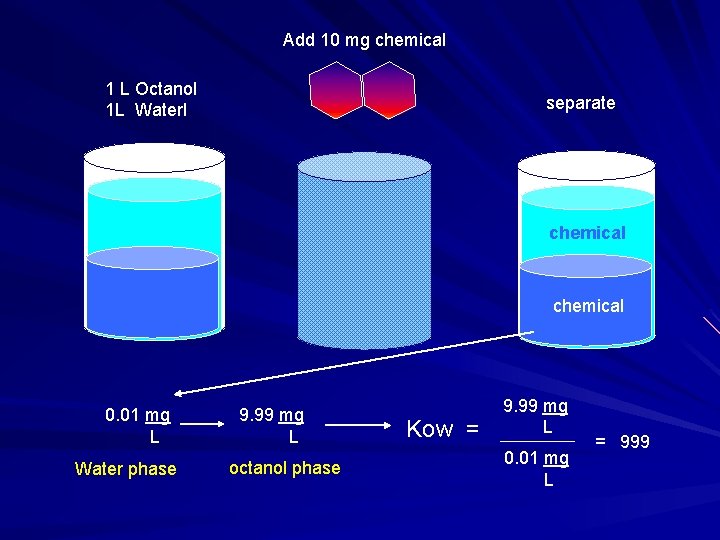
Add 10 mg chemical 1 L Octanol 1 L Waterl separate chemical 0. 01 mg L Water phase 9. 99 mg L octanol phase Kow = 9. 99 mg L 0. 01 mg L = 999
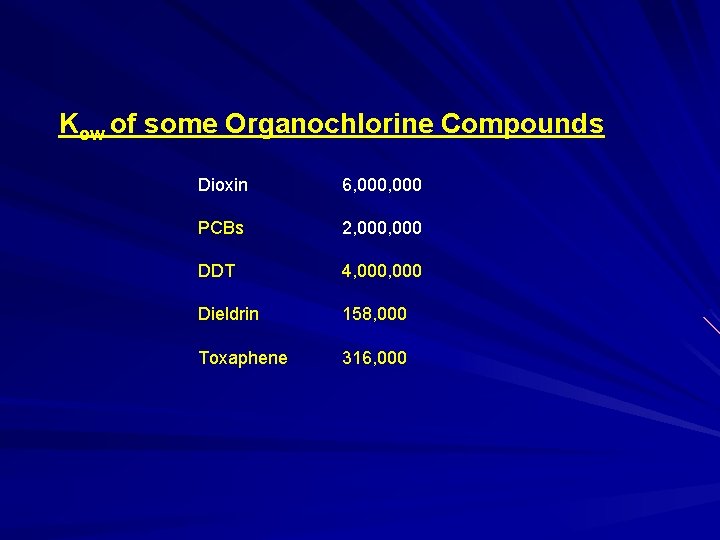
Kow of some Organochlorine Compounds Dioxin 6, 000 PCBs 2, 000 DDT 4, 000 Dieldrin 158, 000 Toxaphene 316, 000
What does this have to do with soils?
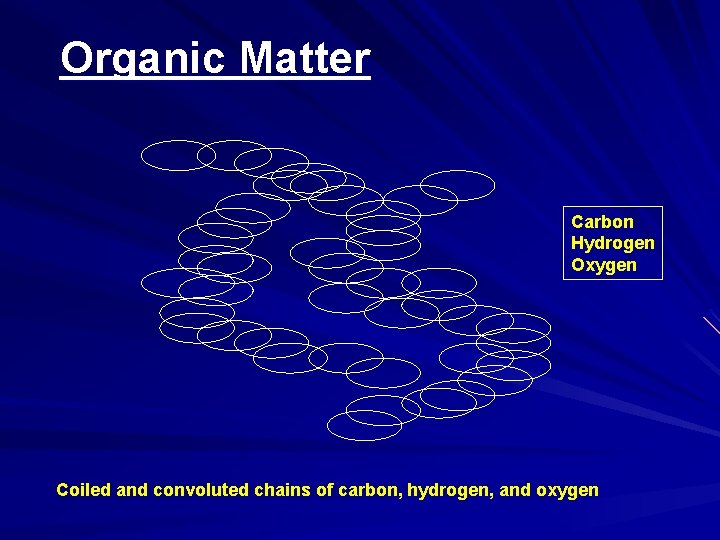
Organic Matter Carbon Hydrogen Oxygen Coiled and convoluted chains of carbon, hydrogen, and oxygen
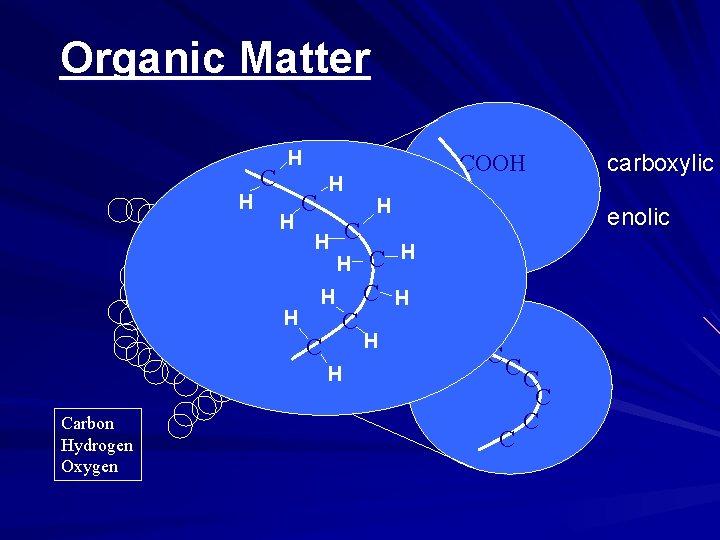
Organic Matter H C H H H C C H Carbon Hydrogen Oxygen COOH H enolic OH C H H CC CC C carboxylic C C C
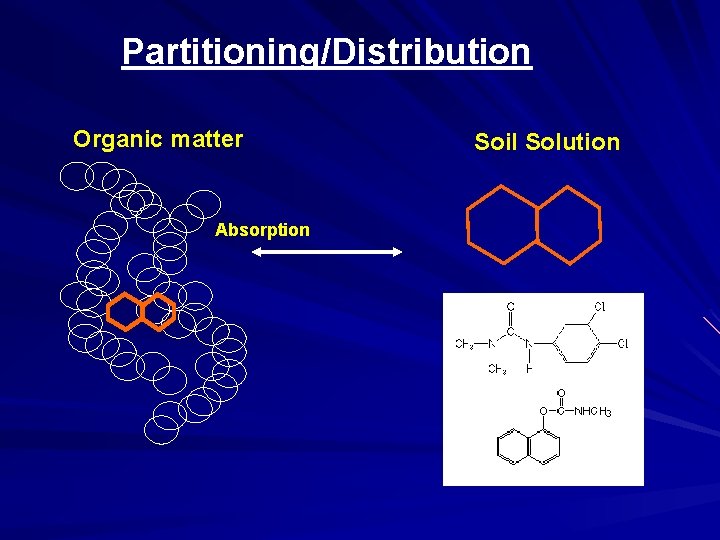
Partitioning/Distribution Organic matter Absorption Soil Solution

Turn 4 pages
Quantifying Partitioning and Absorption in Soils
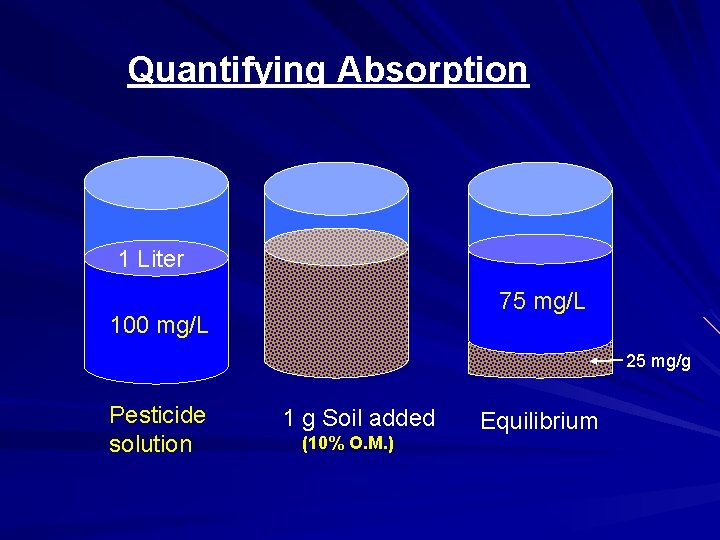
Quantifying Absorption 1 Liter 75 mg/L 100 mg/L 25 mg/g Pesticide solution 1 g Soil added (10% O. M. ) Equilibrium
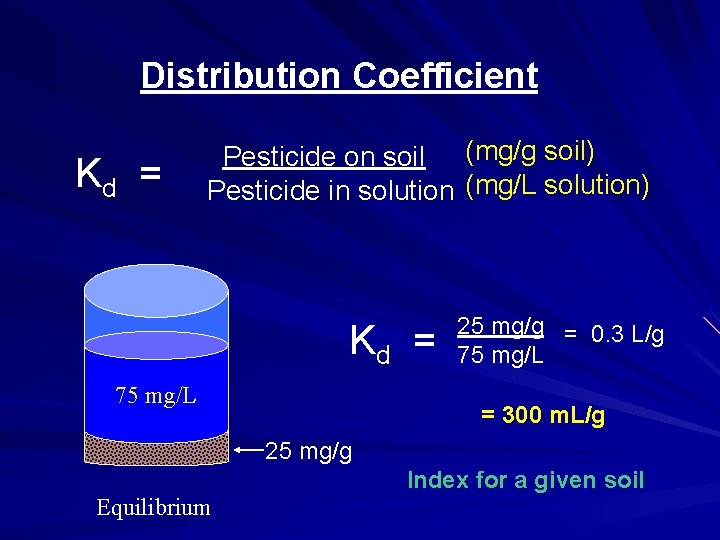
Distribution Coefficient Kd = Pesticide on soil (mg/g soil) Pesticide in solution (mg/L solution) 25 mg/g = 0. 3 L/g 75 mg/L Kd = 75 mg/L = 300 m. L/g 25 mg/g Index for a given soil Equilibrium
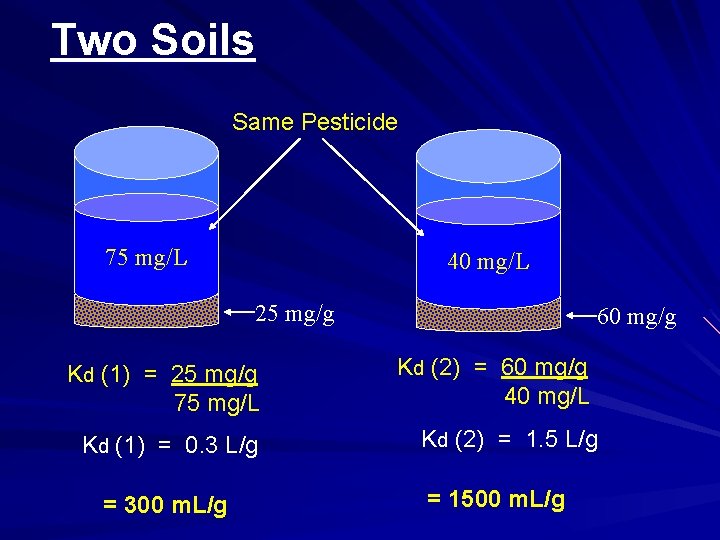
Two Soils Same Pesticide 75 mg/L 40 mg/L 25 mg/g Kd (1) = 25 mg/g 75 mg/L Kd (1) = 0. 3 L/g = 300 m. L/g 60 mg/g Kd (2) = 60 mg/g 40 mg/L Kd (2) = 1. 5 L/g = 1500 m. L/g
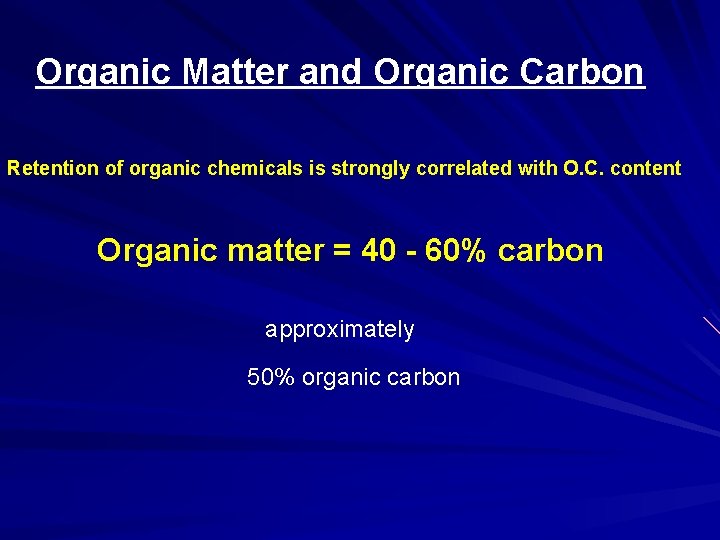
Organic Matter and Organic Carbon Retention of organic chemicals is strongly correlated with O. C. content Organic matter = 40 - 60% carbon approximately 50% organic carbon
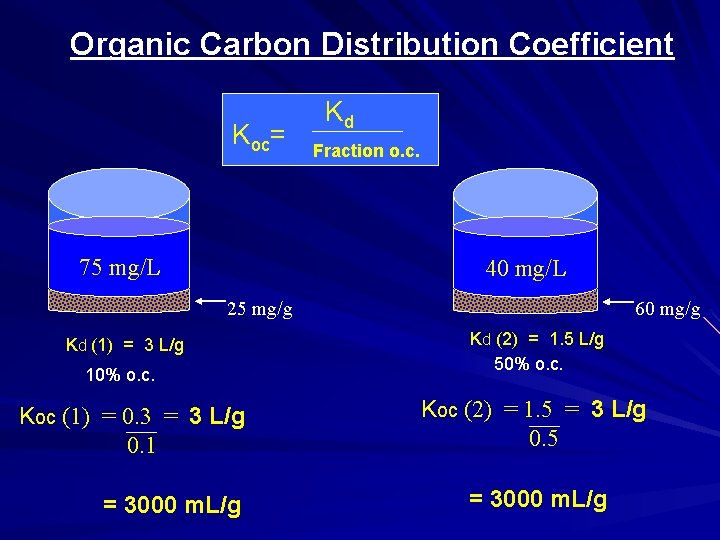
Organic Carbon Distribution Coefficient Koc= 75 mg/L Kd Fraction o. c. 40 mg/L 25 mg/g Kd (1) = 3 L/g 10% o. c. Koc (1) = 0. 3 = 3 L/g 0. 1 = 3000 m. L/g 60 mg/g Kd (2) = 1. 5 L/g 50% o. c. Koc (2) = 1. 5 = 3 L/g 0. 5 = 3000 m. L/g
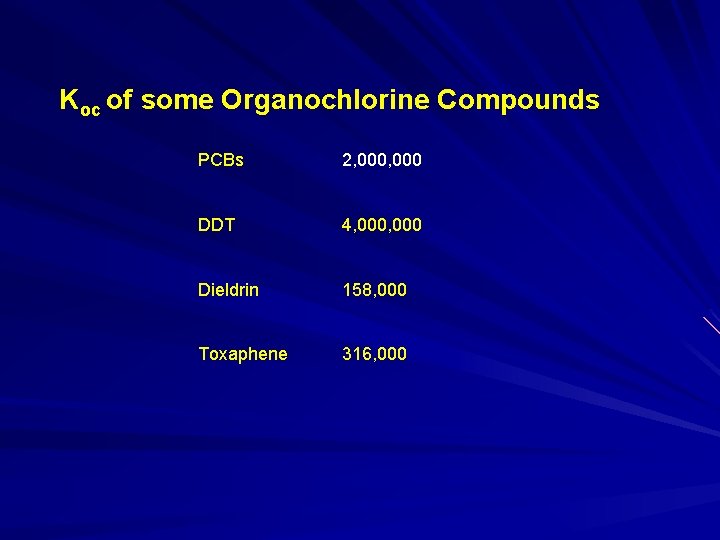
Koc of some Organochlorine Compounds PCBs 2, 000 DDT 4, 000 Dieldrin 158, 000 Toxaphene 316, 000
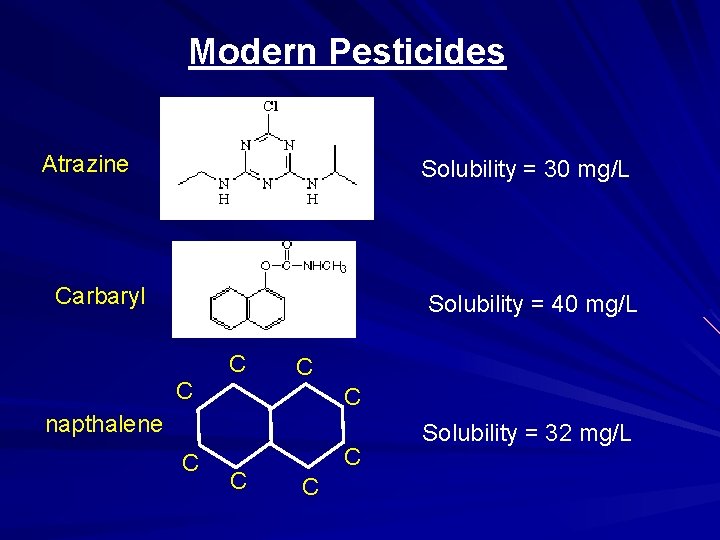
Modern Pesticides Atrazine Solubility = 30 mg/L Carbaryl Solubility = 40 mg/L C C napthalene C C Solubility = 32 mg/L
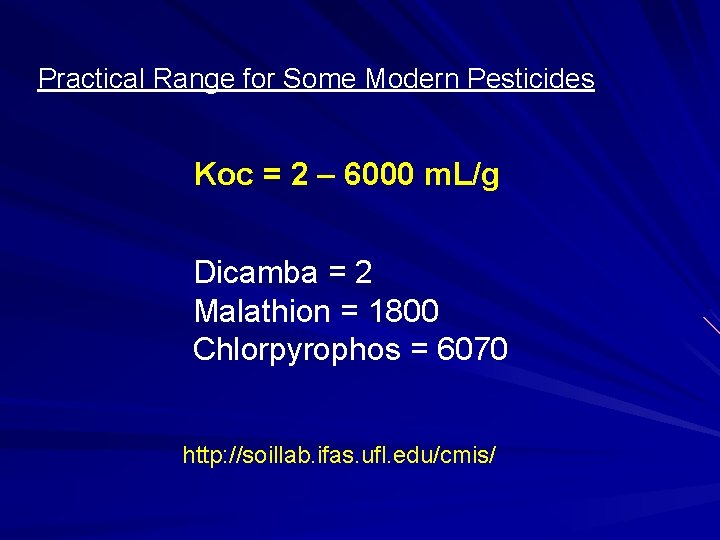
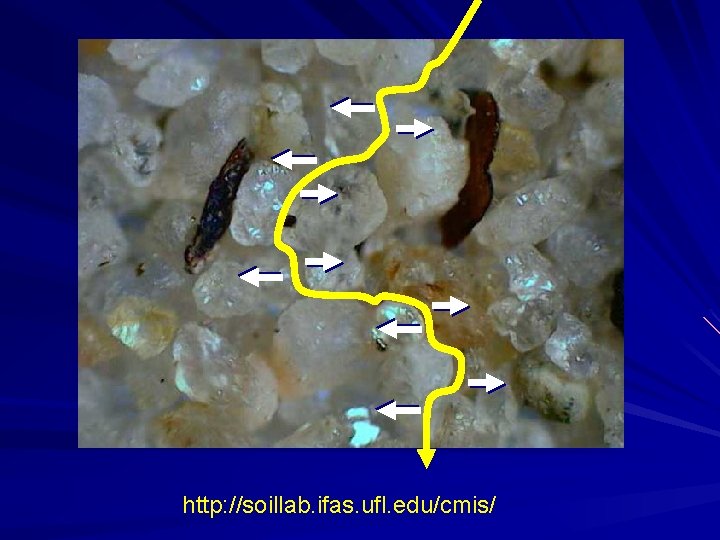
Practical Range for Some Modern Pesticides Koc = 2 – 6000 m. L/g Dicamba = 2 Malathion = 1800 Chlorpyrophos = 6070 http: //soillab. ifas. ufl. edu/cmis/
http: //soillab. ifas. ufl. edu/cmis/
Summary 1. 2. 3. 4. 5. 6. 6. 7. 7. 8. 8. 9. Many organic compound are non-polar Non-polar compounds are weakly soluble in water Non-polar compounds are soluble in organic solvents. Organic matter can behave like an organic solvent Kow describes the distribution of a chemical between the organic solvent, octanol, and the soil solution. Koc describes the distribution of a chemical between soil organic carbon and the soil solution. Koc will impact the movement and distribution of organic chemicals in soils. Organic chemicals degrade. The ½ life is an indicator of the chemicals relative persistence.
- Slides: 36