
Exam 2 F 41 bring cheat sheet QA
Exam #2 F 4/1 (bring cheat sheet) • Q&A Th 3/31 TBA Today: Material Transport
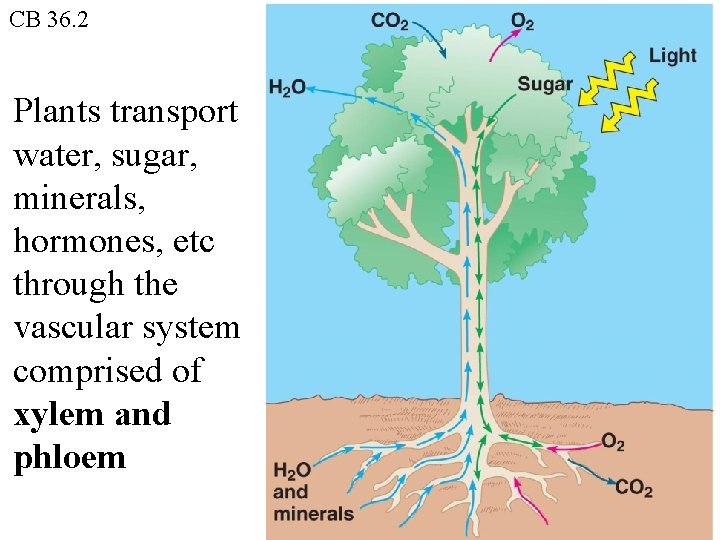
CB 36. 2 Plants transport water, sugar, minerals, hormones, etc through the vascular system comprised of xylem and phloem
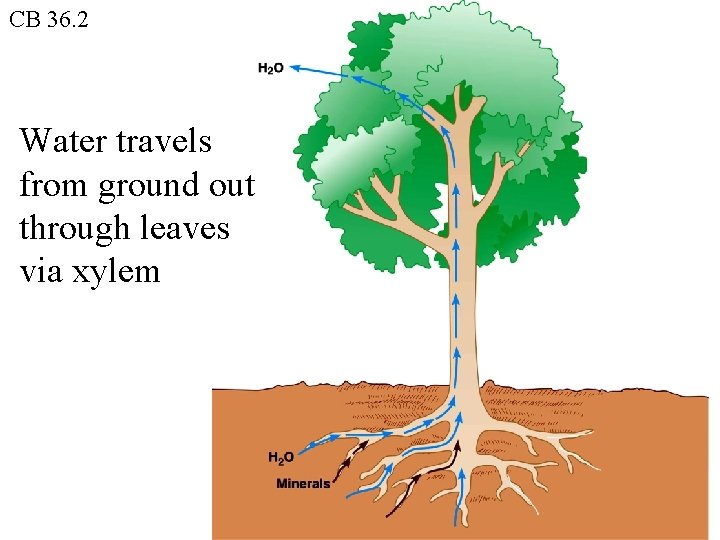
CB 36. 2 Water travels from ground out through leaves via xylem
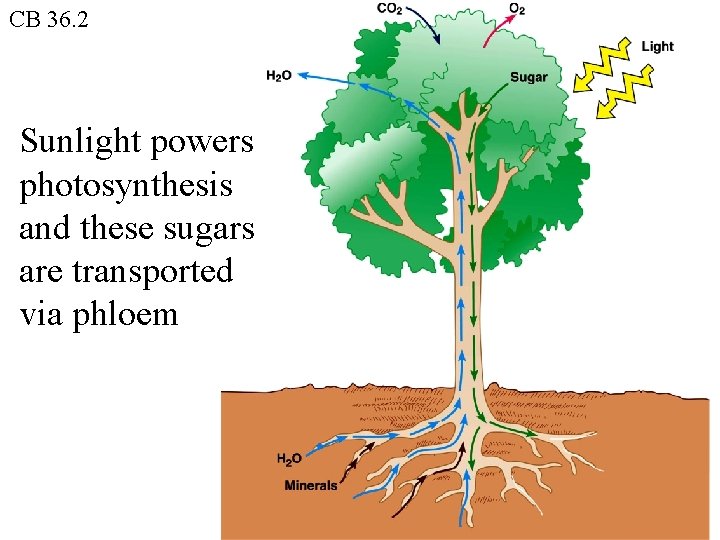
CB 36. 2 Sunlight powers photosynthesis and these sugars are transported via phloem
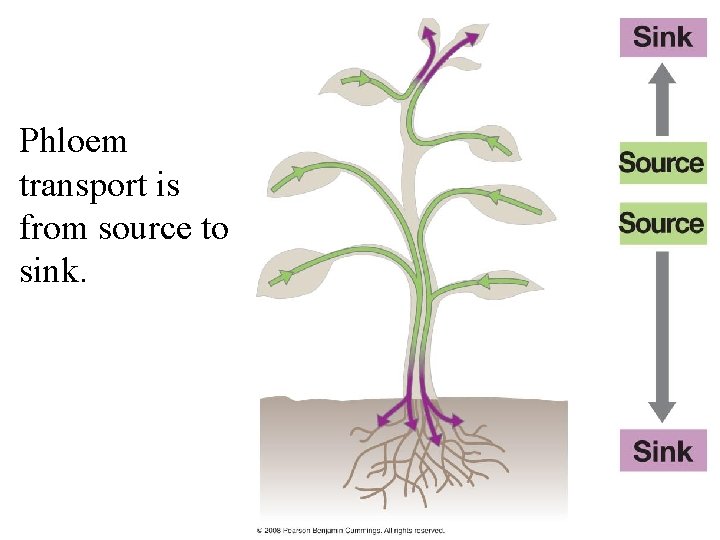
Phloem transport is from source to sink.
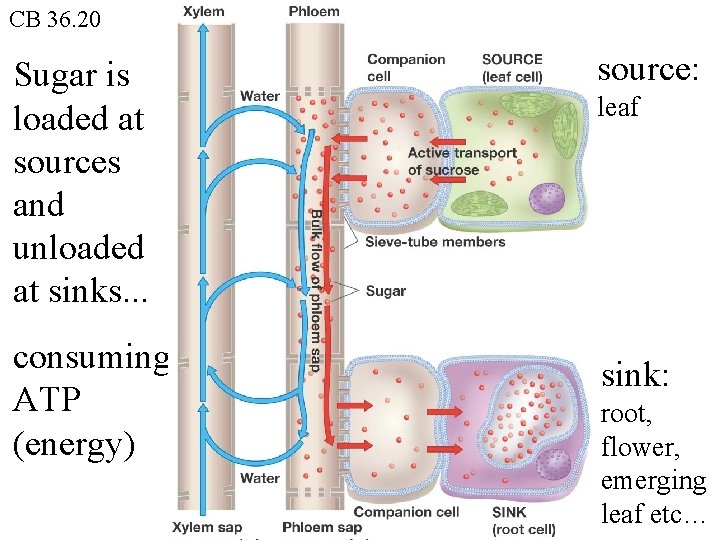
CB 36. 20 Sugar is loaded at sources and unloaded at sinks. . . consuming ATP (energy) source: leaf sink: root, flower, emerging leaf etc…
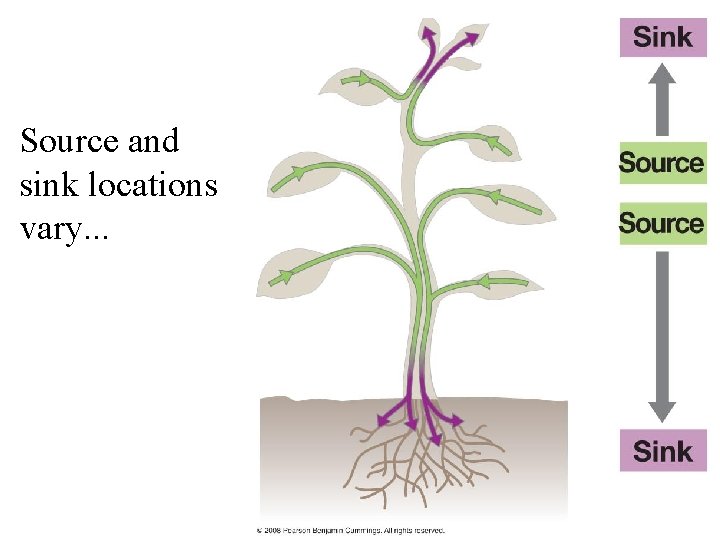
Source and sink locations vary. . .
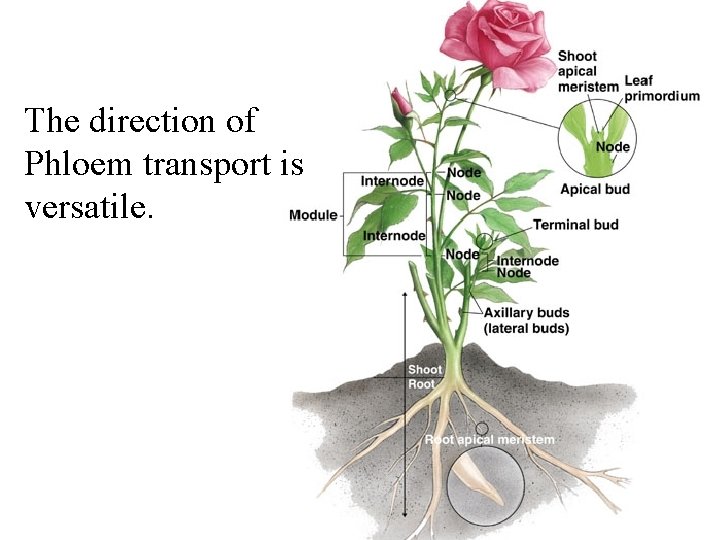
The direction of Phloem transport is versatile.
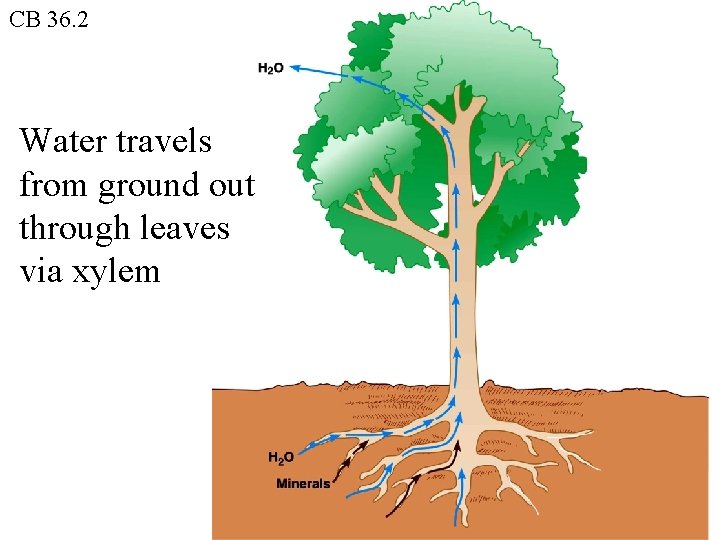
CB 36. 2 Water travels from ground out through leaves via xylem
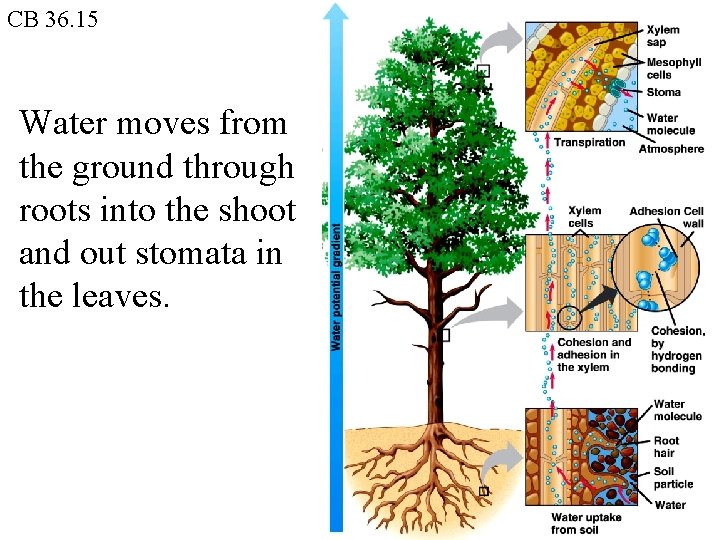
CB 36. 15 Water moves from the ground through roots into the shoot and out stomata in the leaves.
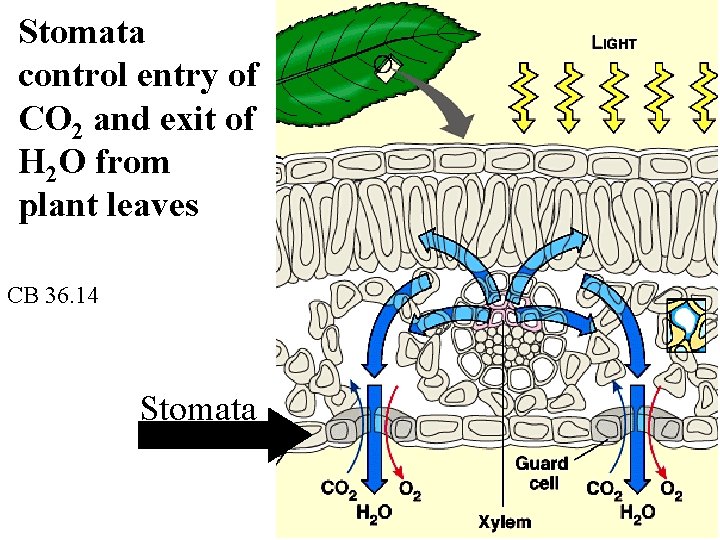
Stomata control entry of CO 2 and exit of H 2 O from plant leaves CB 36. 14 Stomata
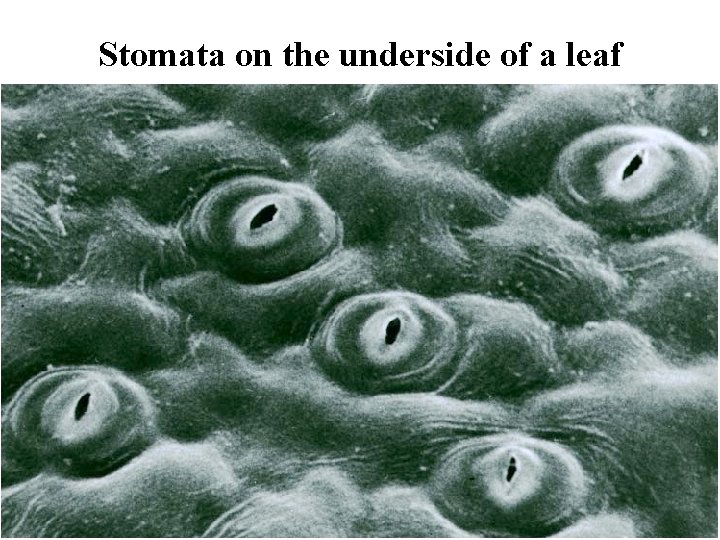
Stomata on the underside of a leaf
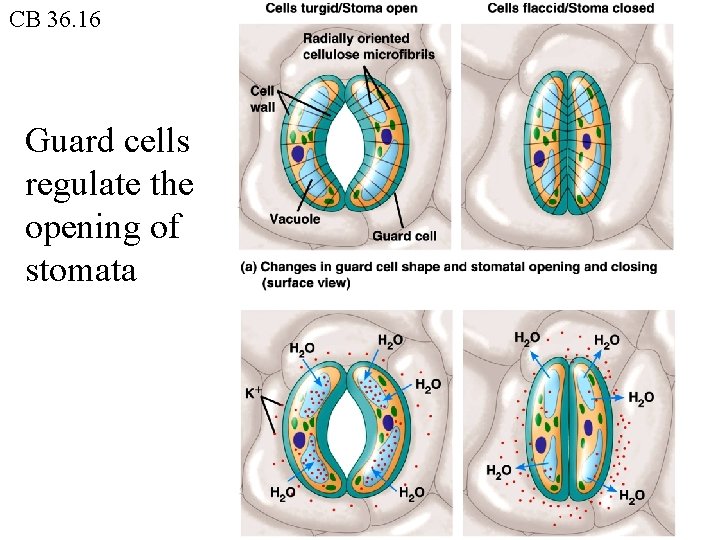
CB 36. 16 Guard cells regulate the opening of stomata
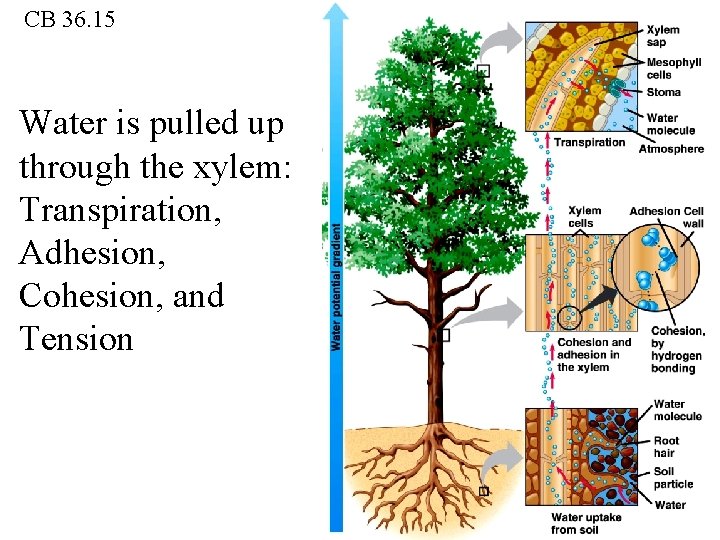
CB 36. 15 Water is pulled up through the xylem: Transpiration, Adhesion, Cohesion, and Tension
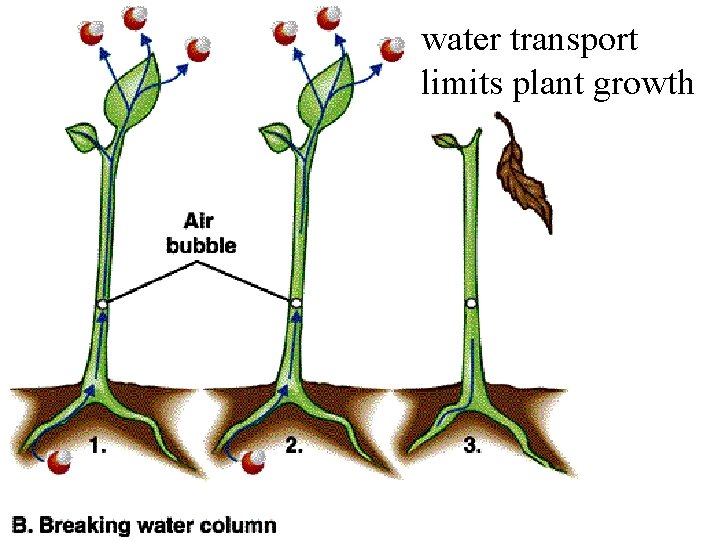
water transport limits plant growth
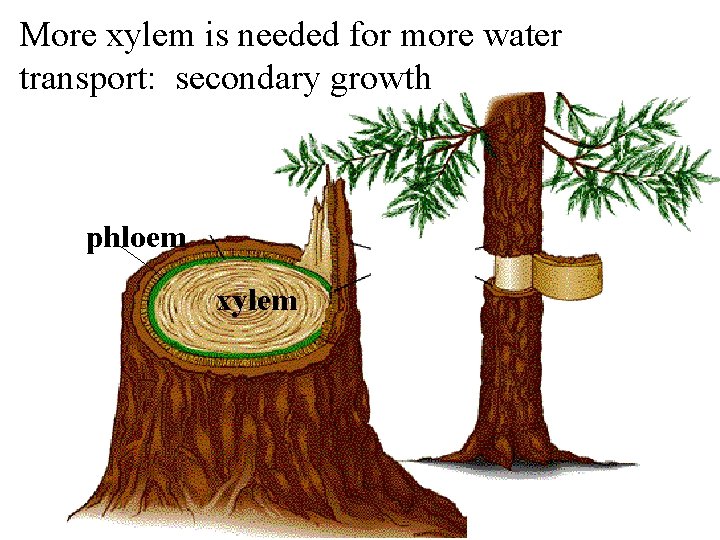
More xylem is needed for more water transport: secondary growth phloem xylem
CB 35. 11 Primary vs. secondary growth
CB 35. 19 Primary growth in a stem
CB 35. 19 Secondary growth: a vascular meristem (cambium) forms between the xylem and phloem
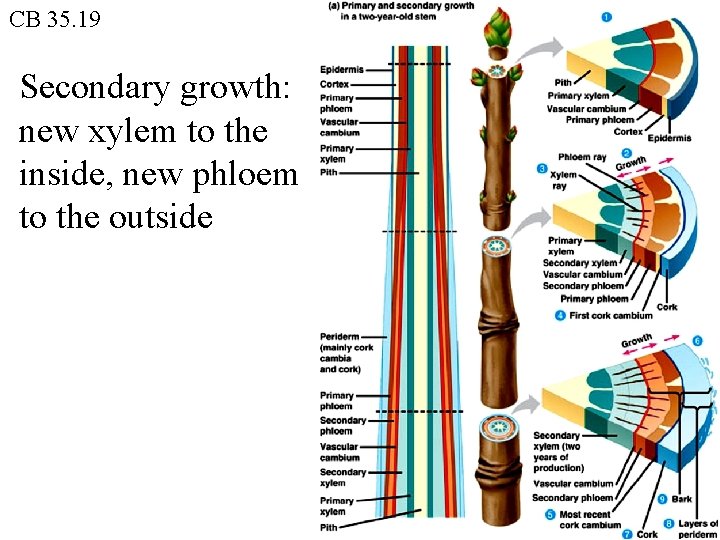
CB 35. 19 Secondary growth: new xylem to the inside, new phloem to the outside
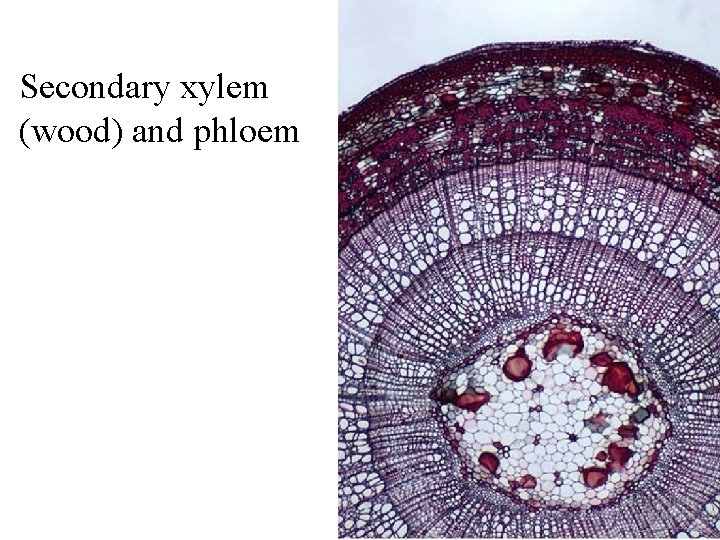
Secondary xylem (wood) and phloem
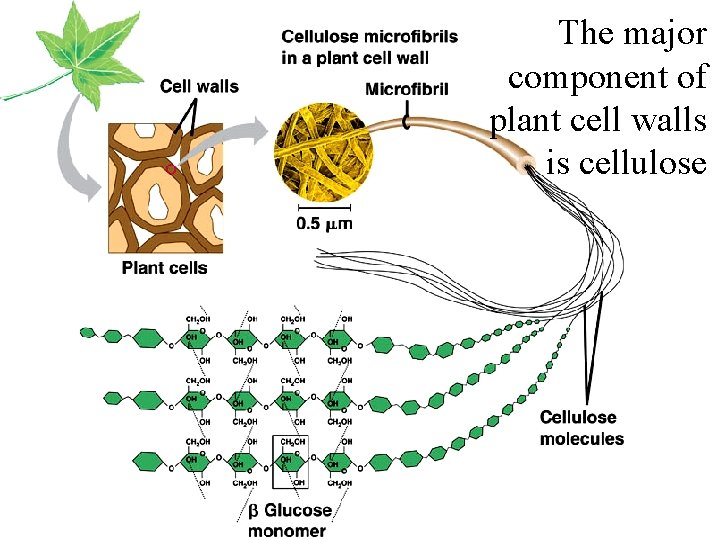
The major component of plant cell walls is cellulose
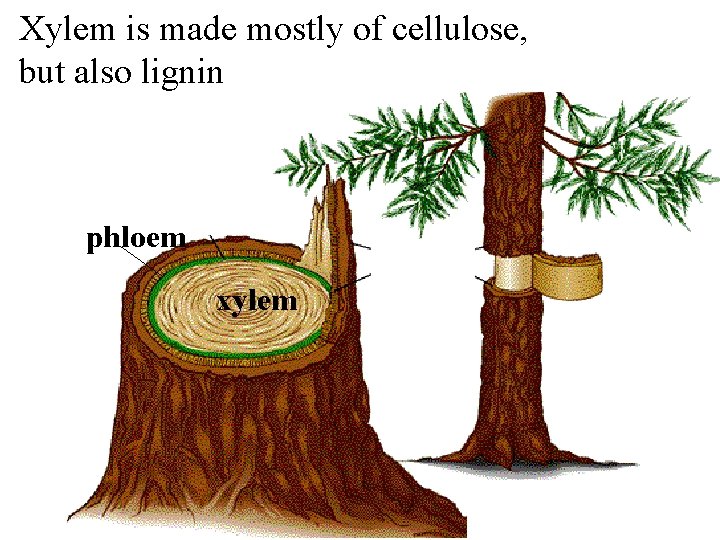
Xylem is made mostly of cellulose, but also lignin phloem xylem
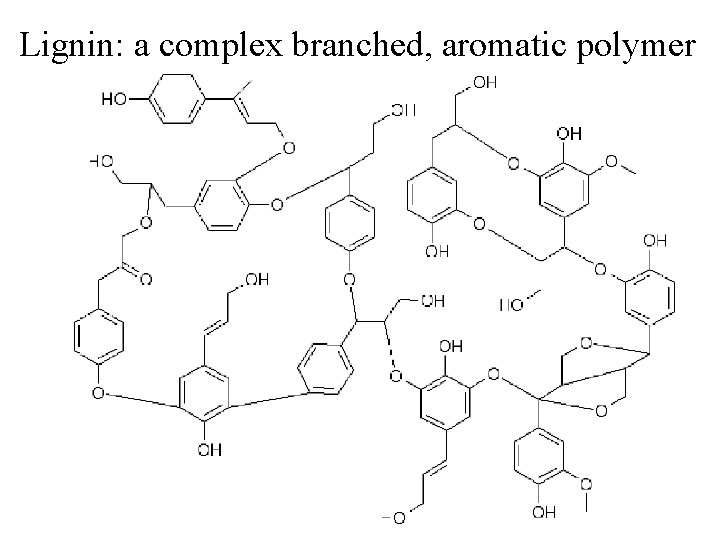
Lignin: a complex branched, aromatic polymer
Lignin cross -links cellulose fibers and makes xylem waterproof http: //www. ccrc. uga. edu/~mao/intro/ouline. htm
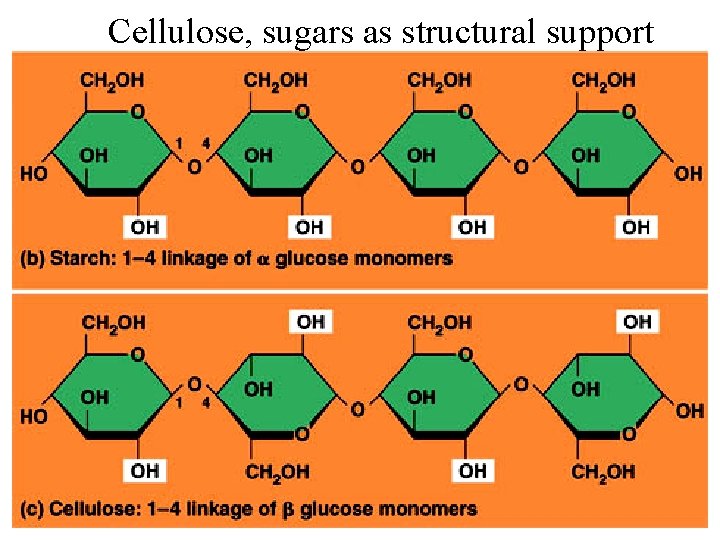
Cellulose, sugars as structural support
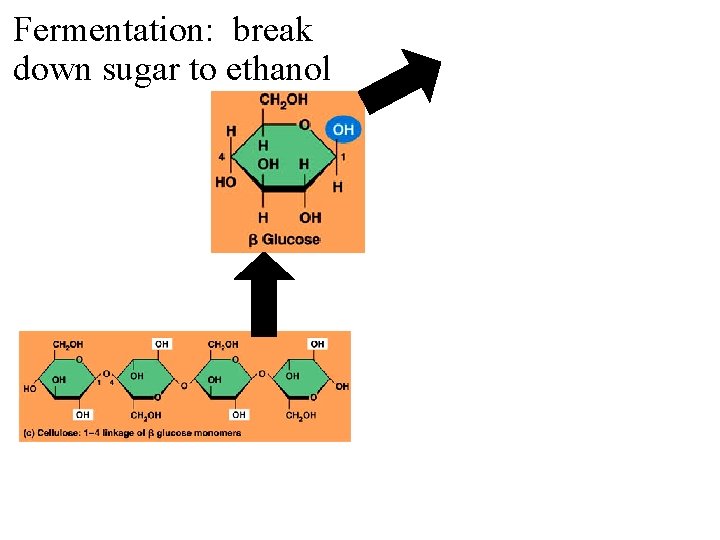
Fermentation: break down sugar to ethanol

http: //www. iogen. ca/images/m 1 _fuel_cycle 2. jpg
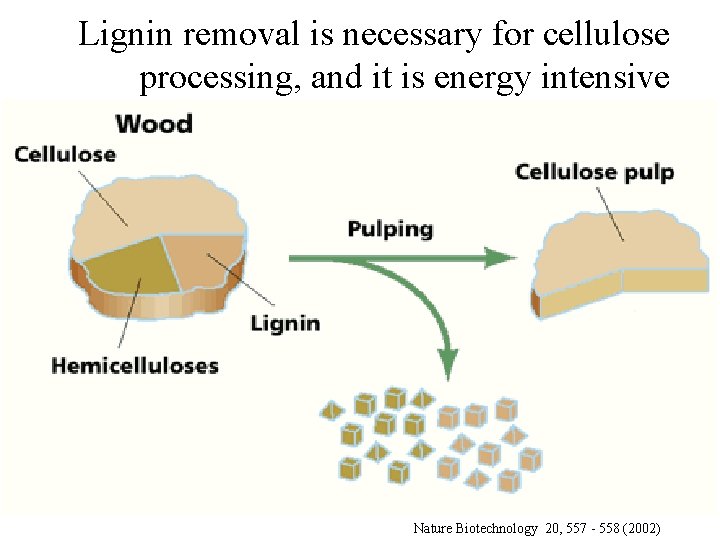
Lignin removal is necessary for cellulose processing, and it is energy intensive Nature Biotechnology 20, 557 - 558 (2002)
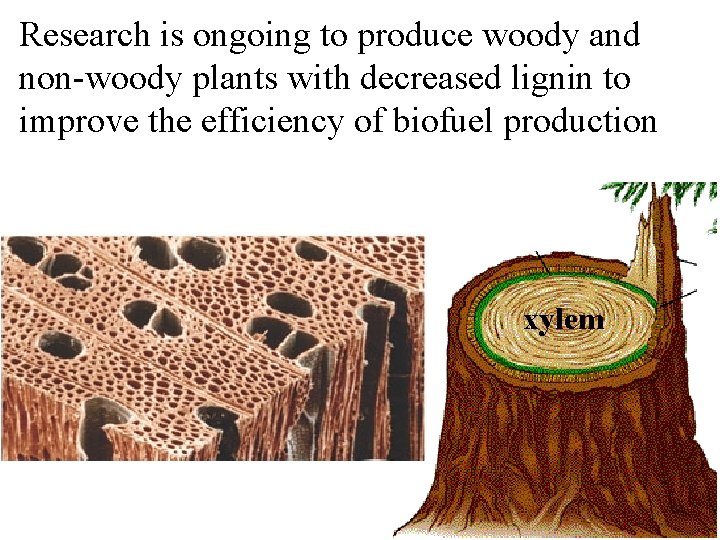
Research is ongoing to produce woody and non-woody plants with decreased lignin to improve the efficiency of biofuel production xylem
Treatment efficiencies of untreated transgenic biomass are comparable to that of unmodified biomass subjected to pretreatment Loosening lignin's grip on biofuel production Clint Chapple, Michael Ladisch & Rick Meilan Nature Biotechnology 25, 746 - 748 (2007)
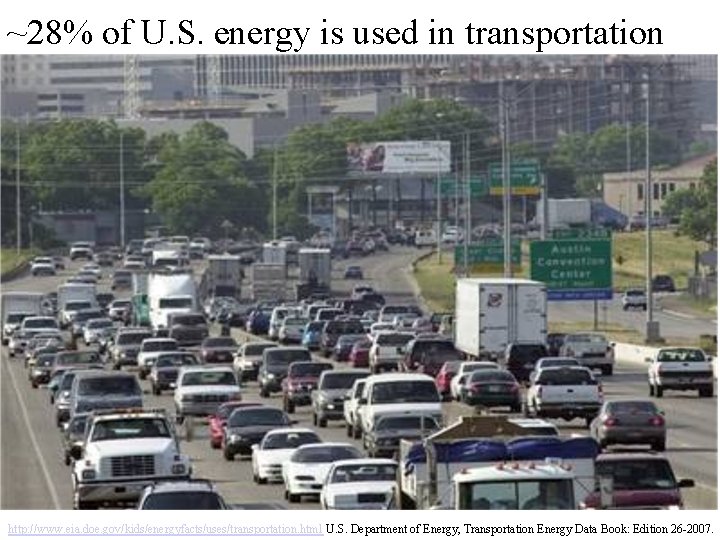
~28% of U. S. energy is used in transportation http: //www. eia. doe. gov/kids/energyfacts/uses/transportation. html U. S. Department of Energy, Transportation Energy Data Book: Edition 26 -2007.
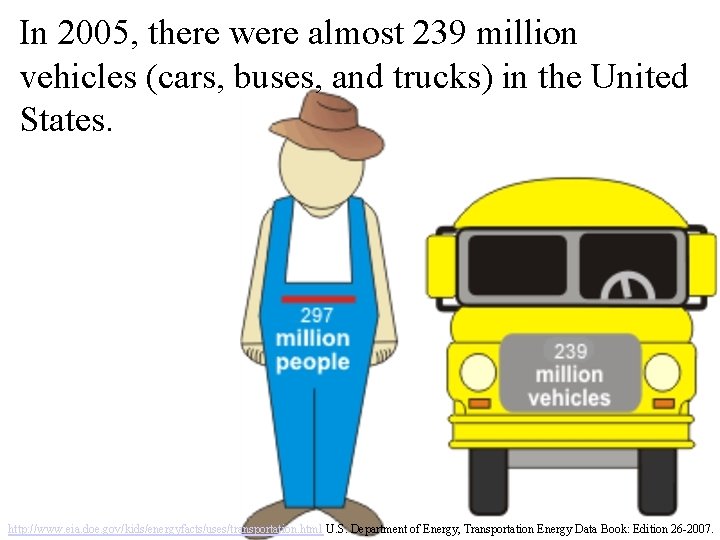
In 2005, there were almost 239 million vehicles (cars, buses, and trucks) in the United States. http: //www. eia. doe. gov/kids/energyfacts/uses/transportation. html U. S. Department of Energy, Transportation Energy Data Book: Edition 26 -2007.
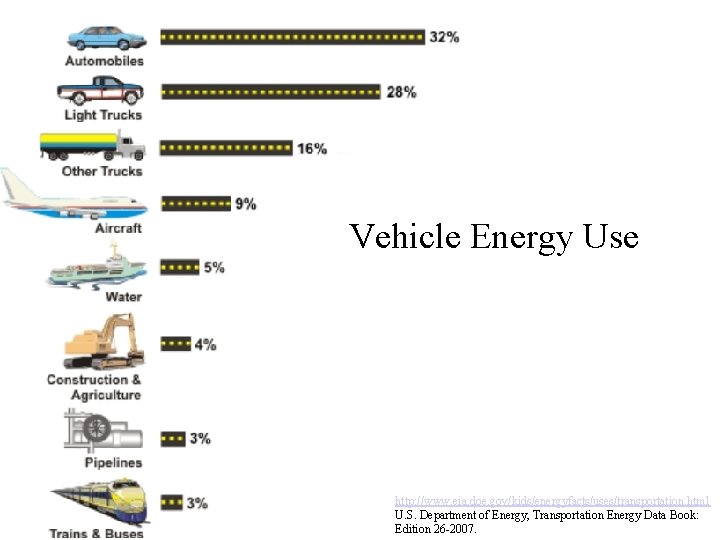
Vehicle Energy Use http: //www. eia. doe. gov/kids/energyfacts/uses/transportation. html U. S. Department of Energy, Transportation Energy Data Book: Edition 26 -2007.
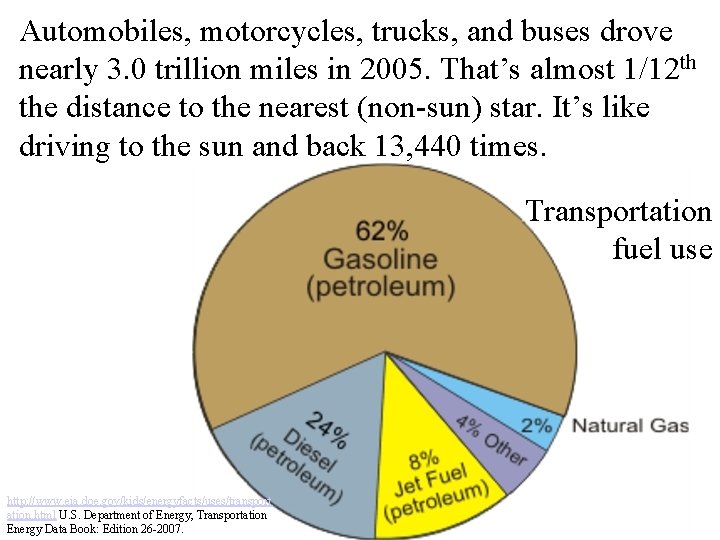
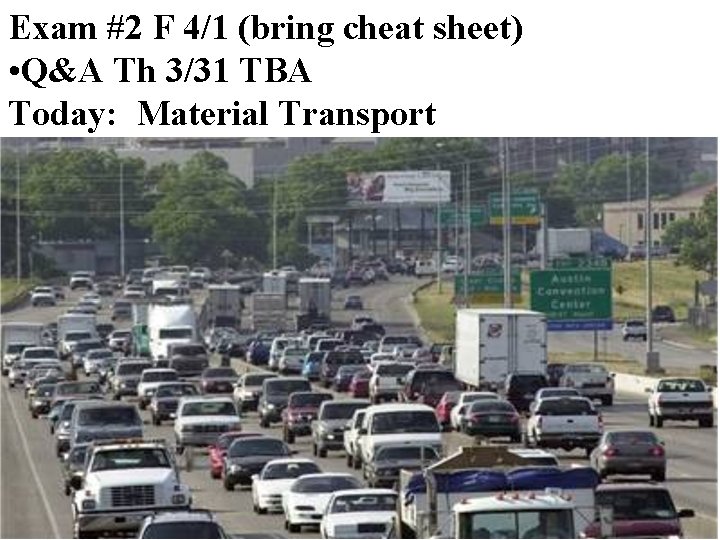
Automobiles, motorcycles, trucks, and buses drove nearly 3. 0 trillion miles in 2005. That’s almost 1/12 th the distance to the nearest (non-sun) star. It’s like driving to the sun and back 13, 440 times. Transportation fuel use http: //www. eia. doe. gov/kids/energyfacts/uses/transport ation. html U. S. Department of Energy, Transportation Energy Data Book: Edition 26 -2007.
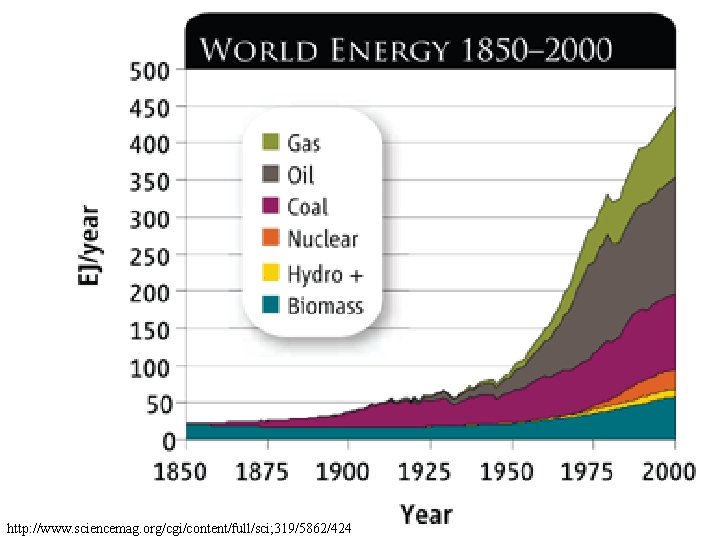
http: //www. sciencemag. org/cgi/content/full/sci; 319/5862/424
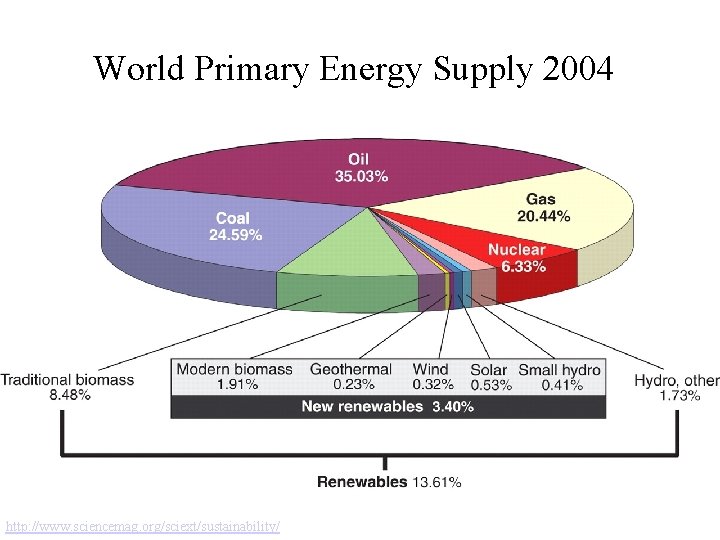
World Primary Energy Supply 2004 http: //www. sciencemag. org/sciext/sustainability/

http: //www. iogen. ca/images/m 1 _fuel_cycle 2. jpg
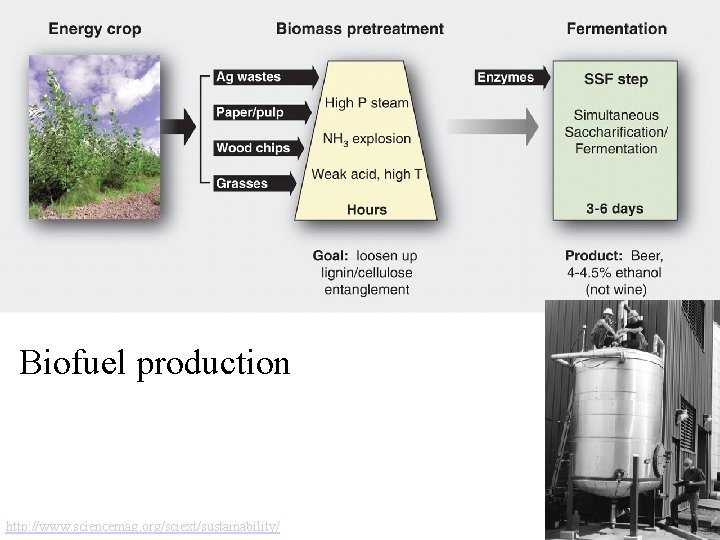
Biofuel production http: //www. sciencemag. org/sciext/sustainability/
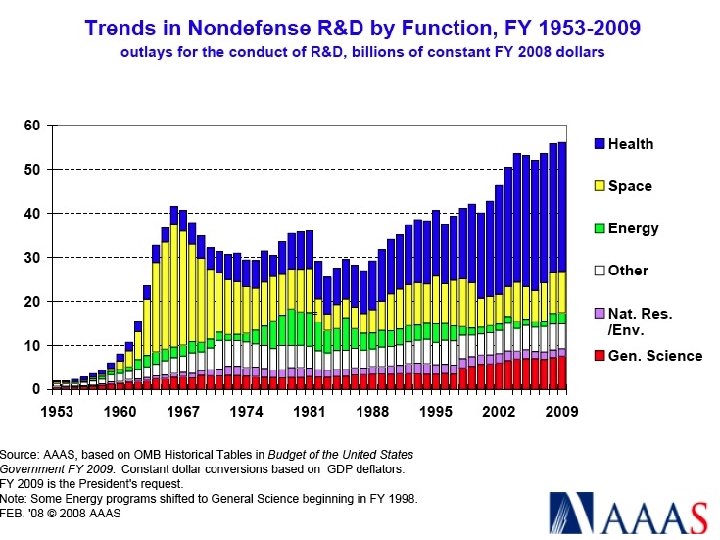
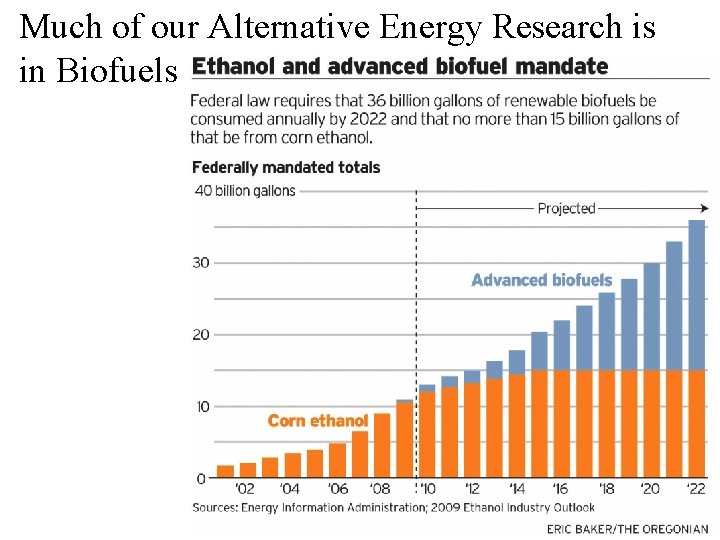
Much of our Alternative Energy Research is in Biofuels
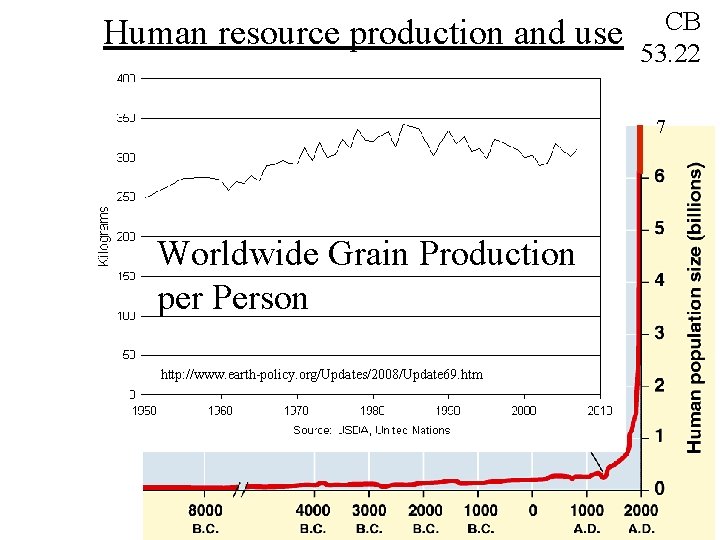
Human resource production and use CB 53. 22 7 Worldwide Grain Production per Person http: //www. earth-policy. org/Updates/2008/Update 69. htm
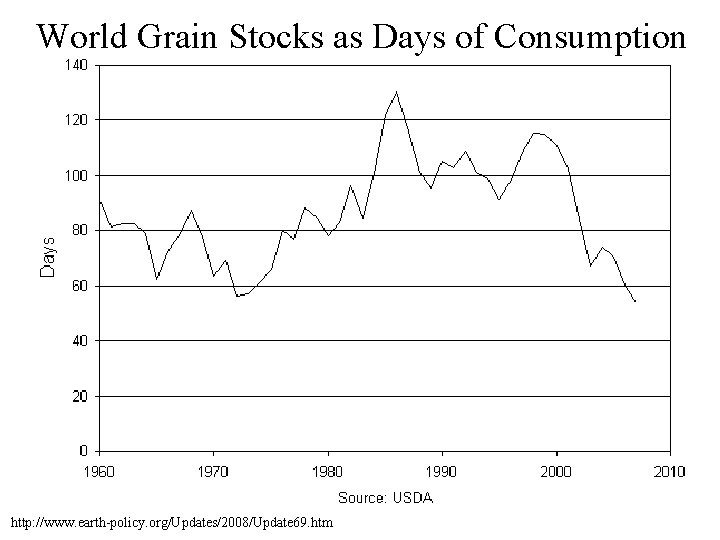
World Grain Stocks as Days of Consumption http: //www. earth-policy. org/Updates/2008/Update 69. htm
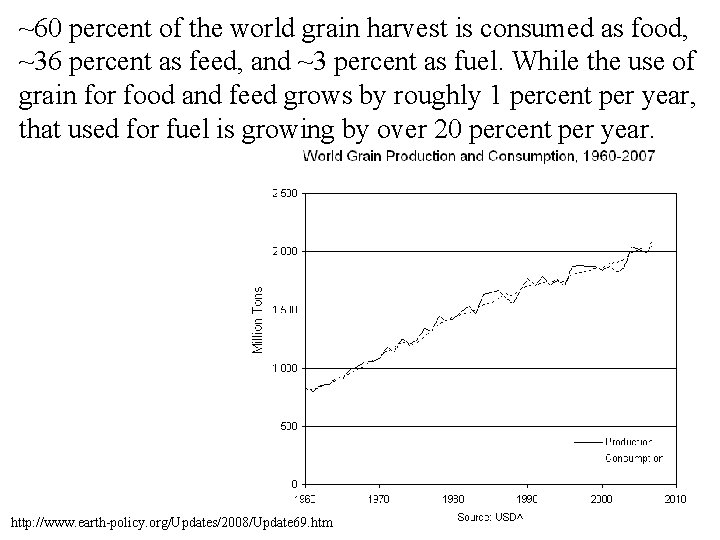
~60 percent of the world grain harvest is consumed as food, ~36 percent as feed, and ~3 percent as fuel. While the use of grain for food and feed grows by roughly 1 percent per year, that used for fuel is growing by over 20 percent per year. http: //www. earth-policy. org/Updates/2008/Update 69. htm
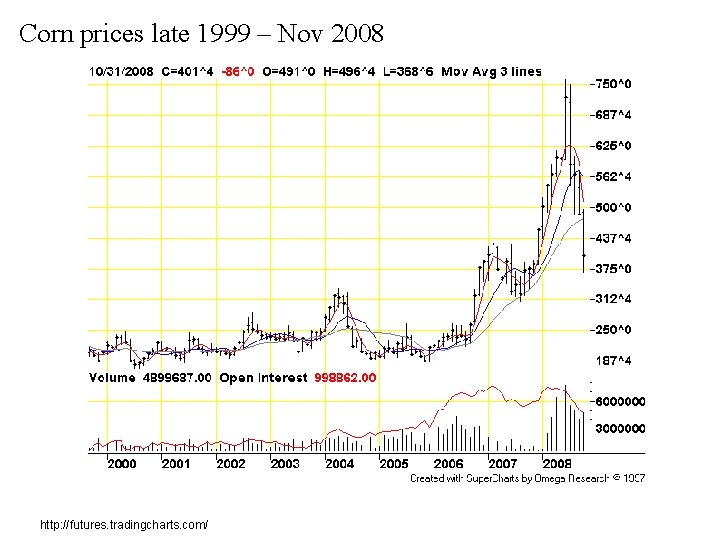
Corn prices late 1999 – Nov 2008 http: //futures. tradingcharts. com/
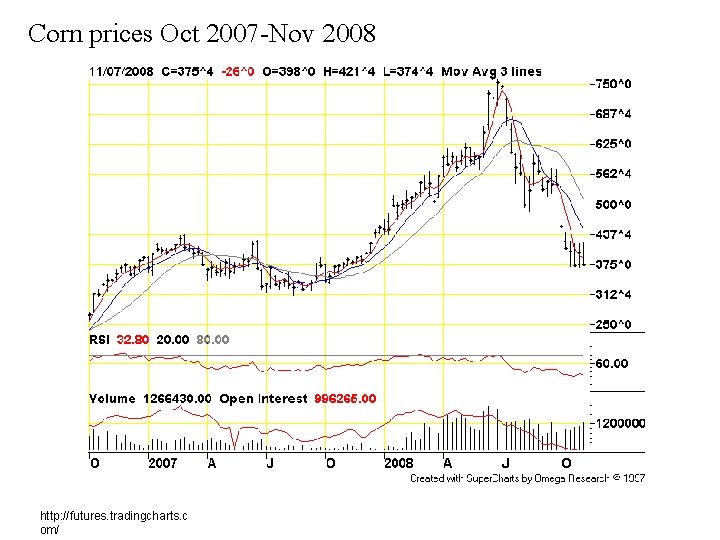
Corn prices Oct 2007 -Nov 2008 http: //futures. tradingcharts. c om/
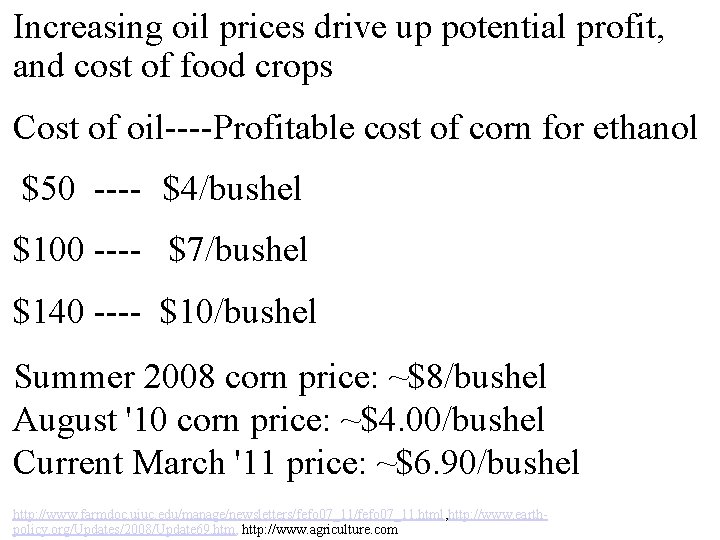
Increasing oil prices drive up potential profit, and cost of food crops Cost of oil----Profitable cost of corn for ethanol $50 ---- $4/bushel $100 ---- $7/bushel $140 ---- $10/bushel Summer 2008 corn price: ~$8/bushel August '10 corn price: ~$4. 00/bushel Current March '11 price: ~$6. 90/bushel http: //www. farmdoc. uiuc. edu/manage/newsletters/fefo 07_11. html, http: //www. earthpolicy. org/Updates/2008/Update 69. htm, http: //www. agriculture. com
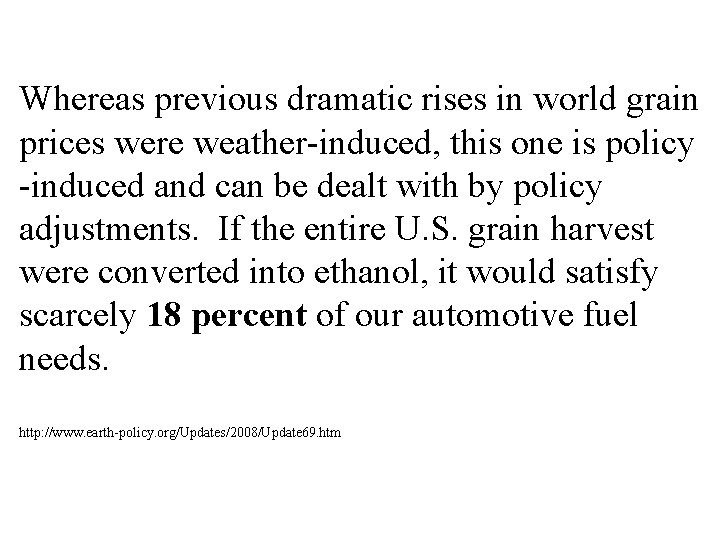
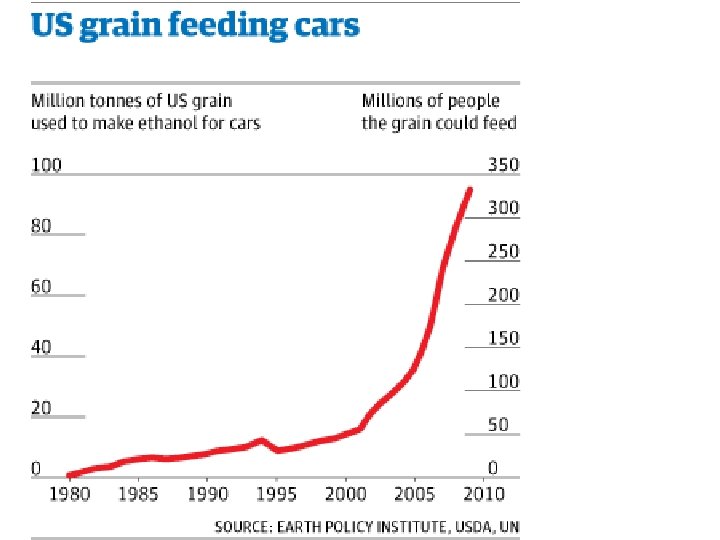
Whereas previous dramatic rises in world grain prices were weather-induced, this one is policy -induced and can be dealt with by policy adjustments. If the entire U. S. grain harvest were converted into ethanol, it would satisfy scarcely 18 percent of our automotive fuel needs. http: //www. earth-policy. org/Updates/2008/Update 69. htm
Exam #2 F 4/1 (bring cheat sheet) • Q&A Th 3/31 TBA Today: Material Transport
- Slides: 51