
EVS TEACHING IS MADE STUDENT FRIENDLY IN PRIMARY
- Slides: 29
EVS TEACHING IS MADE STUDENT FRIENDLY IN PRIMARY CLASSES A presentation by S. CHAKRABORTY
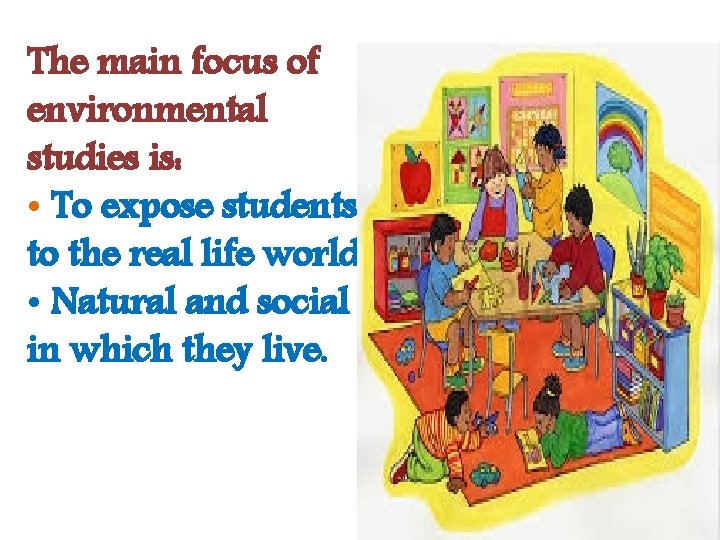
The main focus of environmental studies is: • To expose students to the real life world • Natural and social in which they live.
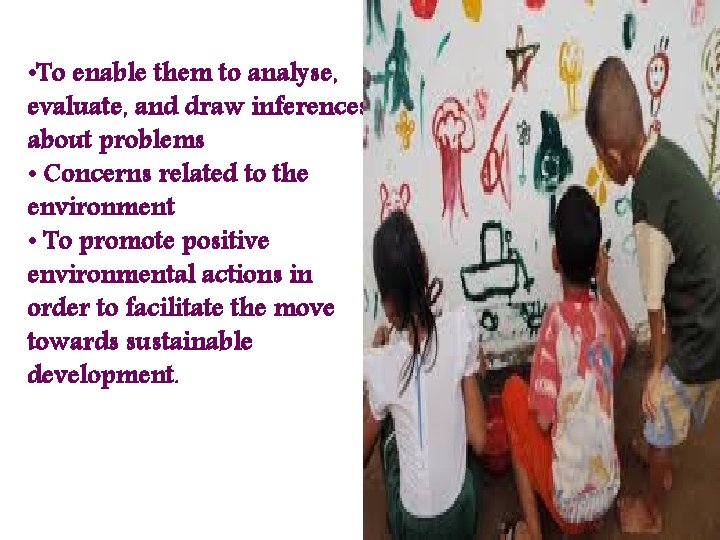
• To enable them to analyse, evaluate, and draw inferences about problems • Concerns related to the environment • To promote positive environmental actions in order to facilitate the move towards sustainable development.
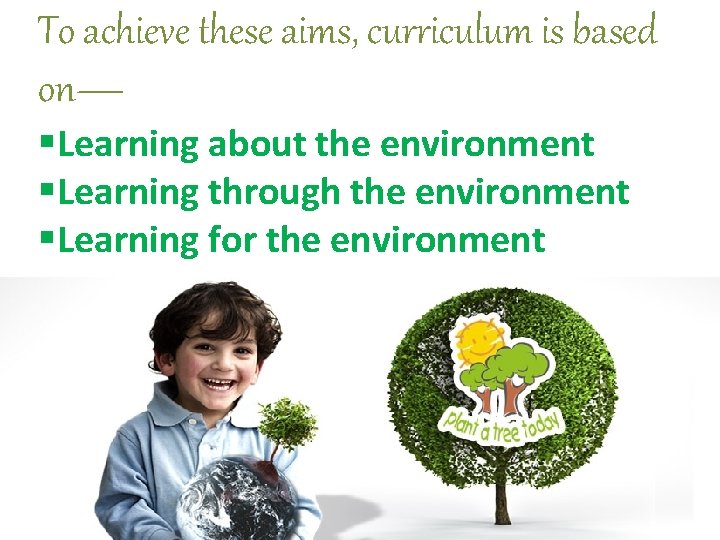
To achieve these aims, curriculum is based on— §Learning about the environment §Learning through the environment §Learning for the environment
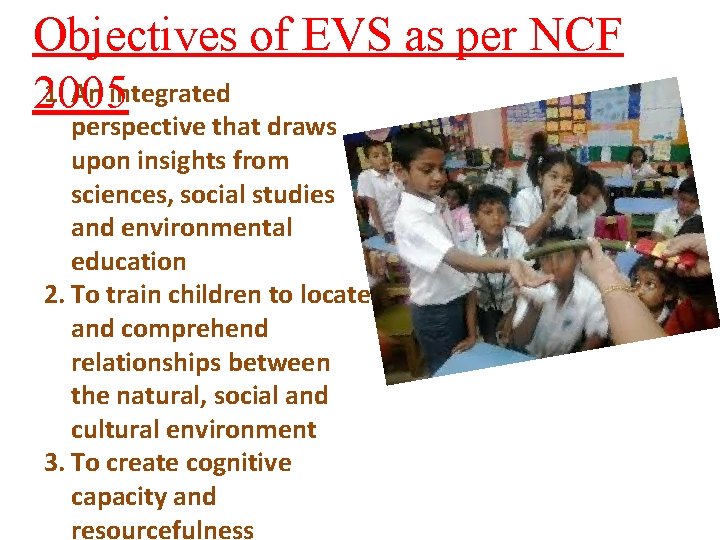
Objectives of EVS as per NCF 1. An integrated 2005 perspective that draws upon insights from sciences, social studies and environmental education 2. To train children to locate and comprehend relationships between the natural, social and cultural environment 3. To create cognitive capacity and resourcefulness
4. To make the child curious about social phenomena, starting with the family and moving to wider space. 5. To nurture the curiosity and creativity of the child. 6. To develop an awareness about environmental issues 7. To engage the child in exploratory and hands-on activities 8. To acquire basic cognitive and psychomotor skills through observations, classification etc.
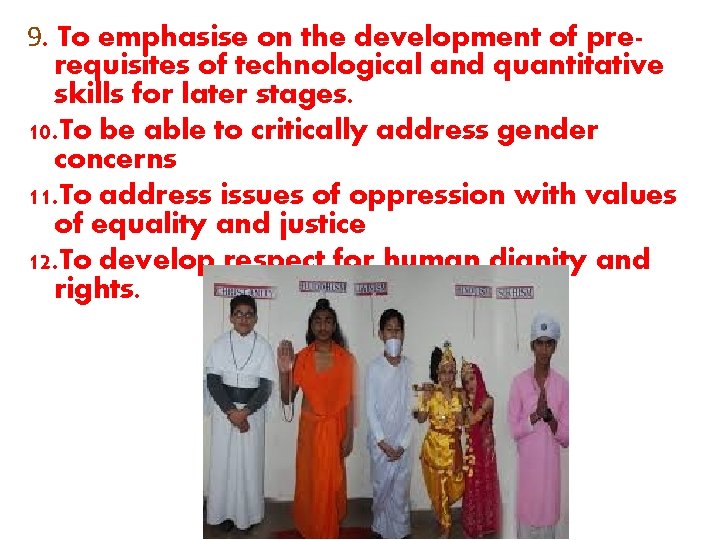
9. To emphasise on the development of prerequisites of technological and quantitative skills for later stages. 10. To be able to critically address gender concerns 11. To address issues of oppression with values of equality and justice 12. To develop respect for human dignity and rights.
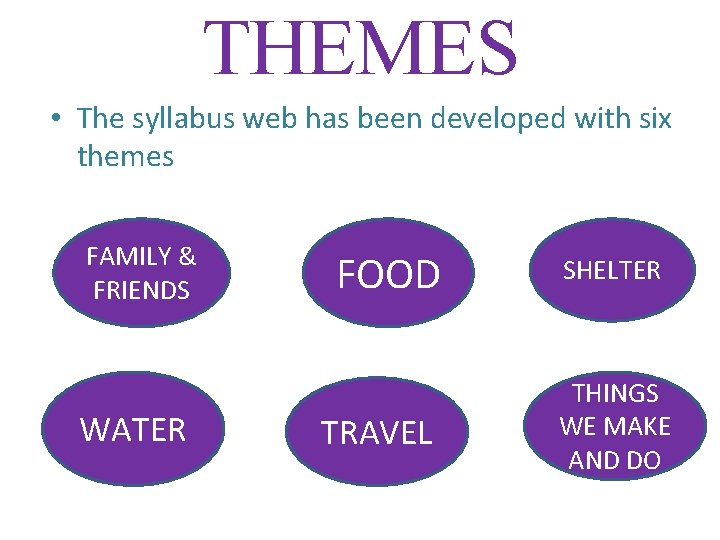
THEMES • The syllabus web has been developed with six themes FAMILY & FRIENDS WATER FOOD TRAVEL SHELTER THINGS WE MAKE AND DO
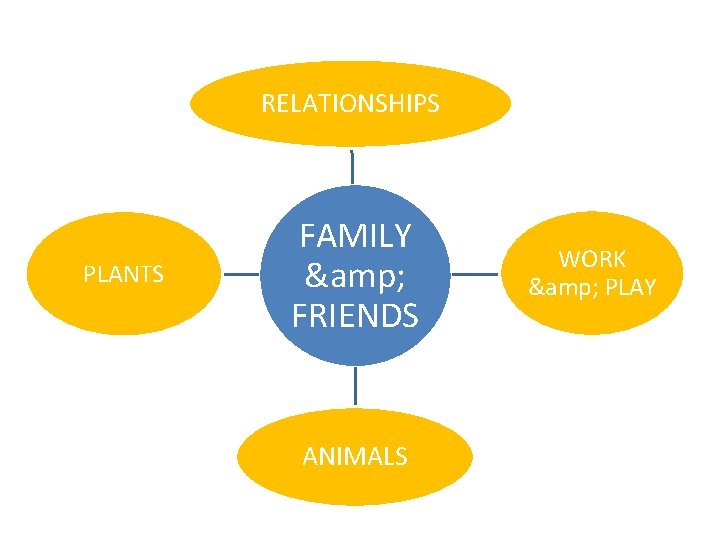
RELATIONSHIPS PLANTS FAMILY & FRIENDS ANIMALS WORK & PLAY
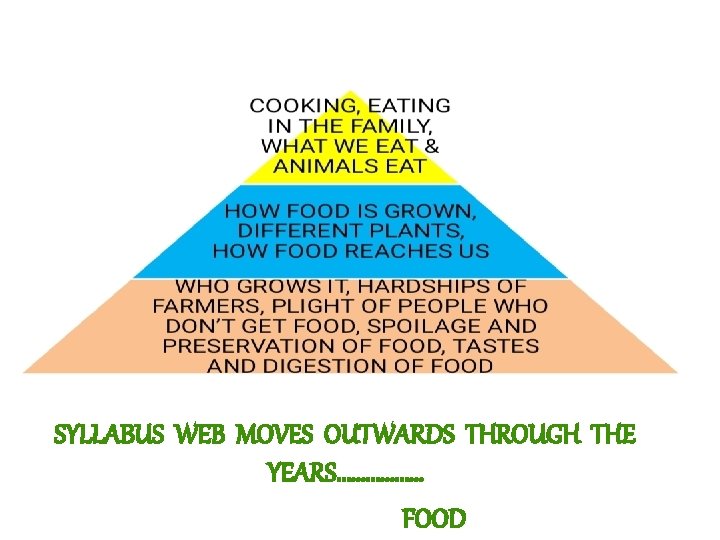
SYLLABUS WEB MOVES OUTWARDS THROUGH THE YEARS……………… FOOD
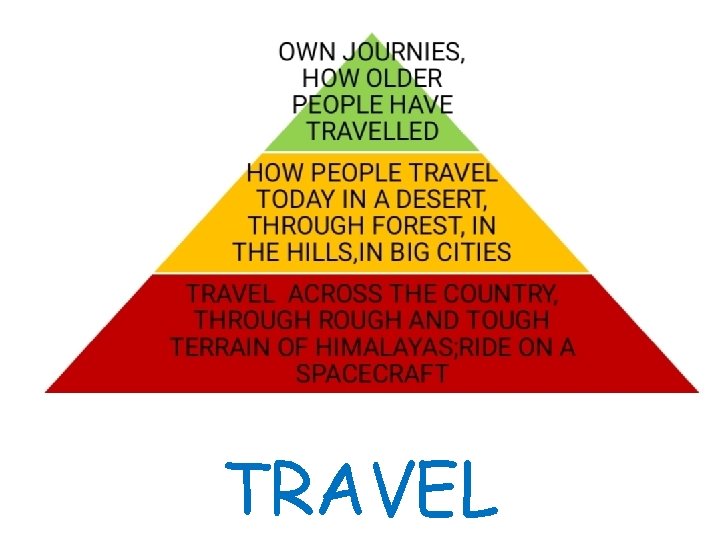
TRAVEL
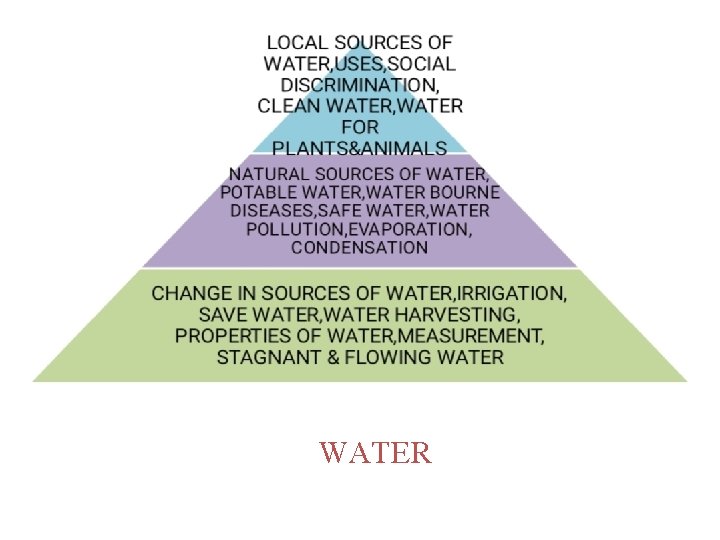
WATER
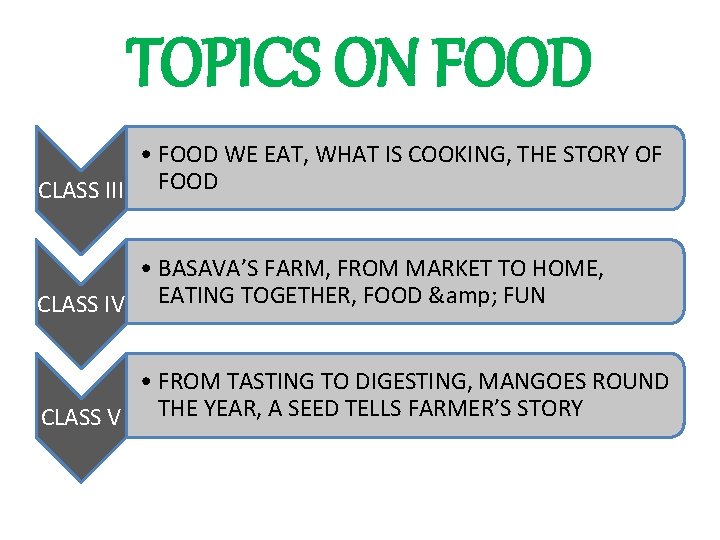
TOPICS ON FOOD • FOOD WE EAT, WHAT IS COOKING, THE STORY OF CLASS III FOOD • BASAVA’S FARM, FROM MARKET TO HOME, CLASS IV EATING TOGETHER, FOOD & FUN • FROM TASTING TO DIGESTING, MANGOES ROUND CLASS V THE YEAR, A SEED TELLS FARMER’S STORY
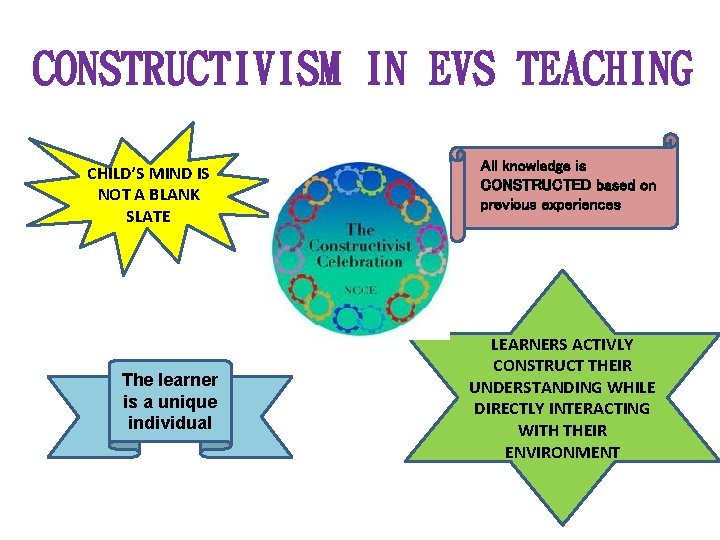
CONSTRUCTIVISM IN EVS TEACHING CHILD’S MIND IS NOT A BLANK SLATE The learner is a unique individual All knowledge is CONSTRUCTED based on previous experiences LEARNERS ACTIVLY CONSTRUCT THEIR UNDERSTANDING WHILE DIRECTLY INTERACTING WITH THEIR ENVIRONMENT
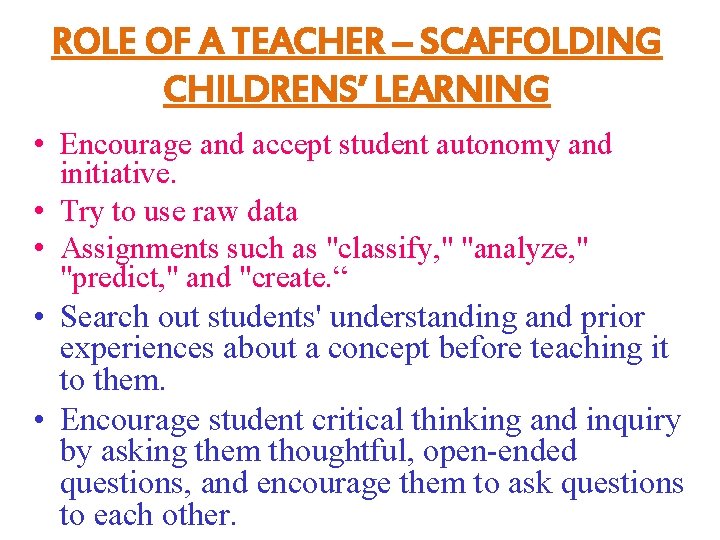
ROLE OF A TEACHER – SCAFFOLDING CHILDRENS’ LEARNING • Encourage and accept student autonomy and initiative. • Try to use raw data • Assignments such as "classify, " "analyze, " "predict, " and "create. “ • Search out students' understanding and prior experiences about a concept before teaching it to them. • Encourage student critical thinking and inquiry by asking them thoughtful, open-ended questions, and encourage them to ask questions to each other.
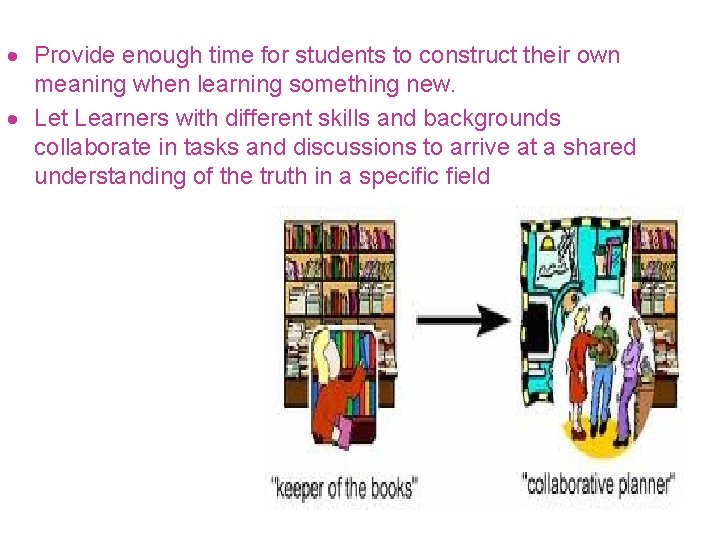
Provide enough time for students to construct their own meaning when learning something new. Let Learners with different skills and backgrounds collaborate in tasks and discussions to arrive at a shared understanding of the truth in a specific field
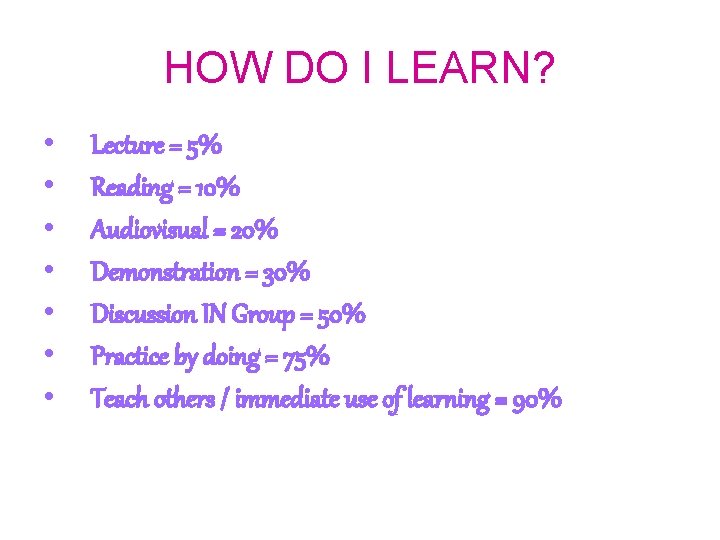
HOW DO I LEARN? • • Lecture = 5% Reading = 10% Audiovisual = 20% Demonstration = 30% Discussion IN Group = 50% Practice by doing = 75% Teach others / immediate use of learning = 90%
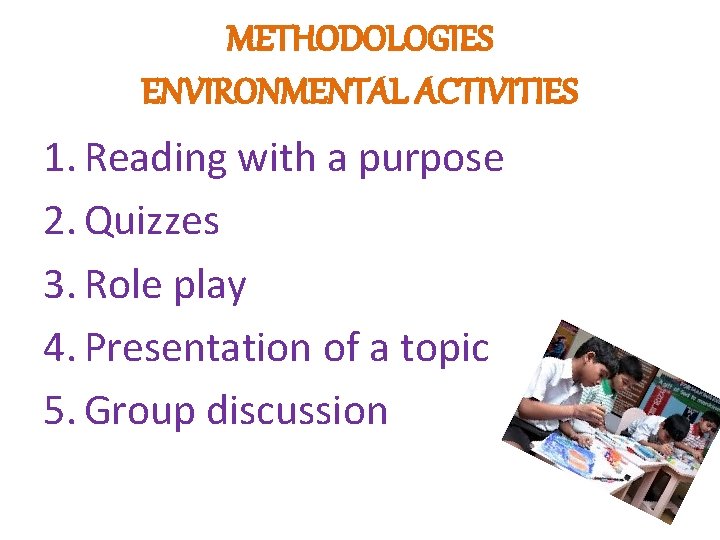
METHODOLOGIES ENVIRONMENTAL ACTIVITIES 1. Reading with a purpose 2. Quizzes 3. Role play 4. Presentation of a topic 5. Group discussion
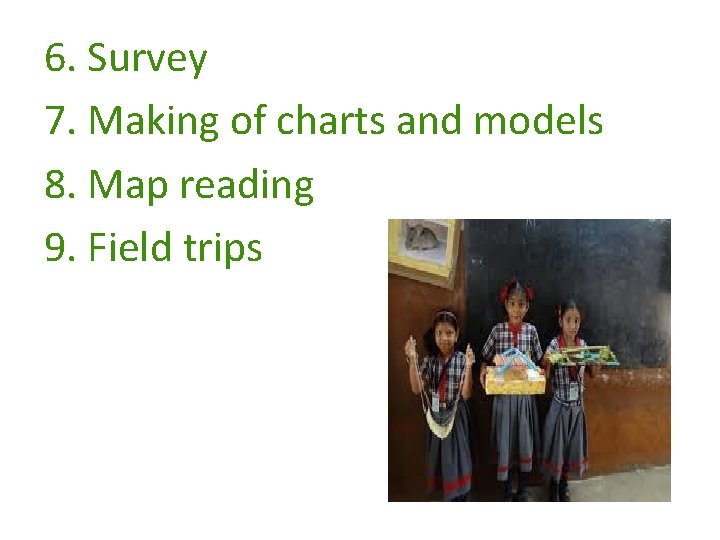
6. Survey 7. Making of charts and models 8. Map reading 9. Field trips
10. Writing reports 11. Group investigations 12. Source based analysis 13. Computer aided learning
14. Seminar 15. Group project 16. Experiments 17. Exploratory projects 18. Playing games 19. Peer Learning
INTER-DISCIPLINARY APPROACH • Combining or involving two or more academic disciplines as fields of study. • Conscious effort is to be made to integrate various subjects. • It makes learning complete. • New knowledge can’t be imparted without linking it to the old knowledge.
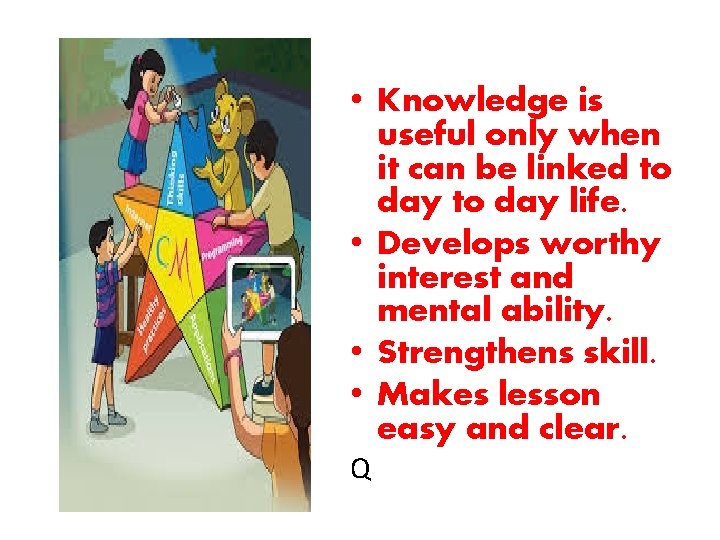
• Knowledge is useful only when it can be linked to day life. • Develops worthy interest and mental ability. • Strengthens skill. • Makes lesson easy and clear. Q
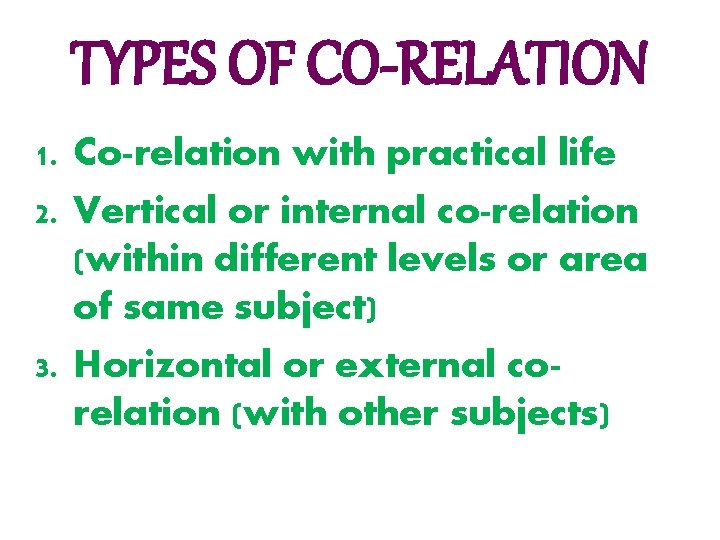
TYPES OF CO-RELATION 1. Co-relation with practical life 2. Vertical or internal co-relation (within different levels or area of same subject) 3. Horizontal or external corelation (with other subjects)
HOW DO WE CO-RELATE? • Casual or incidental • Conscious/systematic/plant co-relation
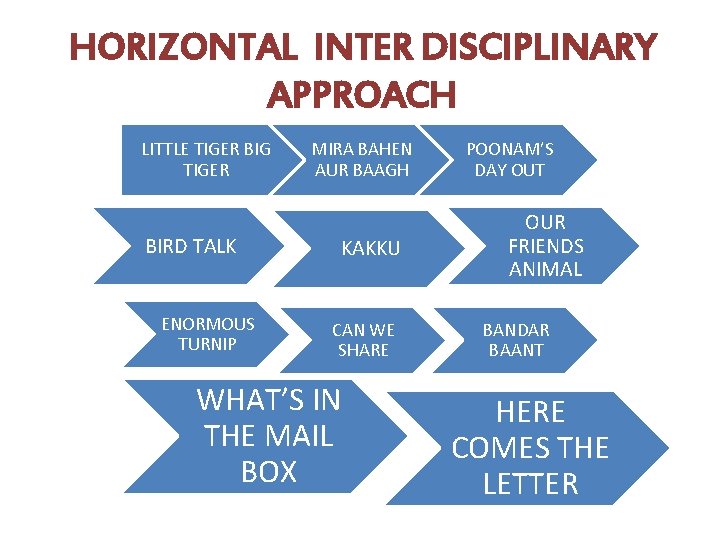
HORIZONTAL INTER DISCIPLINARY APPROACH LITTLE TIGER BIG TIGER BIRD TALK ENORMOUS TURNIP MIRA BAHEN AUR BAAGH KAKKU CAN WE SHARE WHAT’S IN THE MAIL BOX POONAM’S DAY OUT OUR FRIENDS ANIMAL BANDAR BAANT HERE COMES THE LETTER
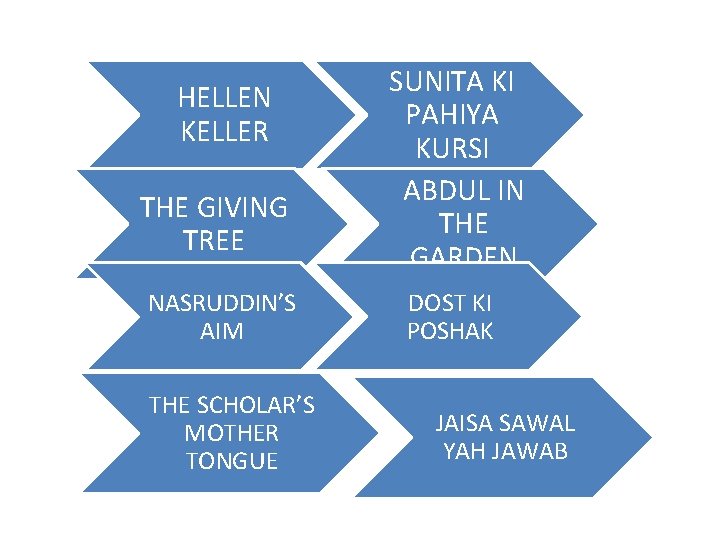
HELLEN KELLER THE GIVING TREE NASRUDDIN’S AIM THE SCHOLAR’S MOTHER TONGUE SUNITA KI PAHIYA KURSI ABDUL IN THE GARDEN DOST KI POSHAK JAISA SAWAL YAH JAWAB
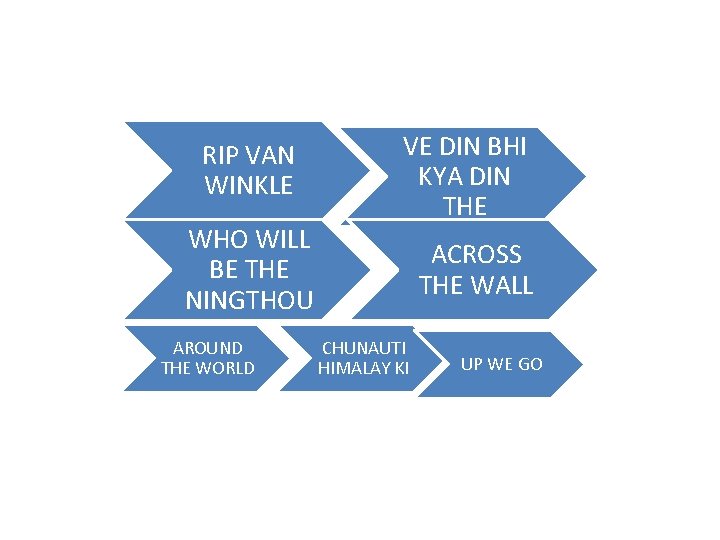
RIP VAN WINKLE WHO WILL BE THE NINGTHOU AROUND THE WORLD VE DIN BHI KYA DIN THE ACROSS THE WALL CHUNAUTI HIMALAY KI UP WE GO