
EVOLVING RISK MANAGEMENT Fundamental Tools Risk Management Process
- Slides: 21
EVOLVING RISK MANAGEMENT: Fundamental Tools
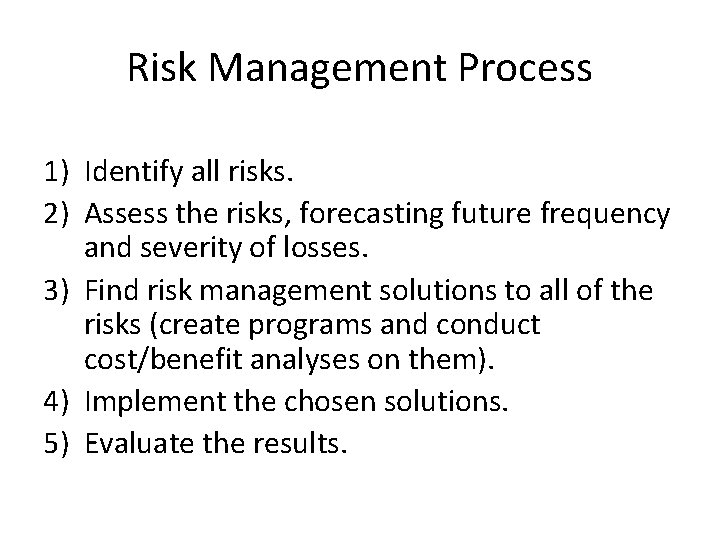
Risk Management Process 1) Identify all risks. 2) Assess the risks, forecasting future frequency and severity of losses. 3) Find risk management solutions to all of the risks (create programs and conduct cost/benefit analyses on them). 4) Implement the chosen solutions. 5) Evaluate the results.
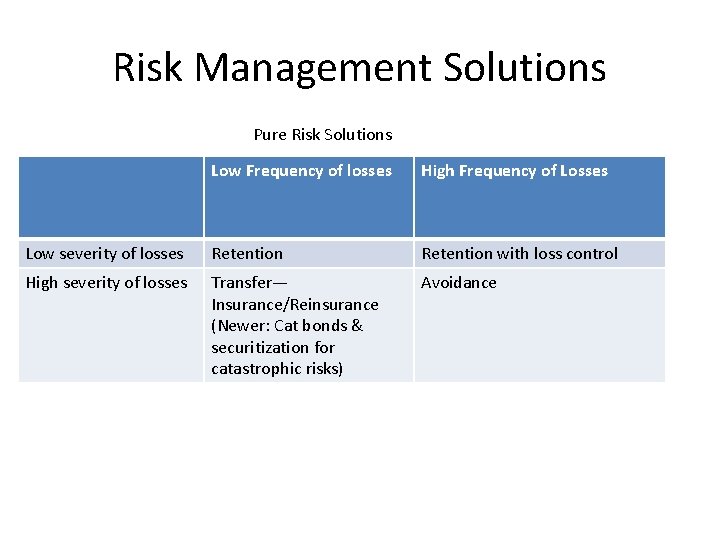
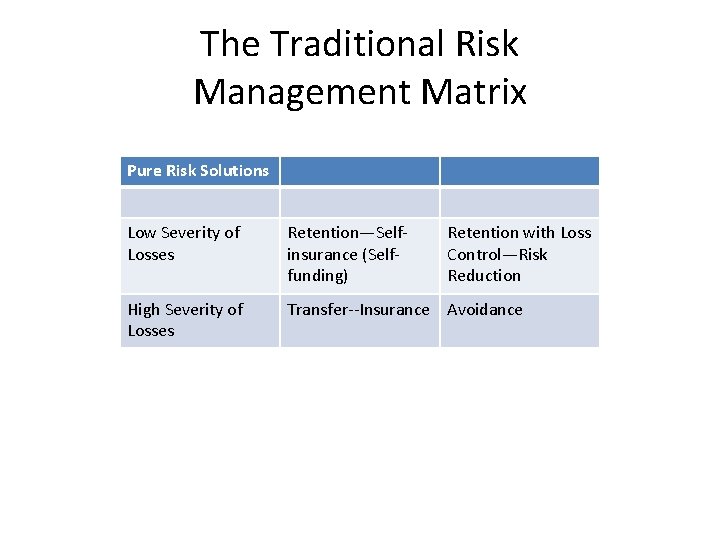
Risk Management Solutions Pure Risk Solutions Low Frequency of losses High Frequency of Losses Low severity of losses Retention with loss control High severity of losses Transfer— Insurance/Reinsurance (Newer: Cat bonds & securitization for catastrophic risks) Avoidance
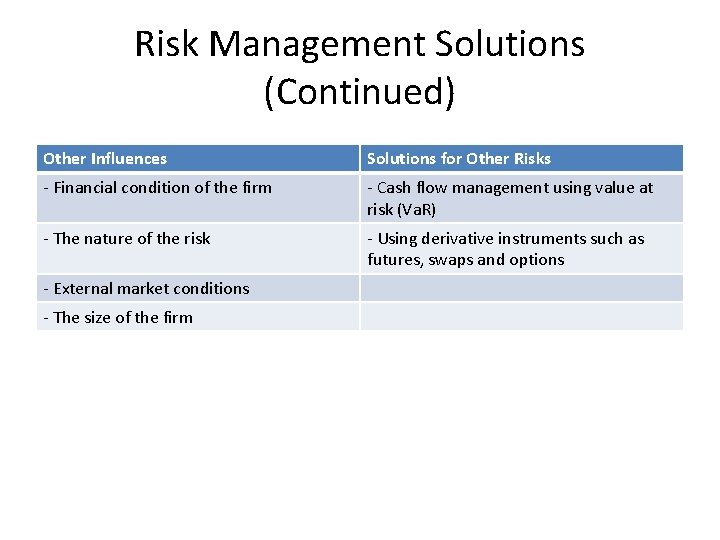
Risk Management Solutions (Continued) Other Influences Solutions for Other Risks - Financial condition of the firm - Cash flow management using value at risk (Va. R) - The nature of the risk - Using derivative instruments such as futures, swaps and options - External market conditions - The size of the firm
Risk Map • A risk map is a visual tool used to compare and contrast risk management alternatives.
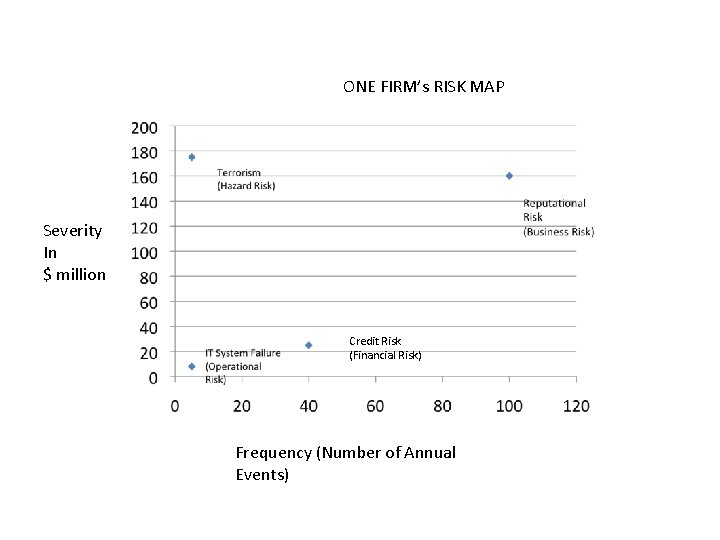
ONE FIRM’s RISK MAP Severity In $ million Credit Risk (Financial Risk) Frequency (Number of Annual Events)
Common Risk Management Guidelines • Write a risk management mission statement • Communicate with every section of the organization to promote safe behavior • Identify risk management processes • Pinpoint all risks (what “keeps employees awake at night”) • Assess risk management & financing alternatives (and external insurance market conditions)
Common Risk Management Guidelines (Continued) • Allocate costs from losses and loss expenses • Negotiate insurance coverage and terms • Adjust claims administration in self-funded firms • Keep accurate records of losses and payments
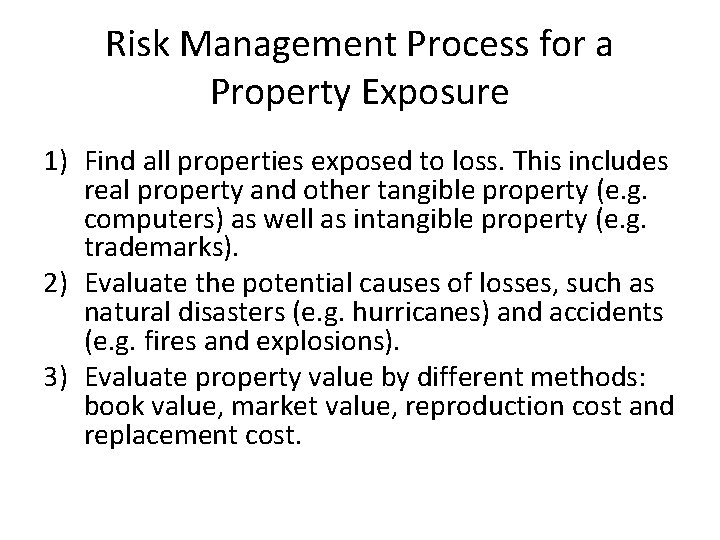
Risk Management Process for a Property Exposure 1) Find all properties exposed to loss. This includes real property and other tangible property (e. g. computers) as well as intangible property (e. g. trademarks). 2) Evaluate the potential causes of losses, such as natural disasters (e. g. hurricanes) and accidents (e. g. fires and explosions). 3) Evaluate property value by different methods: book value, market value, reproduction cost and replacement cost.
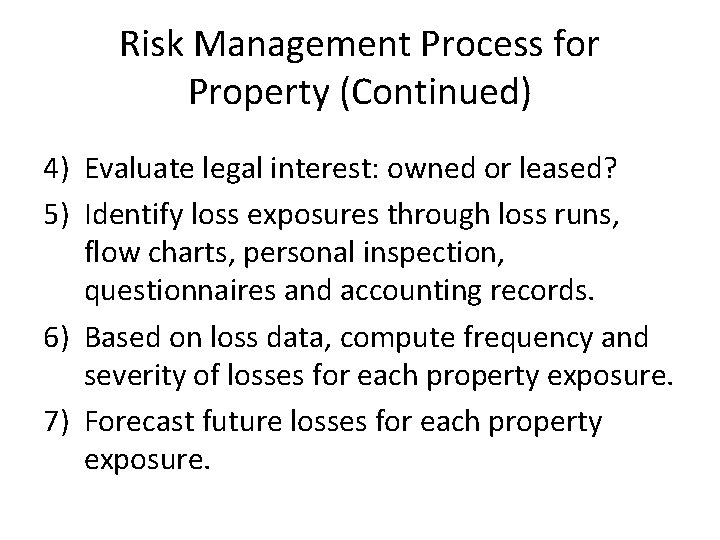
Risk Management Process for Property (Continued) 4) Evaluate legal interest: owned or leased? 5) Identify loss exposures through loss runs, flow charts, personal inspection, questionnaires and accounting records. 6) Based on loss data, compute frequency and severity of losses for each property exposure. 7) Forecast future losses for each property exposure.
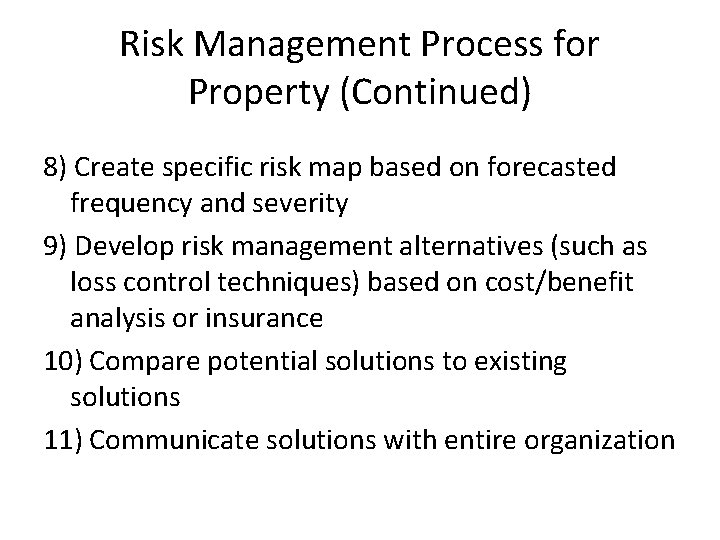
Risk Management Process for Property (Continued) 8) Create specific risk map based on forecasted frequency and severity 9) Develop risk management alternatives (such as loss control techniques) based on cost/benefit analysis or insurance 10) Compare potential solutions to existing solutions 11) Communicate solutions with entire organization
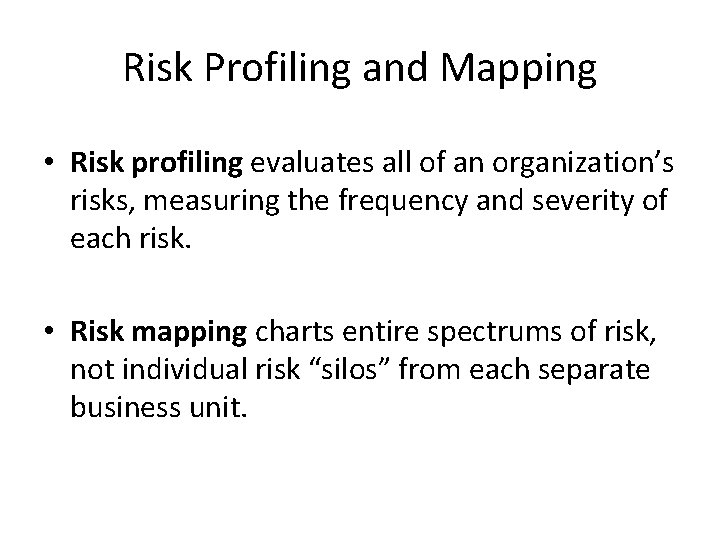
Risk Profiling and Mapping • Risk profiling evaluates all of an organization’s risks, measuring the frequency and severity of each risk. • Risk mapping charts entire spectrums of risk, not individual risk “silos” from each separate business unit.
Plotting the Risk Map: Four Basic Risk Categories • Natural and man-made risks (i. e. hurricane; anthrax threat) • Financial risks: -Prices -Volatility -Liquidity -Credit risk -Foreign exchange risk -Major market recession
Plotting the Risk Map (Continued) • Business risks: reputation risk is a major concern • Operational risks: day-to-day issues such as IT systems failure risk
Forecast Frequency & Severity & Cost Benefit Analysis • Risk management matrix: provides alternative financial action for each frequency/severity combination on risk map • Forecasting: Projects the frequency and severity of losses into the future based on current data and statistical assumptions
Budgeting • Cash flow analysis: looks at the amount of cash that will be saved; brings it into the present-day world • Risk management information systems: computerized data systems that allows a risk manager to quantify a firm’s loss history
The Traditional Risk Management Matrix Pure Risk Solutions Low Severity of Losses Retention—Selfinsurance (Selffunding) Retention with Loss Control—Risk Reduction High Severity of Losses Transfer--Insurance Avoidance
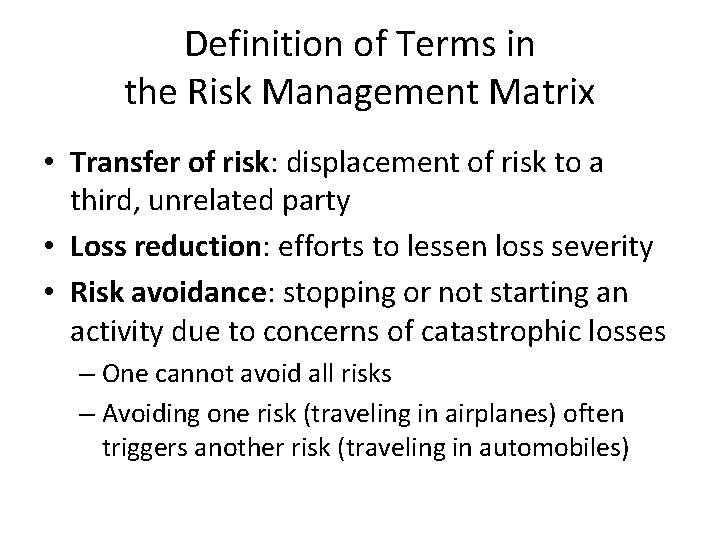
Definition of Terms in the Risk Management Matrix • Transfer of risk: displacement of risk to a third, unrelated party • Loss reduction: efforts to lessen loss severity • Risk avoidance: stopping or not starting an activity due to concerns of catastrophic losses – One cannot avoid all risks – Avoiding one risk (traveling in airplanes) often triggers another risk (traveling in automobiles)
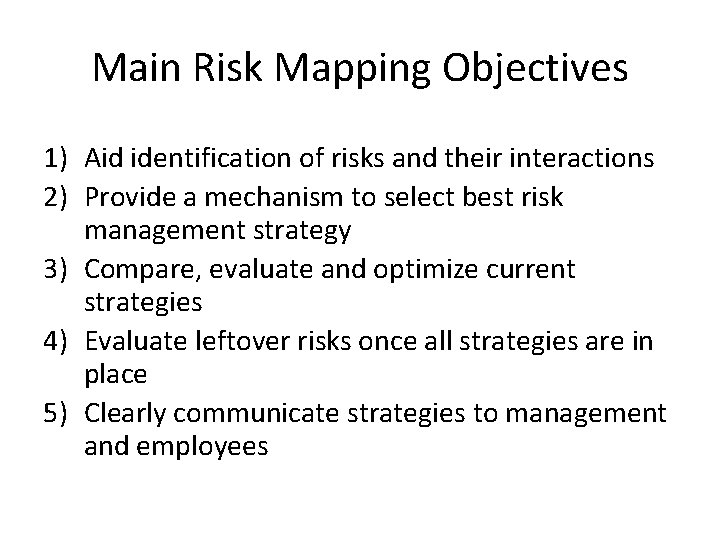
Main Risk Mapping Objectives 1) Aid identification of risks and their interactions 2) Provide a mechanism to select best risk management strategy 3) Compare, evaluate and optimize current strategies 4) Evaluate leftover risks once all strategies are in place 5) Clearly communicate strategies to management and employees
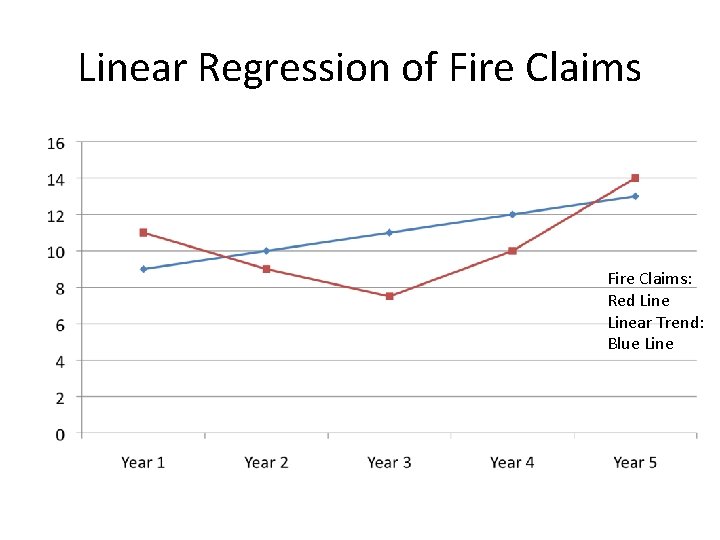
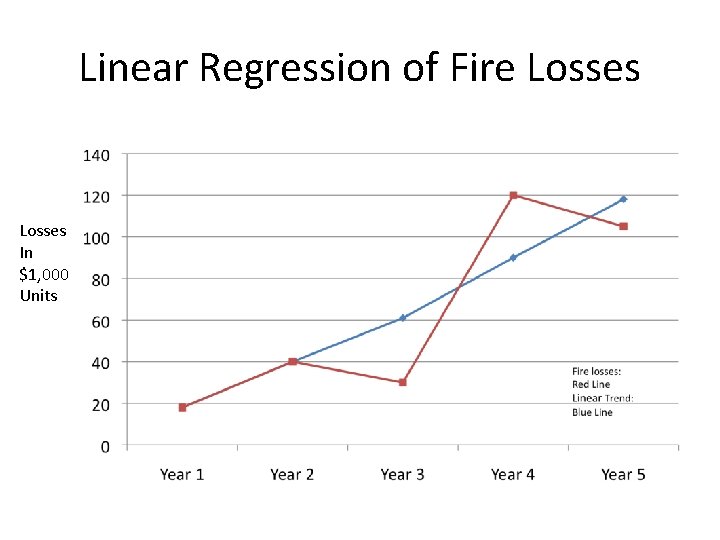
Linear Regression of Fire Claims: Red Linear Trend: Blue Line
Linear Regression of Fire Losses In $1, 000 Units