
EVOLVING INCIDENT MANAGEMENT An Analysis of Organizational Models
- Slides: 33
EVOLVING INCIDENT MANAGEMENT An Analysis of Organizational Models for the Future a project of the National Wildfire Coordinating Group Executive Board by the Incident Management Organization Succession Planning Team
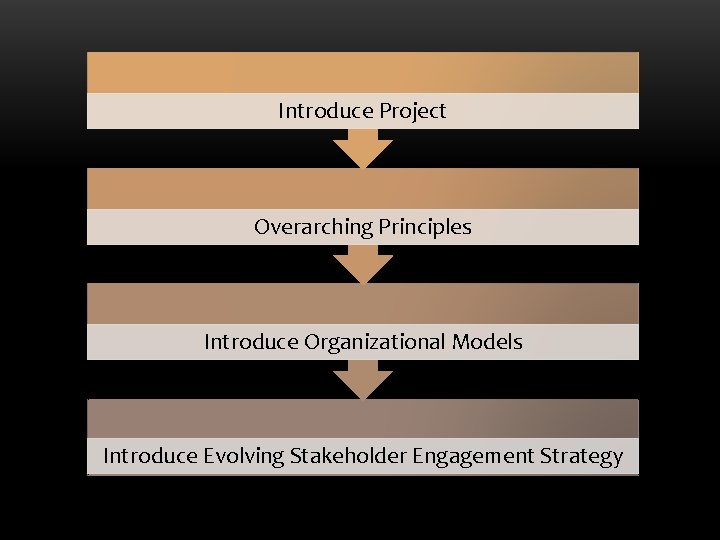
Introduce Project Overarching Principles Introduce Organizational Models Introduce Evolving Stakeholder Engagement Strategy
PROJECT INTRODUCTION Fire Systems Research, U. S. Forest Service Intertribal Timber Council
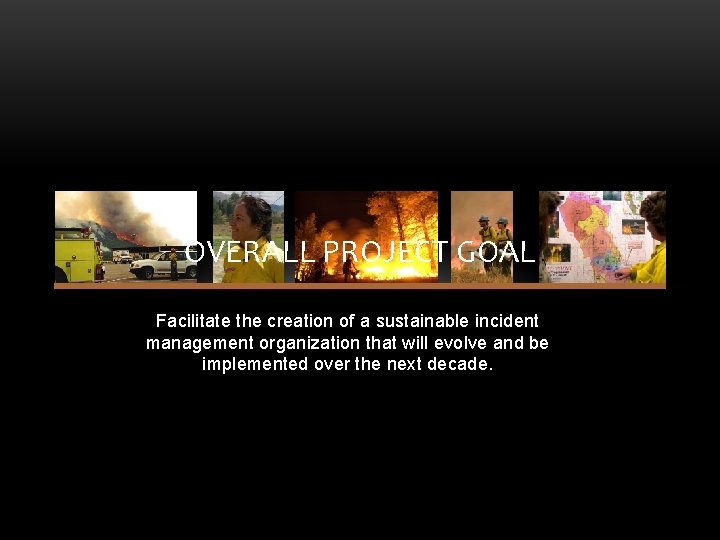
OVERALL PROJECT GOAL Facilitate the creation of a sustainable incident management organization that will evolve and be implemented over the next decade.
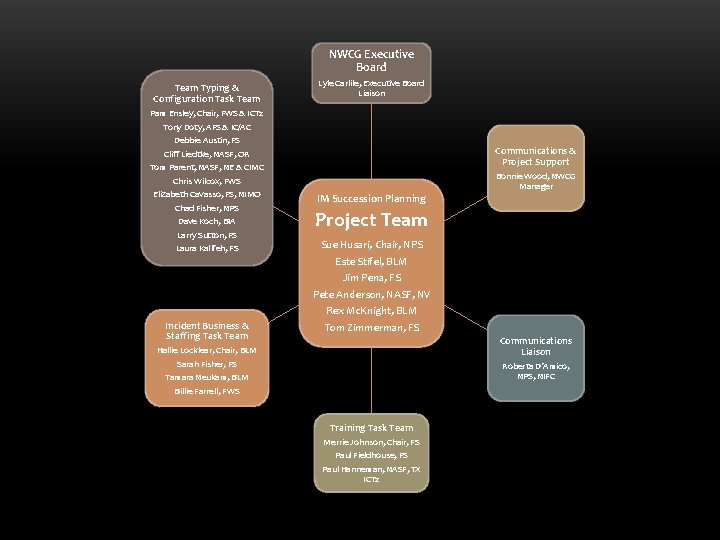
NWCG Executive Board Team Typing & Configuration Task Team Pam Ensley, Chair, FWS & ICT 2 Tony Doty, AFS & IC/AC Debbie Austin, FS Cliff Liedtke, NASF, OR Tom Parent, NASF, NE & CIMC Chris Wilcox, FWS Elizabeth Cavasso, FS, NIMO Chad Fisher, NPS Dave Koch, BIA Larry Sutton, FS Laura Kalifeh, FS Incident Business & Staffing Task Team Lyle Carlile, Executive Board Liaison Communications & Project Support Bonnie Wood, NWCG Manager IM Succession Planning Project Team Sue Husari, Chair, NPS Este Stifel, BLM Jim Pena, FS Pete Anderson, NASF, NV Rex Mc. Knight, BLM Tom Zimmerman, FS Communications Liaison Hallie Locklear, Chair, BLM Sarah Fisher, FS Tamara Neukam, BLM Billie Farrell, FWS Roberta D’Amico, NPS, NIFC Training Task Team Merrie Johnson, Chair, FS Paul Fieldhouse, FS Paul Hanneman, NASF, TX ICT 2
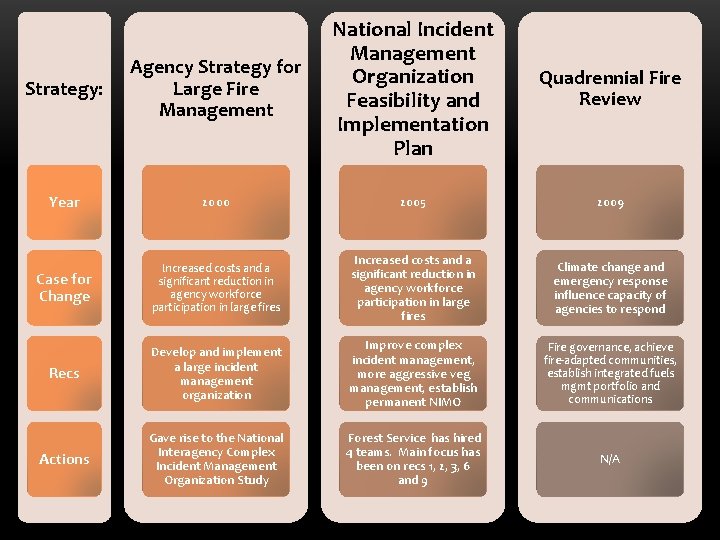
Strategy: Agency Strategy for Large Fire Management National Incident Management Organization Feasibility and Implementation Plan Quadrennial Fire Review Year 2000 2005 2009 Case for Change Increased costs and a significant reduction in agency workforce participation in large fires Climate change and emergency response influence capacity of agencies to respond Recs Develop and implement a large incident management organization Improve complex incident management, more aggressive veg management, establish permanent NIMO Fire governance, achieve fire-adapted communities, establish integrated fuels mgmt portfolio and communications Actions Gave rise to the National Interagency Complex Incident Management Organization Study Forest Service has hired 4 teams. Main focus has been on recs 1, 2, 3, 6 and 9 N/A
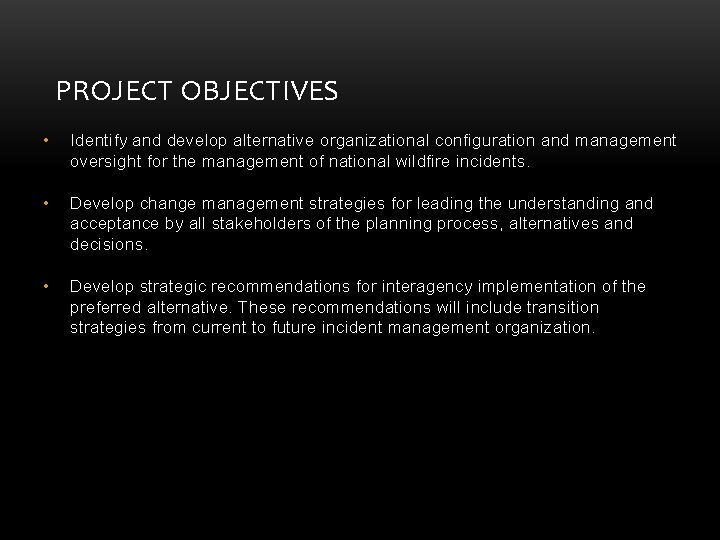
PROJECT OBJECTIVES • Identify and develop alternative organizational configuration and management oversight for the management of national wildfire incidents. • Develop change management strategies for leading the understanding and acceptance by all stakeholders of the planning process, alternatives and decisions. • Develop strategic recommendations for interagency implementation of the preferred alternative. These recommendations will include transition strategies from current to future incident management organization.
OVERARCHING PRINCIPLES Essential to all alternatives
SUCCESSION PLANNING • Long-term succession planning for IMTs • Large scale, linked to interagency workforce planning
SINGLE QUALIFICATION SYSTEM • Common to all agencies and emergency services
AGENCY ACCOUNTABILITY • Follow-up on identified needs for training and positions • Support from agency leadership and supervisors
INCIDENT COMPLEXITY/SCALABILITY • Flexible response based on incident complexity and needs over time
MODULE & SERVICE CENTERS • Develop support modules by function • Utilize Service Centers and web-based systems
RESPONSIVENESS TO FEDERAL FIRE POLICY • Consistency & accountability
COMPENSATION STRATEGIES, INCENTIVES & ACCOUNTABILITY • Develop both incentives & accountability for IMT participation
IMT STANDARD OPERATING PROCEDURES • Ensure consistency • Development of SOPs is a coordinated effort
SUPPORT IMT DECISIONS • Regardless of outcomes • Address personal liability
INTERAGENCY COOPERATION • Team staffing • Oversight of contracted resources
CONSISTENT FINANCIAL PRACTICES • Base salaries charged to emergency accounts • Backfill
ORGANIZATIONAL MODELS A Quick Overview
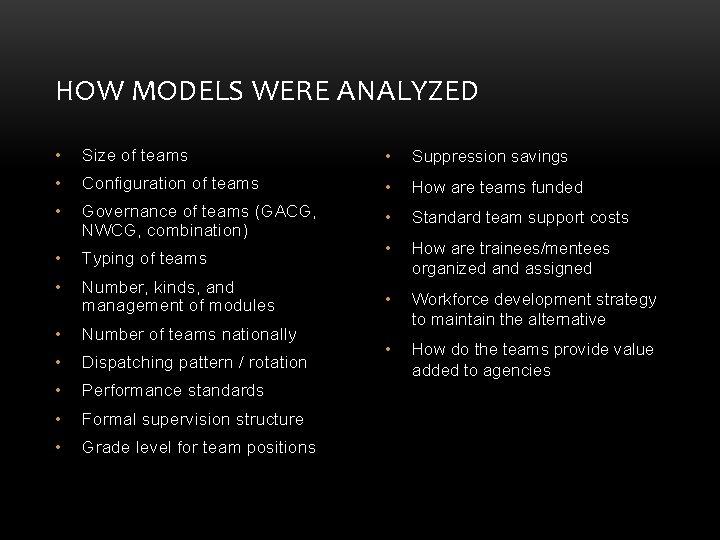
HOW MODELS WERE ANALYZED • Size of teams • Suppression savings • Configuration of teams • How are teams funded • Governance of teams (GACG, NWCG, combination) • Standard team support costs • Typing of teams • • Number, kinds, and management of modules How are trainees/mentees organized and assigned • • Number of teams nationally Workforce development strategy to maintain the alternative • Dispatching pattern / rotation • How do the teams provide value added to agencies • Performance standards • Formal supervision structure • Grade level for team positions
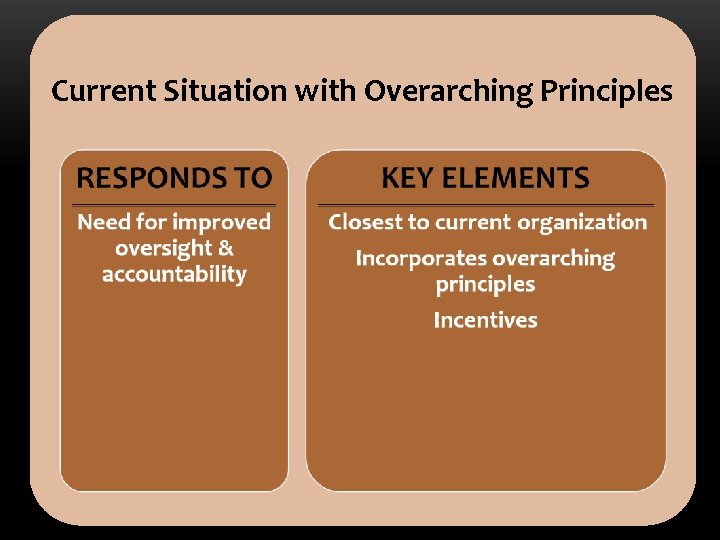
Current Situation with Overarching Principles
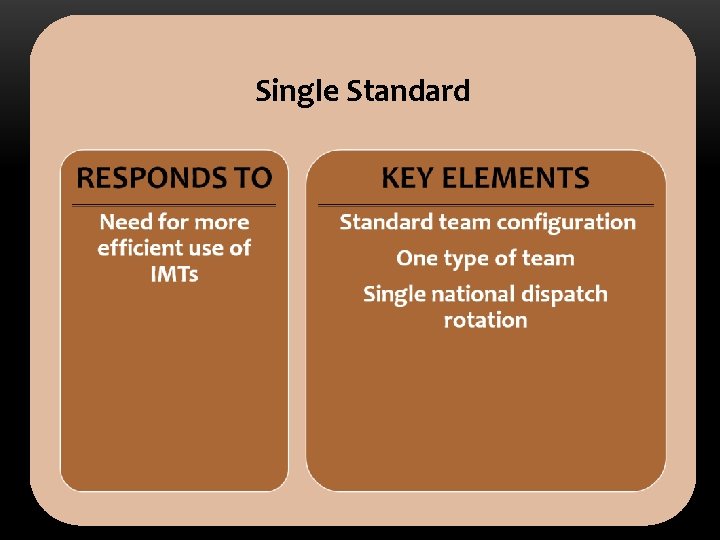
Single Standard
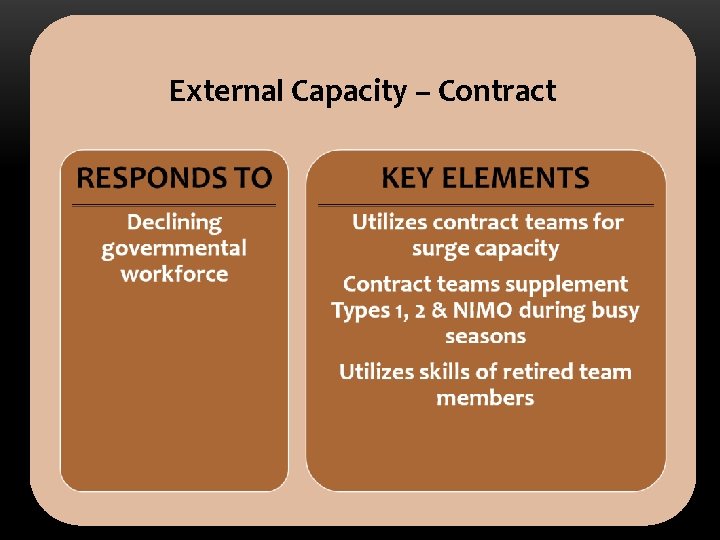
External Capacity – Contract
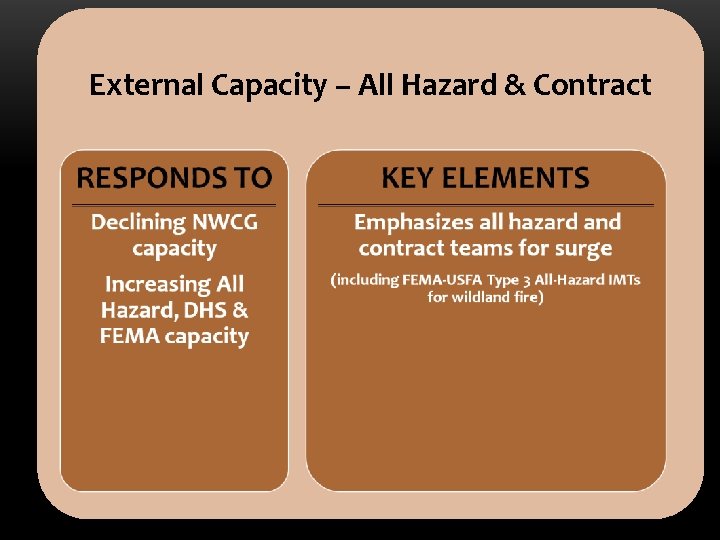
External Capacity – All Hazard & Contract
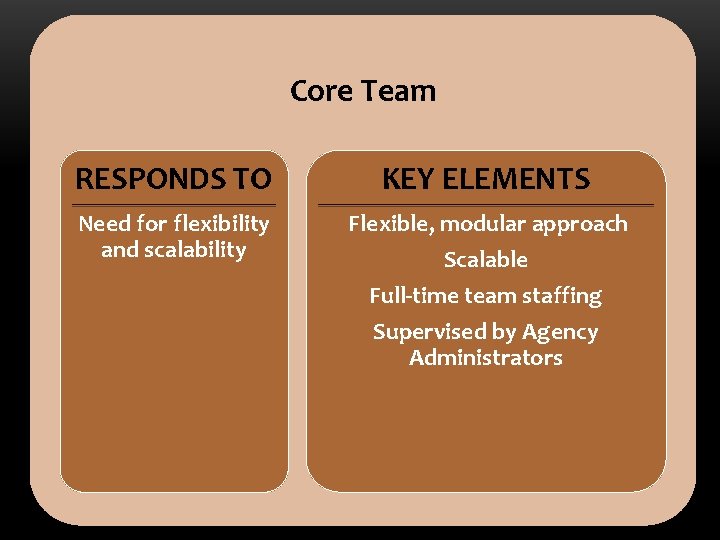
Core Team RESPONDS TO KEY ELEMENTS Need for flexibility and scalability Flexible, modular approach Scalable Full-time team staffing Supervised by Agency Administrators
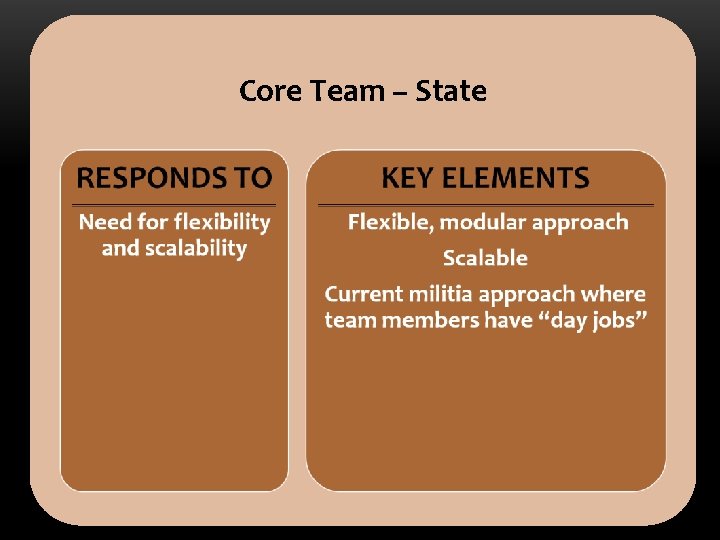
Core Team – State
NEXT STEPS What Comes Next?
NWCG DECISIONS • NWCG accepted the Report – Final November 19 • Moving forward with inform stage of Stakeholder Engagement. • Presentations will be made by NWCG Executive Board and project team members. • Involvement and collaboration funded and tasked to Organization Development Enterprise. • Organizational Model developed by June 2011 for implementation based on input from stakeholders. • Implementation will start immediately but will take 5 -10 years to complete.
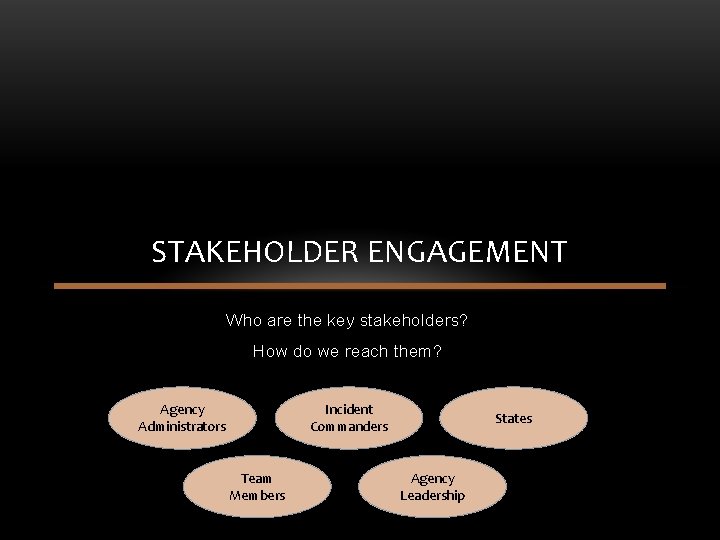
STAKEHOLDER ENGAGEMENT Who are the key stakeholders? How do we reach them? Agency Administrators Incident Commanders Team Members States Agency Leadership
WHY STAKEHOLDER ENGAGEMENT? Support and active participation is essential to success! • Case for Change • Collaborate and Involve—Support is Critical to Success • Road Test Overarching Principles • Refine and Develop new Organizational Model • Build a sustainable model for Incident Management designed to meet future challenges.
TOOLS FOR ENGAGEMENT • Website (www. nwcg. gov/imosp) • Organizational Model Matrix • Descriptions of Organizational Models • Overarching Principles • Questionnaire • Webinars • Deliberative Workshops
FEEDBACK OPPORTUNITIES Immediate IMsuccessionplanning@gmail. com For Additional Feedback Mechanisms, Visit www. nwcg. gov/imosp