
EVOLUTIONARY PROCESSES AND PATTERNS Theory of Special Creation
- Slides: 36
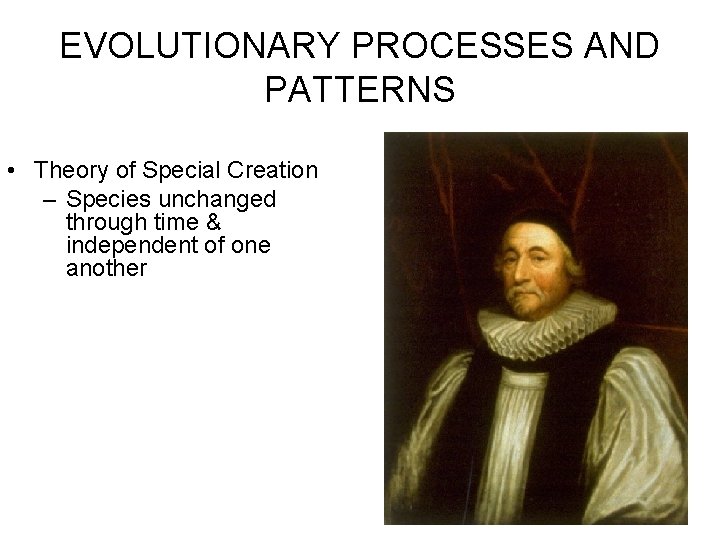
EVOLUTIONARY PROCESSES AND PATTERNS • Theory of Special Creation – Species unchanged through time & independent of one another
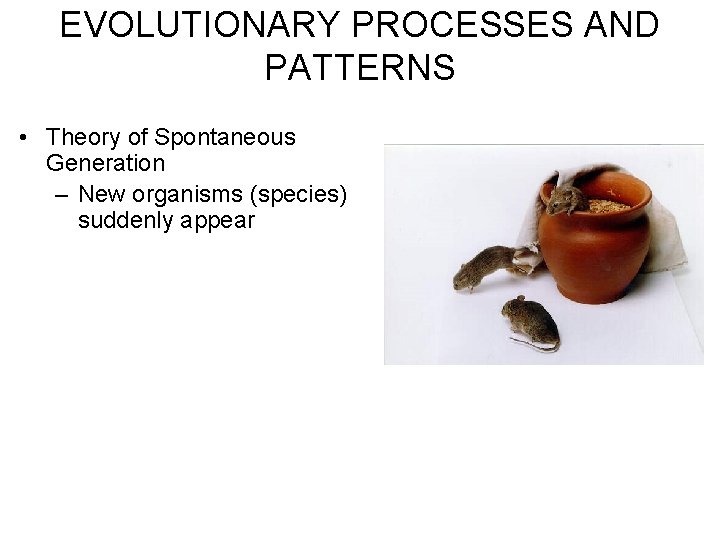
EVOLUTIONARY PROCESSES AND PATTERNS • Theory of Spontaneous Generation – New organisms (species) suddenly appear
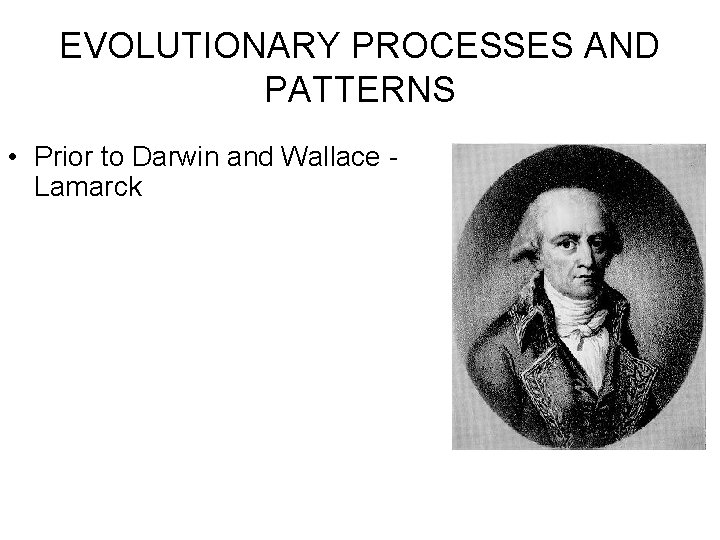
EVOLUTIONARY PROCESSES AND PATTERNS • Prior to Darwin and Wallace Lamarck
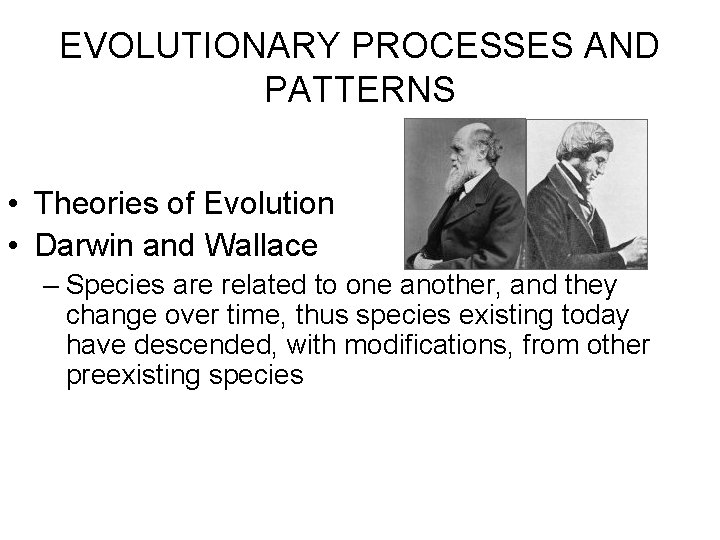
EVOLUTIONARY PROCESSES AND PATTERNS • Theories of Evolution • Darwin and Wallace – Species are related to one another, and they change over time, thus species existing today have descended, with modifications, from other preexisting species
Evolution • What is evolution? • Microevolution: • Macroevolution:
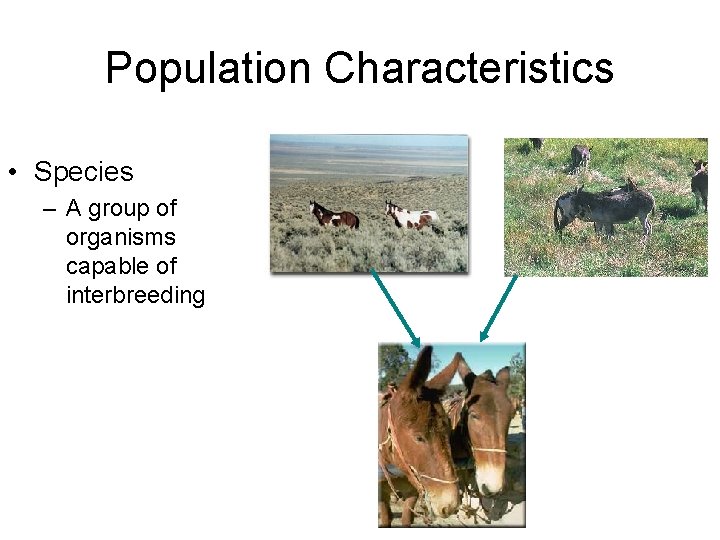
Population Characteristics • Species – A group of organisms capable of interbreeding
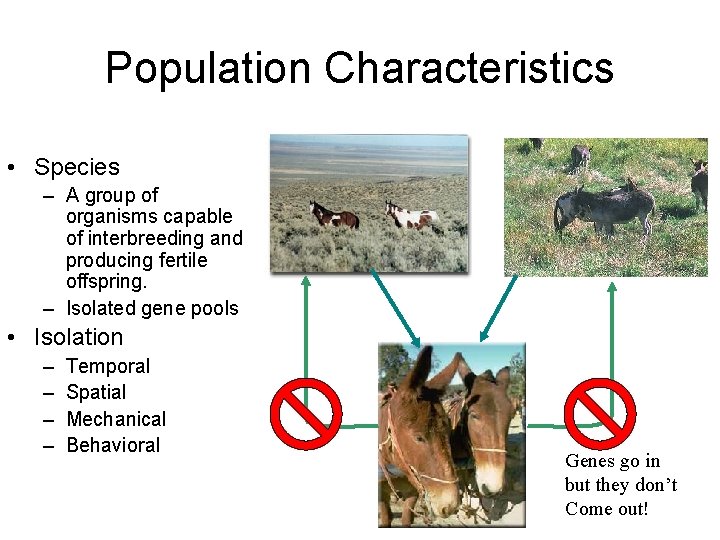
Population Characteristics • Species – A group of organisms capable of interbreeding and producing fertile offspring. – Isolated gene pools • Isolation – – Temporal Spatial Mechanical Behavioral Genes go in but they don’t Come out!
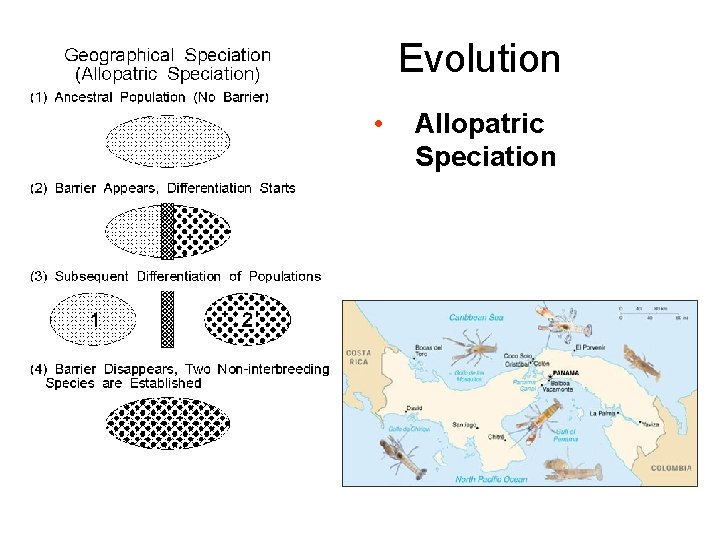
Evolution • Allopatric Speciation
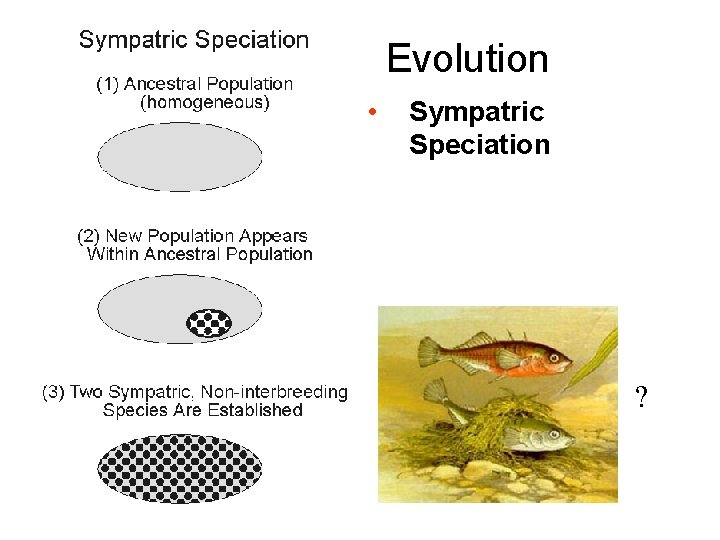
Evolution • Sympatric Speciation ?
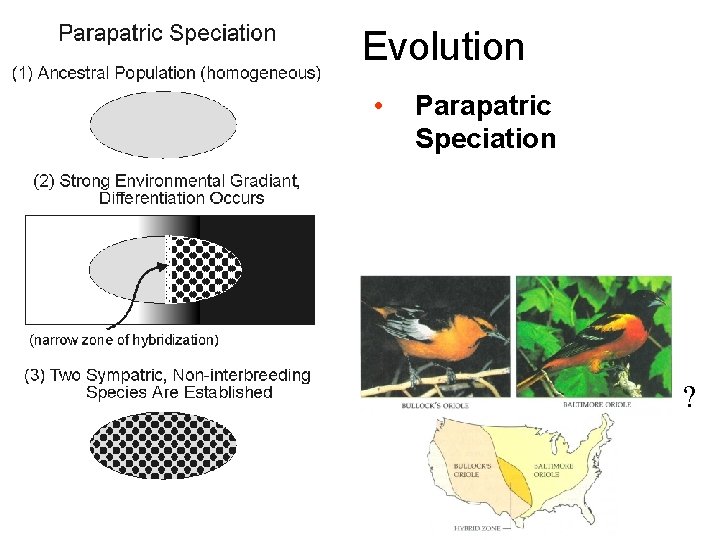
Evolution • Parapatric Speciation ?
Darwinian Selection • All natural selection results in evolution, but not all evolution is the product of natural selection. • What is evolution? • What is natural selection? • What is an adaptation?
Darwinian Selection • All natural selection results in evolution, but not all evolution is the product of natural selection. • What is evolution?
Darwinian Selection • All natural selection results in evolution, but not all evolution is the product of natural selection. • What is evolution? – Evolution is the change in allele frequencies (or traits) over time. • What is natural selection? • What is an adaptation?
Darwinian Selection • All natural selection results in evolution, but not all evolution is the product of natural selection. • What is evolution? – Evolution is the change in allele frequencies (or traits) over time. • What is natural selection? – Natural selection is the differential reproductive success resulting from an adaptation. • What is an adaptation?
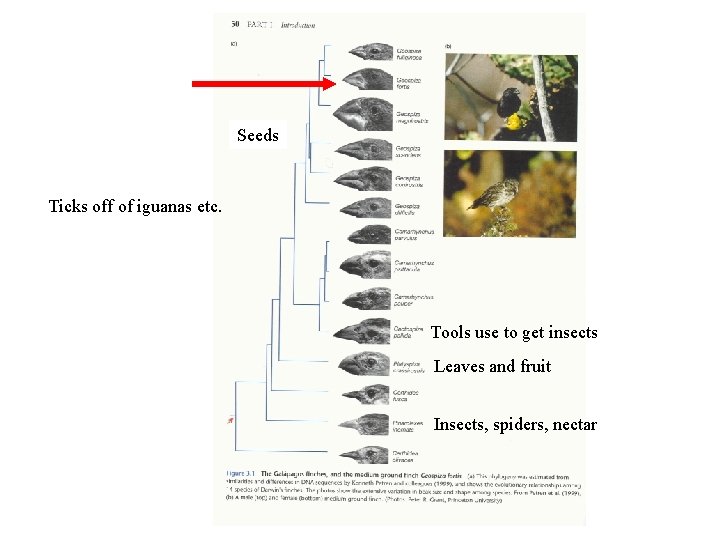
Seeds Ticks off of iguanas etc. Tools use to get insects Leaves and fruit Insects, spiders, nectar
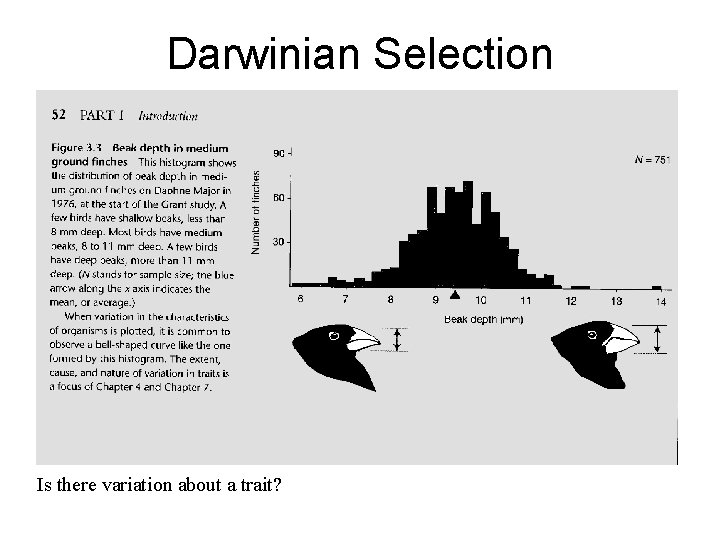
Darwinian Selection Is there variation about a trait?
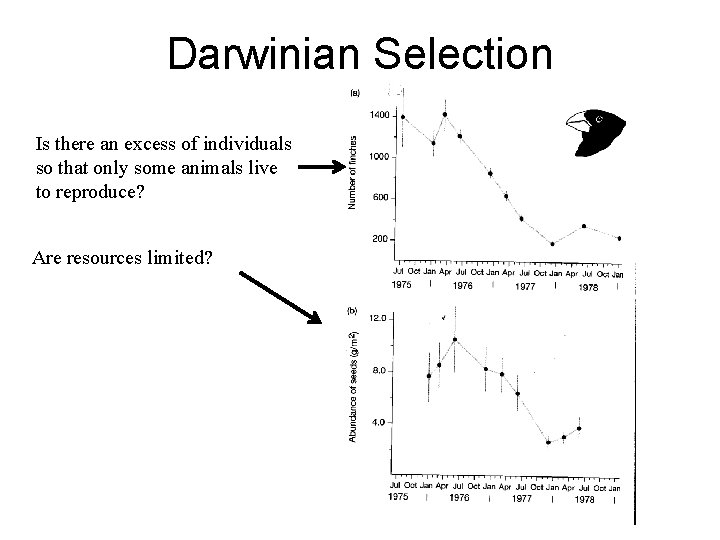
Darwinian Selection Is there an excess of individuals so that only some animals live to reproduce? Are resources limited?
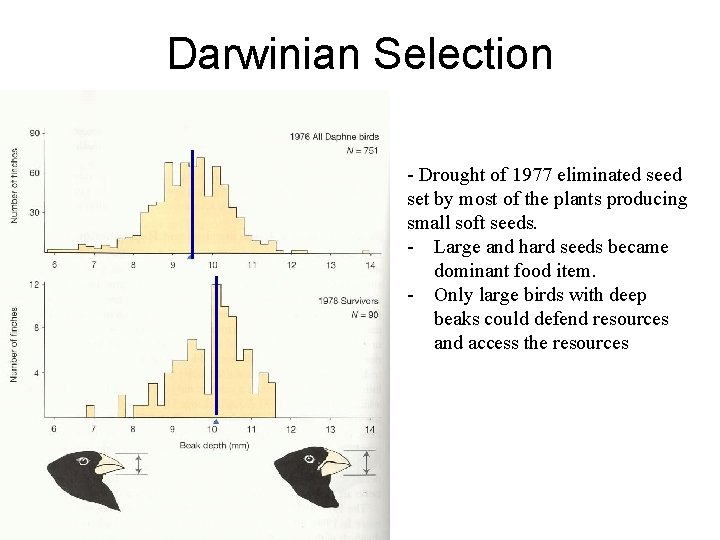
Darwinian Selection - Drought of 1977 eliminated set by most of the plants producing small soft seeds. - Large and hard seeds became dominant food item. - Only large birds with deep beaks could defend resources and access the resources
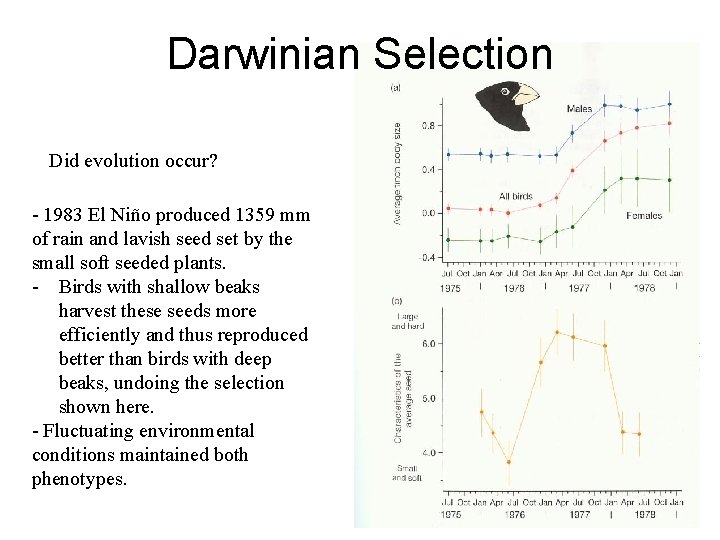
Darwinian Selection Did evolution occur? - 1983 El Niño produced 1359 mm of rain and lavish seed set by the small soft seeded plants. - Birds with shallow beaks harvest these seeds more efficiently and thus reproduced better than birds with deep beaks, undoing the selection shown here. - Fluctuating environmental conditions maintained both phenotypes.
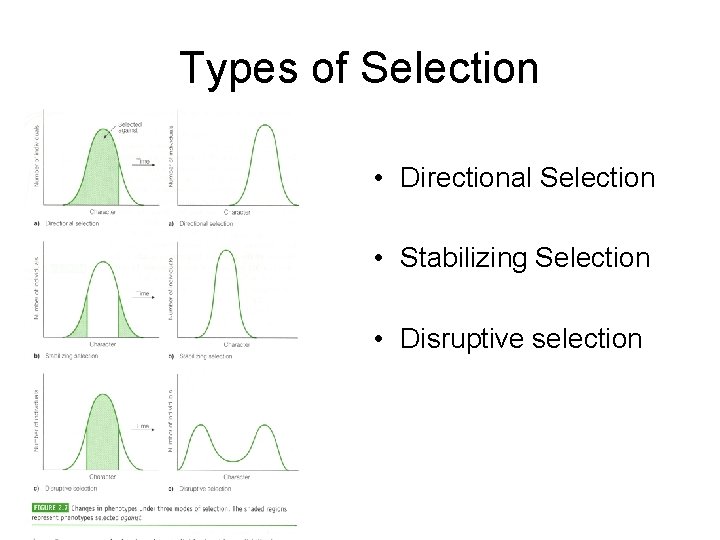
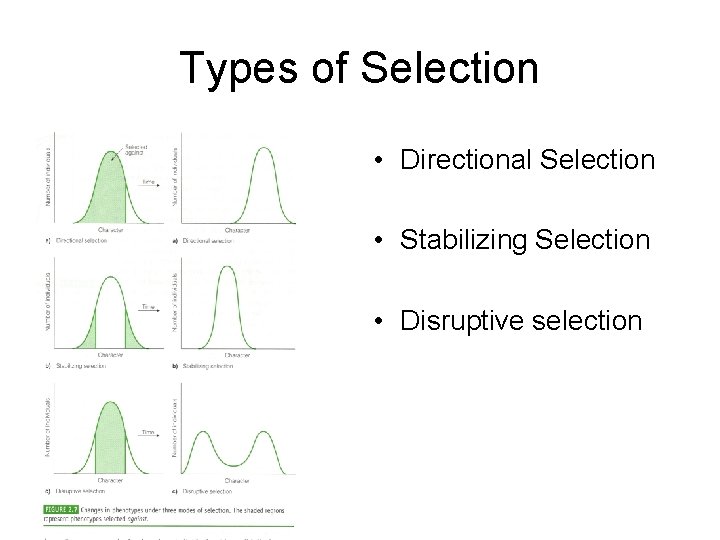
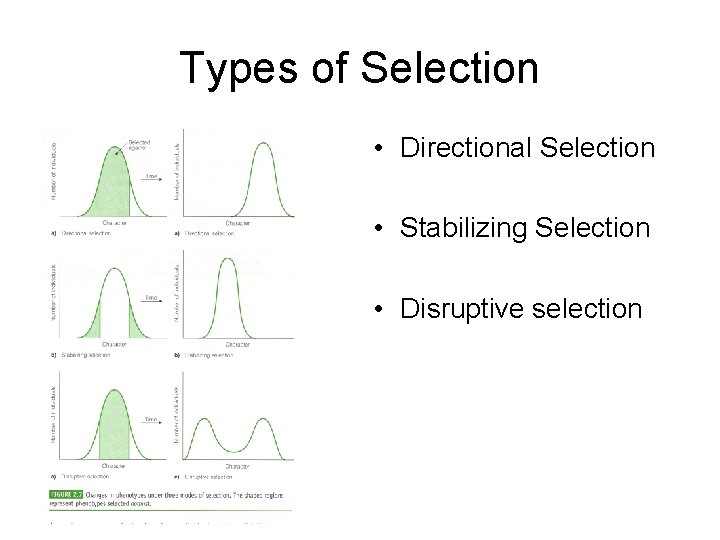
Types of Selection • Directional Selection • Stabilizing Selection • Disruptive selection
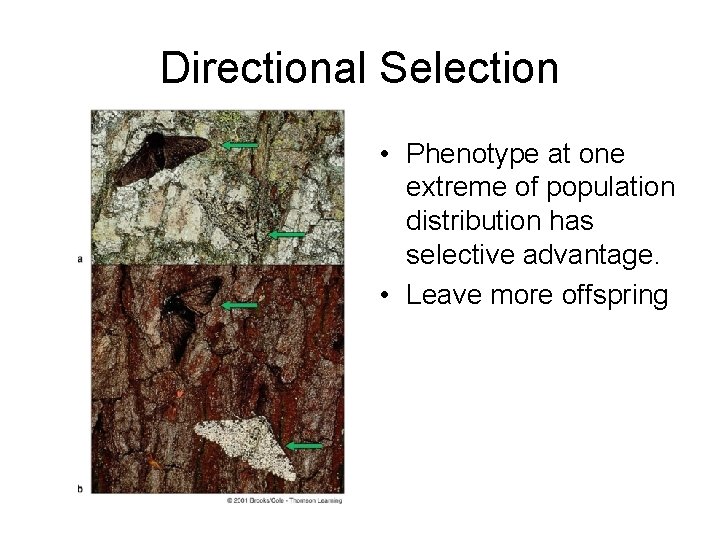
Directional Selection • Phenotype at one extreme of population distribution has selective advantage. • Leave more offspring
Types of Selection • Directional Selection • Stabilizing Selection • Disruptive selection
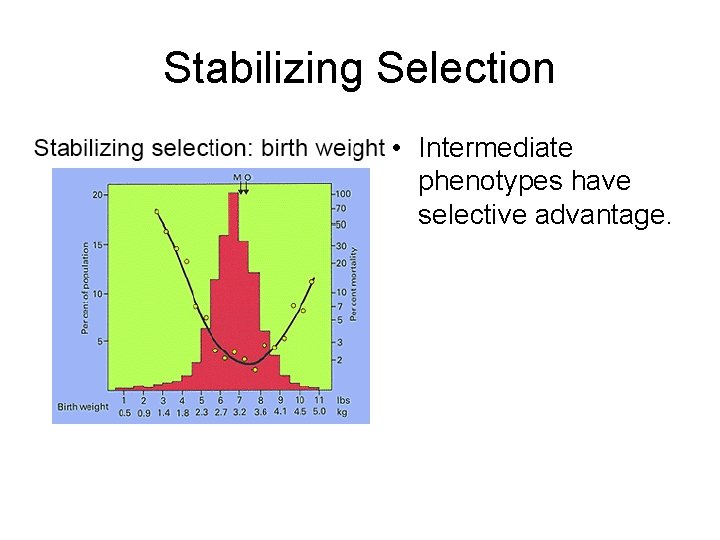
Stabilizing Selection • Intermediate phenotypes have selective advantage.
Types of Selection • Directional Selection • Stabilizing Selection • Disruptive selection
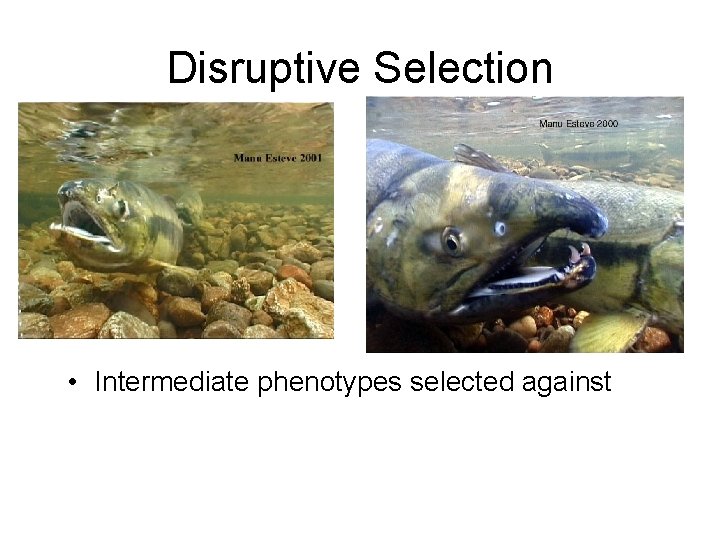
Disruptive Selection • Intermediate phenotypes selected against
Darwinian Selection • The consequences of natural selection are expressed at the population level.
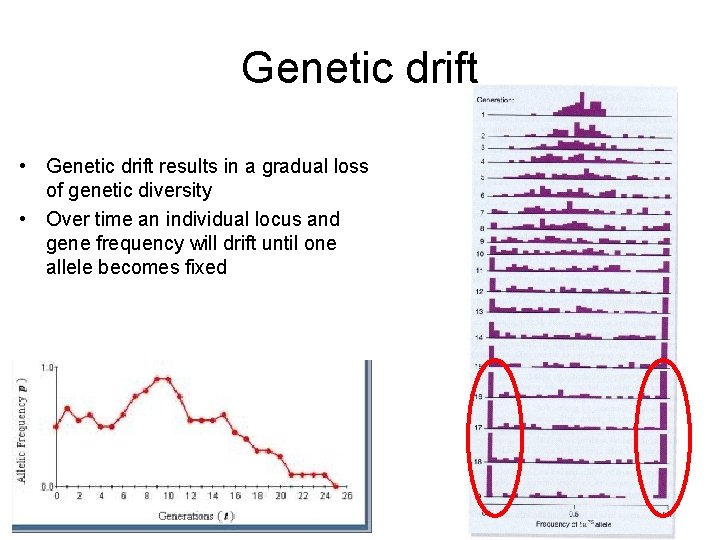
Genetic drift • Genetic drift results in a gradual loss of genetic diversity • Over time an individual locus and gene frequency will drift until one allele becomes fixed
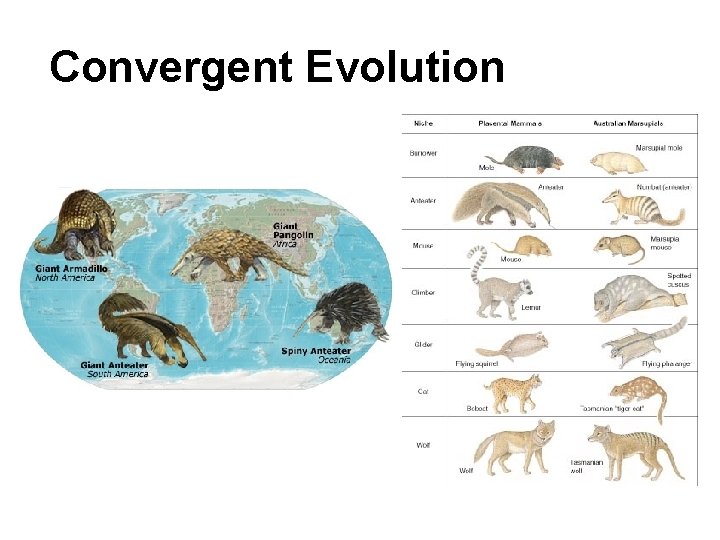
Convergent Evolution
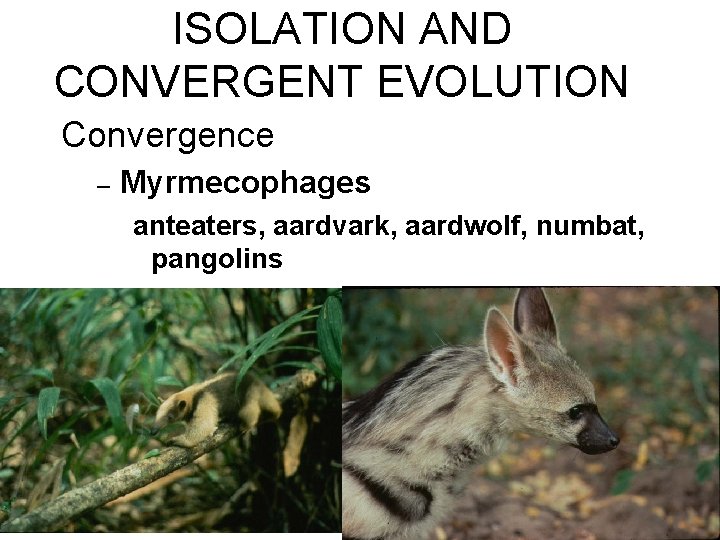
ISOLATION AND CONVERGENT EVOLUTION Convergence – Myrmecophages anteaters, aardvark, aardwolf, numbat, pangolins
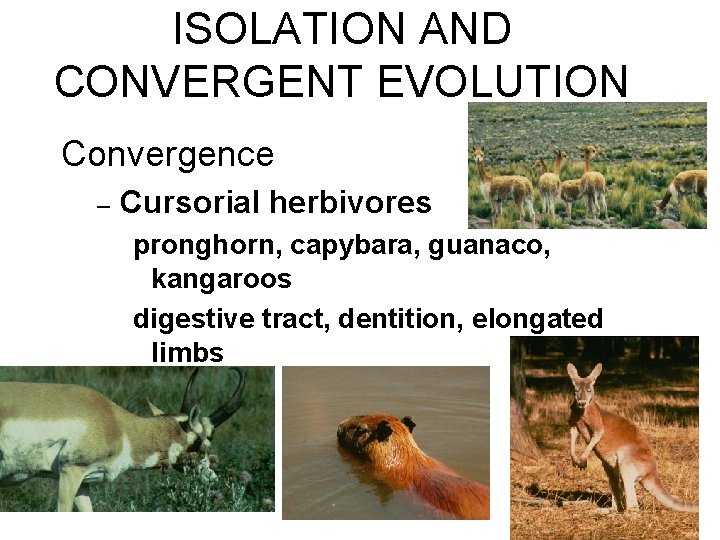
ISOLATION AND CONVERGENT EVOLUTION Convergence – Cursorial herbivores pronghorn, capybara, guanaco, kangaroos digestive tract, dentition, elongated limbs
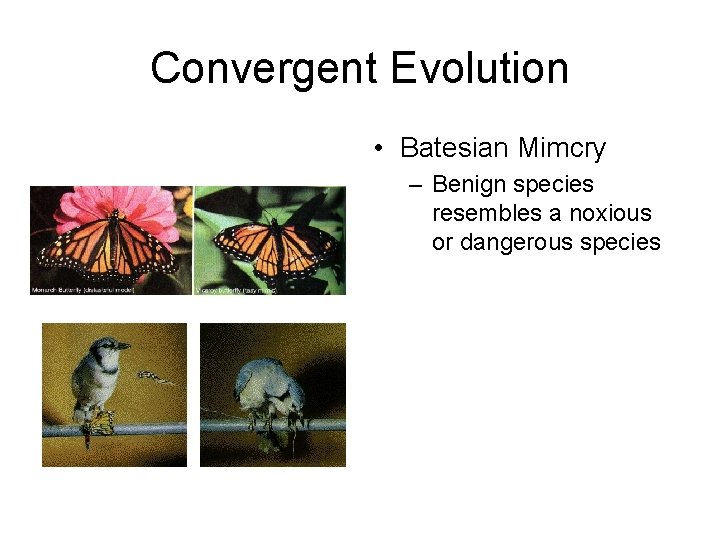
Convergent Evolution • Batesian Mimcry – Benign species resembles a noxious or dangerous species
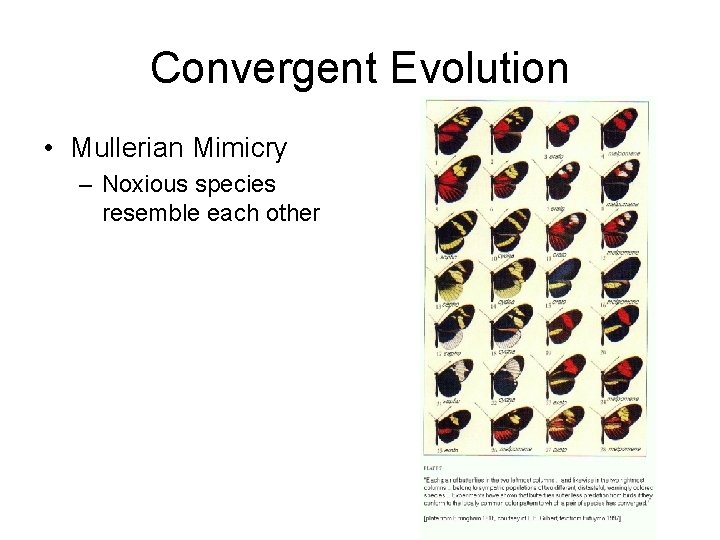
Convergent Evolution • Mullerian Mimicry – Noxious species resemble each other
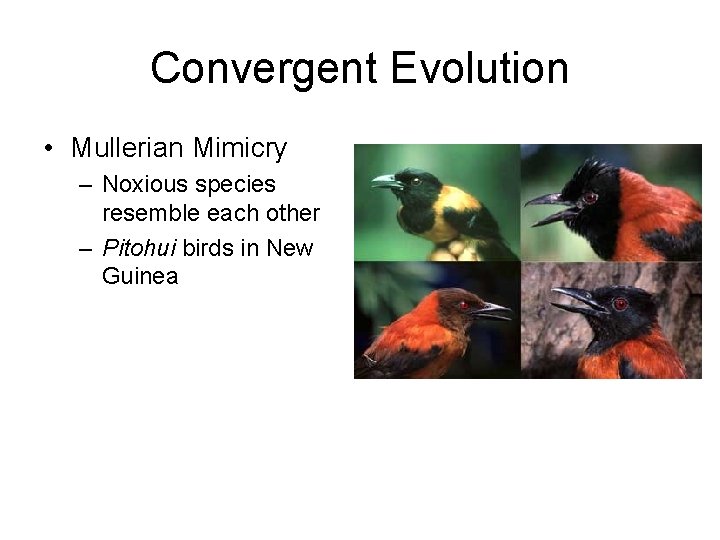
Convergent Evolution • Mullerian Mimicry – Noxious species resemble each other – Pitohui birds in New Guinea
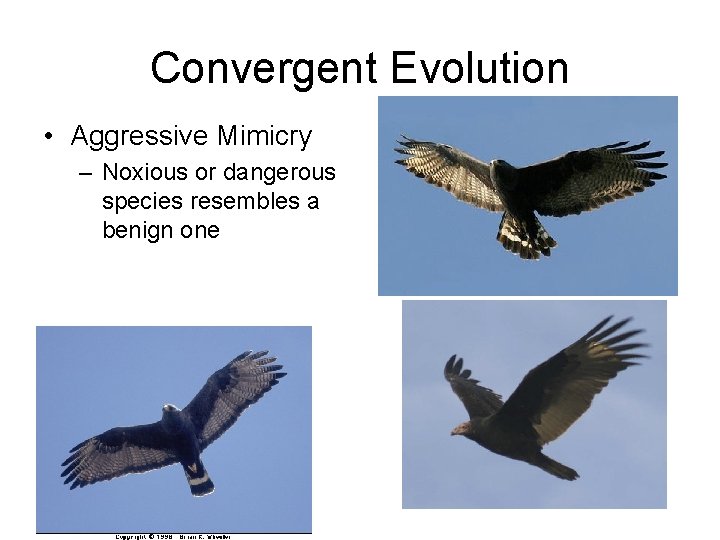
Convergent Evolution • Aggressive Mimicry – Noxious or dangerous species resembles a benign one
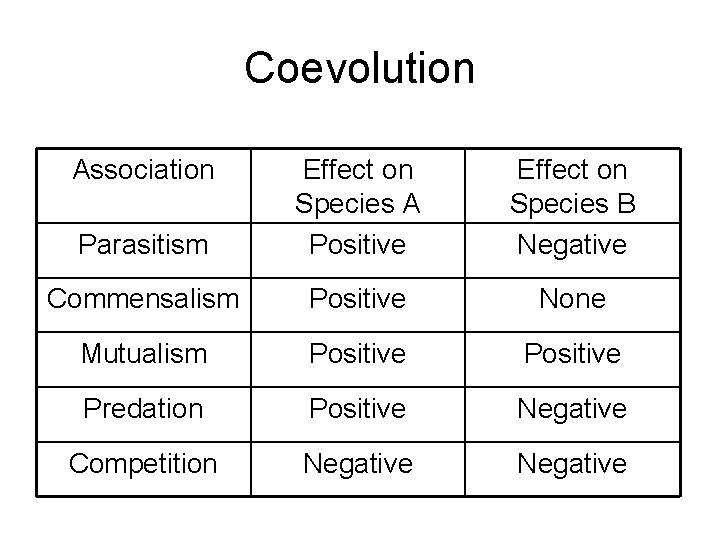
Coevolution Association Parasitism Effect on Species A Positive Effect on Species B Negative Commensalism Positive None Mutualism Positive Predation Positive Negative Competition Negative