
Evolutionary Games and Population Dynamics Oskar Morgenstern 1902

- Slides: 58
Evolutionary Games and Population Dynamics
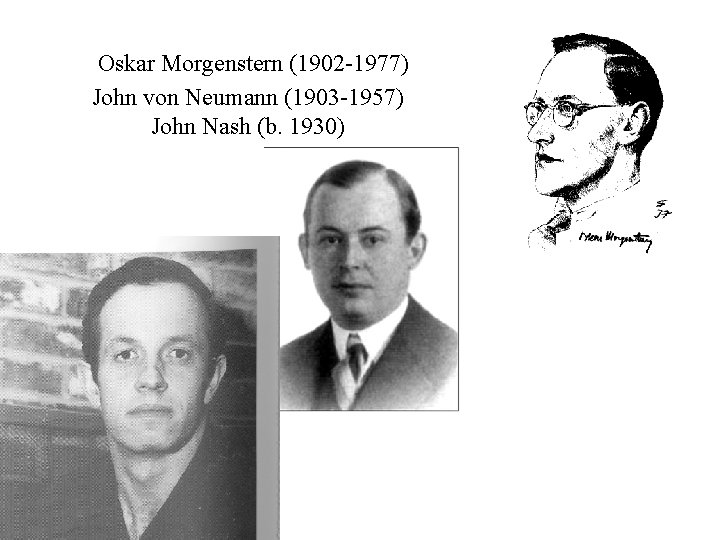
Oskar Morgenstern (1902 -1977) John von Neumann (1903 -1957) John Nash (b. 1930)
Nash-Equilibrium • • • Arbitrarily many players each has arbitrarily many strategies there always exists an equilibrium solution no player can improve payoff by deviating each strategy best reply to the others
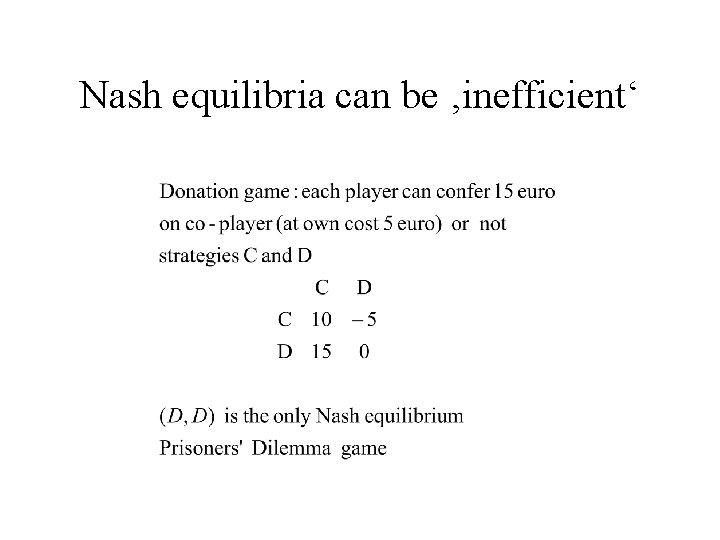
Nash equilibria can be ‚inefficient‘
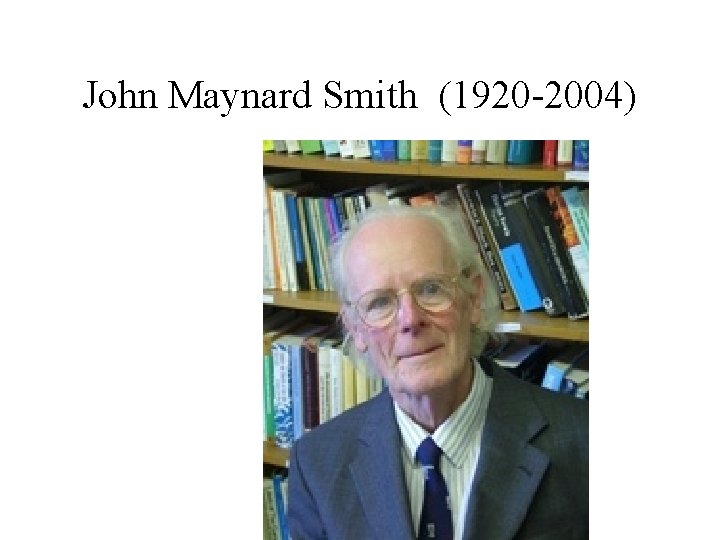
John Maynard Smith (1920 -2004)
Evolutionary Game Theory • Population of players (not necessarily rational) • Subgroups meet and interact • Strategies: Types of behaviour • Successful strategies spread in population
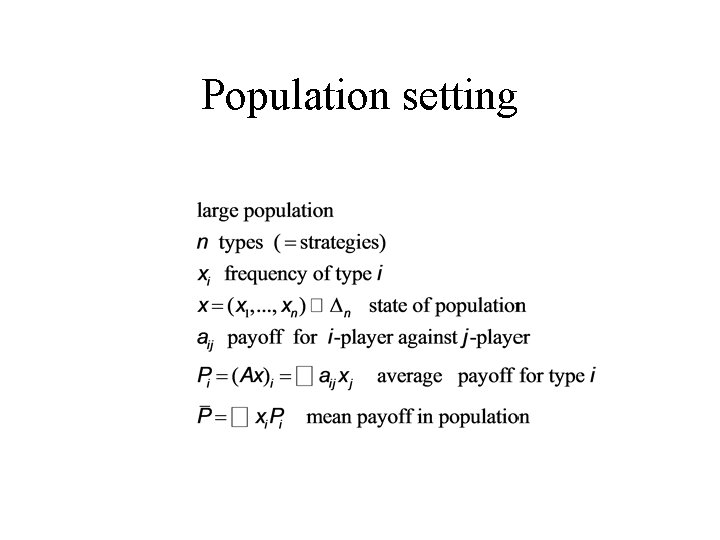
Population setting
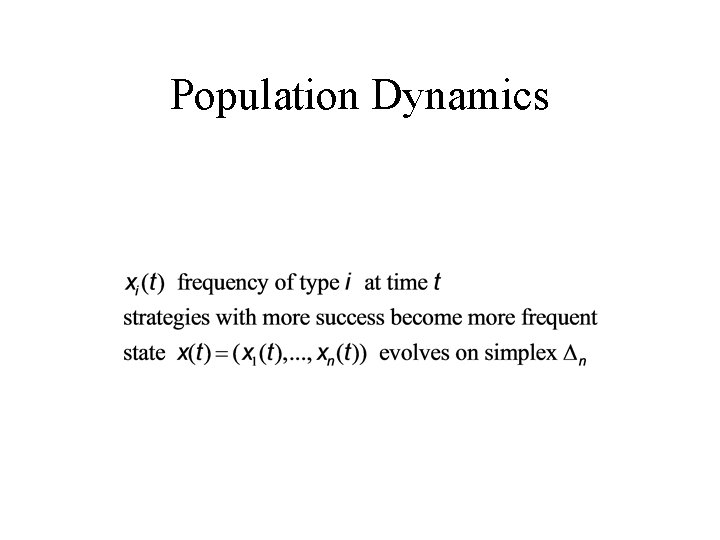
Population Dynamics
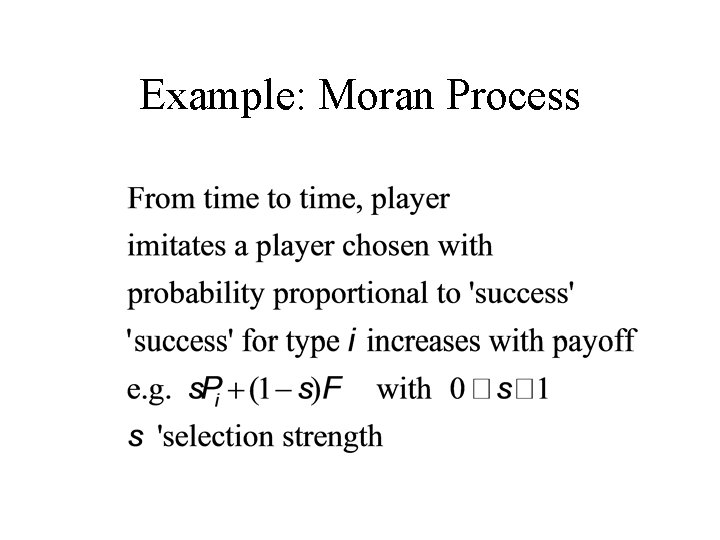
Example: Moran Process
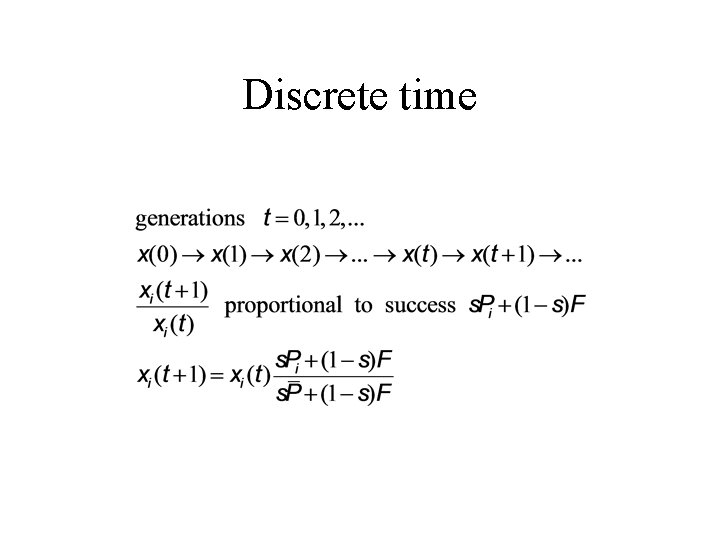
Discrete time
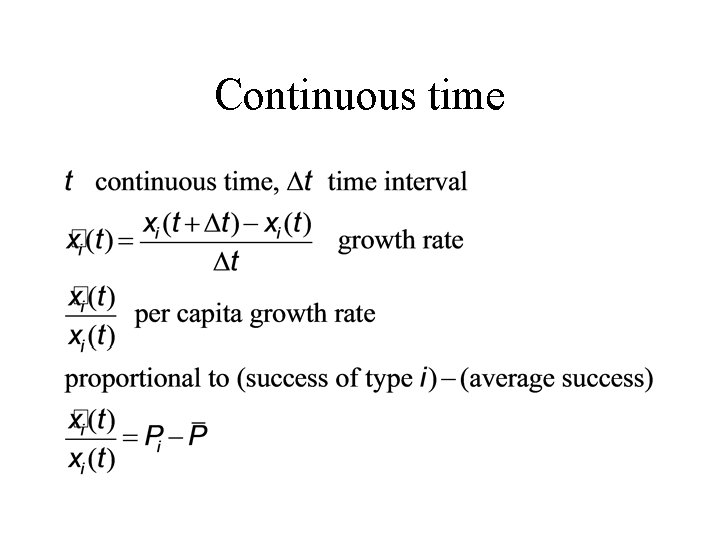
Continuous time
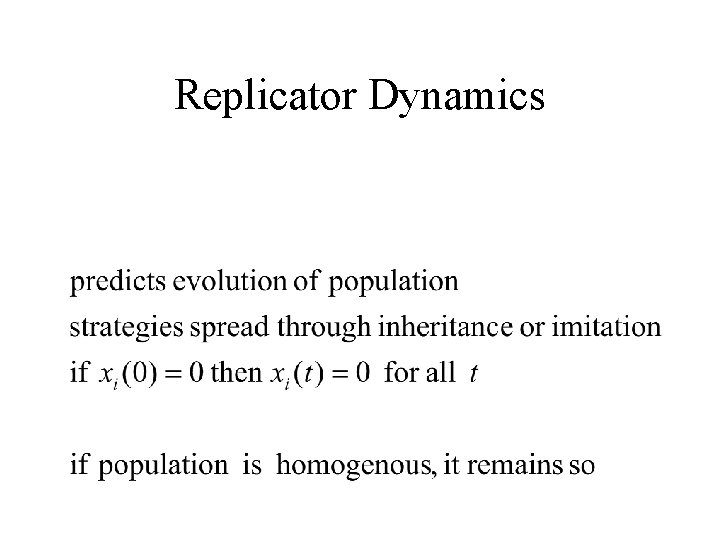
Replicator Dynamics
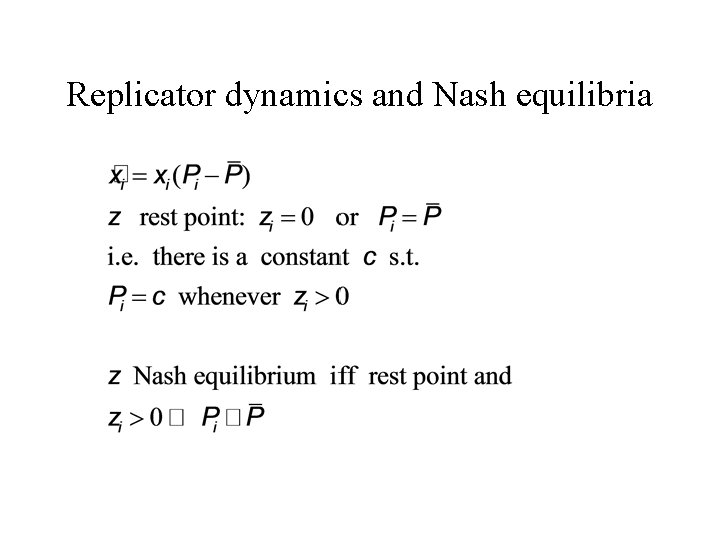
Replicator dynamics and Nash equilibria
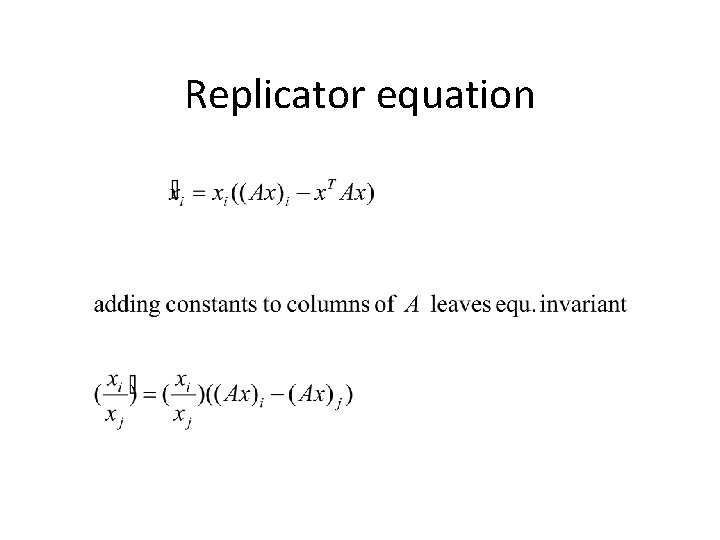
Replicator equation
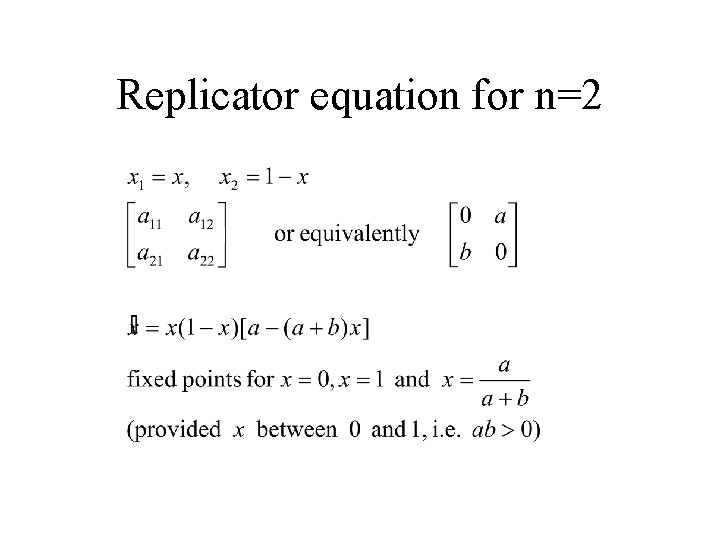
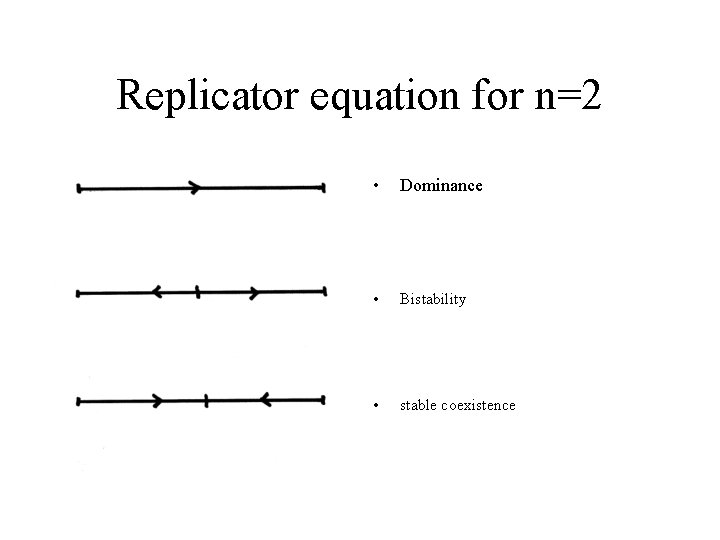
Replicator equation for n=2
Replicator equation for n=2 • Dominance • Bistability • stable coexistence
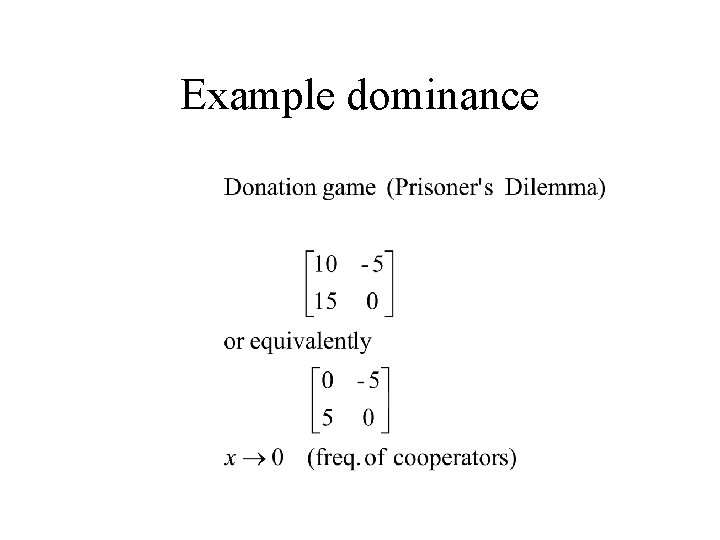
Example dominance
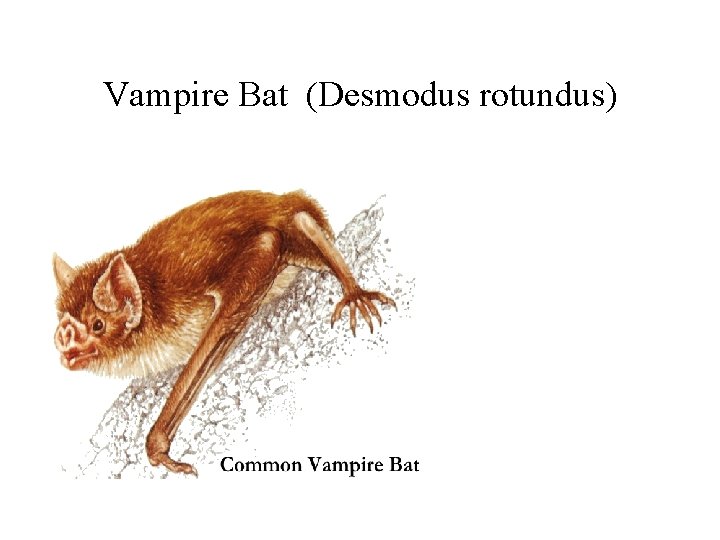
Vampire Bat (Desmodus rotundus)
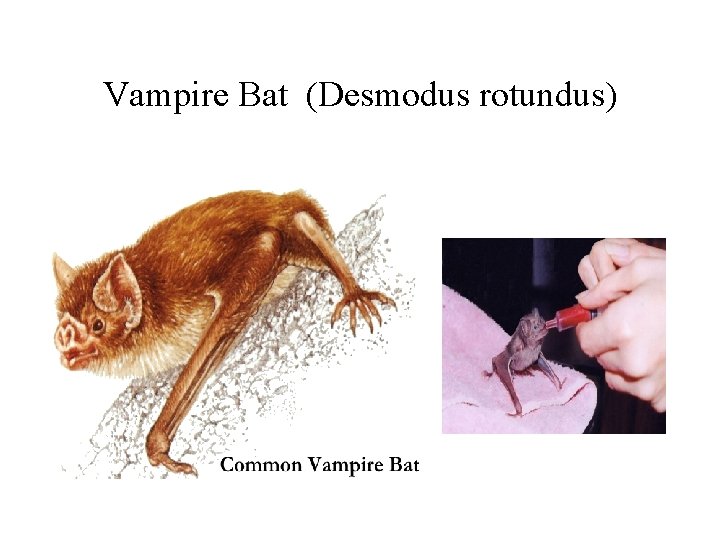
Vampire Bat (Desmodus rotundus)
Vampire Bats Blood donation as a Prisoner‘s Dilemma? Wilkinson, Nature 1990 The trait should vanish Repeated Interactions? (or kin selection? )
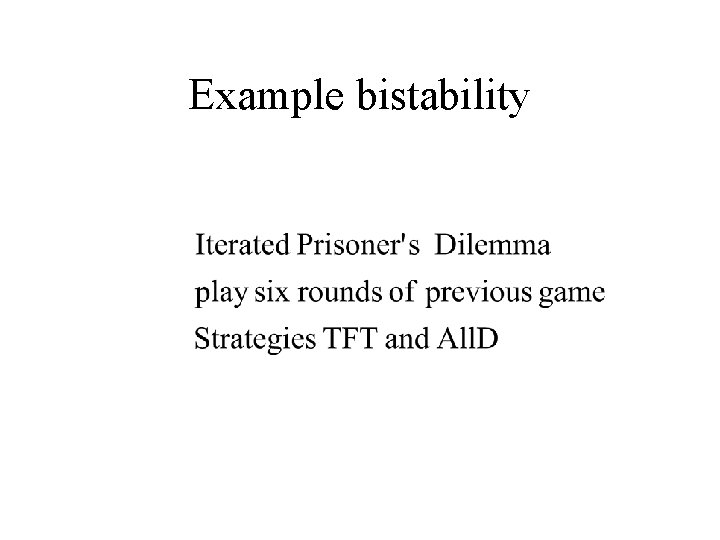
Example bistability
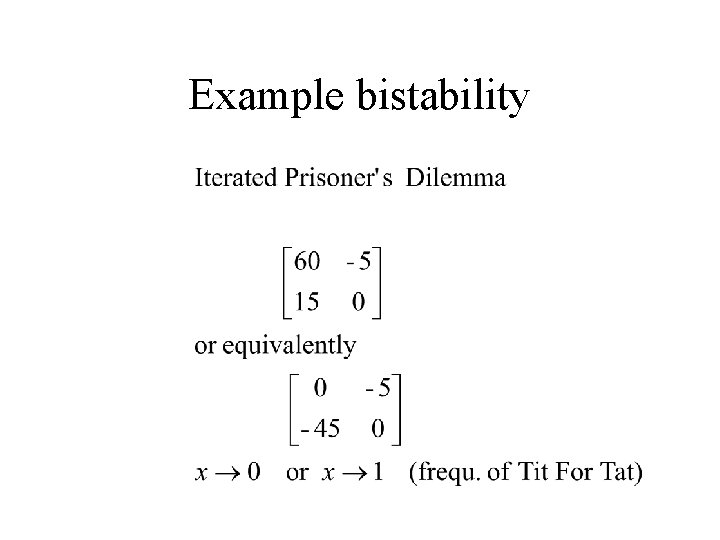
Example bistability
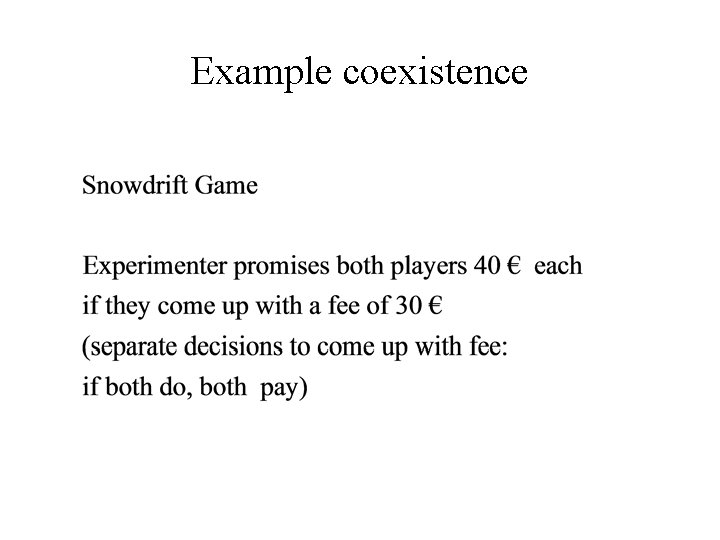
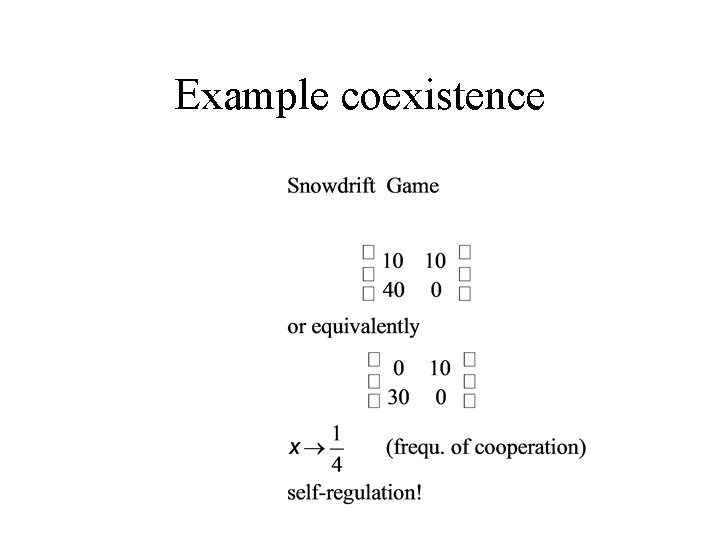
Example coexistence
Example coexistence
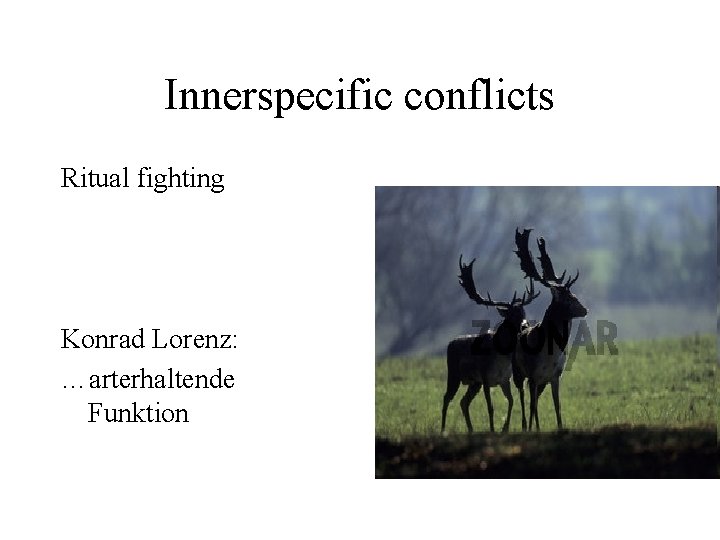
Innerspecific conflicts Ritual fighting Konrad Lorenz: …arterhaltende Funktion
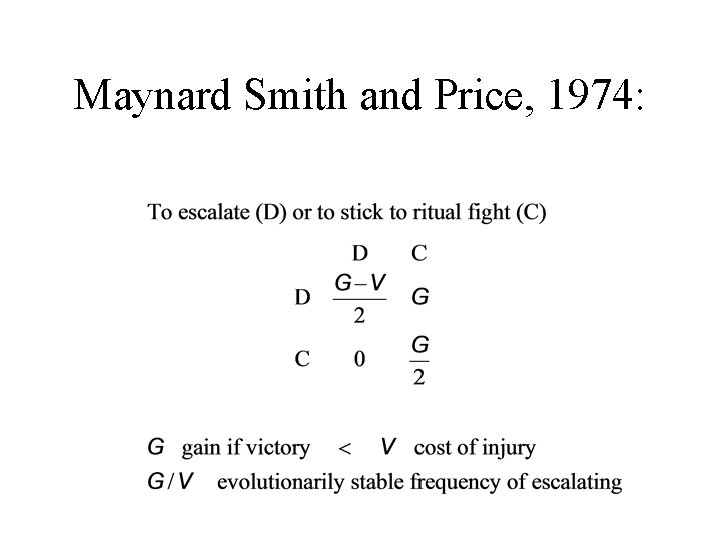
Maynard Smith and Price, 1974:
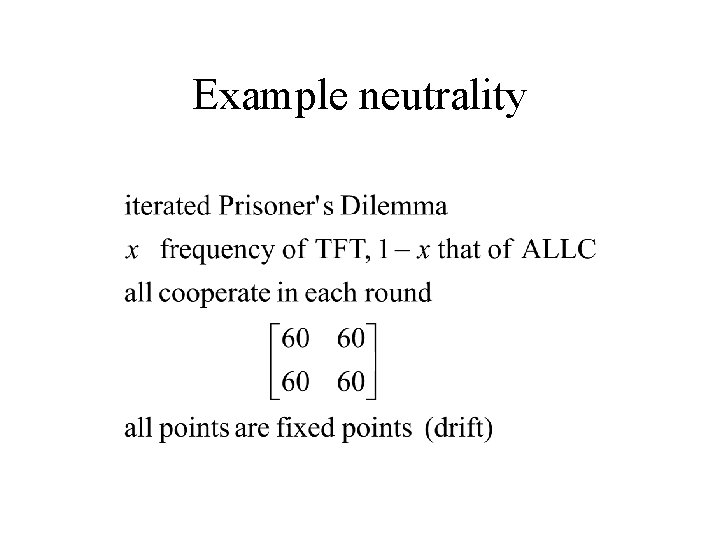
Example neutrality
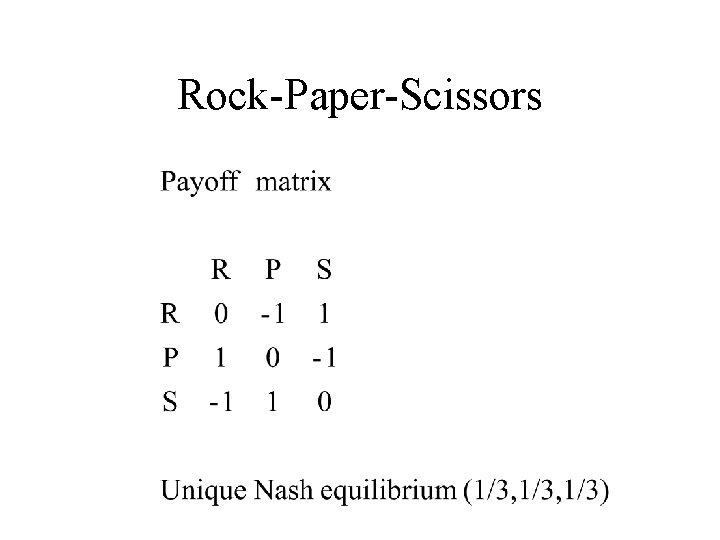
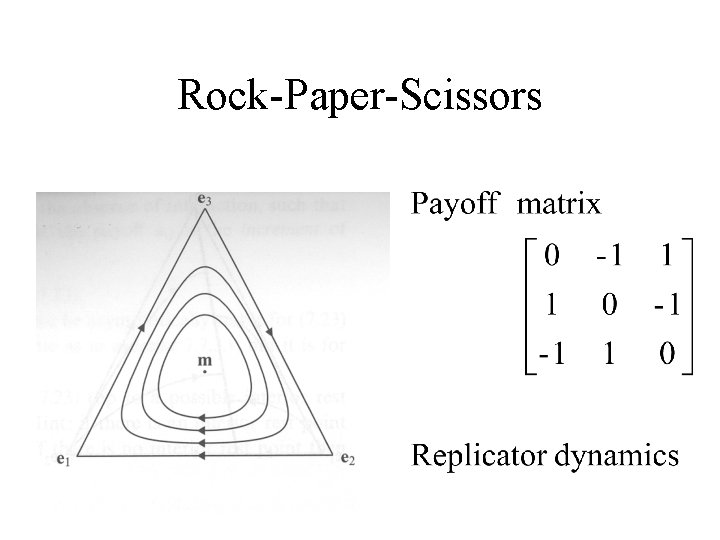
If n=3 strategies • Example: Rock-Paper-Scissors
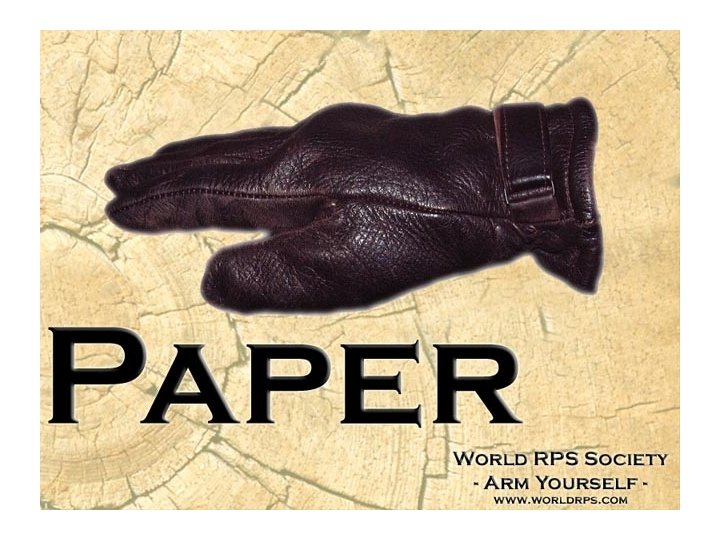
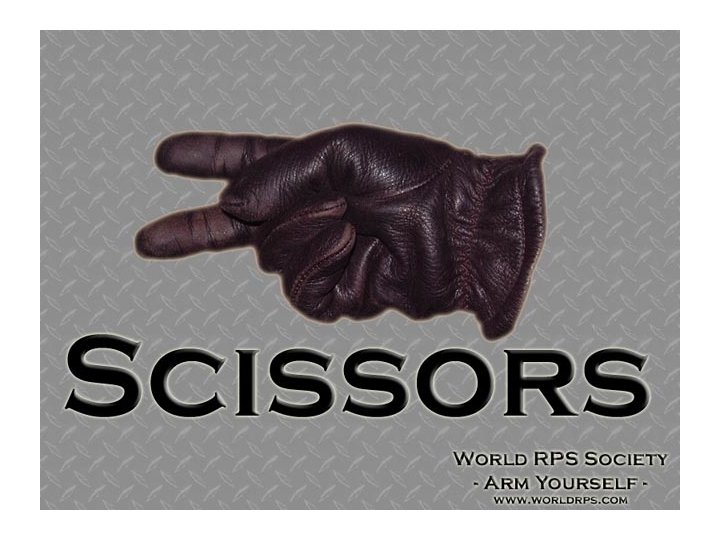
Rock-Paper-Scissors
Rock-Paper-Scissors
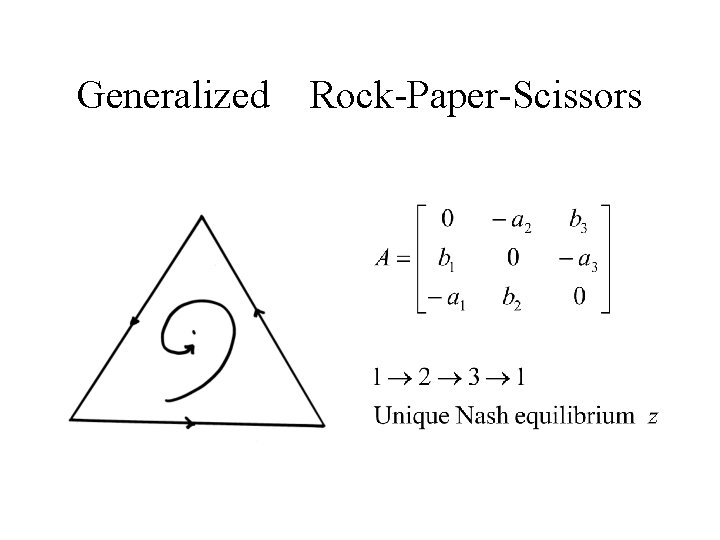
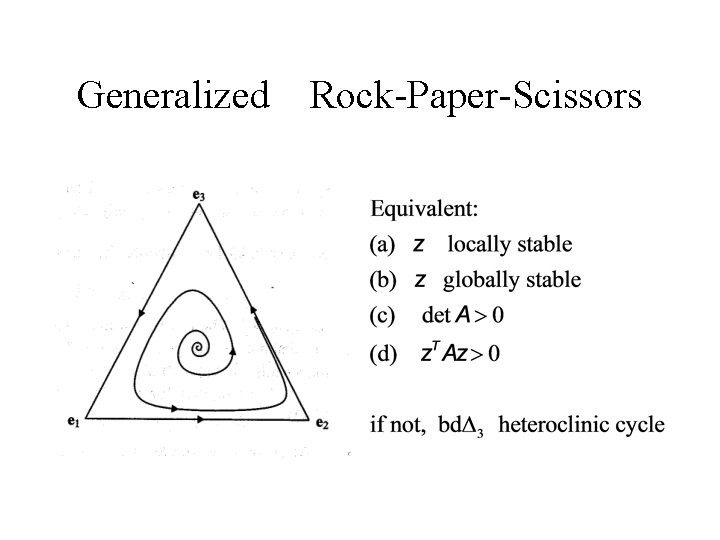
Generalized Rock-Paper-Scissors
Generalized Rock-Paper-Scissors
Bacterial Game Dynamics Escherichia coli Type A: wild type
Bacterial Game Dynamics Escherichia coli Type A: wild type Type B: mutant producing colicin (toxic) and an immunity protein
Bacterial Game Dynamics Escherichia coli Type A: wild type Type B: mutant producing colicin (toxic) and an immunity protein Type C: produces only the immunity protein
Bacterial Game Dynamics Escherichia coli Rock-Paper-Scissors cycle Not permanent! Serial transfer (from flask to flask): only one type can survive! (Kerr et al, Nature 2002)
Mating behavior • Uta stansburiana (lizards) • (Sinervo and Lively, Nature, 1998)
Mating behavior • males: 3 morphs (inheritable)
Rock-Paper-Scissors in Nature • males: 3 morphs (inheritable) • A: monogamous, guards female
Rock-Paper-Scissors in Nature • males: 3 morphs (inheritable) • A: monogamous, guards female • B: polygamous, guards harem (less efficiently)
Rock Paper Scissors in human interactions • Example: three players divide some goods • Any pair forms a majority • Shifting coalitions
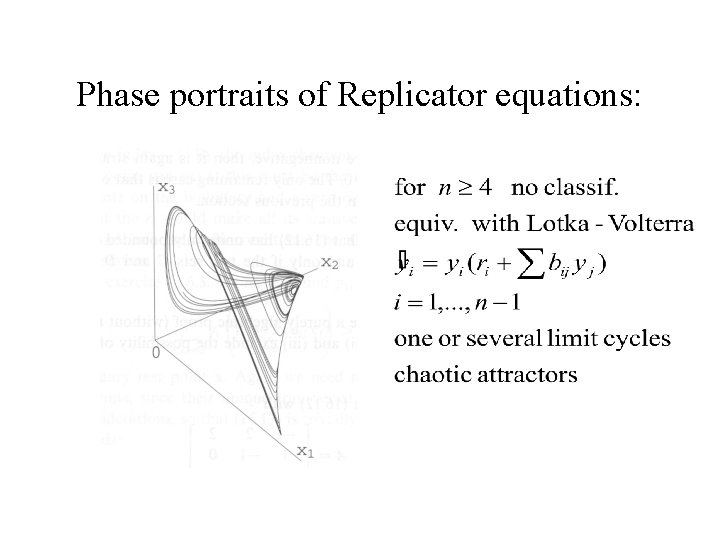
Phase portraits of Replicator equations: