
Evolution The change in the genetic makeup of
- Slides: 12
Evolution
The change in the genetic makeup of a population over time is evolution
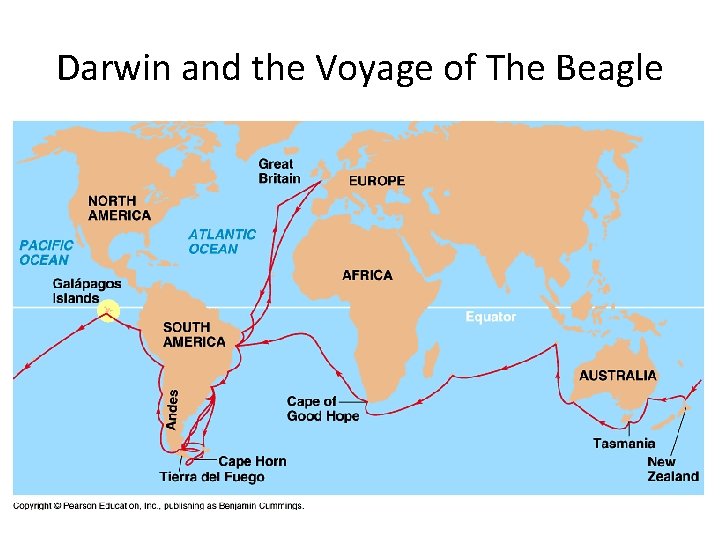
Darwin and the Voyage of The Beagle
Biogeography: the geographic distribution of species Species tend to be more closely related to other species from the same area rather than species with a similar way of life but living in a different area
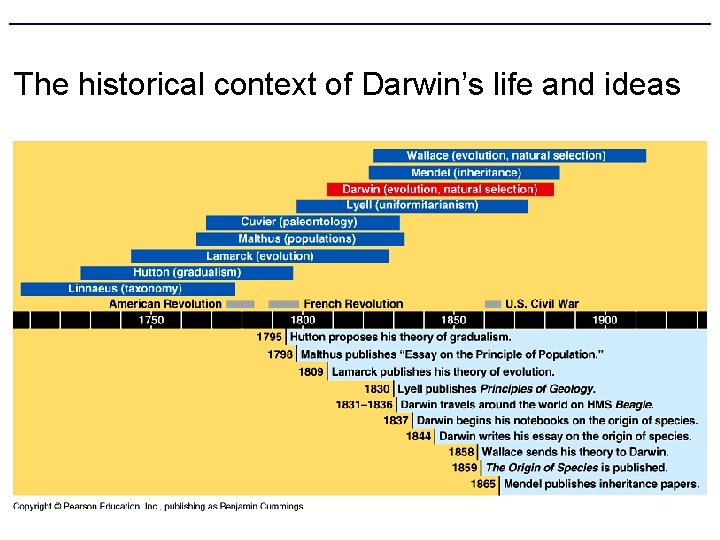
The historical context of Darwin’s life and ideas
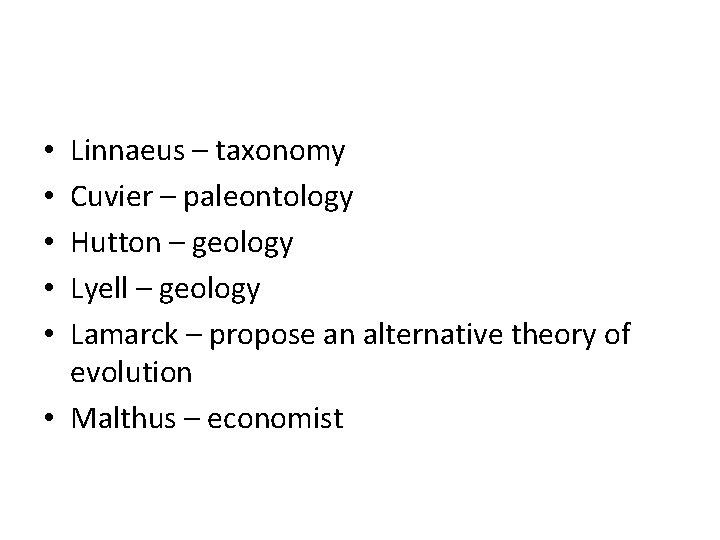
Linnaeus – taxonomy Cuvier – paleontology Hutton – geology Lyell – geology Lamarck – propose an alternative theory of evolution • Malthus – economist • • •
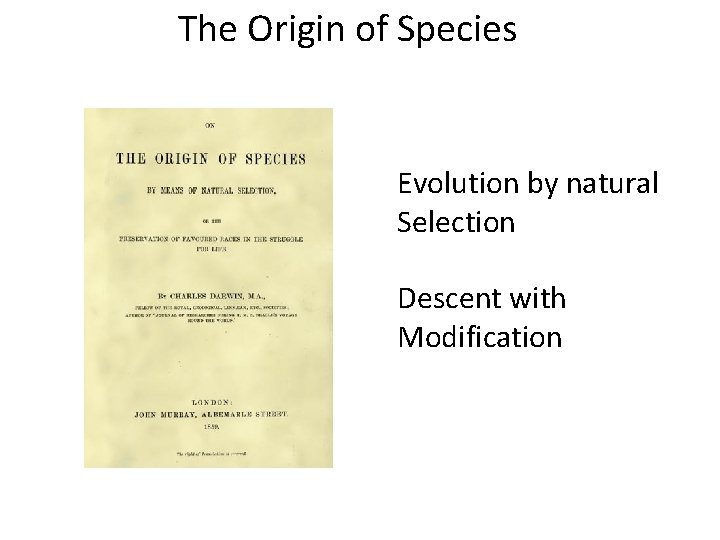
The Origin of Species Evolution by natural Selection Descent with Modification
Principle of Natural Selection • There are more individuals than the environment can support, leading to a struggle for existence, with only a fraction of offspring surviving each generation • Survival of individuals is not random but depends on their fitness • These traits are heritable and are passed on from one generation from the next • The unequal ability of individuals to survive and reproduce will lead to a gradual change in population, with favorable characteristics accumulating over the generations
Important Terms • • • Fitness and reproductive success Relative fitness Adaptation Heritability Genetic variability mutation
• Adaptive radiation: process in which organisms diversify rapidly into new forms • Population bottlenecks: sharp reduction in the size of populations • Mutation: permanent change in DNA sequence
Selection In Action • Peppered moths • Darwin’s finches • Antibiotic-resistant bacteria
Do Now: • Which of the following is not an observation or inference on which natural selection is based? (a) There is heritable variation among individuals (b) Poorly adapted individuals never produce offspring (c) There is a struggle for limited resources and only a fraction of offspring survive (d) individuals whose characteristics are best suited to the environment generally leave more offspring than those whose characteristics are less well suited (e) organisms interact with their environments