
Evolution Question and Answer Samples and Techniques Which
- Slides: 12
Evolution Question and Answer Samples and Techniques
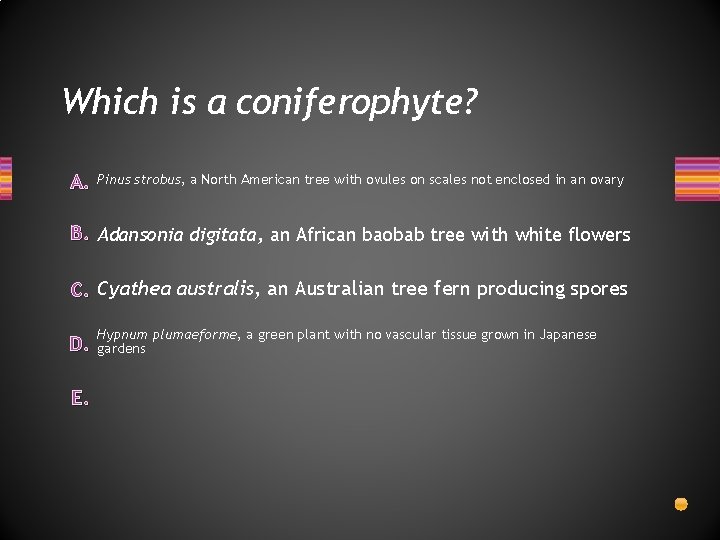
Which is a coniferophyte? A. Pinus strobus, a North American tree with ovules on scales not enclosed in an ovary B. Adansonia digitata, an African baobab tree with white flowers C. Cyathea australis, an Australian tree fern producing spores D. E. Hypnum plumaeforme, a green plant with no vascular tissue grown in Japanese gardens
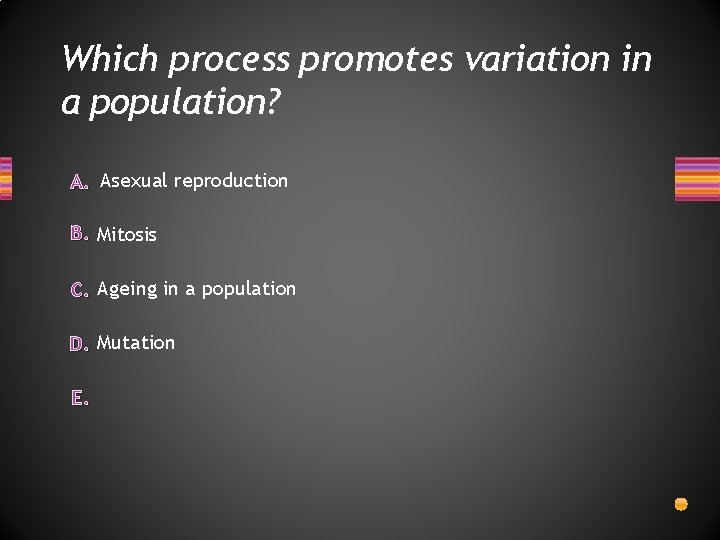
Which process promotes variation in a population? A. Asexual reproduction B. Mitosis C. Ageing in a population D. Mutation E.
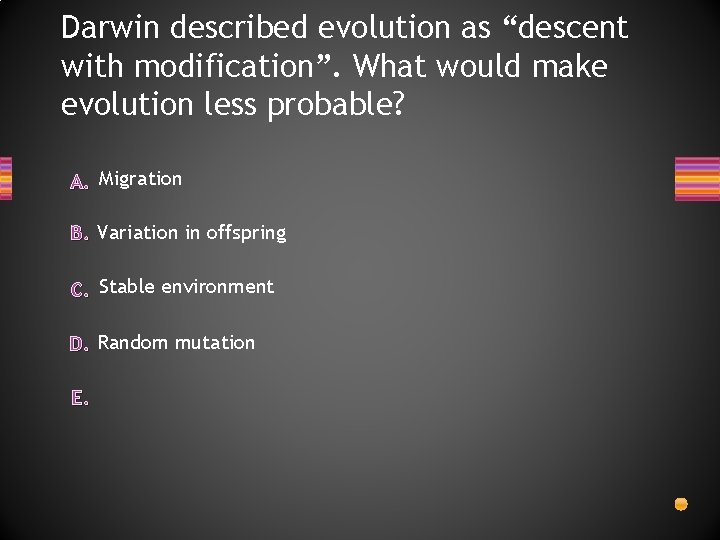
Darwin described evolution as “descent with modification”. What would make evolution less probable? A. Migration B. Variation in offspring C. Stable environment D. Random mutation E.
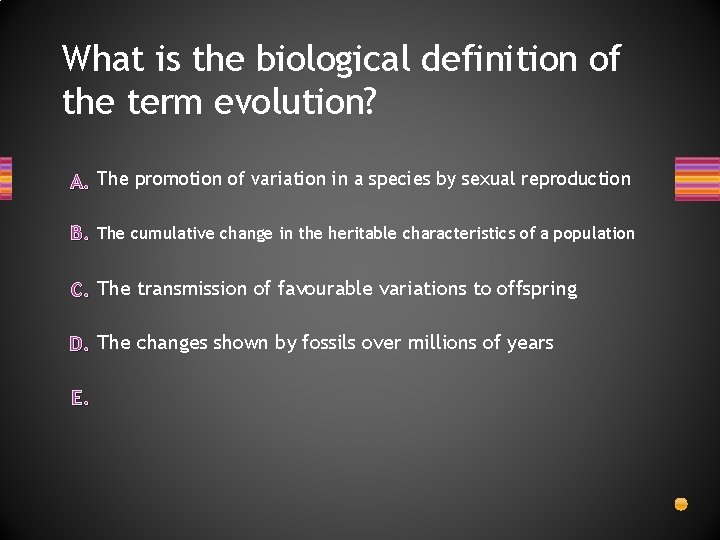
What is the biological definition of the term evolution? A. The promotion of variation in a species by sexual reproduction B. The cumulative change in the heritable characteristics of a population C. The transmission of favourable variations to offspring D. The changes shown by fossils over millions of years E.
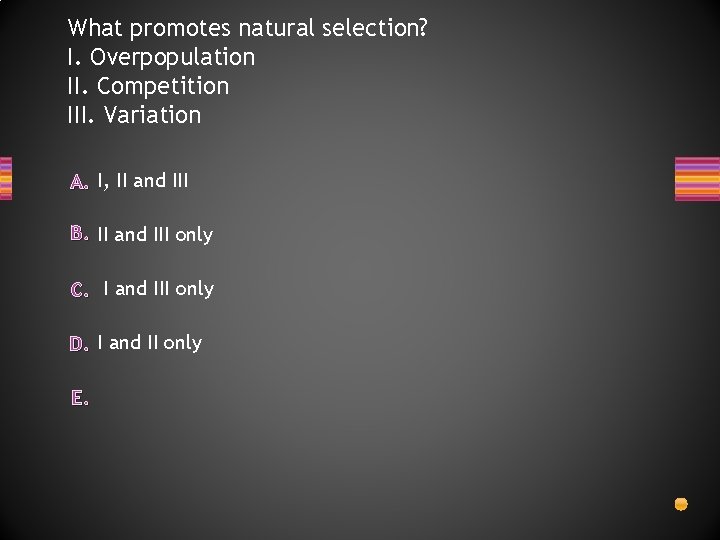
What promotes natural selection? I. Overpopulation II. Competition III. Variation A. I, II and III B. II and III only C. I and III only D. I and II only E.
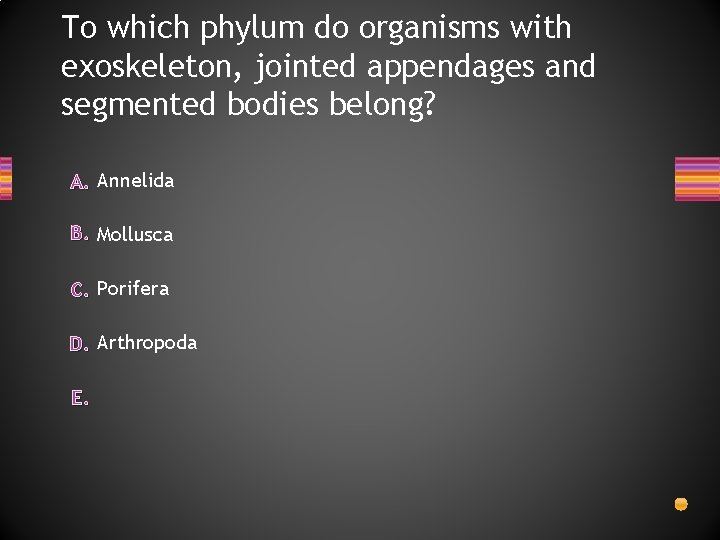
To which phylum do organisms with exoskeleton, jointed appendages and segmented bodies belong? A. Annelida B. Mollusca C. Porifera D. Arthropoda E.
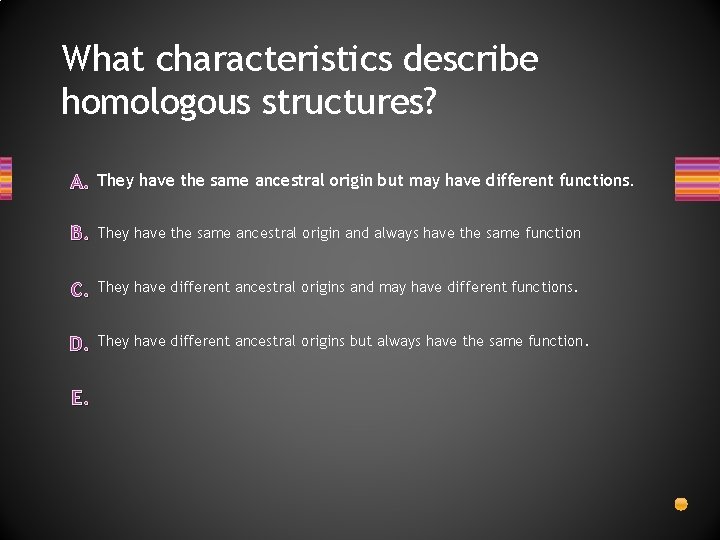
What characteristics describe homologous structures? A. They have the same ancestral origin but may have different functions. B. They have the same ancestral origin and always have the same function C. They have different ancestral origins and may have different functions. D. They have different ancestral origins but always have the same function. E.
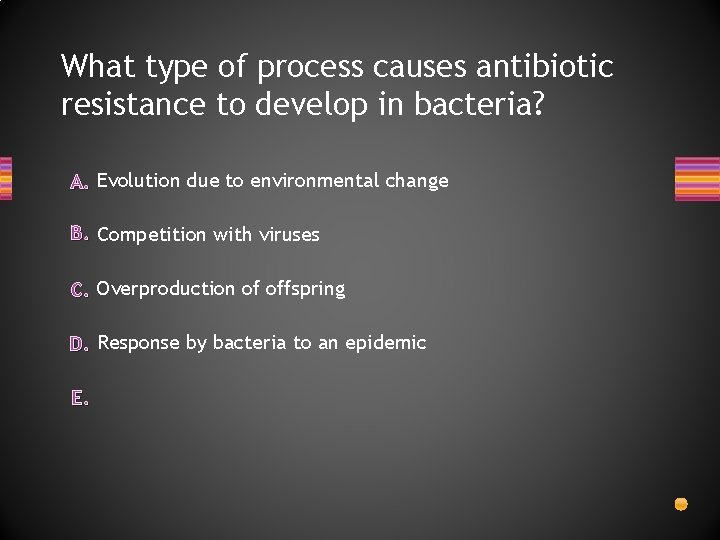
What type of process causes antibiotic resistance to develop in bacteria? A. Evolution due to environmental change B. Competition with viruses C. Overproduction of offspring D. Response by bacteria to an epidemic E.
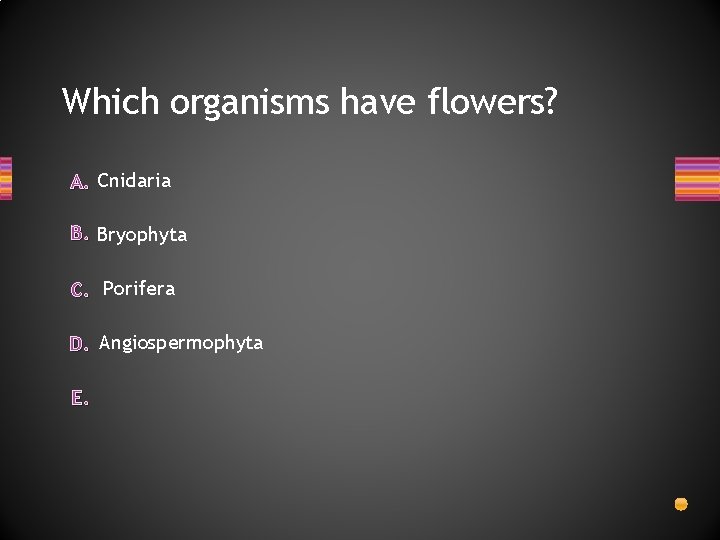
Which organisms have flowers? A. Cnidaria B. Bryophyta C. Porifera D. Angiospermophyta E.
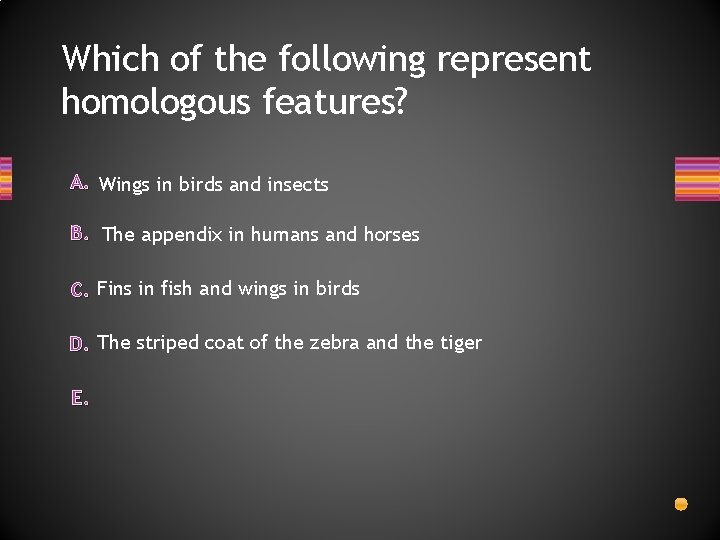
Which of the following represent homologous features? A. Wings in birds and insects B. The appendix in humans and horses C. Fins in fish and wings in birds D. The striped coat of the zebra and the tiger E.
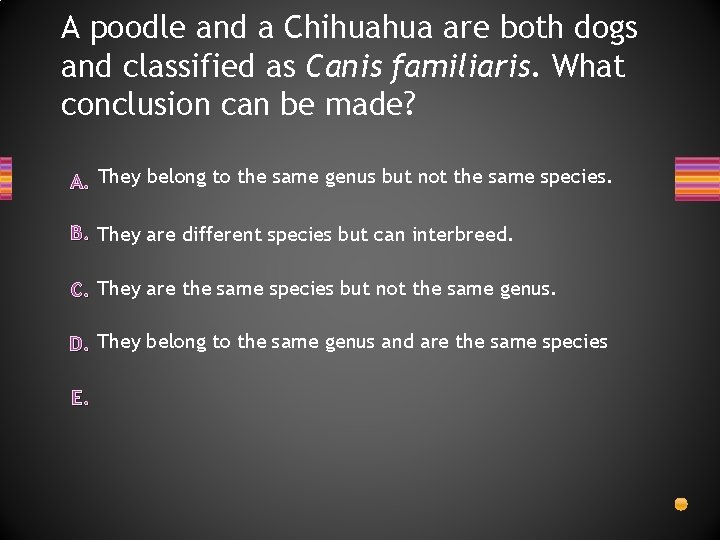
A poodle and a Chihuahua are both dogs and classified as Canis familiaris. What conclusion can be made? A. They belong to the same genus but not the same species. B. They are different species but can interbreed. C. They are the same species but not the same genus. D. They belong to the same genus and are the same species E.