
Evolution Processes As new species originate they may
- Slides: 53
Evolution Processes
As new species originate, they may go through different processes of evolution… • • Divergent evolution Convergent evolution Coevolution Adaptive radiation
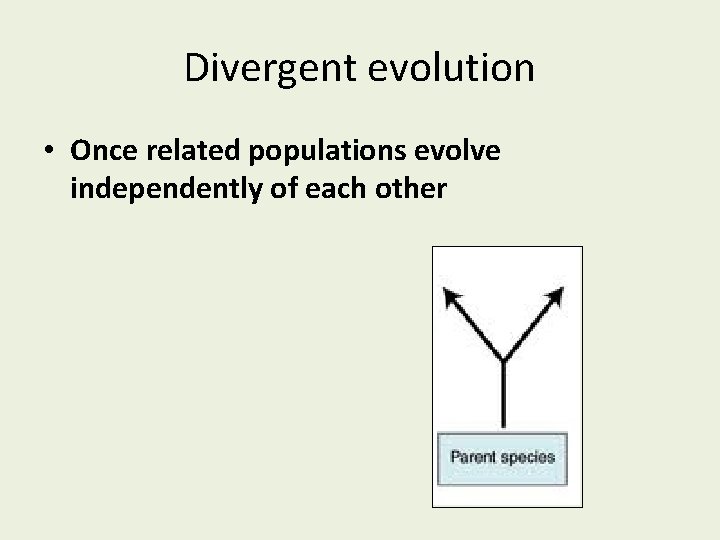
Divergent evolution • Once related populations evolve independently of each other
Divergent evolution • Causes: – Geographic barriers – Small group colonizing new area
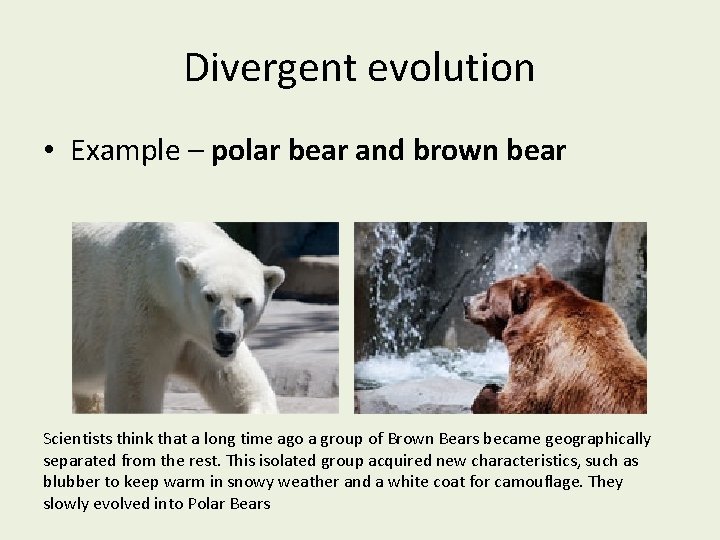
Divergent evolution • Example – polar bear and brown bear Scientists think that a long time ago a group of Brown Bears became geographically separated from the rest. This isolated group acquired new characteristics, such as blubber to keep warm in snowy weather and a white coat for camouflage. They slowly evolved into Polar Bears
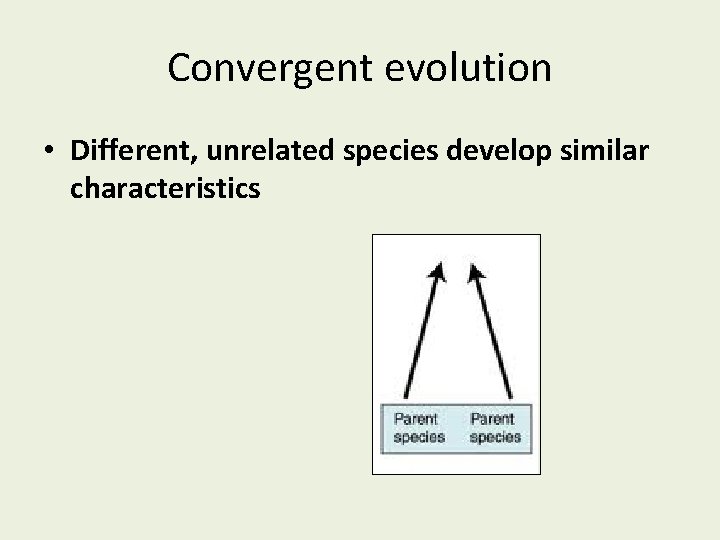
Convergent evolution • Different, unrelated species develop similar characteristics
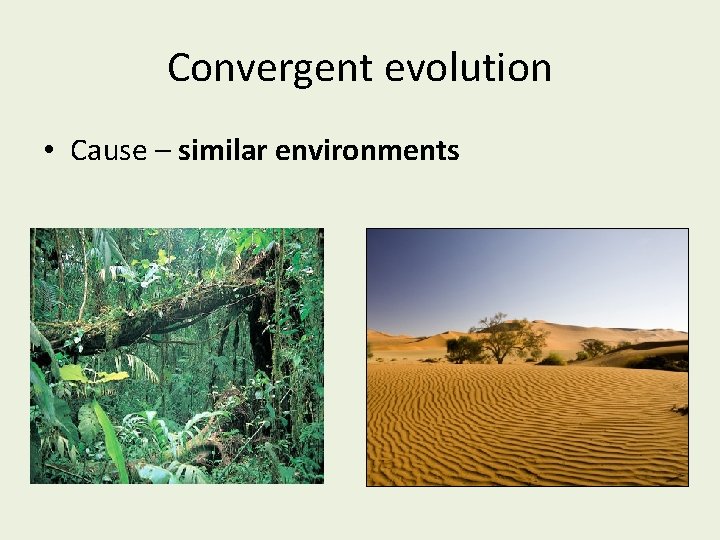
Convergent evolution • Cause – similar environments
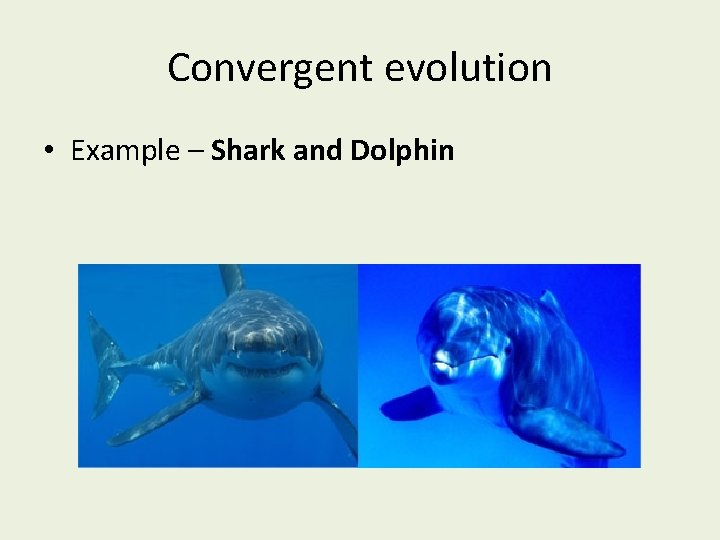
Convergent evolution • Example – Shark and Dolphin
Modeling Convergent Evolution • Think of an invention that would make __________ better.
Modeling Convergent Evolution • Were any of your ideas the same or similar? • How does this activity illustrate convergent evolution?
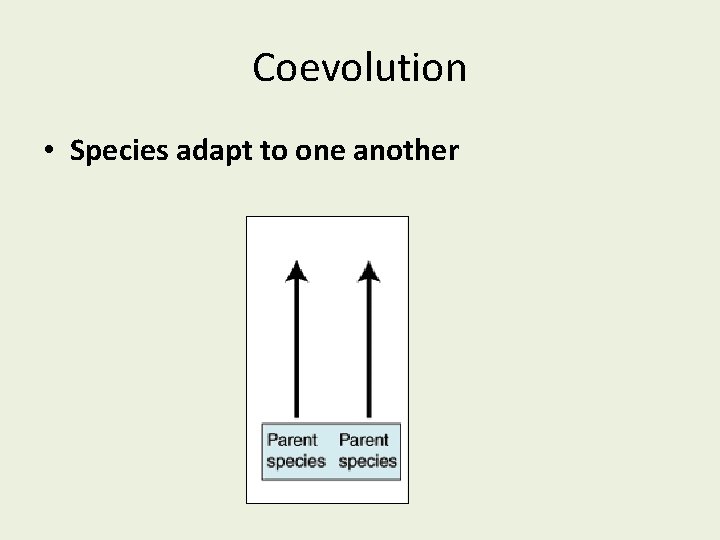
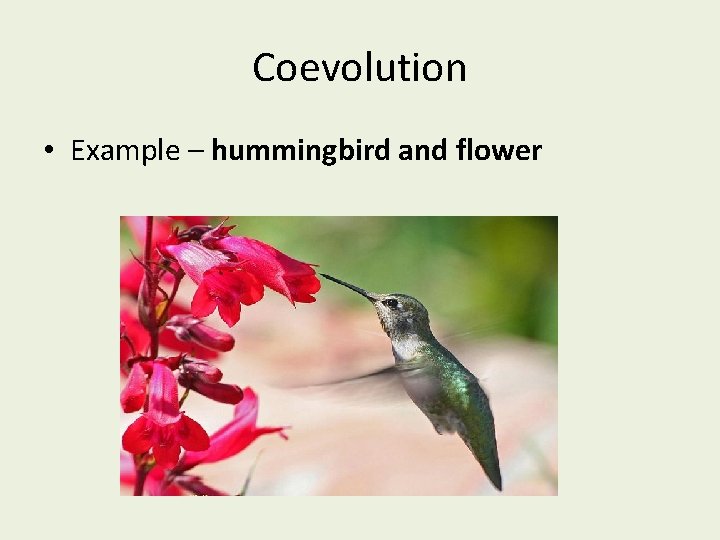
Coevolution • Species adapt to one another
Coevolution • Cause – close interaction Symbiotic Relationships Predator and prey – one benefits Mutualistic – both benefit
Coevolution • Example – hummingbird and flower
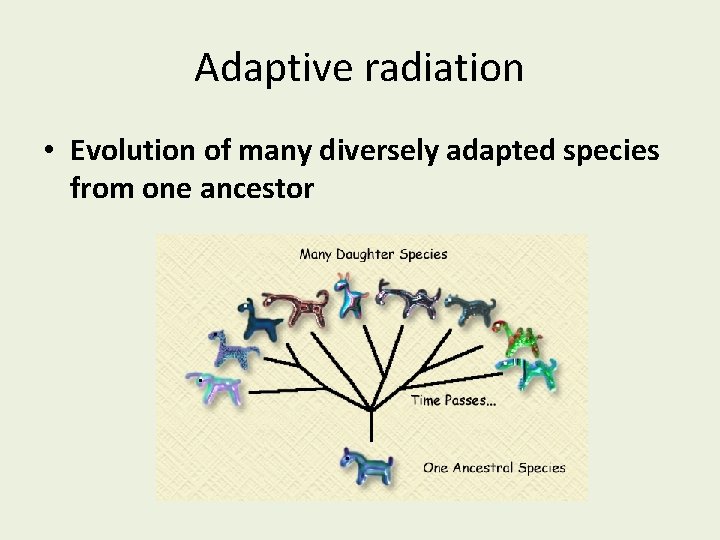
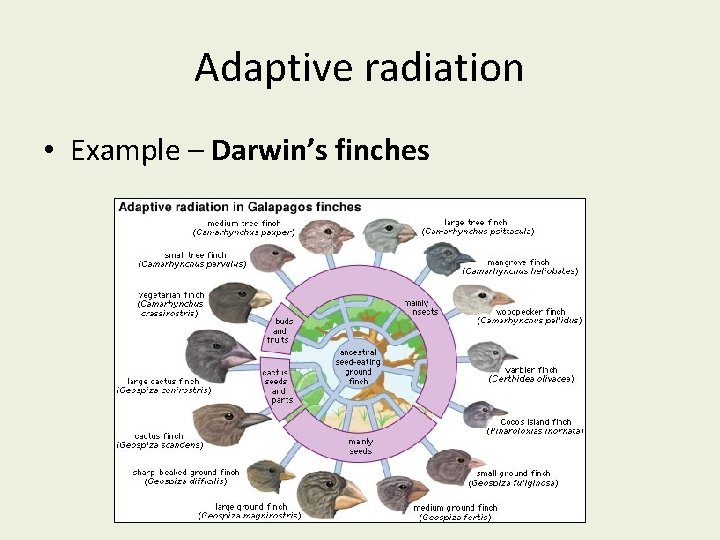
Adaptive radiation • Evolution of many diversely adapted species from one ancestor
Adaptive radiation • Example – Darwin’s finches
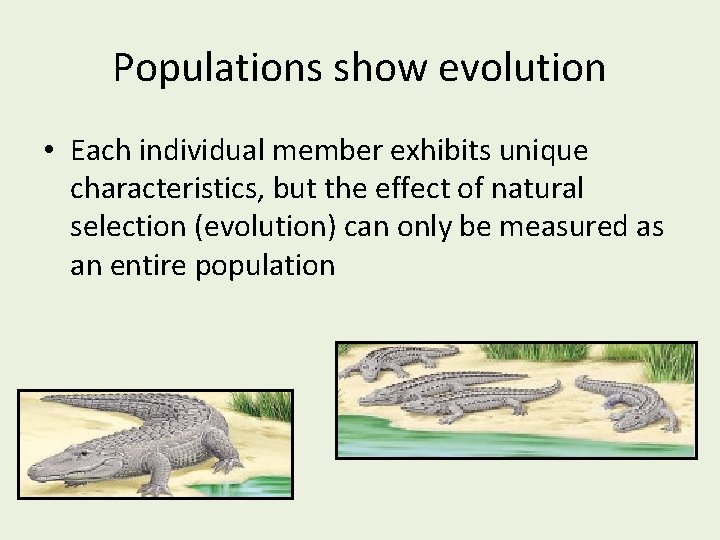
Populations show evolution • Each individual member exhibits unique characteristics, but the effect of natural selection (evolution) can only be measured as an entire population
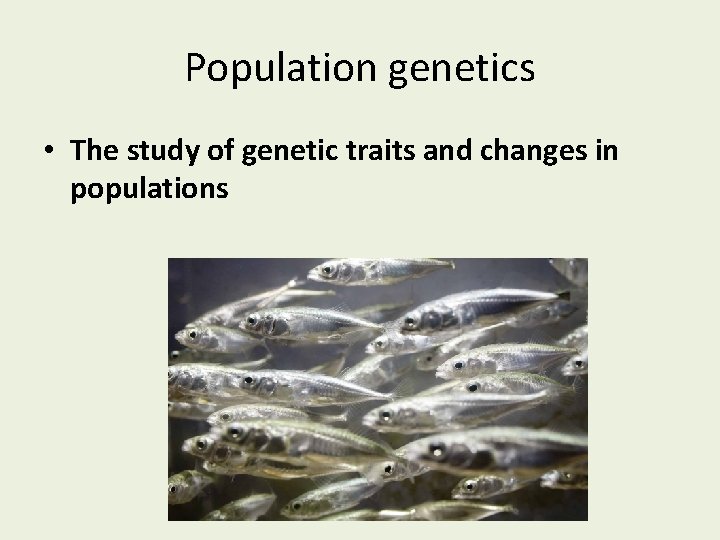
Population genetics • The study of genetic traits and changes in populations
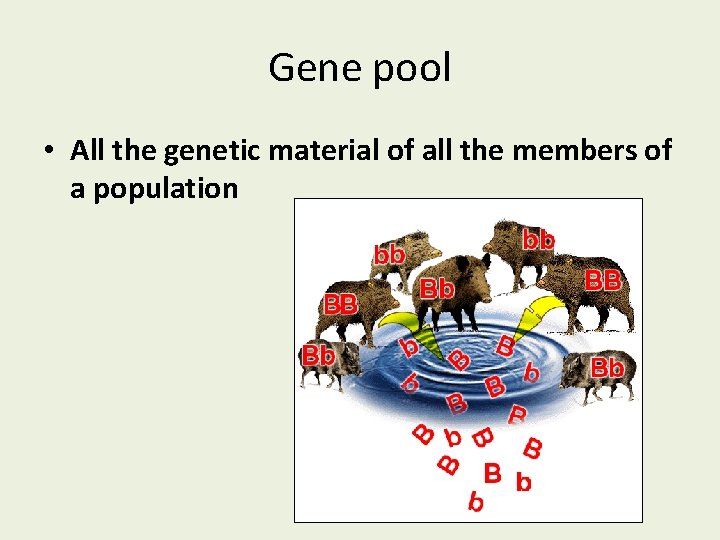
Gene pool • All the genetic material of all the members of a population
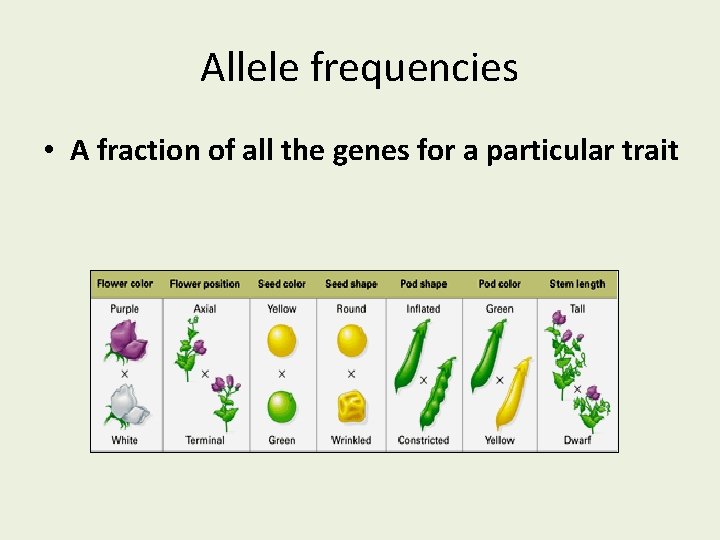
Allele frequencies • A fraction of all the genes for a particular trait
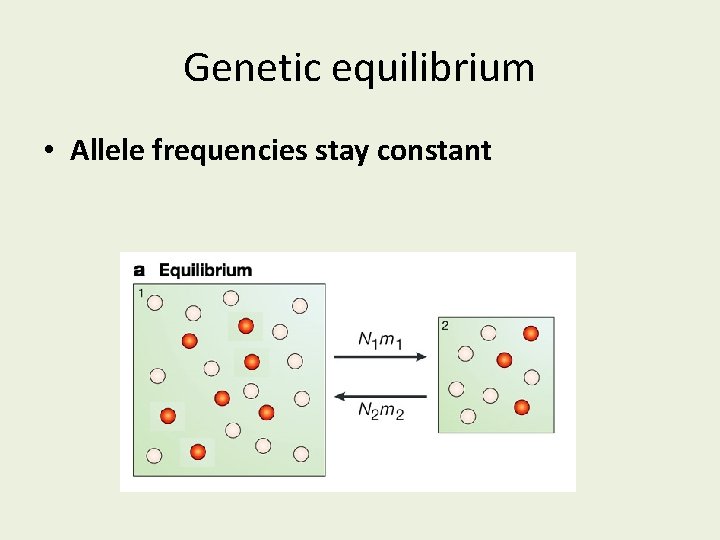
Genetic equilibrium • Allele frequencies stay constant
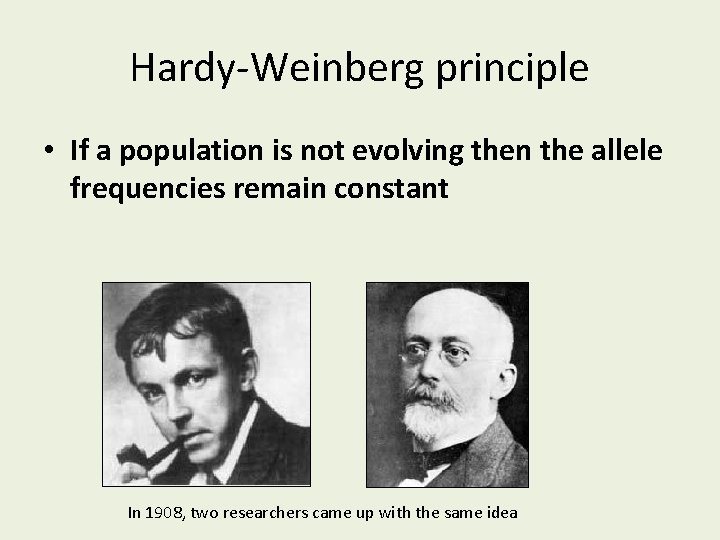
Hardy-Weinberg principle • If a population is not evolving then the allele frequencies remain constant In 1908, two researchers came up with the same idea
Hardy-Weinberg principle • This principle will be maintained in nature only if all five of the following conditions are met: a. Very large population b. Isolation from other populations c. No new mutations d. Random mating e. No natural selection
Genetic drift • Random change in allele frequencies due to chance events • Natural disasters – volcanoes, earthquakes, forest fires, flooding… • Migration
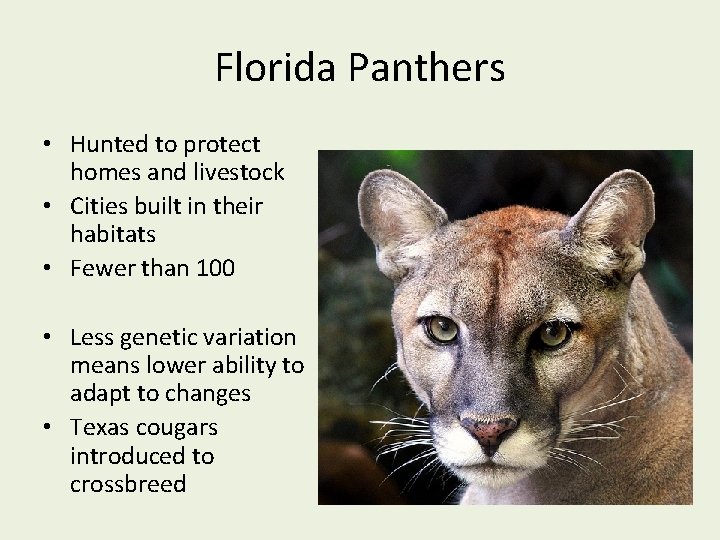
Florida Panthers • Hunted to protect homes and livestock • Cities built in their habitats • Fewer than 100 • Less genetic variation means lower ability to adapt to changes • Texas cougars introduced to crossbreed
Population Genetics
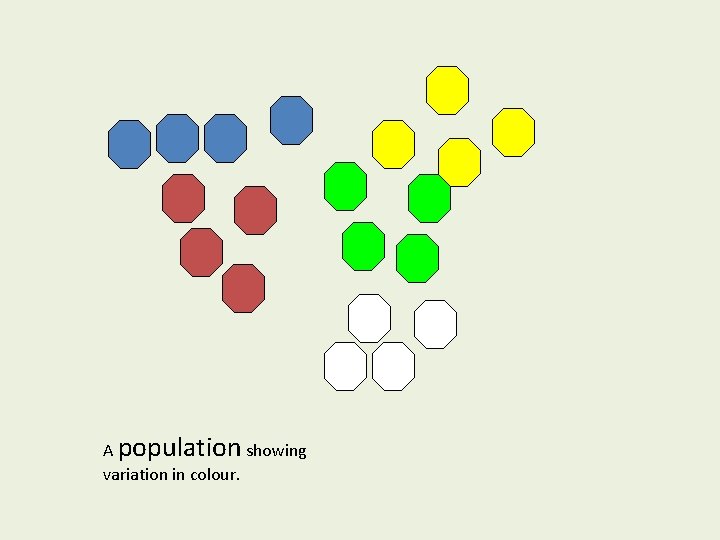
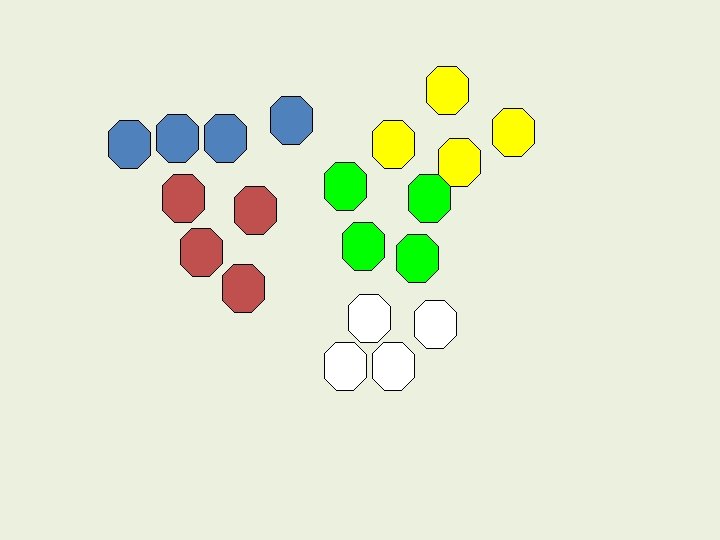
A population showing variation in colour.
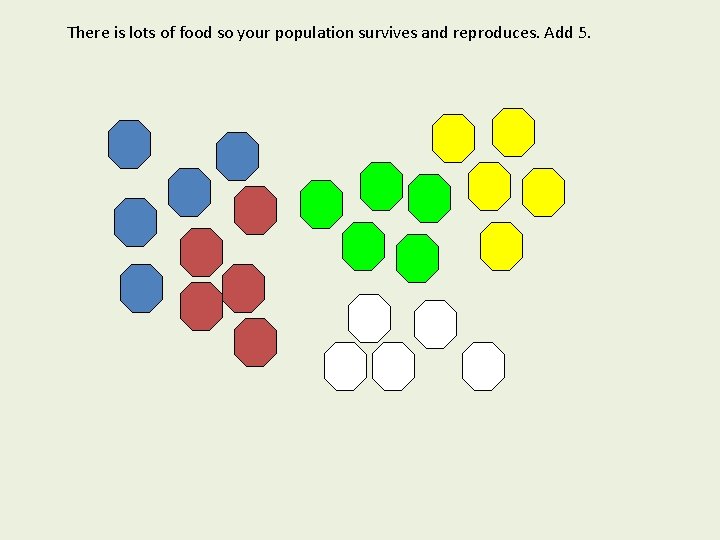
There is lots of food so your population survives and reproduces. Add 5.
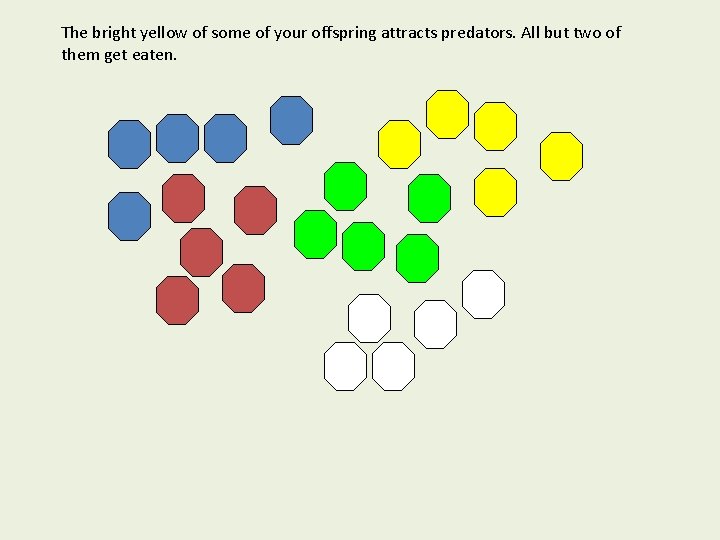
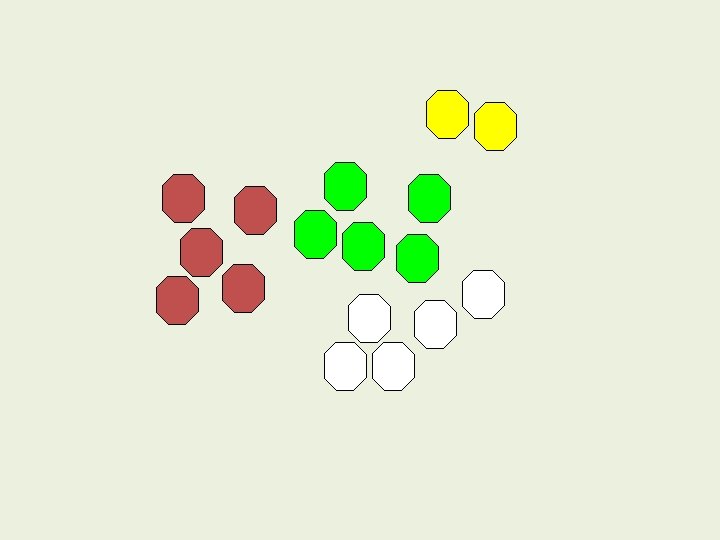
The bright yellow of some of your offspring attracts predators. All but two of them get eaten.
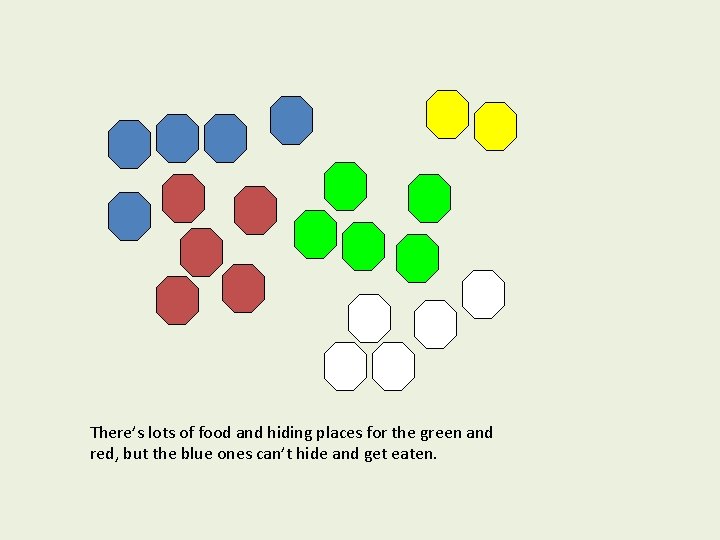
There’s lots of food and hiding places for the green and red, but the blue ones can’t hide and get eaten.
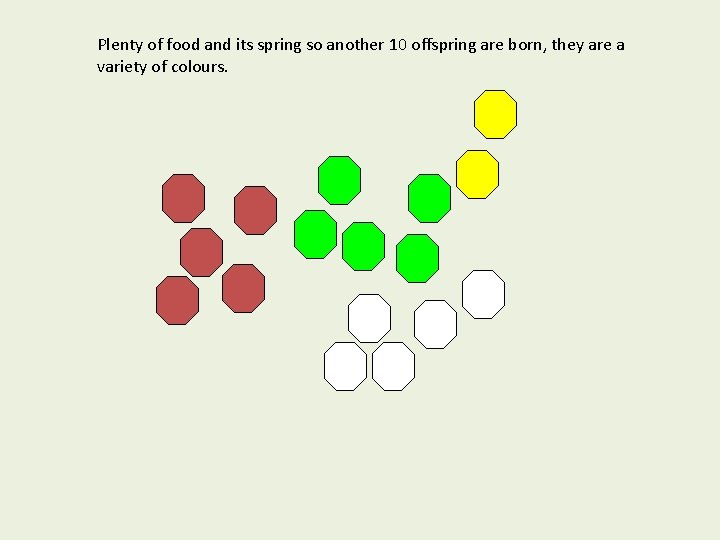
Plenty of food and its spring so another 10 offspring are born, they are a variety of colours.
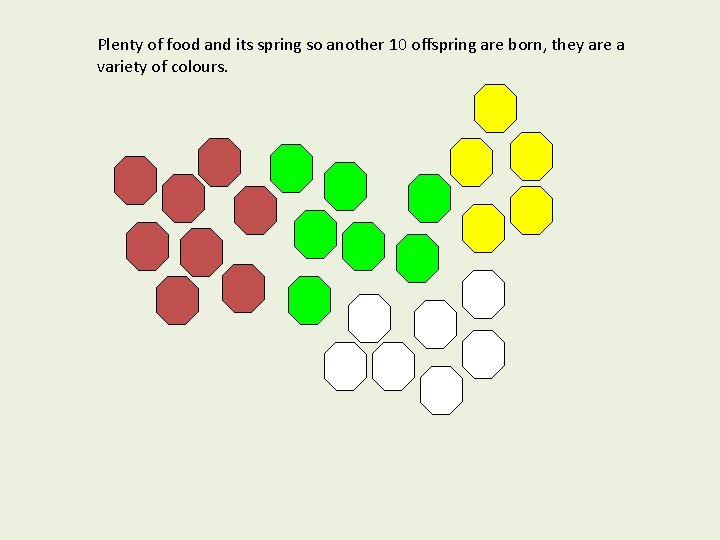
Plenty of food and its spring so another 10 offspring are born, they are a variety of colours.
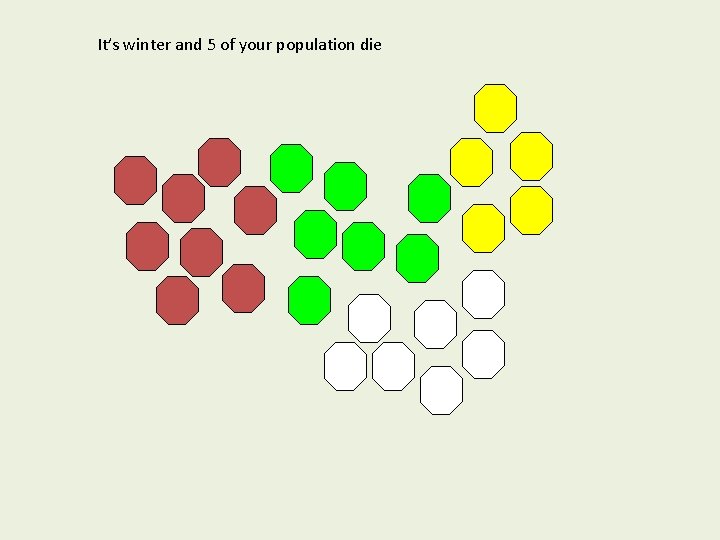
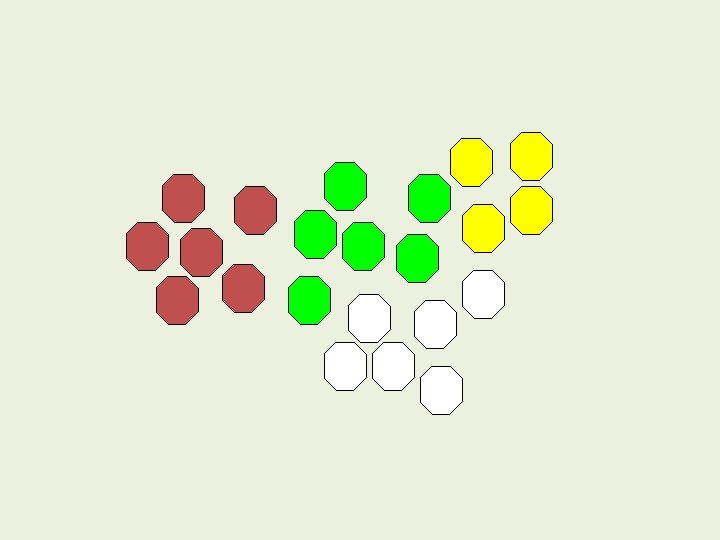
It’s winter and 5 of your population die
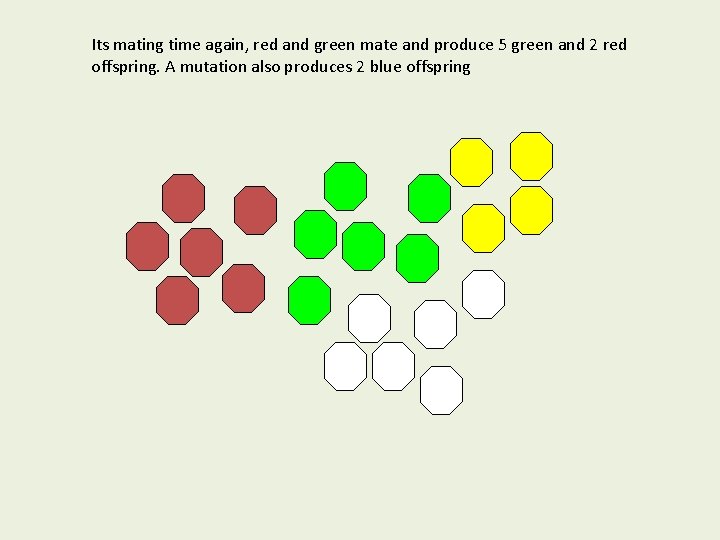
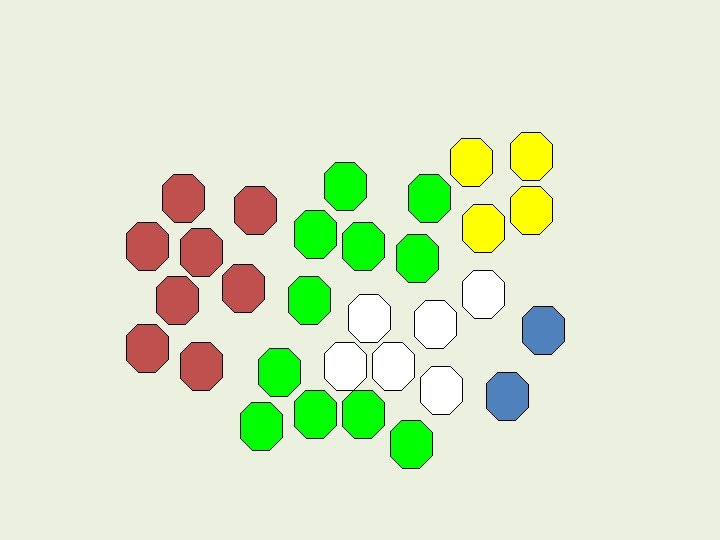
Its mating time again, red and green mate and produce 5 green and 2 red offspring. A mutation also produces 2 blue offspring
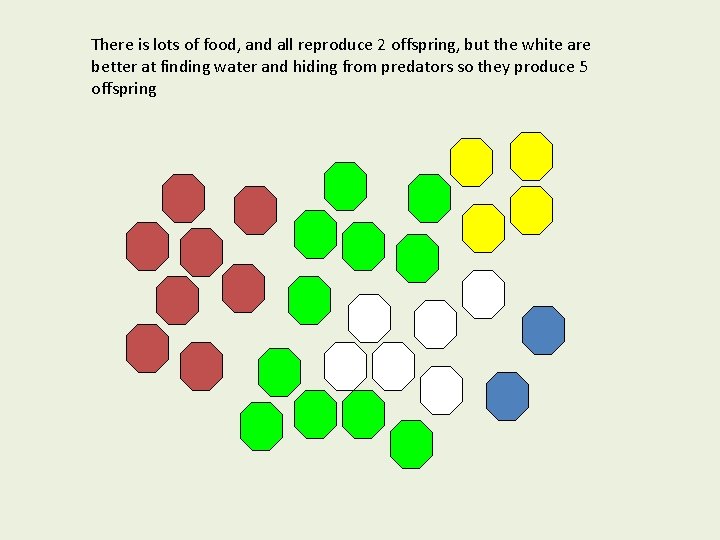
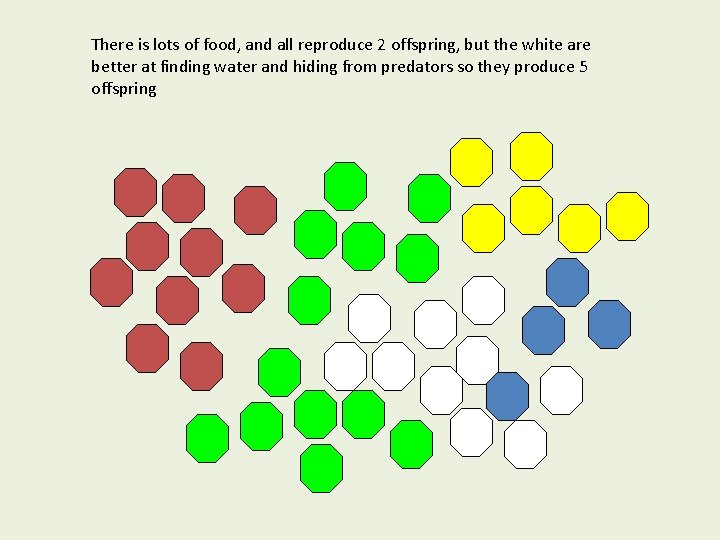
There is lots of food, and all reproduce 2 offspring, but the white are better at finding water and hiding from predators so they produce 5 offspring
There is lots of food, and all reproduce 2 offspring, but the white are better at finding water and hiding from predators so they produce 5 offspring
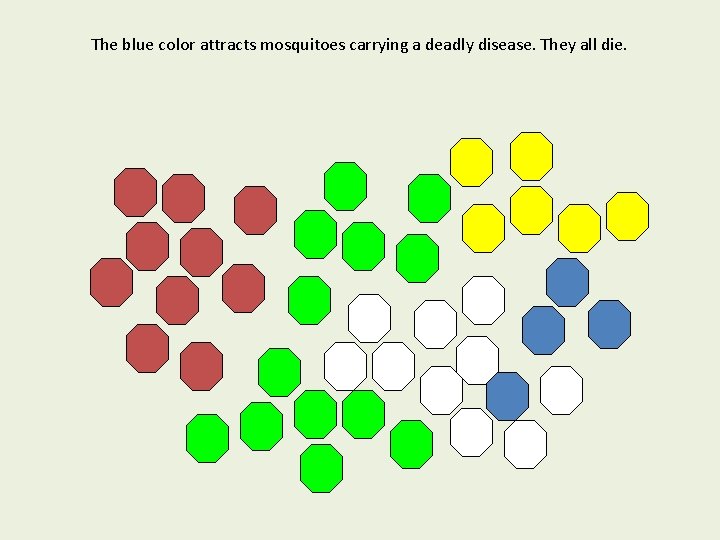
The blue color attracts mosquitoes carrying a deadly disease. They all die.
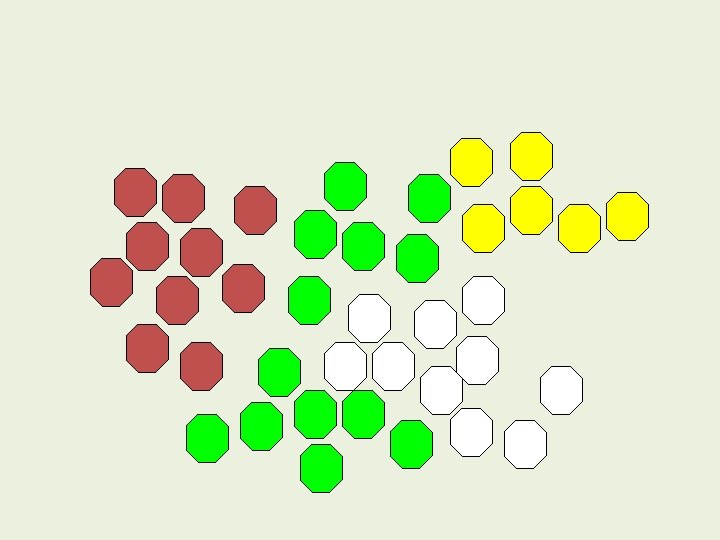
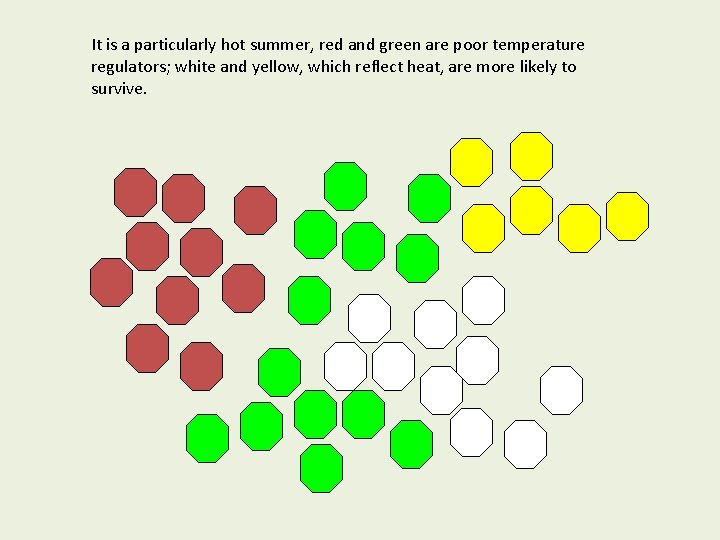
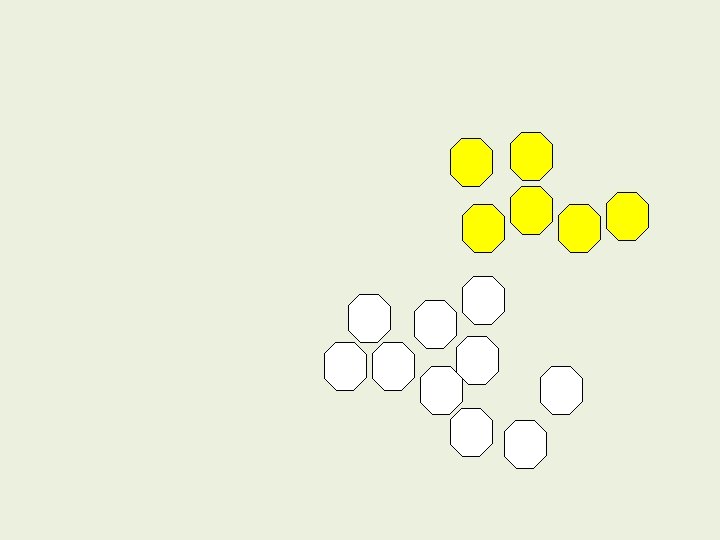
It is a particularly hot summer, red and green are poor temperature regulators; white and yellow, which reflect heat, are more likely to survive.
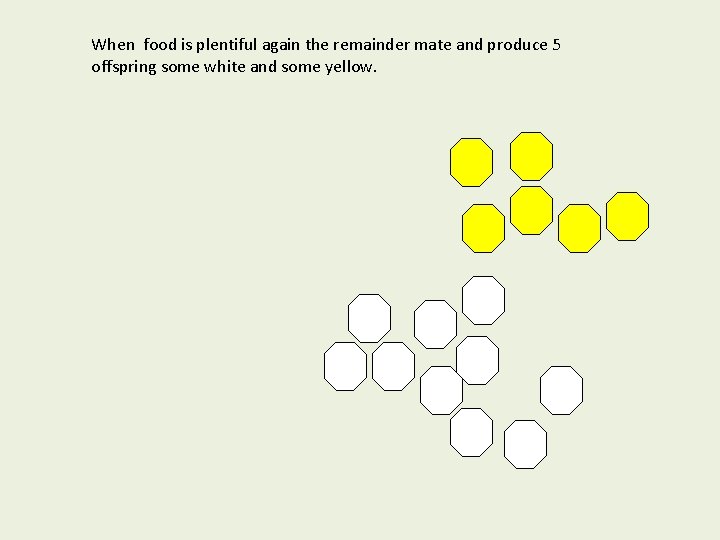
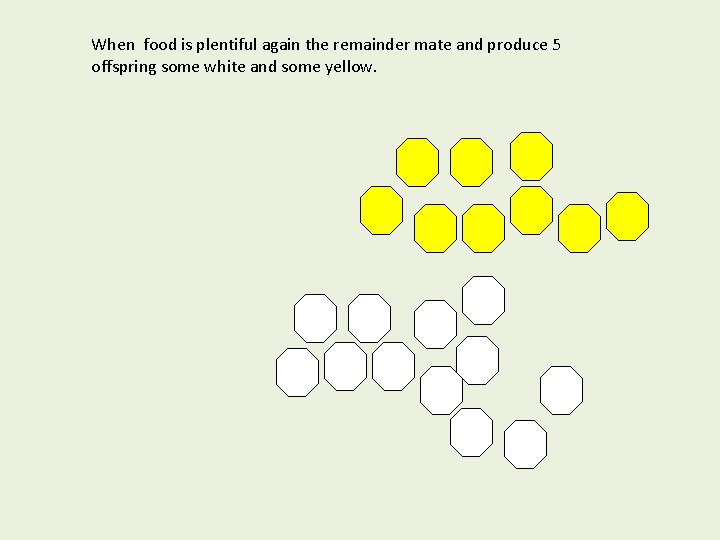
When food is plentiful again the remainder mate and produce 5 offspring some white and some yellow.
When food is plentiful again the remainder mate and produce 5 offspring some white and some yellow.
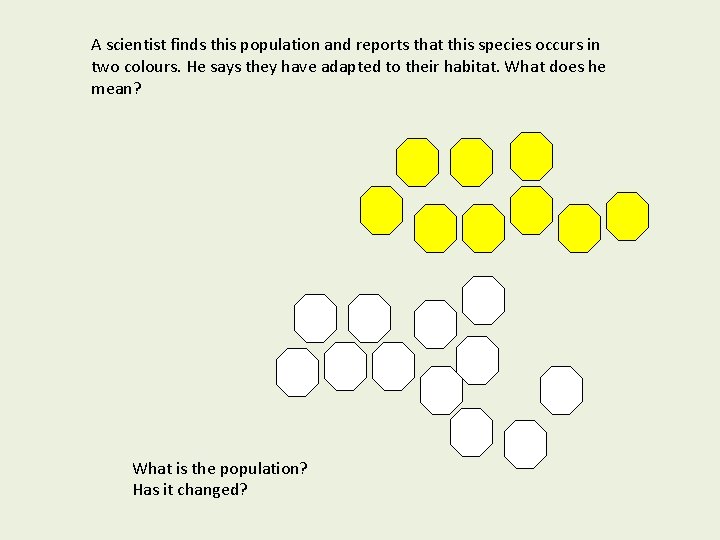
A scientist finds this population and reports that this species occurs in two colours. He says they have adapted to their habitat. What does he mean? What is the population? Has it changed?
In outline, Darwin stated the following: Many more individuals are born than can possibly survive. Individuals within a population vary slightly from one another. There is a frequent recurring struggle for existence. Some individuals will have a better chance of surviving than others (they will be naturally selected). Any selected variety will tend to propagate its form. Q. What did the individuals in our population compete for in the struggle to survive? Q. Which individuals were naturally selected?
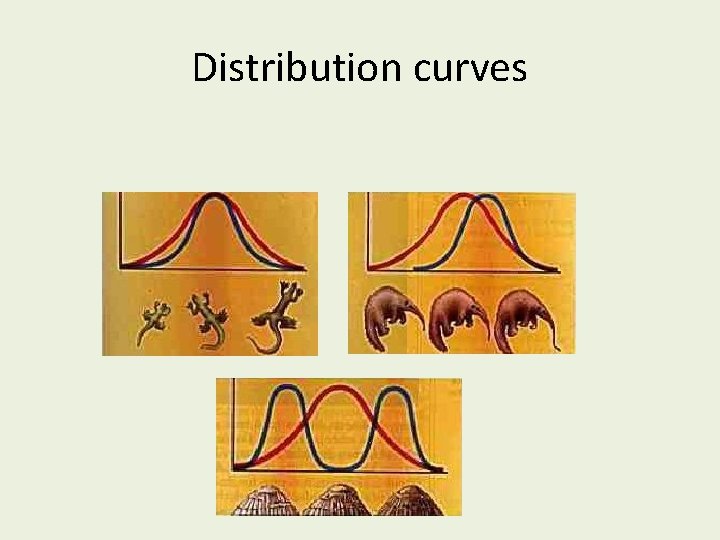
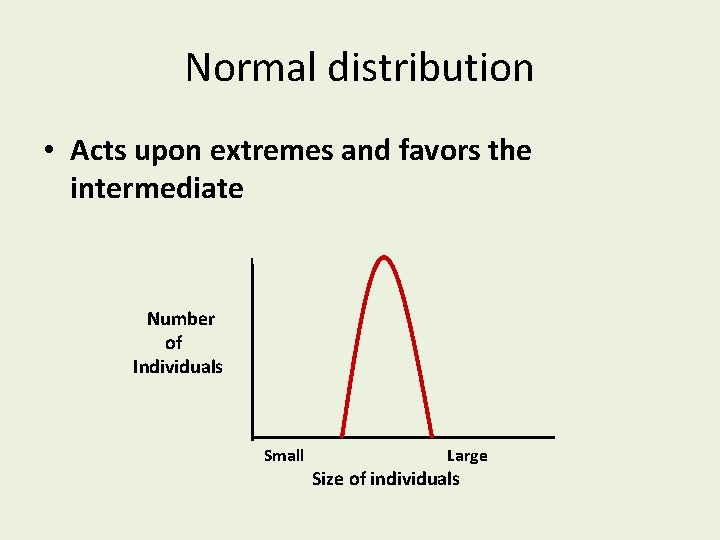
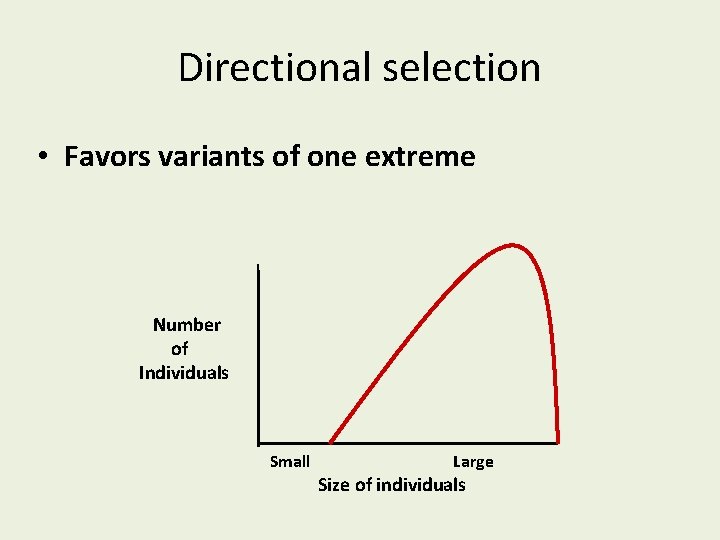
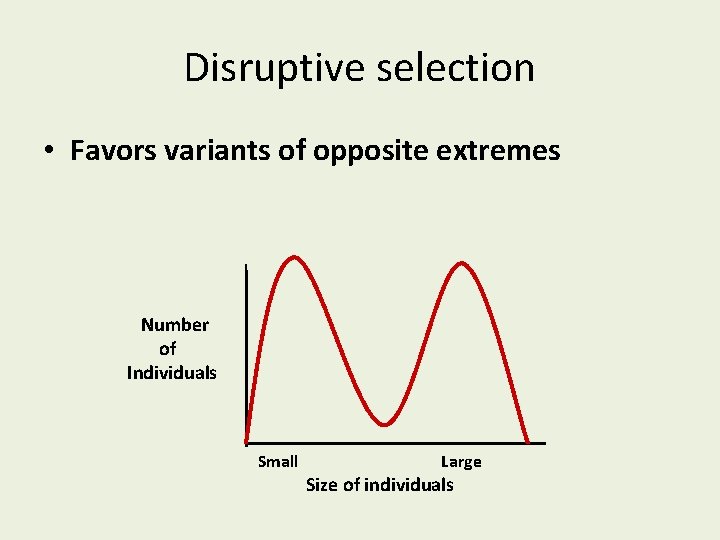
Distribution curves
Normal distribution • Acts upon extremes and favors the intermediate Number of Individuals Small Large Size of individuals
Directional selection • Favors variants of one extreme Number of Individuals Small Large Size of individuals
Disruptive selection • Favors variants of opposite extremes Number of Individuals Small Large Size of individuals
Why does evolution matter now?
Why does evolution matter now?