
Evolution of the universe FROM CHEMICAL EVOLUTION ON
- Slides: 25
Evolution of the universe: FROM CHEMICAL EVOLUTION ON EARTH TO From Astrophysics to Astrobiology INSTRUMENTATION ISSUES FOR TESTING The Abdus Salam. ASTROBIOLOGY ICTP, Trieste, Italia SYSTEMS ON EXO-WORLDS Julian Chela-Flores and Instituto de Estudios Avanzados, Caracas, Republica Bolivariana de Venezuela International Workshop on Chemical Evolution and Origin of Life. The Origins: how, when and where it all started , ITT Roorkee, 21 – 23 March 2013. Accademia Nazionale dei Lincei. Centro Linceo Interdisciplinare “Beniamino Segre”, Roma, 22 May 2006 A. B. Bhattacherjee 1, J. Chela-Flores 2 and S. Dudeja 3 1. Department of Physics, ARSD College, University of Delhi, New Delhi, India 2. ICTP, Trieste and IDEA, Caracas, Bolivarian Republic of Venezuela 3. Department of Chemistry, ARSD College, University of Delhi, New Delhi, India 1
Life on exoworlds The Earth-like worlds (ELWs: planets and exomoons) 2
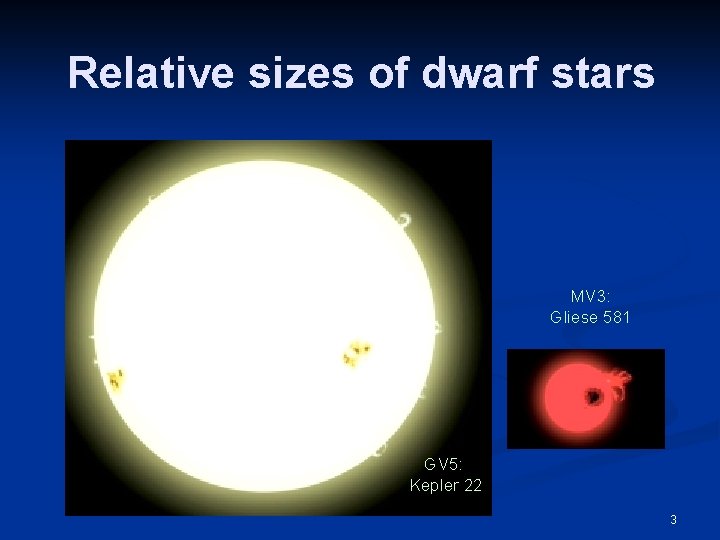
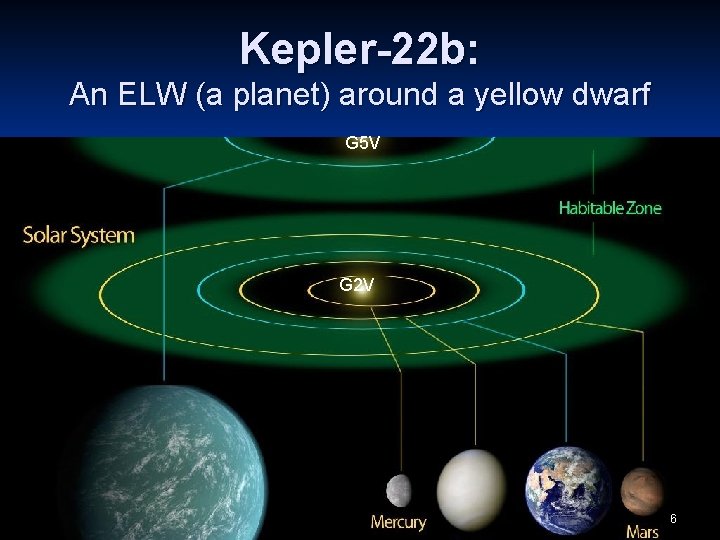
Relative sizes of dwarf stars MV 3: Gliese 581 GV 5: Kepler 22 3
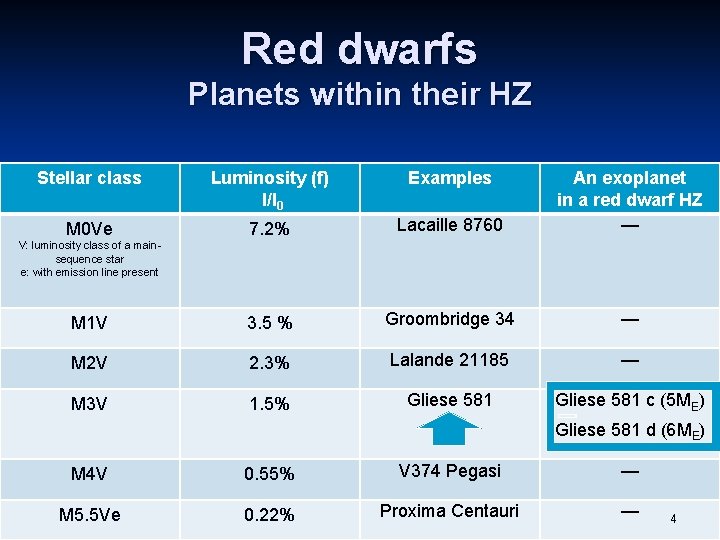
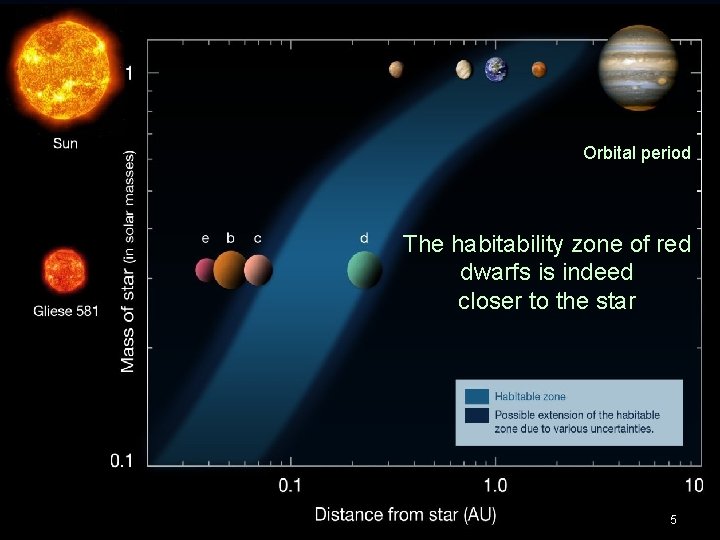
Red dwarfs Planets within their HZ Stellar class Luminosity (f) l/l 0 Examples M 0 Ve 7. 2% Lacaille 8760 An exoplanet in a red dwarf HZ — M 1 V 3. 5 % Groombridge 34 — M 2 V 2. 3% Lalande 21185 — M 3 V 1. 5% Gliese 581 c (5 ME) V: luminosity class of a mainsequence star e: with emission line present Gliese 581 d (6 ME) M 4 V 0. 55% V 374 Pegasi — M 5. 5 Ve 0. 22% Proxima Centauri — 4
Orbital period The habitability zone of red dwarfs is indeed closer to the star 5
Kepler-22 b: An ELW (a planet) around a yellow dwarf G 5 V G 2 V 6
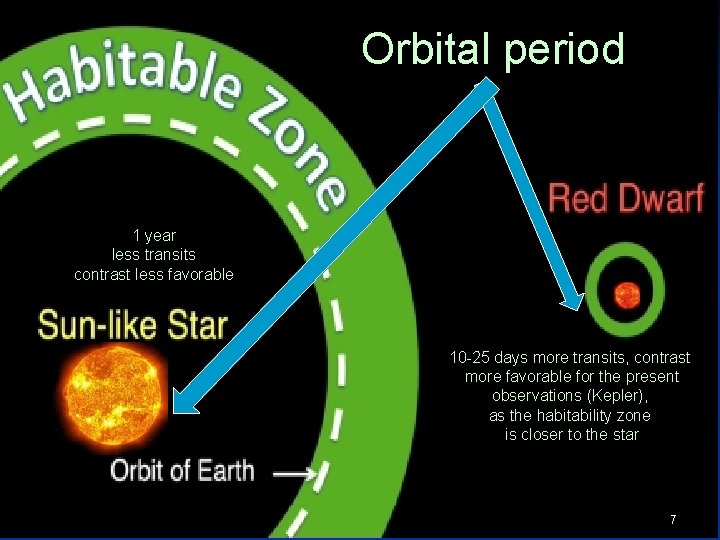
Orbital period 1 year less transits contrast less favorable 10 -25 days more transits, contrast more favorable for the present observations (Kepler), as the habitability zone is closer to the star 7
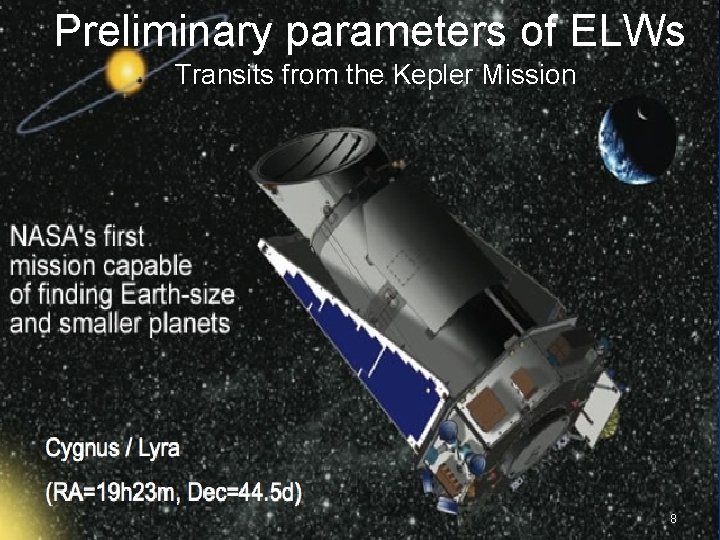
Preliminary parameters of ELWs Kepler: ELW from Transits from the Keplertransits Mission 8
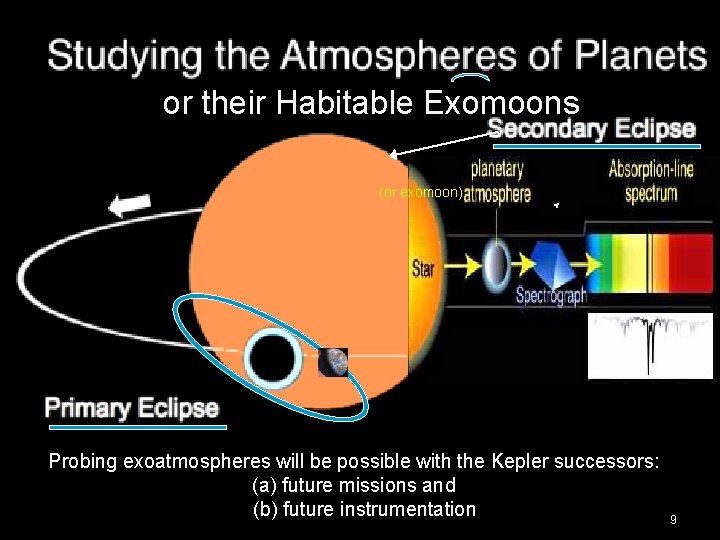
or their Habitable Exomoons (or exomoon) Probing exoatmospheres will be possible with the Kepler successors: (a) future missions and (b) future instrumentation 9
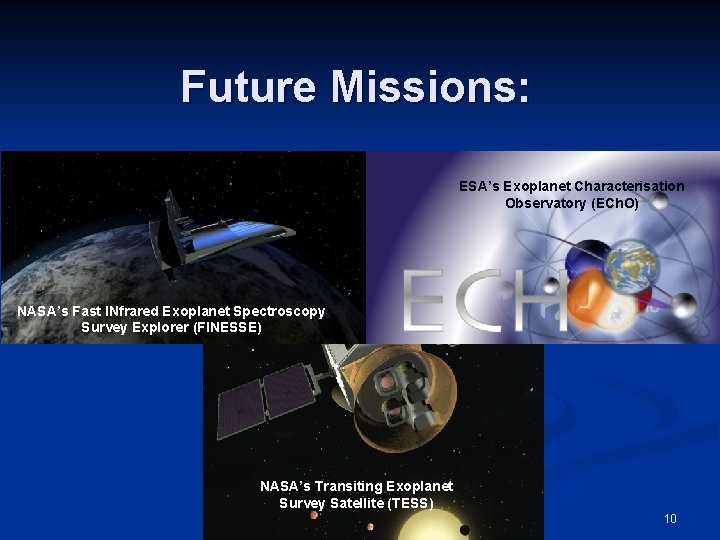
Future Missions: ESA’s Exoplanet Characterisation Observatory (ECh. O) NASA’s Fast INfrared Exoplanet Spectroscopy Survey Explorer (FINESSE) NASA’s Transiting Exoplanet Survey Satellite (TESS) 10
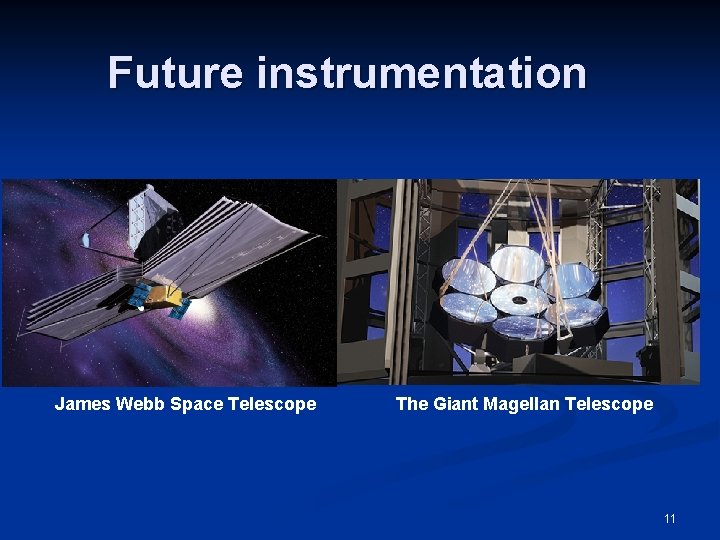
Future instrumentation James Webb Space Telescope The Giant Magellan Telescope 11
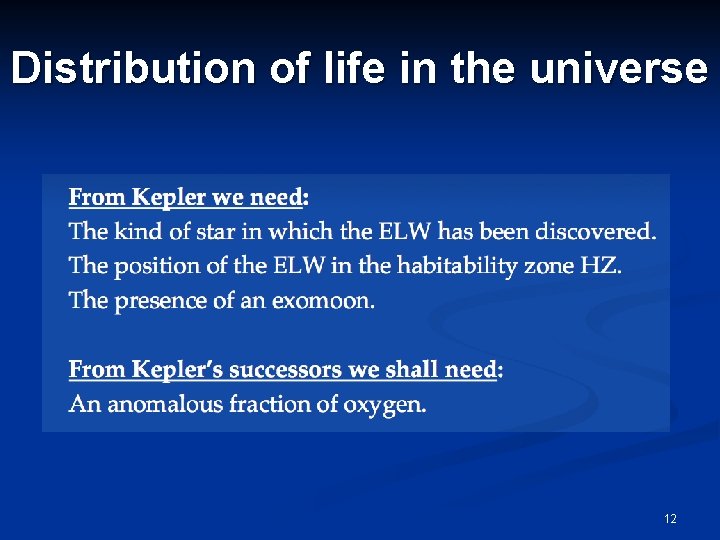
Distribution of life in the universe 12
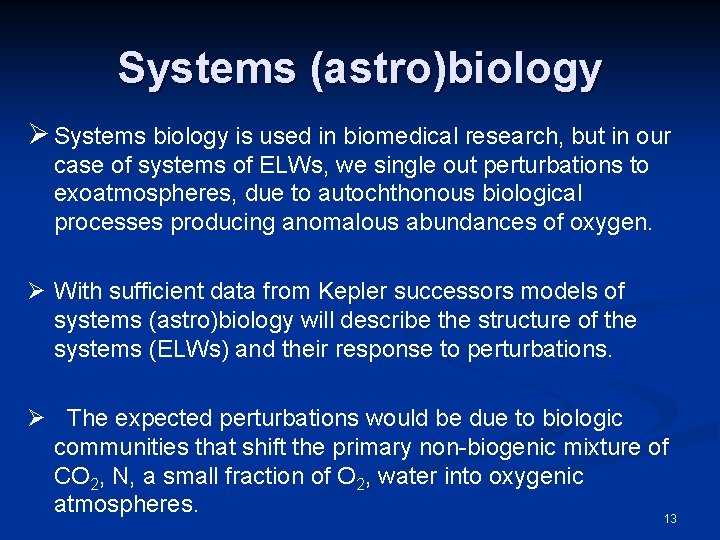
Systems (astro)biology Ø Systems biology is used in biomedical research, but in our case of systems of ELWs, we single out perturbations to exoatmospheres, due to autochthonous biological processes producing anomalous abundances of oxygen. Ø With sufficient data from Kepler successors models of systems (astro)biology will describe the structure of the systems (ELWs) and their response to perturbations. Ø The expected perturbations would be due to biologic communities that shift the primary non-biogenic mixture of CO 2, N, a small fraction of O 2, water into oxygenic atmospheres. 13
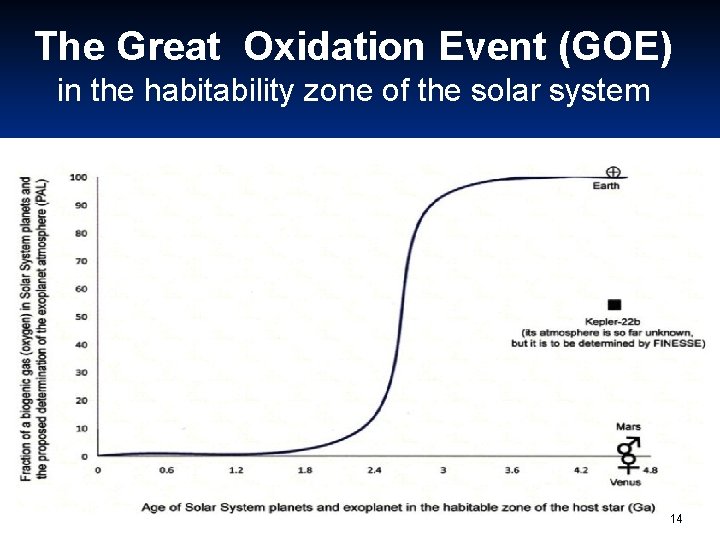
The Great Oxidation Event (GOE) in the habitability zone of the solar system 14
An analytic model Assumptions: Ø We assume the universality of biology. Ø In particular, we assume evolutionary convergence. 15
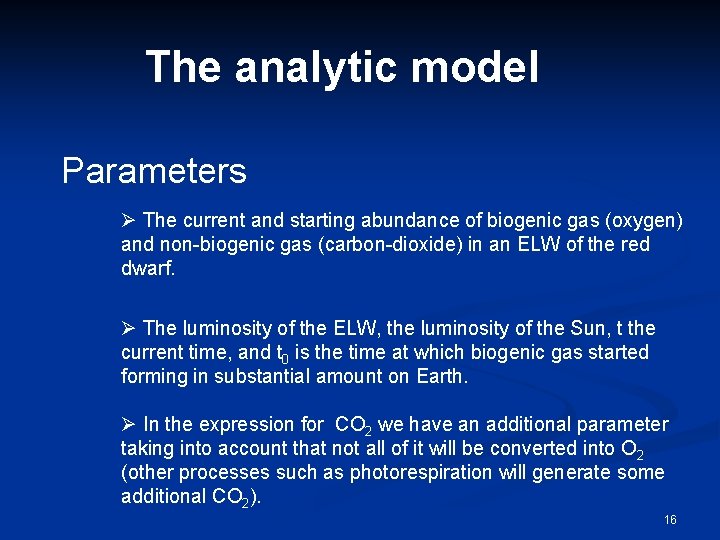
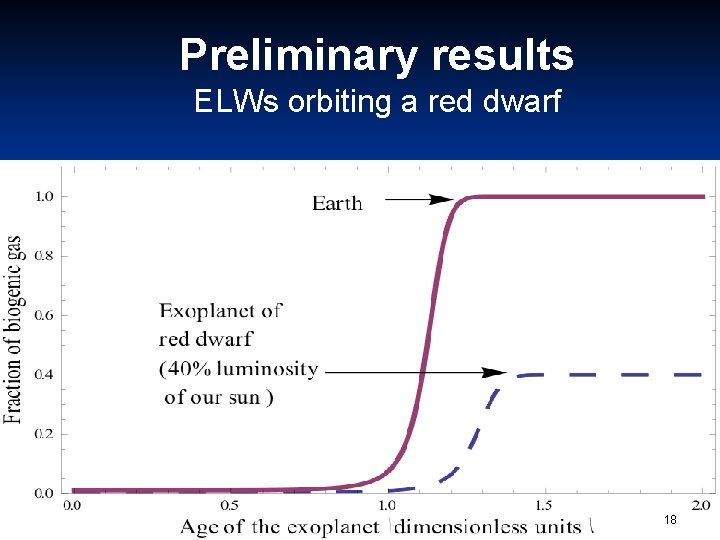
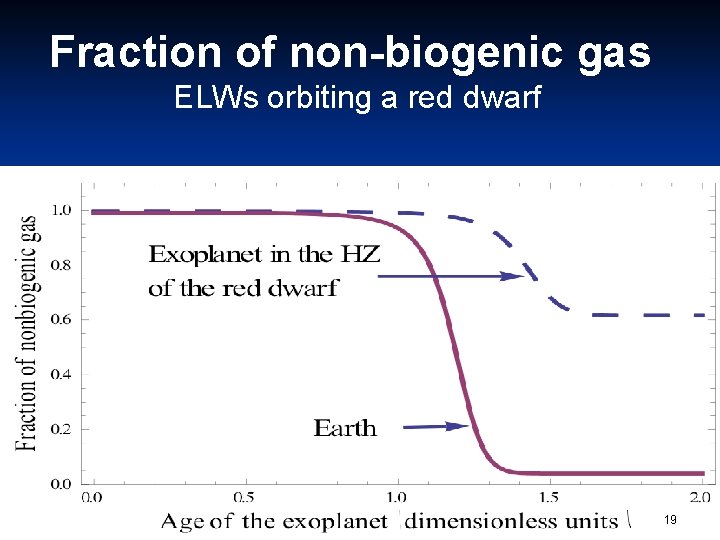
The analytic model Parameters Ø The current and starting abundance of biogenic gas (oxygen) and non-biogenic gas (carbon-dioxide) in an ELW of the red dwarf. Ø The luminosity of the ELW, the luminosity of the Sun, t the current time, and t 0 is the time at which biogenic gas started forming in substantial amount on Earth. Ø In the expression for CO 2 we have an additional parameter taking into account that not all of it will be converted into O 2 (other processes such as photorespiration will generate some additional CO 2). 16
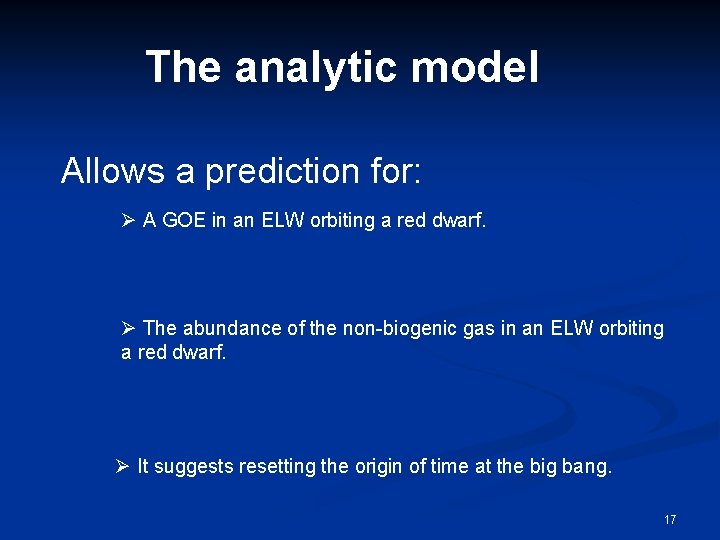
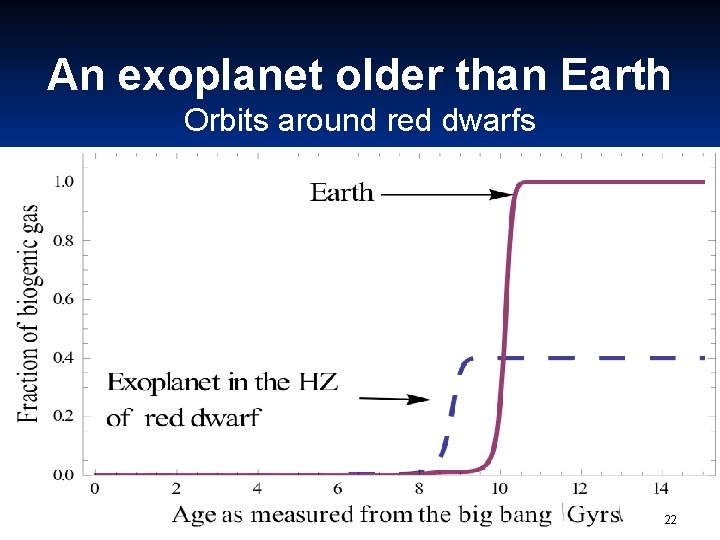
The analytic model Allows a prediction for: Ø A GOE in an ELW orbiting a red dwarf. Ø The abundance of the non-biogenic gas in an ELW orbiting a red dwarf. Ø It suggests resetting the origin of time at the big bang. 17
Preliminary results ELWs orbiting a red dwarf 18
Fraction of non-biogenic gas ELWs orbiting a red dwarf 19
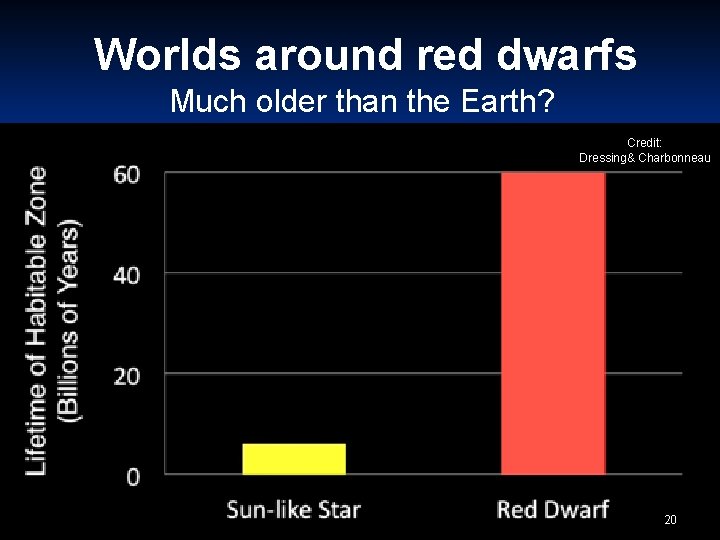
Worlds around red dwarfs Much older than the Earth? Credit: Dressing& Charbonneau 20
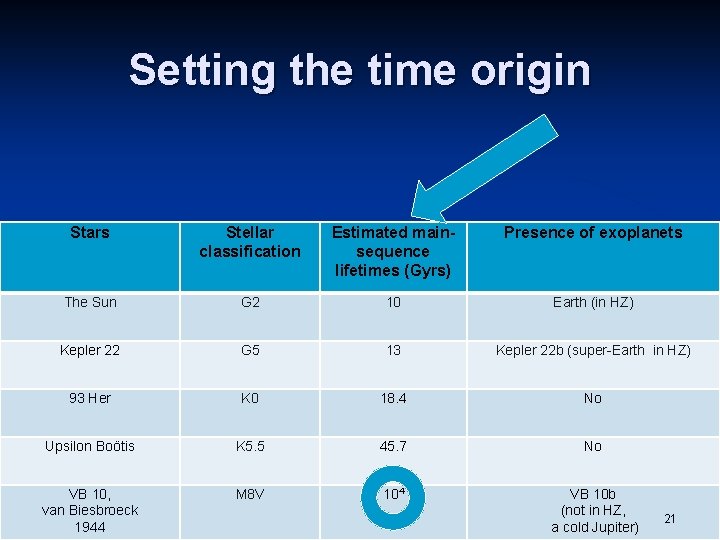
Setting the time origin Stars Stellar classification Estimated mainsequence lifetimes (Gyrs) Presence of exoplanets The Sun G 2 10 Earth (in HZ) Kepler 22 G 5 13 Kepler 22 b (super-Earth in HZ) 93 Her K 0 18. 4 No Upsilon Boötis K 5. 5 45. 7 No VB 10, van Biesbroeck 1944 M 8 V 104 VB 10 b (not in HZ, a cold Jupiter) 21
An exoplanet older than Earth Orbits around red dwarfs 22
Habitability could have preceded terrestrial life Ø Our own tiny Kepler environment is less than 300 light years. Ø With SETI the cosmic environment accessible by 2020 should be about three times the Kepler range, about 1000 light years. 23
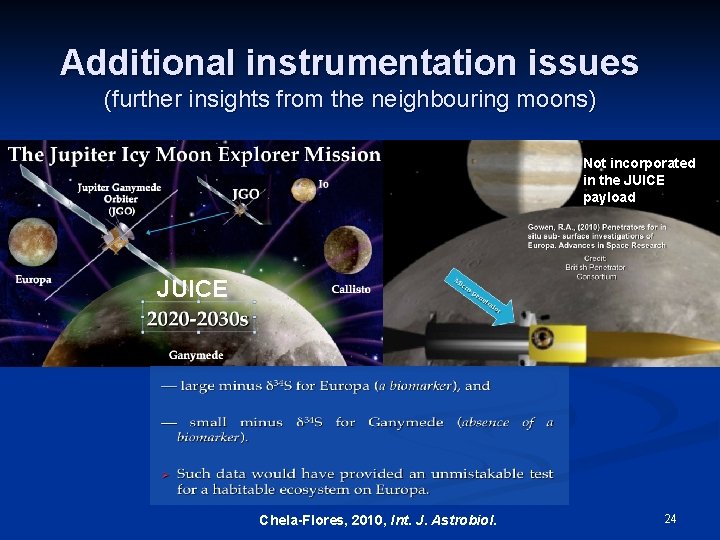
Additional instrumentation issues (further insights from the neighbouring moons) Not incorporated in the JUICE payload JUICE Chela-Flores, 2010, Int. J. Astrobiol. 24
Summary Ø Most stars are red dwarfs and some host Earth-like planets. Ø Oxygen and carbon dioxide are the exo-bioindicators considered in this work. Ø Model predictions for exo-atmospheres have assumed: Universal biology (evolutionary convergence) Ø Testing the predictions for the exoatmospheres of ELWs is possible with forthcoming new missions and with future Earth-bound instrumentation. 25