
Evolution of the Quality of the Cadastral Map


- Slides: 19
Evolution of the Quality of the Cadastral Map in the Netherlands: Balancing User’s demands and process optimization Martin Salzmann Cadastre, Land Registry and Mapping Agency of the Netherlands (Kadaster) PCC Conference, Riga, May 12 -13, 2015
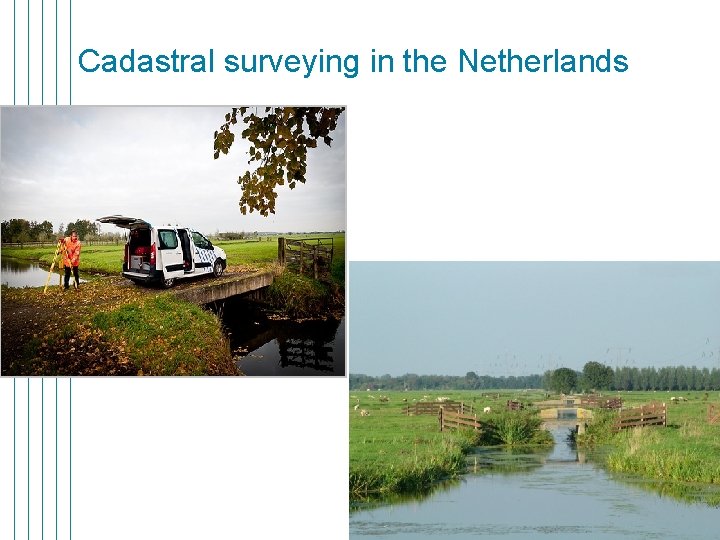
Cadastral surveying in the Netherlands
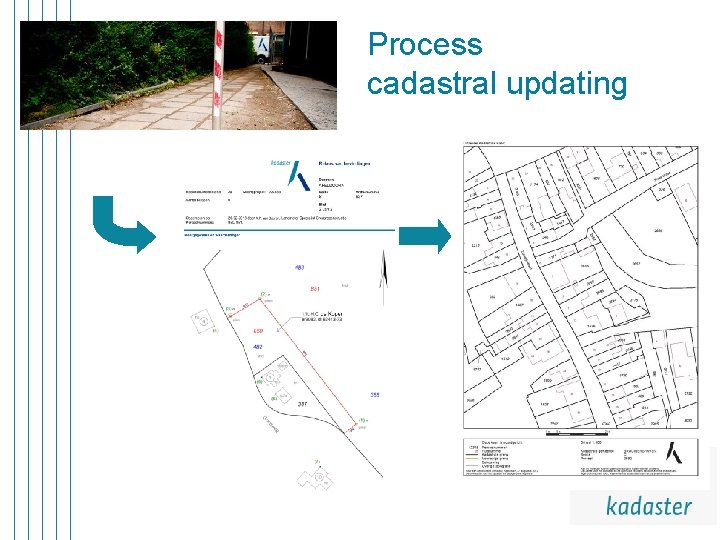
Process cadastral updating
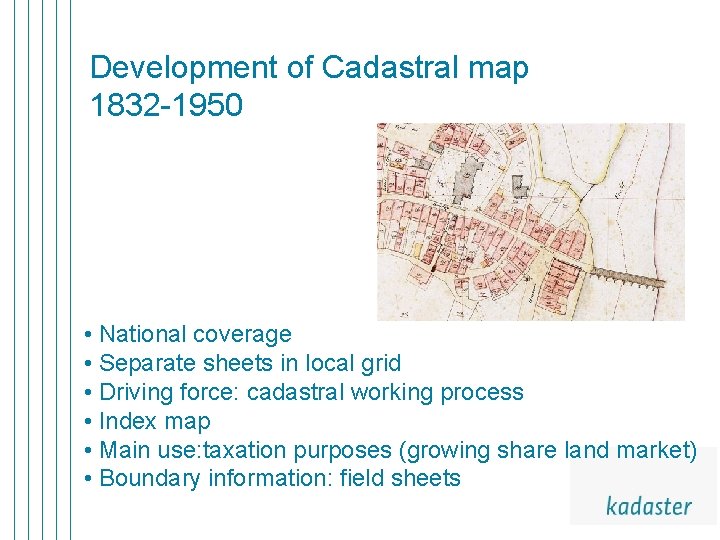
Development of Cadastral map 1832 -1950 • National coverage • Separate sheets in local grid • Driving force: cadastral working process • Index map • Main use: taxation purposes (growing share land market) • Boundary information: field sheets
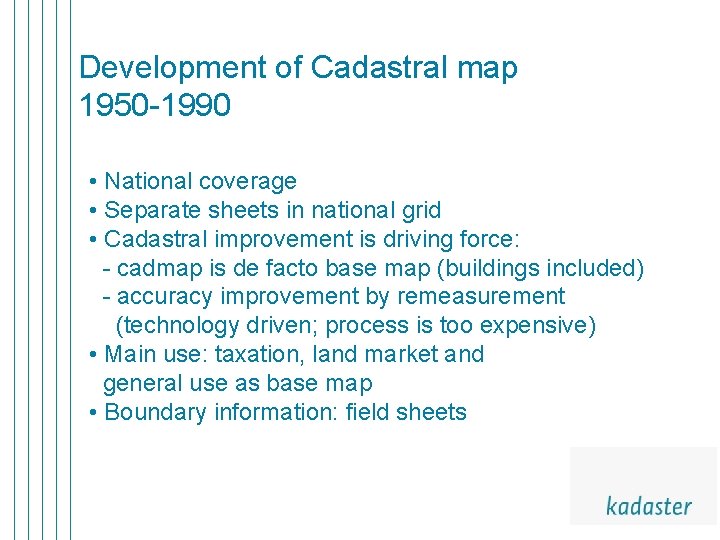
Development of Cadastral map 1950 -1990 • National coverage • Separate sheets in national grid • Cadastral improvement is driving force: - cadmap is de facto base map (buildings included) - accuracy improvement by remeasurement (technology driven; process is too expensive) • Main use: taxation, land market and general use as base map • Boundary information: field sheets
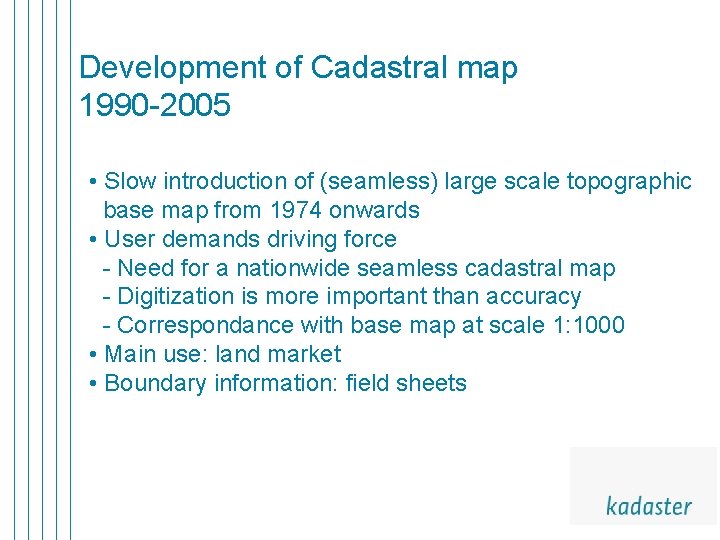
Development of Cadastral map 1990 -2005 • Slow introduction of (seamless) large scale topographic base map from 1974 onwards • User demands driving force - Need for a nationwide seamless cadastral map - Digitization is more important than accuracy - Correspondance with base map at scale 1: 1000 • Main use: land market • Boundary information: field sheets
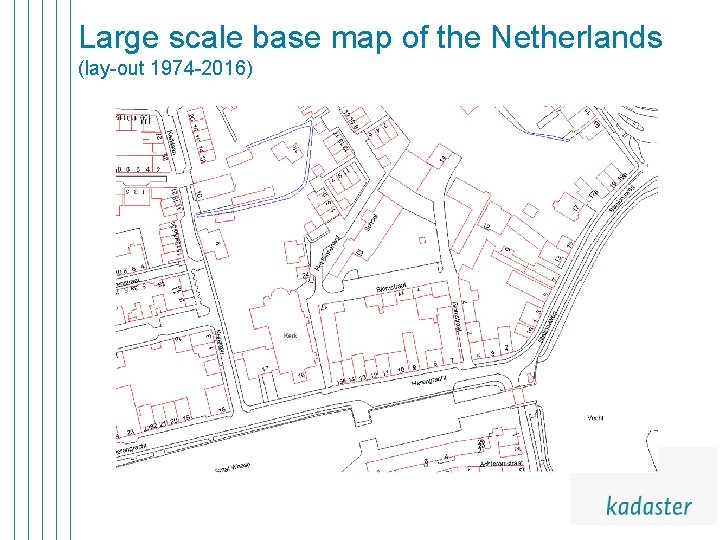
Large scale base map of the Netherlands (lay-out 1974 -2016)
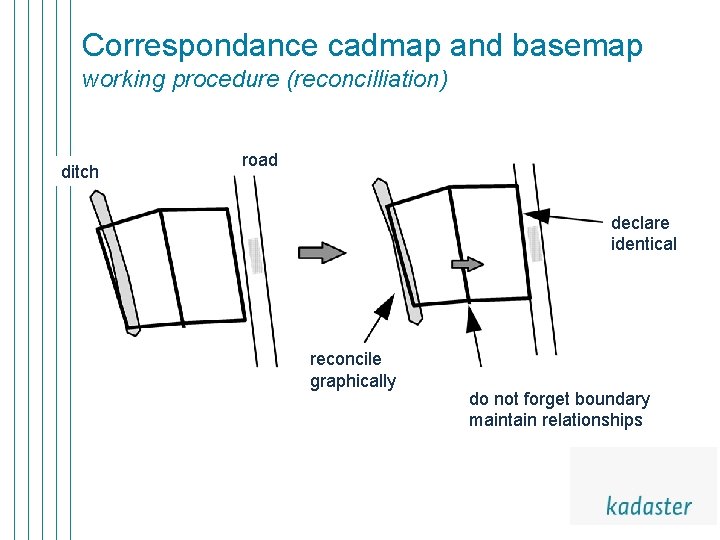
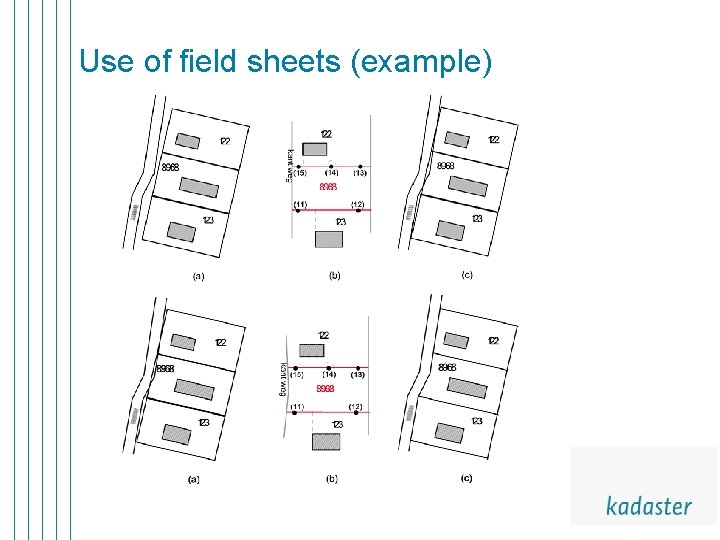
Correspondance cadmap and basemap working procedure (reconcilliation) ditch road declare identical reconcile graphically do not forget boundary maintain relationships
Use of field sheets (example)
Development of Cadastral map 2005 -future • Large scale topographic map finalized 2000 (object based key-register from 2016 onwards) • User demands, process integration, technology: - currency - consistency cadastral theme in combination with topomap and building and address registration - easier and direct access to boundary information - 3 D - cables and pipelines (networks) - part of e. Government information infrastructure • Main use: land market and cornerstone e. Government
Summary of development cadastral map 1832 1950 1970 1990 2000 2010 2020 Taxation Land market New technologies; process optimization De facto basemap User driven e. Government
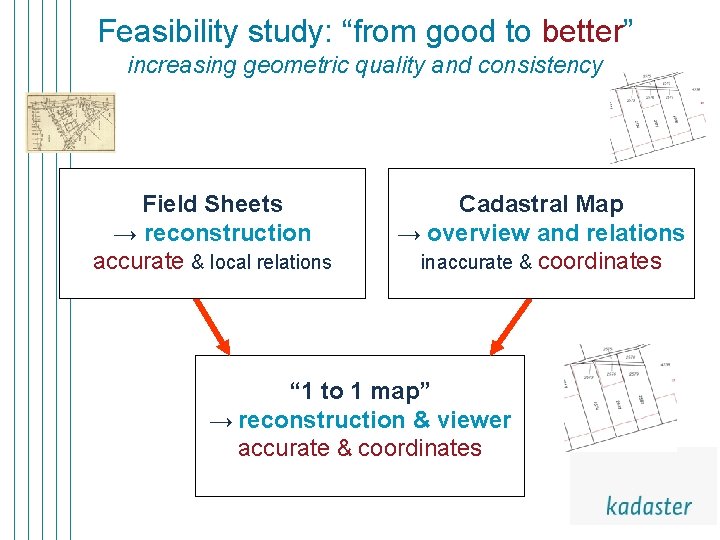
Feasibility study: “from good to better” increasing geometric quality and consistency Field Sheets → reconstruction accurate & local relations Cadastral Map → overview and relations inaccurate & coordinates “ 1 to 1 map” → reconstruction & viewer accurate & coordinates
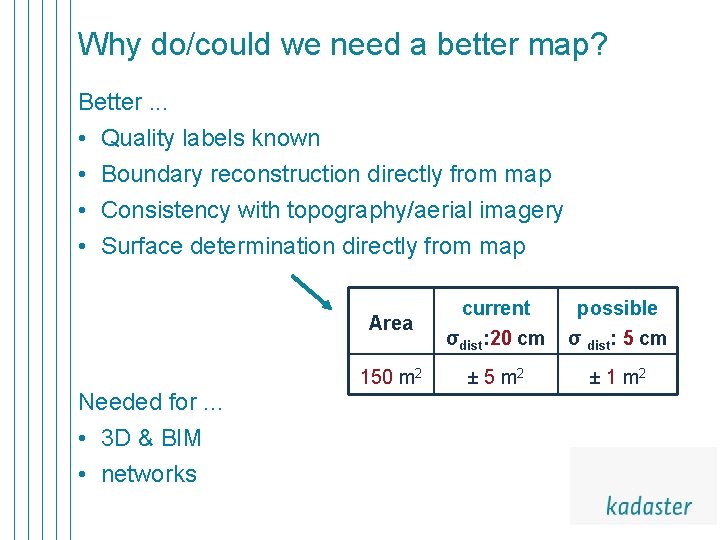
Why do/could we need a better map? Better. . . • Quality labels known • Boundary reconstruction directly from map • Consistency with topography/aerial imagery • Surface determination directly from map Needed for. . . • 3 D & BIM • networks Area current σdist: 20 cm possible σ dist: 5 cm 150 m 2 ± 5 m 2 ± 1 m 2
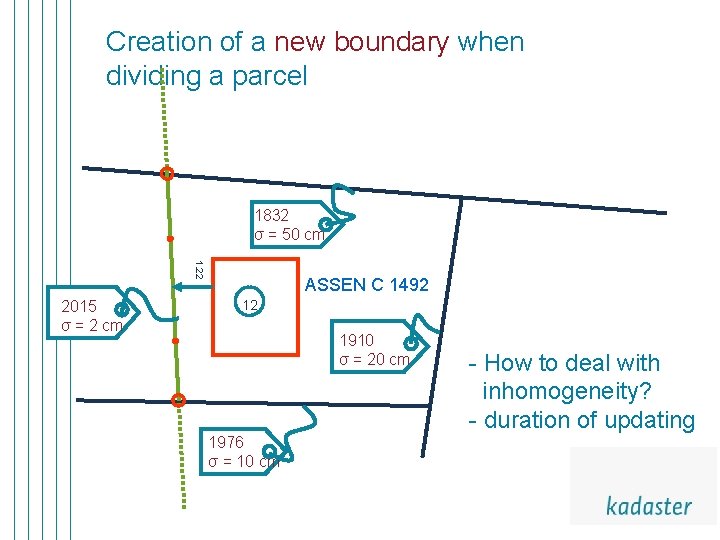
Creation of a new boundary when dividing a parcel 1832 σ = 50 cm 1. 22 2015 σ = 2 cm ASSEN C 1492 12 1910 σ = 20 cm 1976 σ = 10 cm - How to deal with inhomogeneity? - duration of updating
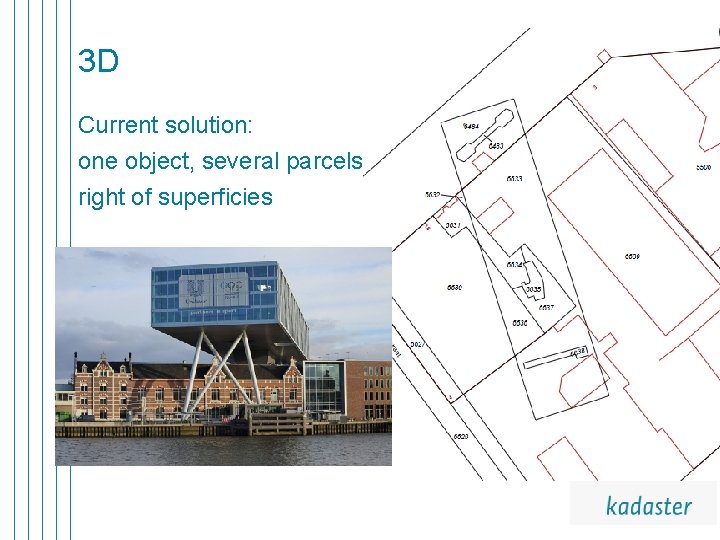
3 D Current solution: one object, several parcels right of superficies
Registration of networks correspondance with location of network provided by utilities?
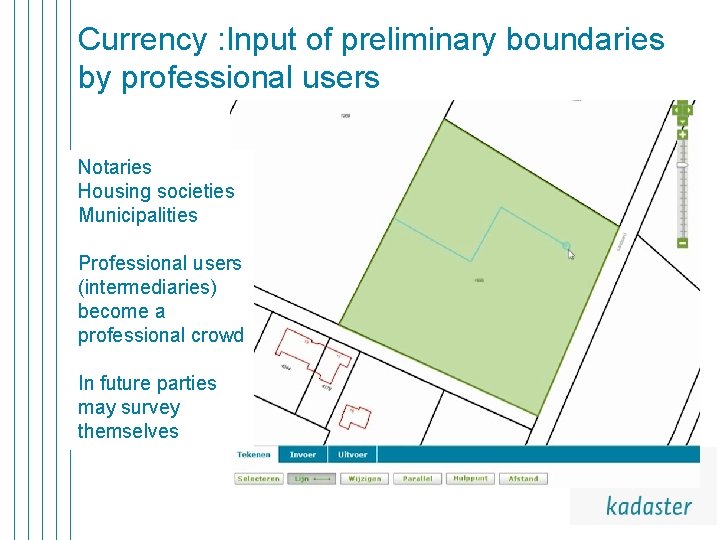
Currency : Input of preliminary boundaries by professional users Notaries Housing societies Municipalities Professional users (intermediaries) become a professional crowd In future parties may survey themselves
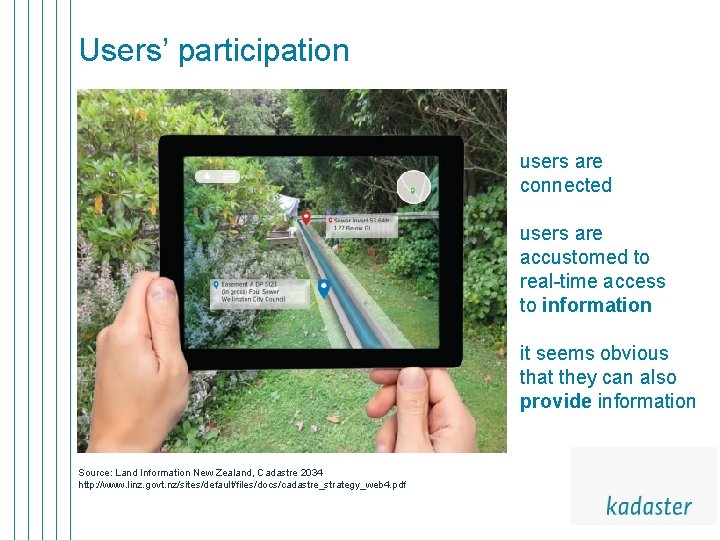
Users’ participation users are connected users are accustomed to real-time access to information it seems obvious that they can also provide information Source: Land Information New Zealand, Cadastre 2034 http: //www. linz. govt. nz/sites/default/files/docs/cadastre_strategy_web 4. pdf
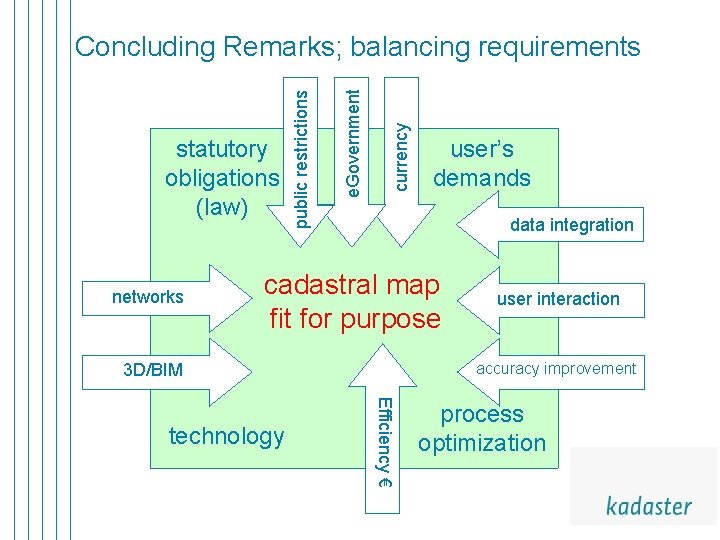
networks currency e. Government statutory obligations (law) public restrictions Concluding Remarks; balancing requirements user’s demands data integration cadastral map fit for purpose accuracy improvement 3 D/BIM Efficiency € technology user interaction process optimization