
Evolution of the Computer Zeroth Generation Mechanical 1

- Slides: 48
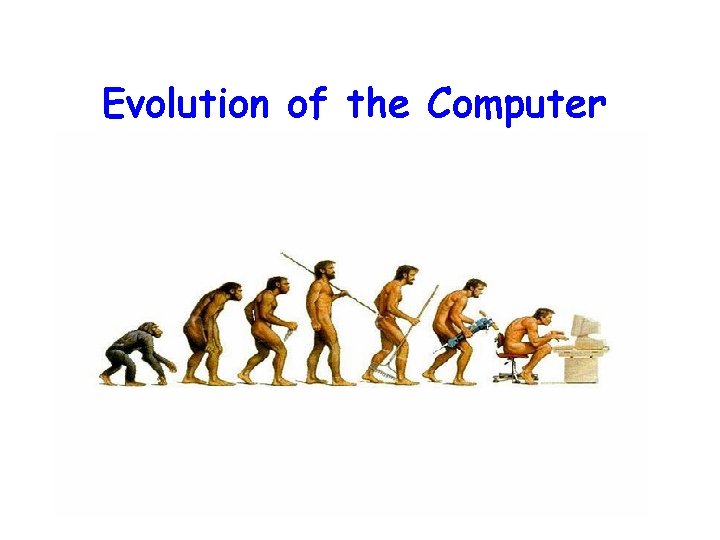
Evolution of the Computer
Zeroth Generation- Mechanical 1. Blaise Pascal -1642 1. Mechanical calculator only perform + - 1. Mechanical four function calculator 2. Von Leibiniz -1672 3. Charles Babage-1834 1. Difference engine – output is on punched card 2. Analytical engine – general purpose / four components – mill , memory , i & o / programmable (Ada- first programmer) 4. Aiken - 1940 Mark 1 - Electro mechanical computer
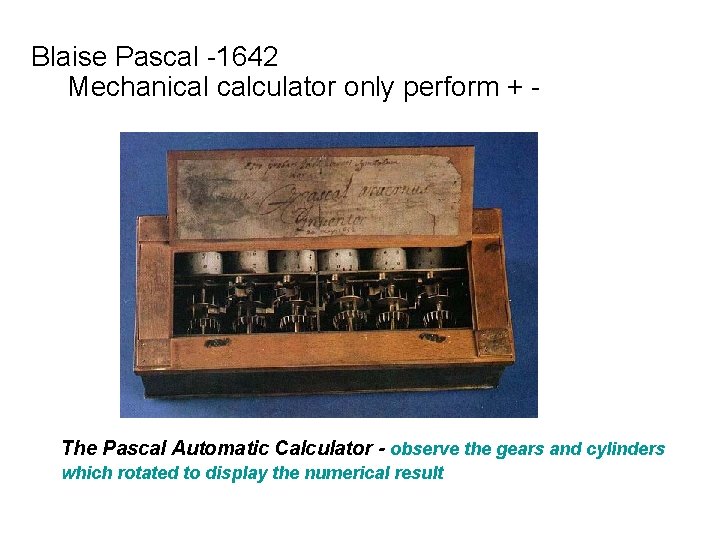
Blaise Pascal -1642 Mechanical calculator only perform + - The Pascal Automatic Calculator - observe the gears and cylinders which rotated to display the numerical result
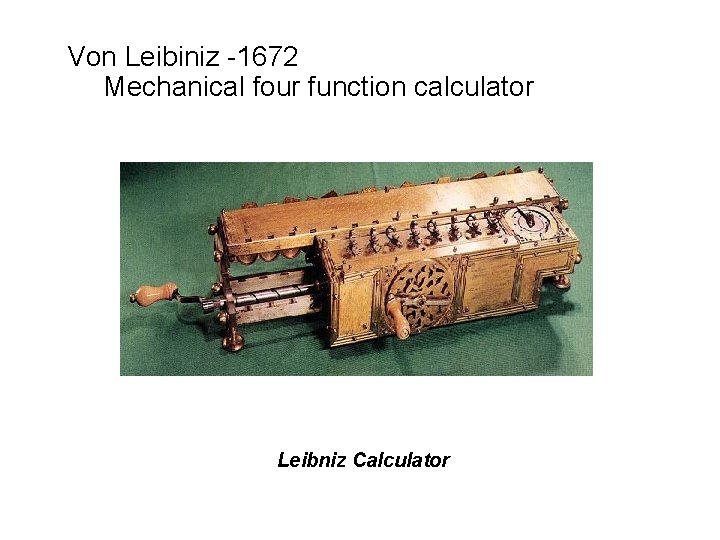
Von Leibiniz -1672 Mechanical four function calculator Leibniz Calculator
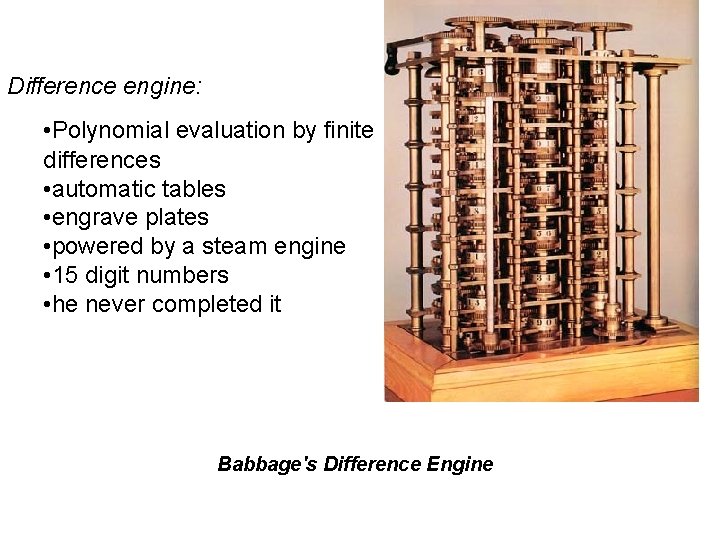
Difference engine: • Polynomial evaluation by finite differences • automatic tables • engrave plates • powered by a steam engine • 15 digit numbers • he never completed it Babbage's Difference Engine
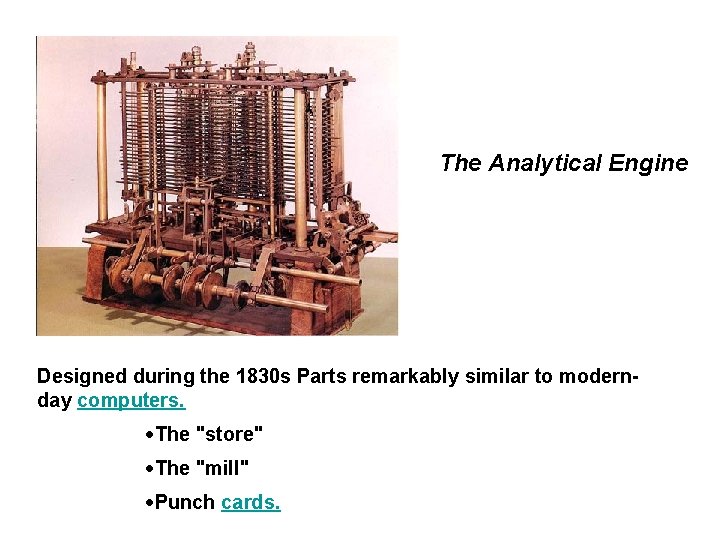
The Analytical Engine Designed during the 1830 s Parts remarkably similar to modernday computers. ·The "store" ·The "mill" ·Punch cards.
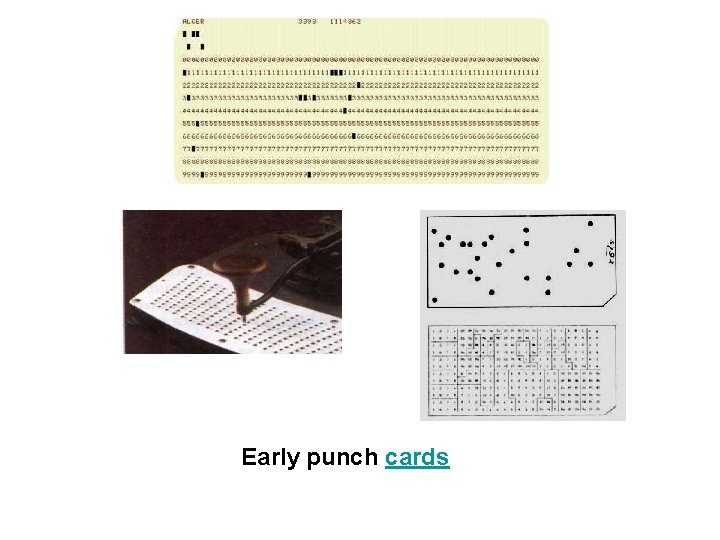
Early punch cards
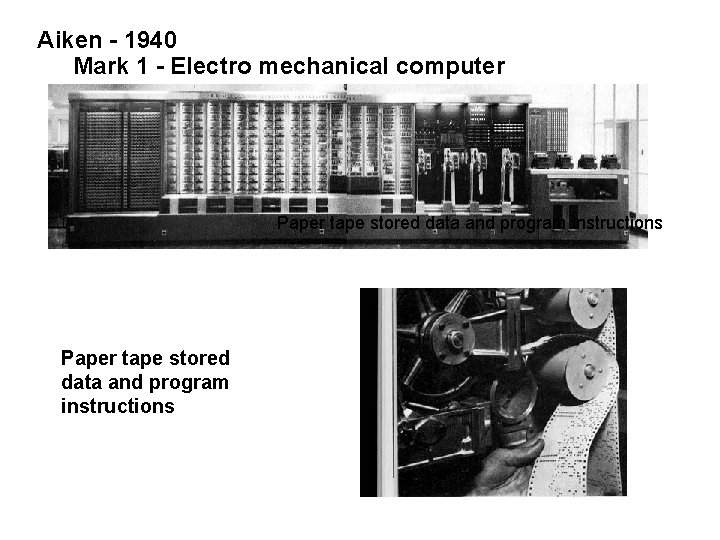
Aiken - 1940 Mark 1 - Electro mechanical computer Paper tape stored data and program instructions
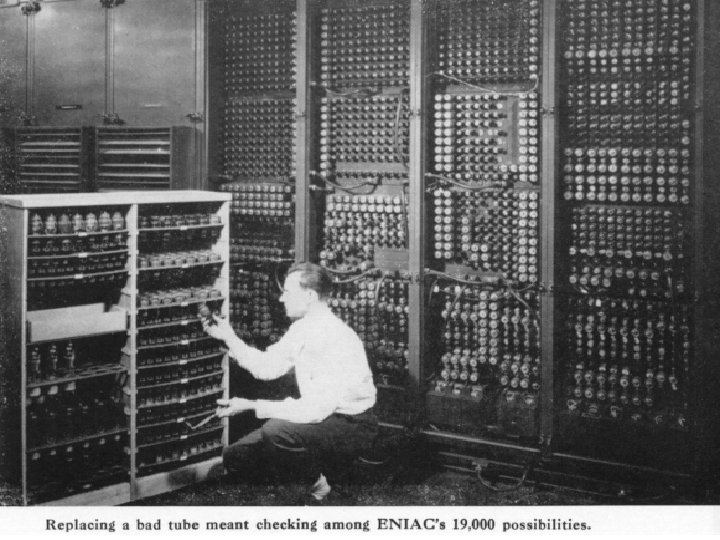
First Generation – Vacuum tubes 1 ENIAC 1. Electronic Numerical Integrator And Computer 2. Eckert and Mauchy of University of Pennsylvania 3. Trajectory tables for weapons 4. Started 1943 and Finished 1946 5. Too late for war effort Used until 1955
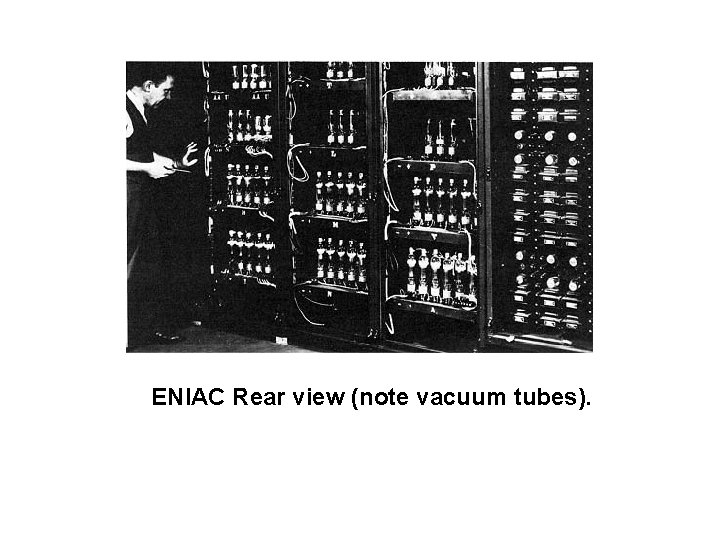
ENIAC features 1. 2. 3. 4. 5. 6. 7. 8. Decimal (not binary) 20 accumulators of 10 digits Programmed manually by switches 18, 000 vacuum tubes 30 tons 15, 000 square feet 140 k. W power consumption 5, 000 additions per second
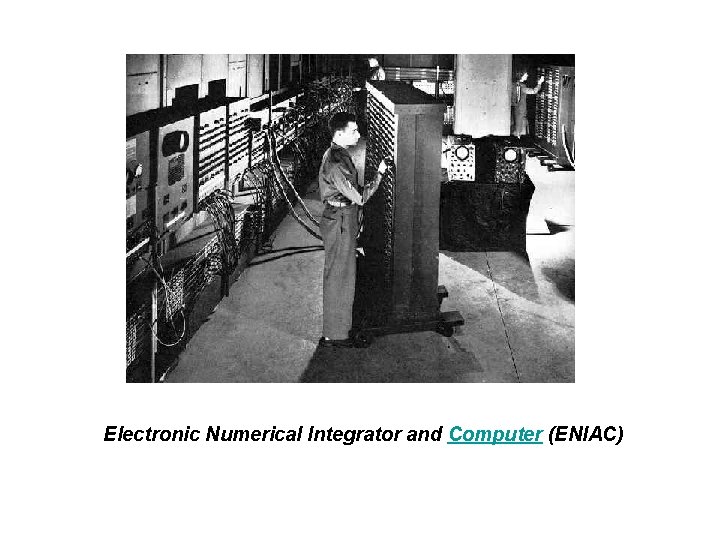
Electronic Numerical Integrator and Computer (ENIAC)
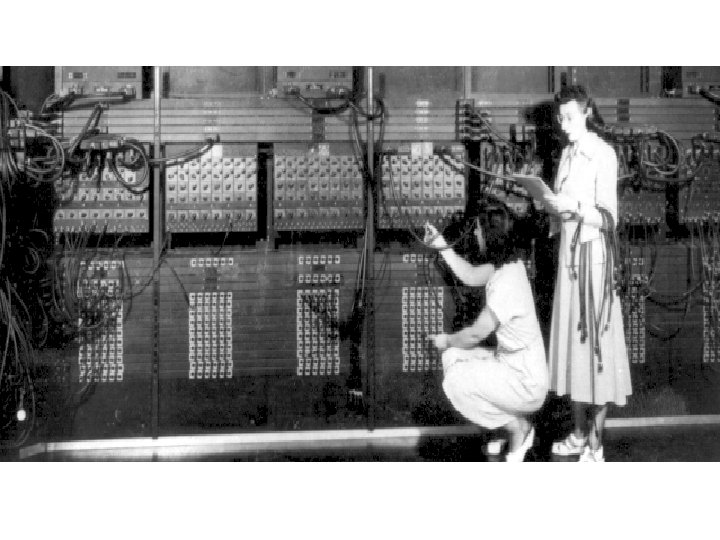
ENIAC Rear view (note vacuum tubes).
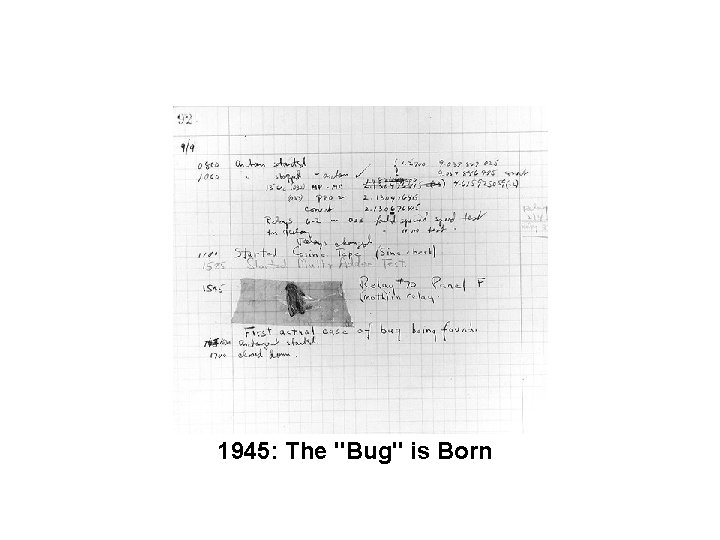
1945: The "Bug" is Born
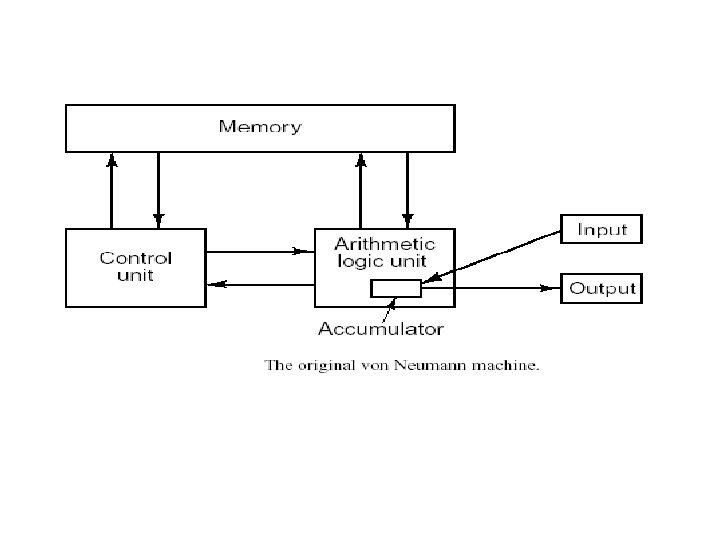
2 IAS computer - Princeton University's Institute of Advanced Studies (1952) 1. Von Neumann - Stored Program concept Main memory storing both programs and data 2. ALU operating on binary data 3. Control unit interpreting instructions from memory and executing 4. Input and output equipment operated by control unit
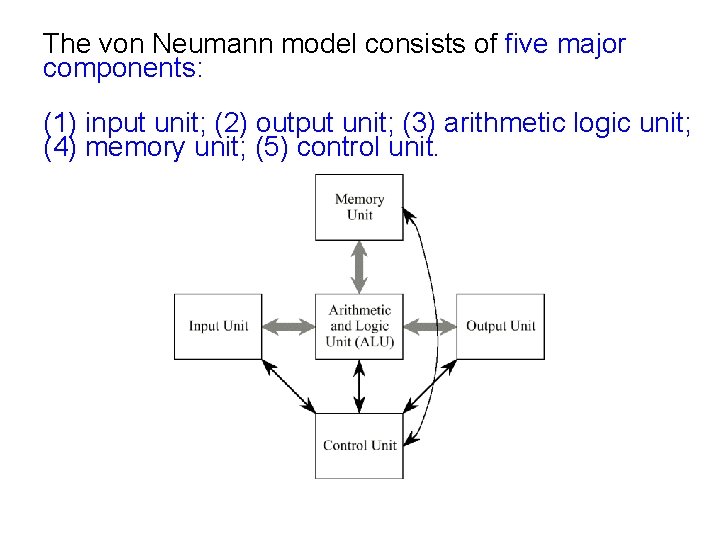
The von Neumann model consists of five major components: (1) input unit; (2) output unit; (3) arithmetic logic unit; (4) memory unit; (5) control unit.
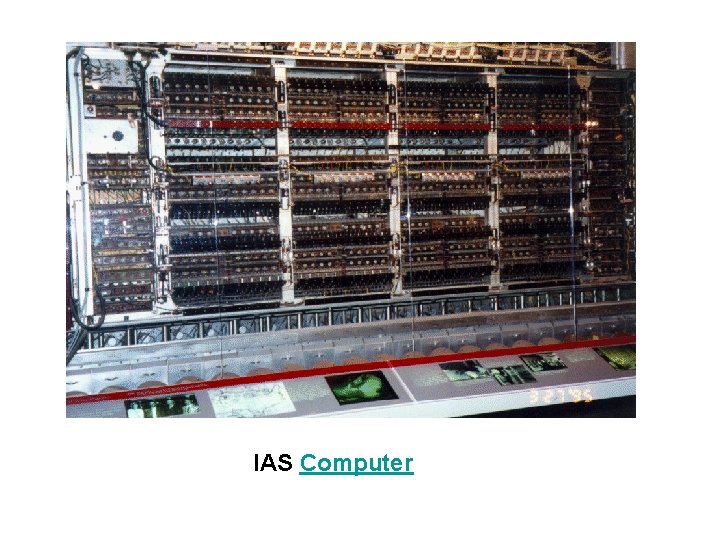
IAS Computer
IAS - details • 1000 x 40 bit words – Binary number – 2 x 20 bit instructions • Set of registers (storage in CPU) – – – – Memory Buffer Register Memory Address Register Instruction Buffer Register Program Counter Accumulator Multiplier Quotient
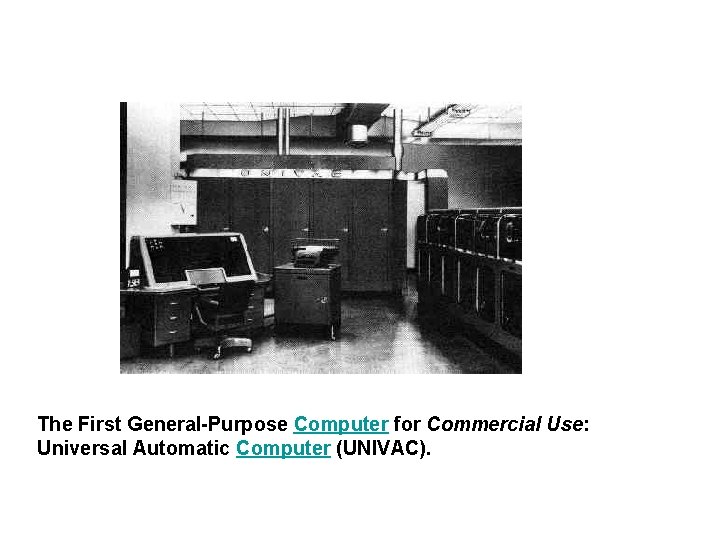
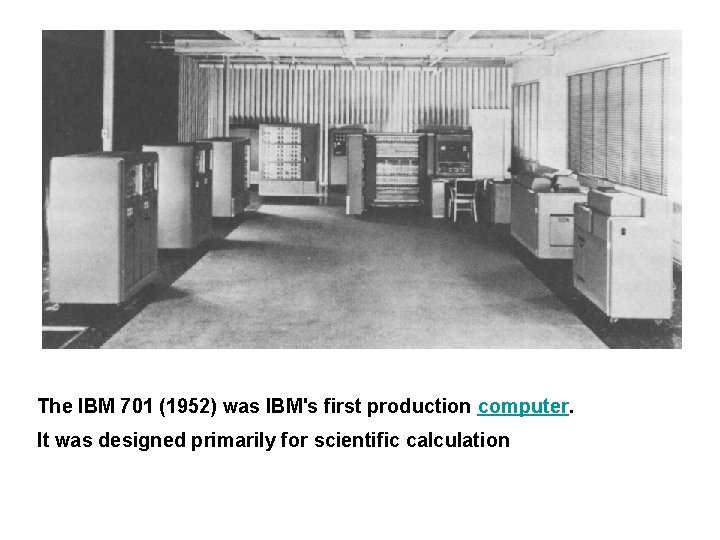
Commercial Computers • 1947 - Eckert-Mauchly Computer Corporation – UNIVAC I (Universal Automatic Computer) – US Bureau of Census 1950 calculations • IBM – Punched-card processing equipment – 701 is IBM’s first stored program computer (1953) – Scientific calculations
The First General-Purpose Computer for Commercial Use: Universal Automatic Computer (UNIVAC).
The IBM 701 (1952) was IBM's first production computer. It was designed primarily for scientific calculation
Second Generation - Transistor was Invented 1947 at Bell Labs William Shockley et al. – Replaced vacuum tubes – Smaller – Cheaper – Less heat dissipation – Solid State device – Made from Silicon (Sand) Digital Equipment Corporation (DEC)
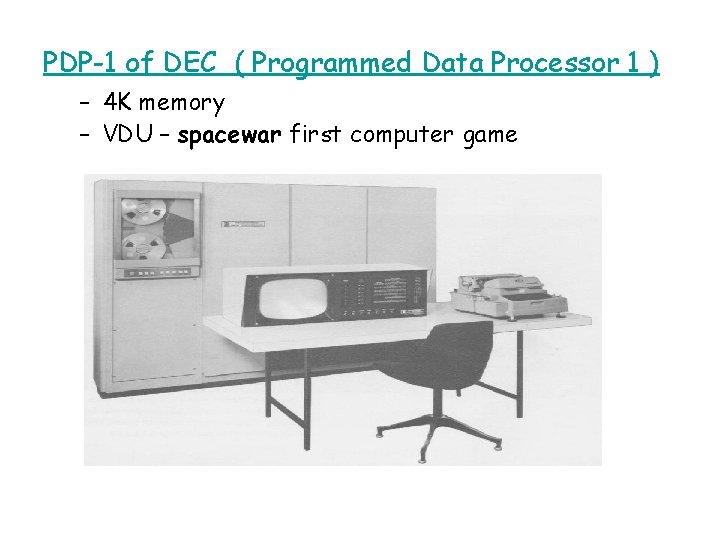
PDP-1 of DEC ( Programmed Data Processor 1 ) – 4 K memory – VDU – spacewar first computer game
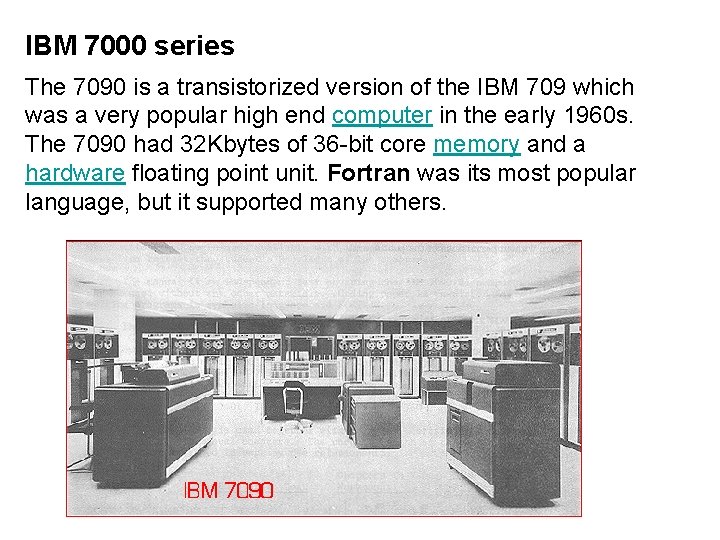
IBM 7000 series The 7090 is a transistorized version of the IBM 709 which was a very popular high end computer in the early 1960 s. The 7090 had 32 Kbytes of 36 -bit core memory and a hardware floating point unit. Fortran was its most popular language, but it supported many others.
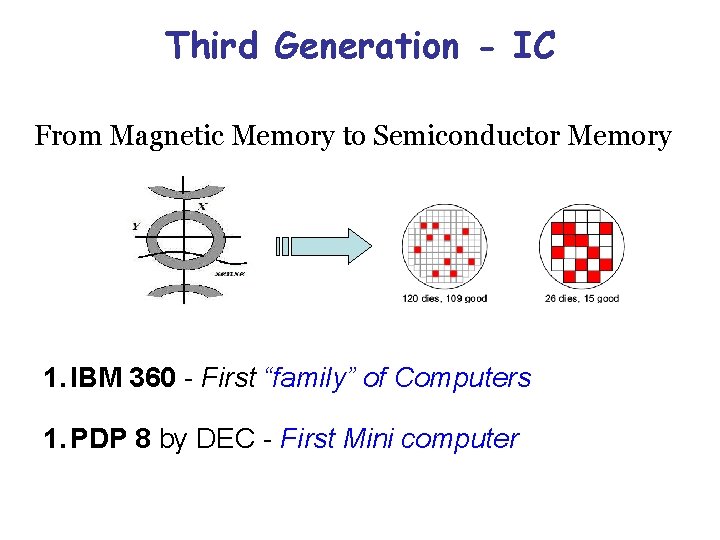
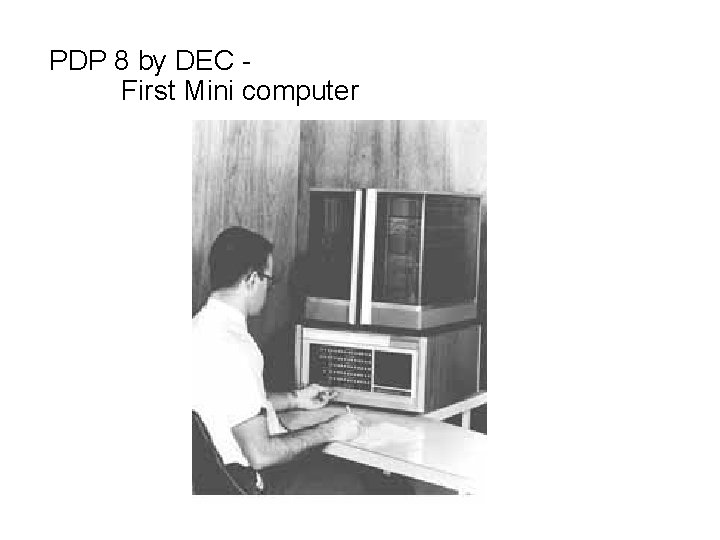
Third Generation - IC From Magnetic Memory to Semiconductor Memory 1. IBM 360 - First “family” of Computers 1. PDP 8 by DEC - First Mini computer
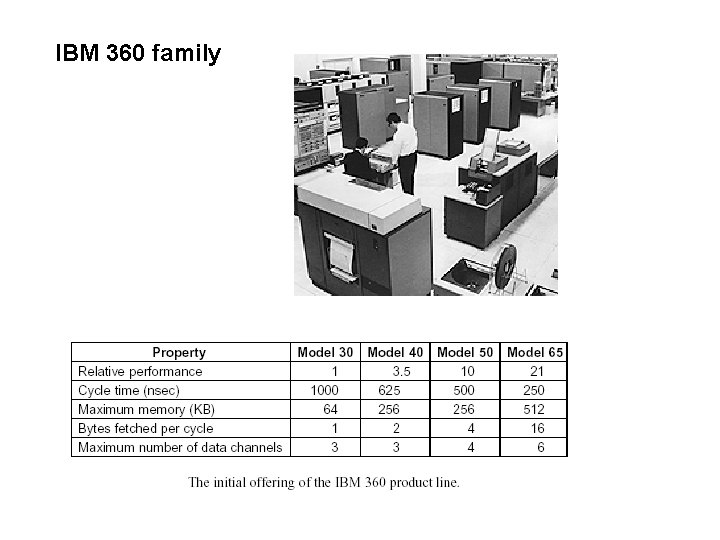
• IBM 360 – First planned “family” of computers – Similar or identical instruction sets – Similar or identical O/S – Increasing speed – Increasing number of I/O ports (i. e. more terminals) – Increased memory size – Increased cost – multiprogramming
IBM 360 family
PDP 8 by DEC First Mini computer
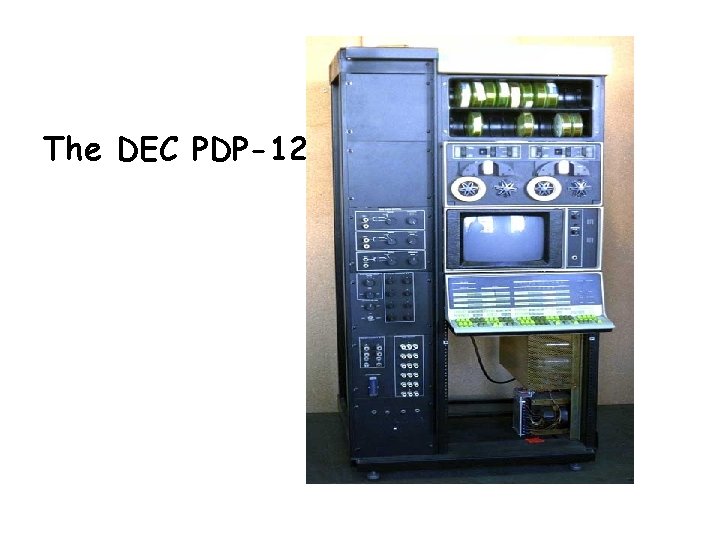
DEC The DEC PDP-12
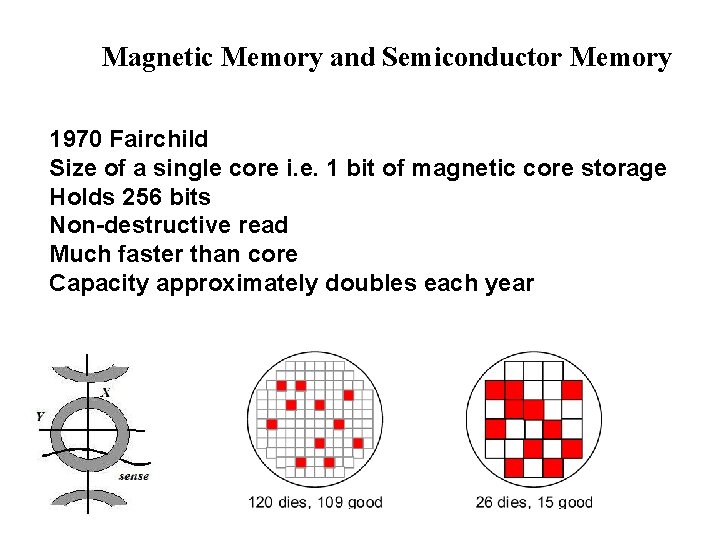
Magnetic Memory and Semiconductor Memory 1970 Fairchild Size of a single core i. e. 1 bit of magnetic core storage Holds 256 bits Non-destructive read Much faster than core Capacity approximately doubles each year
Fourth generation - VLSI 1. CPU in a chip - microprocessor 2. Personal computers 1. IBM PC 2. Apple 3. commodore 3. Intel (integrated electronics)
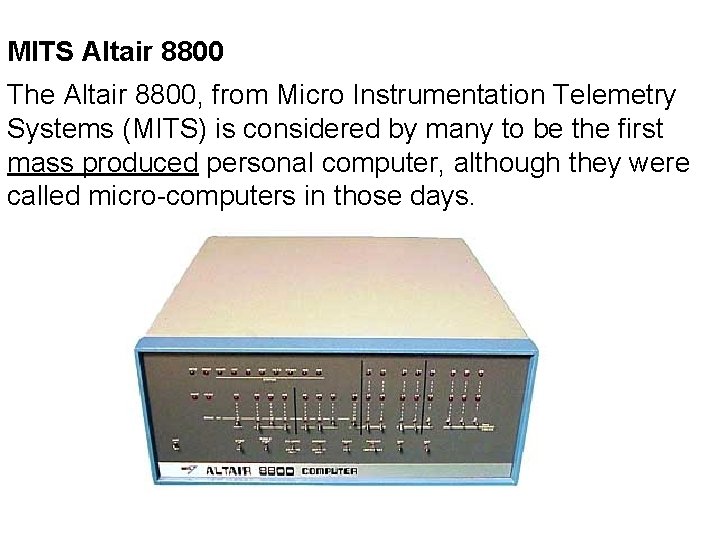
MITS Altair 8800 The Altair 8800, from Micro Instrumentation Telemetry Systems (MITS) is considered by many to be the first mass produced personal computer, although they were called micro-computers in those days.
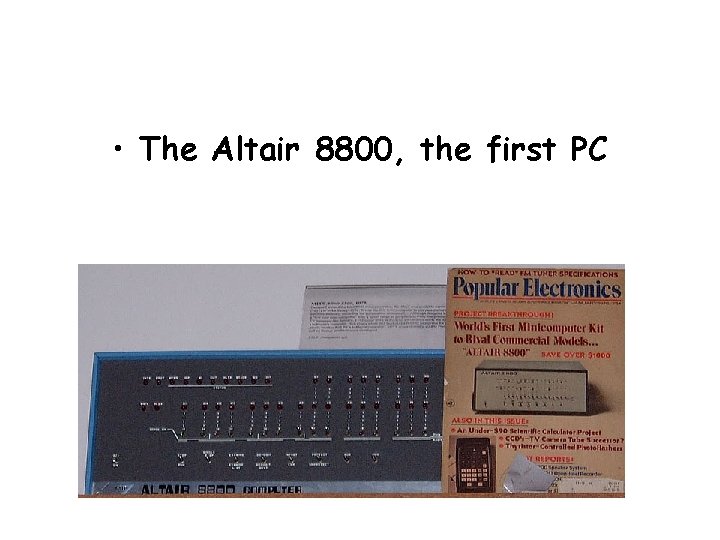
• The Altair 8800, the first PC
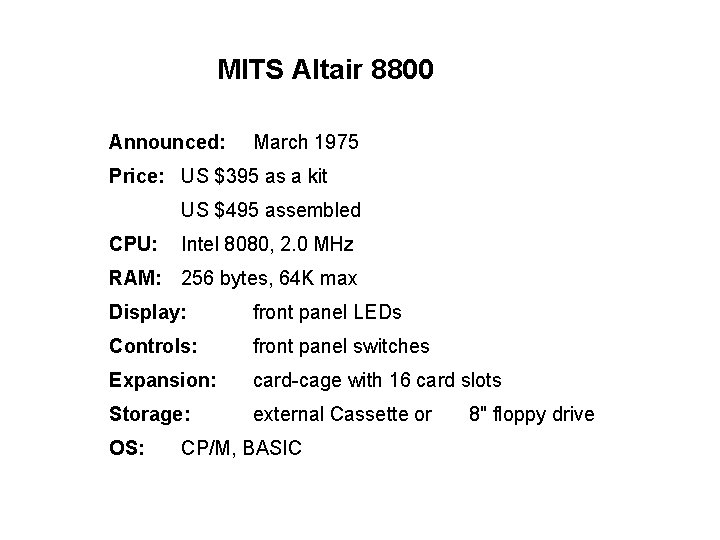
MITS Altair 8800 Announced: March 1975 Price: US $395 as a kit US $495 assembled CPU: Intel 8080, 2. 0 MHz RAM: 256 bytes, 64 K max Display: front panel LEDs Controls: front panel switches Expansion: card-cage with 16 card slots Storage: external Cassette or OS: CP/M, BASIC 8" floppy drive
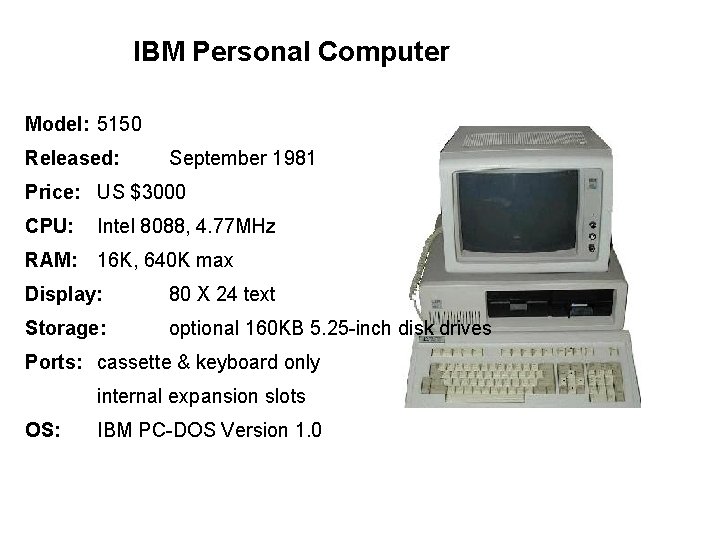
IBM Personal Computer Model: 5150 Released: September 1981 Price: US $3000 CPU: Intel 8088, 4. 77 MHz RAM: 16 K, 640 K max Display: 80 X 24 text Storage: optional 160 KB 5. 25 -inch disk drives Ports: cassette & keyboard only internal expansion slots OS: IBM PC-DOS Version 1. 0
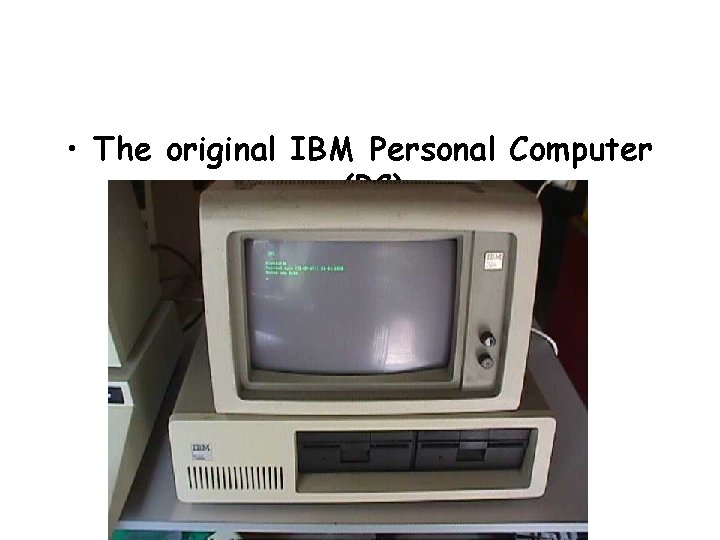
• The original IBM Personal Computer (PC)
History of Microprocessors CPU IN A CHIP
Intel family of Chips 1. IN 1968 ROBERT NOYCE AND GORDON MOORE started INTEL (integrated Electronics) to make memory chips. 2. 1971 - 4004 1. First microprocessor 2. All CPU components on a single chip 3. 4 bit 3. Followed in 1972 by 8008 1. 8 bit
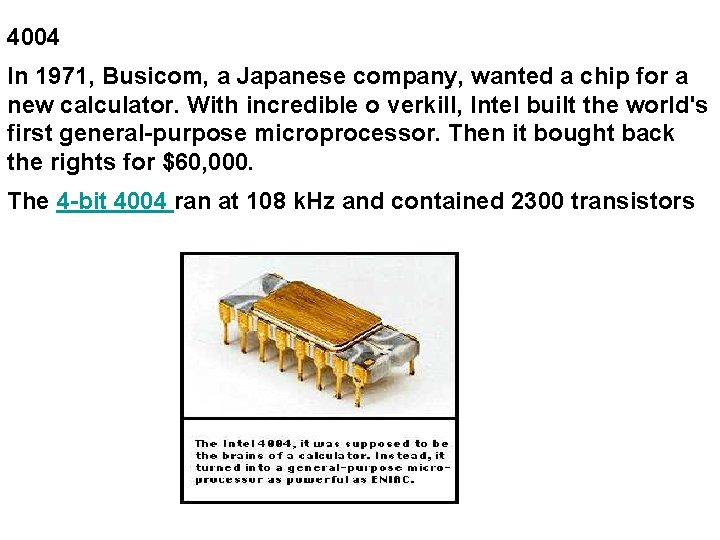
4004 In 1971, Busicom, a Japanese company, wanted a chip for a new calculator. With incredible o verkill, Intel built the world's first general-purpose microprocessor. Then it bought back the rights for $60, 000. The 4 -bit 4004 ran at 108 k. Hz and contained 2300 transistors
• 1974 - 8080 – Intel’s first general purpose microprocessor – Both designed for specific applications – Used in first microcomputer Altair • At the same time – Motorola 6800 – Zilog 80
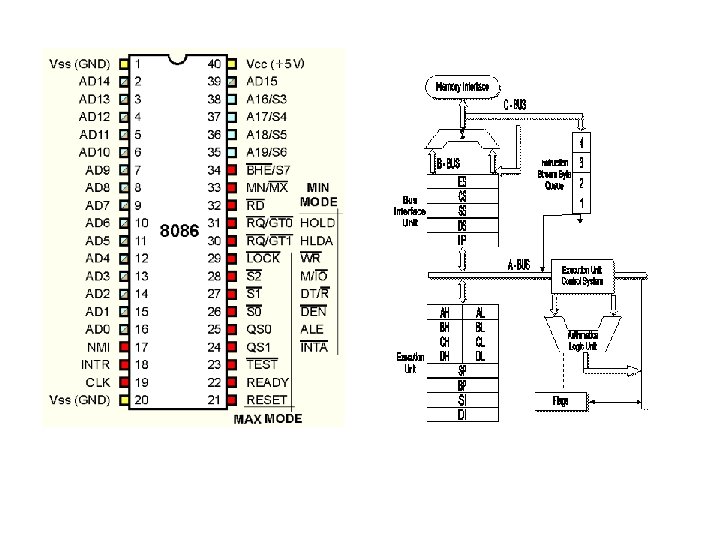
• Intel 8086 – 16 bit – 20 bit address bus • Intel 8088 – 16 bit but external data bus 8 bit • IBM PC – 8088 up – 16 K memory – 5 expansion slots for I/O cards
Microprocessor evolution
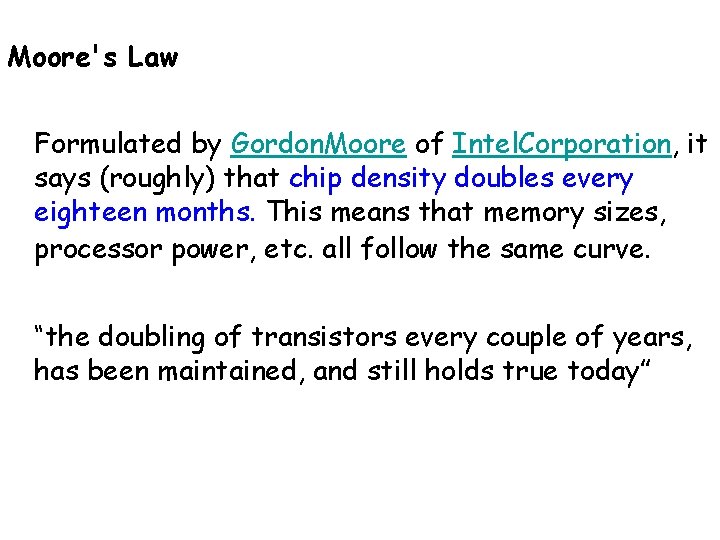
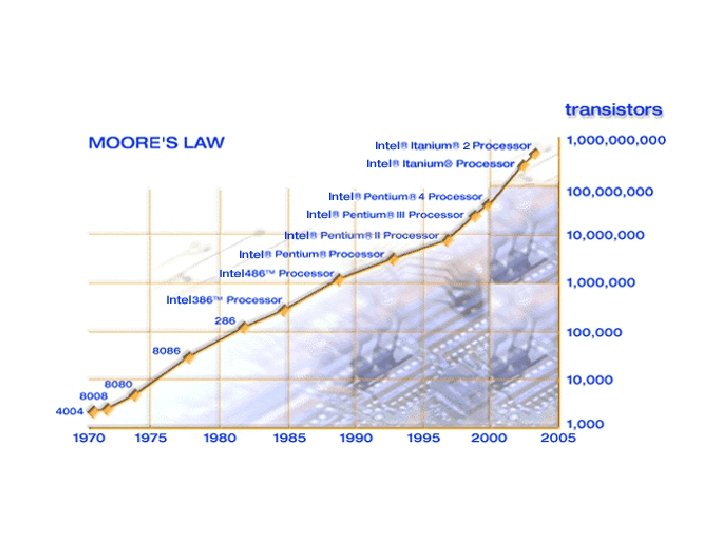
Moore's Law Formulated by Gordon. Moore of Intel. Corporation, it says (roughly) that chip density doubles every eighteen months. This means that memory sizes, processor power, etc. all follow the same curve. “the doubling of transistors every couple of years, has been maintained, and still holds true today”
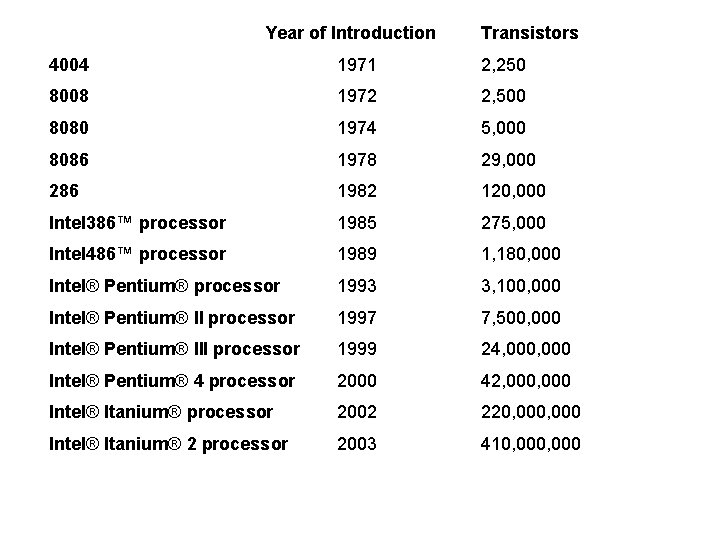
Year of Introduction Transistors 4004 1971 2, 250 8008 1972 2, 500 8080 1974 5, 000 8086 1978 29, 000 286 1982 120, 000 Intel 386™ processor 1985 275, 000 Intel 486™ processor 1989 1, 180, 000 Intel® Pentium® processor 1993 3, 100, 000 Intel® Pentium® II processor 1997 7, 500, 000 Intel® Pentium® III processor 1999 24, 000 Intel® Pentium® 4 processor 2000 42, 000 Intel® Itanium® processor 2002 220, 000 Intel® Itanium® 2 processor 2003 410, 000