
Evolution of the African Monsoon during 2006 Sahel
- Slides: 79
Evolution of the African Monsoon during 2006 (Sahel Rainfall, African Easterly Waves and Atlantic Tropical Cyclones) Rosana Nieto Ferreira Tom Rickenbach East Carolina University Earle Williams (MIT) Nick Guy (San José State University) East Carolina University
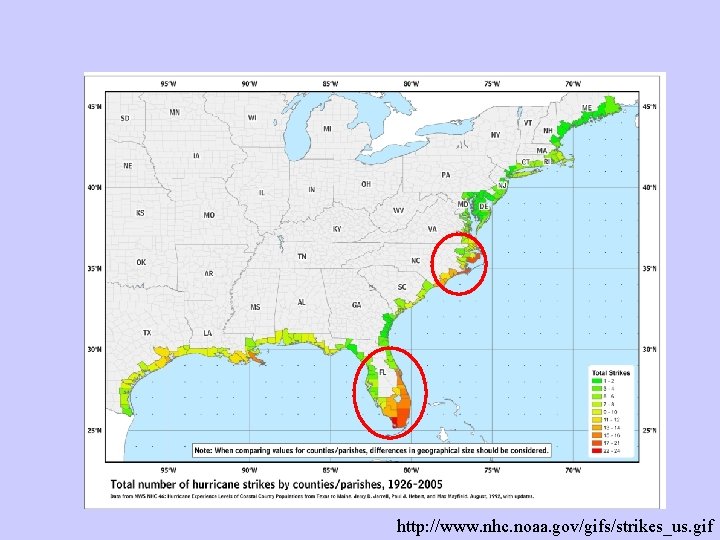
http: //www. nhc. noaa. gov/gifs/strikes_us. gif
Typical Hurricane Paths
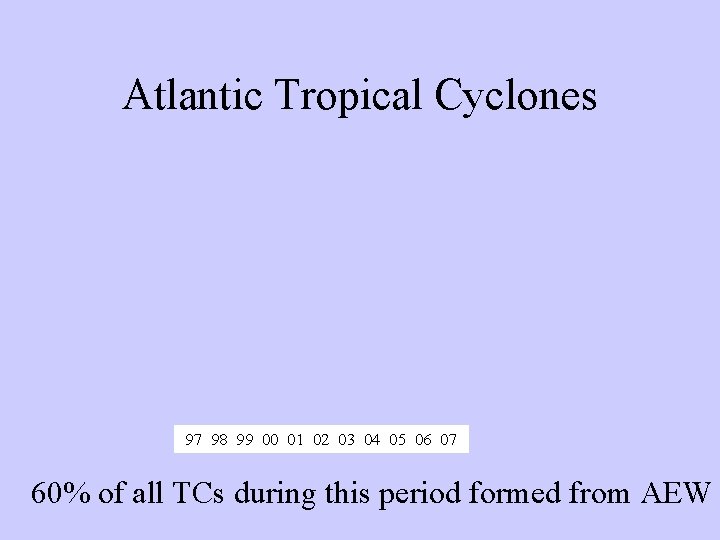
Atlantic Tropical Cyclones 97 98 99 00 01 02 03 04 05 06 07 60% of all TCs during this period formed from AEW
North Carolina Tropical Cyclones Season peak in Aug/Sep Half come from African Easterly Waves
Hurricane Dennis (1999) Hurricane Floyd Bio • Formed from an African Easterly Wave that left the coast of Africa on Aug 17 • Formed from an African Easterly Wave that left the coast of Africa on September 2 • Category 2 hurricane • Category 4 hurricane • Tropical Storm at landfall in NC on Sep 1 • category 2 (105 mph winds) at landfall on Sep 16
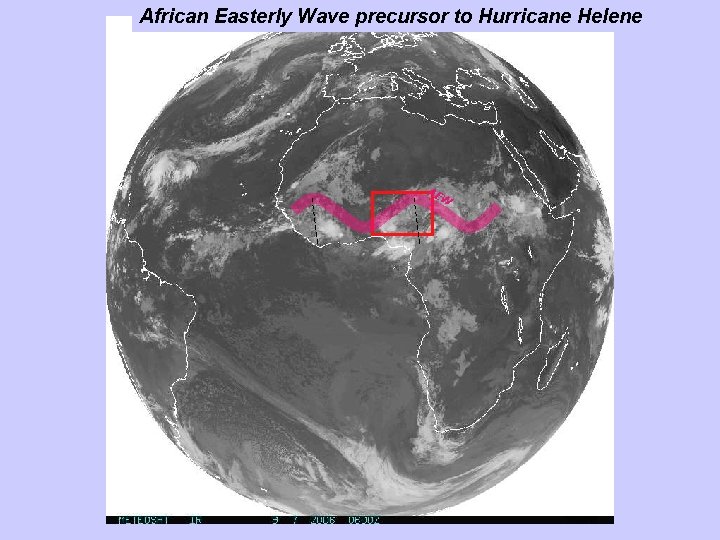
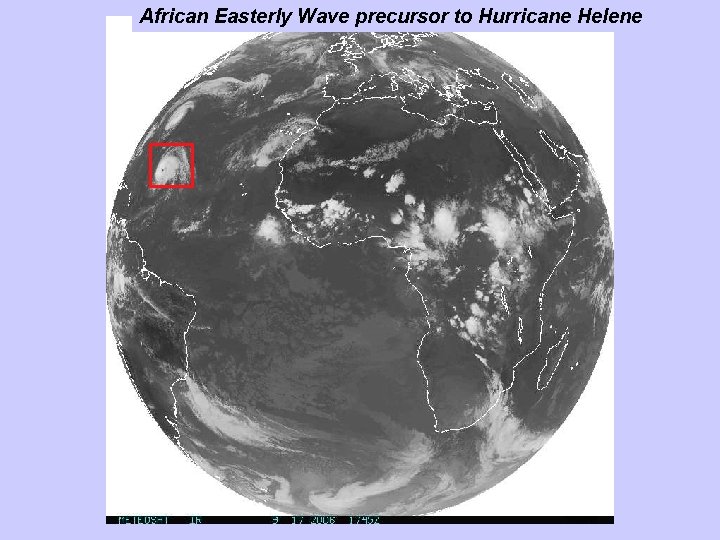
What is an African Easterly Wave? Like our own Jet Stream, cyclonic meandering in winds over West Africa favor the formation of storms
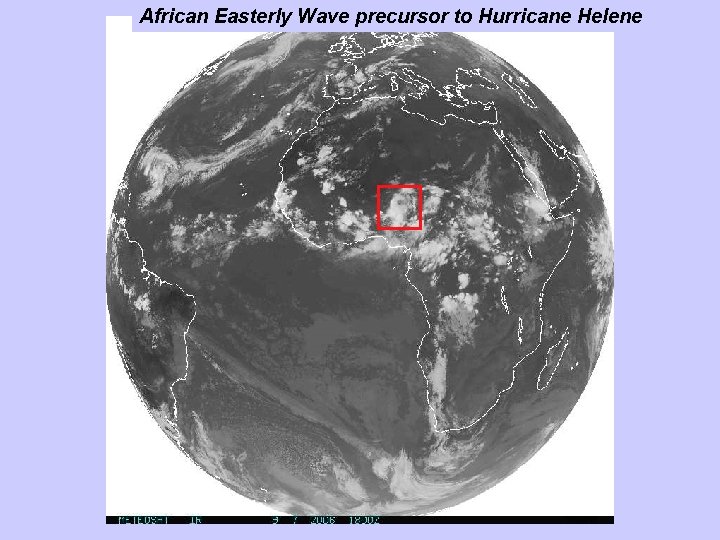
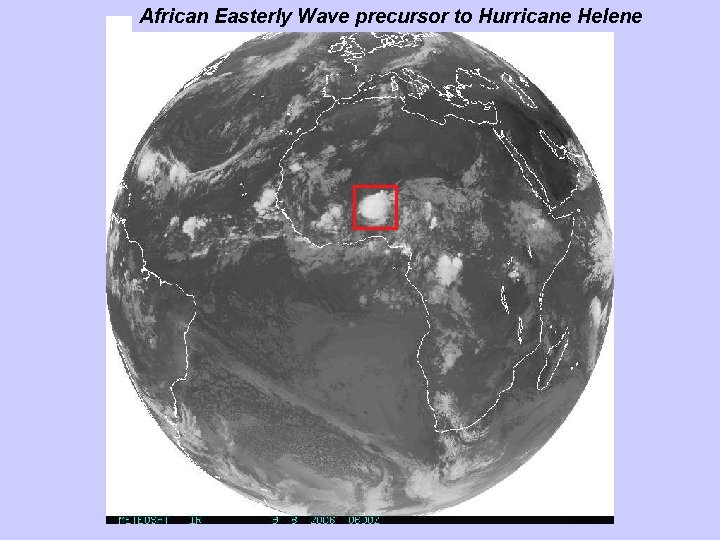
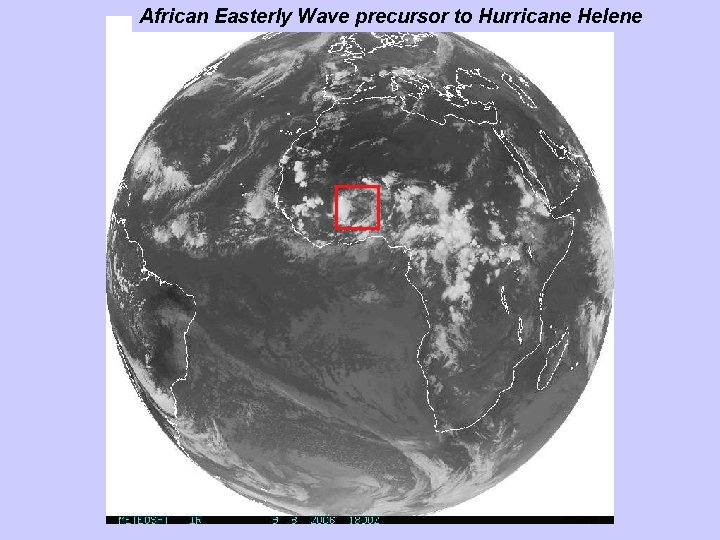
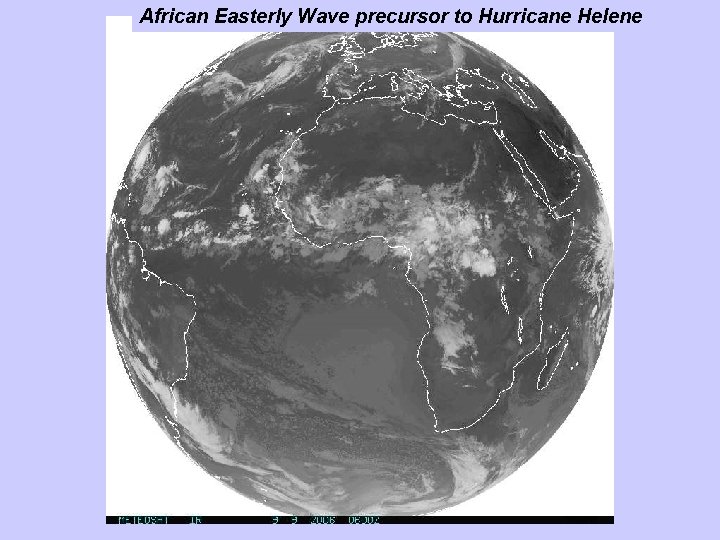
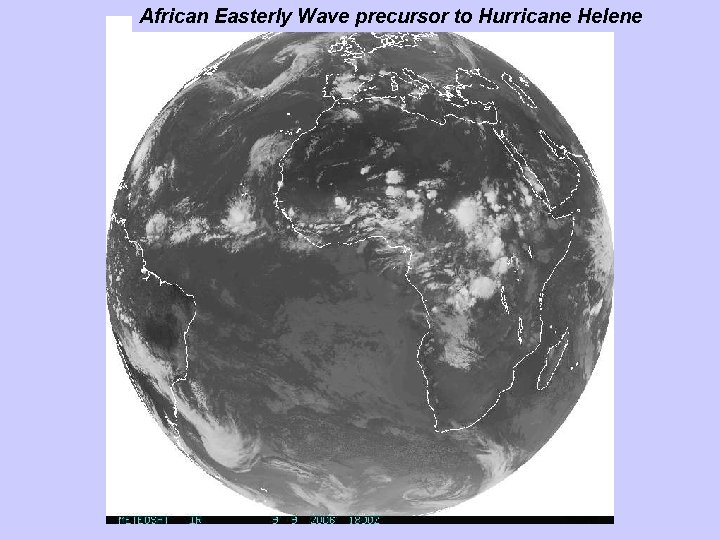
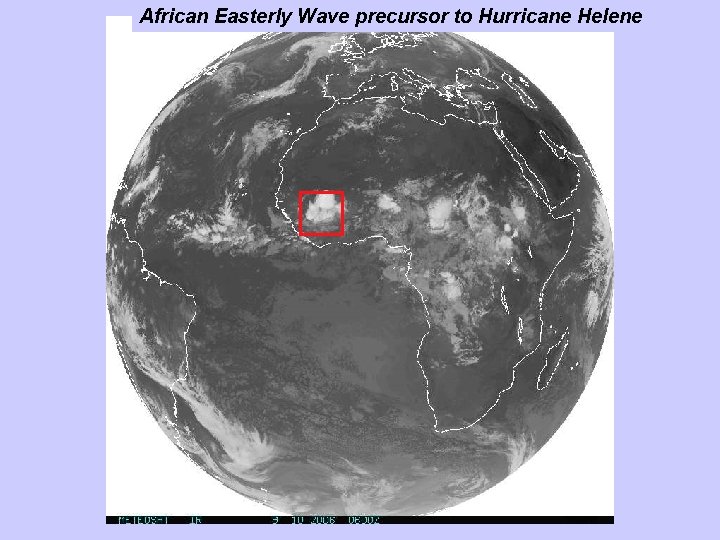
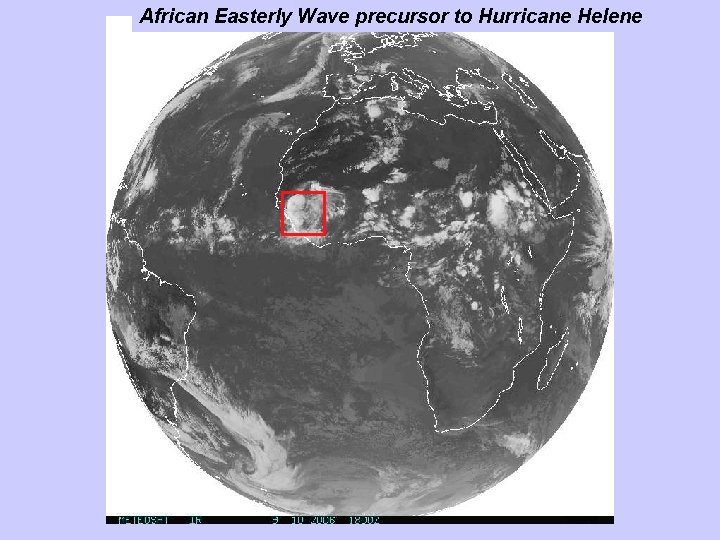
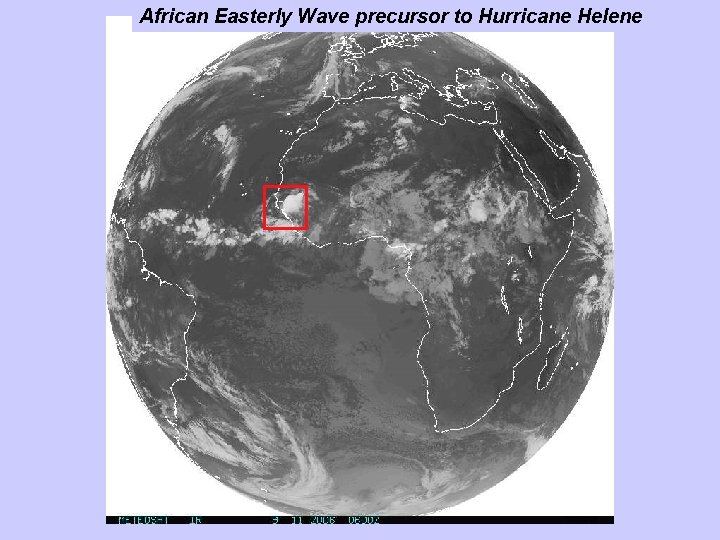
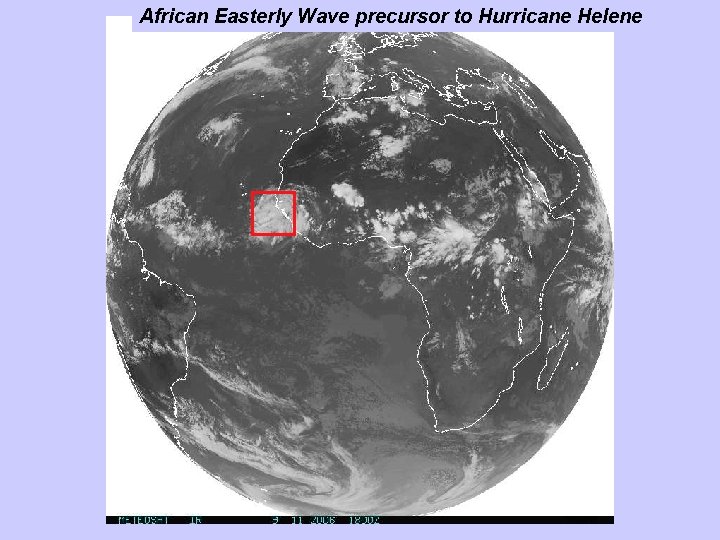
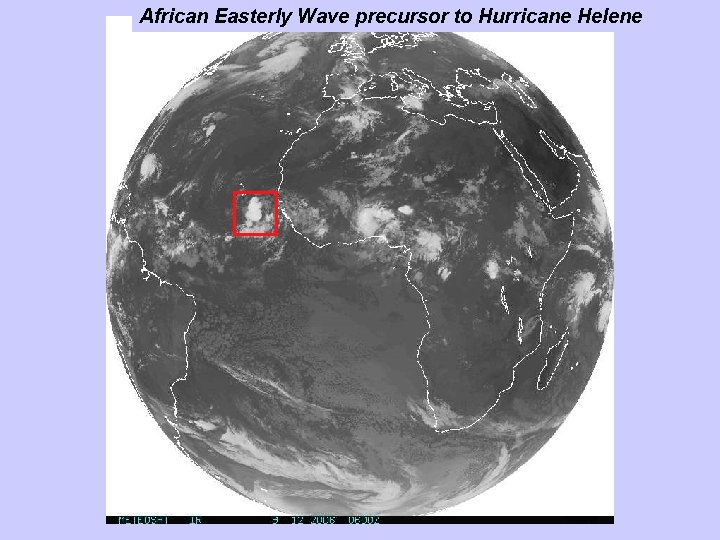
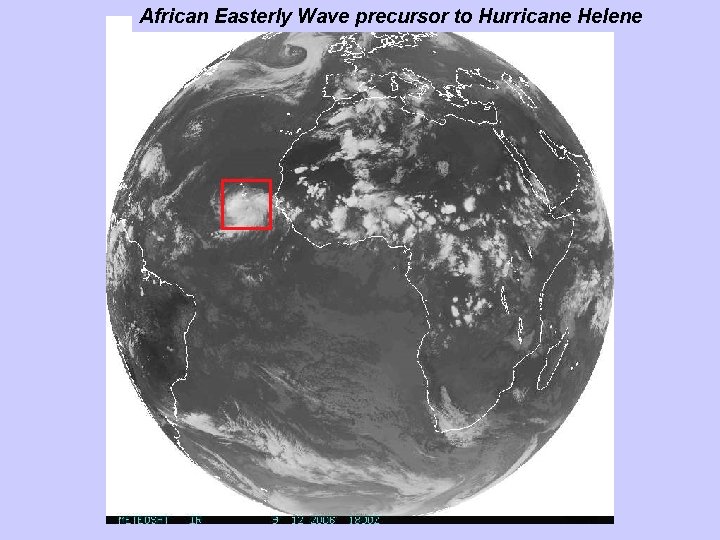
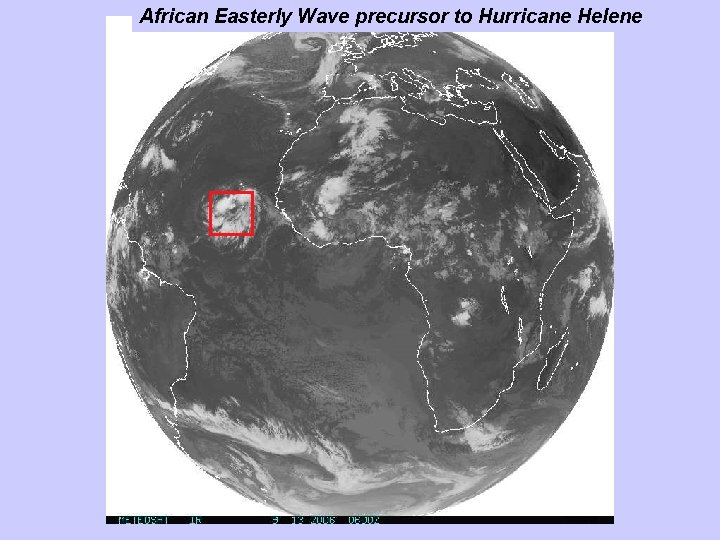
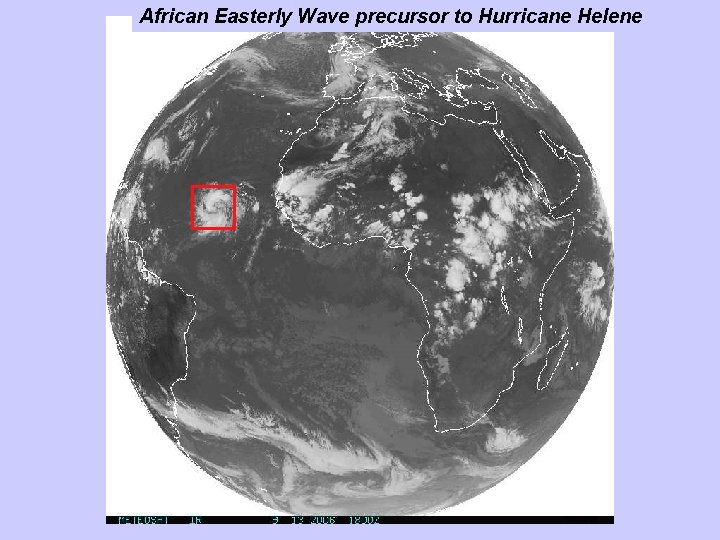
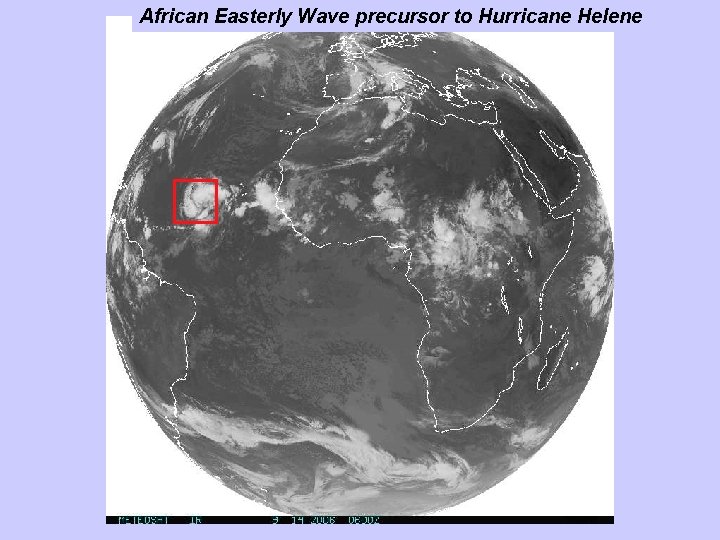
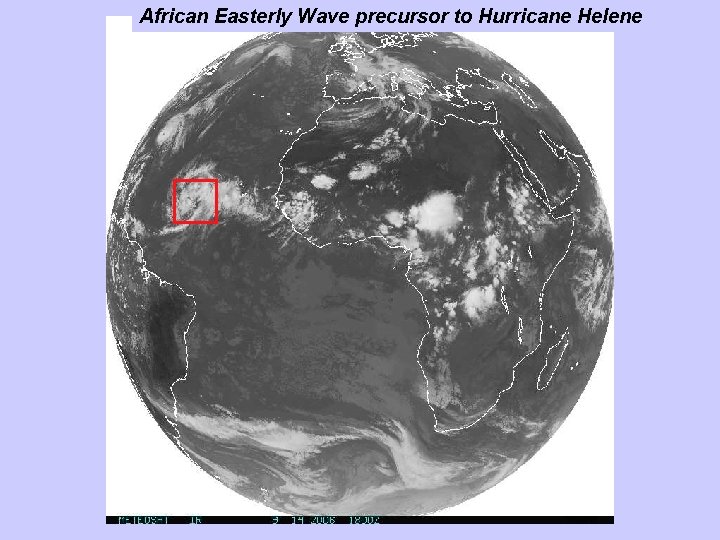
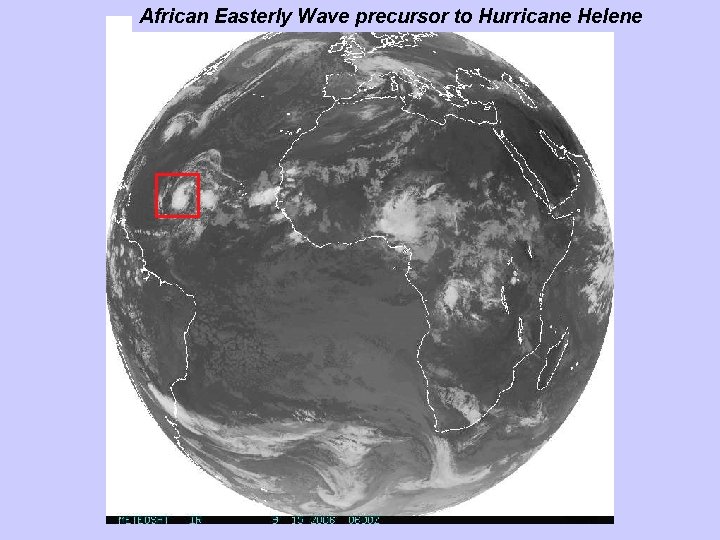
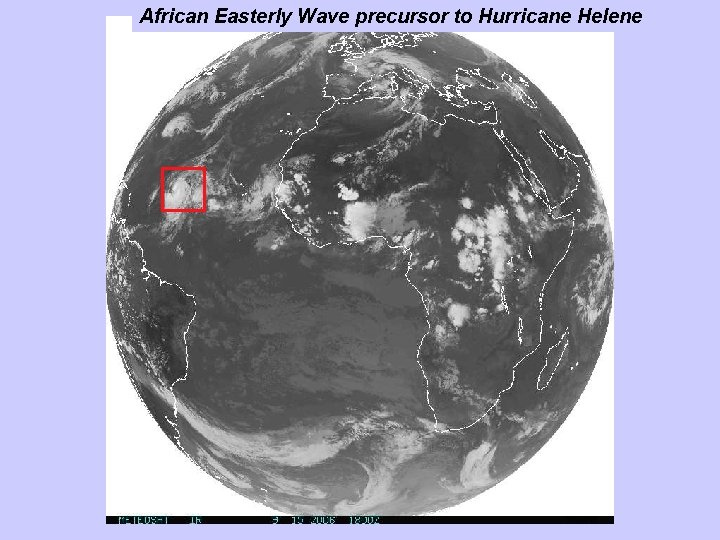
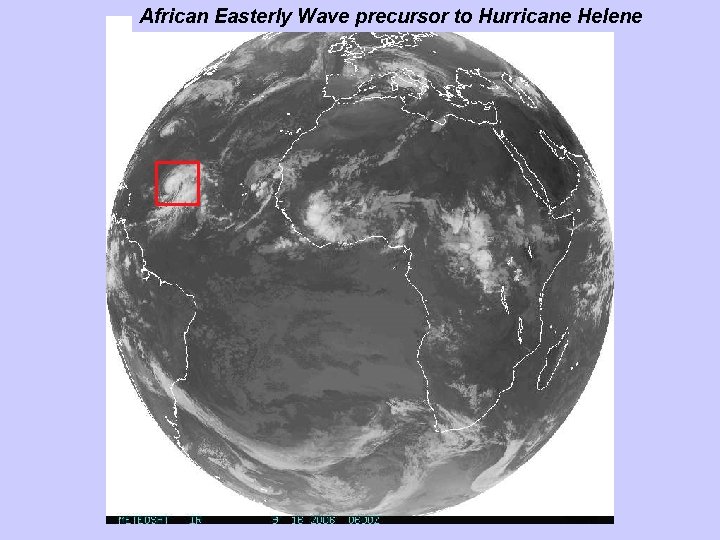
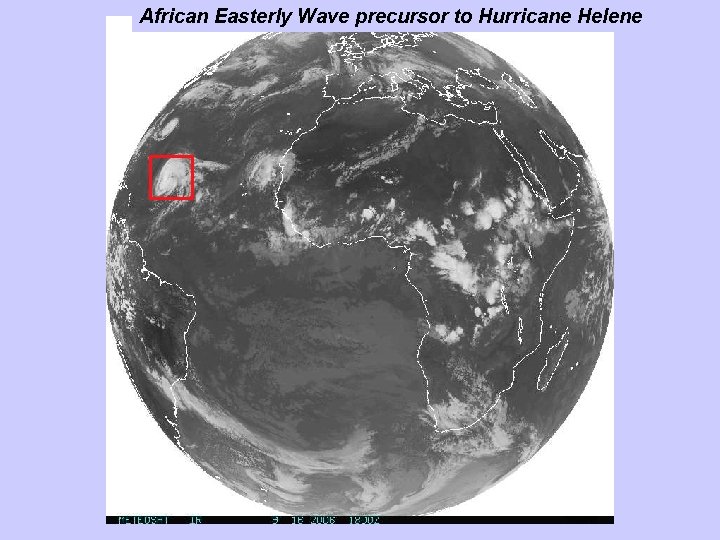
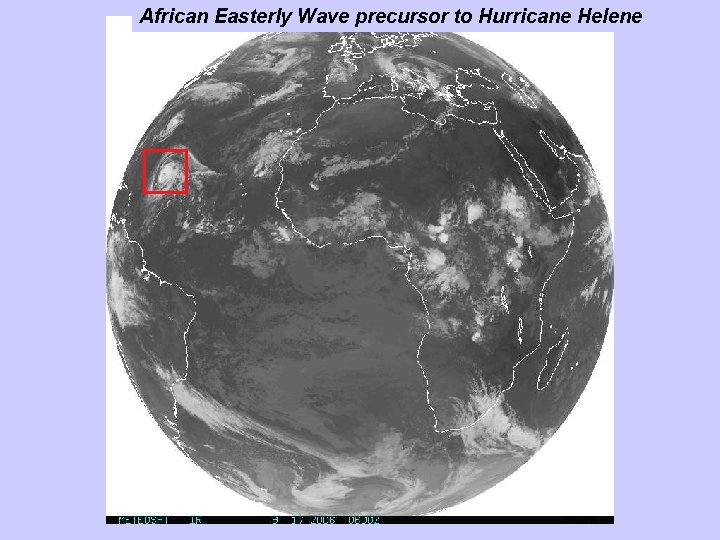
African Easterly Wave precursor to Hurricane Helene AE W
African Easterly Wave precursor to Hurricane Helene
African Easterly Wave precursor to Hurricane Helene
African Easterly Wave precursor to Hurricane Helene
African Easterly Wave precursor to Hurricane Helene
African Easterly Wave precursor to Hurricane Helene
African Easterly Wave precursor to Hurricane Helene
African Easterly Wave precursor to Hurricane Helene
African Easterly Wave precursor to Hurricane Helene
African Easterly Wave precursor to Hurricane Helene
African Easterly Wave precursor to Hurricane Helene
African Easterly Wave precursor to Hurricane Helene
African Easterly Wave precursor to Hurricane Helene
African Easterly Wave precursor to Hurricane Helene
African Easterly Wave precursor to Hurricane Helene
African Easterly Wave precursor to Hurricane Helene
African Easterly Wave precursor to Hurricane Helene
African Easterly Wave precursor to Hurricane Helene
African Easterly Wave precursor to Hurricane Helene
African Easterly Wave precursor to Hurricane Helene
African Easterly Wave precursor to Hurricane Helene
African Easterly Wave precursor to Hurricane Helene
How do African Easterly Waves form?
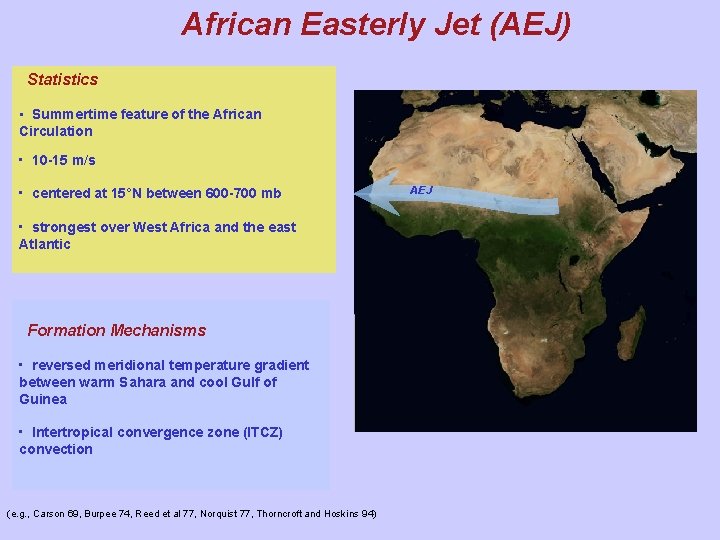
African Easterly Jet (AEJ) Statistics • Summertime feature of the African Circulation • 10 -15 m/s • centered at 15°N between 600 -700 mb • strongest over West Africa and the east Atlantic Formation Mechanisms • reversed meridional temperature gradient between warm Sahara and cool Gulf of Guinea • Intertropical convergence zone (ITCZ) convection (e. g. , Carson 69, Burpee 74, Reed et al 77, Norquist 77, Thorncroft and Hoskins 94) AEJ
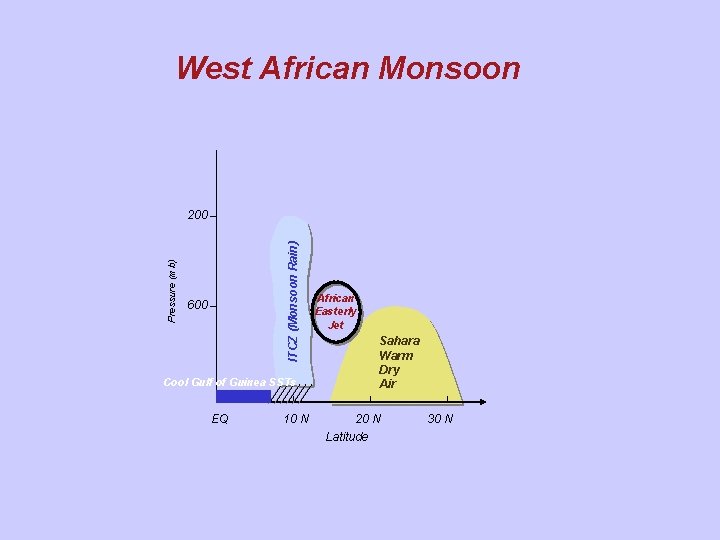
West African Monsoon ITCZ (Monsoon Rain) Pressure (mb) 200 600 Cool Gulf of Guinea SSTs EQ 10 N African Easterly Jet Sahara Warm Dry Air 20 N Latitude 30 N
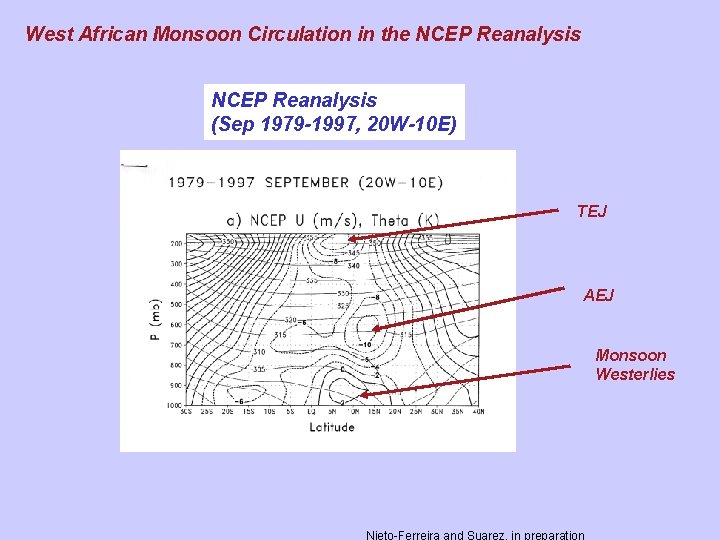
West African Monsoon Circulation in the NCEP Reanalysis (Sep 1979 -1997, 20 W-10 E) TEJ AEJ Monsoon Westerlies
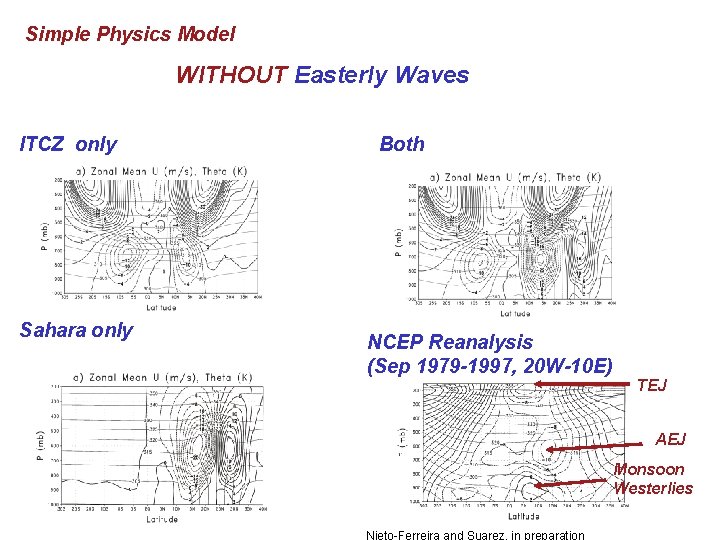
Simple Physics Model WITHOUT Easterly Waves ITCZ only Sahara only Both NCEP Reanalysis (Sep 1979 -1997, 20 W-10 E) TEJ AEJ Monsoon Westerlies
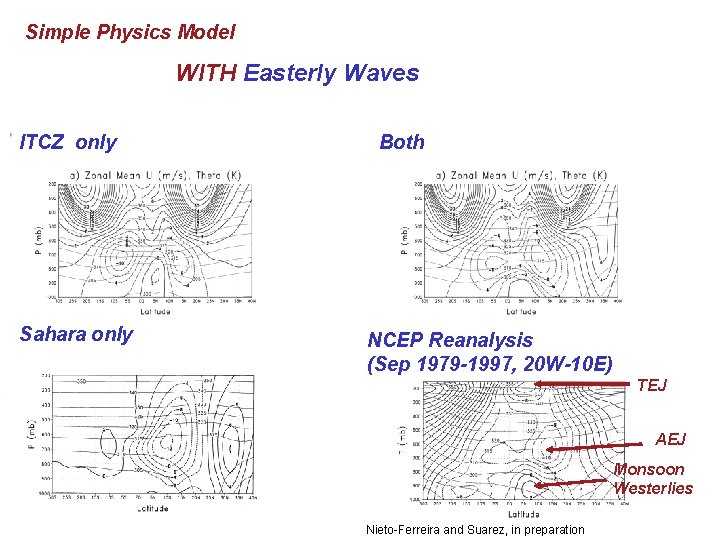
Simple Physics Model WITH Easterly Waves ITCZ only Sahara only Both NCEP Reanalysis (Sep 1979 -1997, 20 W-10 E) TEJ AEJ Monsoon Westerlies Nieto-Ferreira and Suarez, in preparation
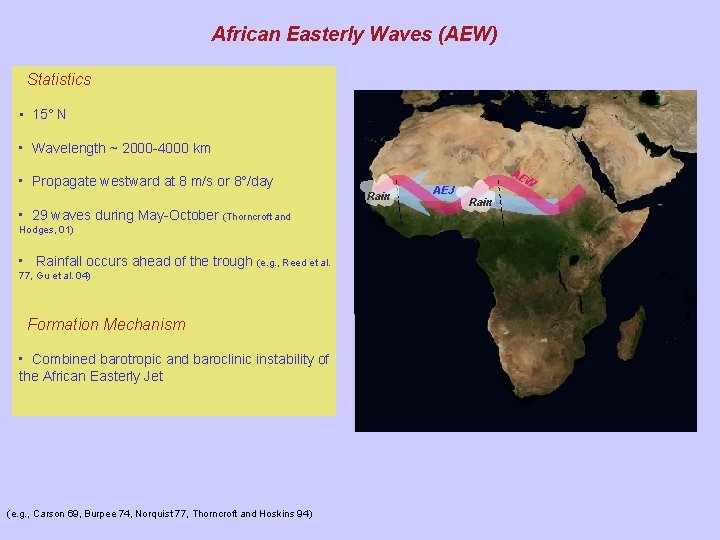
African Easterly Waves (AEW) Statistics • 15° N • Wavelength ~ 2000 -4000 km • Propagate westward at 8 m/s or 8°/day Rain • 29 waves during May-October (Thorncroft and Hodges, 01) • Rainfall occurs ahead of the trough (e. g. , Reed et al. 77, Gu et al. 04) Formation Mechanism • Combined barotropic and baroclinic instability of the African Easterly Jet (e. g. , Carson 69, Burpee 74, Norquist 77, Thorncroft and Hoskins 94) AEJ AE W Rain
How is African Easterly Wave Activity affected by rainfall in Africa?
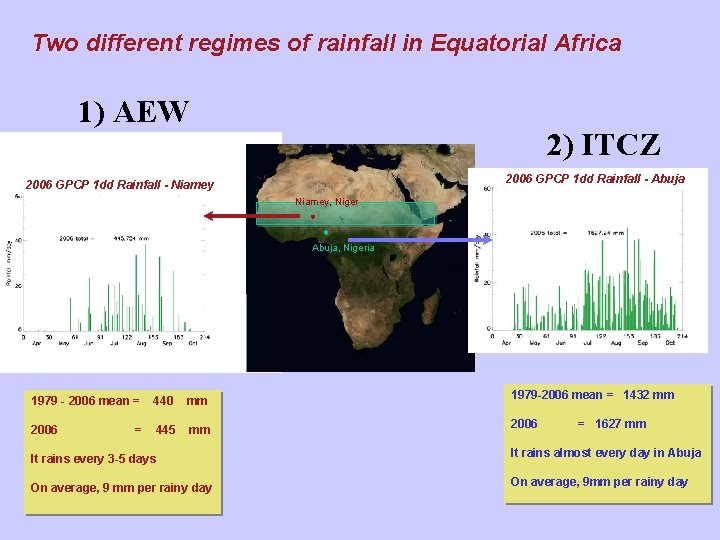
Two different regimes of rainfall in Equatorial Africa 1) AEW 2) ITCZ 2006 GPCP 1 dd Rainfall - Abuja 2006 GPCP 1 dd Rainfall - Niamey, Niger Abuja, Nigeria 1979 - 2006 mean = 440 mm 1979 -2006 mean = 1432 mm 2006 445 mm 2006 = = 1627 mm It rains every 3 -5 days It rains almost every day in Abuja On average, 9 mm per rainy day On average, 9 mm per rainy day
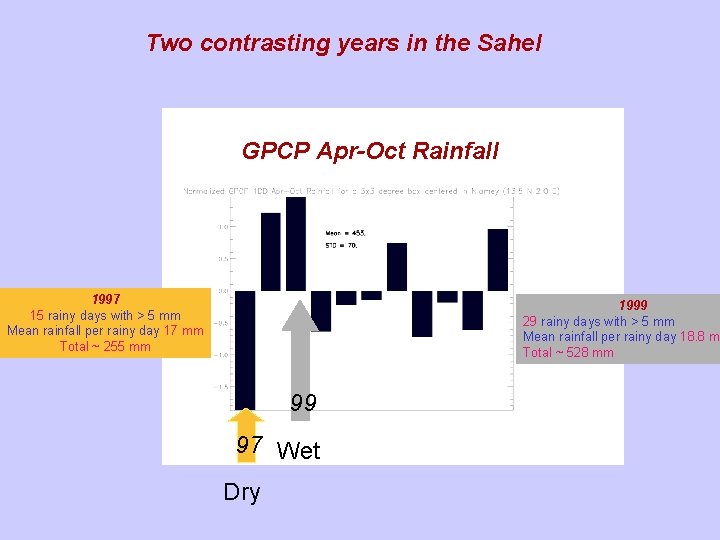
Two contrasting years in the Sahel GPCP Apr-Oct Rainfall 1997 15 rainy days with > 5 mm Mean rainfall per rainy day 17 mm Total ~ 255 mm 1999 29 rainy days with > 5 mm Mean rainfall per rainy day 18. 8 m Total ~ 528 mm 99 97 Wet Dry
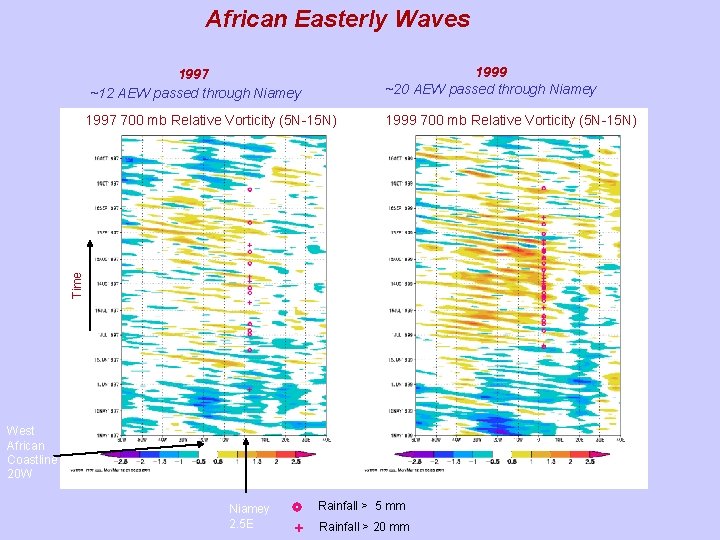
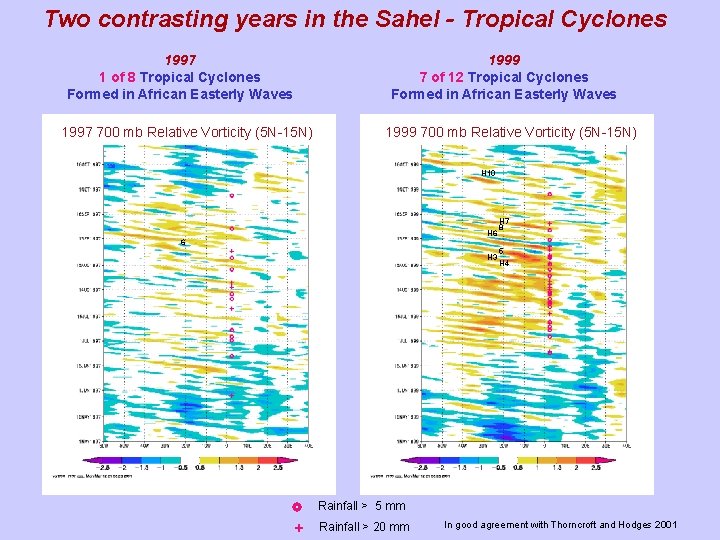
African Easterly Waves 1999 ~20 AEW passed through Niamey 1997 ~12 AEW passed through Niamey 1999 700 mb Relative Vorticity (5 N-15 N) Time 1997 700 mb Relative Vorticity (5 N-15 N) West African Coastline 20 W Niamey 2. 5 E Rainfall > 5 mm + Rainfall > 20 mm
Two contrasting years in the Sahel - Tropical Cyclones 1997 1 of 8 Tropical Cyclones Formed in African Easterly Waves 1999 7 of 12 Tropical Cyclones Formed in African Easterly Waves 1997 700 mb Relative Vorticity (5 N-15 N) 1999 700 mb Relative Vorticity (5 N-15 N) H 10 H 6 H 7 8 6 H 3 5 H 4 Rainfall > 5 mm + Rainfall > 20 mm In good agreement with Thorncroft and Hodges 2001
In general, we should expect more and stronger African Easterly Waves during wet years in the African Sahel but it is not the case that more African Easterly Waves result in more Atlantic tropical cyclones, at least not in interannual timescales…
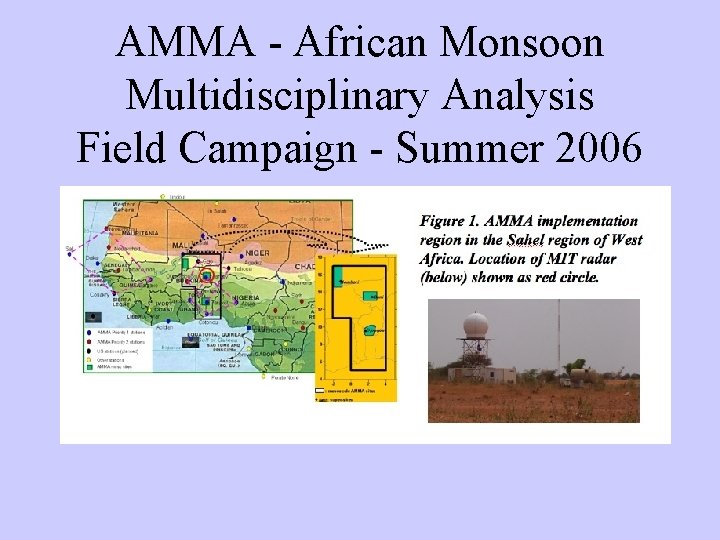
AMMA - African Monsoon Multidisciplinary Analysis Field Campaign - Summer 2006
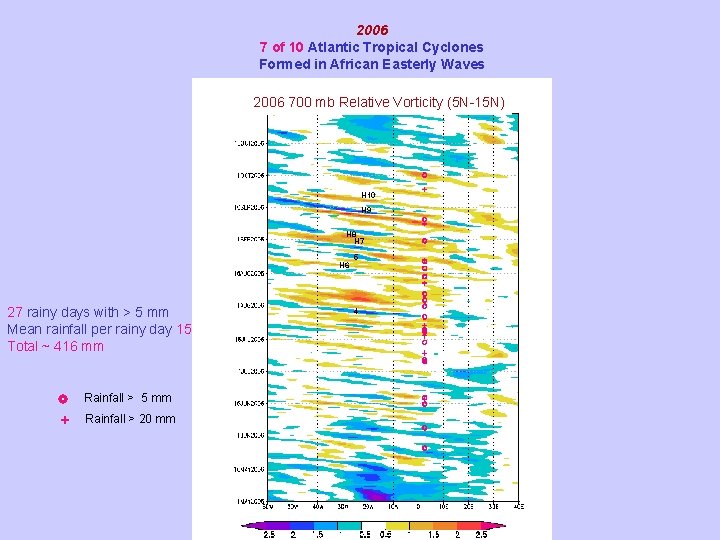
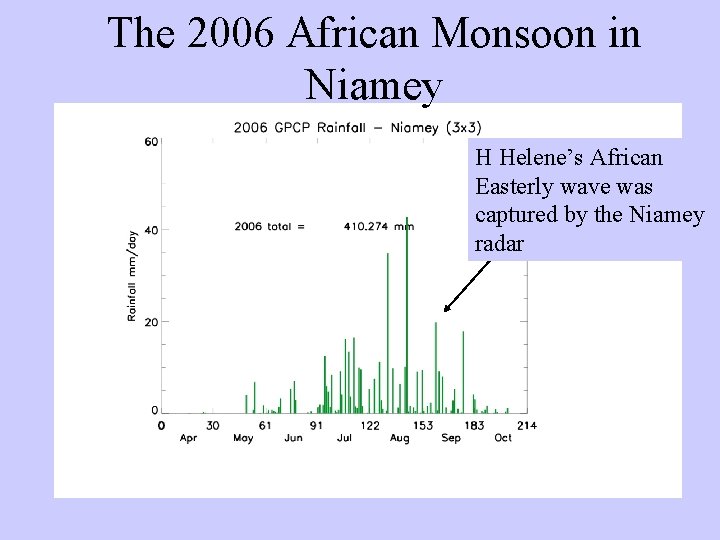
In 2006 Niamey rainfall was slightly below average for the 1997 -2007 period
2006 7 of 10 Atlantic Tropical Cyclones Formed in African Easterly Waves 2006 700 mb Relative Vorticity (5 N-15 N) H 10 H 9 H 8 H 7 H 6 27 rainy days with > 5 mm Mean rainfall per rainy day 15. 4 mm Total ~ 416 mm Rainfall > 5 mm + Rainfall > 20 mm 5 4
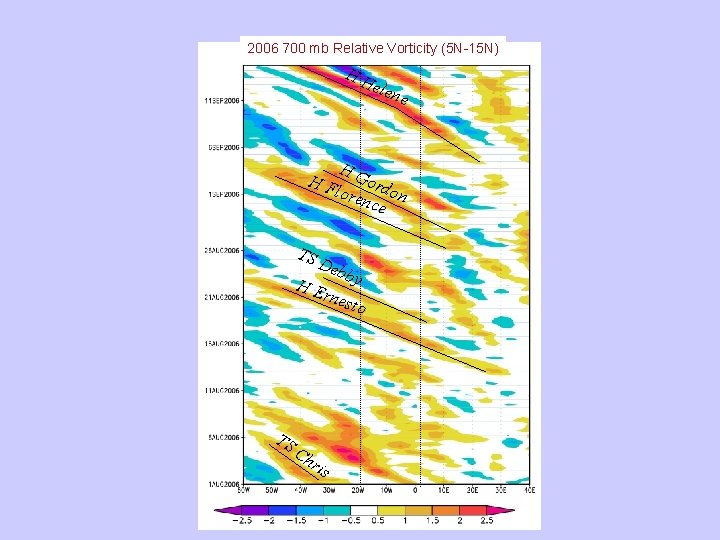
2006 700 mb Relative Vorticity (5 N-15 N) HH elen e HG o lore rdon nce HF TS Deb by rnes to HE TS Ch ris
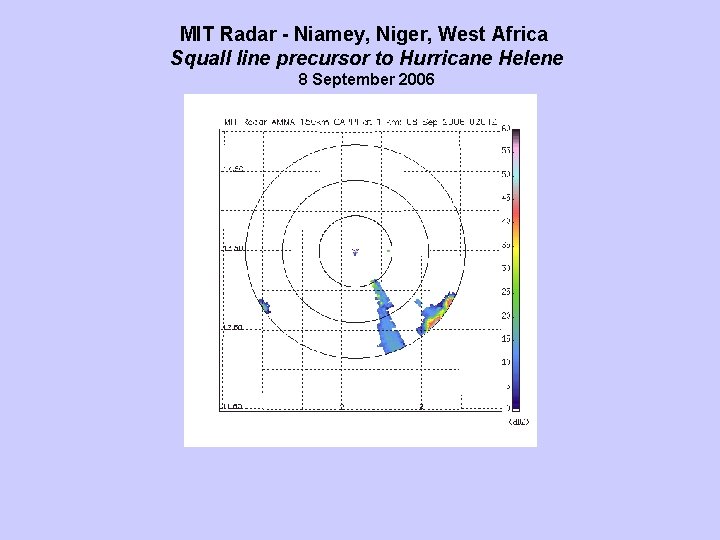
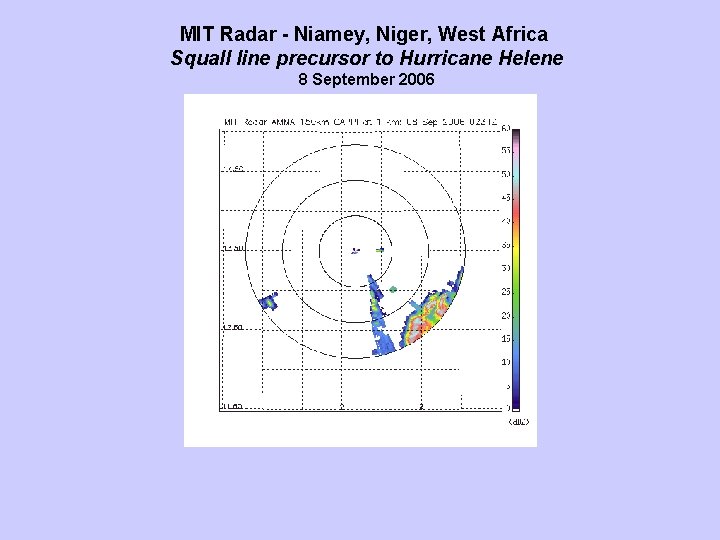
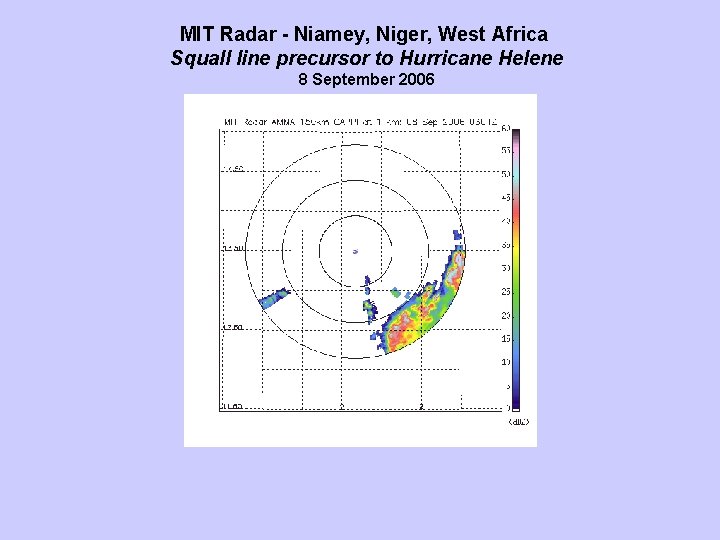
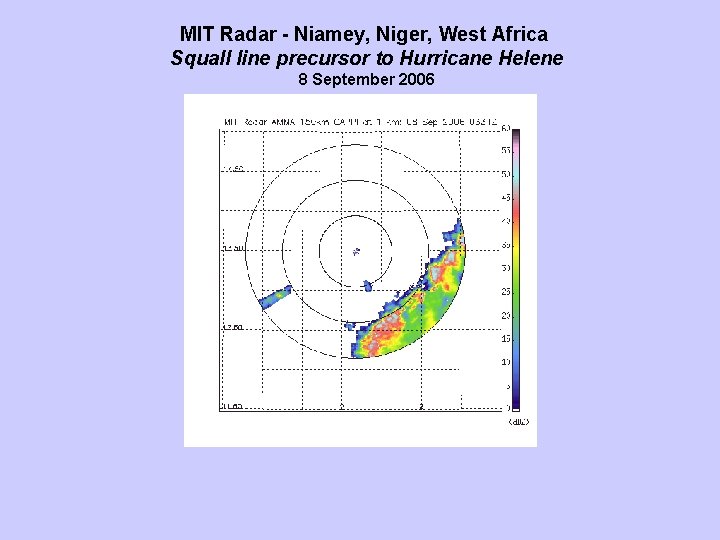
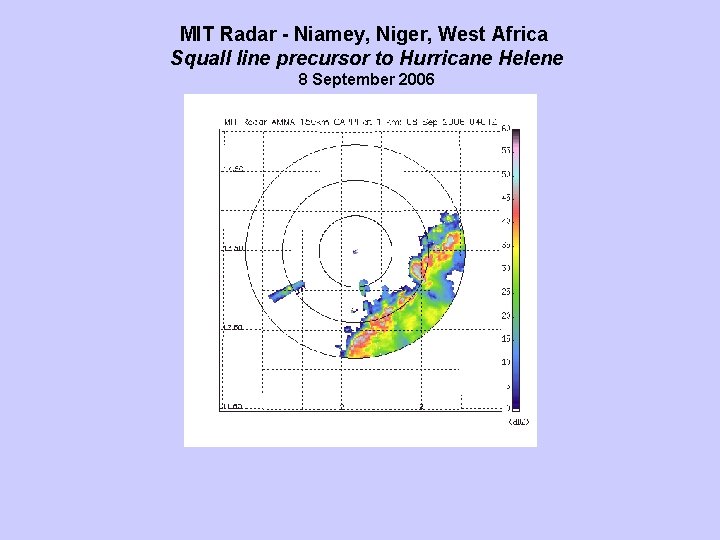
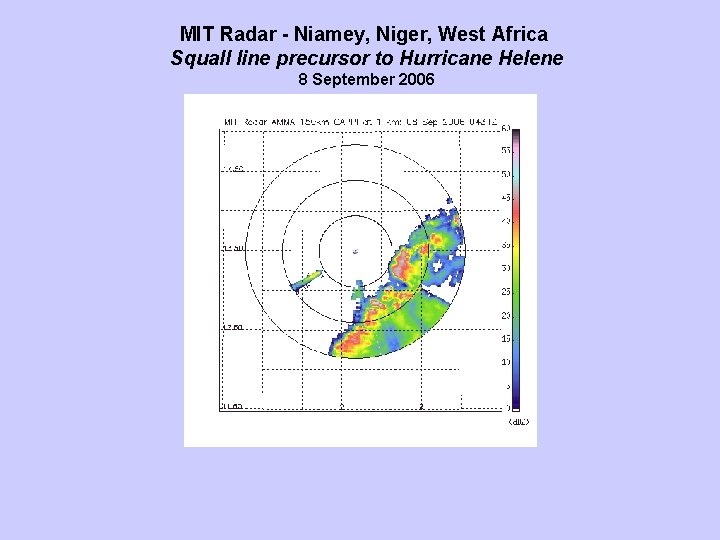
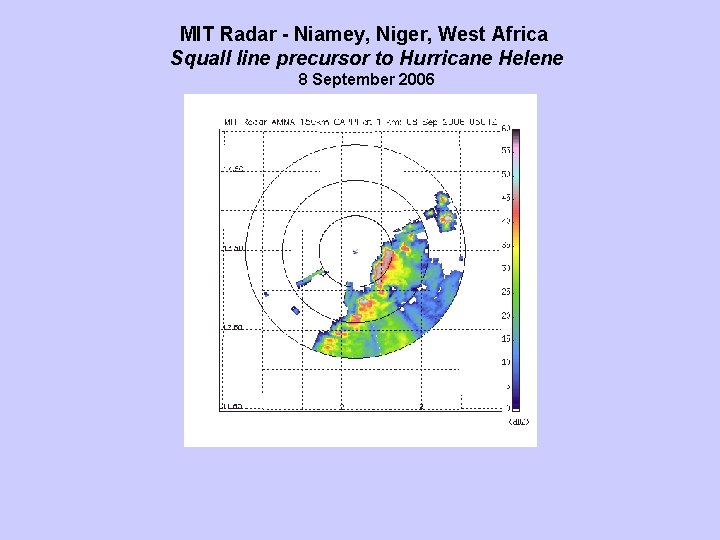
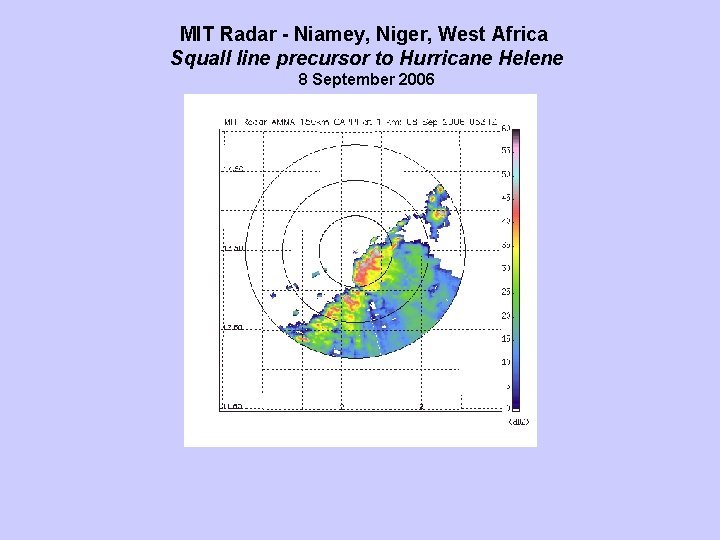
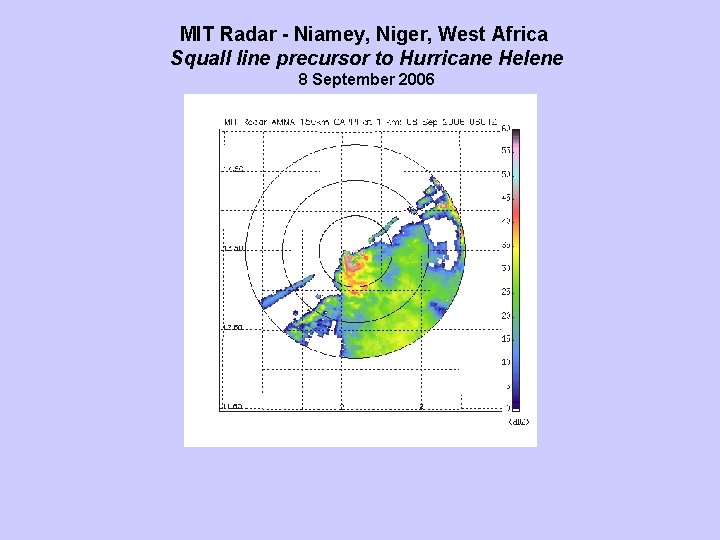
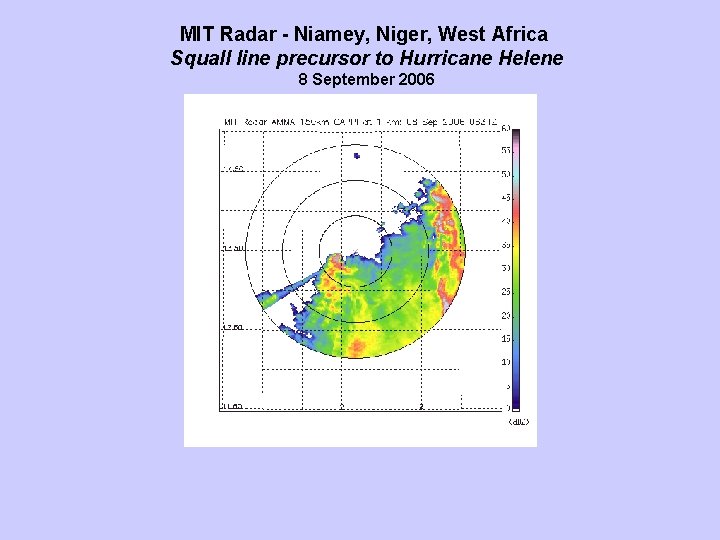
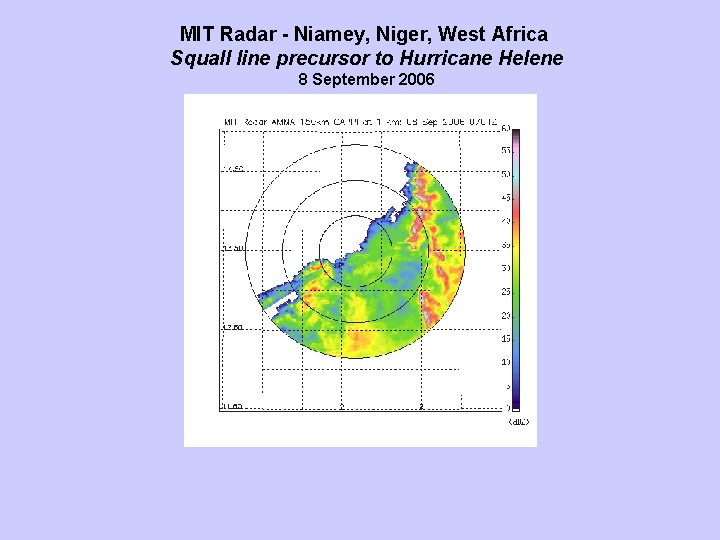
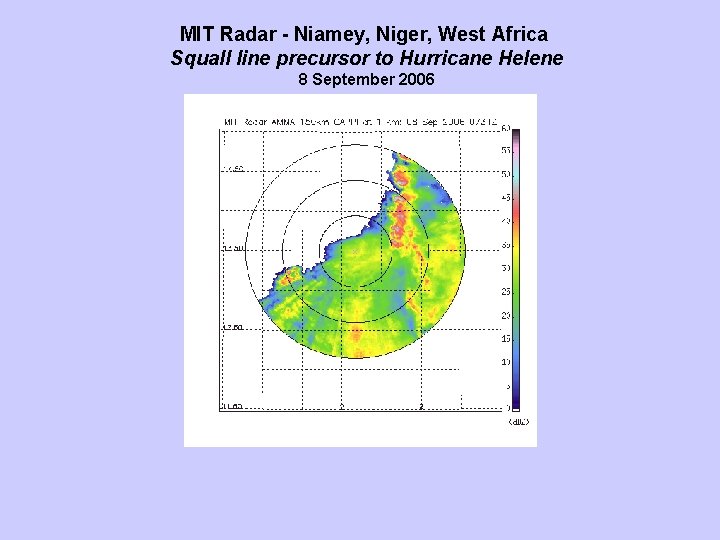
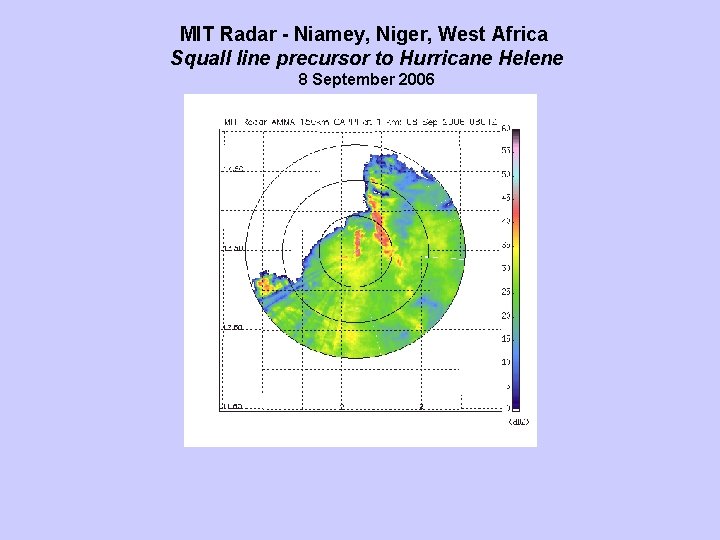
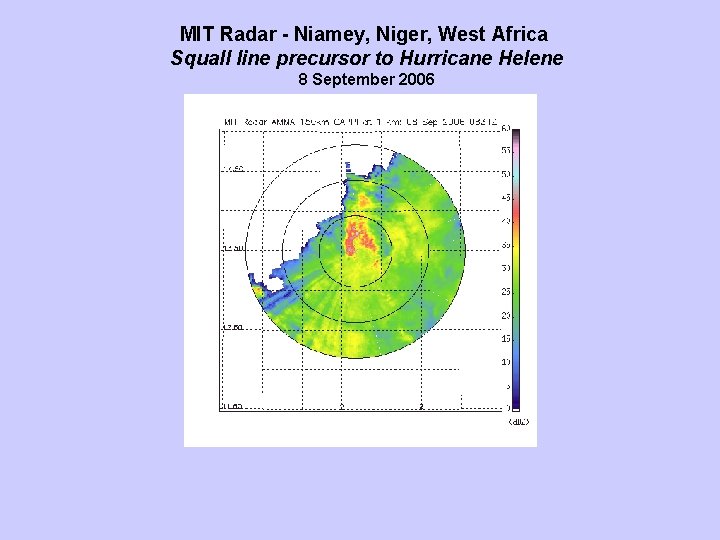
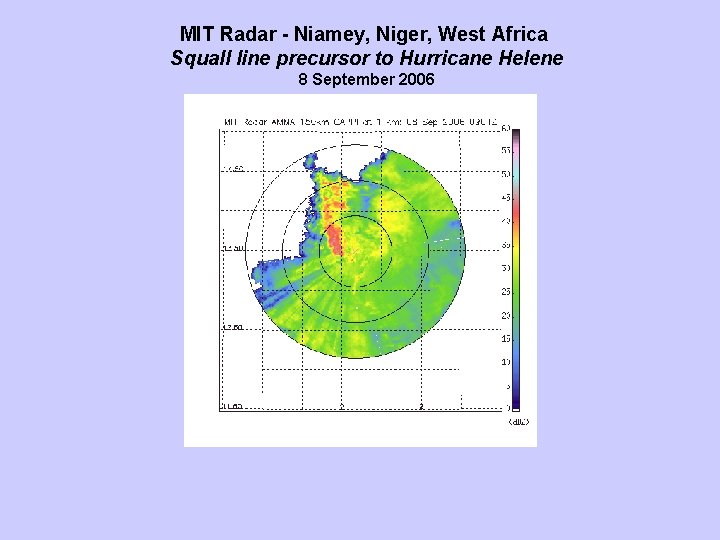
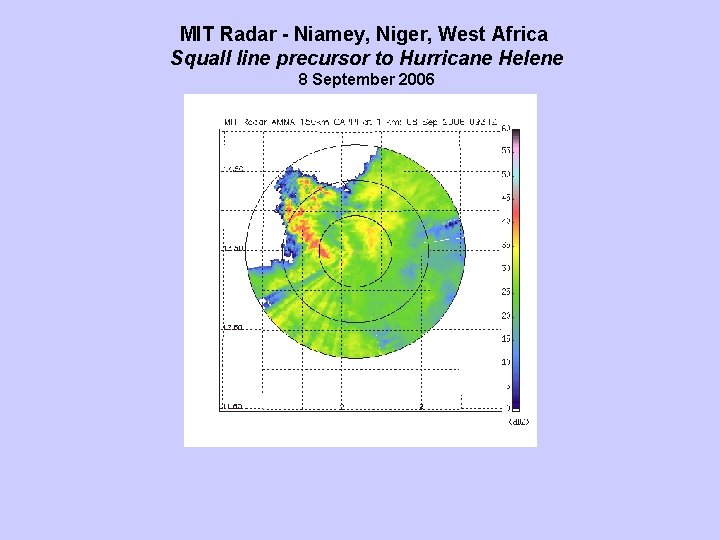
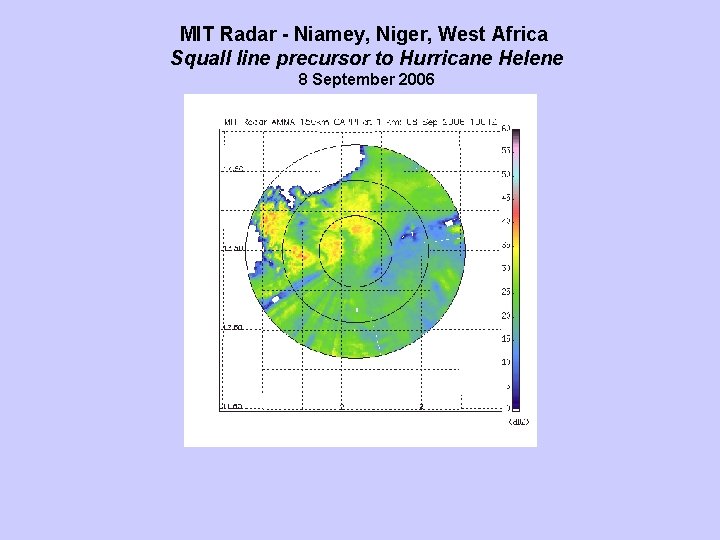
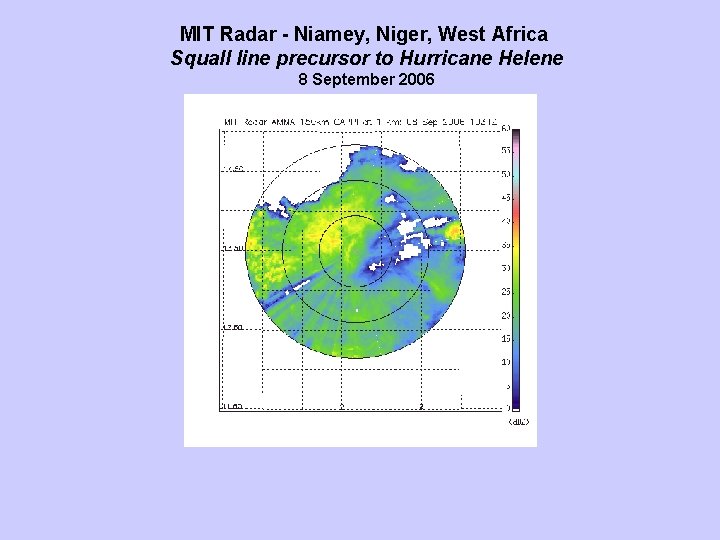
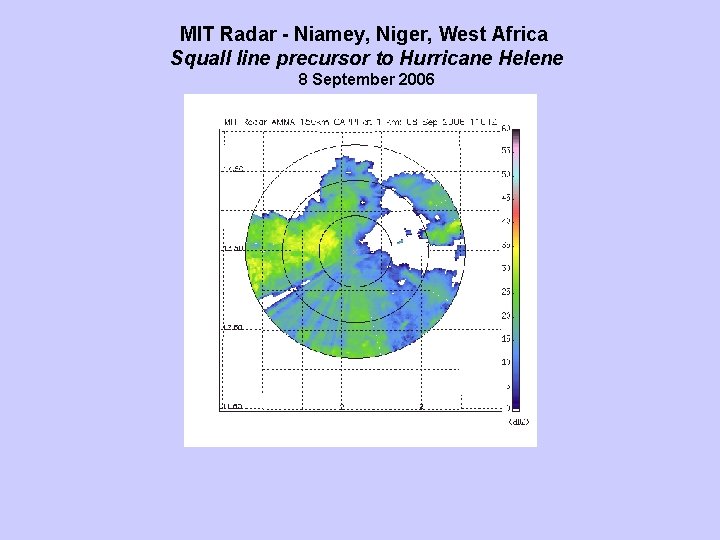
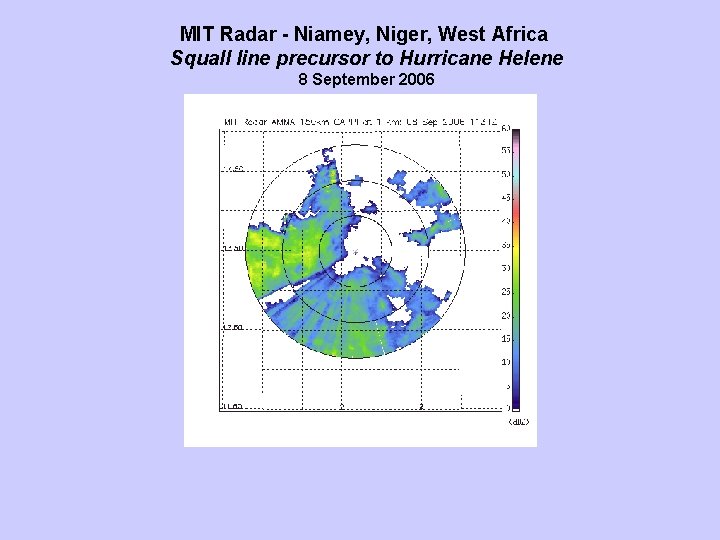
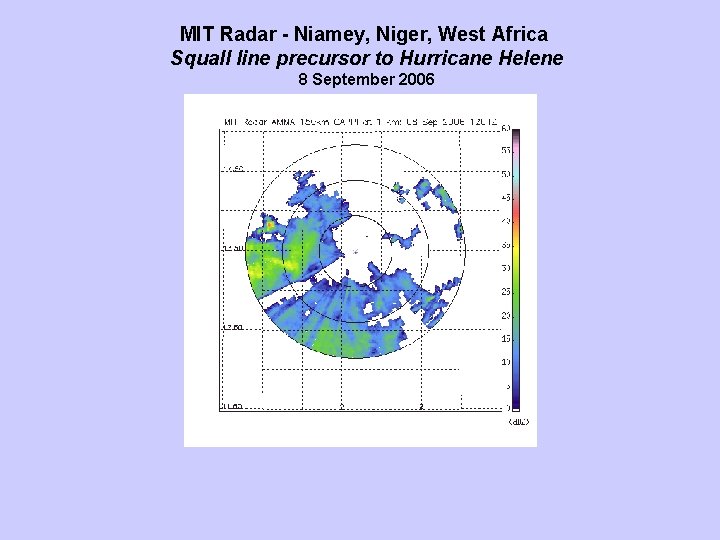
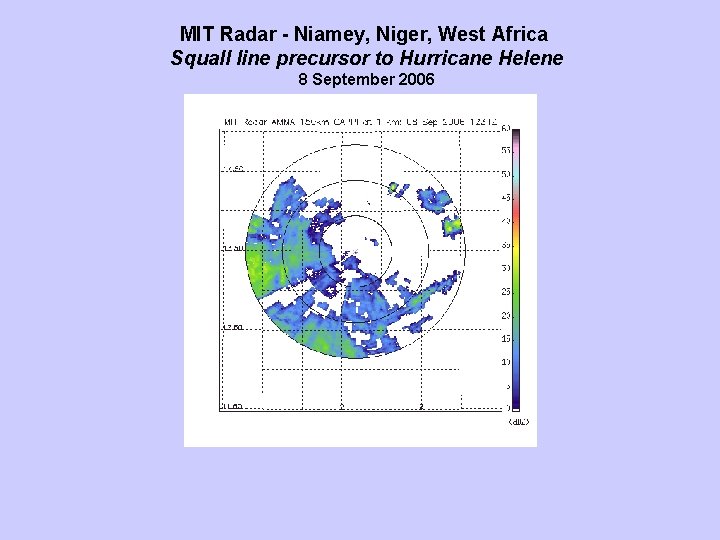
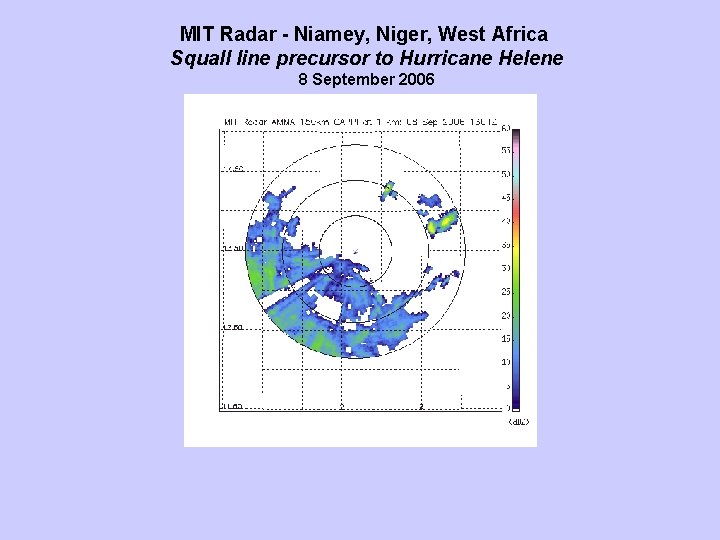
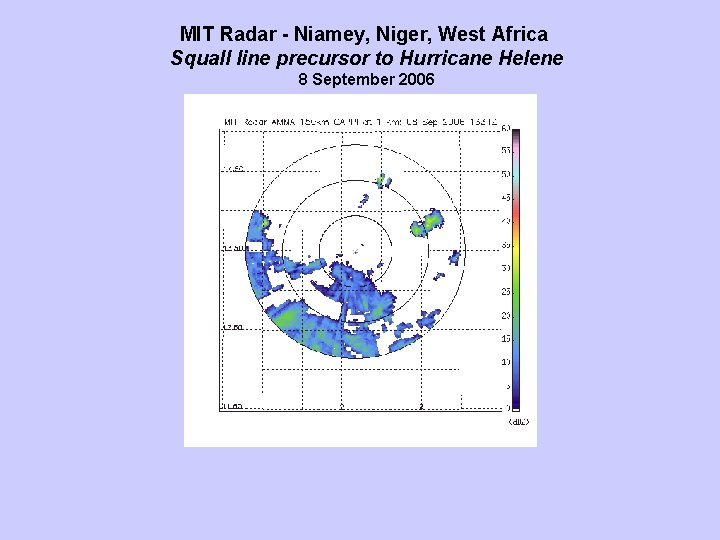
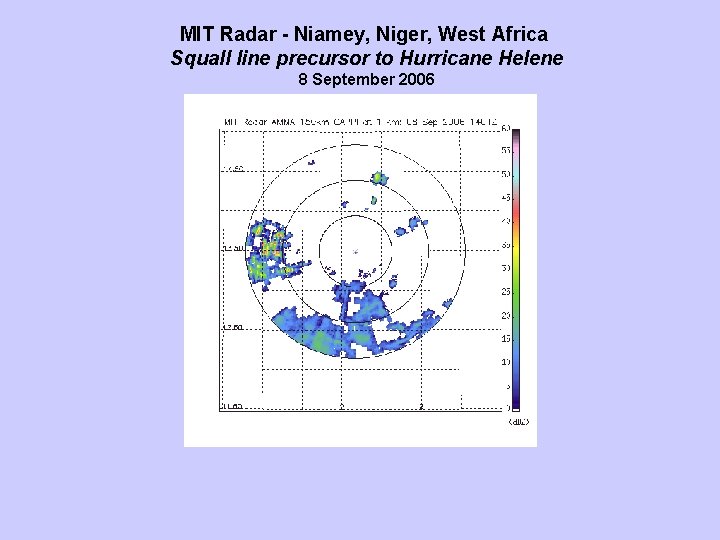
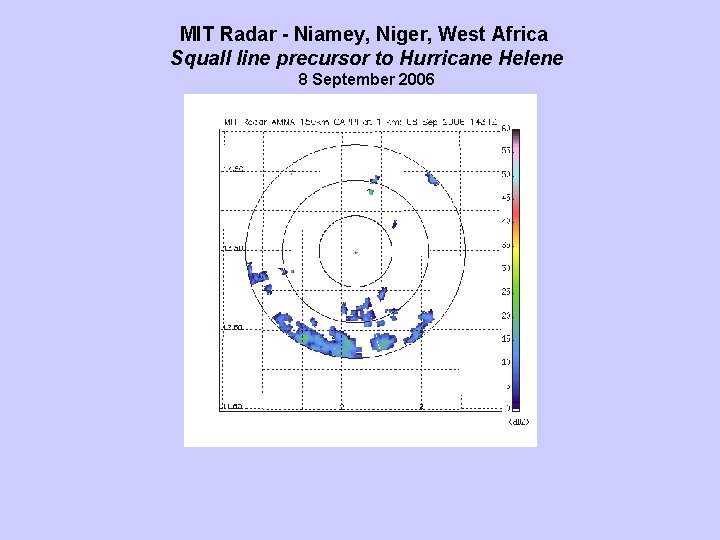
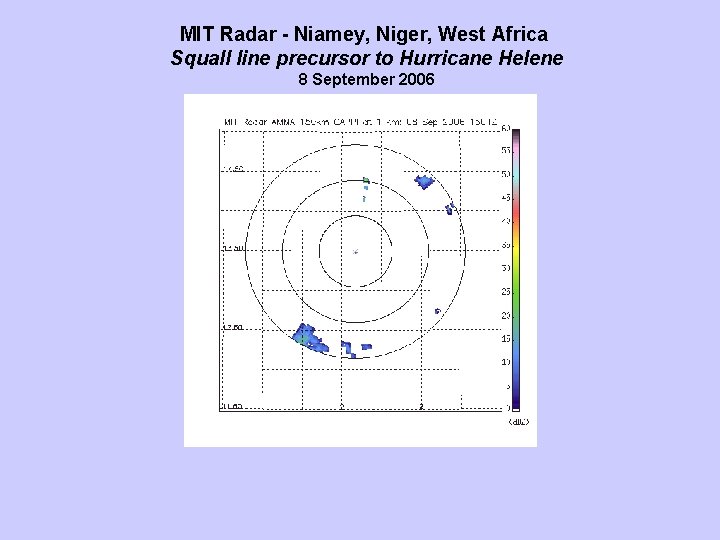
The 2006 African Monsoon in Niamey H Helene’s African Easterly wave was captured by the Niamey radar
West African ‘Rainmakers’ Organized as squall lines: the largest, rainiest systems observed over land • Squall lines feed back to reinforce African Easterly Waves • Squall lines produce most of the monsoon rain vital to subsistence agriculture in West Africa • African squall lines are “seedlings” for about half of all Atlantic hurricanes
MIT Radar - Niamey, Niger, West Africa Squall line precursor to Hurricane Helene 8 September 2006
MIT Radar - Niamey, Niger, West Africa Squall line precursor to Hurricane Helene 8 September 2006
MIT Radar - Niamey, Niger, West Africa Squall line precursor to Hurricane Helene 8 September 2006
MIT Radar - Niamey, Niger, West Africa Squall line precursor to Hurricane Helene 8 September 2006
MIT Radar - Niamey, Niger, West Africa Squall line precursor to Hurricane Helene 8 September 2006
MIT Radar - Niamey, Niger, West Africa Squall line precursor to Hurricane Helene 8 September 2006
MIT Radar - Niamey, Niger, West Africa Squall line precursor to Hurricane Helene 8 September 2006
MIT Radar - Niamey, Niger, West Africa Squall line precursor to Hurricane Helene 8 September 2006
MIT Radar - Niamey, Niger, West Africa Squall line precursor to Hurricane Helene 8 September 2006
MIT Radar - Niamey, Niger, West Africa Squall line precursor to Hurricane Helene 8 September 2006
MIT Radar - Niamey, Niger, West Africa Squall line precursor to Hurricane Helene 8 September 2006
MIT Radar - Niamey, Niger, West Africa Squall line precursor to Hurricane Helene 8 September 2006
MIT Radar - Niamey, Niger, West Africa Squall line precursor to Hurricane Helene 8 September 2006
MIT Radar - Niamey, Niger, West Africa Squall line precursor to Hurricane Helene 8 September 2006
MIT Radar - Niamey, Niger, West Africa Squall line precursor to Hurricane Helene 8 September 2006
MIT Radar - Niamey, Niger, West Africa Squall line precursor to Hurricane Helene 8 September 2006
MIT Radar - Niamey, Niger, West Africa Squall line precursor to Hurricane Helene 8 September 2006
MIT Radar - Niamey, Niger, West Africa Squall line precursor to Hurricane Helene 8 September 2006
MIT Radar - Niamey, Niger, West Africa Squall line precursor to Hurricane Helene 8 September 2006
MIT Radar - Niamey, Niger, West Africa Squall line precursor to Hurricane Helene 8 September 2006
MIT Radar - Niamey, Niger, West Africa Squall line precursor to Hurricane Helene 8 September 2006
MIT Radar - Niamey, Niger, West Africa Squall line precursor to Hurricane Helene 8 September 2006
MIT Radar - Niamey, Niger, West Africa Squall line precursor to Hurricane Helene 8 September 2006
MIT Radar - Niamey, Niger, West Africa Squall line precursor to Hurricane Helene 8 September 2006
MIT Radar - Niamey, Niger, West Africa Squall line precursor to Hurricane Helene 8 September 2006
MIT Radar - Niamey, Niger, West Africa Squall line precursor to Hurricane Helene 8 September 2006
MIT Radar - Niamey, Niger, West Africa Squall line precursor to Hurricane Helene 8 September 2006
West African ‘Rainmakers’ Organized as squall line these are the largest, rainiest systems observed over land A toatl of 23 squall line-MCS like this one produced over 70 percent of the 2006 rainfall in Niamey
Conclusion 2006 African Monsoon was about average 23 squall line systems associated with African Easterly waves were the major rainmaker in the African Sahel in 2006 Rainfall in the Sahel is a good indicator of the number and strength of African Easterly Waves, but not a good indicator of the number of tropical cyclones in the Atlantic. The relationship between the strength of the African monsoon and the number of altantic hurricanes is not very strong in interannual timescales. E-mail: ferreirar@ecu. edu
Ongoing Work Use a combination of the AMMA-Niamey radar, NCEP Reanalysis, GPCP rainfall datasets and a hierarchy of numerical models of the atmosphere to further improve our understanding of the two-way interaction between convection and synoptic-scale flow in the West African Monsoon
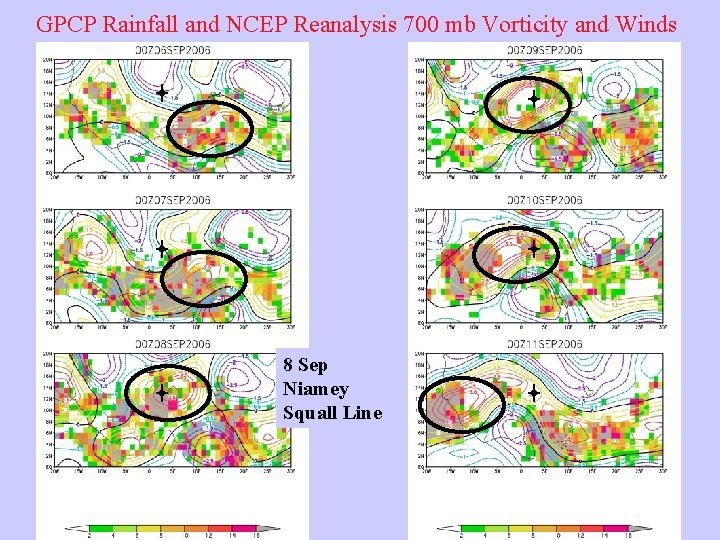
GPCP Rainfall and NCEP Reanalysis 700 mb Vorticity and Winds 8 Sep Niamey Squall Line