
Evolution of Tetrapods wonderful example of transitional forms
- Slides: 23
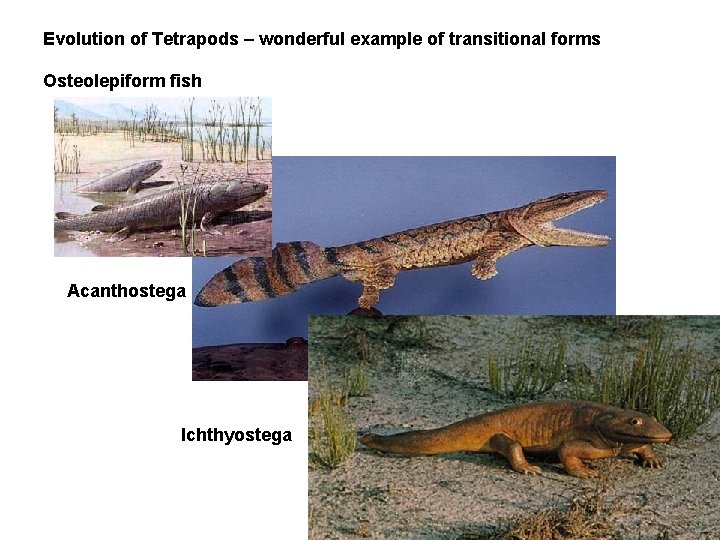
Evolution of Tetrapods – wonderful example of transitional forms Osteolepiform fish Acanthostega Ichthyostega
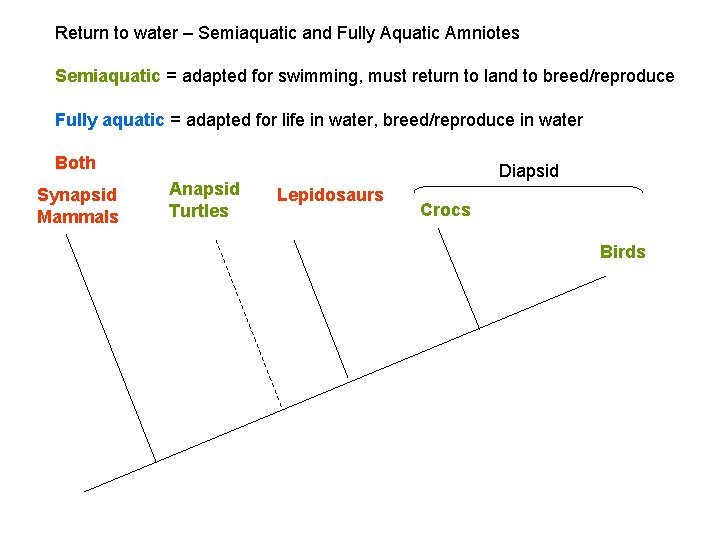
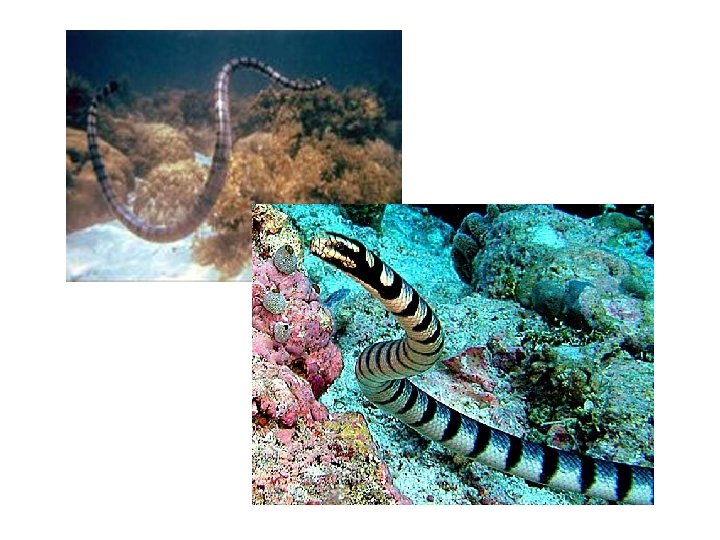
Return to water – Semiaquatic and Fully Aquatic Amniotes Semiaquatic = adapted for swimming, must return to land to breed/reproduce Fully aquatic = adapted for life in water, breed/reproduce in water Both Synapsid Mammals Anapsid Turtles Diapsid Lepidosaurs Crocs Birds
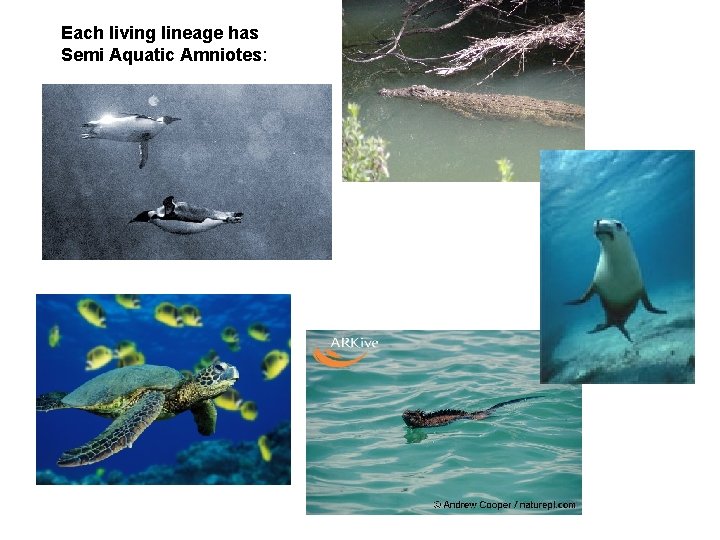
Each living lineage has Semi Aquatic Amniotes:
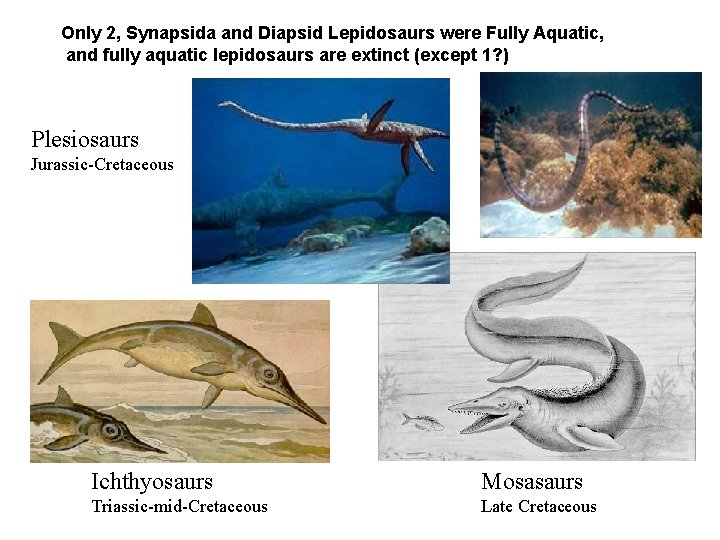
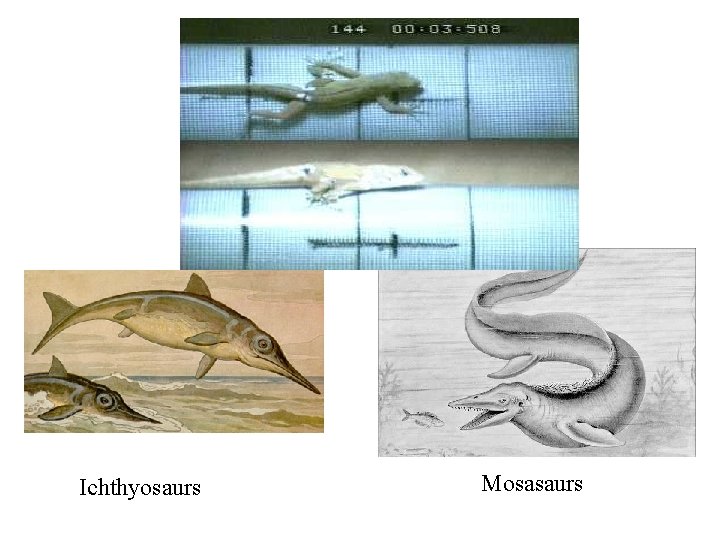
Only 2, Synapsida and Diapsid Lepidosaurs were Fully Aquatic, and fully aquatic lepidosaurs are extinct (except 1? ) Plesiosaurs Jurassic-Cretaceous Ichthyosaurs Mosasaurs Triassic-mid-Cretaceous Late Cretaceous
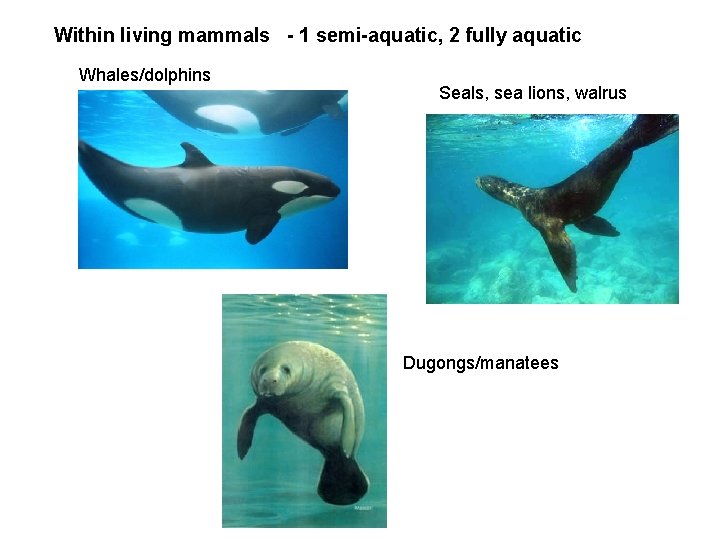
Within living mammals - 1 semi-aquatic, 2 fully aquatic Whales/dolphins Seals, sea lions, walrus Dugongs/manatees
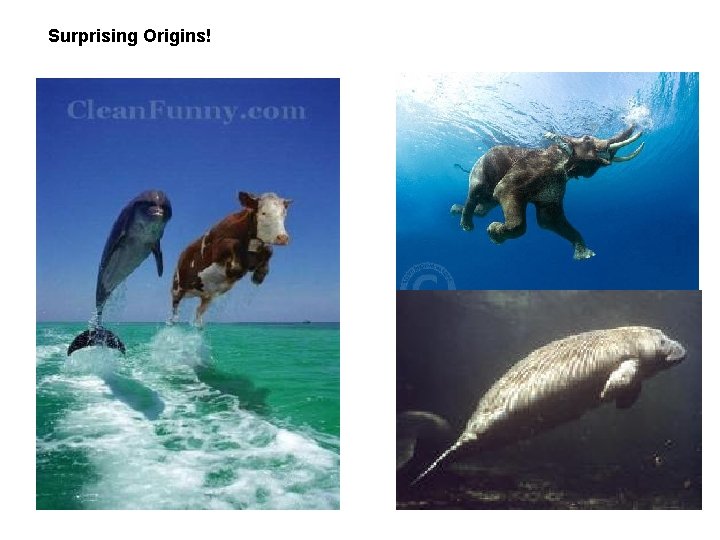
Surprising Origins!
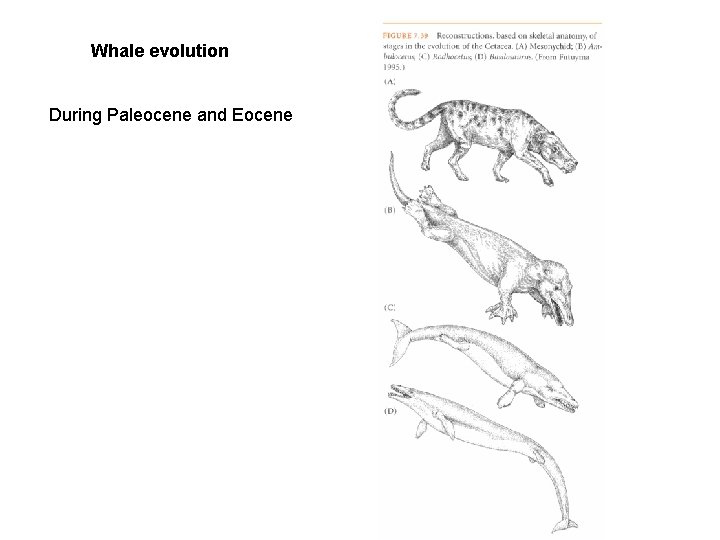
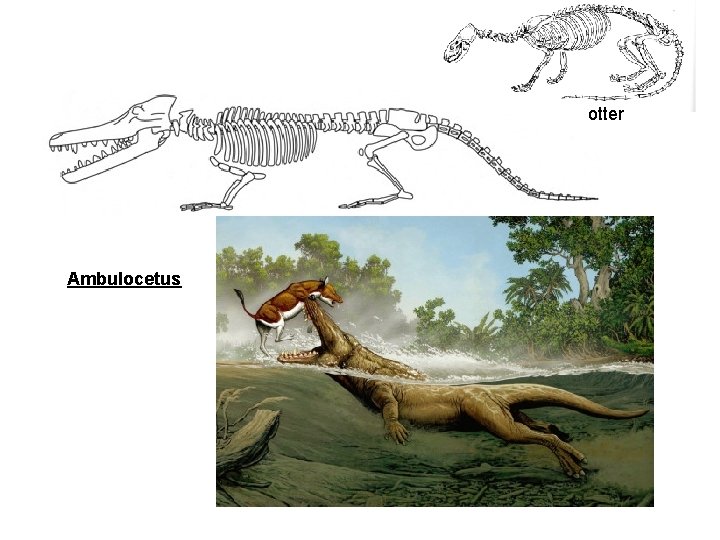
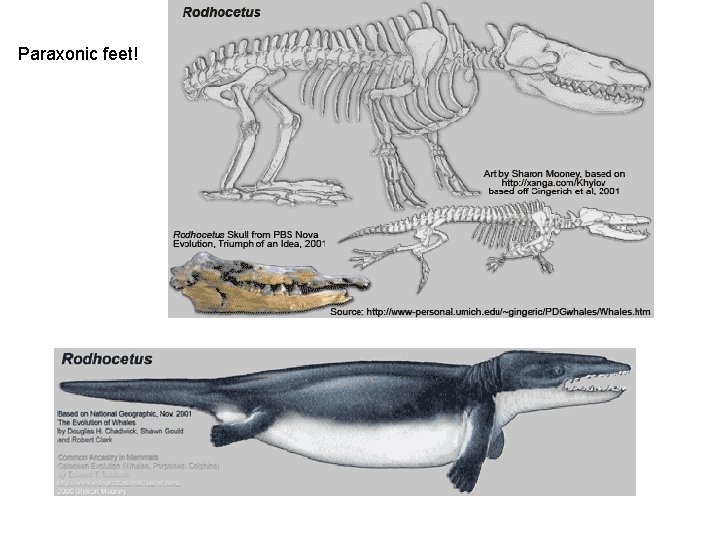
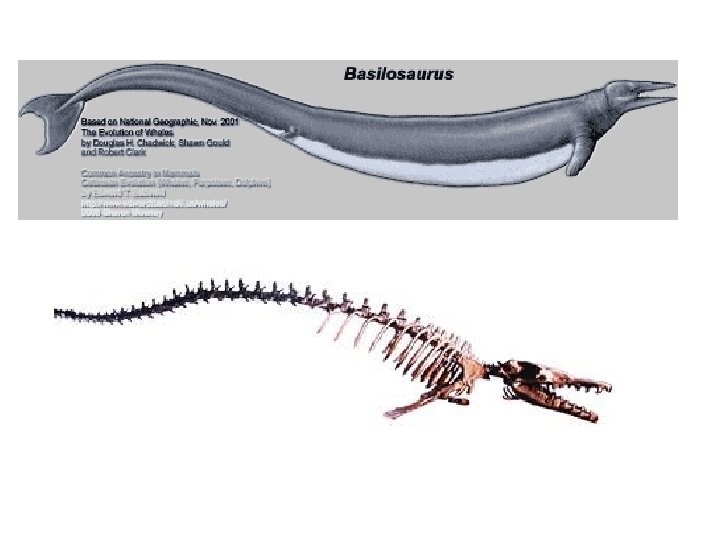
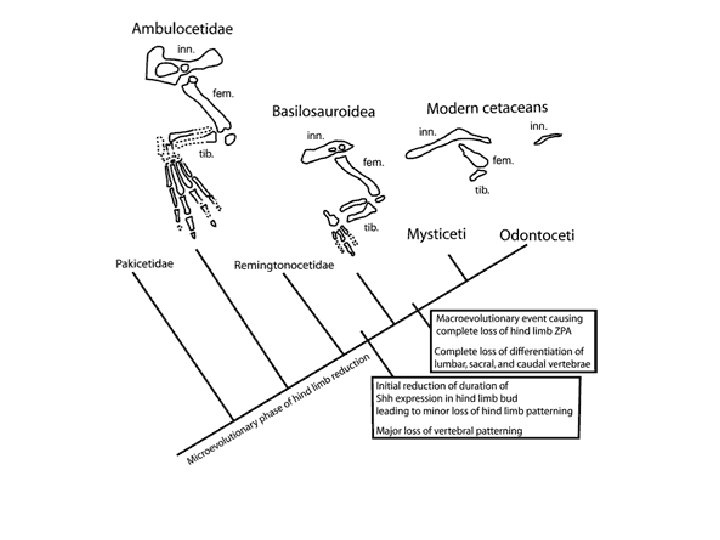
Whale evolution During Paleocene and Eocene
otter Ambulocetus
Paraxonic feet!
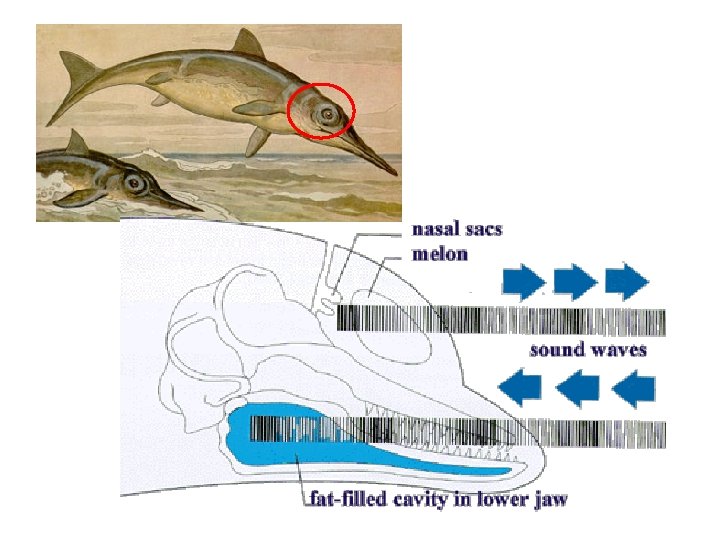
Ichthyosaurs Mosasaurs
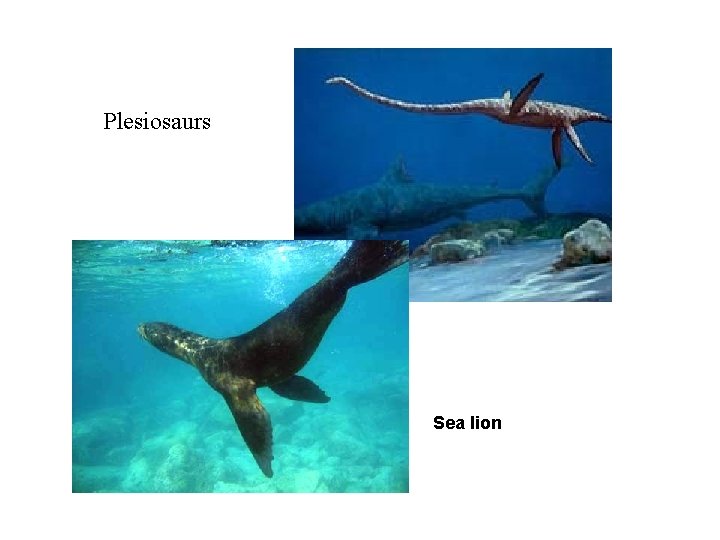
Plesiosaurs Sea lion
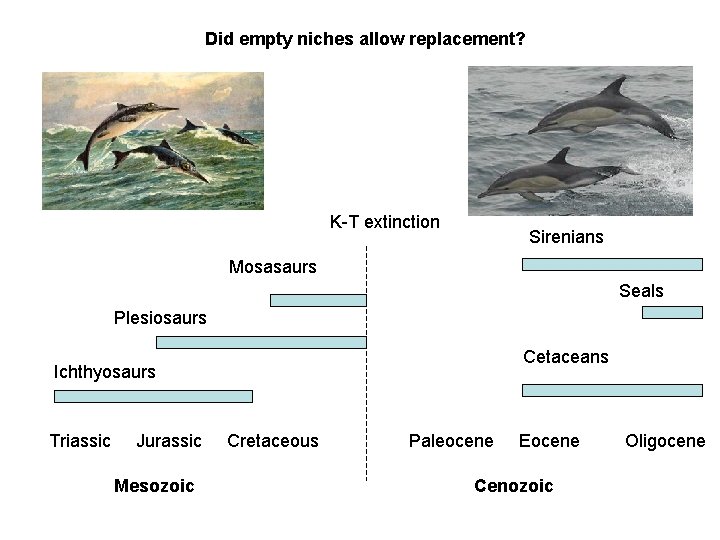
Did empty niches allow replacement? K-T extinction Sirenians Mosasaurs Seals Plesiosaurs Cetaceans Ichthyosaurs Triassic Jurassic Mesozoic Cretaceous Paleocene Eocene Cenozoic Oligocene
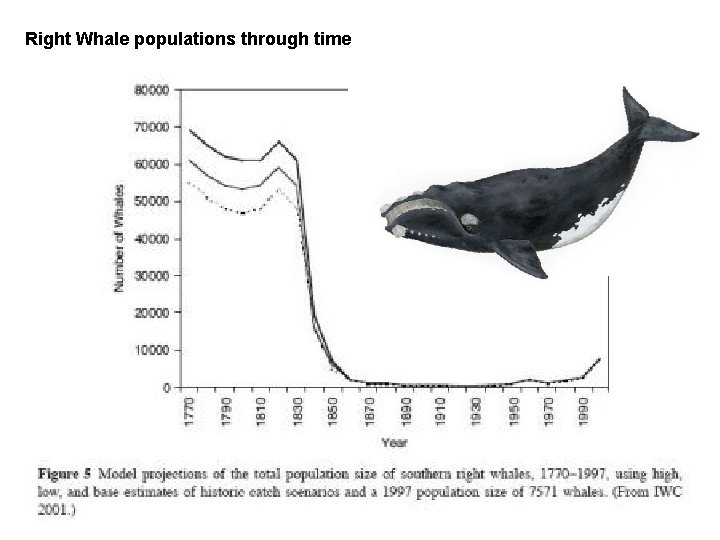
Right Whale populations through time
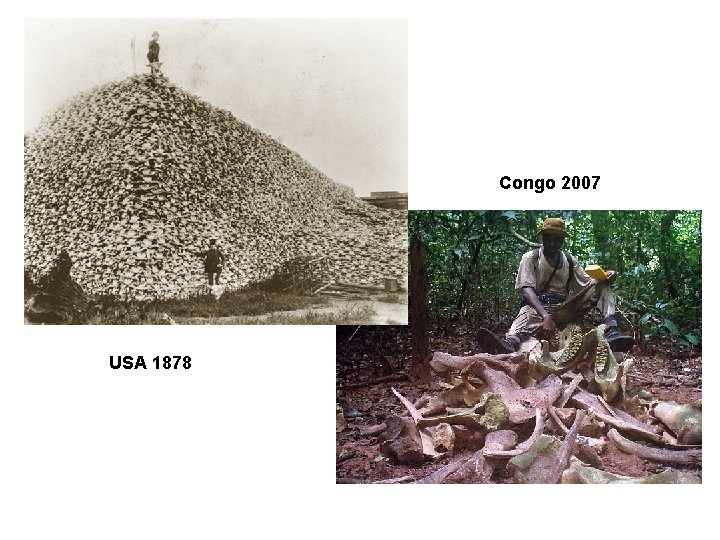
Congo 2007 USA 1878
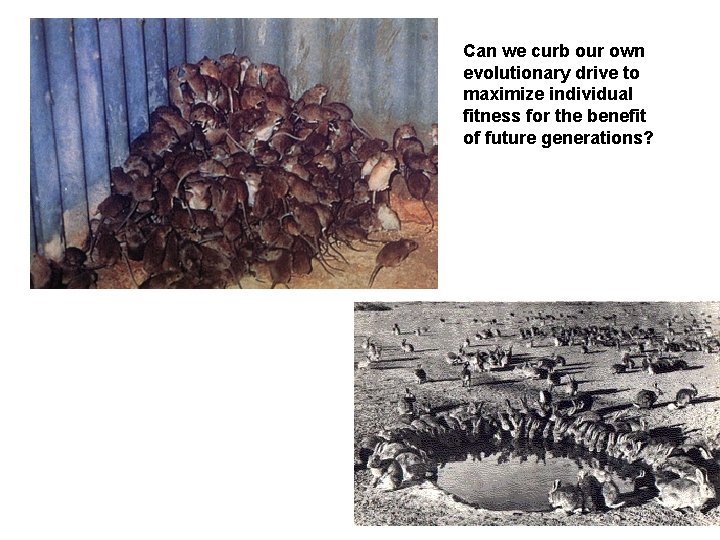
Can we curb our own evolutionary drive to maximize individual fitness for the benefit of future generations?
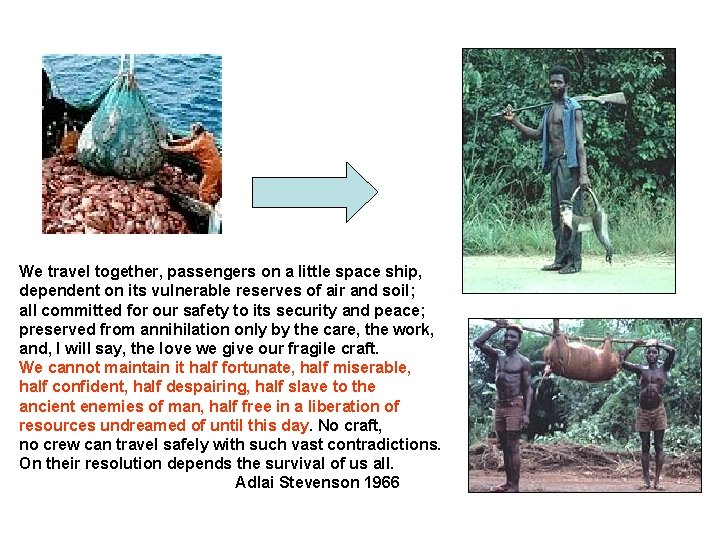
We travel together, passengers on a little space ship, dependent on its vulnerable reserves of air and soil; all committed for our safety to its security and peace; preserved from annihilation only by the care, the work, and, I will say, the love we give our fragile craft. We cannot maintain it half fortunate, half miserable, half confident, half despairing, half slave to the ancient enemies of man, half free in a liberation of resources undreamed of until this day. No craft, no crew can travel safely with such vast contradictions. On their resolution depends the survival of us all. Adlai Stevenson 1966