
EVOLUTION OF SOFTWARE ARCHITECTURE CLOUD NATIVE MICROSERVICE VIQUAR
- Slides: 28
EVOLUTION OF SOFTWARE ARCHITECTURE! CLOUD NATIVE MICROSERVICE. VIQUAR MOHAMMED KHAN
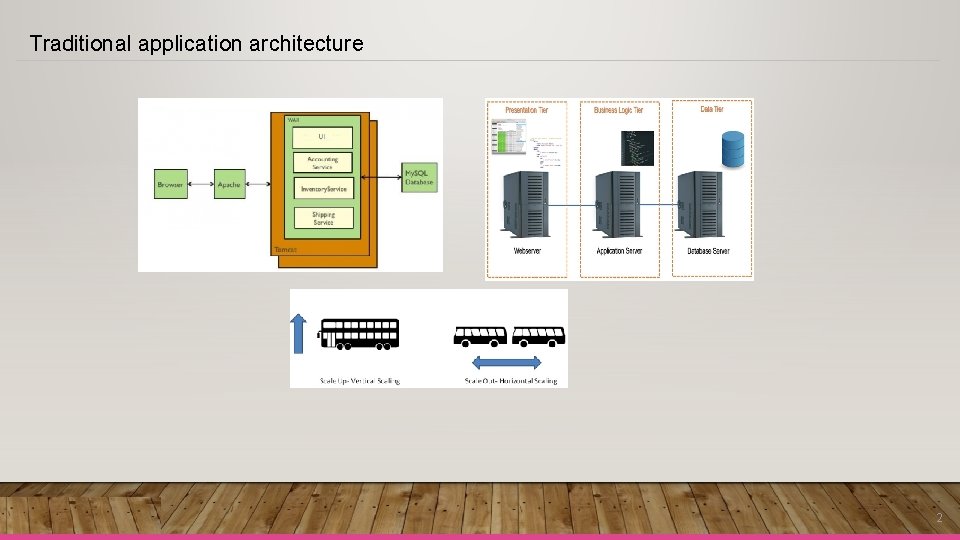
Traditional application architecture 2
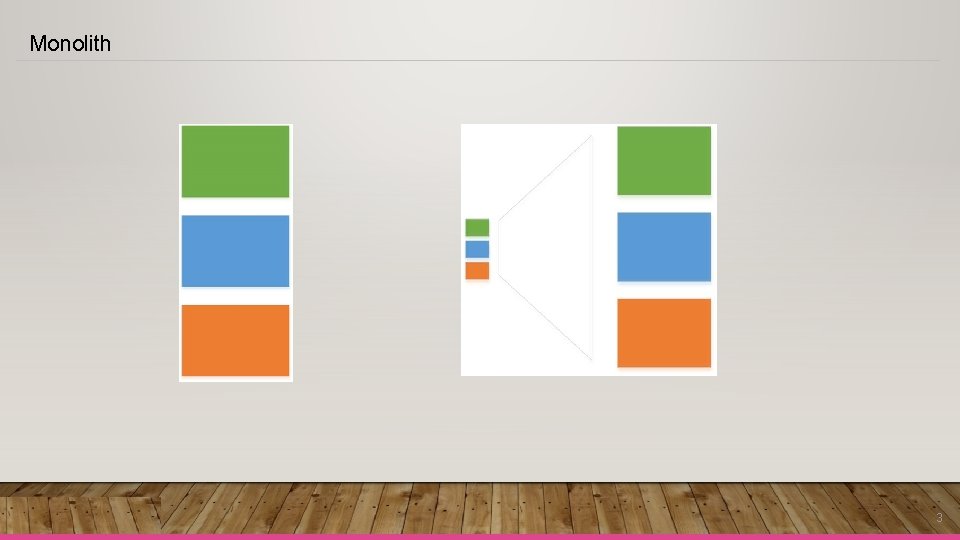
Monolith 3
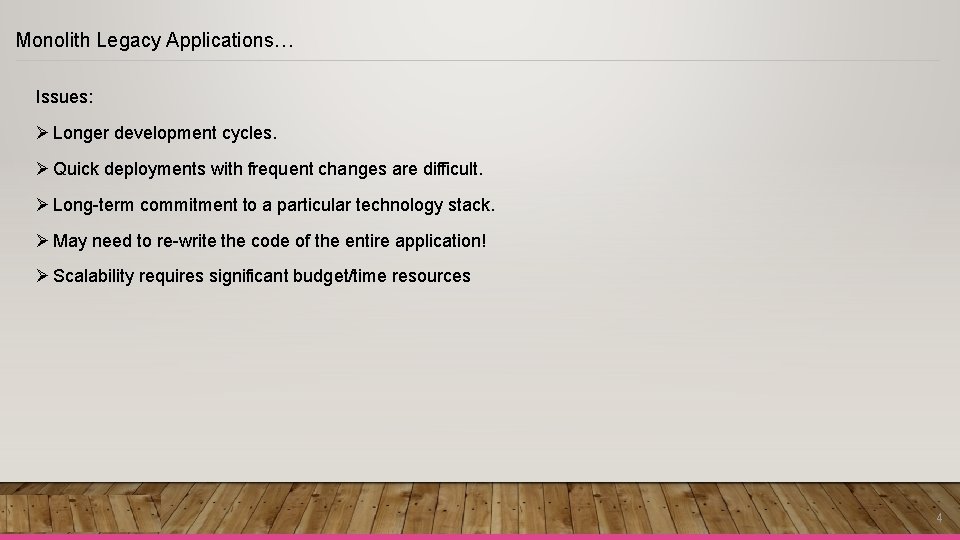
Monolith Legacy Applications… Issues: Ø Longer development cycles. Ø Quick deployments with frequent changes are difficult. Ø Long-term commitment to a particular technology stack. Ø May need to re-write the code of the entire application! Ø Scalability requires significant budget/time resources 4
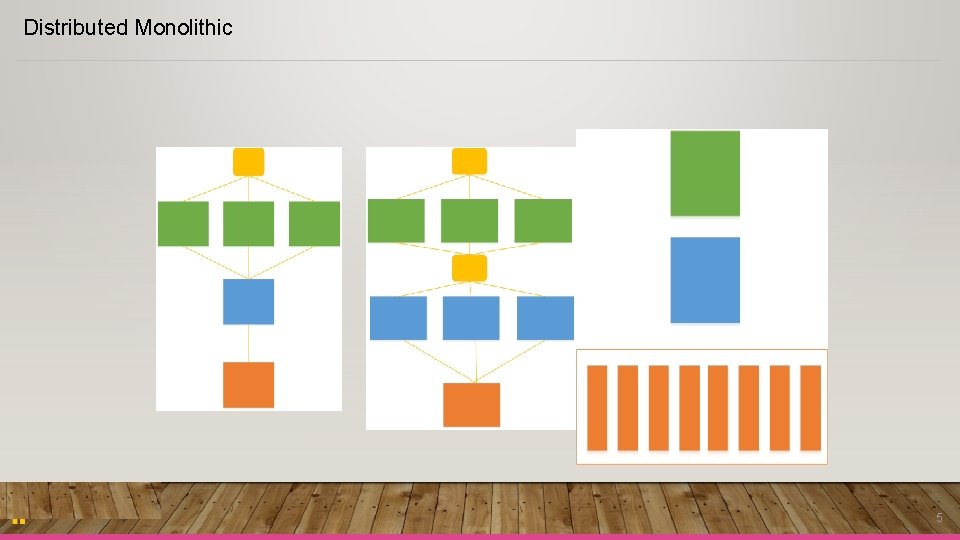
Distributed Monolithic 5
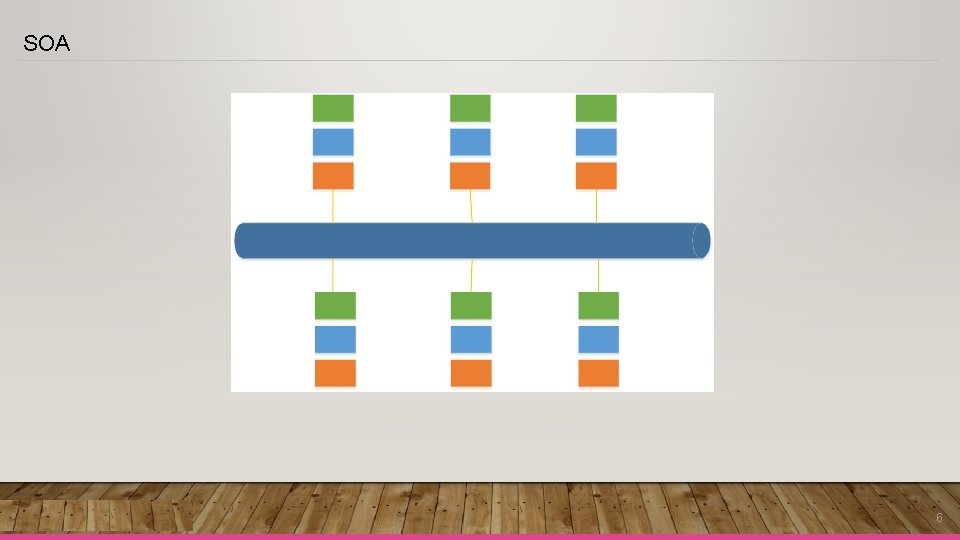
SOA 6
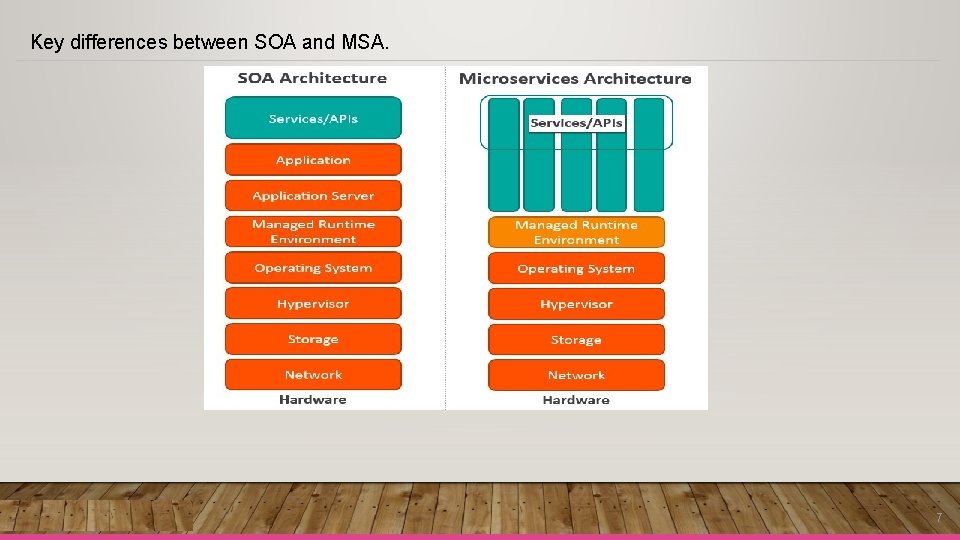
Key differences between SOA and MSA. 7
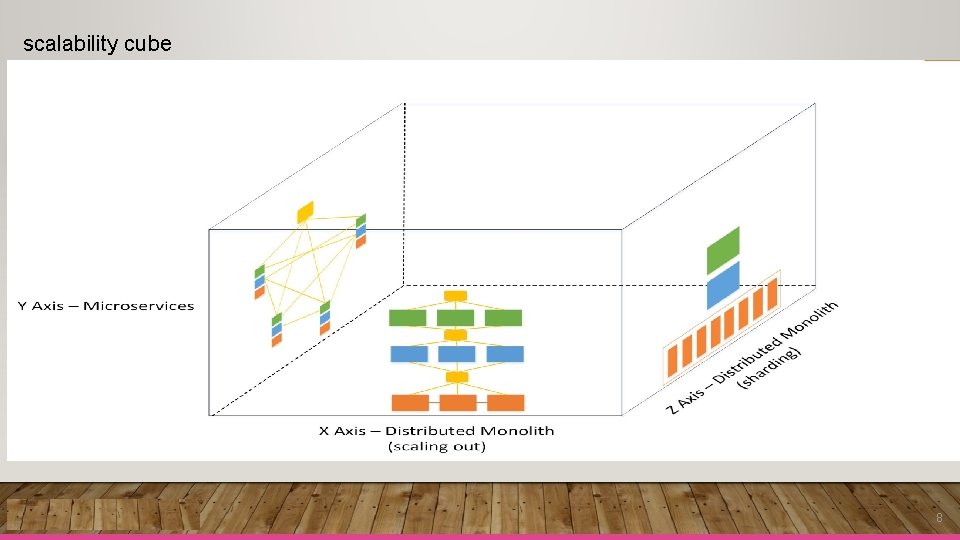
scalability cube 8
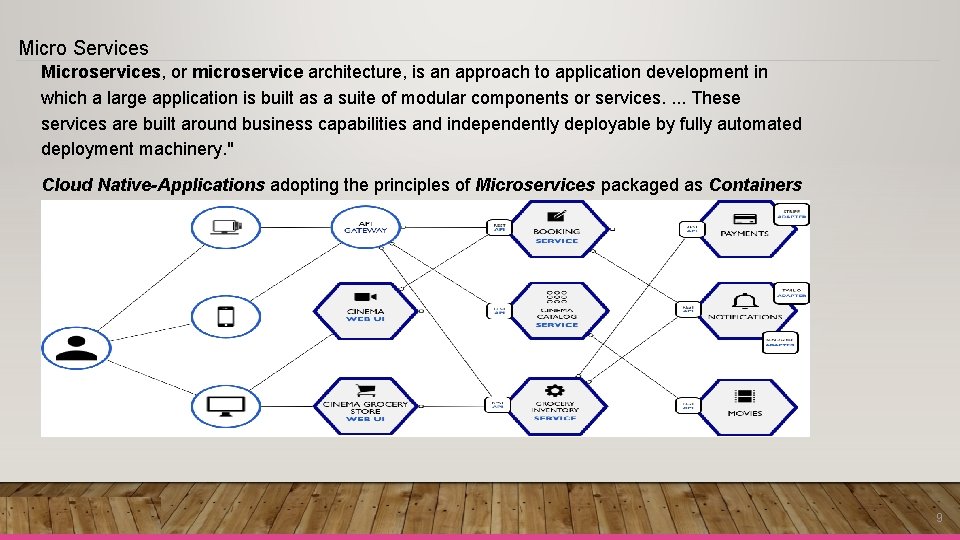
Micro Services Microservices, or microservice architecture, is an approach to application development in which a large application is built as a suite of modular components or services. . These services are built around business capabilities and independently deployable by fully automated deployment machinery. " Cloud Native-Applications adopting the principles of Microservices packaged as Containers orchestrated by Platforms running on top of Cloud infrastructure. 9
Microservice Architectures • Simple / Challenging - freedom to independently develop and deploy services • Modularity Based on Component Services - code for different services can be written in different languages • Change Cycles Decoupled / Enable Frequent Deploys • Efficient Scaling - easy integration and automatic deployment starts the web container more quickly, deployment is also faster • Fault isolation- one instance fails, others will continue to work • Individual Components Less Intimidating to New Development-when change is required in a certain part of the application, only the related service can be modified and redeployed- no need to modify and redeploy the entire application • Enables Scaling of Development • Easy to scale and integrate with third-party services • Eliminates Long-Term Commitment to Technical Stack - no long-term commitment to technology stack 10
Challenges of Microservices § Distributed System - Due to distributed deployment, testing can be complicated and tedious Being a distributed system, it can result in duplication of effort § Remote Calls More Expensive Than In-process Calls - Increasing number of services can result in information barriers § Eventual Consistency- When number of services increases, integration and managing whole products can become complicated § Features Spanning Multiple Services- Handling use cases that span more than one service without using distributed transactions is not only tough but also requires communication and cooperation between different teams § Dependency Management / API Versioning - Developers have to put additional effort into implementing the mechanism of communication between the services § Refactoring Module Boundaries-Partitioning the application into microservices is very much an art 11
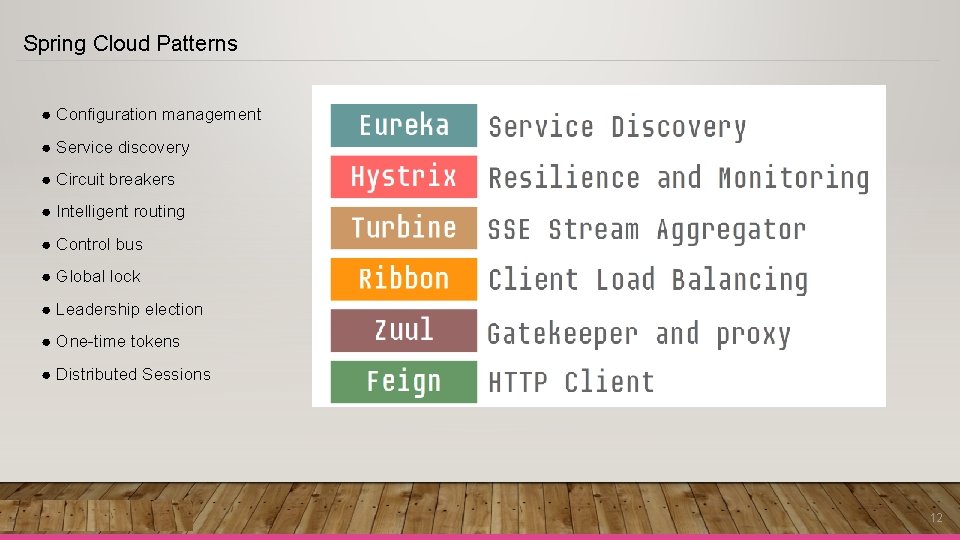
Spring Cloud Patterns ● Configuration management ● Service discovery ● Circuit breakers ● Intelligent routing ● Control bus ● Global lock ● Leadership election ● One-time tokens ● Distributed Sessions 12
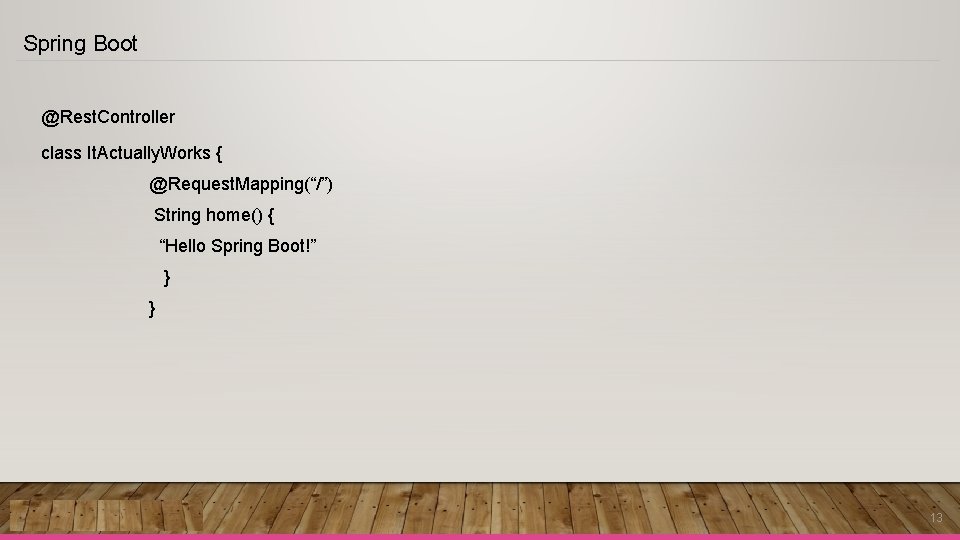
Spring Boot @Rest. Controller class It. Actually. Works { @Request. Mapping(“/”) String home() { “Hello Spring Boot!” } } 13
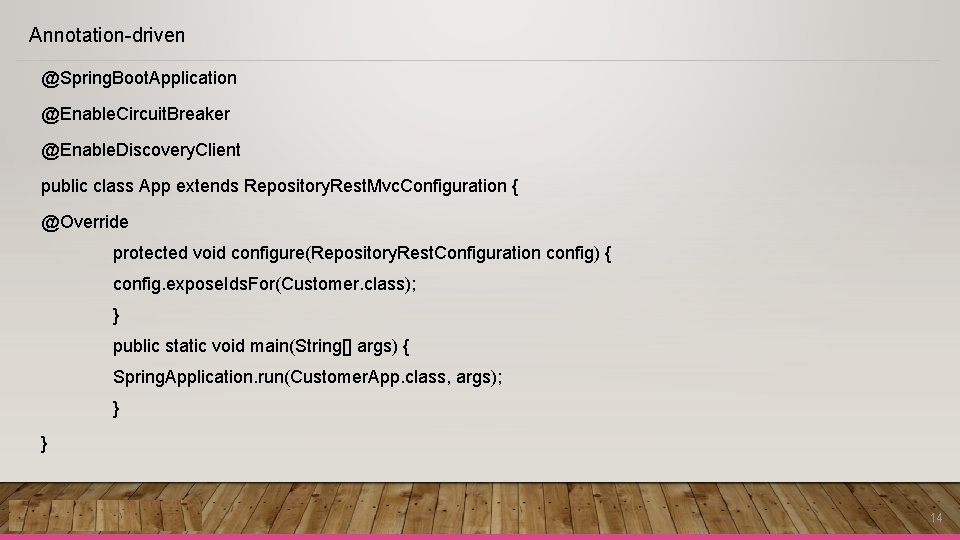
Annotation-driven @Spring. Boot. Application @Enable. Circuit. Breaker @Enable. Discovery. Client public class App extends Repository. Rest. Mvc. Configuration { @Override protected void configure(Repository. Rest. Configuration config) { config. expose. Ids. For(Customer. class); } public static void main(String[] args) { Spring. Application. run(Customer. App. class, args); } } 14
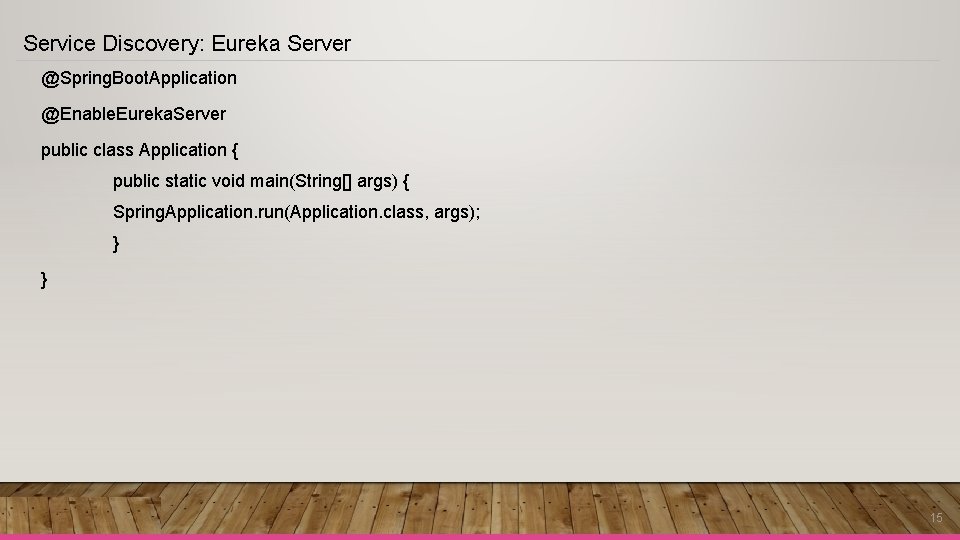
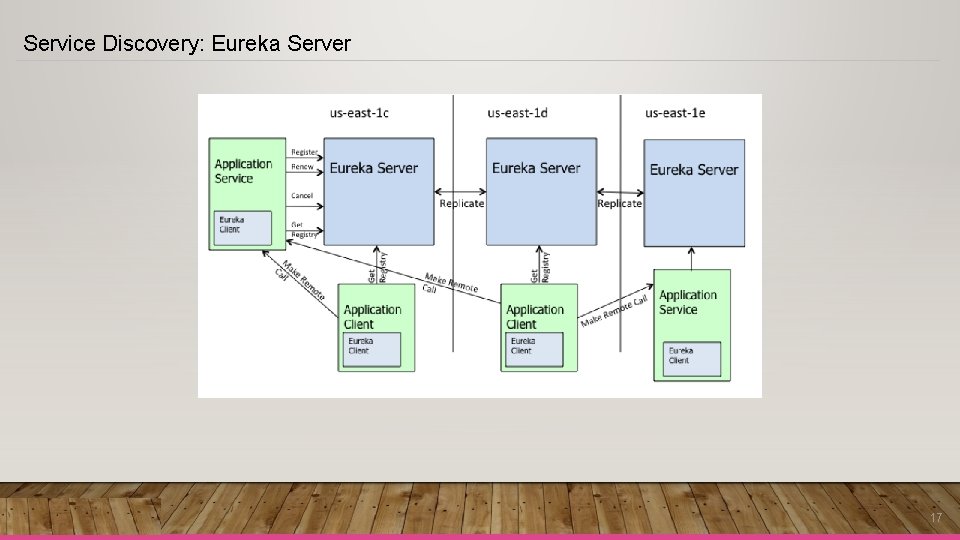
Service Discovery: Eureka Server @Spring. Boot. Application @Enable. Eureka. Server public class Application { public static void main(String[] args) { Spring. Application. run(Application. class, args); } } 15
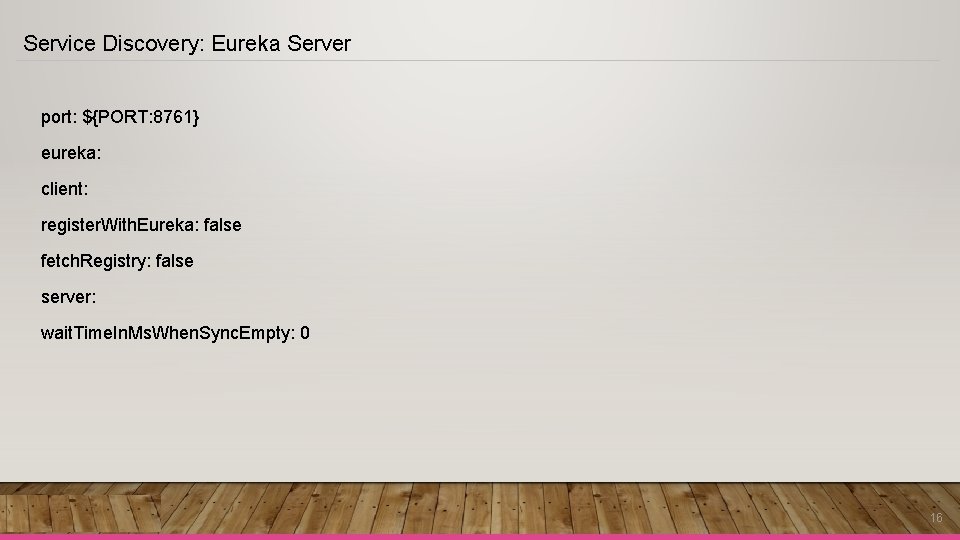
Service Discovery: Eureka Server port: ${PORT: 8761} eureka: client: register. With. Eureka: false fetch. Registry: false server: wait. Time. In. Ms. When. Sync. Empty: 0 16
Service Discovery: Eureka Server 17
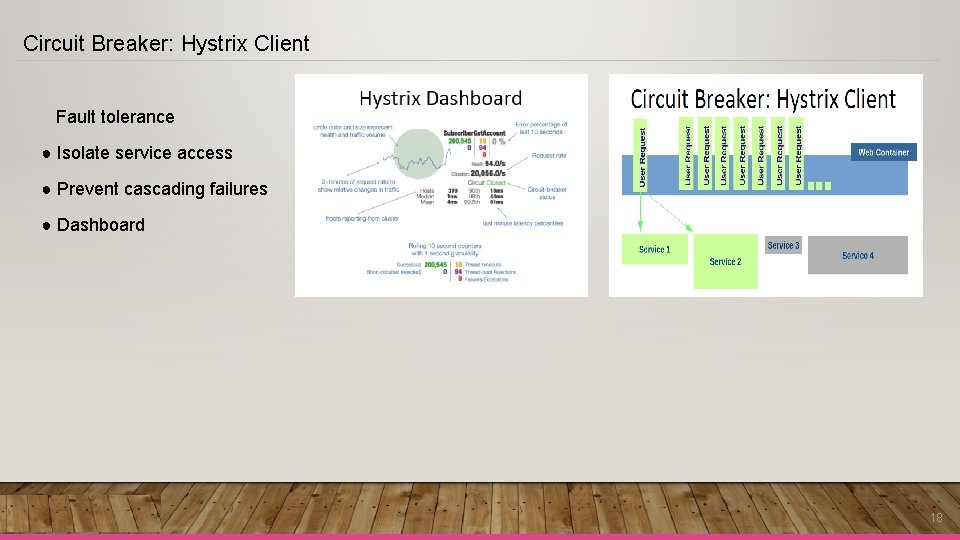
Circuit Breaker: Hystrix Client Fault tolerance ● Isolate service access ● Prevent cascading failures ● Dashboard 18
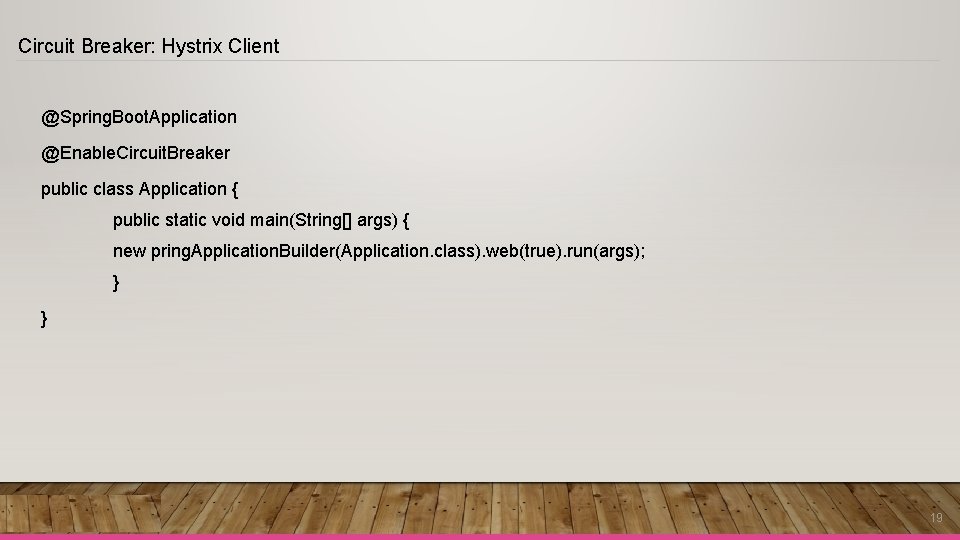
Circuit Breaker: Hystrix Client @Spring. Boot. Application @Enable. Circuit. Breaker public class Application { public static void main(String[] args) { new pring. Application. Builder(Application. class). web(true). run(args); } } 19
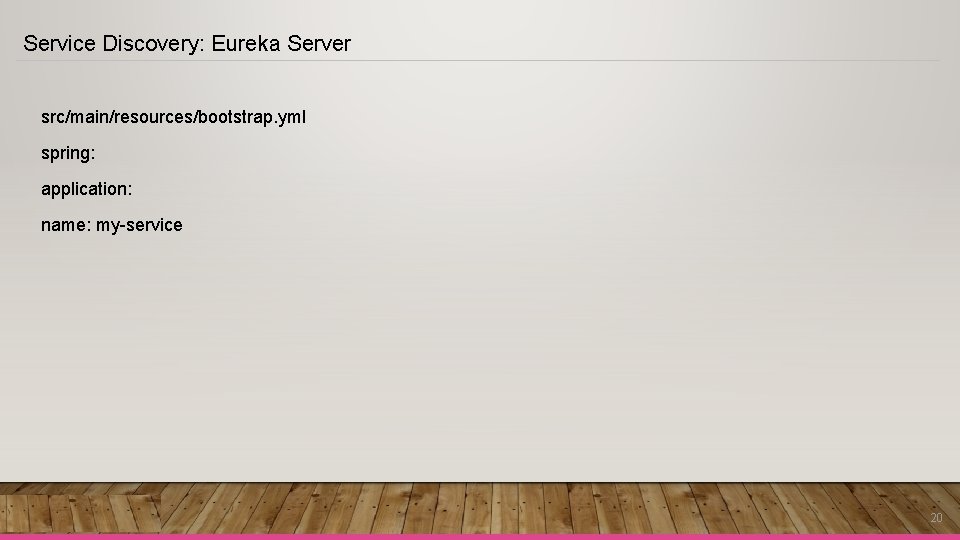
Service Discovery: Eureka Server src/main/resources/bootstrap. yml spring: application: name: my-service 20
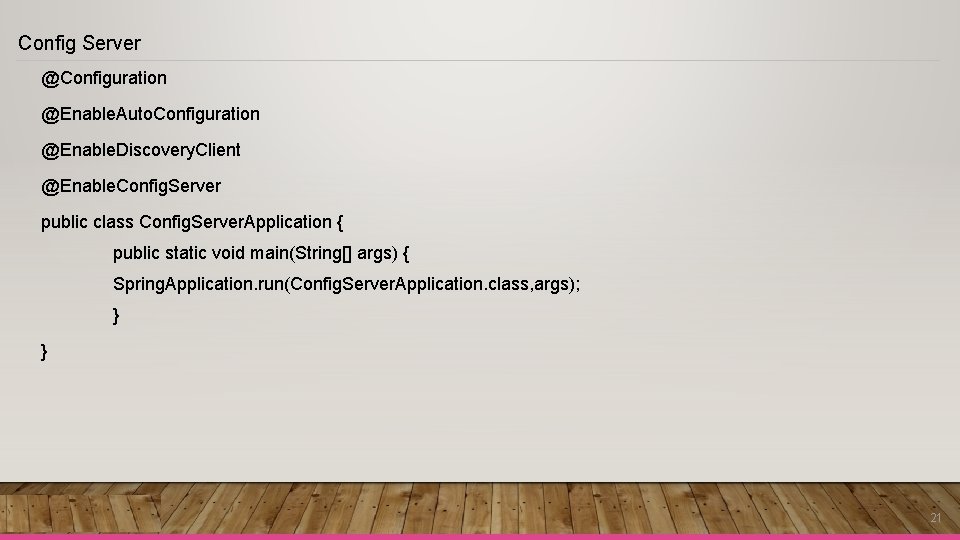
Config Server @Configuration @Enable. Auto. Configuration @Enable. Discovery. Client @Enable. Config. Server public class Config. Server. Application { public static void main(String[] args) { Spring. Application. run(Config. Server. Application. class, args); } } 21
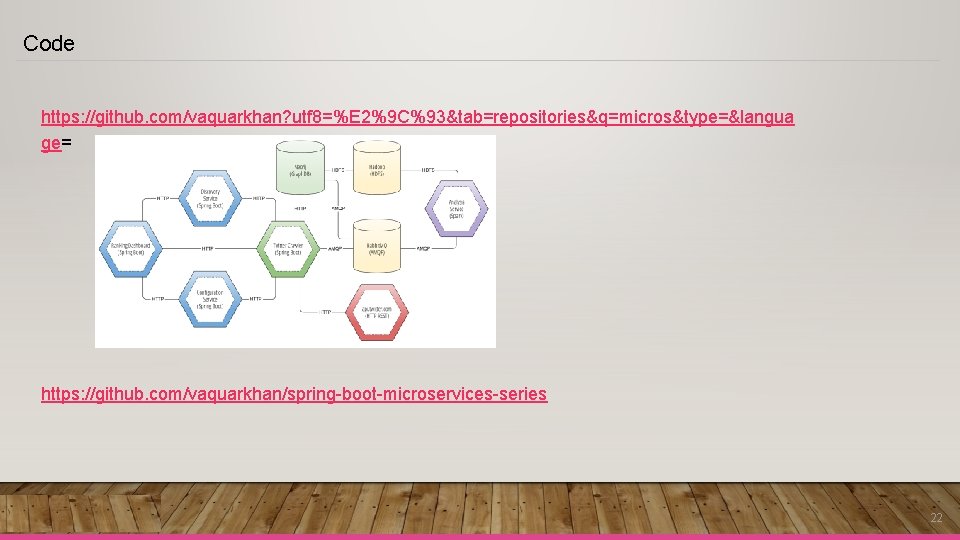
Code https: //github. com/vaquarkhan? utf 8=%E 2%9 C%93&tab=repositories&q=micros&type=&langua ge= https: //github. com/vaquarkhan/spring-boot-microservices-series 22
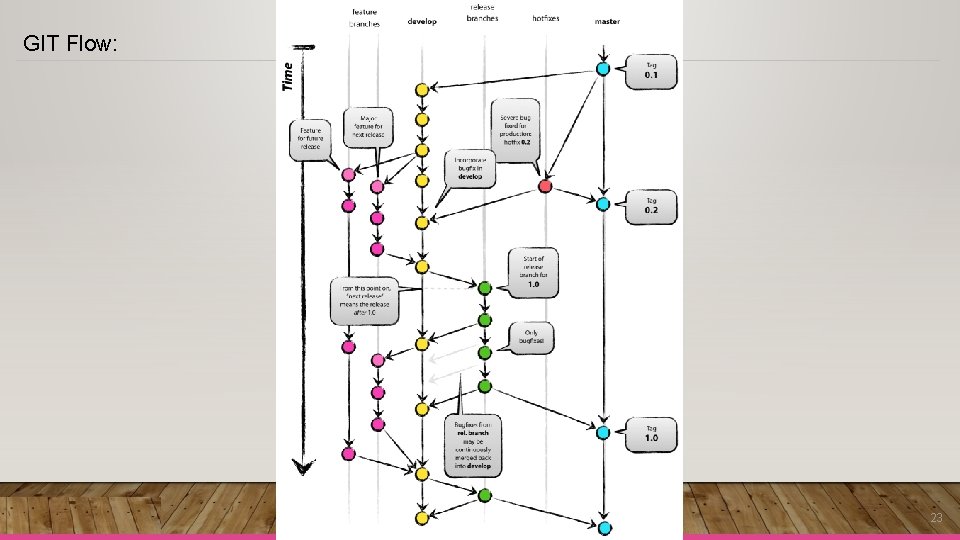
GIT Flow: 23
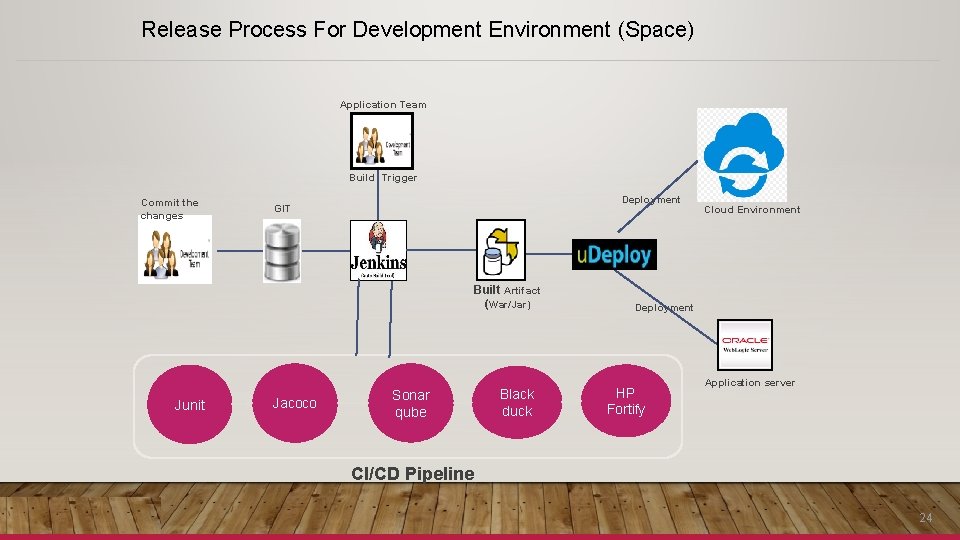
Release Process For Development Environment (Space) Application Team Build Trigger Commit the changes Deployment GIT Built Artifact (War/Jar) Junit Jacoco Sonar qube Black duck Cloud Environment Deployment HP Fortify Application server CI/CD Pipeline 24
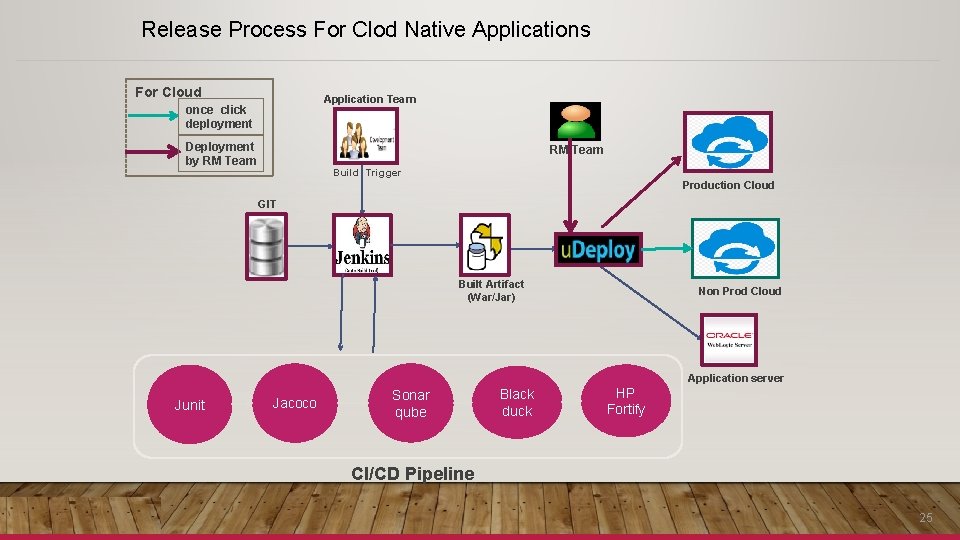
Release Process For Clod Native Applications For Cloud Application Team once click deployment Deployment by RM Team Build Trigger Production Cloud GIT Built Artifact (War/Jar) Non Prod Cloud Application server Junit Jacoco Sonar qube Black duck HP Fortify CI/CD Pipeline 25
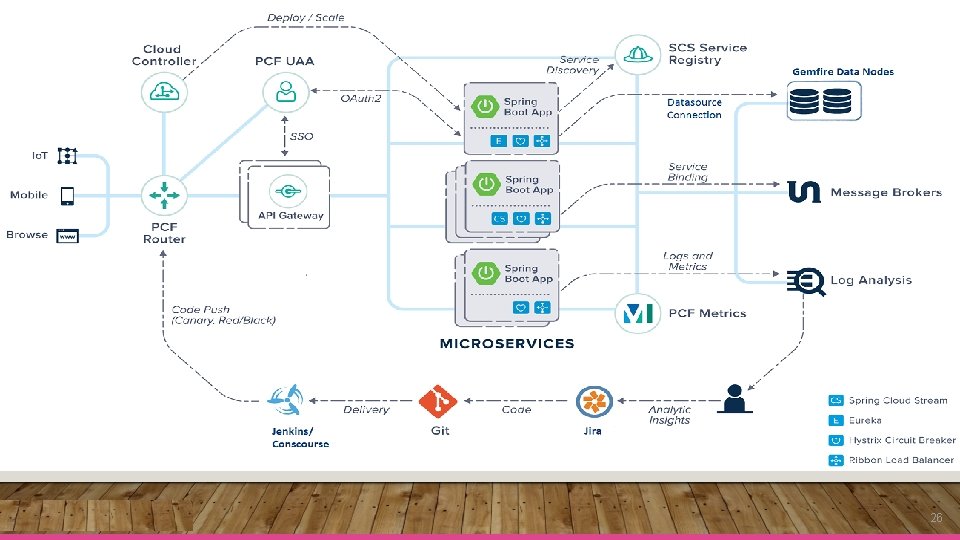
26
Questions? 27
Resources ● http: //projects. spring. io/spring-cloud/ ● http: //martinfowler. com ● http: //techblog. netflix. com 28