
Evolution of Sleep Wake Cycles Most living organisms
- Slides: 18
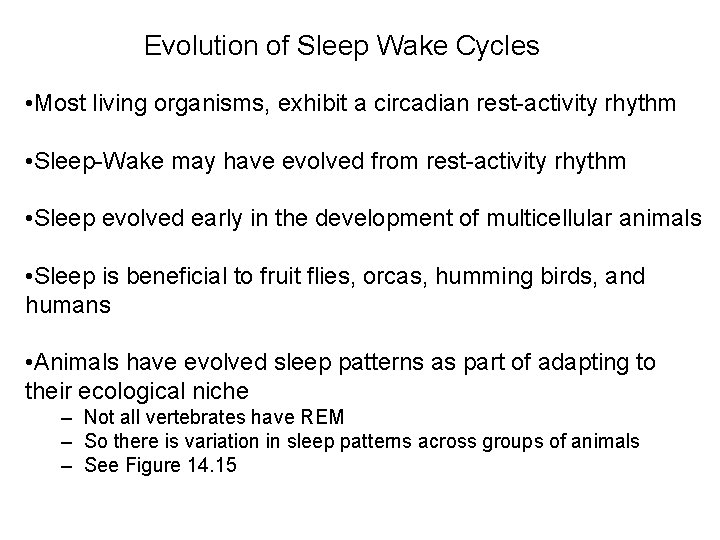
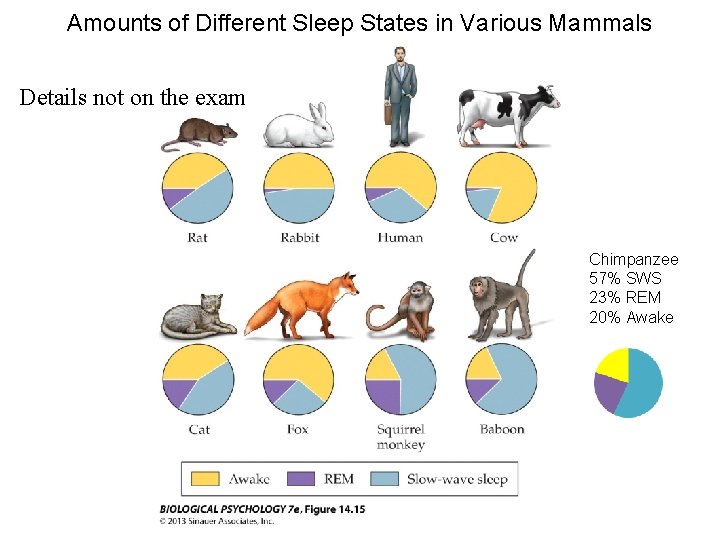
Evolution of Sleep Wake Cycles • Most living organisms, exhibit a circadian rest-activity rhythm • Sleep-Wake may have evolved from rest-activity rhythm • Sleep evolved early in the development of multicellular animals • Sleep is beneficial to fruit flies, orcas, humming birds, and humans • Animals have evolved sleep patterns as part of adapting to their ecological niche – Not all vertebrates have REM – So there is variation in sleep patterns across groups of animals – See Figure 14. 15
Amounts of Different Sleep States in Various Mammals Details not on the exam Chimpanzee 57% SWS 23% REM 20% Awake
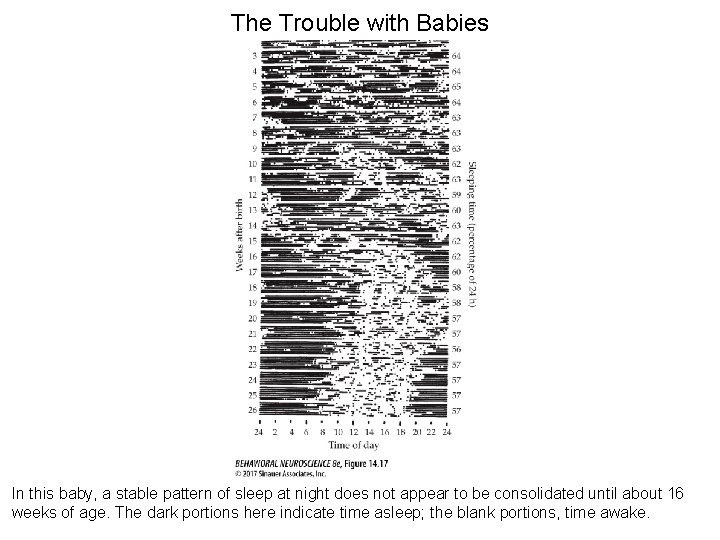
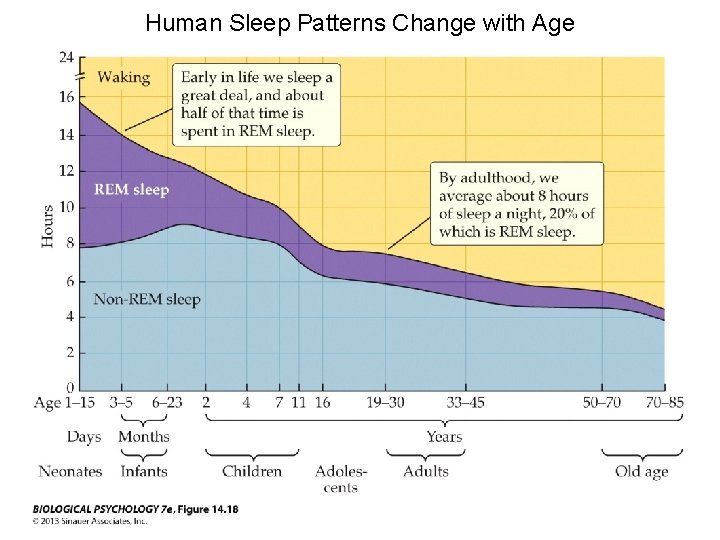
Development of Sleep – Wake Cycle • The sleep-wake cycle take time to develop, resulting in the irregular sleep schedules of newborns. See Figures 14. 7, 14. 8 • The rhythms begin to develop at about six weeks, and by three to six months most infants have a regular sleep-wake cycle • Babies spend 50 percent of their time in REM and the sleep cycle is about 50 minutes. • Sleep is especially important for children as it directly impacts mental and physical development.
The Trouble with Babies In this baby, a stable pattern of sleep at night does not appear to be consolidated until about 16 weeks of age. The dark portions here indicate time asleep; the blank portions, time awake.
Human Sleep Patterns Change with Age
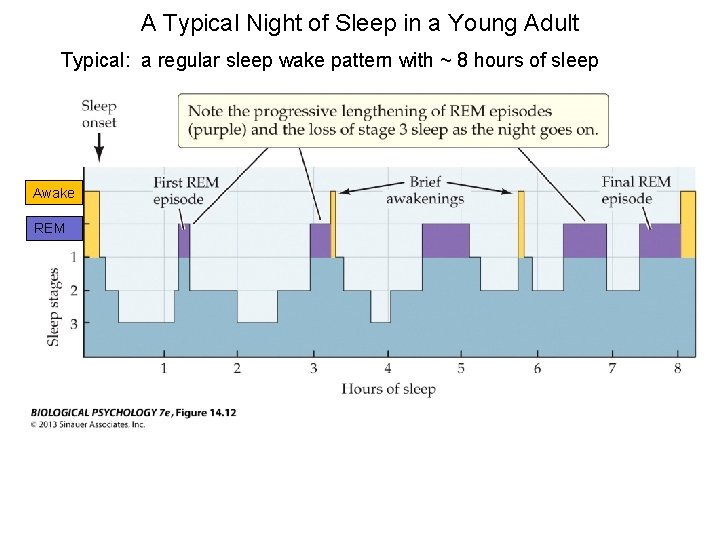
A Typical Night of Sleep in a Young Adult Typical: a regular sleep wake pattern with ~ 8 hours of sleep Awake REM
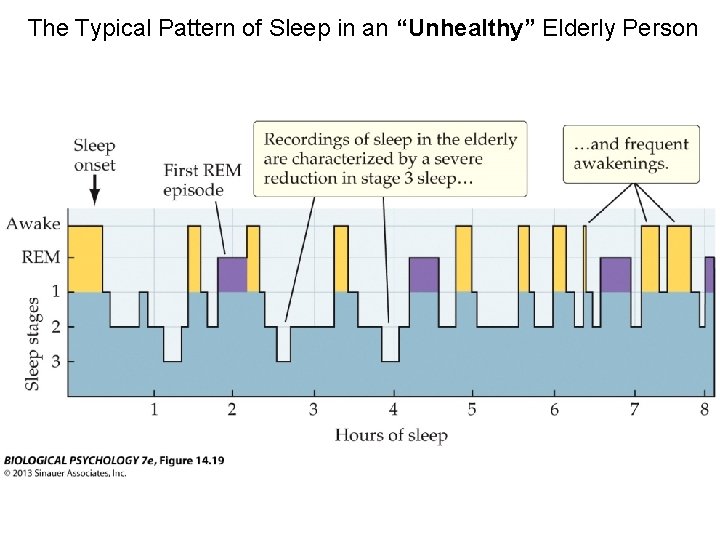
The Typical Pattern of Sleep in an “Unhealthy” Elderly Person
Changes in Sleep Patterns with Aging • Normative changes in sleep pattern with aging – Total amount of sleep decreases up to age 60 – less SWS stages 3 -4 – more awakenings in the early morning • Symptoms of insomnia are common (26%) among older adults and are associated with a decrease in health related quality of life – Carla R. Schubert, Prevalence of Sleep Problems and Quality of Life in an Older Population, SLEEP, Vol. 25, No. 8, 2002 – Sleep disruption from medical conditions such as apnea, enlarged prostate or medications they are taking – Sleep dyssynchrony from lifestyle changes such as decreased activity and napping – Loss of SWS stages 3 -4 in senile dementia • Prevalence of sleep problems is very low in healthy older adults • YOUR GUIDE TO Healthy Sleep NIH Publication No. 11 -5271 Originally printed November 2005 Revised August 2011 • http: //www. nhlbi. nih. gov/health/public/sleep/healthy_sleep. pdf
Sleep Demand • Sleep demand is an automatic onset of drowsiness • Rebound after sleep deprivation – Amount of SWS increases – Amount of REM increases – Change in sleep stage pattern • Total sleep deprivation compromises the immune system and leads to death. – The disease fatal familial insomnia is inherited. – In midlife, people stop sleeping and die 7– 24 months after onset of the insomnia. – Autopsy shows degeneration in the brain. • Evidence of the Biological Functions of Sleep
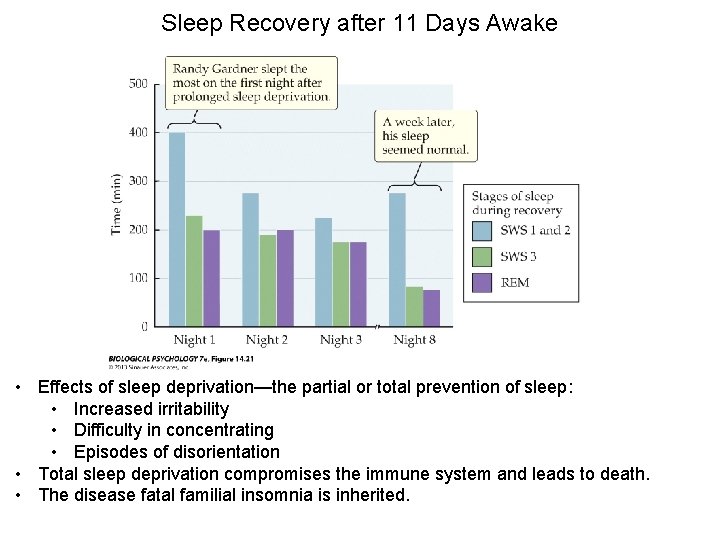
Sleep Recovery after 11 Days Awake • Effects of sleep deprivation—the partial or total prevention of sleep: • Increased irritability • Difficulty in concentrating • Episodes of disorientation • Total sleep deprivation compromises the immune system and leads to death. • The disease fatal familial insomnia is inherited.
What Are the Biological Functions of Sleep? • Biological Functions – – Energy conservation Niche adaptation Body restoration Memory consolidation • • • Declarative during SWS Non-declarative during REM However a few people sleep very little – Whatever the function of sleep these people fill it with a brief nap yet are normal and healthy
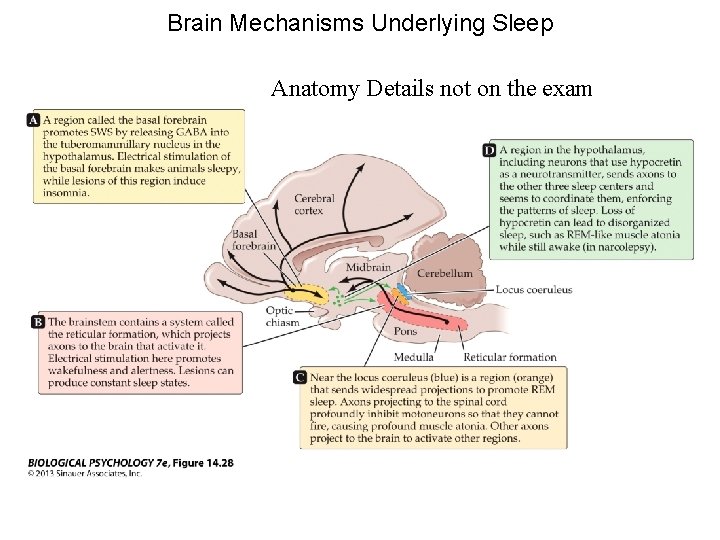
At Least Four Interacting Neural Systems Underlie Sleep • A basal forebrain system– • becomes active at sleep onset • displays SWS when isolated • A brainstem system– • reticular formation is able to activate the forebrain • Balance between reticular and basal forebrain areas • A pontine system– • Near the locus coeruleus • triggers REM sleep • Inhibits spinal motor neurons • A hypothalamic system– • Coordinates the other three • hypocretin-based sleep center • Lack of hypocretin signaling produces narcolepsy
Brain Mechanisms Underlying Sleep Anatomy Details not on the exam
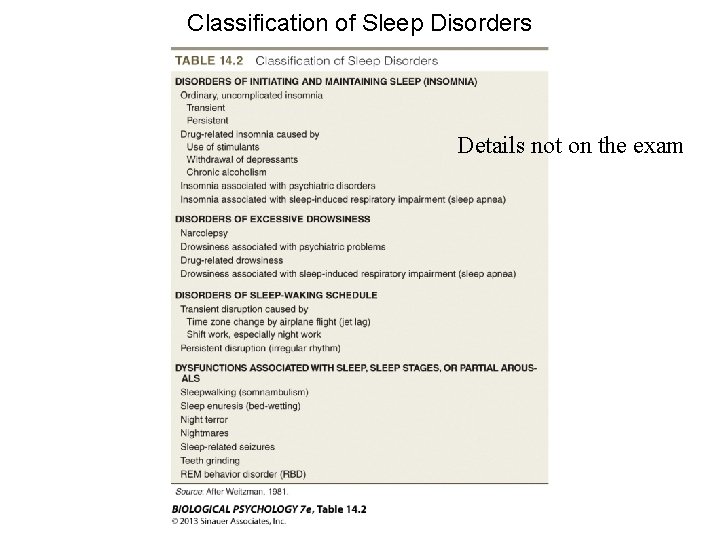
Classification of Sleep Disorders Details not on the exam
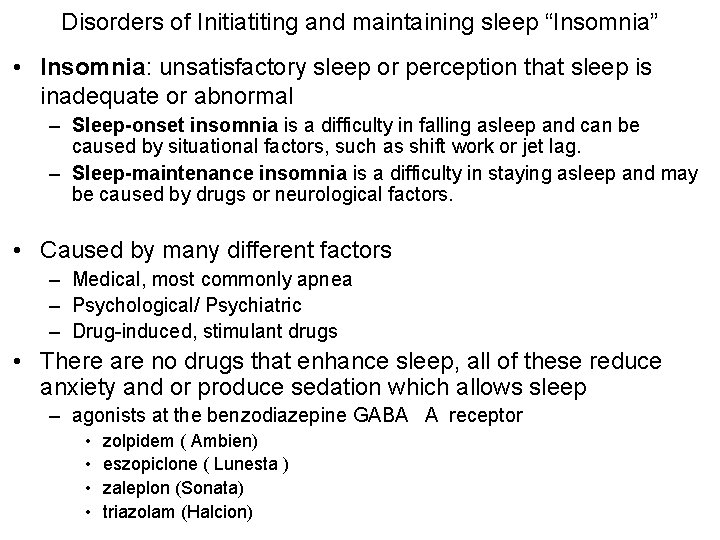
Disorders of Initiatiting and maintaining sleep “Insomnia” • Insomnia: unsatisfactory sleep or perception that sleep is inadequate or abnormal – Sleep-onset insomnia is a difficulty in falling asleep and can be caused by situational factors, such as shift work or jet lag. – Sleep-maintenance insomnia is a difficulty in staying asleep and may be caused by drugs or neurological factors. • Caused by many different factors – Medical, most commonly apnea – Psychological/ Psychiatric – Drug-induced, stimulant drugs • There are no drugs that enhance sleep, all of these reduce anxiety and or produce sedation which allows sleep – agonists at the benzodiazepine GABA A receptor • • zolpidem ( Ambien) eszopiclone ( Lunesta ) zaleplon (Sonata) triazolam (Halcion)
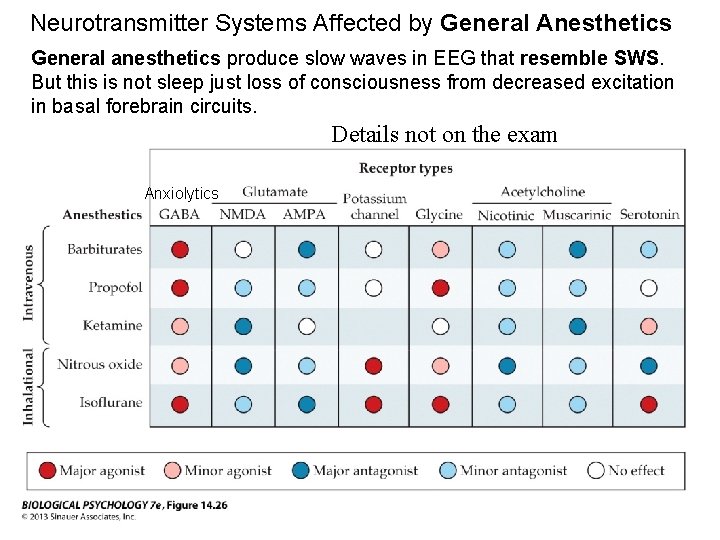
Neurotransmitter Systems Affected by General Anesthetics General anesthetics produce slow waves in EEG that resemble SWS. But this is not sleep just loss of consciousness from decreased excitation in basal forebrain circuits. Details not on the exam Anxiolytics
Disorders of Sleep-Waking Schedule • Transient changes in schedule require adjustment – Daylight Saving Time, Work schedule shift change, Jet Lag • Persistent disruption “Irregular Sleep Patterns” – Time of sleep onset and waking varies from day to day • Usually delayed sleep onset (going to sleep later) • Combined with delayed waking (note: not sleep deprivation) – Exposure to light resets SCN • Reset at different times across several days • SCN regulated biorhythms can not adjust • Similar to chronic jet lag – Sleep deprivation • Delayed sleep onset combined with regular waking time • Working all night without sleep
Irregular Sleep and Sleep Deprivation Health Effects • Numerous health effects – Deficient immune system • Greater likelihood of illness • Slower recovery from infection • Fatal with long-term disruption – Increased risk of obesity and diabetes – Increased Risk of Accidents • Reduced motor coordination • Slow reaction time – Makes you stupid • Impaired long-term memory • Slower decision making • Impaired problem solving