
EVOLUTION OF POPULATIONS What is evolution The change
- Slides: 23
EVOLUTION OF POPULATIONS
What is evolution? • The change in the genetic make-up of a species over time
POPULATION GENETICS n n Study of evolution from a genetic point of view What is a population? • A collection of individuals of the same species that routinely interbreed ( living in the same location) n n A species is a naturally breeding group of organisms that produce fertile offspring. A population is the smallest in which evolution occurs
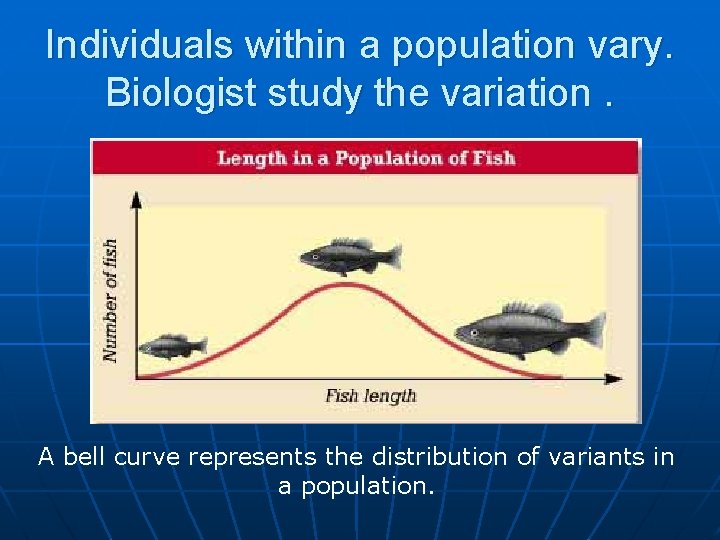
Individuals within a population vary. Biologist study the variation. A bell curve represents the distribution of variants in a population.
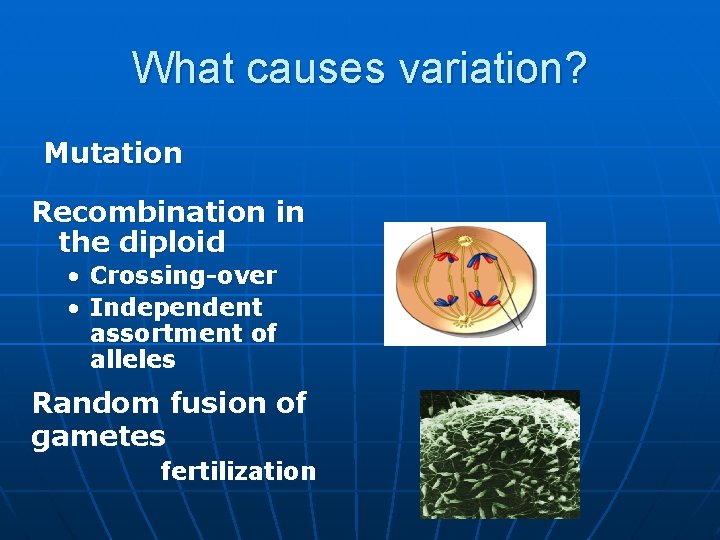
What causes variation? Mutation Recombination in the diploid • Crossing-over • Independent assortment of alleles Random fusion of gametes fertilization
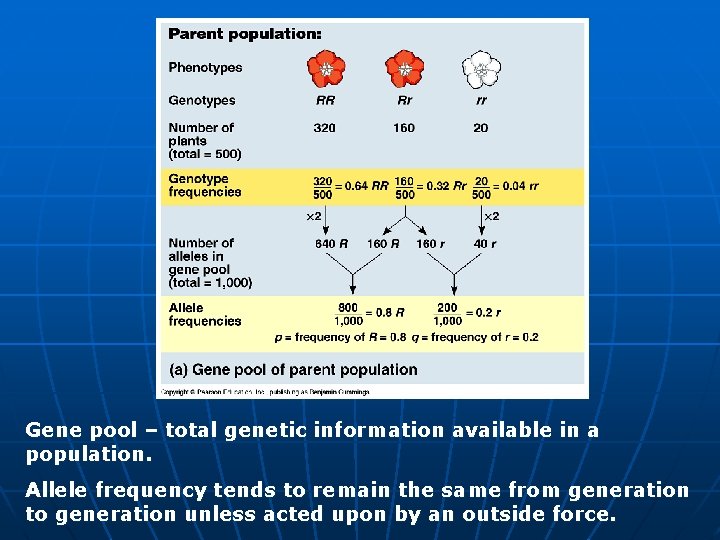
Gene pool – total genetic information available in a population. Allele frequency tends to remain the same from generation to generation unless acted upon by an outside force.
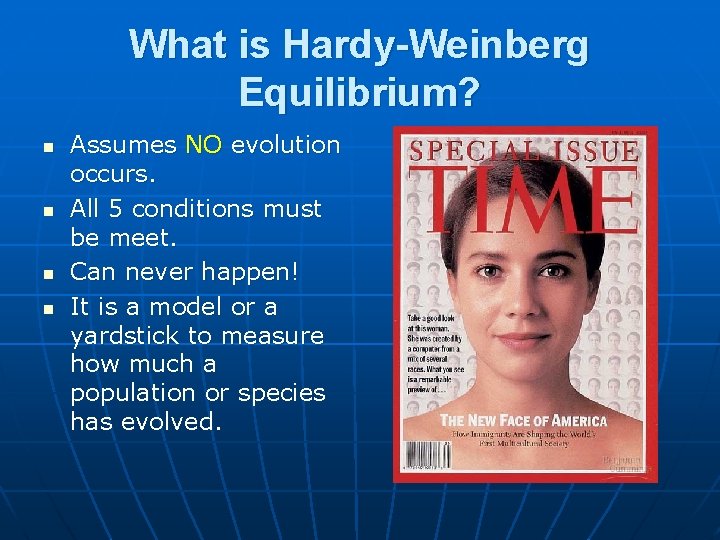
What is Hardy-Weinberg Equilibrium? n n Assumes NO evolution occurs. All 5 conditions must be meet. Can never happen! It is a model or a yardstick to measure how much a population or species has evolved.
Hardy-Weinberg Equilibrium Conditions n No net mutation n No migration n Large population size n Mating is random n Natural selection does not occur
Disruption of Genetic Equilibrium n n n Mutation Migration Genetic Drift Non- Random Mating Natural Selection
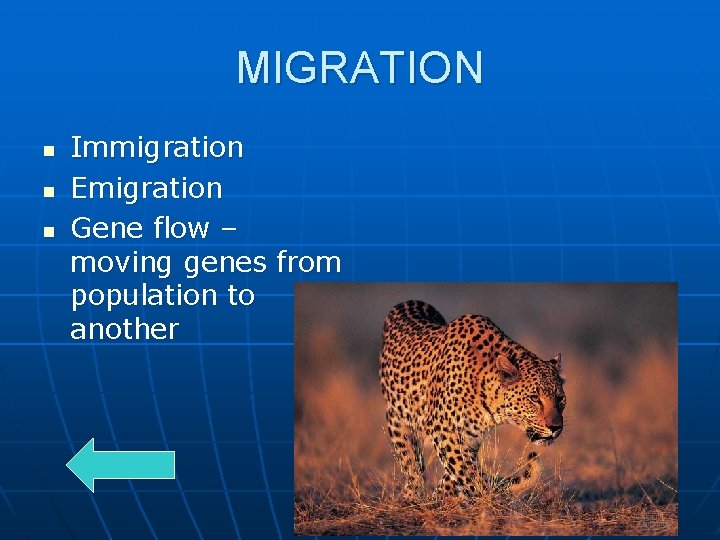
MIGRATION n n n Immigration Emigration Gene flow – moving genes from population to another
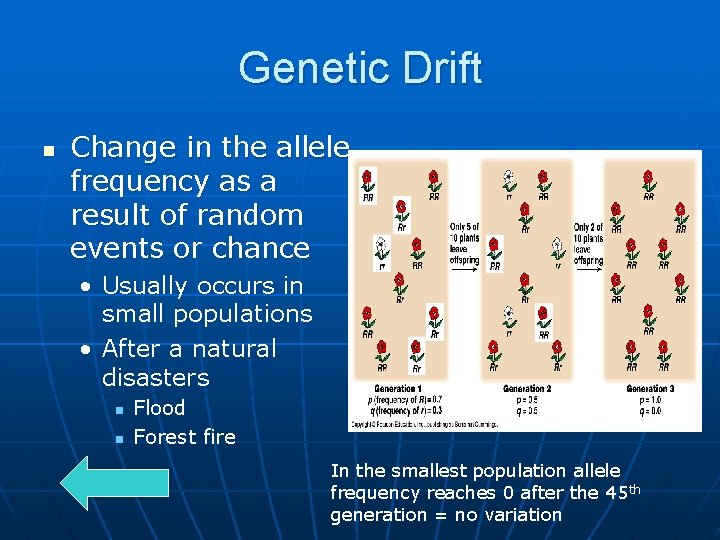
Genetic Drift n Change in the allele frequency as a result of random events or chance • Usually occurs in small populations • After a natural disasters n n Flood Forest fire In the smallest population allele frequency reaches 0 after the 45 th generation = no variation
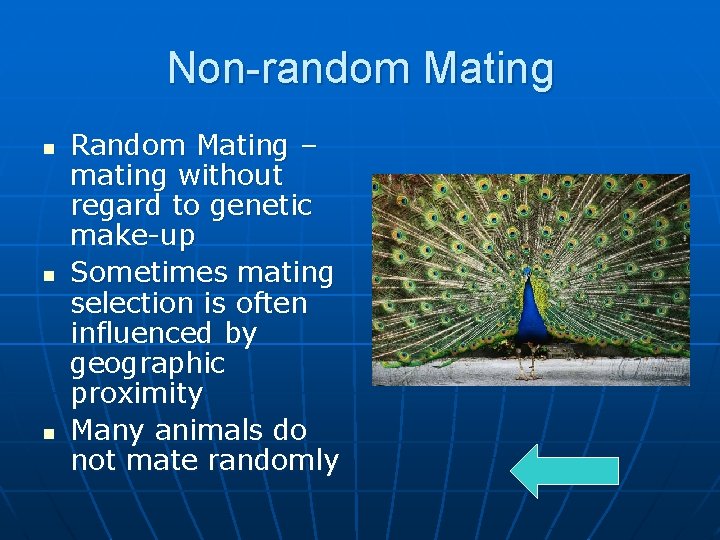
Non-random Mating n n n Random Mating – mating without regard to genetic make-up Sometimes mating selection is often influenced by geographic proximity Many animals do not mate randomly
NATURAL SELECTION 1 2. 3 4 5 All species have genetic variation. The environment presents many challenges Organisms tend to produce more offspring than the environment can support competition ( struggle for survival) Some individuals are better suited to cope with the challenges ( survival of fittest) Characteristics best suited to environment tend to increase in a population over time
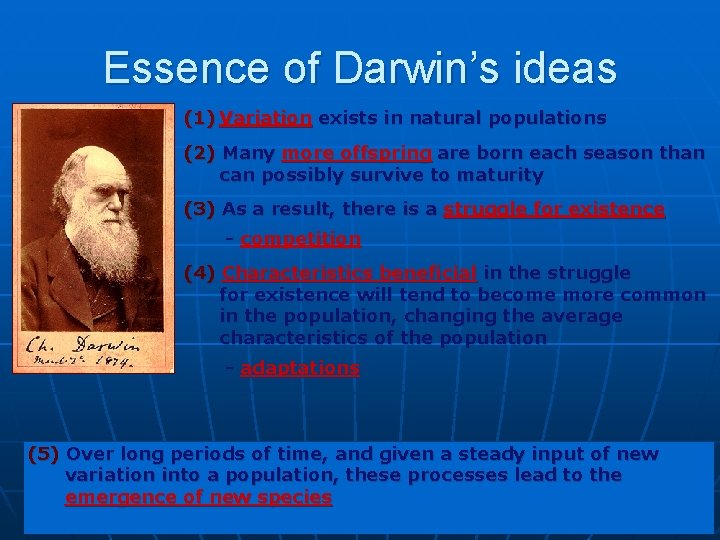
Essence of Darwin’s ideas (1) Variation exists in natural populations (2) Many more offspring are born each season than can possibly survive to maturity (3) As a result, there is a struggle for existence - competition (4) Characteristics beneficial in the struggle for existence will tend to become more common in the population, changing the average characteristics of the population - adaptations (5) Over long periods of time, and given a steady input of new variation into a population, these processes lead to the emergence of new species
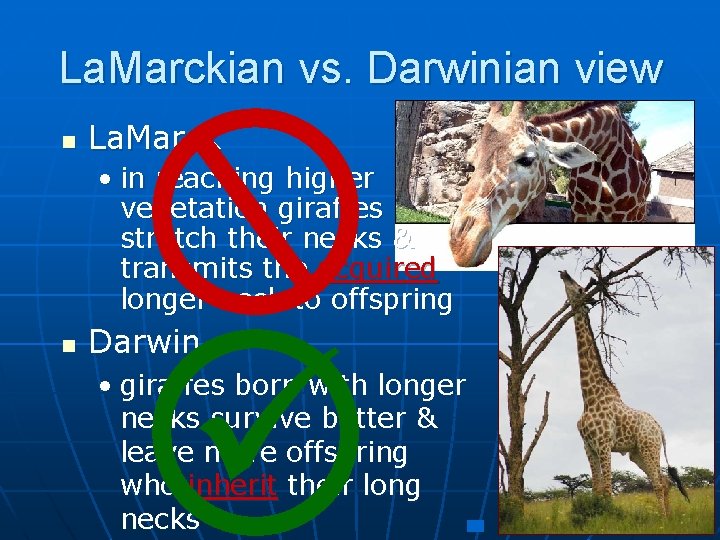
La. Marckian vs. Darwinian view n La. Marck • in reaching higher vegetation giraffes stretch their necks & transmits the acquired longer neck to offspring n Darwin • giraffes born with longer necks survive better & leave more offspring who inherit their long necks
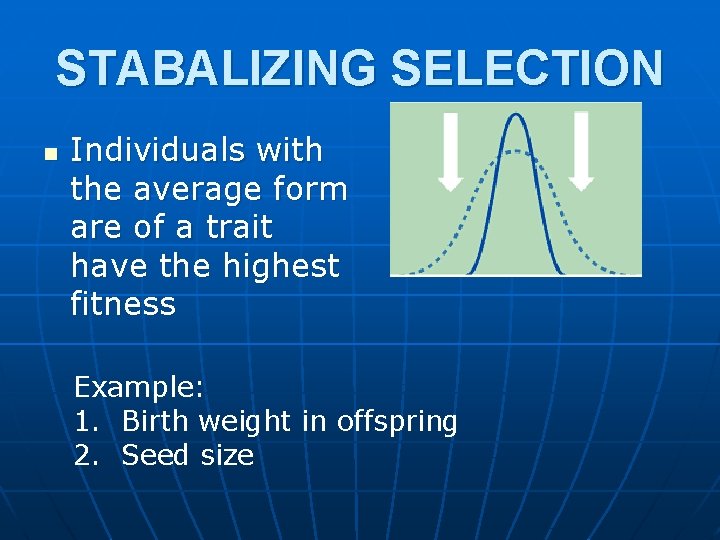
STABALIZING SELECTION n Individuals with the average form are of a trait have the highest fitness Example: 1. Birth weight in offspring 2. Seed size
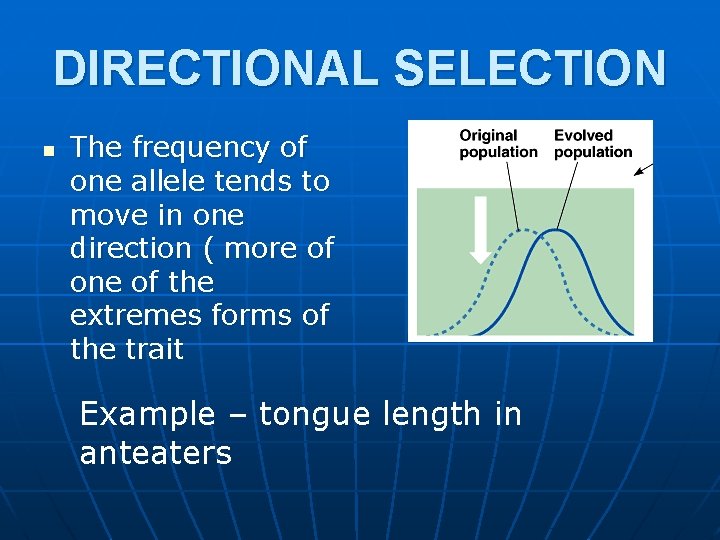
DIRECTIONAL SELECTION n The frequency of one allele tends to move in one direction ( more of one of the extremes forms of the trait Example – tongue length in anteaters
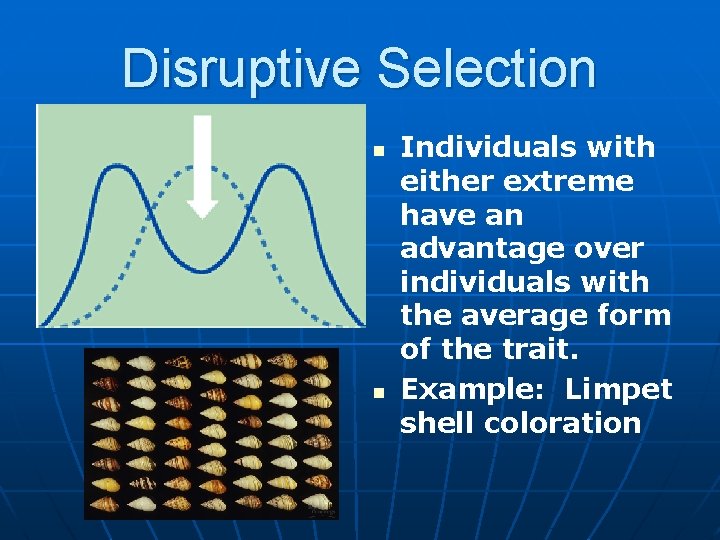
Disruptive Selection n n Individuals with either extreme have an advantage over individuals with the average form of the trait. Example: Limpet shell coloration
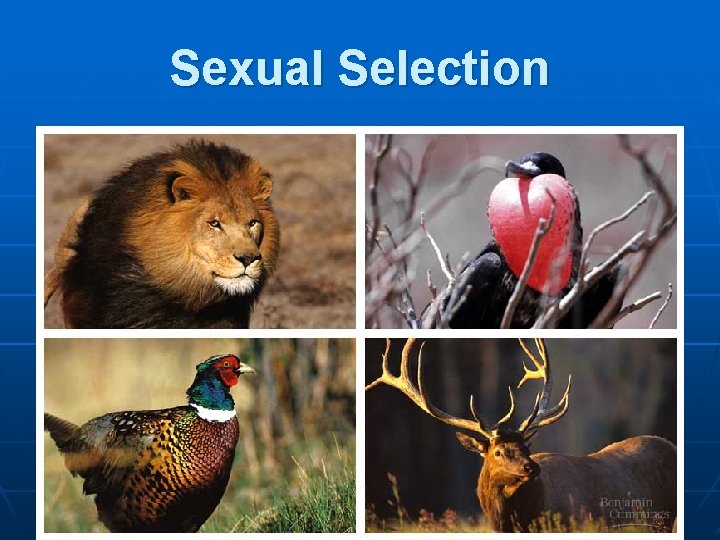
Sexual Selection
SPECIES FORMATION n Begins with geographic isolation n Results in reproductive isolation n Speciation occurs
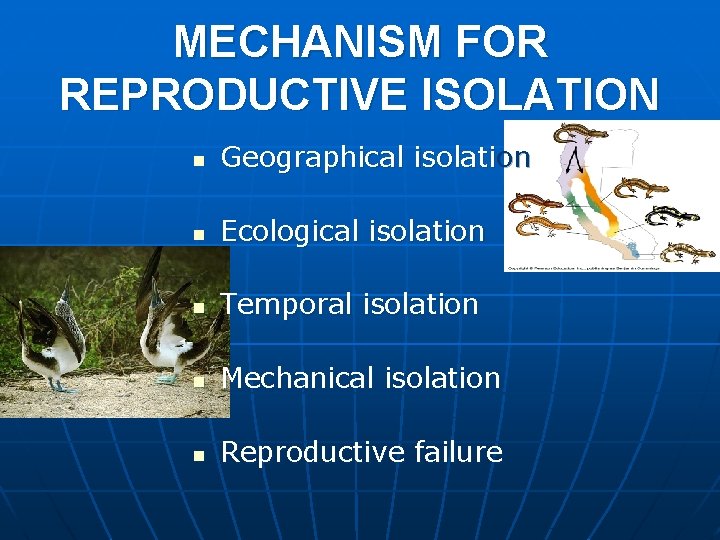
MECHANISM FOR REPRODUCTIVE ISOLATION n Geographical isolation n Ecological isolation n Temporal isolation n Mechanical isolation n Reproductive failure
How does evolution/speciation occur? n n GRADUALISM • gradual process that goes on all the time PUNCTUATED EQUILIBRIUM • periods of rapid change are separated by periods of little or no change
MICROEVOLUTION LEADS TO MACROEVOLUTION