
Evolution of Populations The Smallest Unit of Evolution
- Slides: 28
Evolution of Populations
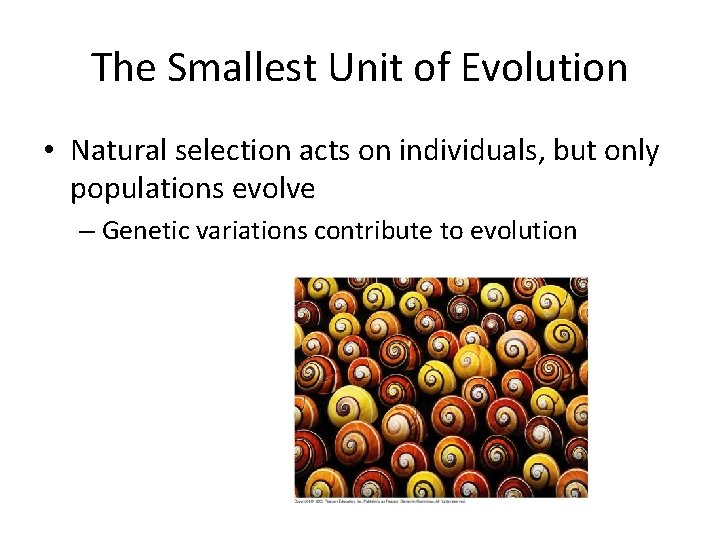
The Smallest Unit of Evolution • Natural selection acts on individuals, but only populations evolve – Genetic variations contribute to evolution
Population genetics • Population genetics – study of how populations change genetically over time • Mendelian genetics with the Darwinian theory • populations as units of evolution
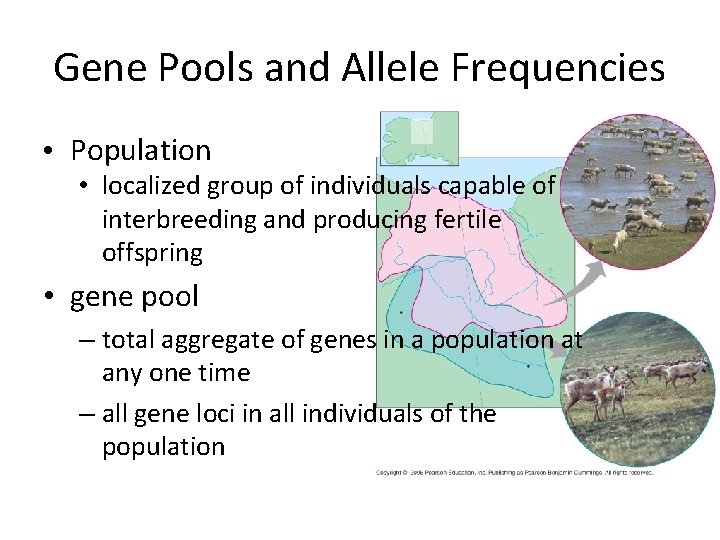
Gene Pools and Allele Frequencies • Population • localized group of individuals capable of interbreeding and producing fertile offspring • gene pool – total aggregate of genes in a population at any one time – all gene loci in all individuals of the population
The Hardy-Weinberg Theorem • population that is not evolving • frequencies of alleles and genotypes in a population’s gene pool remain constant from generation to generation, provided that only Mendelian segregation and recombination of alleles are at work • preservation of genetic variation in a population
Hardy-Weinberg Equilibrium • The five conditions for non-evolving populations are rarely met in nature: – Extremely large population size – No gene flow – No mutations – Random mating – No natural selection
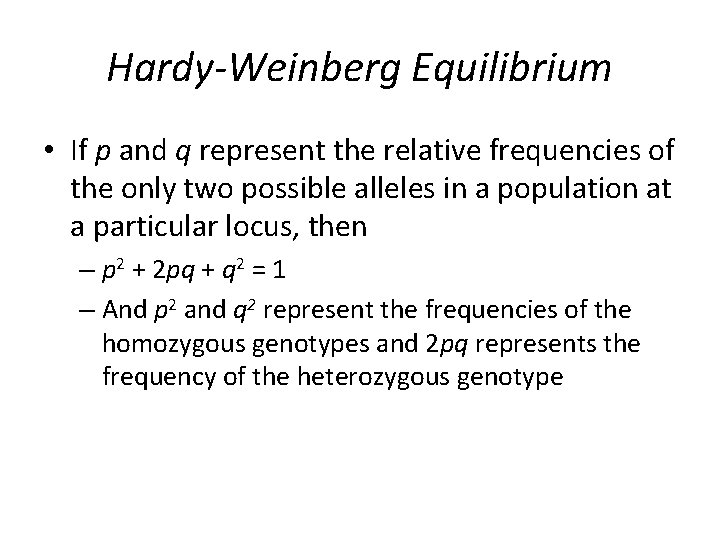
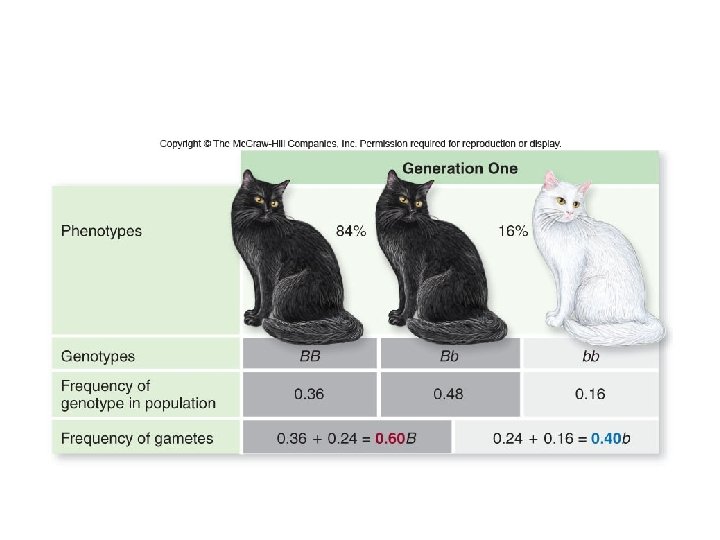
Hardy-Weinberg Equilibrium • If p and q represent the relative frequencies of the only two possible alleles in a population at a particular locus, then – p 2 + 2 pq + q 2 = 1 – And p 2 and q 2 represent the frequencies of the homozygous genotypes and 2 pq represents the frequency of the heterozygous genotype
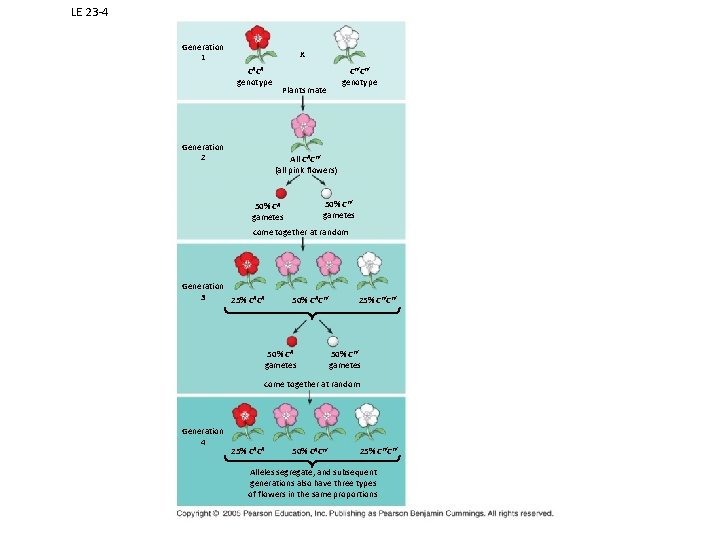
LE 23 -4 Generation 1 X CRCR genotype Generation 2 CWCW genotype Plants mate All CRCW (all pink flowers) 50% CW gametes 50% CR gametes come together at random Generation 3 25% CRCR 50% CRCW 50% CR gametes 25% CWCW 50% CW gametes come together at random Generation 4 25% CRCR 50% CRCW 25% CWCW Alleles segregate, and subsequent generations also have three types of flowers in the same proportions
Evolutionary Change • Three major factors alter allele frequencies and bring about most evolutionary change: – Mutations – Natural selection – Nonrandom Mating – Genetic drift – Gene flow
Variations that make Natural Selection Possible • Mutation – changes in the nucleotide sequence of DNA – new genes and alleles to arise – Point Mutations • change in one base in a gene • usually harmless • may impact on phenotype
Mutations • Chromosomal mutations that delete, disrupt, or rearrange many loci are typically harmful • Gene duplication is nearly always harmful
Natural Selection • Differential success in reproduction results in certain alleles being passed to the next generation in greater proportions
• 3 conditions for natural selection to occur and to result in evolutionary change 1. Variation must exist among individuals in a population 2. Variation among individuals must result in differences in the number of offspring surviving in the next generation 3. Variation must be genetically inherited 14
Sexual Recombination • far more important than mutation • produces the genetic differences that make adaptation possible
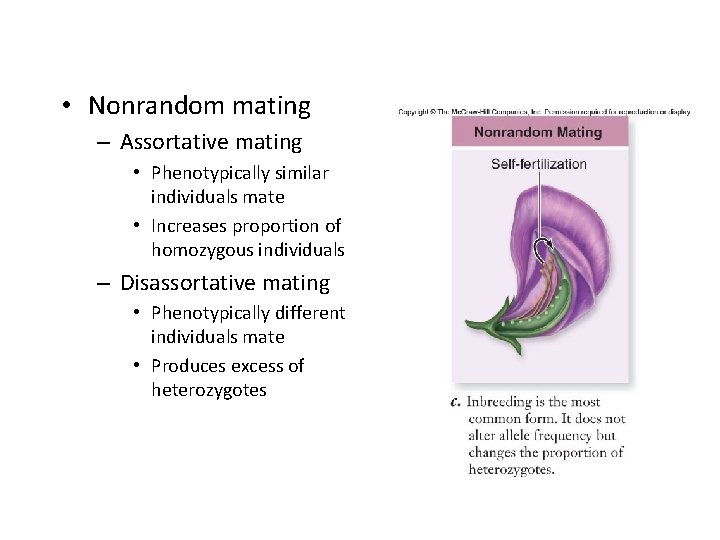
• Nonrandom mating – Assortative mating • Phenotypically similar individuals mate • Increases proportion of homozygous individuals – Disassortative mating • Phenotypically different individuals mate • Produces excess of heterozygotes
Genetic Drift • The smaller a sample, the greater the chance of deviation from a predicted result • allele frequencies fluctuate unpredictably from one generation to the next • reduces genetic variation through losses of alleles
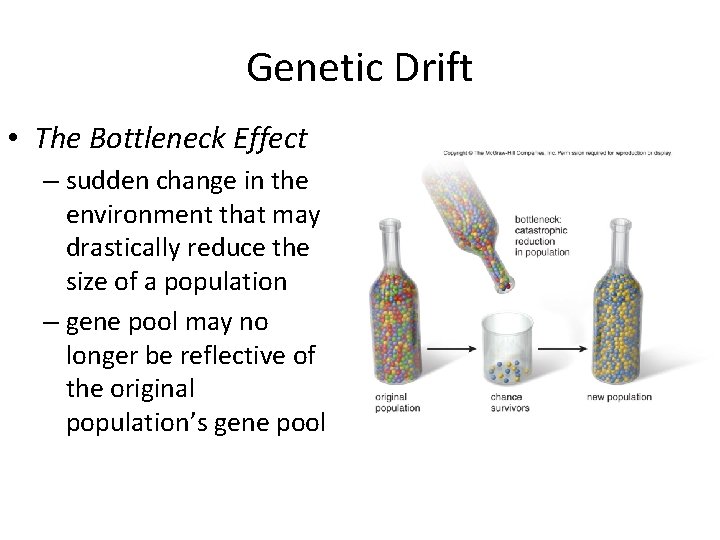
Genetic Drift • The Bottleneck Effect – sudden change in the environment that may drastically reduce the size of a population – gene pool may no longer be reflective of the original population’s gene pool
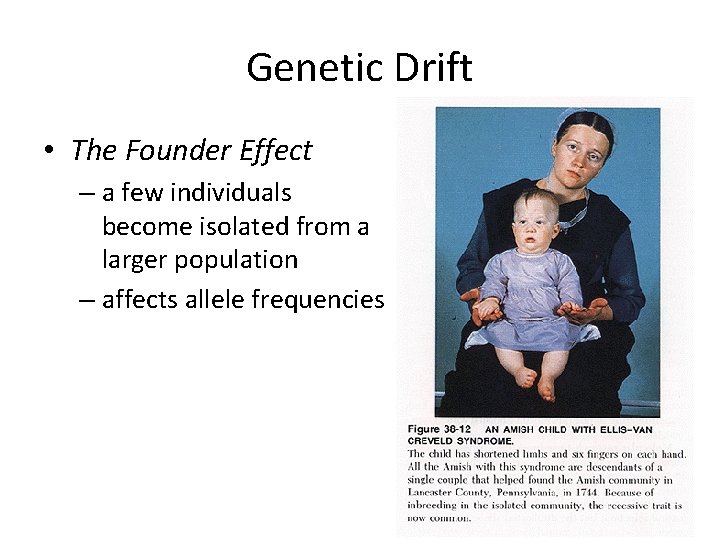
Genetic Drift • The Founder Effect – a few individuals become isolated from a larger population – affects allele frequencies
Gene Flow • genetic additions or subtractions from a population, resulting from movement of fertile individuals or gametes • gain or loss of alleles • reduce differences between populations over time
A Closer Look at Natural Selection • From the range of variations available in a population, natural selection increases frequencies of certain genotypes, fitting organisms to their environment over generations
Evolutionary Fitness • Misleading – “struggle for existence” – “survival of the fittest” • Fitness – contribution an individual makes to the gene pool of the next generation, relative to the contributions of other individuals • Relative fitness – contribution of a genotype to the next generation, compared with contributions of alternative genotypes for the same locus
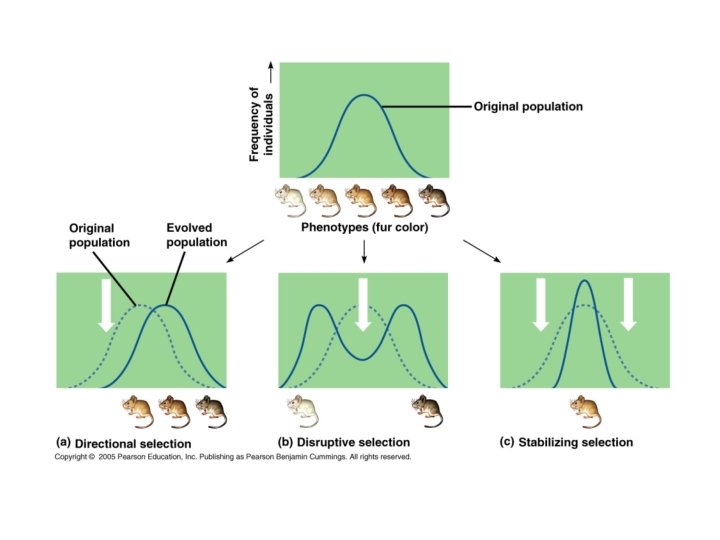
Directional, Disruptive, and Stabilizing Selection • Selection favors certain genotypes by acting on the phenotypes of certain organisms • Three modes of selection: – Directional • favors individuals at one end of the phenotypic range – Disruptive • favors individuals at both extremes of the phenotypic range – Stabilizing • favors intermediate variants and acts against extreme phenotypes
The Preservation of Genetic Variation • Diploidy – maintains genetic variation in the form of hidden recessive alleles • Balancing selection – natural selection maintains stable frequencies of two or more phenotypic forms
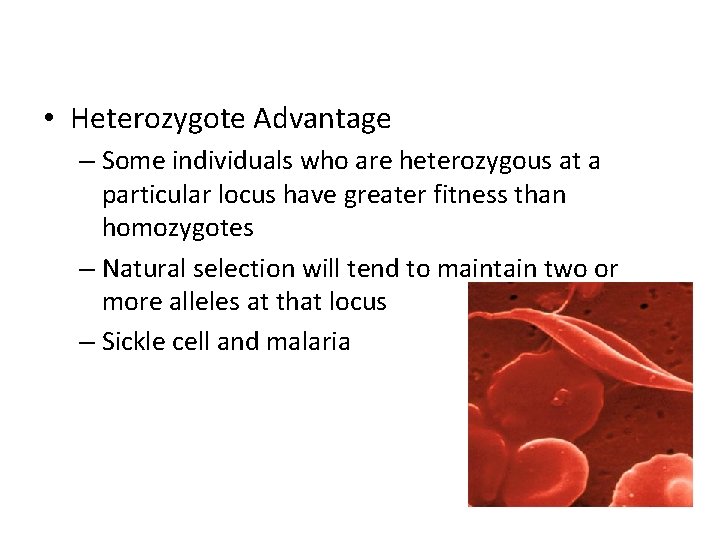
• Heterozygote Advantage – Some individuals who are heterozygous at a particular locus have greater fitness than homozygotes – Natural selection will tend to maintain two or more alleles at that locus – Sickle cell and malaria
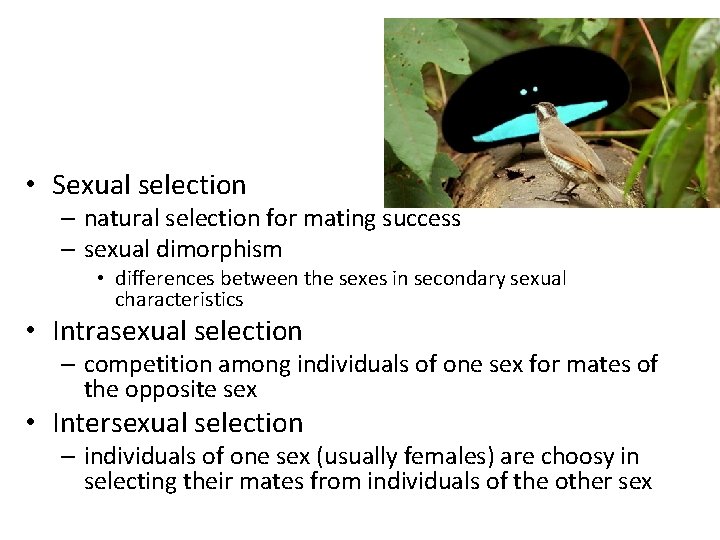
• Sexual selection – natural selection for mating success – sexual dimorphism • differences between the sexes in secondary sexual characteristics • Intrasexual selection – competition among individuals of one sex for mates of the opposite sex • Intersexual selection – individuals of one sex (usually females) are choosy in selecting their mates from individuals of the other sex
Why Natural Selection Cannot Fashion Perfect Organisms • • Evolution is limited by historical constraints Adaptations are often compromises Chance and natural selection interact Selection can only edit existing variations