
Evolution of Populations DO NOW Is evolution random

- Slides: 28
Evolution of Populations
DO NOW Is evolution random or non-random? Be prepared to discuss.
DO NOW (1) Hand in Chapter 22 Homework and signed contract (place in folder marked with your class period) (2) Write your name and class period on your lab supply item and place it in the corner of the classroom in the spot marked with your class period (3) Put away bags and cell-phones – we will begin with the quiz
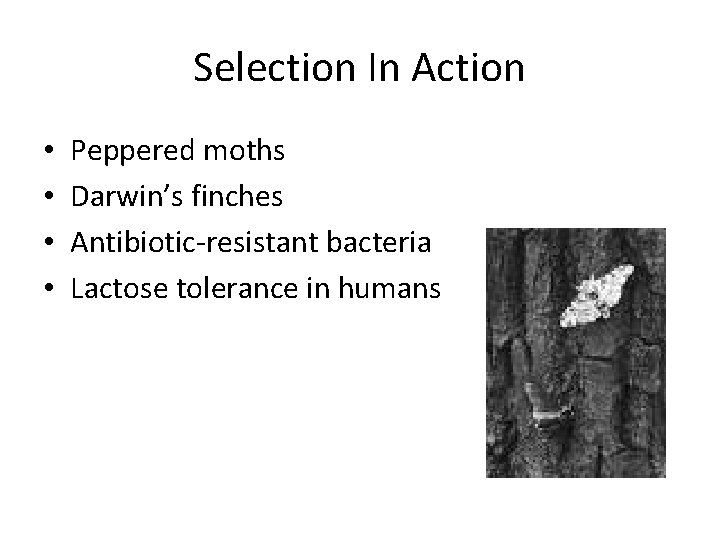
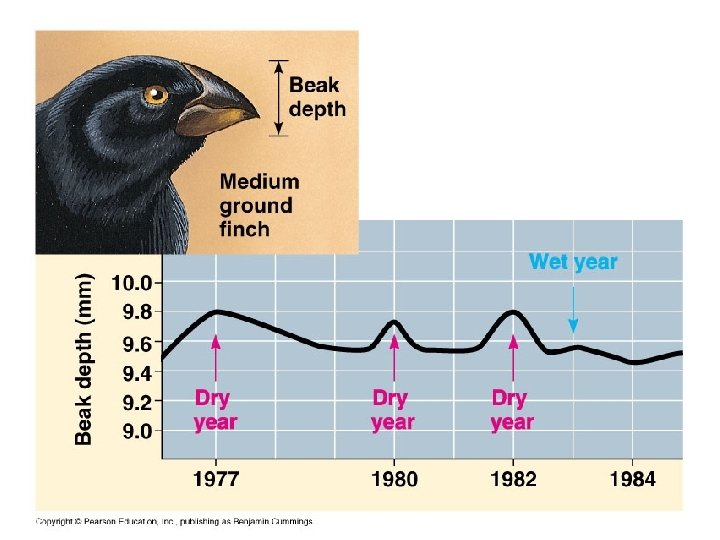
Selection In Action • • Peppered moths Darwin’s finches Antibiotic-resistant bacteria Lactose tolerance in humans
Modern Evolutionary Synthesis • Darwin’s theory of evolution by natural selection lacked an explanation for the basis of heredity. Genetics helped explain this, creating a synthesis between the idea of Darwinian selection and Mendelian genetics.
Evolution of Populations Population: localized group of individuals belonging to the same species Evolution happens on a larger level than the individual organism – evolution occurs at the level of populations.
• Population genetics: the study of genetic variability within populations • Gene pool: combined aggregate of genes in a population at any one time • Species: a group of populations that have the potential to interbreed and produce fertile offspring in nature
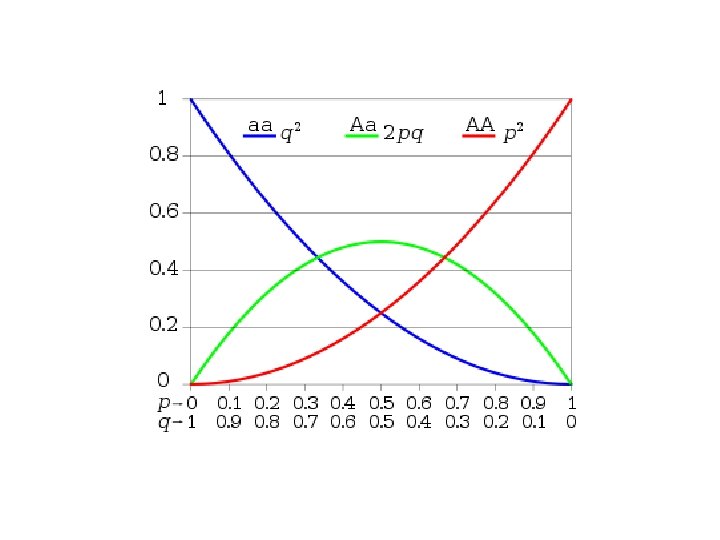
Hardy-Weinberg principle • states that allele and genotype frequencies will remain constant from generation to generation in the absence of other evolutionary influences
Hardy-Weinberg Theorem Assumptions 1. 2. 3. 4. 5. Very large population size No migration No net mutations Random mating No natural selection
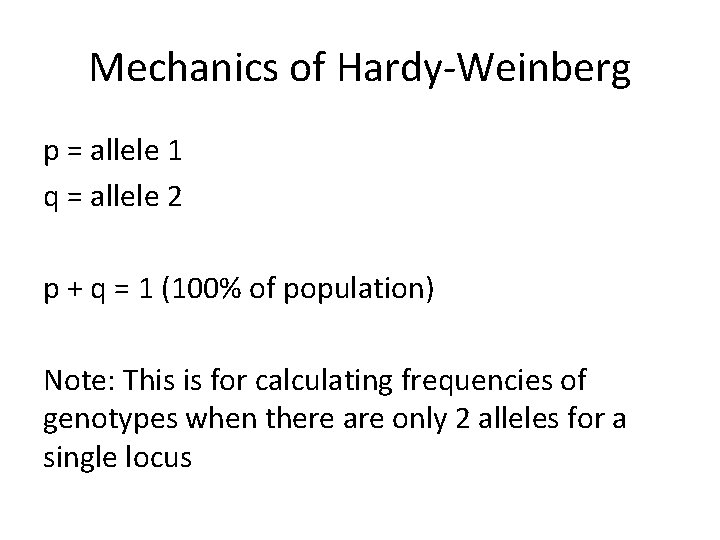
Mechanics of Hardy-Weinberg p = allele 1 q = allele 2 p + q = 1 (100% of population) Note: This is for calculating frequencies of genotypes when there are only 2 alleles for a single locus
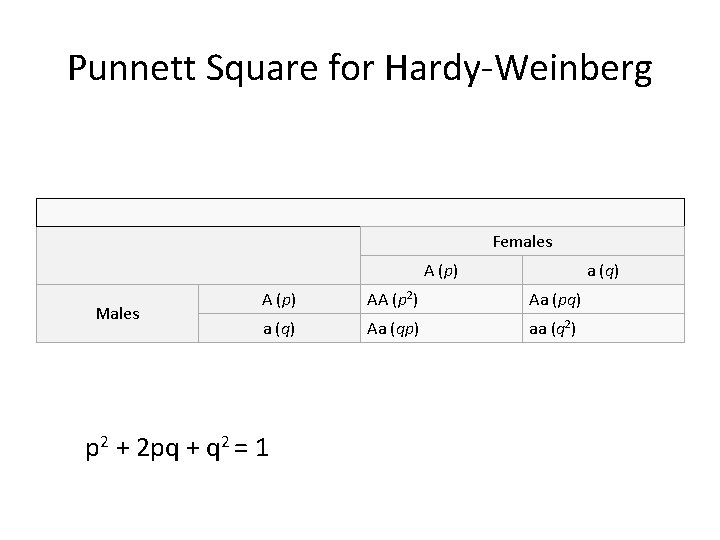
Punnett Square for Hardy-Weinberg Females A (p) Males a (q) A (p) AA (p 2) Aa (pq) a (q) Aa (qp) aa (q 2) p 2 + 2 pq + q 2 = 1
Microevolution
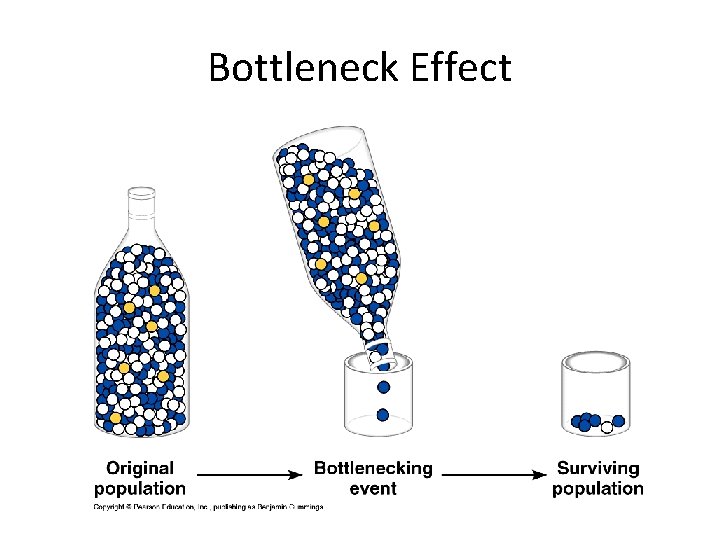
Bottleneck Effect
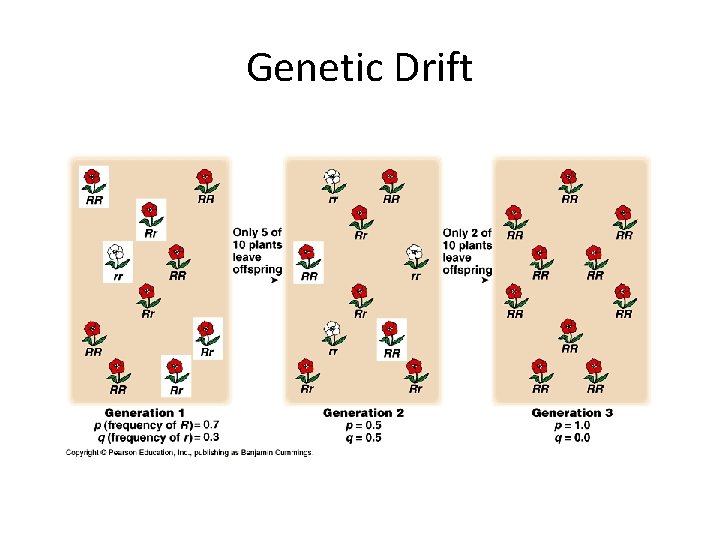
Genetic Drift
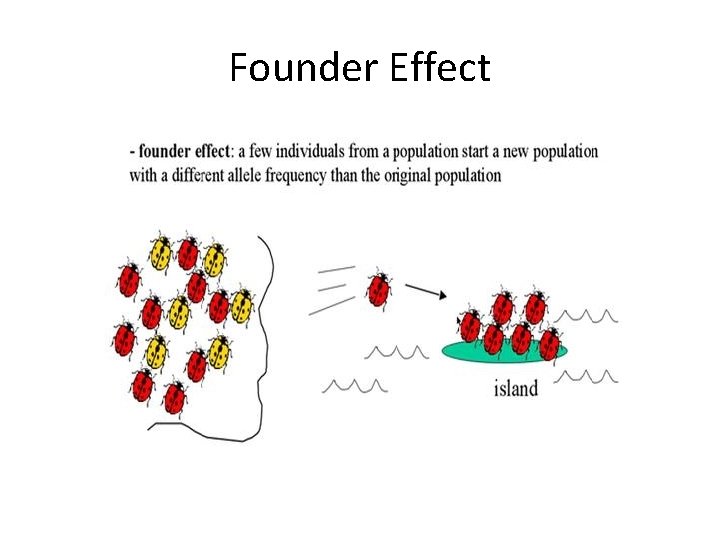
Founder Effect
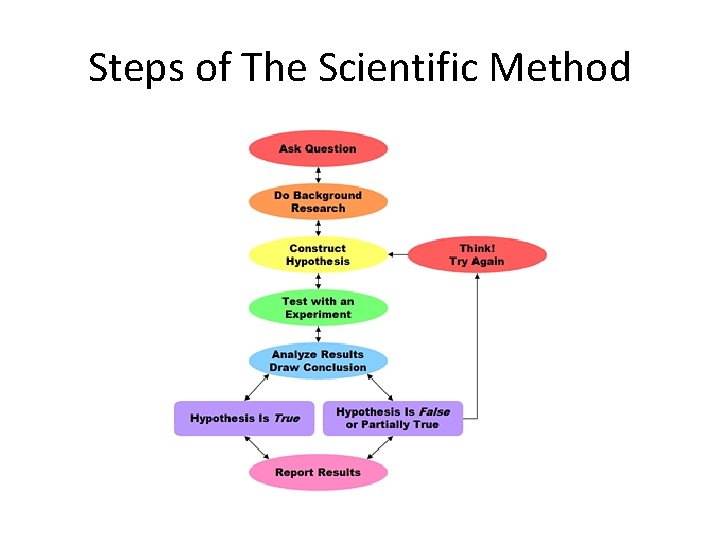
Steps of The Scientific Method
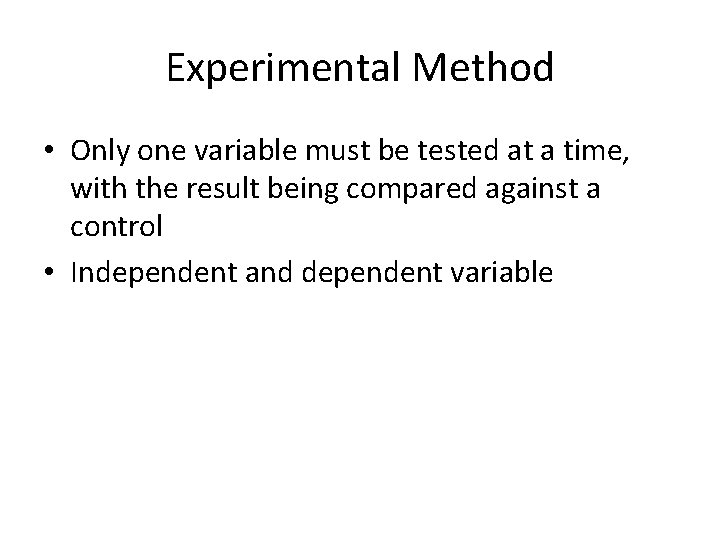
Experimental Method • Only one variable must be tested at a time, with the result being compared against a control • Independent and dependent variable
Genetic Variation Within Populations • Polymorphism • Gene diversity • Nucleotide diversity
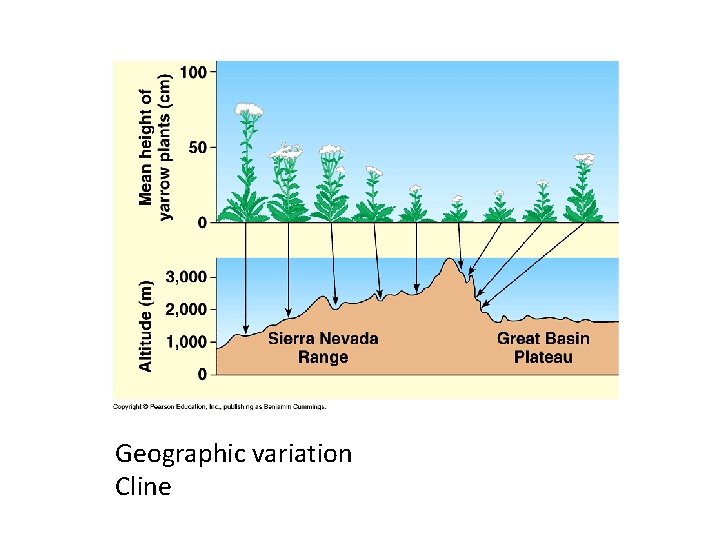
Geographic variation Cline
Maintaining Genetic Variation In Populations • • Diploidy Heterozygote advantage Frequency-dependent selection Neutral variation
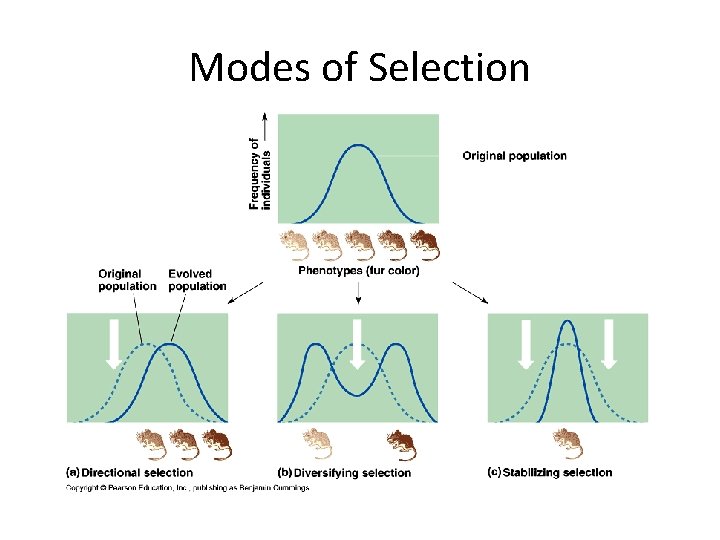
Modes of Selection
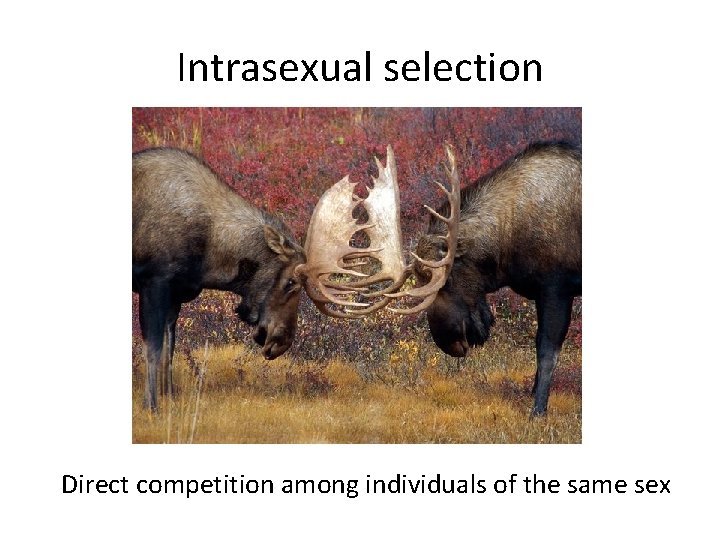
Intrasexual selection Direct competition among individuals of the same sex
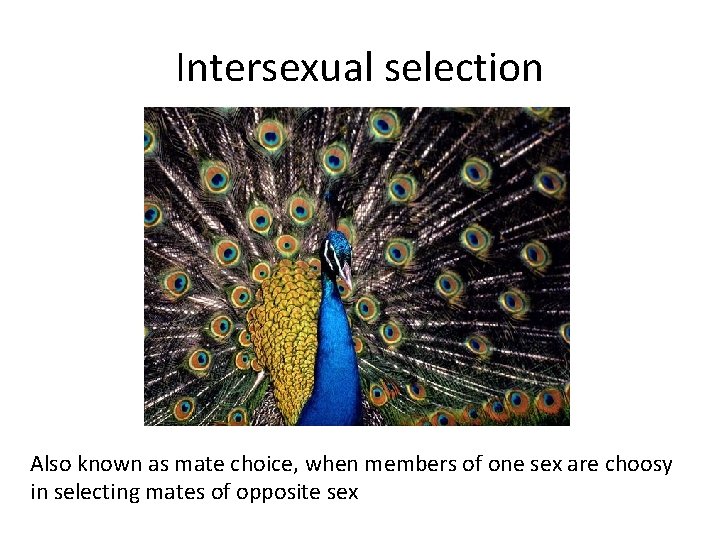
Intersexual selection Also known as mate choice, when members of one sex are choosy in selecting mates of opposite sex
Balanced polymorphism • Ability of natural selection to maintain stable frequencies of two or more phenotypic forms
Heterozygote advantage • When individuals that are heterozygous at a particular locus have a greater survivorship and reproductive success
Frequency-dependent selection • Survival and reproduction of any one morph declines if the phenotypic form becomes too common