
Evolution of Populations Chapter 11 Genetic Variation Within
- Slides: 31
Evolution of Populations Chapter 11
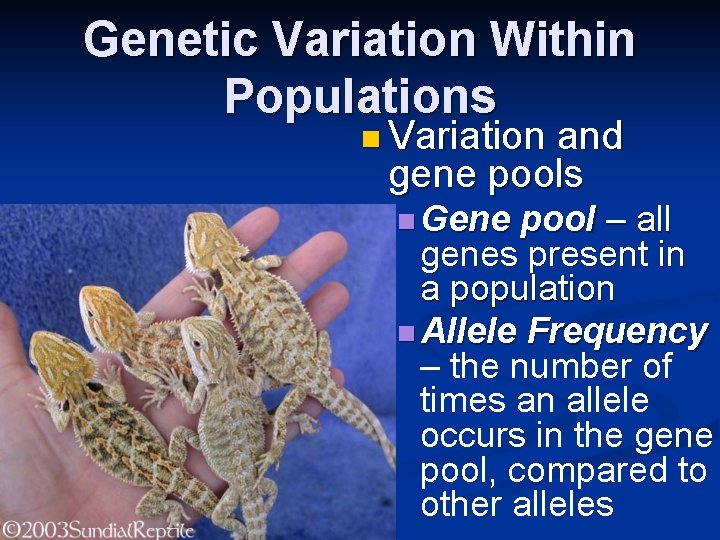
Genetic Variation Within Populations n Variation and gene pools n Gene pool – all genes present in a population n Allele Frequency – the number of times an allele occurs in the gene pool, compared to other alleles
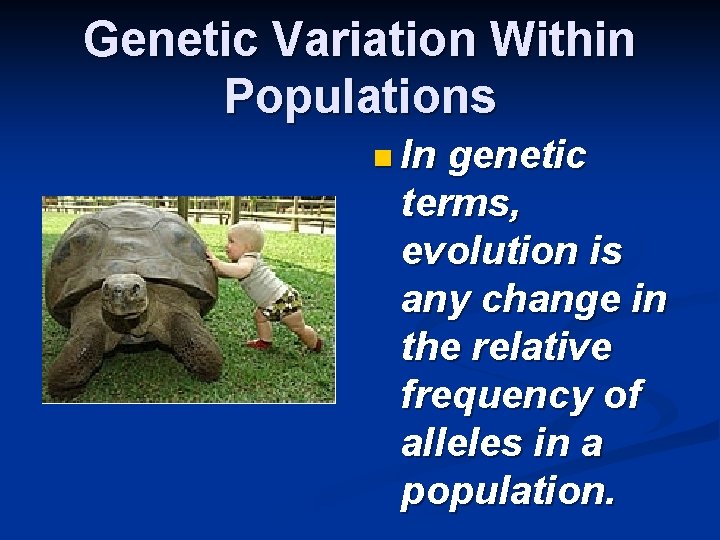
Genetic Variation Within Populations n In genetic terms, evolution is any change in the relative frequency of alleles in a population.
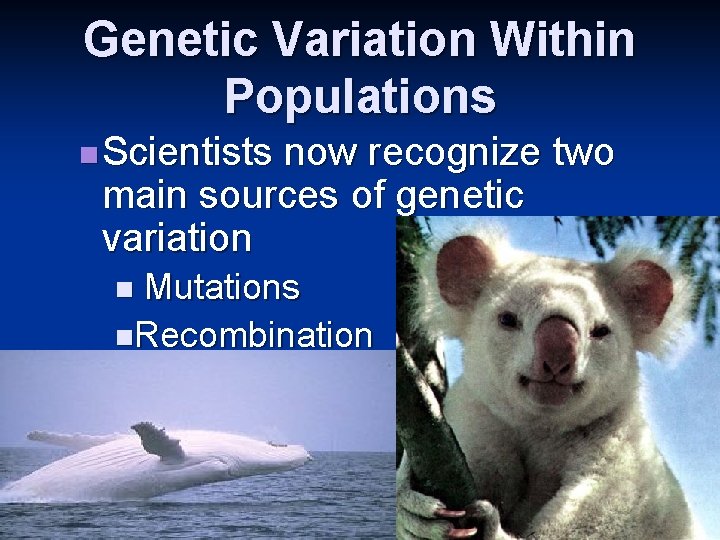
Genetic Variation Within Populations n Scientists now recognize two main sources of genetic variation Mutations n. Recombination n
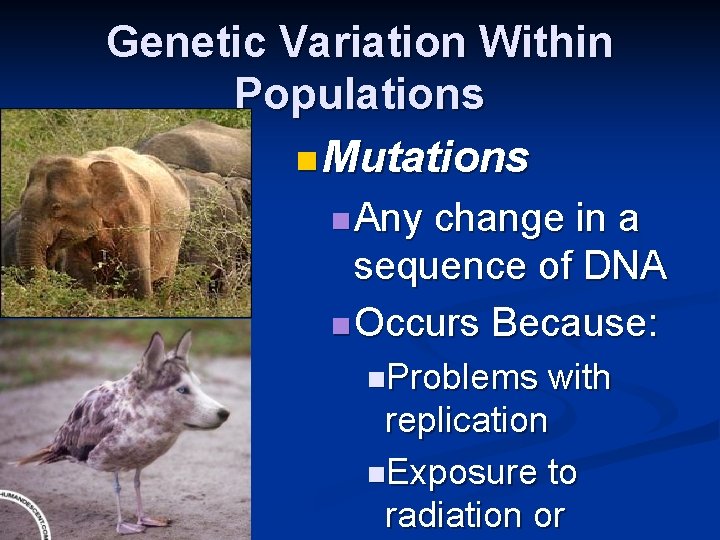
Genetic Variation Within Populations n Mutations n Any change in a sequence of DNA n Occurs Because: n. Problems with replication n. Exposure to radiation or
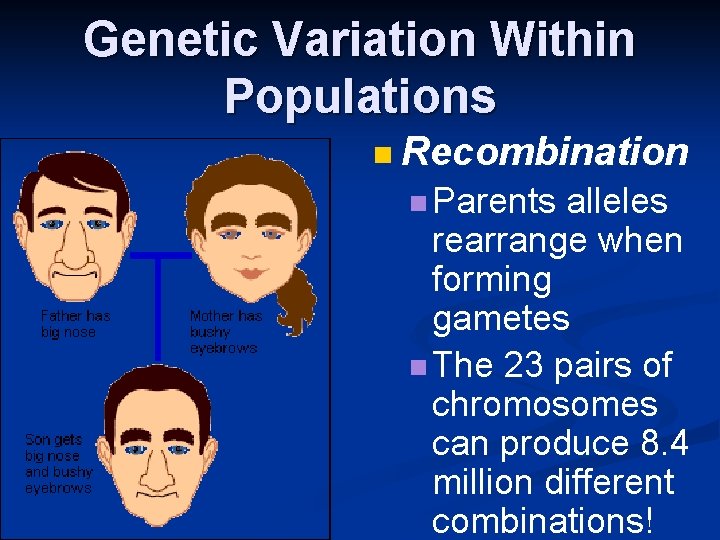
Genetic Variation Within Populations n Recombination n Parents alleles rearrange when forming gametes n The 23 pairs of chromosomes can produce 8. 4 million different combinations!
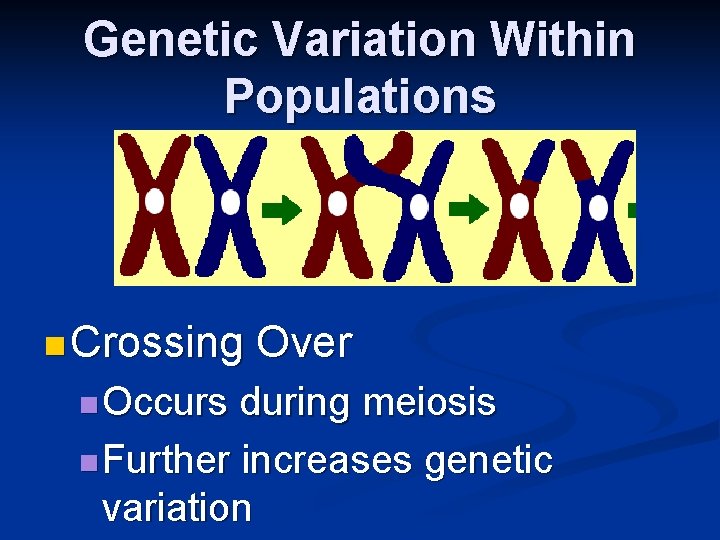
Genetic Variation Within Populations n Crossing n Occurs Over during meiosis n Further increases genetic variation
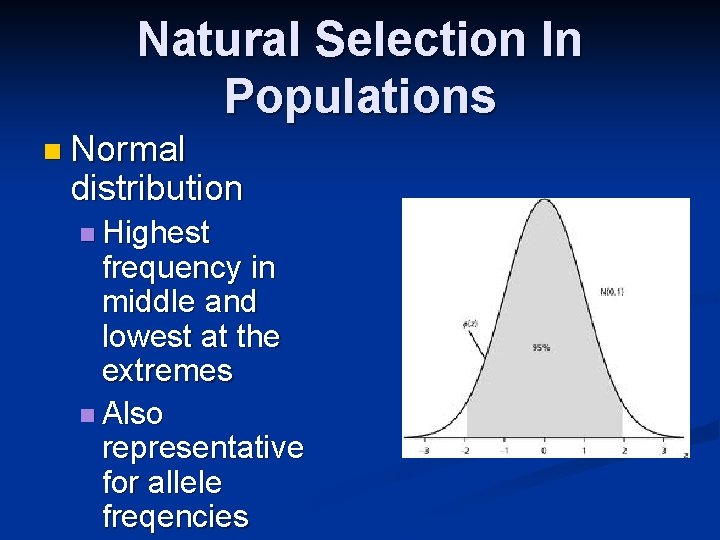
Natural Selection In Populations n Normal distribution n Highest frequency in middle and lowest at the extremes n Also representative for allele freqencies
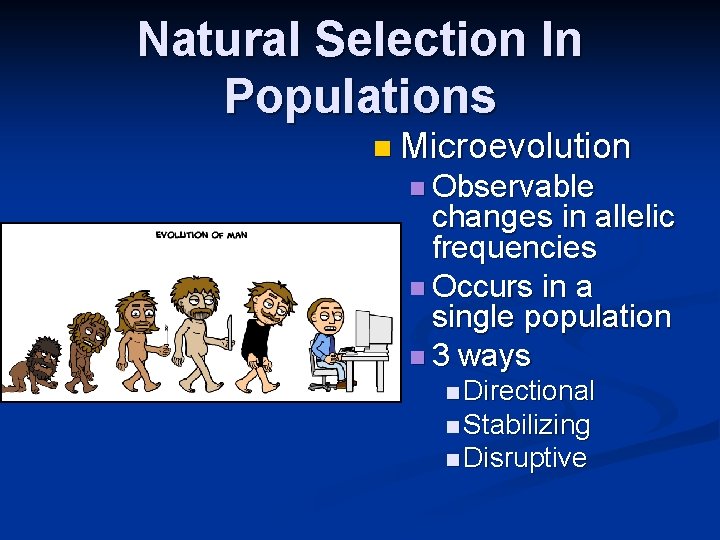
Natural Selection In Populations n Microevolution n Observable changes in allelic frequencies n Occurs in a single population n 3 ways n Directional n Stabilizing n Disruptive
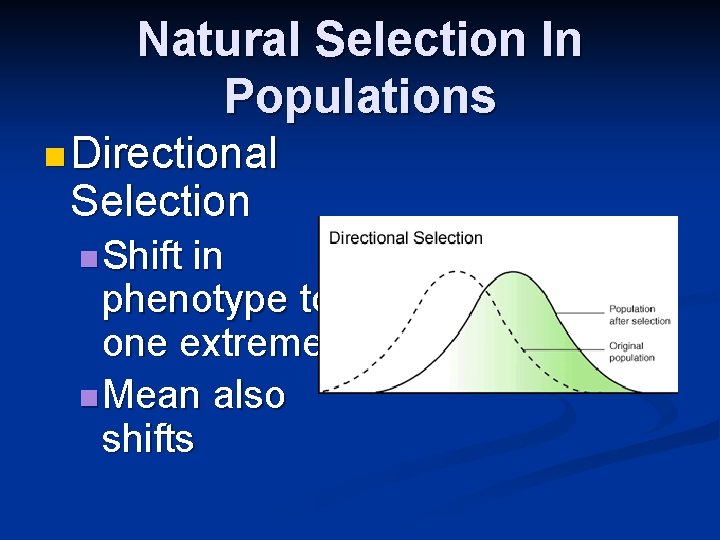
Natural Selection In Populations n Directional Selection n Shift in phenotype to one extreme n Mean also shifts
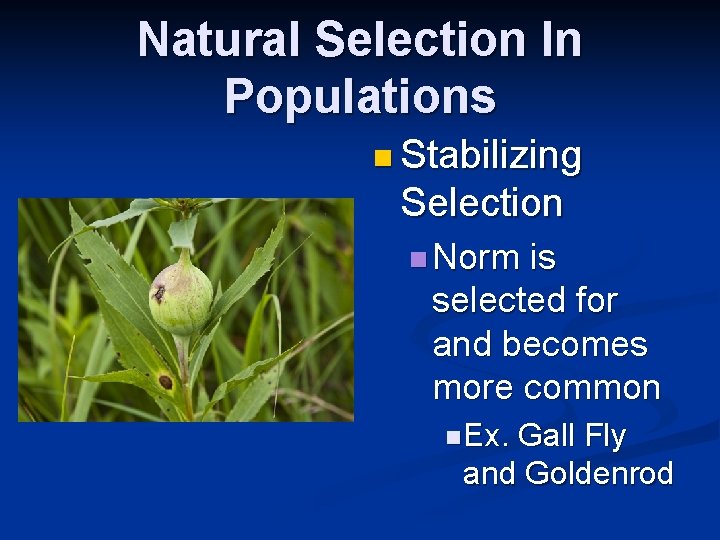
Natural Selection In Populations n Stabilizing Selection n Norm is selected for and becomes more common n Ex. Gall Fly and Goldenrod
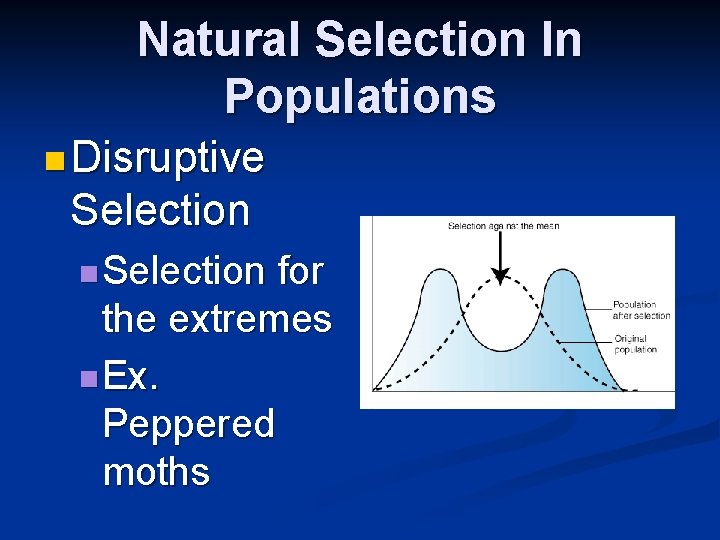
Natural Selection In Populations n Disruptive Selection n Selection for the extremes n Ex. Peppered moths
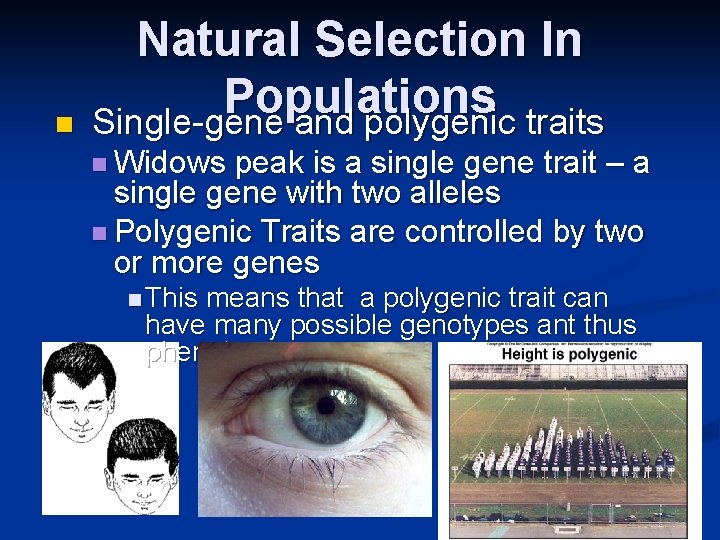
n Natural Selection In Populations Single-gene and polygenic traits n Widows peak is a single gene trait – a single gene with two alleles n Polygenic Traits are controlled by two or more genes n This means that a polygenic trait can have many possible genotypes ant thus phenotypes.
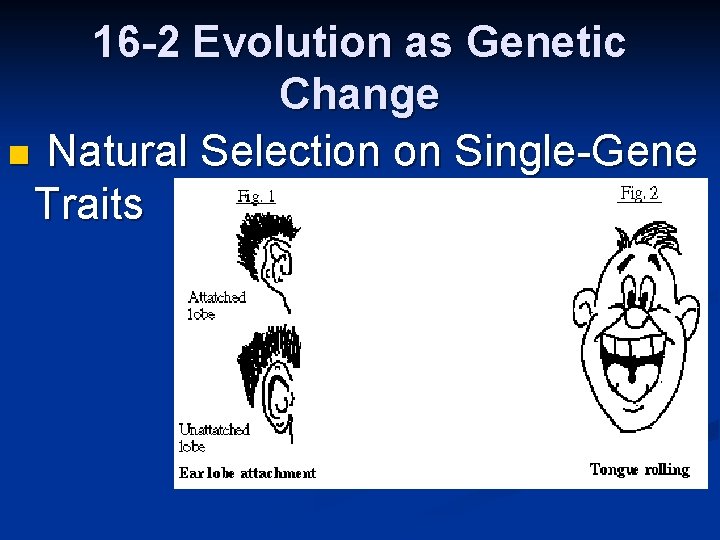
16 -2 Evolution as Genetic Change n Natural Selection on Single-Gene Traits
Other Mechanisms of Evolution n Gene Flow n n n Some animals move once they are able When the move into new population, their alleles become part of gene pool Occurs with movement between populations Increases variation If less movement, the more different two species become
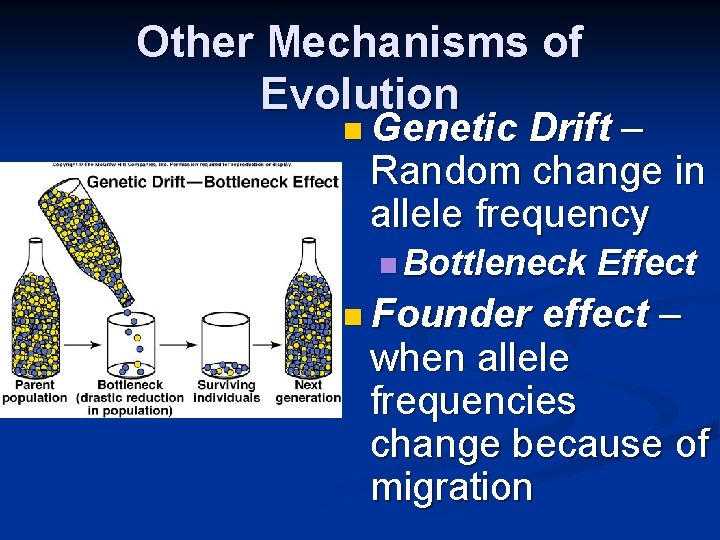
Other Mechanisms of Evolution n Genetic Drift – Random change in allele frequency n Bottleneck n Founder Effect effect – when allele frequencies change because of migration
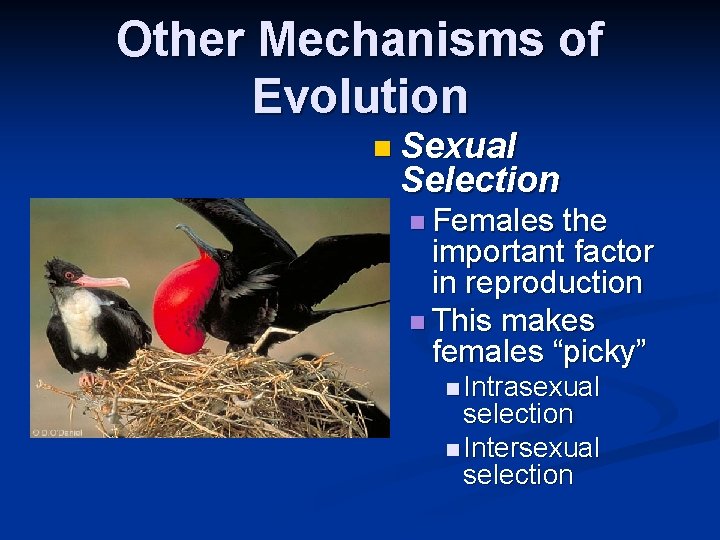
Other Mechanisms of Evolution n Sexual Selection n Females the important factor in reproduction n This makes females “picky” n Intrasexual selection n Intersexual selection
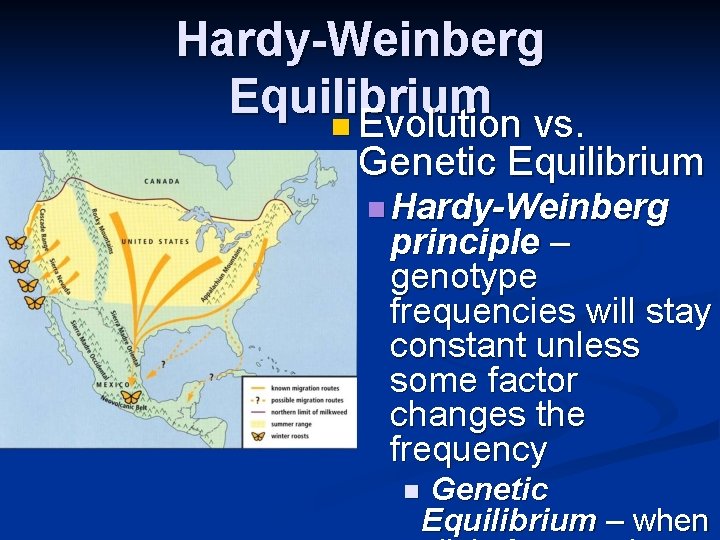
Hardy-Weinberg Equilibrium n Evolution vs. Genetic Equilibrium n Hardy-Weinberg principle – genotype frequencies will stay constant unless some factor changes the frequency n Genetic Equilibrium – when
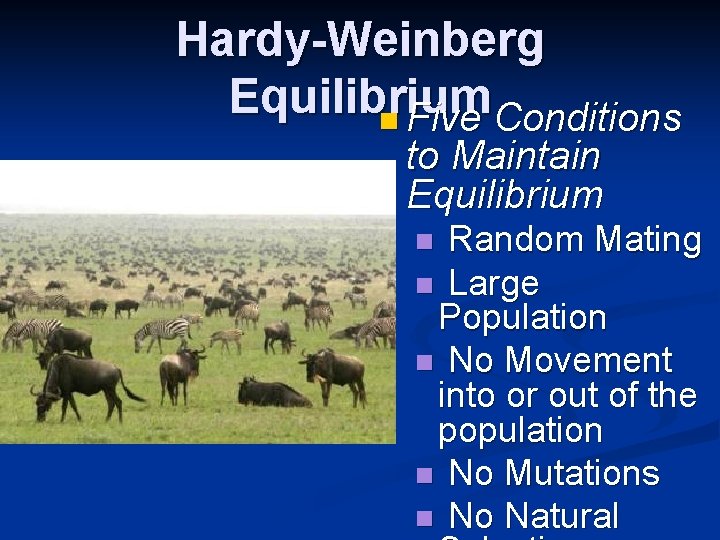
Hardy-Weinberg Equilibrium n Five Conditions to Maintain Equilibrium Random Mating n Large Population n No Movement into or out of the population n No Mutations n No Natural n
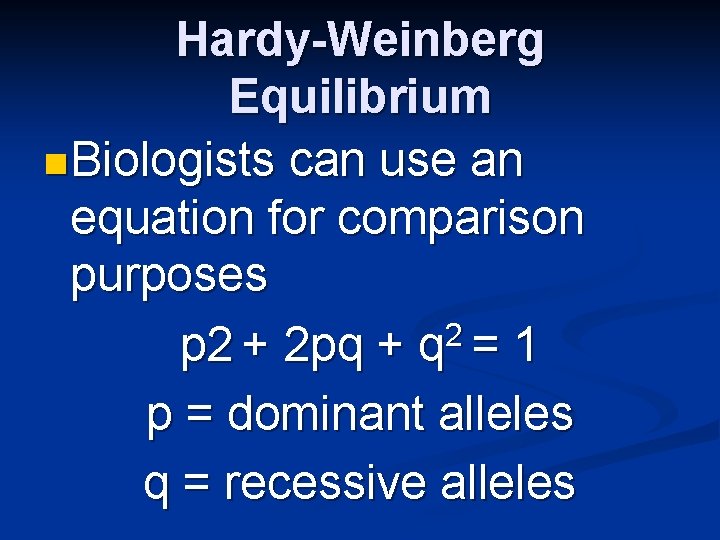
Hardy-Weinberg Equilibrium n Biologists can use an equation for comparison purposes 2 p 2 + 2 pq + q = 1 p = dominant alleles q = recessive alleles
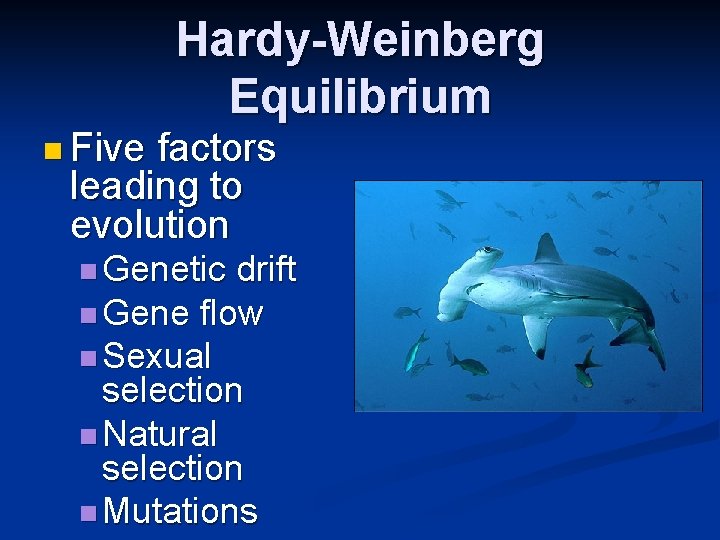
n Five Hardy-Weinberg Equilibrium factors leading to evolution n Genetic drift n Gene flow n Sexual selection n Natural selection n Mutations
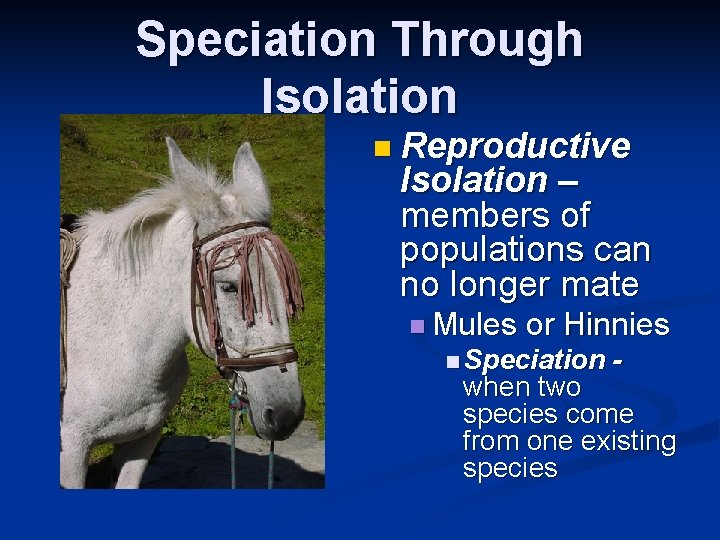
Speciation Through Isolation n Reproductive Isolation – members of populations can no longer mate n Mules or Hinnies n Speciation - when two species come from one existing species
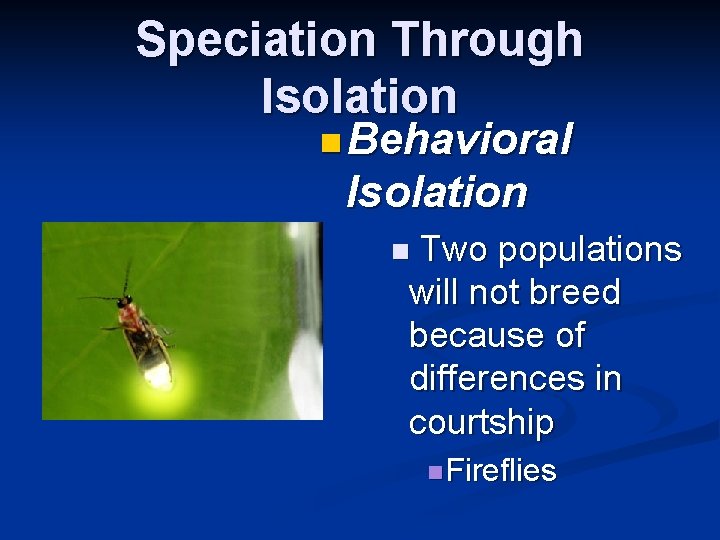
Speciation Through Isolation n Behavioral Isolation Two populations will not breed because of differences in courtship n n Fireflies
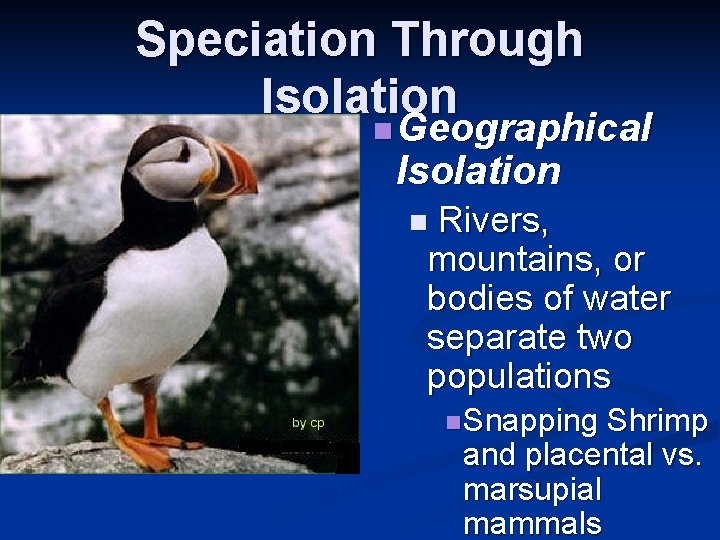
Speciation Through Isolation n Geographical Isolation Rivers, mountains, or bodies of water separate two populations n n Snapping Shrimp and placental vs. marsupial mammals
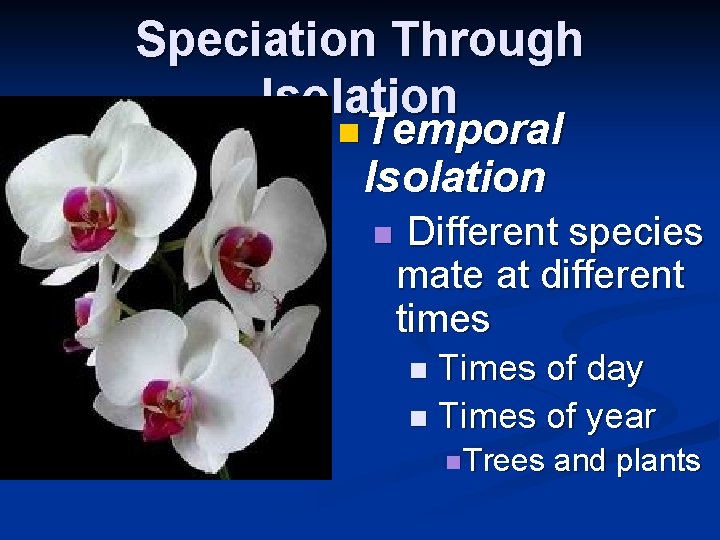
Speciation Through Isolation n Temporal Isolation n Different species mate at different times Times of day n Times of year n n Trees and plants
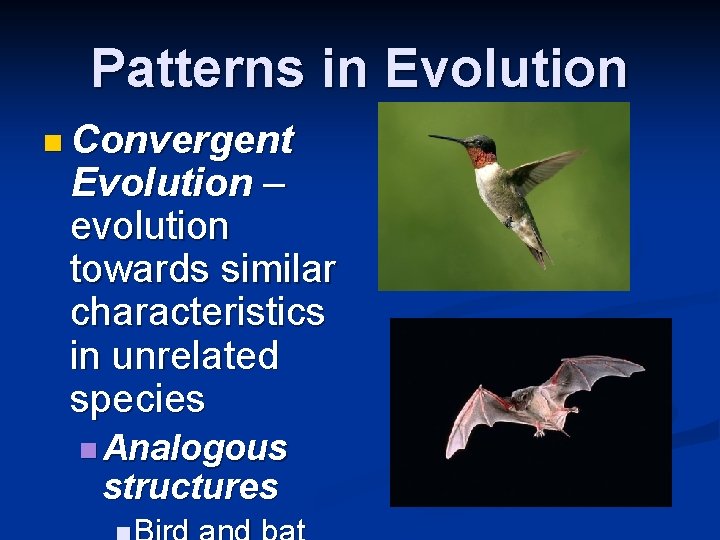
Patterns in Evolution n Convergent Evolution – evolution towards similar characteristics in unrelated species n Analogous structures
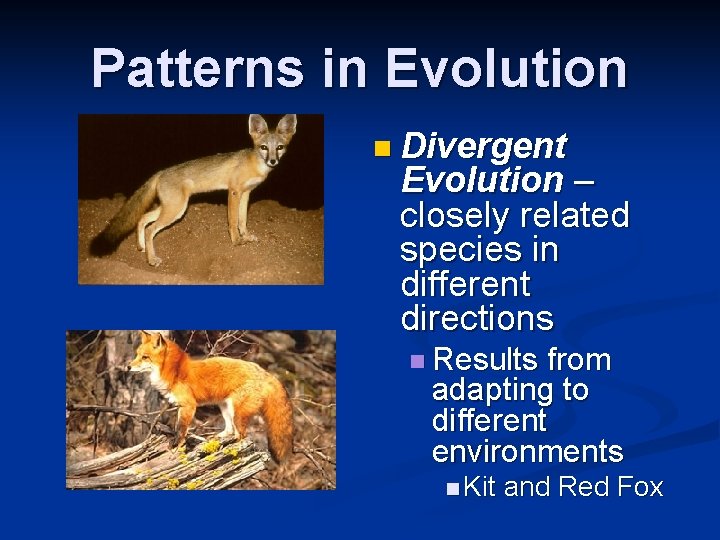
Patterns in Evolution n Divergent Evolution – closely related species in different directions n Results from adapting to different environments n Kit and Red Fox
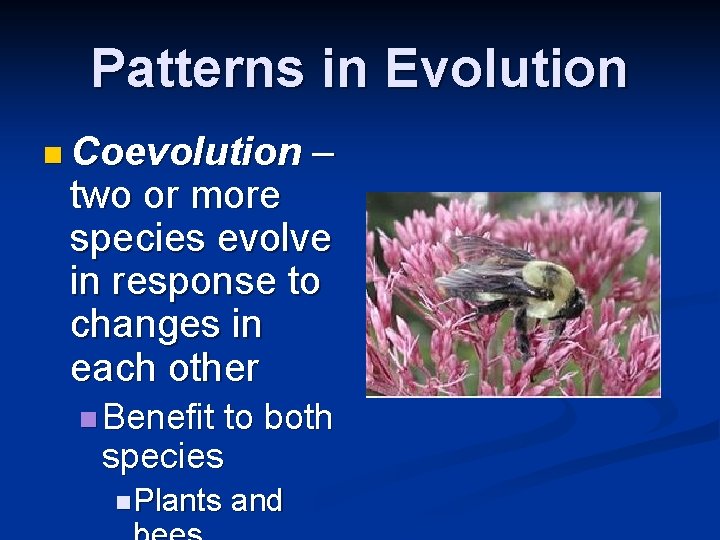
Patterns in Evolution n Coevolution – two or more species evolve in response to changes in each other n Benefit to both species n Plants and
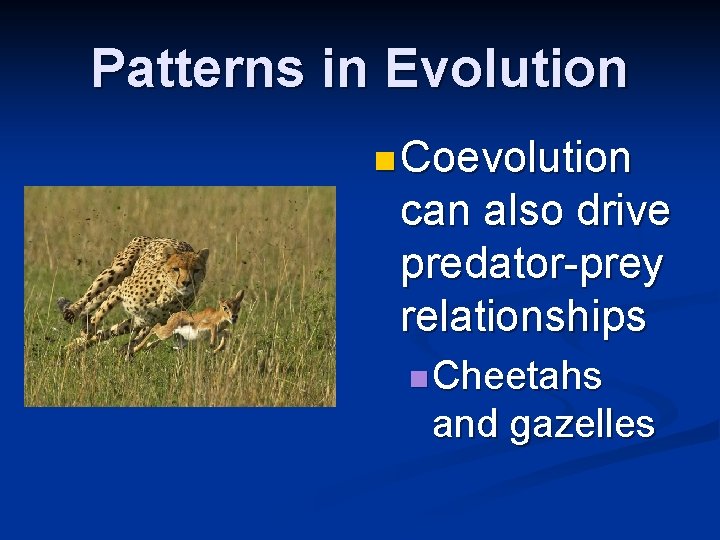
Patterns in Evolution n Coevolution can also drive predator-prey relationships n Cheetahs and gazelles
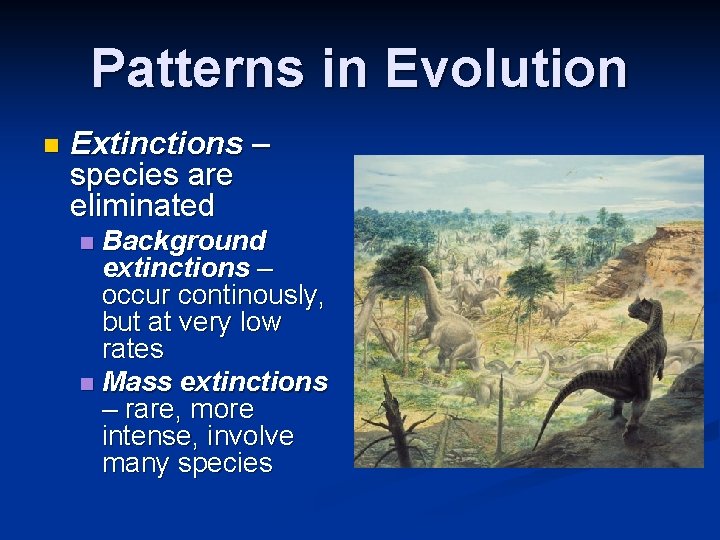
Patterns in Evolution n Extinctions – species are eliminated Background extinctions – occur continously, but at very low rates n Mass extinctions – rare, more intense, involve many species n
Patterns in Evolution n Punctuated equilibrium – bursts of evolutionary activity followed by periods of inactivity n Adaptive radiation – diversification of multiple species from one ancestral species n Mammals