
Evolution of Populations AP Biology Crosby High School
Evolution of Populations AP Biology Crosby High School
Modern Evolutionary Synthesis Modern Synthesis – Emphasize importance of population as evolutionary unit – Natural selection most important mechanism of evolution – Gradualism explains large changes from accumulated small changes Population Genetics – Emphasizes extensive genetic variability – Recognized quantitative characteristics
Pop. Gen. Terminology Population: local group of individuals belonging to the same species Species: group of populations whose individuals have potential to interbreed and produce fertile offspring Gene Pool: total aggregate of genes in population at any given time – Fixed gene pool: all individuals homozygous for an allele
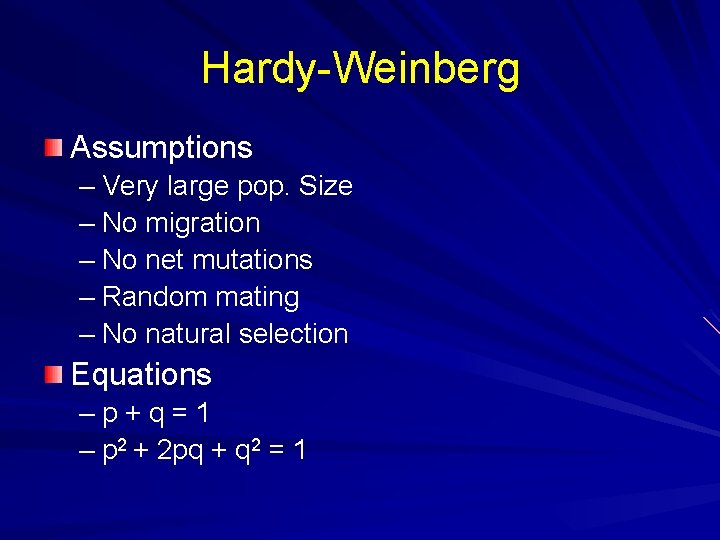
Hardy-Weinberg Assumptions – Very large pop. Size – No migration – No net mutations – Random mating – No natural selection Equations –p+q=1 – p 2 + 2 pq + q 2 = 1
Causes of Microevolution Genetic Drift – Bottleneck Effect Results from disasters and leads to little variability – Founder Effect Huevos a doce Natural Selection – Moths Gene Flow – Migration Mutation
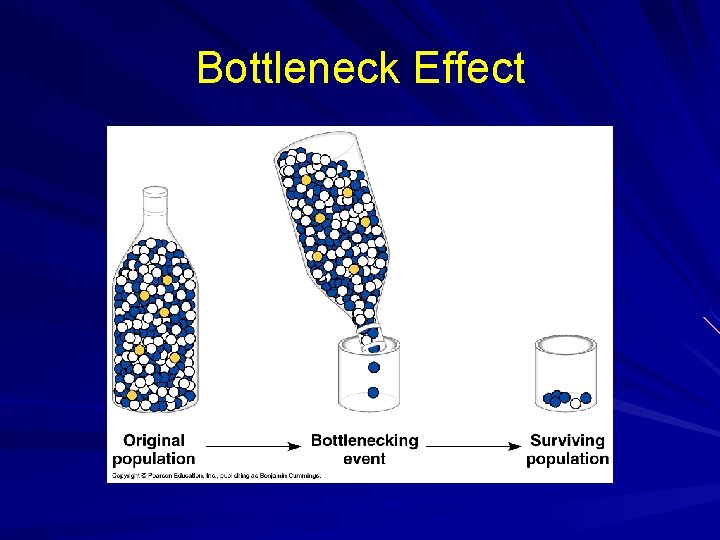
Bottleneck Effect
Genetic Variation w/in Populations Polymorphism – More than one form of a characteristic – Not quantitative traits Measuring Genetic Variation – Gene Diversity % Heterozygous Humans: 14% – Nucleotide Diversity % Difference in nucleotides of two individuals Humans: 0. 1%
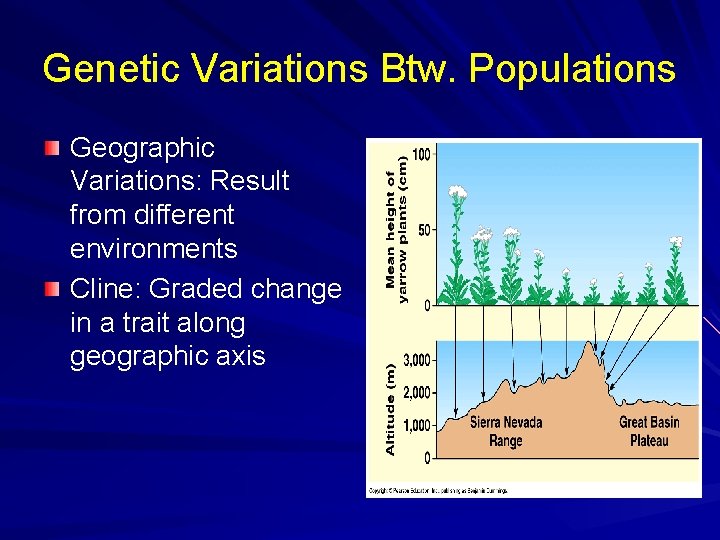
Genetic Variations Btw. Populations Geographic Variations: Result from different environments Cline: Graded change in a trait along geographic axis
Genetic Variation Mutation Sexual Recombination Diploidy Balanced Polymorphism – Heterozygote advantage Sickle Cell carriers are advantageous – Frequency-dependent Selection Two species affect each others evolution
Fitness Evolutionary: relative contribution an individual makes to the gene pool Darwinian: Contribution an individual makes to the gene pool of the next generation relative to the contributions of another individual Relative: Contribution of genotype to the next generation compared to other genotypes
Relative Fitness Most favored genotype set to a value of 1 Less favored genotypes are given values based on how much offspring they produce – If they produce 80% as many offspring as the most favored genotype then Relative fitness = 0. 8 – Sterile individuals have relative fitness of 0. 0
Modes of Selection Directional Selection: common during periods of environmental change or migration Diversifying Selection: favors both extremes over the intermediate genotype Stabilizing Selection: Acts against the extremes keeping the status quo – Birth weight (3 -4 kg)
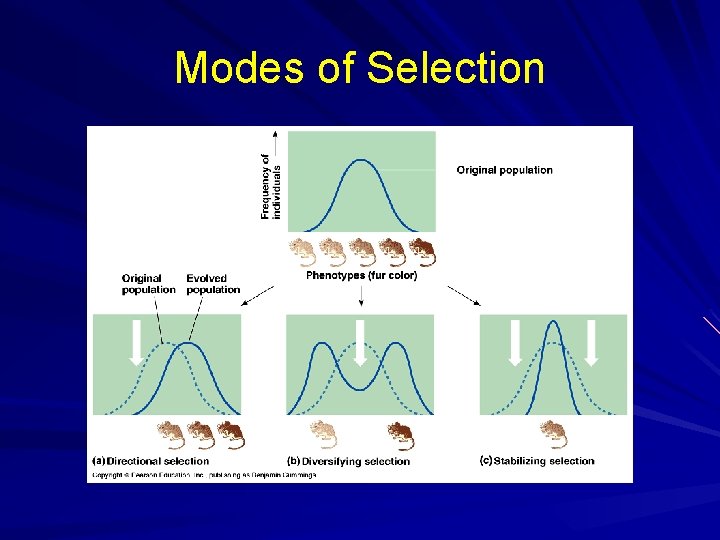
Modes of Selection
Sexual Selection Benefits of sex Sexual Dimorphism: Difference in appearance between the sexes Intrasexual Selection: Direct competition between males of the same sex – Rams Intersexual Selection: Individual of one sex are choosy in selecting a mate – Peacocks
Nobody’s Perfect Evolution is limited by historical contraints Adaptations are often compromises Not all evolution is adaptive Selection can only edit existing variations
- Slides: 15