
Evolution of Populations 16 1 pp 299 302
- Slides: 8
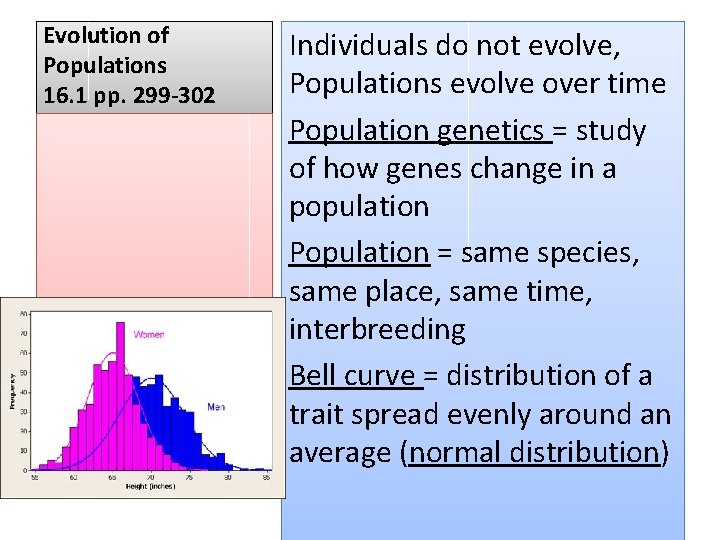
Evolution of Populations 16. 1 pp. 299 -302 Individuals do not evolve, Populations evolve over time Population genetics = study of how genes change in a population Population = same species, same place, same time, interbreeding Bell curve = distribution of a trait spread evenly around an average (normal distribution)
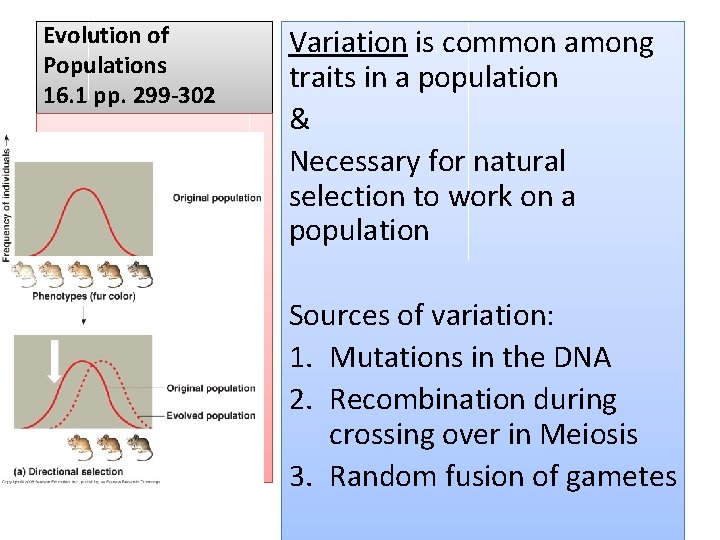
Evolution of Populations 16. 1 pp. 299 -302 Variation is common among traits in a population & Necessary for natural selection to work on a population Sources of variation: 1. Mutations in the DNA 2. Recombination during crossing over in Meiosis 3. Random fusion of gametes
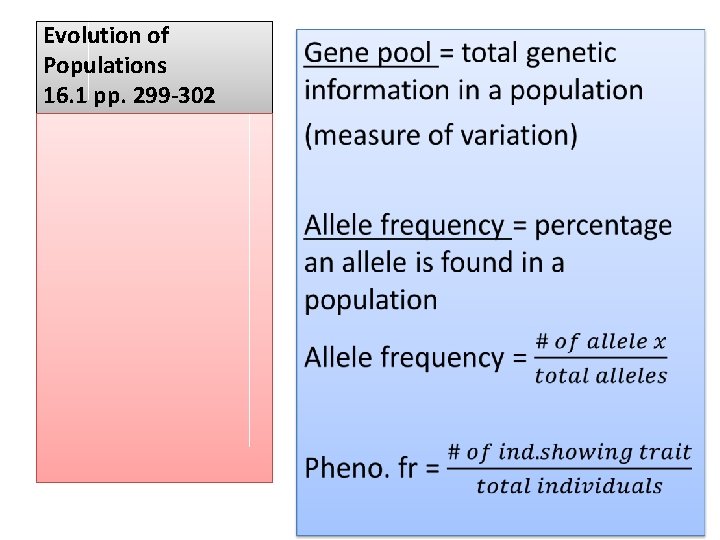
Evolution of Populations 16. 1 pp. 299 -302 •
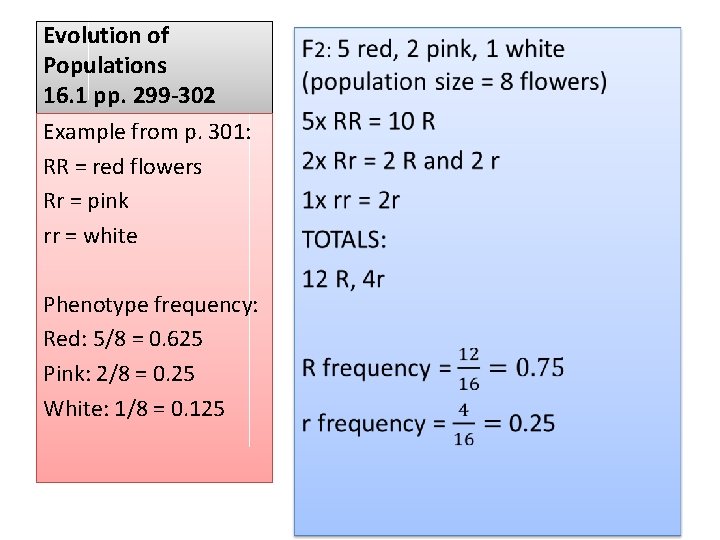
Evolution of Populations 16. 1 pp. 299 -302 Example from p. 301: RR = red flowers Rr = pink rr = white Phenotype frequency: Red: 5/8 = 0. 625 Pink: 2/8 = 0. 25 White: 1/8 = 0. 125 •
Evolution of Populations 16. 1 pp. 299 -302 Random mating requires no sexual selection, a form of natural selection. Hardy-Weinberg Equilibrium describes populations that are NOT evolving, allele frequency is in equilibrium 5 conditions necessary: 1. No mutations 2. No migration 3. No natural selection 4. Large population size 5. Random mating
Evolution of Populations 16. 1 pp. 299 -302 Birds of paradise Bighorn sheep https: //www. youtube. com/w atch? v=W 7 QZnw. Kqopo https: //www. youtube. com/w atch? v=Ez 7 RUSCUhzk
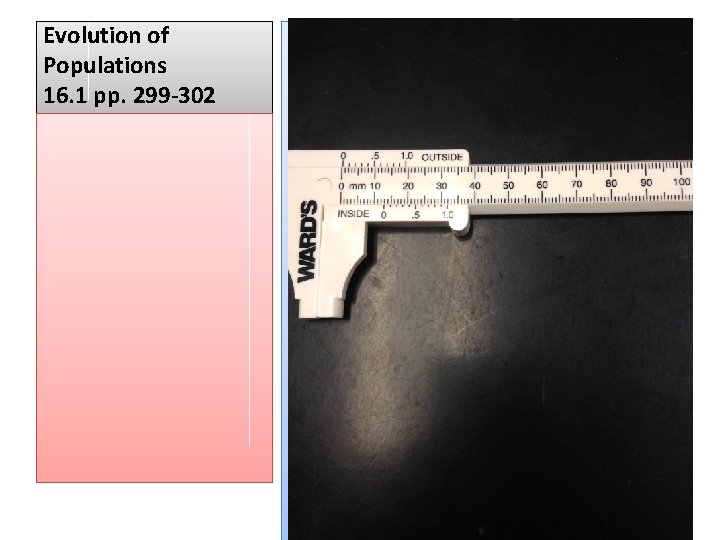
Evolution of Populations 16. 1 pp. 299 -302
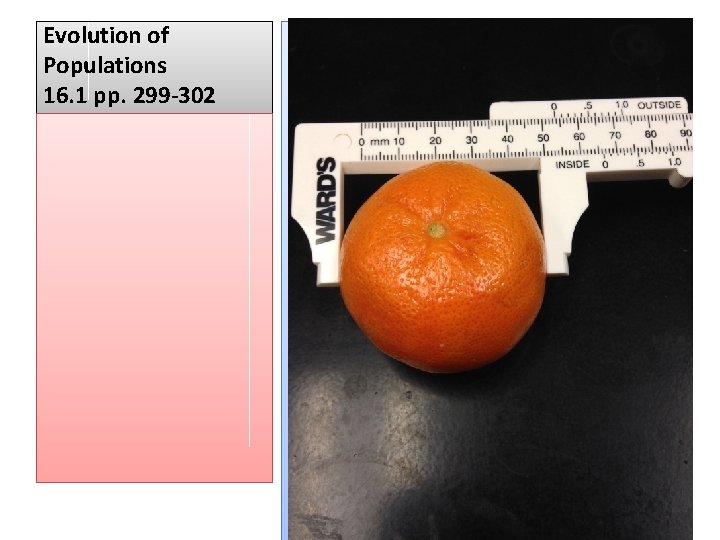
Evolution of Populations 16. 1 pp. 299 -302