
Evolution of Plants evolved from a freshwater green
- Slides: 43
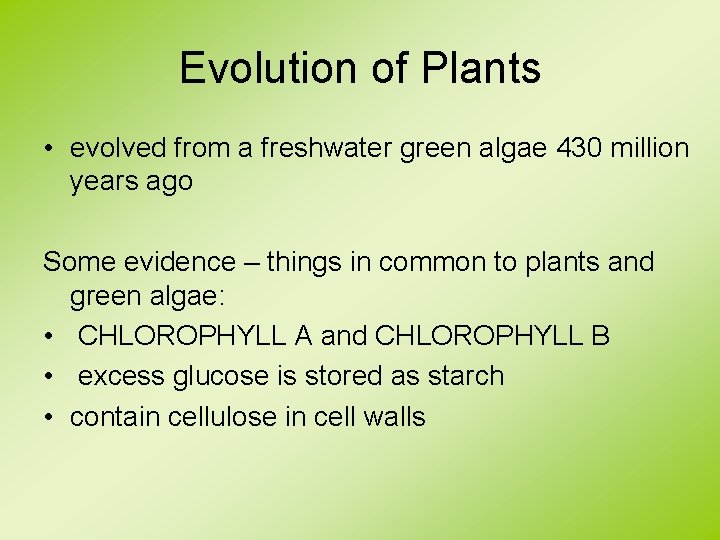
Evolution of Plants • evolved from a freshwater green algae 430 million years ago Some evidence – things in common to plants and green algae: • CHLOROPHYLL A and CHLOROPHYLL B • excess glucose is stored as starch • contain cellulose in cell walls
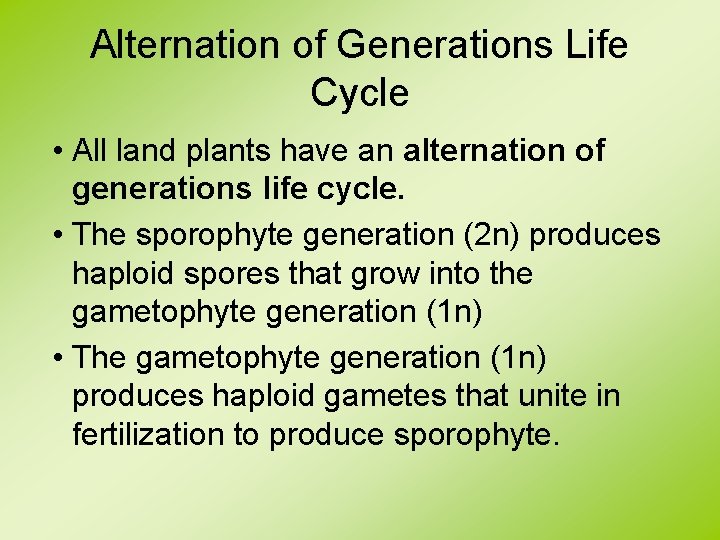
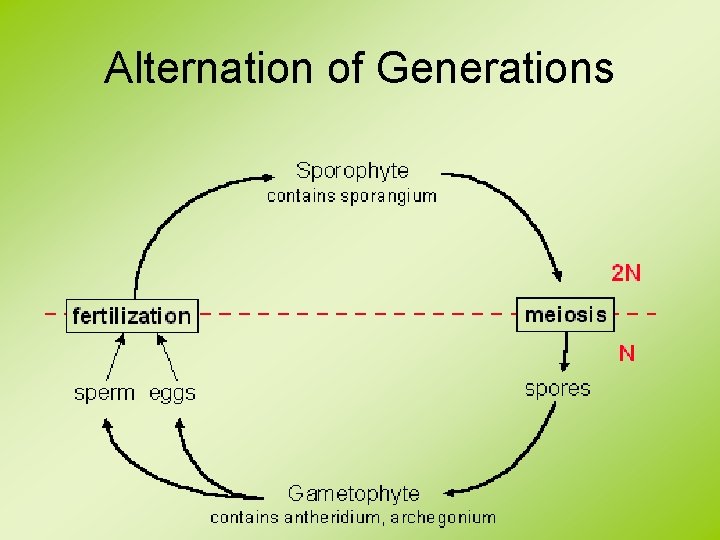
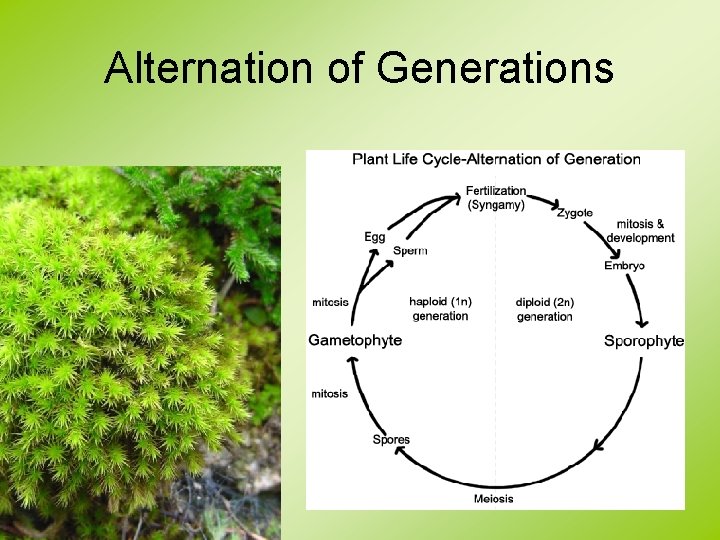
Alternation of Generations Life Cycle • All land plants have an alternation of generations life cycle. • The sporophyte generation (2 n) produces haploid spores that grow into the gametophyte generation (1 n) • The gametophyte generation (1 n) produces haploid gametes that unite in fertilization to produce sporophyte.
Alternation of Generations
Alternation of Generations
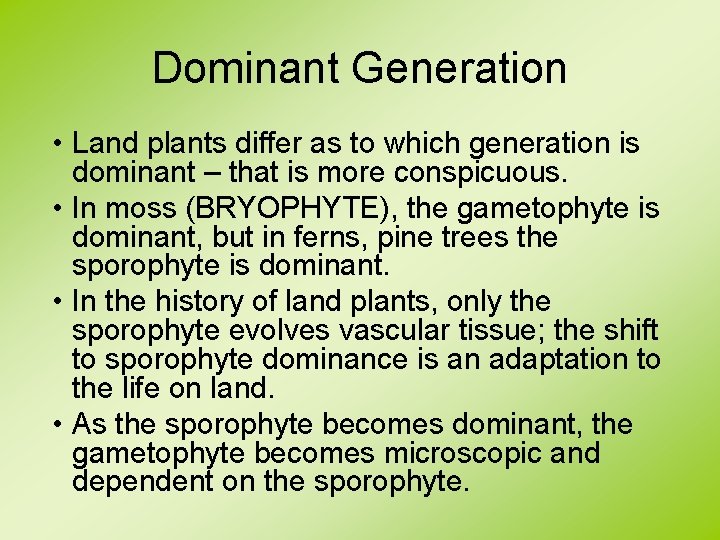
Dominant Generation • Land plants differ as to which generation is dominant – that is more conspicuous. • In moss (BRYOPHYTE), the gametophyte is dominant, but in ferns, pine trees the sporophyte is dominant. • In the history of land plants, only the sporophyte evolves vascular tissue; the shift to sporophyte dominance is an adaptation to the life on land. • As the sporophyte becomes dominant, the gametophyte becomes microscopic and dependent on the sporophyte.
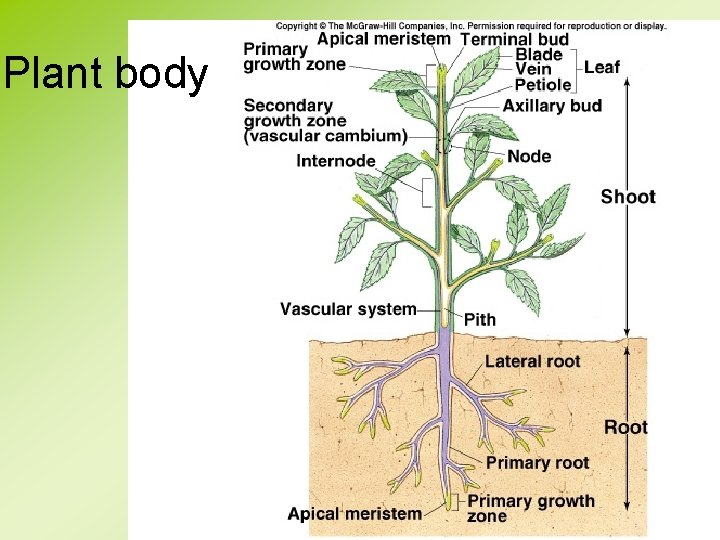
Plant body
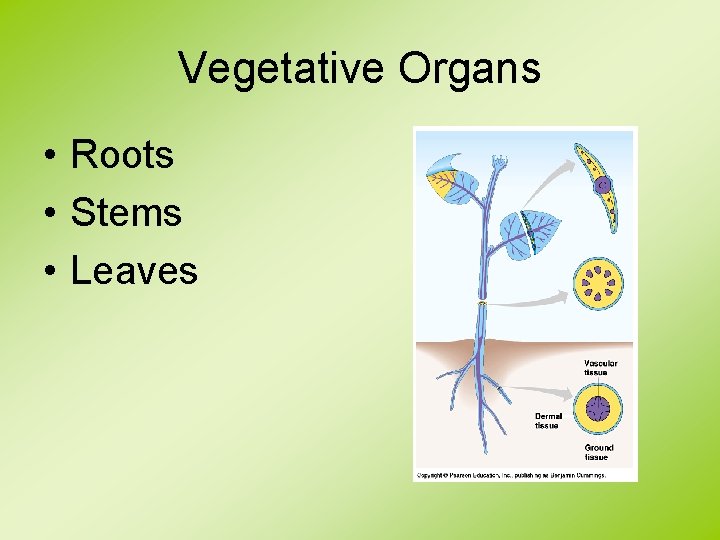
Vegetative Organs • Roots • Stems • Leaves
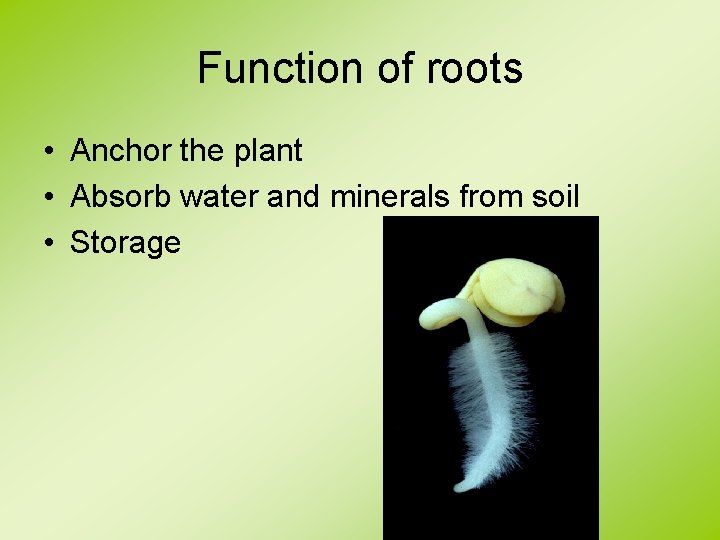
Function of roots • Anchor the plant • Absorb water and minerals from soil • Storage
Function of Stems • support leaves to maximize light absorption • part of conduit for transport of water, minerals, and organic solutes • storage
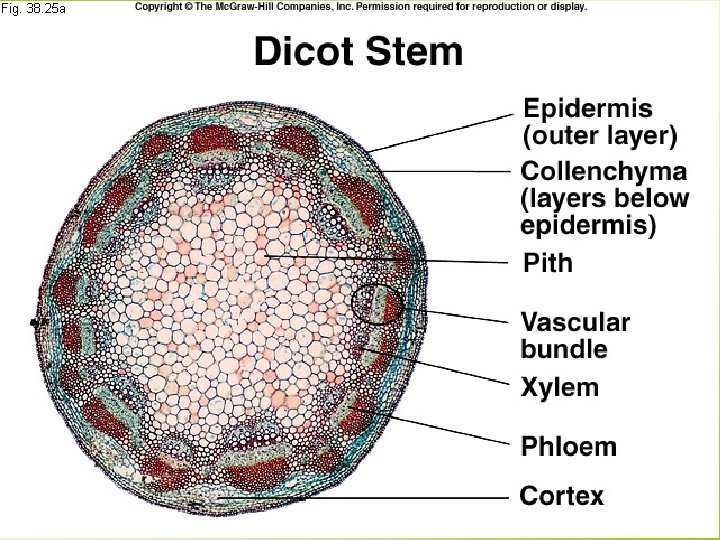
Fig. 38. 25 a
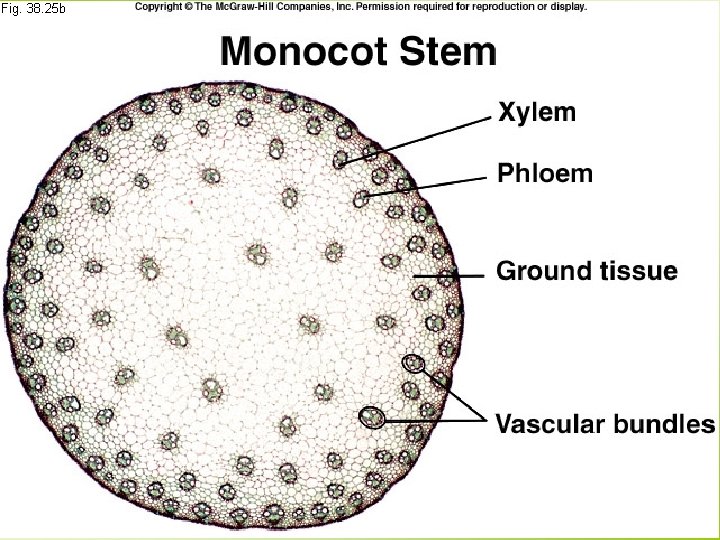
Fig. 38. 25 b
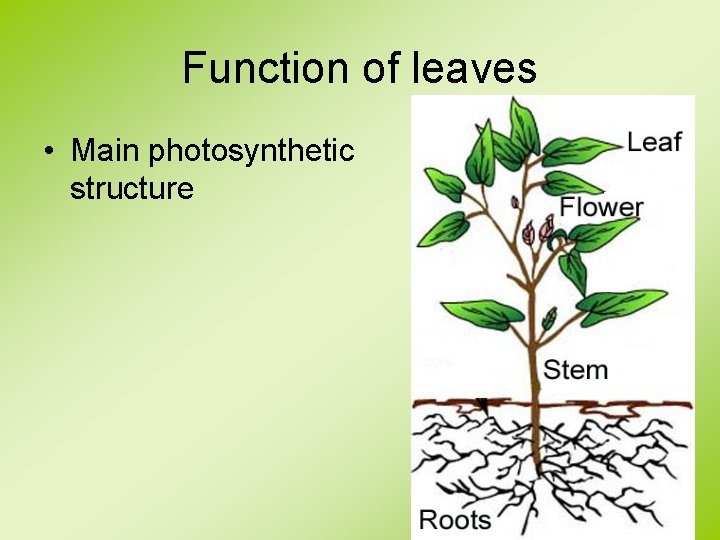
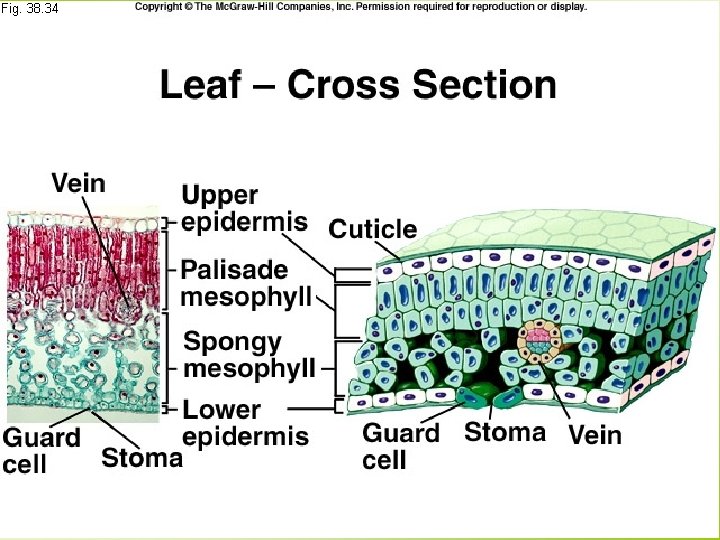
Function of leaves • Main photosynthetic structure
Fig. 38. 34
Plant Tissues
• TISSUES- a group of cells functioning together in some specialized activity
1. MERISTEMS • a mass of cells which can develop into all other specialized cell types • localized regions of cell division
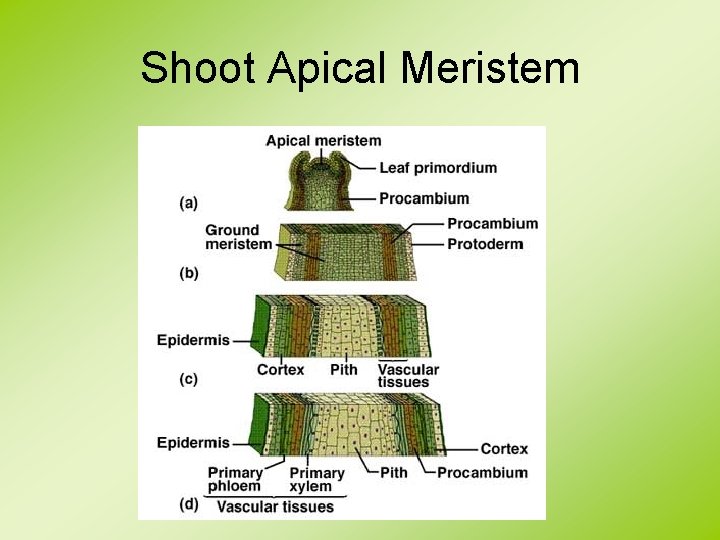
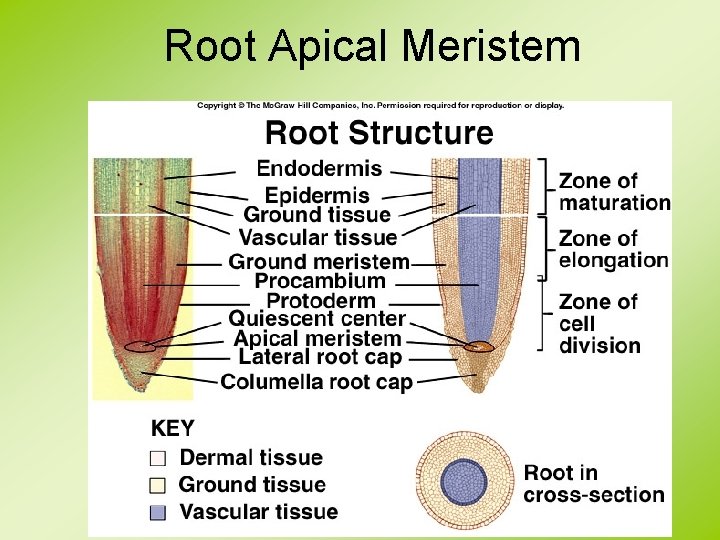
• Primary meristems – apical meristems - ends of stems, branches and roots
Shoot Apical Meristem
Root Apical Meristem
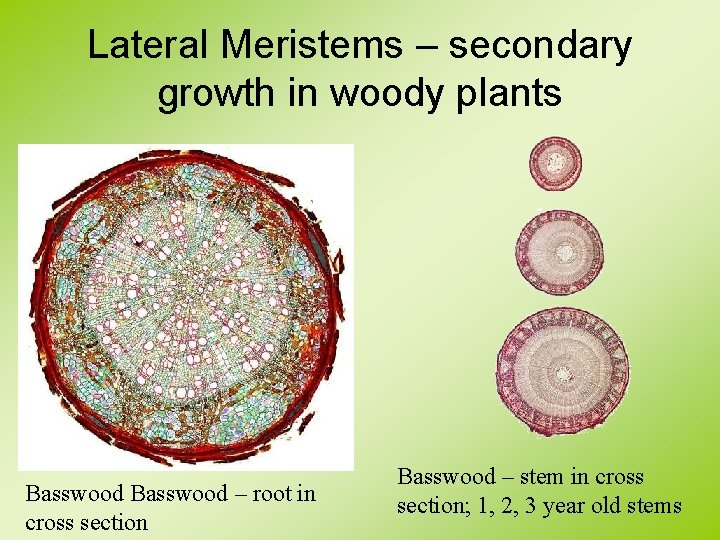
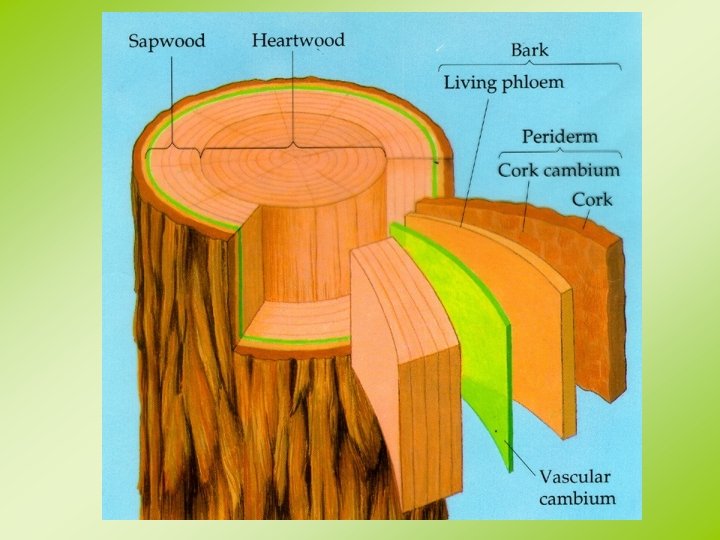
• Secondary meristems – lateral meristems are parallel to sides of plant parts and increase girth
Lateral Meristems – secondary growth in woody plants Basswood – root in cross section Basswood – stem in cross section; 1, 2, 3 year old stems
GROUND TISSUE • Consists of three kinds of cells: – PARENCHYMA CELLS – COLLENCHYMA CELLS – SCLERENCHYMA CELLS
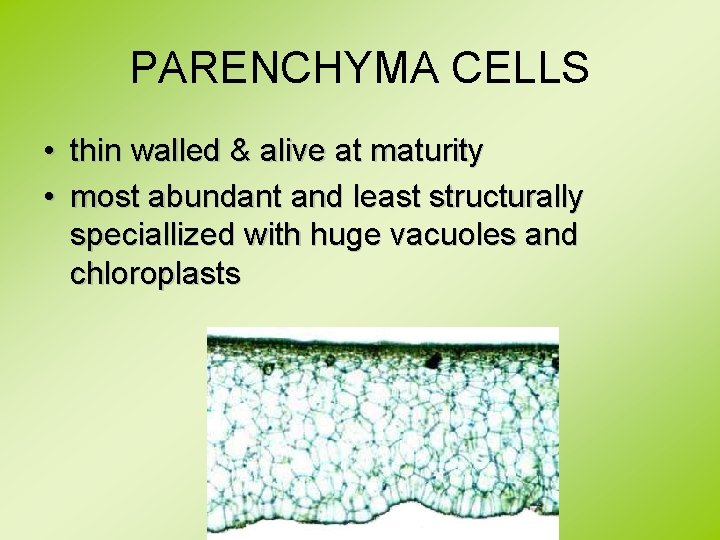
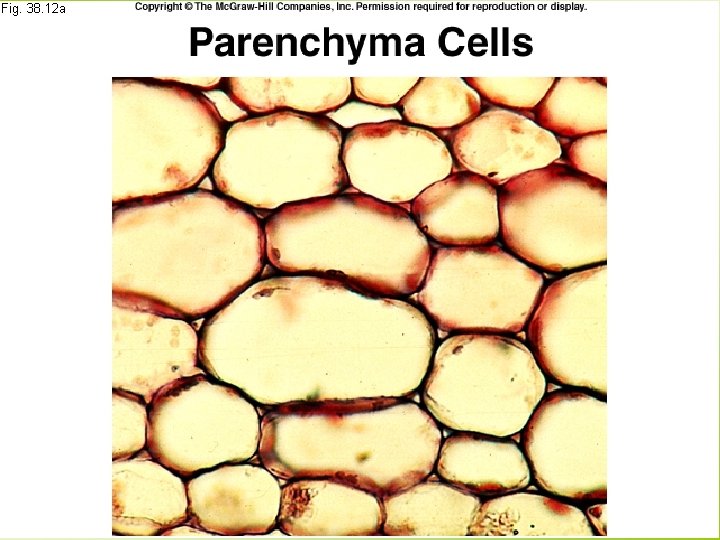
PARENCHYMA CELLS • thin walled & alive at maturity • most abundant and least structurally speciallized with huge vacuoles and chloroplasts
Fig. 38. 12 a
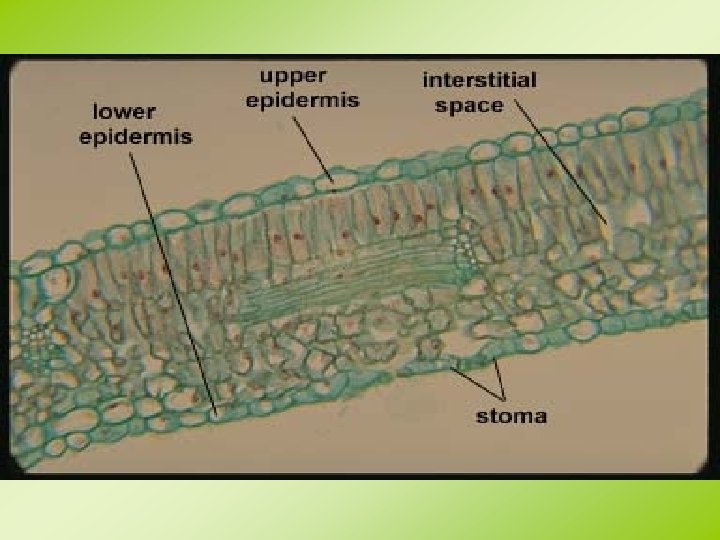
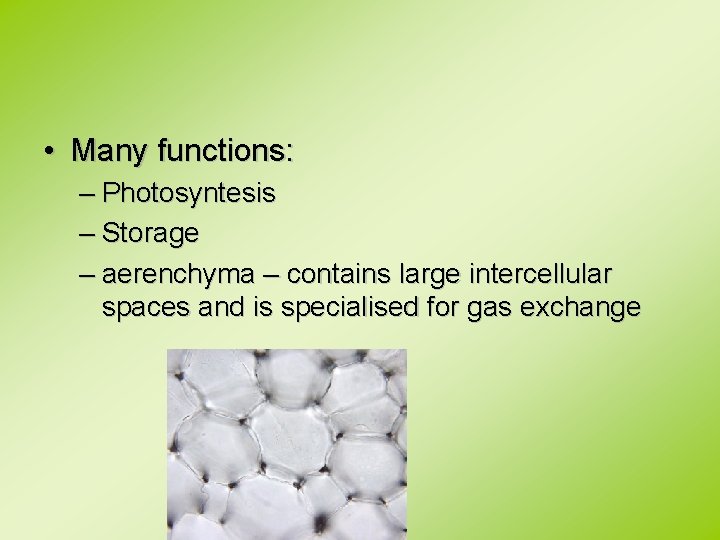
• Many functions: – Photosyntesis – Storage – aerenchyma – contains large intercellular spaces and is specialised for gas exchange
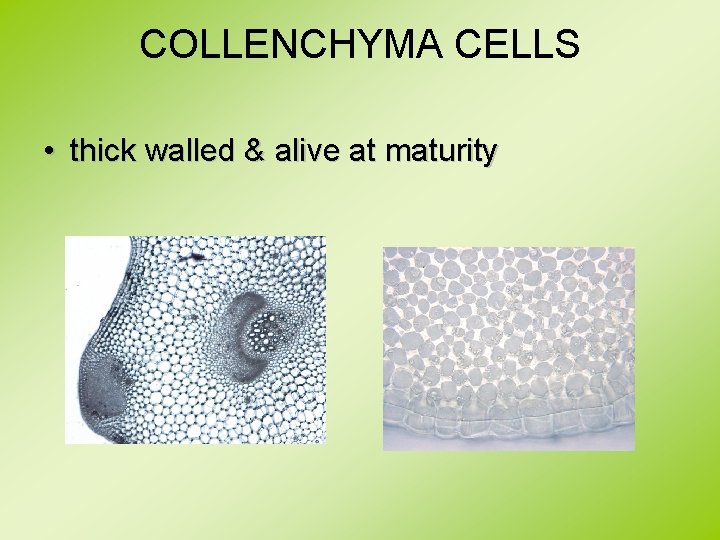
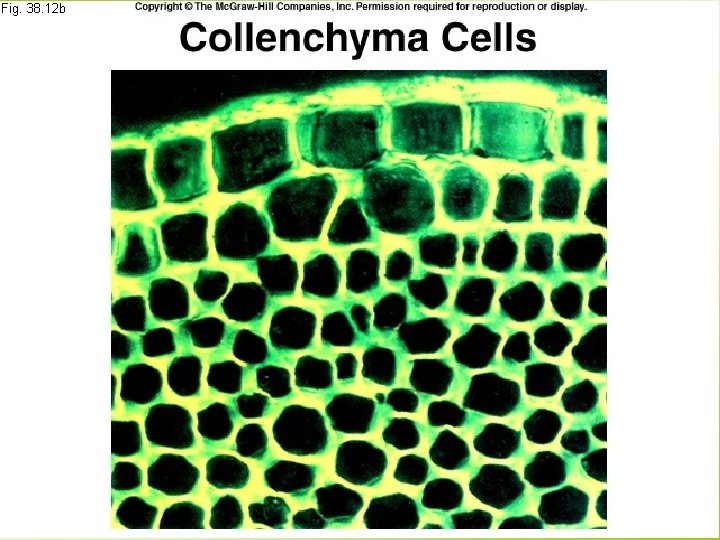
COLLENCHYMA CELLS • thick walled & alive at maturity
Fig. 38. 12 b
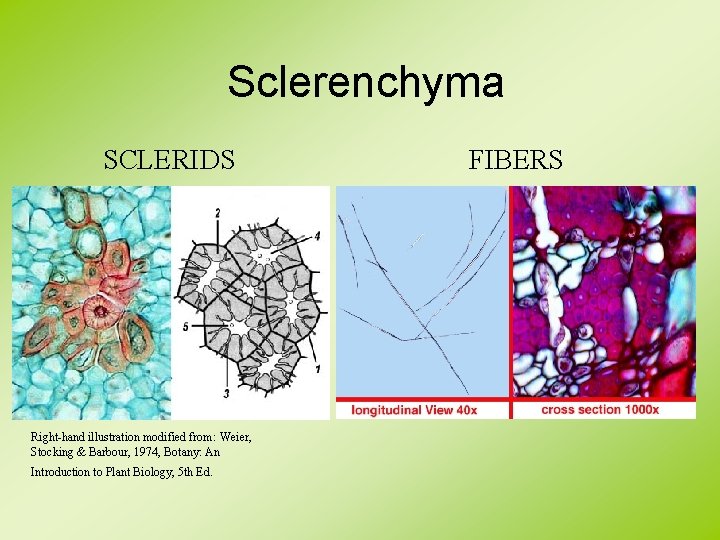
Sclerenchyma SCLERIDS Right-hand illustration modified from: Weier, Stocking & Barbour, 1974, Botany: An Introduction to Plant Biology, 5 th Ed. FIBERS
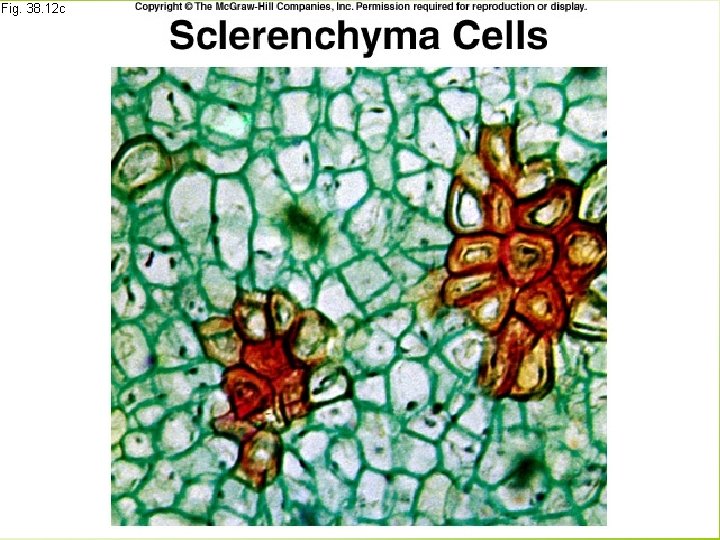
SCLERENCHYMA CELLS • thick walled and dead at maturity – Sclerids or stone cells – cells as long as they are wide – Fibers – cells longer than they are wide
Fig. 38. 12 c
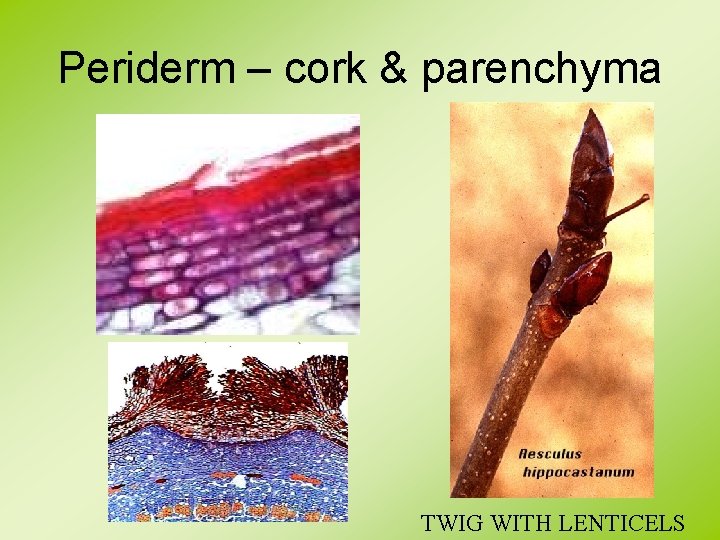
Dermal cells • Epidermis – epidermal cells • Periderm – cork cells
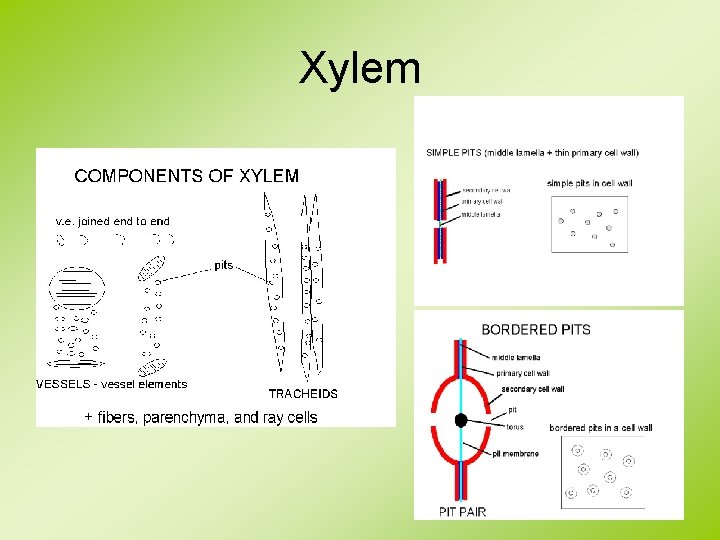
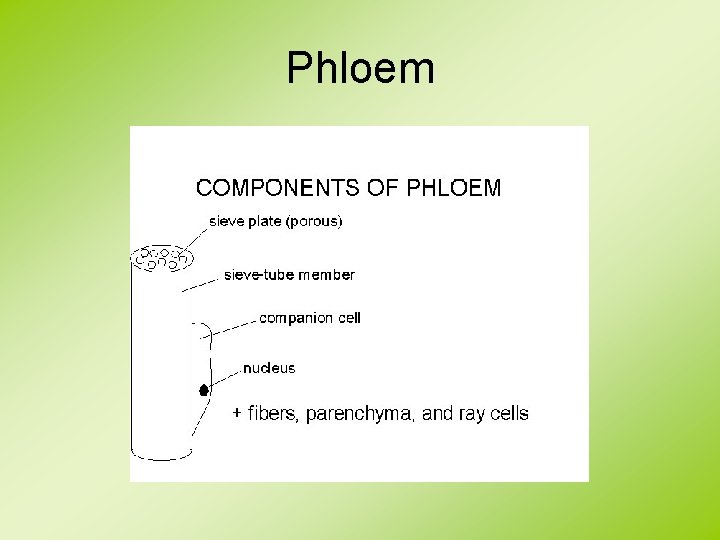
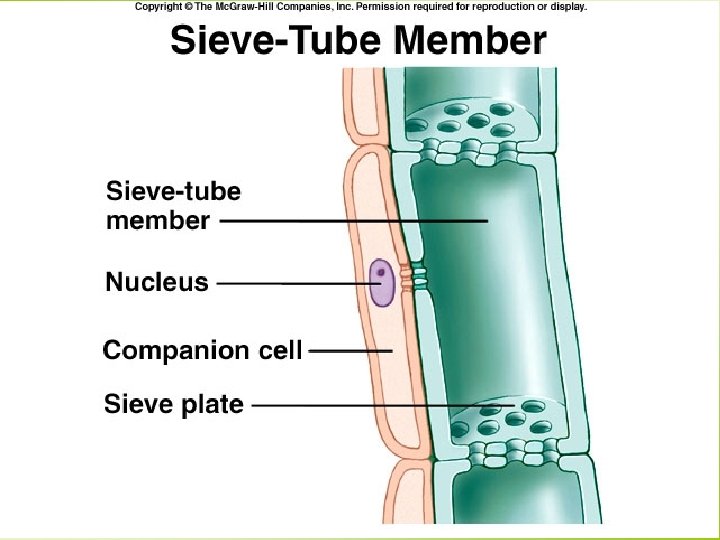
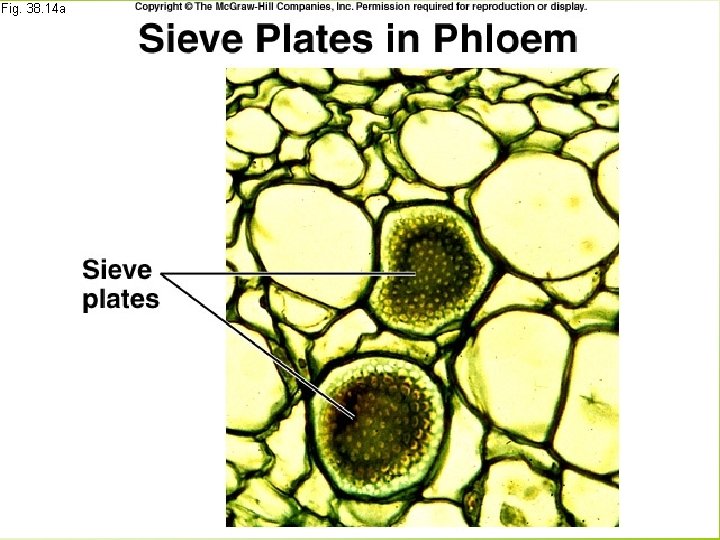
Vascular Tissue • Xylem – Mostly to conduct water and nutrients – E. g. , roots to shoots • Phloem – Mostly to conduct sugars, amino acids, etc. – E. g. , leaves to roots or flowers
Xylem
Phloem
Fig. 38. 14 a
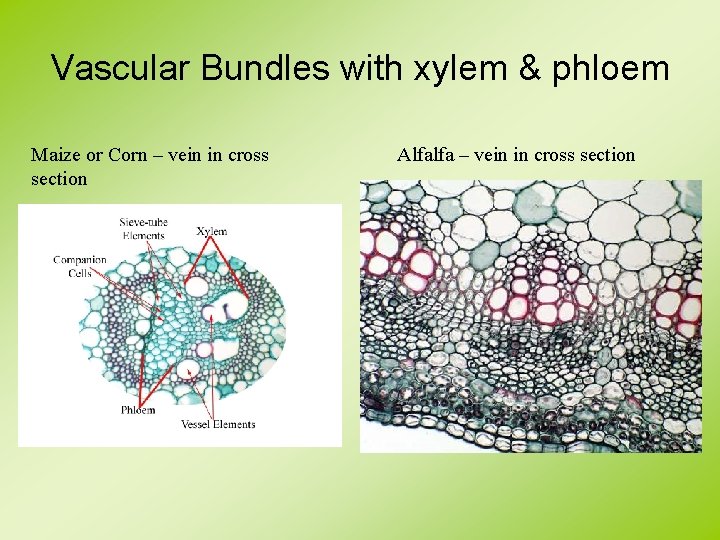
Vascular Bundles with xylem & phloem Maize or Corn – vein in cross section Alfalfa – vein in cross section
Periderm – cork & parenchyma TWIG WITH LENTICELS
Secretory tissue • External secretory structures: – HYDATODES • Secret water via a process called guttation • At edges of leaves – NECTARIES – secrete nectar • ¸associated with flowers
• Internal secretory structures: • SECRETORY CELLS – Contain oils, tanins. .
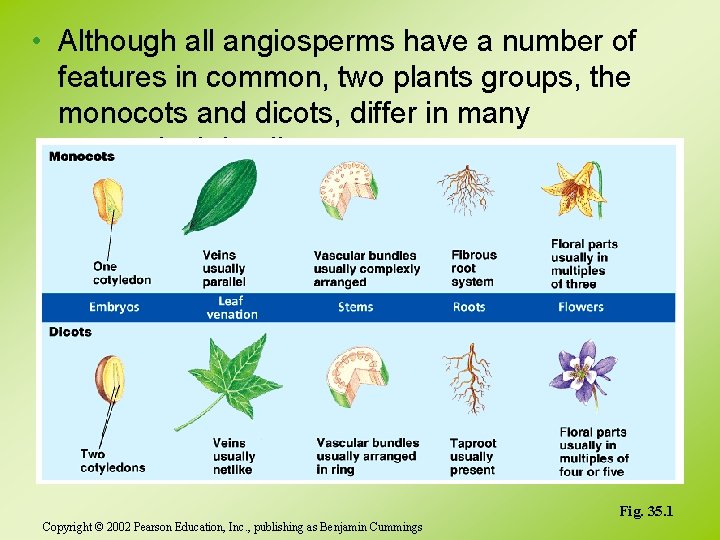
• Although all angiosperms have a number of features in common, two plants groups, the monocots and dicots, differ in many anatomical details. Fig. 35. 1 Copyright © 2002 Pearson Education, Inc. , publishing as Benjamin Cummings